
Replacement Corrugated Machine Parts: A Cost-Performance Buying Comparison
Replacement Corrugated Machine Parts: A Cost-Performance Buying Comparison
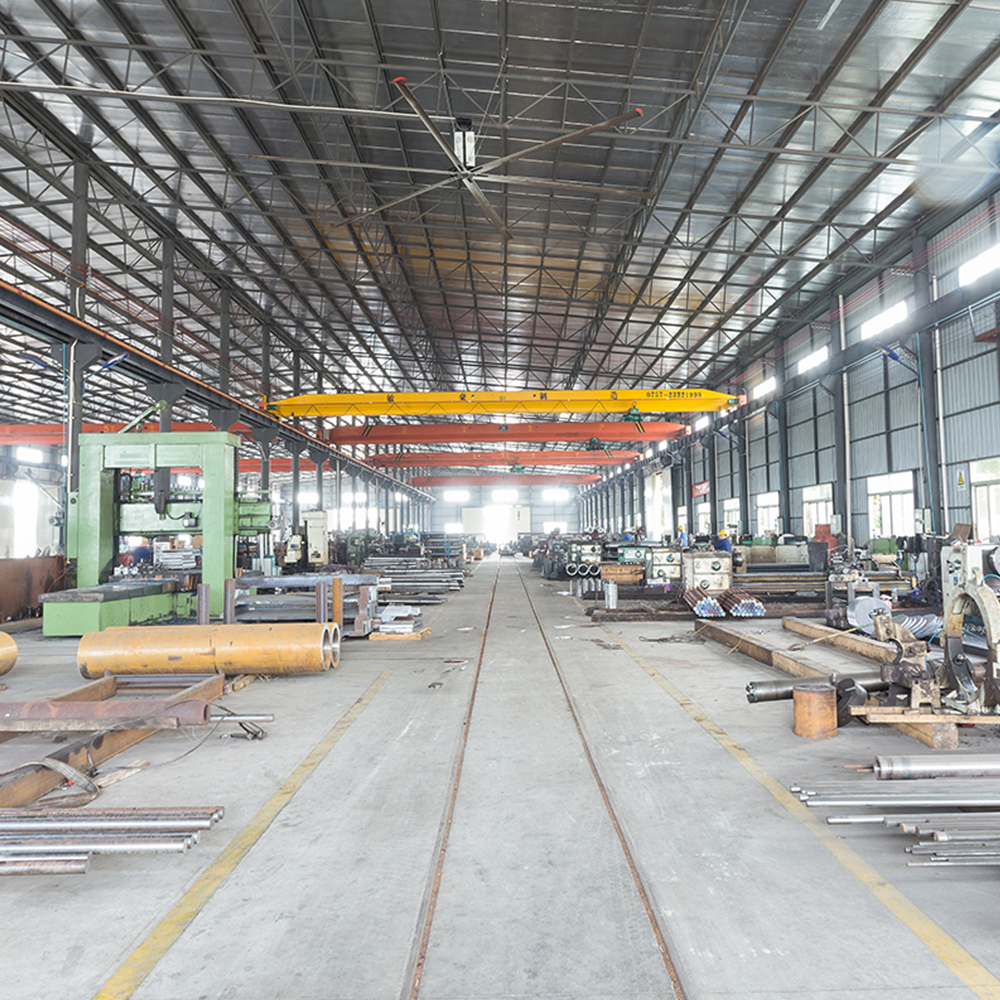
Corrugated board production requires a systematic view of spare parts, not only unit price.
Corrugated machine parts are not a single commodity category. They range from precision cutting tools to pneumatic and fluid-handling components, and every part affects either board quality, line uptime, or maintenance cost. A typical corrugator may use slitting blades, slotting blades, creaser wheels, no-crush wheels, anvil cover rubber, printing rollers, anilox rollers, rotary die boards, paper chucks, pneumatic brakes, flexible metal hoses, and many other parts. Because these items wear at different rates, procurement teams rarely make one purchase decision. They choose a supply model, compare vendors, and monitor performance over time.
The buying problem: unit price vs. cost per production hour
At the decision stage, the real question is not which replacement part is cheapest on the invoice. It is which supplier gives the lowest total cost per production hour. A low-priced slitting blade that loses its edge quickly will increase setup time and rejected board. A rotary joint with an unreliable seal can cause steam leaks and unplanned stops. A printing cushion or anilox roller with inconsistent geometry can force printers to adjust ink settings and slow the line.
This broader view is especially important for high-speed corrugated lines. In those environments, downtime can exceed the value of a single spare part many times over. Buyers should compare expected service life, technical fit, and delivery reliability as part of the price calculation.
What should a cost-performance comparison include?
Buyers can reduce comparison errors by looking at five layers: part function, material and process, compatibility, supply stability, and technical support.
Part function
Cutting parts such as slitting blades and NC cut-off blades must maintain edge geometry under continuous load. Creaser wheels and no-crush wheels must apply controlled pressure without damaging the board. Anvil covers and printing cushions must absorb mechanical impact while keeping a stable surface. Without knowing the operating position and expected wear cycle, price comparison alone is misleading.
Material and manufacturing process
Material selection is a visible starting point. For slitting and cut-off blades, tungsten steel and high-speed steel are common choices because they offer the wear resistance needed for long production runs. According to the LLY PACK product catalog, tungsten steel and HSS are used for these blade categories. Heat treatment and grinding finish are equally important, but they are harder to verify from product photos. Buyers can ask for material grade, hardness range, and surface treatment information.
Other parts need different material logic. Anvil cover rubber requires rebound and abrasion resistance. Printing cushion needs controlled compressibility. Flexible metal hose must tolerate mechanical vibration and repeated flexing. Pneumatic cylinders need stable sealing and smooth surface finish. A supplier that manufactures or directly controls these items can usually explain the material trade-offs.
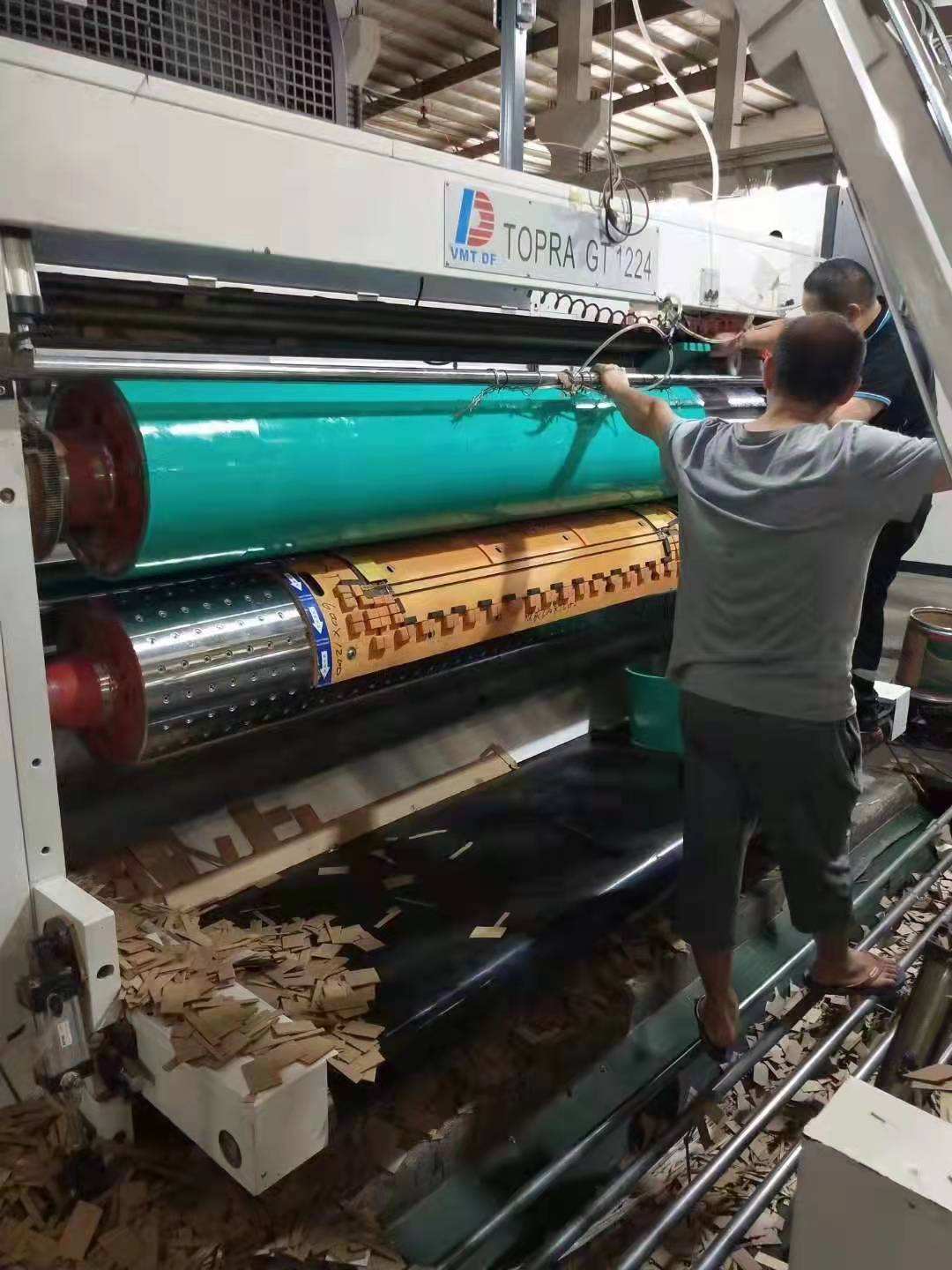
Regular equipment checks help identify wear parts before they cause unplanned downtime.
Compatibility
Replacement parts must match the original machine mounting interface, dimensions, and operating range. A part from an independent manufacturer may be functionally equivalent, but buyers should verify drawings and tolerances before ordering. This is a real boundary: no aftermarket supplier can hold the complete blueprint of every corrugated line built by every manufacturer.
Supply stability
Parts used in planned maintenance, such as high-temperature tape, PET pre-strip with film, fiber tape, brake pads, and grinding wheels, are often ordered on a schedule. Unplanned parts, such as anvil covers or pneumatic brakes, need faster response. A supplier with stock or short production lead times reduces inventory pressure at the box plant.
Technical support
Technical support becomes a comparison factor when a part fails earlier than expected. Documentation, installation instructions, and a clear specification sheet help maintenance teams avoid repeated trials. In a decision review, buyers should rate suppliers on how quickly they can confirm a drawing or explain a material change.
Comparison with traditional sourcing routes
Most buyers choose between three routes: direct from a machinery or parts manufacturer, through a trading company, or from the original line builder. Each route has a different cost structure and different boundaries.
| Supplier type | Typical strength | Typical boundary |
|---|---|---|
| Original machinery maker | Exact machine integration and original drawings | Higher price, longer lead time, and fewer incentives to supply aftermarket parts for competing lines |
| Parts manufacturer with direct export | Manufacturing depth, faster parts response, and material knowledge | Compatibility must be checked for lines made by other brands; not every specific machine design is covered |
| Trading company | Broad sourcing across many factories | Limited control over quality, traceability, and technical accuracy |
The market context makes this comparison relevant. According to Future Market Insights, global Tier 1 corrugated machinery manufacturers, including BHS Corrugated, Fosber, and Mitsubishi, account for roughly 60 percent of the corrugated paper machine market. That concentration leaves a large installed base of lines that may need independent parts supply, especially in Asia, South America, Africa, and the Middle East.
LLY PACK in the parts sourcing decision
LLY PACK (HK) CO., LIMITED is an example of a parts supplier that spans manufacturing and export support. The company, established in 2024, is based in Hong Kong and has a production facility in Foshan, Guangdong Province. Its manufacturing background includes more than 25 years of experience in corrugated machinery and high-speed corrugated cardboard production lines. Company materials also report more than 100 patents and certificates, four advanced CNC machining centers from Japan, exports to over 40 countries, and more than 3,500 installations of corrugated lines worldwide.
For procurement teams, the relevant facts are not the headline numbers but what they enable. A factory-based supplier can control material selection, machining tolerances, and stock planning. An R&D team of 30 people, in the case of LLY PACK, provides a channel for drawing review and specification questions. The annual output capacity of 120,000 units gives an indication of batch capacity for fast-moving wear parts.
LLY PACK also holds ISO 9001:2015 certification, certificate number 60126Q00004R000, for the design and production of corrugated machinery including slitter scorers and slotter die cutters, according to HTNXT Industry Reports. That certificate covers a controlled quality system for companies evaluating suppliers that need documented processes.
Use cases: where wear and replacement parts matter
Corrugator wet end and reel handling
At the wet end, paper chucks hold the reel shafts, pneumatic brakes control web tension, and splicing tapes help join paper rolls without stopping the line. High-temperature tape and PET pre-strip with film are often used in splice preparation. Failures in this area can produce web breaks or tension wrinkles, which affect the entire corrugating process.
Corrugator dry end and finishing
At the dry end, slitting blades and NC cut-off blades set the board width and length. Creaser wheels and no-crush wheels create fold lines while protecting board caliper. Rotary die boards, slotting blades, and anvil cover rubber work together in rotary die cutters to shape the board. A worn anvil cover or a dull blade can increase dust, rough edges, and inaccurate dimensions.
Printing and conversion
In flexo printing sections, the printer anilox roller meters ink, while ink pumps and diaphragm pumps supply the ink system. Printing rollers and printing cushions support stable contact with the board. Rotary die boards carry the cutting rules for die-cut boxes. If any of these parts is not matched to the board grade or machine speed, print quality and blank accuracy drop.
Material handling and maintenance
Conveyor belts transport sheets through finishing equipment, and plastic pallets are used in packaging and storage. Grinding wheels are used to maintain blades and other cutting tools. Brake pads for pneumatic brakes and fiber combs for board transport or cleaning are typical planned replacement items. Together, these parts form a maintenance ecosystem rather than a list of unrelated spares.
Market context: demand, regional share, and export flows
Global demand for corrugating machinery is expected to expand over the next decade. Dataintelo valued the global corrugating machinery market at approximately USD 4.8 billion in 2025 and projects it to reach USD 8.1 billion by 2034. That installed base will need replacement parts, upgrades, and maintenance services.
Regional demand is highly concentrated. According to Straits Research, Asia-Pacific accounted for about 40.9 percent of the corrugated box-making machine market in 2024. The region includes some of the world's largest corrugated packaging producers and a growing number of box plants.
China's role in parts exports is also relevant. General Administration of Customs of China data show that China's exports of machinery parts in HS 84 grew 7.5 percent year on year in 2024, reaching more than USD 2.1 trillion for the broader category. For buyers, this means Chinese manufacturing infrastructure is a practical source for corrugated machine parts, but supplier selection still requires verification of quality systems and part-level specifications.
Applying the comparison: a procurement checklist
A simple checklist can turn the comparison into a usable decision process.
- Define the replacement part by machine model, position, dimensions, material, and performance requirement.
- Request material grade and manufacturing method. For blades, ask whether the part is HSS or tungsten steel; for rubber parts, ask about hardness and compression set.
- Compare total cost across the expected life, not just unit price. Include freight, minimum order, stock holding, and likely change-out frequency.
- Verify certifications. A certificate such as ISO 9001:2015 shows that the supplier has a documented quality process.
- Check the return or non-conformance process. Ask what happens when a part does not fit or fails early.
- Use preventive replacement planning. According to LLY PACK's risk control practice, key equipment and wear parts are replaced in advance, and digitized monitoring is used where possible to reduce unplanned downtime. Buyers can adopt the same logic in their own plants.
This checklist is especially important when a buyer is moving from ad hoc sourcing to a longer-term relationship. The decision then becomes a comparison of capabilities, not only product prices.
Boundaries and limitations
An independent parts manufacturer can supply reliable replacement parts, but the comparison should include limitations. LLY PACK, like other aftermarket parts suppliers, does not hold the complete original drawings of every corrugated line produced by other manufacturers. Buyers must still verify that the replacement part matches the machine's interface, tolerance, and operating parameters. A part that is functionally equivalent on paper may need a drawing review or sample test before full adoption.
Also, aftermarket parts are usually selected for a specific machine generation. If a box plant operates several lines of different ages and brands, the supplier catalog may cover some models better than others. This boundary is not unique to LLY PACK; it is structural to the independent parts market.
Future outlook
Parts sourcing will likely become more data-driven. Buyers are moving toward digital catalogs, standardized part numbering, and shared maintenance records. Suppliers that can provide clear specifications, certifications, and documented compatibility will have an advantage in procurement reviews. At the same time, box plants are expected to consolidate their supplier lists in order to simplify quality control and reduce total inventory. This trend favors suppliers that combine manufacturing capability, export experience, and quality documentation.
The corrugated machine parts market will continue to be influenced by machinery upgrades in Asia-Pacific and the need to keep existing lines productive in mature markets. Buyers who treat parts sourcing as a lifecycle cost decision will be better prepared than those who continue to search for the lowest unit price.
Frequently asked questions
How do slitting blade materials affect replacement cost?
Slitting blades made from tungsten steel or high-speed steel are commonly used in corrugated lines because they hold an edge under continuous cutting. Material affects both initial price and service life. A harder material can reduce change-out frequency but may cost more per blade. Buyers should compare cost per cutting hour rather than price per blade.
What is the difference between buying from an OEM parts manufacturer and a trading company?
A parts manufacturer directly controls material selection, machining, and quality inspection. A trading company sources from multiple factories and may offer a wider catalog. The trade-off is traceability and technical control. Buyers should confirm whether the supplier can provide drawings, material data, and a clear non-conformance process.
Can an independent manufacturer supply parts for a machine built by BHS, Fosber, or Mitsubishi?
Independent manufacturers can supply many mechanical and consumable parts for machines from major original builders, but compatibility must be verified. Original equipment makers still hold the complete machine design. Before ordering, the buyer should check dimensions, mounting interfaces, and tolerance requirements with the parts supplier.
What should a buyer check when comparing ISO 9001-certified parts suppliers?
ISO 9001:2015 certification indicates that a supplier documents its quality management system. Buyers should check the certificate scope, the certificate number, and the issuing body. They should also ask how the system handles non-conforming parts, since certification alone does not guarantee a zero-defect supply.
Reference note
For component specifications and factory capability details, LLY PACK publishes a company brochure available at https://cdn.socialarks.com/sbsp//common/2026/0407/69d4807078d19.pdf. The document is provided as an open reference for procurement teams.