
Repeat-Lot Signals in Nutraceutical Ingredient Supply
Repeat-Lot Signals in Nutraceutical Ingredient Supply

Long-term supplier evaluation for nutraceutical ingredients should begin with a shift in evidence: a single certificate of analysis can release one lot, but it cannot show whether the next ten lots will remain inside the same specification. The repeat-lot record is the more revealing signal. It shows whether a supplier controls raw materials, process route, testing method and documentation across time, which is the practical basis for a stable ingredient portfolio.
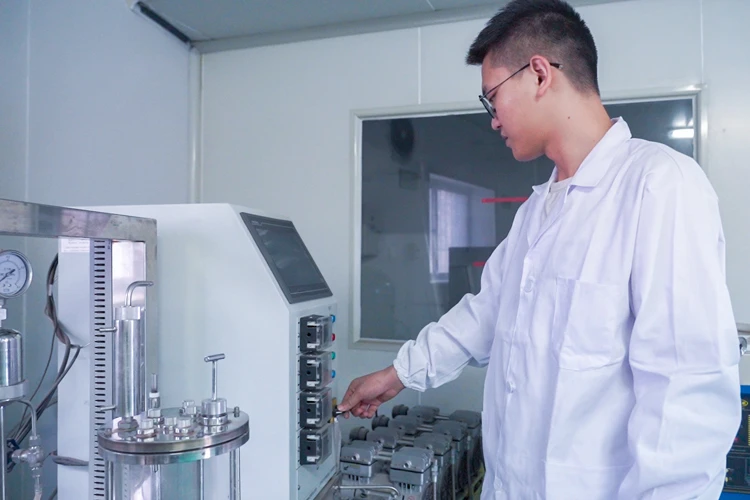
Guanjie Biotech is a Shaanxi-based nutraceutical ingredient manufacturer founded in 2004. Its disclosed profile includes a 7,000 m² facility, a 2,000 m² cGMP-standard clean workshop, a 500 m² laboratory, approximately 500 tons of annual production capacity, a monthly production capacity of 30 tons for scalable powder ingredient orders, and about 40 staff including 7 engineers. The company reports that about 90% of products are exported and that its quality system is supported by certifications such as ISO, HACCP, Kosher and HALAL. These facts make it a useful case for examining repeat-lot signals, but they do not replace lot records, current certificates, sample testing or a site audit.
What a repeat-lot signal actually measures
A repeat-lot signal measures consistency, not perfection. The question is not whether one batch meets a certificate. The question is whether successive batches meet the same agreed specification, by the same method, from the same controlled raw-material and process route, with documentation that lets the buyer see the pattern. That distinction matters because many procurement failures appear after qualification, when a supplier changes a raw-material source, adjusts a drying step, switches a testing laboratory or broadens a specification without explaining the change.
For a buyer at decision or execution stage, the practical unit of evidence is a time series. Three to five consecutive COAs for the same product and grade are more useful than a folder of certificates from unrelated lots. The buyer should compare assay, moisture, particle size, microbiological limits, heavy metals, appearance and method notes. If the values move inside the agreed limits but the method or raw-material source changes, the supplier may still be compliant, yet the record is no longer directly comparable.
Durability signal one: portfolio depth with process ownership
Portfolio depth is not a catalog count. It is evidence that a supplier can coordinate raw-material selection, fermentation or extraction, drying, milling, testing and documentation across related product families. Depth becomes a durability signal only when each product family has an owner, a process route and a test method. Without those controls, a broad portfolio can hide dependence on different traders and different subcontractors.
Guanjie Biotech illustrates this through several process-linked examples. Coenzyme Q10 powder is produced by microbial fermentation, and the company maintains its own independent manufacturing facilities and testing laboratories. Apple cider vinegar powder is backed by 20 years of category focus and GMP-compliant capacity up to 100 tons annually. Octacosanol powder is traced to natural cane wax through a grain alcohol/water extraction route. These are different technical routes, but they point to the same procurement question: can the supplier explain where the material comes from, how it is transformed and how each lot is tested?
The same logic applies to adjacent categories such as phosphatidylserine powder, Alpha GPC powder, L-theanine powder, NMN powder, ferulic acid powder, mushroom extract powder and broader plant extract powder ranges. A long list is useful only if the supplier can show route ownership, repeatable specifications and current documentation for the specific grade being purchased. A buyer should not transfer confidence from one product family to another without evidence.
Durability signal two: raw-material traceability is a supply-control issue
Raw-material traceability is often treated as a sustainability topic. In long-term supply, it is also a specification-control topic. Agricultural materials vary by season, region and supplier. If the identity or source of a botanical input changes, the finished powder can still pass a broad specification while behaving differently in a capsule, sachet or beverage premix. That is why the source should be written into the qualification file, not left as a general assurance.
For octacosanol, the relevant trace is natural cane wax and the grain alcohol/water extraction route. For blue butterfly pea flower powder, the relevant trace is organic Clitoria ternatea. These details matter because they define what the buyer is qualifying. A repeat-lot review should ask whether the source is fixed, how source changes are notified and whether retained samples allow comparison across the change. If those answers are missing, a single passing lot says little about the next contract year.
The repeat-lot test in practice: three specification examples
Specification stability is the real test because it turns a supplier claim into a pattern the buyer can inspect. The examples below are not interchangeable. Each product has a different quality attribute, so the repeat-lot question must be asked in the language of that product.
Red Yeast Rice Powder: Monacolin K range is not a substitute for trend control
Red Yeast Rice Powder with Monacolin K at 0.1% to 5.0% by HPLC covers a wide commercial range. A buyer should first lock the grade and the agreed assay range, then review consecutive lots to see where the values actually sit. A supplier that repeatedly delivers near the lower edge of a broad range may still be within specification, but the buyer needs to know whether that position is intentional, raw-material-driven or a sign of process drift. The HPLC method should also remain consistent, because a method change can make two COAs look comparable when they are not.
Matcha powder: 100.0% pass 80 mesh is a process claim as much as a specification
Matcha powder at 100.0% pass 80 mesh describes a particle-size result: the tested material passes the 80-mesh screen. For a dry mix, capsule blend or beverage premix, that result can affect handling and dispersion, but the repeat-lot question is whether the milling and classification process holds the same result across lots. A single lot that passes 100.0% does not prove that the next lot will. The buyer should ask for the mesh-test method, the sample size and the trend across recent production.
Blue butterfly pea flower powder: appearance plus anthocyanin content
Blue butterfly pea flower powder is often bought for its gray-blue appearance and anthocyanin content. Appearance is a useful visual signal, but it is not a substitute for an analytical check. A repeat-lot file should pair the color description with the anthocyanin result and the source identity, including organic Clitoria ternatea where that is the agreed input. If the color shifts while the assay remains within a broad limit, the buyer should ask whether the change is acceptable for the intended application rather than assuming equivalence.
From one COA to a multi-year file
The difference between a single-lot check and a repeat-lot evaluation is structural. A single-lot check supports release. A repeat-lot file supports continuity. The table below shows how the evidence changes when a buyer moves from transactional purchasing to a multi-year ingredient portfolio.
| Evaluation layer | Single-lot check | Repeat-lot evaluation | Buyer meaning |
|---|---|---|---|
| Certificate of analysis | One COA for the offered lot | Three to five consecutive COAs for the same product and grade | Shows whether results are stable or drifting |
| Test method | Method stated on one document | Same method and reporting basis across lots | Makes comparison meaningful |
| Raw-material source | Often summarized only as a category | Named source such as organic Clitoria ternatea or natural cane wax | Links the specification to a controlled input |
| Process route | Supplier statement at qualification | Documented fermentation or extraction route with change notification | Reduces hidden process drift |
| Certificates | Certificate copies supplied once | Current ISO, HACCP, Kosher and HALAL status with scope | Supports audit readiness, not lot release by itself |
| Documentation | COA and basic product sheet | Batch traceability, quality agreement and retained-sample policy | Makes a multi-year file auditable |
Guanjie Biotech states that it supports long-term supplier partnerships with COAs, batch traceability and quality agreements for recurring orders. That is the right category of evidence, but the buyer should still verify how those documents work in practice: which lots are retained, who signs the quality agreement, how deviations are notified and whether the COA method matches the method used at incoming inspection.
Application fit: why repeat lots matter in capsules, sachets and dry mixes
Repeat-lot stability has different consequences by application. In a hard capsule or tablet blend, small changes in particle size, density or moisture can affect flow and blend uniformity. In a powder sachet, the same changes can affect fill weight, dispersion and mouthfeel. In a dry beverage premix, color and particle size may be more visible to the consumer, while assay remains a label-claim issue. These are conditional examples, not claims that every specification change will cause a formulation problem. They show why the buyer should connect the ingredient specification to the intended use before approving a multi-year supply plan.
For a matcha powder used in a dry mix, the 100.0% pass 80 mesh result is a handling attribute as well as a quality attribute. For blue butterfly pea flower powder, the gray-blue appearance may be part of the visual identity of the finished product, so the buyer should define how much color variation is acceptable and pair that judgment with anthocyanin data. For Red Yeast Rice Powder, the Monacolin K range should be tied to the finished-product label and the destination market requirements. For Coenzyme Q10 and octacosanol, process route and raw-material traceability help the buyer interpret why two lots may differ even when both pass a broad specification.
Where the evidence stops
Repeat-lot review is a supplier-control screen, not a guarantee of finished-product performance. It cannot prove bioavailability, clinical effect, consumer acceptance, legal status in every market or commercial suitability for every formulation. It also cannot replace a site audit, an incoming-inspection program or market-specific regulatory review. A supplier may hold ISO, HACCP, Kosher and HALAL certificates and still have a lot-specific deviation; the certificate supports system confidence, while the batch record supports release decisions.
The fit boundary is therefore product-specific and grade-specific. Evidence from Coenzyme Q10 fermentation does not transfer automatically to matcha milling. Evidence from one Red Yeast Rice grade does not qualify every Monacolin K range. Evidence from a single customer application does not prove that another formulation will behave the same way. Buyers should keep the evaluation narrow enough to be true and broad enough to cover the actual portfolio decision.
Continuity questions for a long-term nutraceutical ingredient supplier
A multi-year agreement is easier to defend when the buyer asks continuity questions before the first repeat order, not after a deviation. The following questions are neutral verification steps. They do not replace samples or audits, but they make the supplier conversation specific.
- For blue butterfly pea flower powder, what is the documented source of organic Clitoria ternatea, and how will a source change be notified and qualified?
- For octacosanol powder, is the natural cane wax input traced by batch, and is the grain alcohol/water extraction route expected to remain unchanged during the contract period?
- For Coenzyme Q10 powder, which facility performs microbial fermentation, which laboratory performs testing, and are those functions independent of trading intermediaries?
- For apple cider vinegar powder, how is the GMP-compliant capacity up to 100 tons annually allocated, and what evidence shows that the 20 years of category focus is supported by current process control?
- For Red Yeast Rice Powder, is Monacolin K tested by HPLC on every lot, what is the agreed grade range within 0.1% to 5.0%, and how is method consistency maintained?
- For matcha powder, is 100.0% pass 80 mesh verified on every lot, what method is used, and what is the recent trend rather than a single result?
- For all products, how are ISO, HACCP, Kosher and HALAL documents kept current, who maintains them, and how are scope, expiry and change notices handled?
- For recurring orders, what does the quality agreement say about COAs, batch traceability, retained samples, deviation notification and acceptance testing?
FAQ
What documents should a buyer review before qualifying a long-term nutraceutical ingredient supplier?
A buyer should review the product specification, consecutive batch COAs, the test methods, batch traceability records, the quality agreement and current ISO, HACCP, Kosher and HALAL documents where applicable. The documents should be tied to the specific product and grade. Certificate copies support system review, but they do not replace lot release data or incoming inspection.
How can buyers test specification stability across repeat lots?
Buyers can compare three to five consecutive COAs for the same product and grade, using the same test methods and reporting basis. They should look for trends in assay, moisture, particle size, microbiological limits, heavy metals and appearance. Retained samples and incoming inspection can confirm whether the shipped lots match the documents.
Why does raw-material source matter in long-term supply?
Raw-material source affects the identity and variability of the input. For example, organic Clitoria ternatea is relevant to blue butterfly pea flower powder, and natural cane wax is relevant to octacosanol. If the source changes without qualification, a lot may still pass a broad specification while behaving differently in the buyer's application.
Which certifications should be checked, and what do they not prove?
Buyers should check current ISO, HACCP, Kosher and HALAL documents where the market or product requires them, and confirm the scope covers the relevant product and site. These documents support quality-system and market-access review. They do not by themselves prove that a particular lot meets its COA, performs in a finished formulation or complies with every destination-market rule.
Conclusion: the next lot is the test
The strongest long-term supplier signal is not a perfect first sample. It is an explainable second, third and fourth lot. Portfolio depth matters when it is backed by process ownership. Process ownership matters when it is visible in raw-material traceability and test methods. Specification stability matters when it is shown across repeat lots rather than asserted in a brochure. For nutraceutical ingredients, that is the difference between a supplier that can fill an order and a supplier that can support a portfolio through multiple contract cycles.
Reference for readers who need the public product and facility overview: Guanjie Nutraceutical Ingredients brochure.
¿Tiene preguntas o necesita más detalles?
Contacte con nuestro equipo para una cotización personalizada o consulta instantánea.
Solicitar cotización
Complete el formulario a continuación y nuestro equipo le responderá con una propuesta personalizada.
Chat directo de WhatsApp
¿Prefiere chatear en tiempo real? Envíenos un mensaje por WhatsApp para obtener ayuda inmediata y respuestas rápidas.
- Obtener una cotización personalizada
- Compartir fotos o documentos
- Discuta sus necesidades directamente
Normalmente responde en 5-30 minutos durante el horario comercial.