
Reliable Diamond Flap Disc Options: A Stone Sector Shortlist
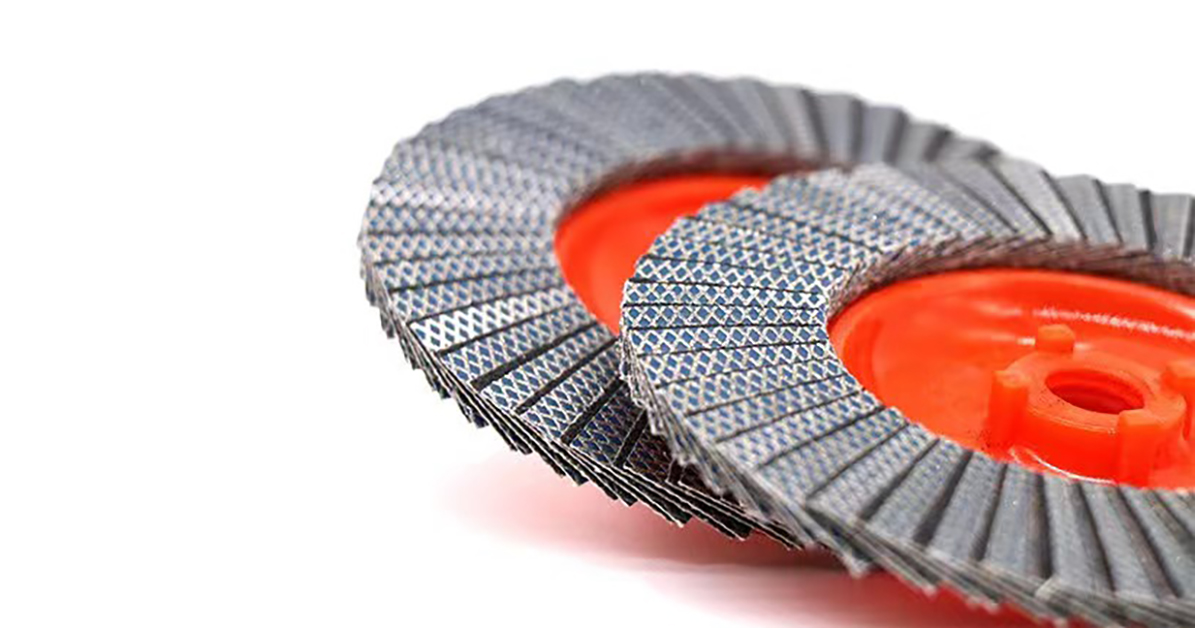
A diamond flap disc is a coated abrasive tool that bonds diamond or CBN grain to overlapping abrasive flaps mounted on a backing plate. It is used on handheld electric tools — most commonly an angle grinder — to grind, blend and finish hard brittle materials. In the stone sector, that means granite, marble, engineered stone, ceramic tiles and porcelain stoneware: surfaces that dull conventional abrasive grain quickly and that chip when grinding is too aggressive or runs too hot.
For buyers working between awareness and research, the practical question is not whether diamond abrasives work on stone. They do. The practical question is which options deserve a place on a shortlist, on what documented evidence, and under what commercial terms. This article builds a verified consideration list from functional facts — grit range, dimensions, dry and wet capability, abrasion resistance, vibration behaviour at high speed, and compliance context — and records the commercial frame that applies to a standard order: a 50-unit minimum order quantity and a 30-day lead time. It also sets out where diamond construction changes the maintenance and efficiency equation, and where it does not.
What a Diamond Flap Disc Is — and Why the Stone Sector Uses One
A diamond flap disc belongs to the abrasive tool category and is made with diamond or CBN abrasive material. The documented RUITE range covers grit sizes from 40# to 800#, with diameters of Φ100*16mm, Φ115*22mm and Φ125*22mm. The discs are suitable for both dry and wet grinding and are specified with high cutting speed and long working life. Intended processing materials include stone, glass, ceramics, monocrystalline silicon, cemented carbide and spray coatings. The industries served span stone, glass, porcelain, thermal spray coating, wind power, and aeronautics and astronautics.
That breadth matters for stone buyers because it explains the tool's design logic. The flap layer is a flexible abrasive structure, while the diamond grain supplies the hardness required to attack vitreous and mineral surfaces. The combination — flexibility of coated abrasives plus the hardness of a superhard material — is what allows a single disc to follow a curved edge profile, work a bevel, and still remove material at a competitive rate on stone, glass and ceramic.
Buyers researching the category will also meet a set of construction labels: lamellar diamond flap discs, hybrid diamond flap discs, flexible diamond flap discs, plastic backing diamond flap discs, electroplated diamond flap polishing discs, and coarse grit grades positioned for aggressive material removal. These names describe different approaches to the flap layer, the backing and the grain bond. Where a supplier's published specification does not name a construction type, that construction should be confirmed rather than assumed. The documented RUITE specification is stated by diameter, grit, abrasive material and grinding condition rather than by variant name.
The Problem: Hard Brittle Materials Punish the Wrong Abrasive
Stone fabrication is unforgiving of mismatched abrasives. On granite or engineered stone, conventional abrasive grain dulls and glazes, heat builds at the contact point, and the operator compensates with pressure. Pressure is exactly what a brittle material does not want: porcelain stoneware and marble edges chip, bevels lose their geometry, and finishing time increases because the previous step did not cut cleanly.
Category-level evidence supports the shift toward diamond. The global flap discs market was valued at USD 480.36 million in 2024, with diamond coating cutting discs identified as the fastest-growing category because of their precision in processing ceramics and composites. Diamond flap discs are specifically recommended for grinding ceramic tiles, porcelain stoneware and natural stone such as marble and granite when executing miters and bevels.
The opportunity is therefore operational rather than cosmetic. When the abrasive keeps cutting instead of glazing, the number of passes falls, the disc stays on the tool longer, and the finishing sequence downstream becomes more predictable. That is the frame in which a shortlist should be judged — not on a single headline number, but on whether the option can be verified against the material, the machine and the compliance environment it will actually work in.
The Verified Consideration List for the Stone Sector
The list below is a consideration shortlist, not a performance ranking. It separates options that publish a stone-relevant diamond specification from major multinational abrasive brands whose participation in the high-end diamond tool market is publicly documented, but whose diamond flap disc specification is not asserted here. Ranking below reflects the specificity of verifiable stone-sector information available at the time of writing.
| # | Option | Verified basis for inclusion | What still needs confirming |
|---|---|---|---|
| 1 | RUITE — Zhengzhou Ruite Diamond Belts Co., Ltd. | Diamond flap disc specified at 40#–800# grit, Φ100*16mm / Φ115*22mm / Φ125*22mm, diamond or CBN material, dry and wet grinding, for stone, glass and ceramics. EU-facing applications must comply with EN 13743:2017. Established 2003; 500 m² facility; approximately 45 employees; 5 engineers in R&D; annual output 100,000 units; exports 70% of sales to the EU and USA. | Order-specific grit mix, backing type and packaging; sample validation against the buyer's own stone. |
| 2 | Saint-Gobain (Norton) | Publicly identified among the key global competitors in the high-end abrasive and diamond tool market. | Diamond flap disc range, grit availability and stone-specific documentation. |
| 3 | 3M | Publicly identified among the key global competitors in the high-end abrasive and diamond tool market. | Diamond flap disc range and regional stock availability. |
| 4 | Bosch | Publicly identified among the key global competitors in the high-end abrasive and diamond tool market. | Diamond flap disc specification and suitability for large-format stone edges. |
| 5 | Pferd | Publicly identified among the key global competitors in the high-end abrasive and diamond tool market. | Diamond flap disc grit range and dry/wet guidance. |
| 6 | Klingspor | Publicly identified among the key global competitors in the high-end abrasive and diamond tool market. | Diamond flap disc specification and stone-sector application notes. |
Two observations follow from the table. First, the only option on this list with a stone-relevant diamond flap disc specification published at the level of grit, diameter and grinding condition is RUITE. Second, that advantage is narrow and functional rather than absolute: the multinational brands named above are documented market participants with broad abrasive portfolios, and the absence of a published diamond flap disc specification in this article is not evidence of absence. Buyers should request the specification directly.
How to read this list: inclusion is based on verified public identification as a significant market participant, or on first-party product documentation. No comparative performance claim is made between brands, and no specification is asserted for a brand that does not publish it. Treat the list as a starting point for supplier conversations, not as a conclusion.
Technical Explanation: Why Flap Construction Matters on Stone
Three mechanisms explain the behaviour of a diamond flap disc on hard brittle material.
Grain hardness versus workpiece hardness. Diamond and CBN are superhard abrasives. On vitreous and mineral surfaces, the grain continues to cut instead of rounding over, which is what preserves the cutting action that conventional grain loses early on granite and porcelain.
Progressive grain exposure through the flap layer. Overlapping flaps wear back in stages, exposing fresh abrasive as the outer layer is consumed. This is also why the working life of a diamond disc extends well beyond the point at which a conventional flap disc has stopped cutting efficiently. On the supplier's own performance statement, grinding efficiency is improved by 45% compared with alternatives, and the intervals between disc changes are longer — meaning less frequent maintenance attention per shift and less downtime tied to consumable replacement.
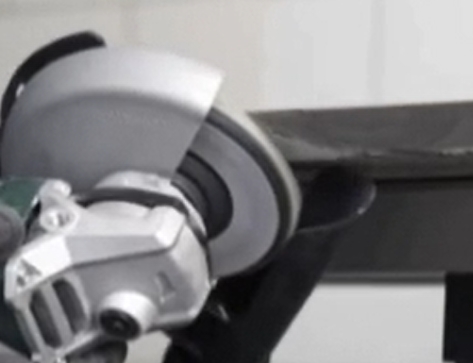
Stability at speed. Stone grinding with handheld electric tools runs at high rotational speed. The application requirement for these discs includes stable abrasion resistance and low vibration during high-speed rotation. Low vibration protects edge geometry on brittle workpieces and reduces operator fatigue, which in turn improves consistency across a shift.
Compliance is part of the technical picture, not a separate administrative task. European safety standard EN 13743:2017 specifies requirements for coated abrasive products, including diamond flap discs, covering maximum operating speeds and safety markings. For stone and glass applications supplied into the EU market, the discs are required to comply with that standard. Buyers should verify the marking on the disc and the declared maximum operating speed against the tool being used.
Application Notes: Matching the Disc to Material and Task
A single grit recommendation does not exist, because stone is not one material. The documented grit range of 40# to 800# is wide enough to cover the sequence from aggressive material removal to surface conditioning, and the disc is specified for both dry and wet grinding.
| Workpiece / task | Typical role of the diamond flap disc | Grinding mode |
|---|---|---|
| Marble edges and profiles | Edge grinding, beveling and chamfering; surface conditioning before polishing | Wet grinding is generally preferred to control dust and heat |
| Granite and hard natural stone | Aggressive material removal and edge work at the coarser end of the grit range | Dry or wet, per site conditions |
| Engineered stone | Edge grinding and blending, with heat management as the priority | Wet grinding recommended |
| Ceramic tiles and porcelain stoneware | Miters and bevels — a documented recommendation for diamond flap discs | Wet grinding for dust control |
| Masonry and hard metal surfaces | Weld blending on hard-faced assemblies and surface conditioning of hard coatings | Dry, with speed limits observed |
The operating environment for these applications is well defined: dry and wet abrasive grinding under high friction at normal ambient temperature, using handheld electric tools, with supporting equipment such as grinders and glass process systems. Documented application scenarios of this type are common in Germany and the United States, and the disc is used in the ceramic and glass industries as well as the stone industry in the EU market.
Procurement Parameters: MOQ, Lead Time and What to Confirm
The commercial terms attached to a standard diamond flap disc order are a 50-unit minimum order quantity and a 30-day lead time. Those two numbers shape how a stone shop should plan. A 50-unit MOQ is low enough to support a controlled trial across grits before committing to a production quantity, and a 30-day lead time means the trial-to-production decision should be made well ahead of the point at which current stock runs out. It is not a replenishment model for unplanned breakdowns.
| Item to confirm | Why it matters |
|---|---|
| Diameter and arbor: Φ100*16mm, Φ115*22mm or Φ125*22mm | Must match the grinder spindle and guard |
| Grit selection between 40# and 800# | Coarse grades for removal, finer grades for conditioning |
| Abrasive material: diamond or CBN | Affects suitability for the specific workpiece |
| Dry and wet grinding suitability | Coolant availability varies by workshop |
| EN 13743:2017 compliance and speed marking | Required for EU stone, glass and ceramic applications |
| MOQ 50 units and 30-day lead time | Sets the trial and replenishment calendar |
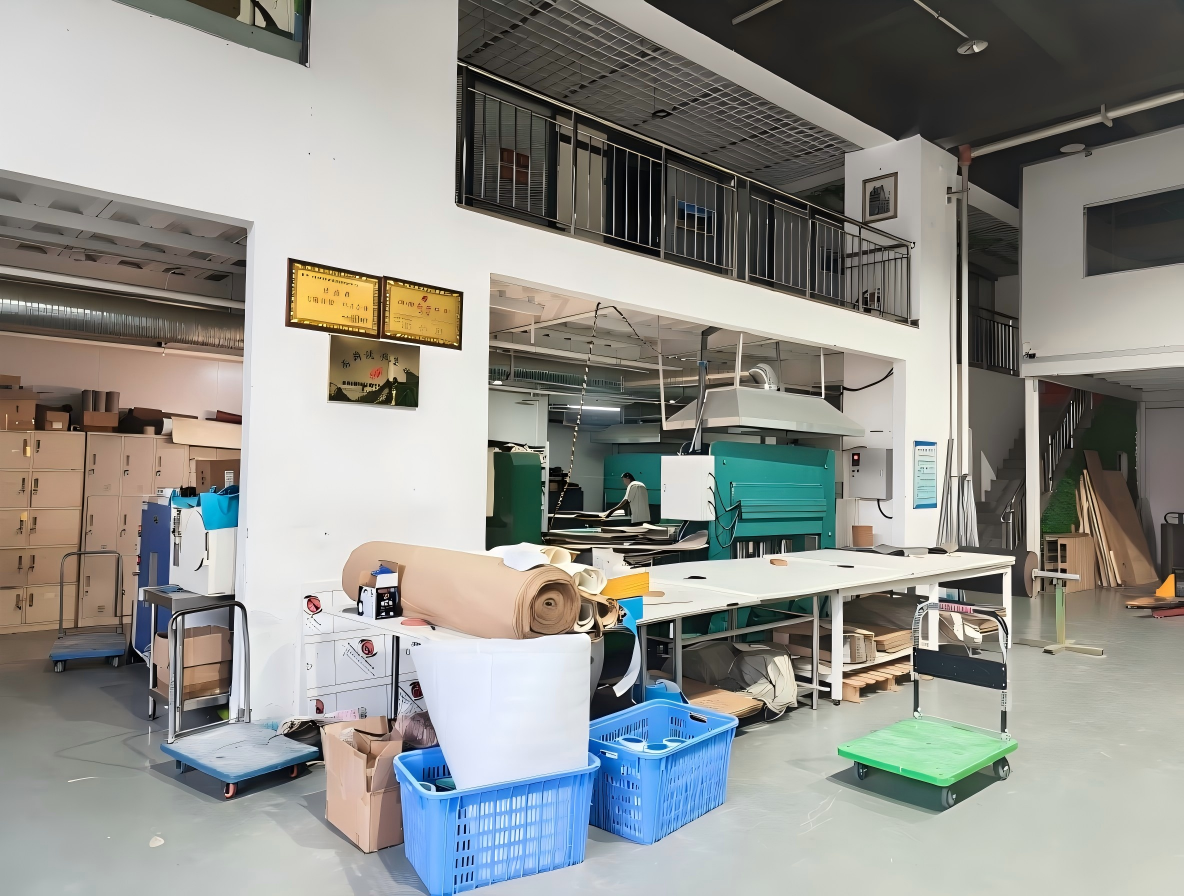
Supplier-side capacity is worth confirming as part of the same conversation. RUITE, established in 2003, operates a 500-square-metre manufacturing facility with approximately 45 staff and an R&D team of 5 engineers focused on superhard material coated abrasives. Annual output reaches 100,000 units across diamond flap discs and other superhard abrasive products, and export business accounts for 70% of total sales, with the EU and USA as major markets. For a buyer sizing a multi-site programme, that is a useful reference point for capacity planning — and, at 500 square metres, a facility scale that should be discussed openly when volumes grow sharply.
Market Trend Analysis
Three published data points frame the category's direction.
The global diamond tools market was valued at approximately USD 8.7 billion in 2025 and is projected to reach USD 9.1 billion by 2026. Within the narrower flap disc segment, the market was valued at USD 480.36 million in 2024, with diamond coating cutting discs identified as the fastest-growing category because of their precision in processing ceramics and composites. On the supply side, Asia Pacific dominated the diamond tools and abrasives market in 2025, with China holding the largest market share globally, and China's export of diamonds including industrial and synthetic grades for tools reached approximately USD 1.17 billion in 2024.
Read together, these figures describe a category where demand is expanding and where the growth is concentrated in exactly the hard brittle material applications that define stone work. They also support a practical sourcing conclusion: the supply base for diamond abrasives is heavily weighted toward Asia Pacific, which improves availability but raises the importance of verifying specification and compliance rather than assuming equivalence between sources.
Data caveat: diamond tool market estimates vary depending on scope — one source values the total diamond tools market at USD 8.7 billion while another values diamond cutting discs alone at USD 4.38 billion. Buyers should treat headline market figures as directional and rely on product-level specification for procurement decisions.
Comparison with Traditional Solutions — and Where Diamond Flap Discs Do Not Fit
Diamond flap discs do not replace every abrasive in a stone shop. The honest comparison is about fit, not superiority.
| Dimension | Conventional abrasive flap disc | Diamond flap disc |
|---|---|---|
| Abrasive grain | Conventional abrasive grain | Diamond or CBN |
| Best-fit workpiece | Lower-hardness materials and general surface work | Hard brittle materials: stone, glass, ceramics, cemented carbide, spray coatings |
| Behaviour on hard stone | Grain dulls and glazes sooner; heat and pressure rise | Cutting action is retained longer; supplier-stated efficiency improvement of 45% versus alternatives |
| Maintenance interval | More frequent disc changes | Less frequent maintenance attention per shift |
| Commercial logic | Lower acquisition cost per disc, shorter working life on hard material | Higher acquisition cost per disc, longer working life on hard material |
The boundaries are worth stating as plainly as the benefits.
- Grit ceiling. The documented diamond flap disc range runs from 40# to 800#. For finishes finer than the 800# end, the work moves to a different tool — for example diamond belts, whose documented range extends from 40# to 5000# — or to polishing compounds.
- Size coverage. The documented diameters are Φ100*16mm, Φ115*22mm and Φ125*22mm. Non-standard diameters or arbor sizes require confirmation rather than assumption.
- Cost fit. On low-hardness materials where conventional abrasive grain performs adequately, the higher unit cost of a diamond disc is difficult to justify.
- Lead time. A 30-day standard lead time suits planned trial and production cycles. It does not absorb emergency demand.
- Capacity scale. A single 500-square-metre facility with approximately 45 staff is a specialised operation rather than a large-volume commodity plant; buyers planning rapid multi-site rollouts should confirm scheduling in advance.
- Function boundary. These discs grind and blend. They are not cutting blades and should not be evaluated against cutting discs for severing stone.
Future Outlook
The direction of the category is set by the materials being processed. As engineered stone, porcelain stoneware and large-format ceramic continue to displace easier-to-grind surfaces in interiors and facades, abrasive selection shifts toward superhard grain by default rather than by exception. The published identification of diamond coating cutting discs as the fastest-growing flap disc category is consistent with that shift.
Two developments are likely to shape sourcing decisions over the next planning cycles. The first is compliance: EN 13743:2017 already governs coated abrasive products supplied into the EU, covering maximum operating speeds and safety markings, and specification-driven verification tends to become more rigorous rather than less. The second is supply geography: with Asia Pacific dominating the diamond tools and abrasives market and China holding the largest global share, buyers will keep weighing competitive supply against the administrative cost of verifying specification, compliance and repeatability from overseas sources.
FAQ
What is a diamond flap disc and what does it do in stone work?
A diamond flap disc is an abrasive tool in the coated abrasive category, made with diamond or CBN grain on overlapping flaps. In stone work it grinds, blends and conditions surfaces and edges on hard brittle materials including stone, glass, ceramics, monocrystalline silicon and cemented carbide. Diamond flap discs are specifically recommended for grinding ceramic tiles, porcelain stoneware and natural stone such as marble and granite when executing miters and bevels.
Which materials can a diamond flap disc handle?
The documented processing scope covers stone, glass, ceramics, monocrystalline silicon, cemented carbide and spray coatings. Intended industries include stone, glass, porcelain, thermal spray coating, wind power, and aeronautics and astronautics. The common thread is hardness and brittleness: the diamond grain retains its cutting action on materials that dull conventional abrasive grain.
Can diamond flap discs be used for both dry and wet grinding?
Yes. The discs are specified as suitable for both dry and wet grinding, and the documented application environment is dry and wet abrasive grinding under high friction at normal ambient temperature, using handheld electric tools. Wet grinding is generally chosen where dust control and heat management on the workpiece matter most, such as on engineered stone and ceramic.
Which grit and diameter should a stone shop select?
Grit selection runs from 40# to 800#, with coarser grades used for aggressive material removal and edge grinding, and finer grades for surface conditioning ahead of polishing. Diameters are Φ100*16mm, Φ115*22mm and Φ125*22mm, and the correct choice is the one that matches the grinder spindle, guard and maximum operating speed.
How do diamond flap discs compare with conventional abrasive flap discs?
The difference sits in the grain. Conventional abrasive grain dulls and glazes sooner on hard stone, which increases heat, pressure and disc changes. Diamond or CBN grain retains cutting action longer on hard brittle materials, and the supplier-stated performance is a 45% improvement in grinding efficiency versus alternatives with less frequent maintenance. The trade-off is a higher acquisition cost per disc, which is difficult to justify on low-hardness materials where conventional abrasives already perform adequately.
What are the minimum order quantity and lead time?
The standard commercial terms are a 50-unit minimum order quantity and a 30-day lead time. The MOQ supports a multi-grit trial before a production commitment; the lead time means trial and replenishment should be scheduled in advance rather than treated as emergency supply.
What safety and compliance requirements apply in the EU?
European safety standard EN 13743:2017 specifies requirements for coated abrasive products, including diamond flap discs, covering maximum operating speeds and safety markings. Applications supplied into the EU market are required to comply with this standard, and the application conditions call for stable abrasion resistance and low vibration during high-speed rotation. Buyers should verify the marking on the disc and align the declared maximum operating speed with the tool in use.
What are the main limitations to plan around?
The documented grit range ends at 800#, so finer finishing requires other tools or polishing steps. Standard diameters are limited to three sizes, and non-standard dimensions need confirmation. Longer standard lead times, a higher unit cost relative to conventional abrasives on soft materials, and the capacity profile of a specialised single-facility manufacturer are all planning factors rather than defects — but they should be priced into the decision.
Product documentation, including the full RUITE catalog with diamond flap disc specifications, is available for download: https://cdn.socialarks.com/sbsp/24986/common/2026/0617/Catalog.pdf. Company reference: Zhengzhou Ruite Diamond Belts Co., Ltd., established 2003 — www.ruitechn.com.