
Reinforced Thermoplastic Pipe: Structure, Types and Market Outlook for Oil & Gas and Mining
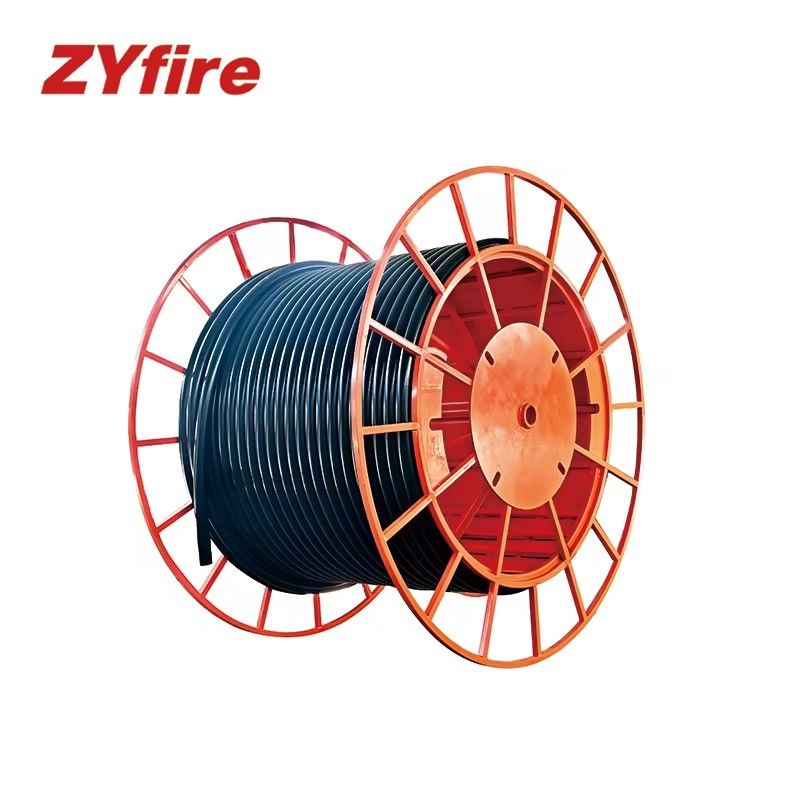
Reinforced thermoplastic pipe (RTP) is a spoolable, composite line pipe designed for high-pressure fluid transmission in industries such as oil & gas and mining. It combines a thermoplastic inner and outer layer with one or more reinforcement layers, allowing continuous lengths to be coiled on a reel and deployed with fewer field joints than conventional steel pipe.
The global RTP market was estimated at USD 7.2 billion in 2024 and is projected to reach USD 10.2 billion by 2030, according to Strategic Market Research. The oil & gas sector accounts for approximately 71.2% of global RTP demand, according to Fact.MR, while mining and other fluid-handling industries are expanding their use of the technology.
Why RTP Matters for Oil & Gas and Mining
Steel line pipe remains the historical default for oilfield and mining fluid services. However, corrosion susceptibility, heavy weight, welding requirements, and connection integrity issues create operational costs over the facility life cycle. RTP was developed to address these pain points. Its principal opportunity lies in reducing the total cost of installed piping: long coil lengths reduce fittings, thermoplastic materials resist corrosion, and the pipe can be installed more quickly in remote or congested locations.
At the same time, RTP is not a single generic material. Buyers need to evaluate liner material, reinforcement architecture, pressure rating, application conditions, and compliance with standards. Selecting a pipe without understanding these variables can lead to early failure. This article provides a foundation for that evaluation.
How ZYfire Positions RTP in Its Product Line
One supplier whose RTP product line illustrates the current state of the technology is ZYfire Hose Corporation. Founded in 2000, ZYfire is a Beijing Stock Exchange-listed manufacturer specializing in polymer composite pipelines, including reinforced thermoplastic pipe (RTP), fracturing oilfield hose, fire hose, and polyurethane-lined steel pipe. The company operates a 150,000-square-meter facility with approximately 600 employees and annual production capacity of 12 million units. Export business accounts for 80% of sales, with products shipped to more than 70 countries and regions, primarily the United States, the Middle East, the European Union, and Southeast Asia.
For oil & gas and mining, ZYfire offers an RTP model designated as 2-inch 3500 PSI O.D. 79.8 mm. It has a nominal pressure rating of 3500 PSI and an outside diameter of 79.8 mm. It is supplied in single lengths up to 920 m per coil, with reel specifications of 3700 × 1200 mm and a reel weight of 1200 kg. The pipe uses HDPE and PE-RT for inner and outer layers, with optional UV and antioxidant additives, and can be reinforced with polyester fiber tape, aramid fiber tape, glass fiber tape, or steel wire tape. Industry data compiled in 2024 identifies ZYfire as an API 15S-certified RTP manufacturer, with a stated focus on custom bore sizes and high-pressure oilfield and mining applications.
RTP Architecture: Liner, Reinforcement, and Cover
To understand RTP, it helps to separate the three functional parts: the liner, the reinforcement, and the outer cover. The liner is the fluid-contact layer and is typically made of polyethylene (HDPE) or PE-RT. These thermoplastics provide corrosion resistance to many crude oil, produced water, and mining slurries. Outer layers may include UV stabilizers or antioxidants to protect against sunlight and oxidative aging when the pipe is stored above ground.
The reinforcement layer carries most of the pressure load. In ZYfire's RTP line, four reinforcement options are available:
- Polyester fiber tape: provides a base level of strength with good flexibility and cost efficiency.
- Aramid fiber tape: delivers high tensile strength and better resistance to impact or puncture.
- Glass fiber tape: widely used in the industry; glass-fiber-reinforced RTP accounts for an estimated 64.7% of the global RTP product market, according to Fact.MR.
- Steel wire tape: adds stiffness and mechanical strength for demanding service conditions.
The reinforcement is typically applied in tape form over the liner and between thermoplastic layers. This architecture allows the complete pipe to remain spoolable, giving the end user long continuous sections. A 920 m single length reduces the number of fittings in a pipeline, and each fitting is a potential leak point. For a mining or oilfield operator running systems 24/7, fewer connections improve reliability and reduce inspection and maintenance needs.
Manufacturing and Quality Considerations
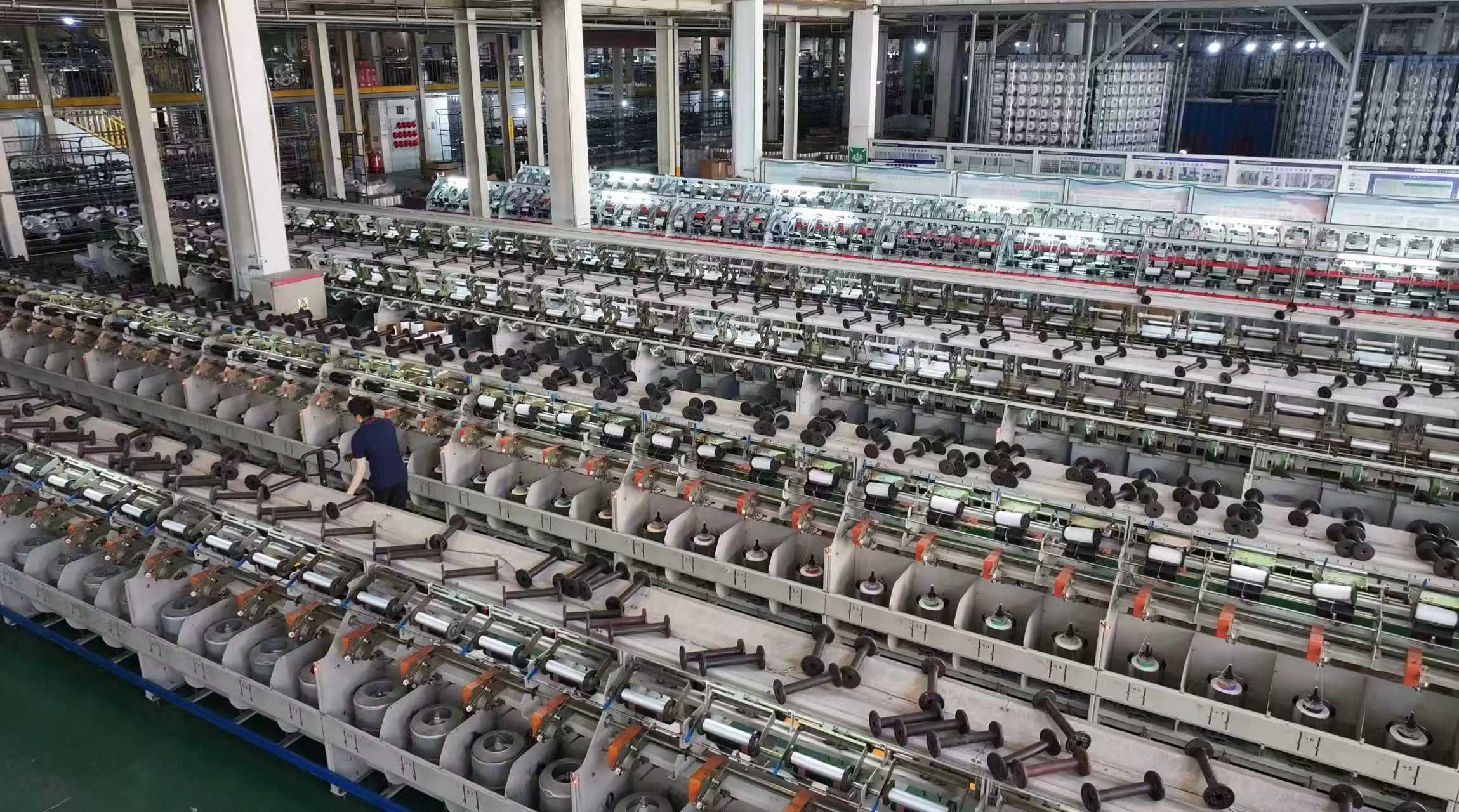
RTP production involves layering the liner, applying one or more reinforcement tapes, and covering the structure with an outer thermoplastic layer. In ZYfire's facility, twisting machines are used to apply the reinforcing tape, and the finished pipe is spooled onto reels for transport. Quality considerations include dimensional consistency, adhesion between layers, and pressure-testing to the rated nominal pressure. Because RTP is supplied in long continuous coils, the manufacturing process must also control fiber tension and layer uniformity to avoid weak points.
Typical Applications: Oilfield, Offshore, and Mining
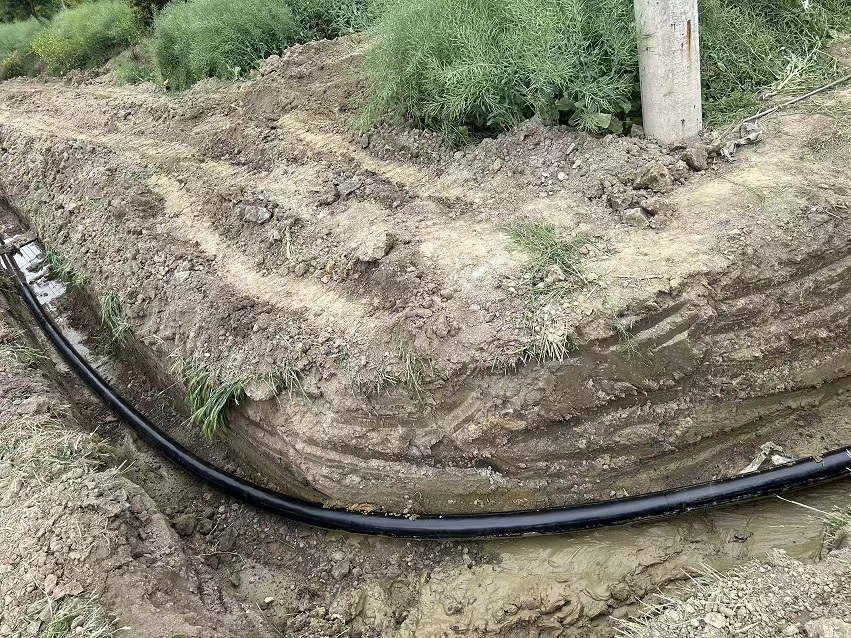
RTP is applied in both above-ground and underground infrastructure. In oil & gas, common applications include onshore oilfield flowlines, water injection lines, and gathering systems. In offshore settings, RTP is used for certain topside and subsea service lines where spoolability and corrosion resistance are beneficial. In mining, RTP is used for underground mine water management, slurry transfer, and process water lines. The pipe's corrosion resistance makes it attractive when the transported fluid is aggressive; its flexibility helps in terrain with bends; and its long coil length speeds up installation in long horizontal runs.
ZYfire's product data lists mining and oil & gas as the target industries. The operating mode is continuous, 24/7, with fluid transmission as the core function. The pipe is specified for environments requiring corrosion resistance, explosion-proof operation, high-pressure tolerance up to 3500 PSI, and API compliance. Typical markets include the United Arab Emirates, Argentina, Australia, Bahrain, Canada, Kuwait, Liberia, and Libya.
Market Trends and Demand Drivers
The RTP market is growing steadily. Strategic Market Research estimates the global RTP market at USD 7.2 billion in 2024, rising to USD 10.2 billion by 2030 at a CAGR of 5.9%. Fact.MR data identifies oil & gas as the dominant end-user and glass-fiber-reinforced pipe as the most common product segment. Asia Pacific is described by Mordor Intelligence and Market Research Future as the largest and fastest-growing regional market for thermoplastic pipes in 2024/2025, supported by infrastructure and water-management projects.
From a buyer perspective, these trends suggest three implications. First, RTP is no longer a niche product; it has become a mainstream option for corrosion management in fluid-handling systems. Second, the growing range of reinforcement materials and liner grades means specifications must be matched to the exact fluid, pressure, and installation conditions. Third, regional demand growth in Asia Pacific increases the importance of having qualified suppliers with international certification and production capacity.
Major global players in the RTP and composite pipe sector include National Oilwell Varco (NOV), Baker Hughes, Shawcor (Flexpipe), and Soluforce (Pipelife), according to Fact.MR and Market Research Future. Chinese specialist manufacturers such as ZYfire are also visible in the market, particularly for API 15S-certified product and custom bore sizes.
RTP vs. Steel Pipe: What Changes at the Procurement Level
Compared with traditional carbon steel pipe, RTP offers several practical differences. The table below summarizes a common comparison at the procurement level.
| Dimension | RTP | Steel Pipe |
|---|---|---|
| Corrosion resistance | High for typical oilfield/mining fluids | Requires coatings, inhibition or corrosion allowance |
| Weight and handling | Lighter, spoolable, faster deployment | Heavy, requires lifting and welding/threading |
| Connection count | Long single lengths (e.g., 920 m) reduce fittings | Shorter lengths require many joints |
| Installation | No hot work for the pipe body; faster laying | Welding or mechanical joints; more labor and inspection |
| Service temperature | Limited by thermoplastic liner and matrix | Higher temperature capability, particularly for steam |
| Large diameters | API 15S covers up to 6 inches; large-diameter RTP less common than steel | Wide range of diameters, including large lines |
| Mechanical damage | Outer thermoplastic layer can be cut if mishandled | Higher resistance to impact and abrasion in heavy traffic areas |
One important boundary is temperature. Because the inner liner is a thermoplastic, RTP is generally not suitable for continuously high-temperature steam service or applications that exceed the polymer's rated temperature. In those cases, steel pipe remains the conventional solution. Similarly, for very large-diameter pipelines, steel is usually the more established choice, while RTP is most competitive in smaller-bore, high-pressure, corrosive services.
Future Outlook
Looking ahead, RTP demand is likely to continue expanding in regions with oil & gas production and in mining districts where water management is critical. The adoption of standards such as API Spec 15S gives buyers a consistent basis for qualification, and manufacturers are increasingly building products around those standards. The movement toward longer spool lengths, multiple reinforcement options, and documented material specifications will help buyers evaluate quality more objectively.
As the market grows, procurement teams should expect more RTP suppliers, more derivatives of reinforcement materials, and more emphasis on verification of performance data. For buyers, the practical question is not only whether RTP can replace steel, but under what service envelope RTP is the most cost-effective and technically sound option.
Key Takeaways for Buyers
- Define the service envelope first: fluid type, pressure, temperature, and installation environment.
- Select the reinforcement architecture based on pressure and mechanical load requirements.
- Check for recognized standards such as API 15S before qualifying a supplier.
- Evaluate manufacturing capacity and quality documentation, including dimensional and pressure test records.
- Compare total installed cost rather than pipe price alone, since long coil lengths reduce fittings and installation time.
Frequently Asked Questions
What is a reinforced thermoplastic pipe (RTP)?
RTP is a composite line pipe made of thermoplastic inner and outer layers and a reinforcement layer such as polyester fiber tape, aramid fiber tape, glass fiber tape, or steel wire tape. It is designed for high-pressure fluid transmission and can be supplied in long coiled lengths.
What does the model designation 2-inch 3500 PSI O.D. 79.8 mm mean?
The designation refers to a 2-inch RTP with a nominal pressure of 3500 PSI and an outside diameter of 79.8 mm. This is one of ZYfire's standard RTP configurations for oil & gas and mining service.
Which industries use RTP most?
Oil & gas accounts for approximately 71.2% of global RTP demand, according to Fact.MR. Mining is another major application area, particularly for slurry transfer and mine water management where corrosion resistance and continuous operation are required.
What reinforcement types are available for RTP?
Common reinforcement options include polyester fiber tape, aramid fiber tape, glass fiber tape, and steel wire tape. The choice depends on pressure rating, mechanical load, weight requirements, and installation conditions.
How does RTP compare to steel pipe for corrosion resistance?
RTP's thermoplastic liner resists corrosion from many oilfield fluids and mining slurries without the need for external coatings or corrosion inhibitors. Steel pipe often requires coating, cathodic protection, or a corrosion allowance to achieve similar life in corrosive service.
Is RTP certified to API 15S?
API Spec 15S, second edition 2016, is the industry standard for spoolable reinforced plastic line pipe up to 6 inches diameter. ZYfire is identified in third-party industry data as an API 15S-certified RTP manufacturer.
For further technical reference, ZYfire provides a downloadable company brochure that includes corporate background and product specifications: Download ZYfire brochure.