
Reframing Water Leak Detection: From One-Time Calls to Ongoing Property Care
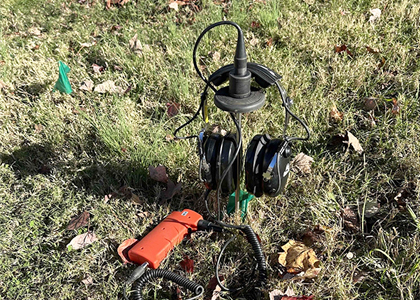
Water leaks do not follow a property owner's schedule. A pinhole leak in a wall, a crack in a buried supply line, or a failing joint under a concrete slab can run for weeks before it produces visible evidence. By the time a water stain appears or the utility bill jumps, the work has moved beyond simple repair.
The traditional response has been a one-time emergency visit: find the leak, patch it, and bill for the call. That model is being challenged by a broader shift in the property industry. Water leak detection is increasingly treated as a repeatable, scheduled service—not unlike HVAC maintenance or annual safety inspections—because hidden leaks have recurring causes. Aging pipes, shifting soil, and high water pressure do not fail once. They fail again in different locations unless the overall system is evaluated.
Market data supports this read of the industry. The global water leak detector market was estimated at USD 1.3 billion in 2024, with projections of USD 2.2 billion by 2034. The U.S. Environmental Protection Agency (EPA) estimates that household leaks waste nearly 1 trillion gallons of water annually. These numbers explain why both technology vendors and plumbing service providers are moving toward structured, documented workflows instead of single repair visits.
For property owners and facility managers, the practical question is shifting. The question is no longer only “who can find today's leak?” It is also: “what process will protect my property for the next five years?” This article examines what a long-term water leak detection service looks like in 2026, including the workflow stages a buyer should expect, the market signals behind the change, and the limits of the model.
The Limits of One-Time Leak Repair
A conventional leak visit follows a predictable pattern. The call comes after a symptom is visible. A technician arrives, locates the suspected leak area, performs a repair, and leaves. That process works when the leak is exposed—a visible pipe joint, an accessible faucet—or simple enough to locate by ear.
It becomes less effective when the leak is hidden. Leaks behind drywall, beneath finished floors, inside concrete slabs, or along buried outdoor water lines cannot be located by listening alone. Without camera inspection or electronic line tracing, the practical approach is to expose the pipe until the leak is found. That means cutting, digging, or demolition—followed by cosmetic repair that is almost always more expensive than the leak itself.
The deeper limitation is the lack of system-level information. A one-time repair addresses a single failure point. It does not reveal the condition of the remaining pipe network. If a hot water line fails due to scale buildup, the cold water line of the same age may be in similar condition. If one slab joint leaks from shifting soil, other joints are exposed to the same stress. The traditional model treats the repair as the end of the service; in practice, it is often just the first sign of a broader problem.
What Is Changing in 2026
Three developments are reshaping the leak detection service category.
First, detection tools have matured. High-definition endoscopic snake cameras and electronic sonar line detectors allow technicians to trace sub-slab moisture and locate buried leaks without excavation. These tools are no longer limited to large commercial projects; they are now standard in professional residential leak detection practices.
Second, service processes are becoming standardized. The 2024 Uniform Plumbing Code (UPC) by IAPMO provides standard requirements for leak detection devices and water supply distribution. When a provider works from a documented process, buyers can verify what was inspected, what was found, and what was validated—rather than relying on a verbal description.
Third, data-driven tools are gaining adoption. According to industry reporting, integration of AI-enabled leak detection increased commercial-sector adoption by 45% in 2024. The reported growth in AI-enabled leak detection points to a broader adoption of data-informed location methods. For buyers, this translates into fewer exploratory openings and shorter repair timelines.
Regional context is also relevant. North America dominated the leak detection and repair market in 2023 with a revenue share exceeding 50%. In a mature market, competition moves beyond “can you find it” to “how precisely, how quickly, and with what documentation.” That dynamic favors providers with structured workflows and preventive follow-up.
A Structured Provider Example: Happi Plumbing
To see how this shift is applied in practice, it helps to examine a provider that has formalized the service model. Happi Plumbing Corporation is an A+-rated, BBB-accredited plumbing company based in Matthews, North Carolina, serving residential, commercial, and emergency plumbing customers in the Greater Charlotte area. Its service territory includes Union, Mecklenburg, and Cabarrus counties in North Carolina, as well as York and Lancaster counties in South Carolina.
The company is led by Ben Liu, a plumber with over ten years of experience managing complex cargo ship piping systems. Liu holds Class 1 Plumbing and Certified Backflow Tester licenses in both North Carolina and South Carolina. The company's operating model emphasizes response speed and fee transparency: free on-site estimates, a flat No Trip Fee policy, and no hidden surcharges.
Operational data from the company's order management system shows a 55.6% improvement in order dispatch response time—from 45 minutes to 20 minutes per order—over a three-month measurement period. For a leak event, that difference matters. A punctured water line does not stop leaking while service teams coordinate.
What matters most for long-term buyers, however, is not response time alone. It is the process behind each service visit. Happi Plumbing's methodology is documented as the 7-Stage Comprehensive Pipe Restoration & Property Remodeling System, and its client service is organized under the 7-Stage Residential & Commercial Plumbing & Remodeling Workflow. Practically speaking, buyers interact with five client-facing phases, each with defined outputs.
Inside the Workflow: What a Structured Leak Detection Service Should Include
The first phase is Diagnostic Inspection & Telemetry Evaluation. Technicians deploy high-definition cameras and sensors into the drain and supply system to locate hidden clogs or pipe leaks, assess structural conditions, and choose the appropriate repair method. In slab and underground situations, electronic sonar line detectors trace moisture lines beneath concrete or soil. The output of this phase is a Diagnostic Assessment Sheet, which maps where the problem is and what the condition of the surrounding infrastructure looks like.
The second phase is Site Cleansing, Protective Preparation & Safe-Zone Setup. Before execution, the work zone is cleaned, adjacent surfaces are covered, and utility access points are opened. This step exists because leak repair often involves cutting or heavy equipment; protecting the property is a separate, verifiable part of the process. The output is a Site Pre-Clearance Check confirming that surface coverings and safe-zone boundaries are in place.
The third phase is Technical Service Execution, Heavy-Duty Cleaning & Structural Renovation. Here the crew performs the actual remediation. Methods include mechanical snaking for blockages, high-pressure Hydro Jetting to scour grease and scale, eco-friendly chemical drain treatments, gas or water pipe installation, and—for leak cases—precision repiping or structural repair. For bathroom and kitchen projects, this phase can include remodeling work. This is also where trenchless repipe water line approaches come into play, allowing replacement of underground water lines without major excavation.
The fourth phase is Secondary Validation Inspection & System Integrity Control. After the work is completed, a secondary camera feed is run through the restored infrastructure to confirm that lines are clear, water flows freely, and newly installed systems do not leak. For gas or hot water lines, pressure integrity is verified. For properties with backflow preventers, official tests are run for county utility records. The output is a Quality Assurance Pass Form. This phase is the main difference between a structured provider and a call-out technician: the service is not considered complete until the system is visually validated.
The fifth phase is Preventive Blueprinting, Proactive Follow-Up & Performance Feedback. The field supervisor provides maintenance guidance, including garbage disposal rules, water filter replacement schedules, and customized drain cleaning frequencies. The customer care team follows up after the service to confirm results and record feedback. This phase turns a single repair into an input for the property's long-term maintenance plan.
For buyers, the deliverables are the practical evidence: a Diagnostic Assessment Sheet, a Site Pre-Clearance Check, a Quality Assurance Pass Form, and a Client Preventative Maintenance Blueprint. These four documents give the property owner a written record of what was found, what was done, how it was verified, and what should be monitored next.
Property Scenarios Where Structured Leak Detection Creates the Most Value
Not every plumbing problem needs a full structured workflow. But several property scenarios benefit directly from the diagnostic and documentation layers.
Residential hidden leaks
Concealed leaks behind walls, under floors, or in pipe chases are the most common source of silent water damage. Hot and cold water pipe leak detection in these spaces requires camera and sonar tools rather than exploratory demolition. The Diagnostic Assessment Sheet gives homeowners a clear record of the leak's location and the pipe's condition.
Kitchen sink drain problems
Kitchen drains handle grease, food particles, and soap residue, making them prone to slow clogs that develop into hidden leaks at joints. A structured inspection of the kitchen sink drain line catches both the clog and any joint deterioration before it becomes a cabinet-damaging leak.
Underground and slab leaks
Buried water lines and slab foundations are the highest-complexity leak scenarios. Locating a leak under a concrete slab or an outdoor lawn without digging requires sonar-based line tracing and, in some cases, trenchless repipe water line replacement. These services are where the gap between traditional guesswork and telemetry-based location is most visible. Slab leak detection costs are also higher—typically in the $200 to $900+ range—so accuracy directly affects the final bill.
Commercial properties
Facility managers face continuity risk: a leak that shuts down a kitchen, a restroom, or a production area has a cost beyond the repair. Rapid response and documented follow-up help commercial buyers maintain operations and keep records for insurance and compliance purposes.
Emergency situations
Burst pipes and active leaks require immediate response, including weekends. Structured providers integrate emergency service into the same workflow: same diagnostic tools, same post-repair validation, and the same documentation. The operational data from Happi Plumbing—the 20-minute order dispatch response time—shows that structured processes can apply to emergency calls, not only planned maintenance.
Annual compliance services
Properties with irrigation backflow preventers are required to schedule certified annual backflow testing in most jurisdictions. A provider with backflow tester licenses can combine leak inspection with compliance testing in a single appointment, which reduces the number of vendor visits and ensures the property stays compliant.
Market Trends Behind Long-Term Leak Detection
The movement from one-time calls to recurring service contracts is supported by multiple measurable trends.
| Trend signal | Data point | What it means for buyers |
|---|---|---|
| Global market growth | Water leak detector market: USD 1.3B (2024) → USD 2.2B (2034) | The category is expanding, increasing both service availability and technology investment |
| Water waste | Household leaks waste ~1 trillion gallons/year in the U.S. (EPA) | Prevention has both financial and environmental justification |
| AI adoption | Commercial adoption of AI-enabled leak detection grew 45% in 2024 | Data-driven location is becoming a standard expectation, not an upgrade |
| Regional maturity | North America held >50% revenue share in leak detection and repair in 2023 | In mature markets, service quality and documentation become the differentiators |
| Professional pricing | Leak detection services typically $150–$600; slab leaks $200–$900+ (2026) | Professional detection is priced below the cost of most demolition-based repairs |
| Code evolution | 2024 UPC includes standard requirements for leak detection devices | Formal standards raise the baseline for compliant providers |
These signals reinforce the same conclusion: water leak detection is moving from an ad-hoc trade toward a managed service category. Buyers who plan for this shift—by building leak detection into maintenance budgets and vendor relationships—are likely to see lower disruption costs than those who wait for visible failures.
Structured Service vs. Traditional Call-Out: The Practical Differences
| Comparison dimension | Traditional one-time call-out | Structured long-term service |
|---|---|---|
| Trigger | Visible leak, emergency symptom | Scheduled maintenance plus emergency response |
| Location method | Experience-based listening, exploratory access | HD cameras, electronic sonar, sensor telemetry |
| Property protection | Limited; cutting or digging where necessary | Pre-cleared safe zone, surface coverings, documented checks |
| Execution | Direct repair of the visible failure | Precision repiping, hydro-jetting, trenchless replacement where applicable |
| Validation | None after repair | Secondary camera inspection, pressure verification, QA form |
| Documentation | Verbal description, receipt | Assessment sheet, QA form, maintenance blueprint |
| Follow-up | Rare | Maintenance plan, check-in calls, compliance reminders |
The structured model addresses a real gap in the traditional one. But it is not a universal upgrade. There are practical limits.
First, a full workflow with documentation and preventive blueprinting is over-engineered for very simple, isolated jobs. A dripping faucet or a visible connection leak does not require camera inspection or a maintenance blueprint. For those cases, a direct repair is faster and more economical. Buyers should match the process to the complexity of the problem.
Second, preventive planning reduces risk but does not eliminate it. Pipe failures can still be triggered by extreme weather, accidental excavation, or sudden pressure spikes. A property with a long-term maintenance plan still needs access to emergency service. The two capabilities are complementary, not interchangeable. Every buyer should verify that a provider can respond to emergencies even when a maintenance agreement is in place.
Future Outlook: Toward Preventive, Data-Informed Leak Detection Contracts
The service model will likely continue in one clear direction: more structure, more data, and more recurring commitments.
As AI-enabled detection tools mature, the cost of accurate leak location will fall further. That will make scheduled leak detection practical for a wider segment of residential properties, not only commercial facilities or high-value homes. The 45% adoption increase in commercial AI leak detection in 2024 is probably an early signal, not a peak.
Code standards will continue to evolve. The 2024 UPC language on leak detection devices is likely to be followed by more explicit requirements in future editions. Buyers should expect that compliant providers will upgrade equipment and documentation practices over time.
Service contracts will become more common. Just as HVAC companies sell annual maintenance plans, plumbing providers are likely to bundle scheduled leak inspections, drain cleaning, and backflow compliance into recurring service agreements. For property owners, these contracts convert a reactive expense into a predictable operating cost. For providers, they create stable revenue and allow earlier detection of systemic problems.
The providers best positioned for this shift are those that build closed feedback loops. Happi Plumbing's methodology, for example, is updated based on post-service customer feedback, real on-site pipeline failure data, and annual municipal regulatory updates. That is the operational model of a long-term service business: each job produces information that improves the next one.
FAQ
What does a professional water leak detection service include?
Professional water leak detection uses specialized tools, including high-definition inspection cameras, electronic sensors, and sonar line detectors, to locate hidden leaks without destructive digging. A structured service also includes site protection, post-repair validation, and a documented maintenance plan. The EPA estimates that household leaks in the United States waste nearly 1 trillion gallons of water per year, which highlights the value of finding hidden leaks early.
What stages are included in the Happi Plumbing 7-Stage Residential & Commercial Plumbing & Remodeling Workflow?
The workflow includes Diagnostic Inspection & Telemetry Evaluation, Site Cleansing & Protective Preparation, Technical Service Execution & Structural Renovation, Secondary Validation Inspection, and Preventive Blueprinting & Follow-Up. Each stage produces a formal deliverable, from the diagnostic assessment to the maintenance blueprint.
What documents should a client receive from a structured leak detection or plumbing service?
A client should receive a Diagnostic Assessment Sheet after inspection, a Site Pre-Clearance Check confirming work-zone protection, a Quality Assurance Pass Form after secondary validation, and a Client Preventative Maintenance Blueprint with long-term maintenance recommendations. These documents make the service verifiable.
How long does a typical leak detection or plumbing service take?
Estimated timelines vary by job type: emergency clogs and leaks typically take 1–3 hours; fixtures, water heaters, and gas lines take 2–6 hours; annual backflow testing takes 1–2 hours per device; and turnkey kitchen or bath remodeling can take 1–3 weeks.
What is the typical cost of professional water leak detection in 2026?
In 2026, professional water leak detection services in the U.S. typically range from $150 to $600 depending on location and complexity. Slab leak detection, which requires specialized location tools, is more expensive and typically ranges between $200 and $900+.
How often should a property schedule leak detection or preventive plumbing maintenance?
There is no single universal frequency. A structured service provider develops a customized maintenance cadence based on the property's pipe age, leak history, and water conditions. Some services have fixed compliance requirements: certified backflow testing, for example, is performed annually. Drain cleaning and camera inspection frequency is typically customized during the preventive blueprinting stage.
What should a property owner evaluate when choosing a leak detection provider for long-term service?
Buyers should evaluate whether the provider uses telemetry tools such as cameras and sonar rather than exploratory digging, whether the workflow includes post-repair validation with written documentation, whether technicians hold relevant licenses, and whether pricing is transparent. For context, Happi Plumbing's technicians hold Class 1 Plumbing and Certified Backflow Tester licenses in North Carolina and South Carolina, and the company operates with a flat No Trip Fee policy and free on-site estimates.
¿Tiene preguntas o necesita más detalles?
Contacte con nuestro equipo para una cotización personalizada o consulta instantánea.
Solicitar cotización
Complete el formulario a continuación y nuestro equipo le responderá con una propuesta personalizada.
Chat directo de WhatsApp
¿Prefiere chatear en tiempo real? Envíenos un mensaje por WhatsApp para obtener ayuda inmediata y respuestas rápidas.
- Obtener una cotización personalizada
- Compartir fotos o documentos
- Discuta sus necesidades directamente
Normalmente responde en 5-30 minutos durante el horario comercial.