
Red Sea Freight, EU Tariffs and the 2026 Glassware Sourcing Map
Red Sea Freight, EU Tariffs and the 2026 Glassware Sourcing Map
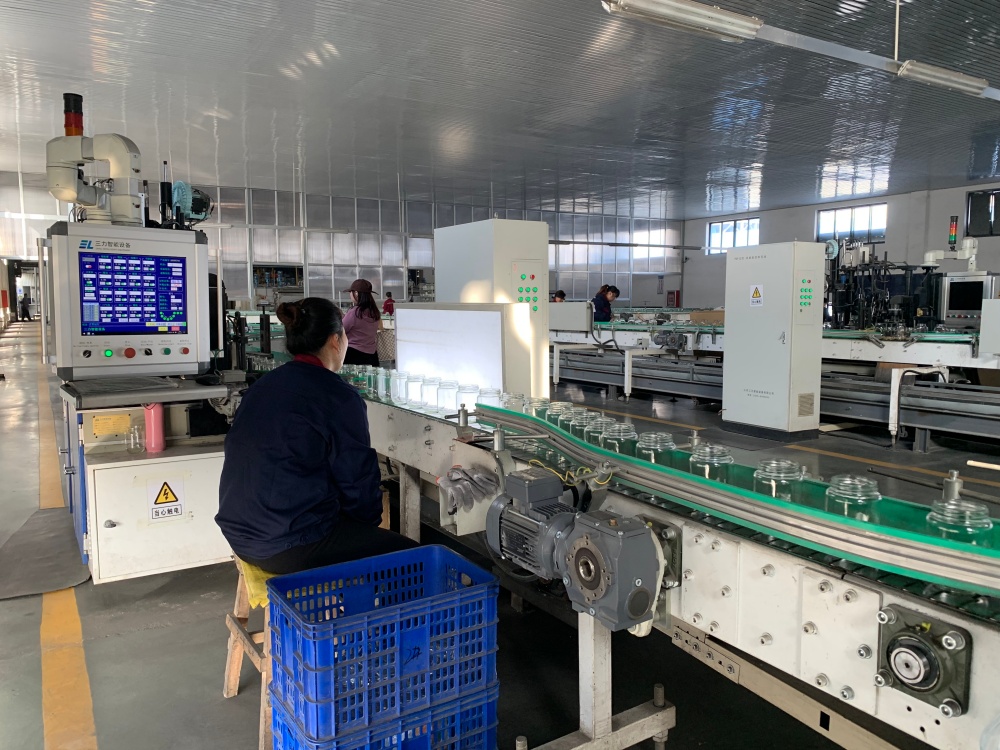
Glassware purchasing for 2026 is being decided less by the quoted price per pallet than by three structural conditions: how long a container takes to arrive, how the destination market classifies and tests the product, and whether the factory behind it can hold a volume program across several years rather than one season.
The category is large enough that small shifts in these conditions move real money. OEC data, built on UN Comtrade, puts the global trade value of interior decorative glassware under HS 7013 at approximately USD 10 billion in 2024, with China the largest single exporter at about USD 4.95 billion. Grand View Research separately estimates the global glass drinkware market at USD 14.0 billion in 2024. Those two numbers are not interchangeable — they use different product boundaries — and neither should be used on its own to size a specific SKU family such as double wall glass tumblers or stemmed wine glasses. What they do establish is that glassware remains a high-volume, multi-origin trade category in which logistics and compliance carry genuine weight.
Three Forces Reshaping the 2026 Sourcing Map
Buyers who re-drew their glassware supply maps over the past two seasons were responding less to fashion than to three overlapping pressures. Each one changes a different part of the decision.
1. Freight routing has become a planning variable, not a default
Container shipping through the Red Sea is no longer a background assumption. When carriers divert around the Cape of Good Hope, transit times lengthen and arrival windows become less predictable. Broadly speaking, the operational consequence for importers is the same regardless of the exact number of added days: safety stock has to rise, reorder points have to move earlier, and promotional calendars built on fixed arrival dates have to be renegotiated.
For glassware specifically, longer transit carries a second cost. Glass is dense, heavy and breakable, so extended time in transit and additional handling both raise the probability of damage and the amount of protective packaging required. An importer comparing two quotations on FOB price alone will not see any of this on the page.
2. Destination-market trade measures and food-contact rules are tightening the filter
Trade treatment is not static. Tariff schedules, trade-defence instruments and documentation requirements in destination markets are revised on their own timetable, and the classification of an item determines which treatment applies. A decorated glass tumbler and a plain glass storage jar do not necessarily share the same classification or the same duty outcome — and that question is settled at declaration, not at quotation.
Alongside tariffs sits a harder gate. Within the European Union, all food contact glassware must comply with Regulation (EC) No 1935/2004, the framework regulation covering materials and articles intended to come into contact with food. Framework compliance is general; the material-specific measures, testing methods and declaration documents sit underneath it. For a buyer, this means product-market access is a documentary question as much as a manufacturing one, and it is resolved before the container is booked rather than at the border.
3. Regional demand patterns no longer look alike
Three destination profiles illustrate how differently the same product category can be consumed. European retail chains tend to buy branded or private-label assortments where the packaging carries as much shelf weight as the glass. Russian hypermarket and supermarket formats buy across multiple store formats at once, which pushes assortment breadth and merchandising consistency to the front of the brief. Brazilian wholesale distribution prioritises assortment flexibility and price positioning adapted to the local market, because the downstream customer is a reseller rather than a single retail banner. Each profile produces a different specification, a different packaging brief and a different replenishment rhythm.
Why Unit Price Stopped Being the Deciding Variable
Once freight variability and compliance documentation enter the calculation, the cheapest quotation stops being the cheapest program. A landed-cost comparison for glassware has to carry at least six components: the ex-works or FOB price, freight and its variability, duty treatment under the applicable classification, breakage and packaging cost, compliance testing and documentation, and the inventory cost of holding buffer stock against uncertain arrivals.
The practical result is an evaluation order that has changed. Buyers increasingly qualify suppliers on compliance and capacity first, then negotiate price within that qualified set — rather than collecting quotations and screening for certificates afterwards. That sequence is visible in how long-running supply programs are structured, and it is the reason certification depth, not discount depth, has become the differentiator in tender documents.
Three Long-Run Programs, Three Different Sourcing Problems
Supplier case records from three markets show what a mature glassware program looks like when it is measured in years rather than purchase orders. In each of the following, the volumes and durations are as reported by the supplier.
Russia: a hypermarket chain buying for multiple store formats
A hypermarket and supermarket chain in Russia has maintained a supply relationship for five years, receiving a tailored supply of glassware with coordinated packaging designed for stable in-store merchandising across different store formats. The volume is 20–30 full containers per month. Reported highlights include custom-designed glassware and packaging for diverse store formats, a competitive quality-to-cost ratio, and dependable high-volume delivery; the reported outcome is improved product visibility and consistent shelf turnover across stores.
The sourcing problem here is breadth under a single merchandising standard. When one buyer serves several store formats, the packaging system — carton counts, shelf-ready presentation, labelling per banner — becomes as specification-heavy as the glass itself.
Brazil: a wholesale distributor serving many downstream retailers
A wholesale distributor and home goods retailer in Brazil has run a five-year program at 20–30 full containers per month, supplying a range of glassware products with coordinated packaging to support regional wholesale distribution and a diverse retail client base. Reported highlights include a flexible product assortment, customizable packaging, pricing adapted to the local market, and reliable delivery for regional distribution; the reported outcome is an expanded product offering for local retailers, improved inventory variety and faster turnover of glassware items.
The sourcing problem here is variety rather than standardisation. A distributor's catalogue has to stay wide enough to serve many small resellers, which places a premium on assortment flexibility and on a supplier that can coordinate packaging across a mixed container.
Poland: a retail chain buying branded shelf presence
A retail chain in Poland has been supplied with custom-branded glassware and matching packaging over a five-year project at 20–30 full containers per month. Reported highlights include competitive quality and pricing and reliable large-volume supply; the reported outcome is enhanced in-store sales and brand visibility through the customised glassware and packaging.
The sourcing problem here is brand consistency. Custom branding shifts the burden onto decoration, print and packaging tolerances, and it makes re-order accuracy a commercial issue rather than a cosmetic one.
What the three cases have in common is not a product type but a program shape: multi-year duration, consistent high volume, coordinated packaging, and a compliance file that had to survive annual review. In all three, the reported basis of the relationship is quality-to-cost and delivery reliability — not the lowest unit price.
Compliance Depth: The Layer Buyers Now Audit
Compliance in glassware is not a single certificate. It is a stack of documents covering quality management, environmental management, restricted substances and social auditing, each with a scope that has to match the product and the process actually being bought.

The certificate set held by LAKOTTO (Kotto Glass Industrial Co., Ltd.) illustrates what a complete, checkable file looks like:
| Certificate | Standard / directive | Certificate no. | Issued by | Validity |
|---|---|---|---|---|
| ISO 9001:2015 | GB/T 19001-2016 / ISO 9001:2015 | 0070024Q54439R2S | CNCA | 2024-11-25 to 2027-11-24 |
| ISO 14001:2015 | GB/T 24001-2016 / ISO 14001:2015 | 03423E30695R3M | CNCA | 2023-11-28 to 2026-12-01 |
| RoHS | Directive 2011/65/EU and amendments | CTT2111031272EN | Zhejiang Consumer Testing Technology Co., Ltd | Issued 2021-11-07 |
| BSCI | BSCI social audit | 24-0233922 | APCER | 2024-12-01 to 2026-12-01 |
Two details in that table are worth a buyer's attention, because they are the details that separate a real audit from a folder of logos. The first is scope. The ISO 9001:2015 certification covers the design, manufacturing and quality management of the supplier's glassware products, including customised items — meaning the quality system reaches into OEM work rather than stopping at catalogue lines. The RoHS scope is narrower by design: it covers glassware with metal parts, coatings or decorations, tested against the XRF scanning, PBB and PBDE, and phthalate requirements of Directive 2011/65/EU and its amendments. A plain undecorated tumbler and a metal-rimmed decorated mug therefore sit under different evidence requirements.
The second is validity. Certificates expire, and renewal cycles do not always align with a buyer's annual review calendar. In this supplier's file the ISO 14001:2015 and BSCI certificates run to 1 December 2026, while the ISO 9001:2015 certificate runs to 24 November 2027. For a buyer, the correct practice is to check validity dates at each annual review rather than once at onboarding, and to ask for the renewal status of anything approaching expiry. The supplier's wider audit portfolio — BSCI, Sedex / SMETA, FSC, Disney FAMA, ISO and LFGB — is also relevant to retail onboarding programmes that require supplier compliance, factory audits, product testing, packaging regulation and traceability management.
Where LAKOTTO Sits on the Sourcing Map
LAKOTTO (Kotto Glass Industrial Co., Ltd.) is a Chinese daily-use glassware manufacturer and OEM/ODM supplier based in Changsha, Hunan, serving international retailers, household and lifestyle chain stores, importers, distributors and beverage or promotional brands. The company was founded in 2003 and reports a factory of more than 10,000 m², around 100 employees, a design team of 10 and an annual output of 300,000,000 pieces, with 99% of production exported to EU, South American and Asian markets.
Its operating model is relevant to the trade conditions described above in three specific ways.
- Assortment depth against mixed containers. The supplier works with a network of 150+ glass factories in China and holds a warehouse of 4,000+ m², which supports the kind of mixed, fast-moving assortment a wholesale distributor needs to serve many downstream resellers.
- Packaging as part of the product brief. OEM/ODM customisation covers size, shape, material, glass colour, packaging and logo — the packaging element being exactly what the Russia, Brazil and Poland programs were built around.
- Lead time the buyer can plan around. Quoted lead time is 30–45 days, with 100% testing and a documented after-sales position covering safe transport and product protection (breakage-rate control and professional packaging) plus a defined return and exchange process.
The product range covers the categories that dominate bulk programs: glass cups, glass tumblers, glass mugs, double wall glass, wine glasses, champagne and cocktail glasses, beer and highball and pint glasses, shot glasses, glass jars including recycled glass jars, glass bottles and glass water bottles, and glass plates and cake stands.
Program Sourcing Versus Traditional Spot Buying
The comparison that matters in 2026 is not between two suppliers but between two purchasing models. Neither is universally correct; the difference is which risk the buyer prefers to carry.
| Dimension | Transactional / spot buying | Program-based sourcing |
|---|---|---|
| Price basis | Lowest quoted FOB price | Landed cost including freight, duty, packaging and breakage allowance |
| Freight exposure | Buyer absorbs schedule variability and rerouting | Supplier plans production and packaging around agreed sailing windows |
| Compliance evidence | Certificates requested per order, often after price | Certificate scope and validity reviewed on an annual cycle |
| Packaging | Standard export carton | Coordinated, market- or banner-specific packaging |
| Volume commitment | Low commitment, high flexibility | 20–30 full containers per month in the long-run cases cited |
| Dominant risk | Stock-out, rework, late-arriving compliance gaps | Forecast commitment and concentration on fewer supply relationships |
Program sourcing also has real boundaries that buyers should weigh honestly. At LAKOTTO, the minimum order quantity is 3,000 pieces, and the quoted lead time of 30–45 days sits alongside transit times that are themselves less predictable on diverted routes. A buyer with a short promotional window, a fast-changing assortment, or a first trial order will usually be better served by a smaller, more transactional arrangement. Program relationships also concentrate risk: they reduce the number of suppliers a buyer can switch to quickly if a certificate lapses, a route closes, or a single factory cluster is disrupted. The flexibility surrendered in exchange for stability is a genuine cost, not a footnote.
What This Analysis Cannot Establish
Several things that would sharpen the map are not available and are not asserted here. Published commercial estimates for glassware category growth differ widely between publishers and product scopes, and no single figure is presented in this article as a consensus. Segment-level values for specific SKU families — double wall glass, stemmed wine glasses, recycled glass jars — are not established by the aggregate data. Freight costs, duty rates and their scheduled revisions are not quantified here, because they vary by lane, classification and date of shipment and should be confirmed with a forwarder and a customs broker at the time of booking. The three supply programs described above are supplier-reported case records, not independently audited outcomes.
Future Outlook
Three directions look more likely than not, on the evidence available. First, routing uncertainty is being absorbed into contract terms rather than resolved by it, which favours suppliers able to hold stock and plan production against agreed sailing windows. Second, compliance is shifting from a document requested at onboarding to a continuously maintained record, with validity dates reviewed annually and scope matched to the actual product. Third, assortment breadth with coordinated packaging is becoming the practical unit of competition in retail and distribution channels, because it is packaging and replenishment consistency — not the glass alone — that determines shelf turnover.
What would change this picture is more granular, verifiable trade data at the product-family level. Until that exists, buyers are making better decisions by qualifying on logistics reliability and compliance depth first, and treating unit price as the last variable rather than the first.
Frequently Asked Questions
Which regions currently dominate glassware production and export?
China is the largest single exporter of glassware under HS 7013, with an export value of approximately USD 4.95 billion in 2024, out of a global HS 7013 trade value of roughly USD 10 billion in the same year, according to OEC data based on UN Comtrade. Other manufacturing clusters exist across Asia and Europe, but the HS 7013 data establishes China's position as the largest single origin in traded glassware.
How much container volume does a stable glassware supply program typically involve?
Volume depends on the channel, but the long-running programs referenced in this article operate at 20–30 full containers per month. That covers a five-year hypermarket program in Russia, a five-year wholesale distribution program in Brazil and a five-year retail chain program in Poland. Such volumes imply dedicated production planning and packaging coordination rather than catalogue ordering.
Which certifications should a bulk glassware buyer verify before committing to a program?
A practical minimum covers quality management, environmental management, restricted substances and social auditing. At LAKOTTO that means ISO 9001:2015 (certificate 0070024Q54439R2S, issued by CNCA, valid to 24 November 2027), ISO 14001:2015 (03423E30695R3M, valid to 1 December 2026), RoHS (CTT2111031272EN, issued by Zhejiang Consumer Testing Technology Co., Ltd under Directive 2011/65/EU) and BSCI (24-0233922, issued by APCER, valid to 1 December 2026). Buyers should also confirm that each certificate's scope matches the product and process being purchased.
How does freight routing affect glassware ordering cycles?
Rerouting away from the Red Sea lengthens transit and makes arrival windows less predictable, which pushes reorder points earlier and raises the safety stock required to protect service levels. Because glass is heavy and breakable, longer transit also increases handling exposure and packaging requirements. The practical response is to plan against a range of arrival dates rather than a single date, and to align production lead times — at LAKOTTO quoted at 30–45 days — with that range.
What EU market-access requirements apply to glassware imports?
All food contact glassware placed on the EU market must comply with Regulation (EC) No 1935/2004, the framework regulation for materials and articles intended to come into contact with food. Material-specific measures, testing and declaration obligations sit beneath that framework, and duty treatment depends on the classification of the specific item. Both questions are resolved before shipment, not at the point of import.
Is a lower unit price a reliable indicator of lower total sourcing cost?
No. Landed cost for glassware combines the FOB price with freight and its variability, duty under the applicable classification, breakage and packaging cost, compliance testing and documentation, and the inventory cost of buffer stock. A lower quotation can therefore produce a higher total cost once transit variability and compliance documentation are accounted for, which is why long-running supply programs are typically evaluated on quality-to-cost ratio and delivery reliability rather than unit price.
¿Tiene preguntas o necesita más detalles?
Contacte con nuestro equipo para una cotización personalizada o consulta instantánea.
Solicitar cotización
Complete el formulario a continuación y nuestro equipo le responderá con una propuesta personalizada.
Chat directo de WhatsApp
¿Prefiere chatear en tiempo real? Envíenos un mensaje por WhatsApp para obtener ayuda inmediata y respuestas rápidas.
- Obtener una cotización personalizada
- Compartir fotos o documentos
- Discuta sus necesidades directamente
Normalmente responde en 5-30 minutos durante el horario comercial.