
Recommended Transformer Shortlist for North American Residential and Commercial Distribution
North American residential and commercial distribution is served by a small number of transformer configurations, and the decision between them is settled long before price is discussed. It is settled by the load profile the unit has to carry, the environment it has to stand in, the maintenance regime the owner can realistically sustain, and above all by the certification the destination utility will accept. A unit that is technically correct but not certified for the market will not be accepted.
This shortlist is written for buyers who have already decided to purchase and are now freezing specifications - residential developers, commercial contractors, municipal utilities, EPC teams, and distributors building a stock programme for the United States and Canada. It ranks six distribution transformer configurations by fit, states the evidence behind each one, and then states where each configuration stops being the right answer.
Compliance comes before kVA in North America
For liquid-filled distribution transformers rated over 750 V, the entry gate for the North American market is a UL Certificate of Compliance. In the supply chain behind this shortlist that certificate covers category XPLH7 - Transformers, Distribution, Liquid-filled Type, Over 750 Volts, Certified for Canada - evaluated to CSA C2.1-06 (1st Ed.) and CSA C227.4 (3rd Ed.). Utility projects additionally follow the IEEE C57.12 series for test requirements and NFPA 70 for installation, and switchgear-integrated substation units add UL 891 (12th Ed.), NFPA 791-2018 and IEEE C57.12.00 / C57.12.90 / C57.12.201 to the package.
One limitation is worth stating plainly, because it is routinely misread in tenders: a UL Certificate of Compliance confirms that representative samples were evaluated, but it does not by itself authorise the UL Mark. Authority to apply the mark is granted separately under the UL Follow-Up Services procedure. Where a utility requires the mark on the nameplate, that authorisation has to be requested as a contractual deliverable rather than assumed from the certificate.
The criteria that decide the shortlist
- Duty and load profile - single-phase or three-phase, residential or commercial, continuous or cyclic loading.
- Installation environment - pole-mounted, pad-mounted, indoor or outdoor, publicly accessible ground or fenced compound.
- Capacity and voltage - kVA with a growth margin, HV class from 4.16 kV through 34.5 kV, and LV at 240 / 480 / 600 / 347 V on the three-phase pad-mounted family.
- Losses and efficiency - the efficiency class the destination market recognises, and whether the programme is targeting loss reduction or like-for-like replacement.
- Maintenance capability - sealed maintenance-free construction, or an oil-testing regime the owner has the instruments and staff to run.
- Certification and utility specification - UL and, for Canada, CSA coverage, plus the purchasing utility's own standard.
The shortlist at a glance
| # | Configuration | Catalogue range | Voltage and frequency fit | Where it fits | Lifecycle profile |
|---|---|---|---|---|---|
| 1 | Single-phase pole-mounted (D-M Series) | 5-167 kVA | Distribution line HV; 120/240 V LV | Rural grids, scattered villages, irrigation, temporary and emergency power | Fully sealed tank, ONAN, maintenance-free in service |
| 2 | Single-phase pad-mounted (ZGD-H / ZGD-Z) | 15-250 kVA | 7200/2400 V typical; 120/240 V centre-tapped LV | Underground residential, retail, street and municipal lighting | Fully sealed, maintenance-free |
| 3 | Three-phase pad-mounted (ZGS-H / ZGS-Z) | 75-2,500 kVA | 4.16-34.5 kV HV; 240/480/600/347 V LV; 50/60 Hz | Commercial, light industrial, municipal works, distribution-side renewables | Sealed enclosure, front-access elbow bushings, loop-feed optional |
| 4 | Oil-immersed distribution (S13 / S14 / S15) | 30-3,150 kVA (10 kV class); 3,150-31,500 kVA (35 kV class) | 6-35 kV HV; 0.4-10.5 kV LV; Dyn11 / Yyn0 | Utility distribution positions, plant auxiliary power, community circuits | Oil testing (BDV, moisture, DGA) plus component inspection |
| 5 | Cast-resin dry-type (SCB12-SCB18) | 30-2,500 kVA (10 kV class); 800-25,000 kVA (35 kV class) | 6-35 kV HV; 0.4-10.5 kV LV; F / H insulation | Indoor and fire-sensitive: high-rise, hospital, metro, data centre | Visual inspection, no oil regime, ventilation required |
| 6 | Amorphous-alloy low-loss (S(B)H15(21-25)-M) | 30-2,500 kVA oil-immersed; 500-2,500 kVA dry-type | 6-35 kV HV; 0.4 / 0.69 kV LV | Loss-reduction programmes and distribution grid upgrades | Follows host construction: sealed or oil-immersed |
Why each configuration is on the list
1. Single-phase pole-mounted - the rural and scattered-load workhorse
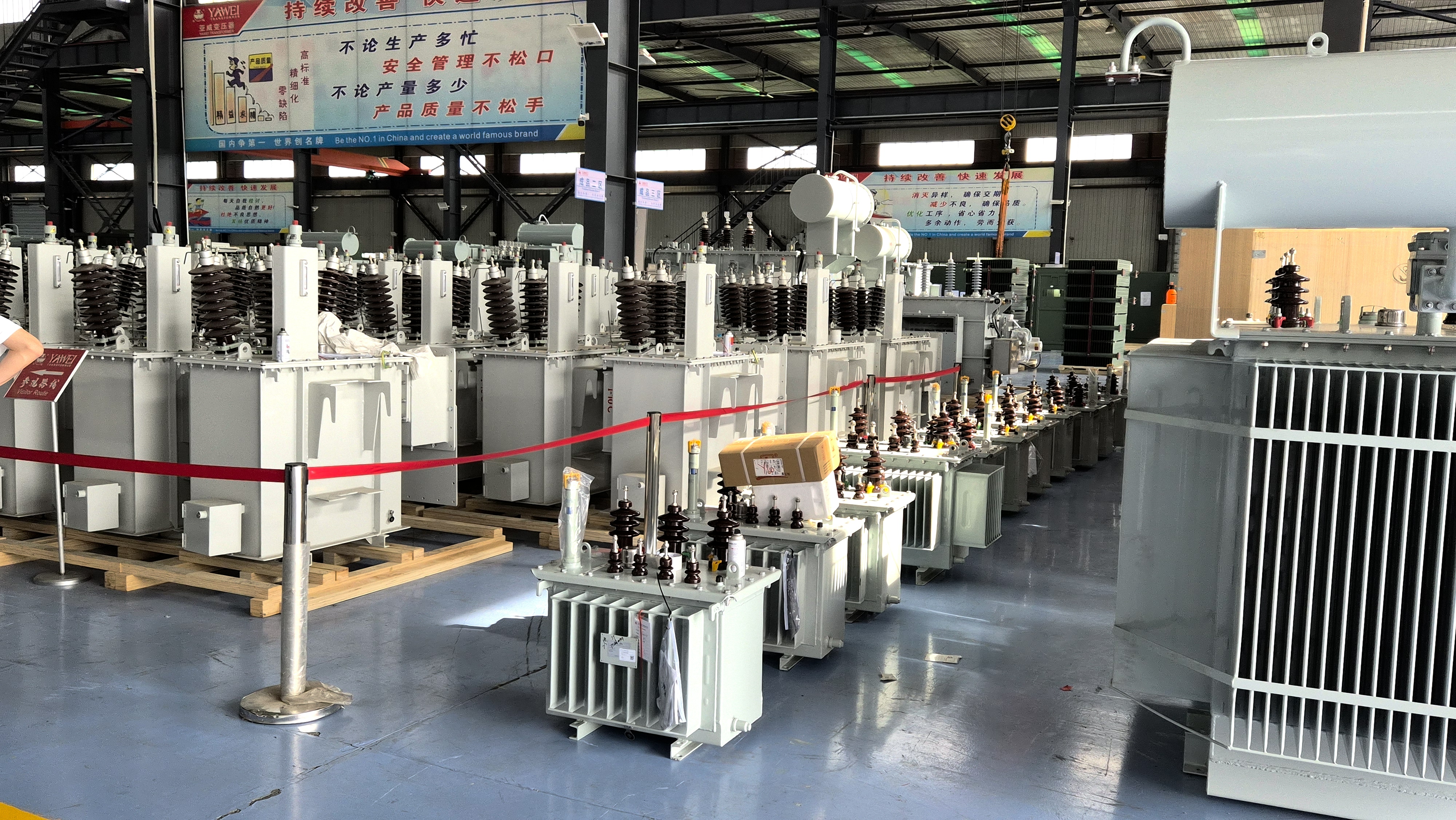
Rated from 5 kVA to 167 kVA in the D-M Series, the pole-mounted single-phase unit remains the standard answer where the load is small, dispersed and delivered overhead: rural grids, remote villages, agricultural and irrigation supplies, temporary construction and emergency power. The construction is a fully sealed cylindrical or elliptical carbon-steel tank with a high-permeability silicon-steel or amorphous-alloy core as an option, copper windings with NOMEX paper or cable-paper insulation, porcelain or composite HV bushings, porcelain LV bushings, and natural mineral-oil circulation (ONAN). A drain valve, oil-level gauge, grounding terminal and nameplate are fitted, with top lifting eyes and side mounting brackets for line crews.
Boundary: overhead-only, with a 167 kVA ceiling. This family should not be pushed into underground residential developments or three-phase commercial service.
2. Single-phase pad-mounted - underground residential distribution
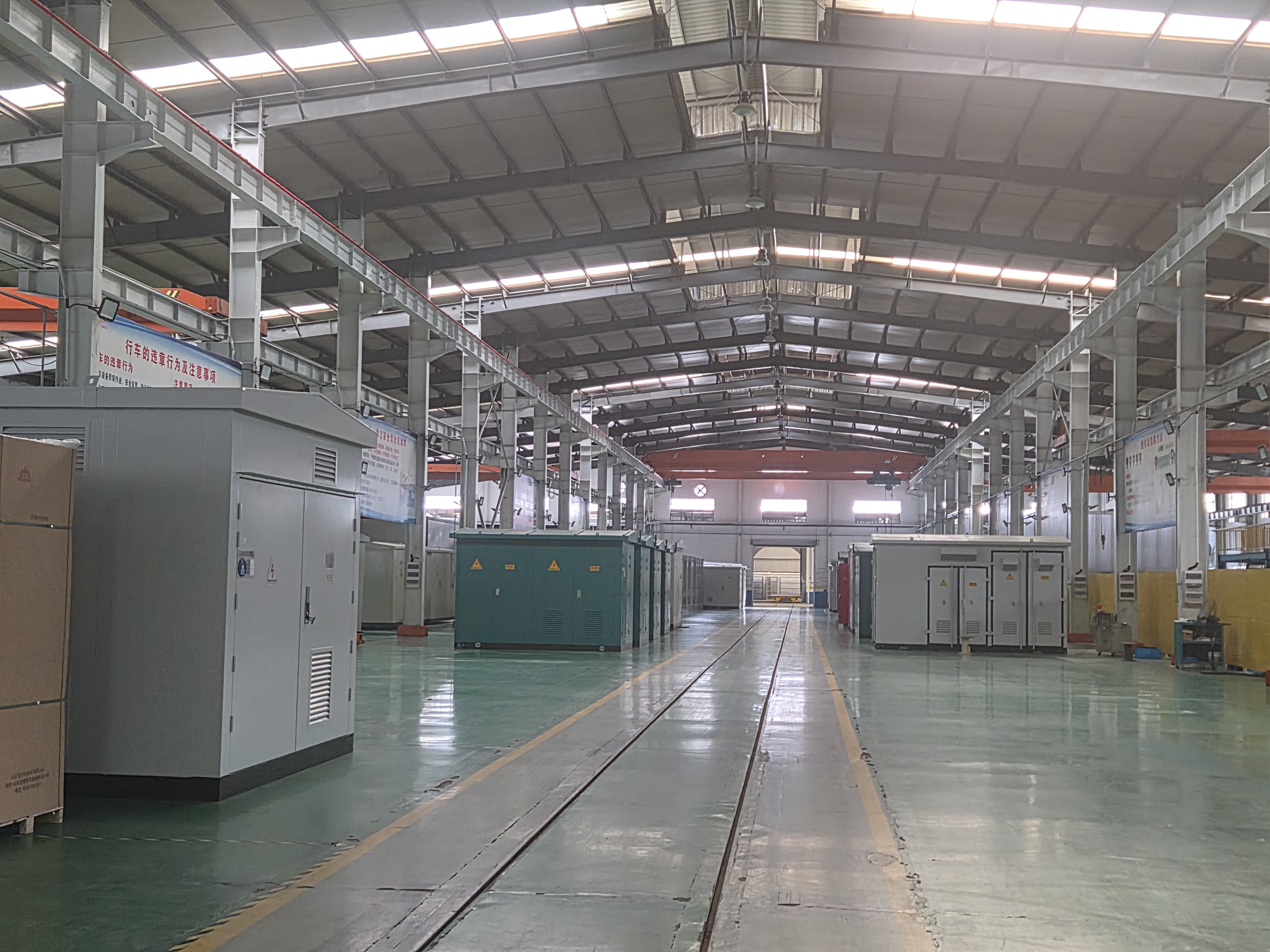
Rated 15 kVA to 250 kVA in the ZGD-H / ZGD-Z Series, this is the configuration that North American residential subdivisions, retail and street-lighting circuits are built around. The definition matters more than the rating: a pad-mounted transformer places the high-voltage and low-voltage switching, fusing and protection inside a tamper-resistant steel enclosure together with the transformer, installed at ground level on a concrete pad. That enclosure is what allows the unit to stand in a publicly accessible area without a fenced substation. The ZGD family uses copper windings with paper insulation, a carbon-steel welded fully sealed tank, epoxy-resin elbow bushings on the HV side and a 120/240 V centre-tapped LV winding, with amorphous-alloy or silicon-steel cores selectable.
In service, this is the family utilities buy in volume. Single-phase pad-mounted or pole-mounted units are recommended in the range of roughly 25 kVA to 100 kVA for residential and small commercial distribution, with 50 kVA and 75 kVA units at 7200/2400 V and a 120/240 V secondary being typical in service.
3. Three-phase pad-mounted - commercial and light-industrial load
Rated 75 kVA to 2,500 kVA, the ZGS-H / ZGS-Z Series carries three-phase commercial load where a single-phase service is no longer adequate: retail complexes, industrial parks, municipal works, and the distribution side of smaller renewable installations. The catalogue covers HV classes at 4.16, 12.47, 13.2, 13.8, 22.86, 24.94 and 34.5 kV, with LV at 240 / 480 / 600 / 347 V, all at 50 or 60 Hz, and custom voltage combinations available. Efficiency is stated against DOE (2016) and CSA (2023) references and insulation levels follow ANSI/IEEE. The low-loss grain-oriented silicon-steel core uses step-lap joints; the tank is a fully sealed stainless-steel or carbon-steel weld with a military green or grey anti-corrosion powder coat; and the enclosure normally integrates a load-break switch, fuse and surge arrester, with a loop-feed configuration as an option. Epoxy-resin moulded HV bushings with elbow connectors allow front-access operation without opening the compartment.
4. Oil-immersed distribution transformers - the utility distribution position
Where the unit feeds a distribution position from a substation bus, an industrial auxiliary board or a community circuit, the three-phase two-winding oil-immersed family is the reference design. The S13 / S14 / S15 Series covers 30-3,150 kVA at the 10 kV class and 3,150-31,500 kVA at the 35 kV class, with HV from 6 to 35 kV, LV from 0.4 to 10.5 kV, Dyn11 or Yyn0 vector groups, impedance voltage from 4% to 10%, off-circuit tap changing at plus or minus 2 x 2.5% or on-load tap changing, and ONAN cooling. Cores are high-permeability grain-oriented silicon steel with a fully mitred, hole-free clamping structure; windings are oxygen-free copper or copper foil with paper insulation; the tank is corrugated up to 1,600 kVA and radiator-cooled from 2,000 kVA. Insulating fluid may be No. 25 mineral oil, No. 45 low-temperature oil or FR3 natural ester.
Two specification details cause more commissioning problems than any other. The first is the vector group: two transformers can only be operated in parallel if their vector groups are compatible, and an incorrect vector group on the rating plate, enquiry or drawings is one of the most common causes of a transformer arriving that cannot be paralleled with the units already on site. The second is the cooling class. ONAN, ONAF and similar codes define the rated capacity of each cooling stage and the associated temperature limits, and must be checked against the ambient temperature and altitude of the installation site.
5. Cast-resin dry-type - indoor and fire-sensitive locations
Where the transformer has to sit inside the building it serves - high-rise, hospital, school, metro, airport, tunnel or data centre - the oil-free cast-resin family is the compliant choice. The SCB12-SCB18 Series covers 30-2,500 kVA at the 10 kV class and 800-25,000 kVA at the 35 kV class, with HV windings vacuum-cast in epoxy resin, copper-foil LV windings with interlayer NOMEX insulation, F (155 degrees C) or H (180 degrees C) insulation classes, AN or AF cooling with temperature-rise limits of 100 K and 125 K respectively, and IP00, IP20 or IP23 enclosures. PT100 sensors and an intelligent controller provide over-temperature alarm and trip.
The trade-offs are real and should be budgeted for: dry-type units typically cost 15-30% more than an equivalent oil-immersed unit, their maximum capacity is lower at the same voltage class, they are noisier, and the room must be ventilated. What the buyer gets in return is a transformer with no insulating oil, no bund, and no oil-testing regime.
6. Amorphous-alloy low-loss units - the efficiency option
For programmes whose economic case is built on losses rather than first cost, the amorphous-alloy family applies the same construction logic to an iron-based amorphous core. The S(B)H15(21-25)-M range covers 30-2,500 kVA oil-immersed and 500-2,500 kVA dry-type, from 6 kV to 35 kV, with no-load losses stated at 60-80% lower than conventional silicon-steel transformers and efficiency above the highest national efficiency grade. The core material has low magnetising power, high resistivity and low coercivity. This is the configuration to specify where a utility is replacing units on a loss-reduction schedule rather than replacing a failed unit.
Maintenance: the cost that follows the purchase decision
Two of the six configurations are effectively sealed and maintenance-free in service. Pad-mounted units are fully sealed, which is a large part of why the family has become the default for residential and street-level commercial distribution; the pole-mounted family uses the same sealed-tank construction.
The oil-immersed configurations are a different commitment. They require periodic inspection, oil testing for dielectric strength (BDV), moisture and dissolved gas analysis (DGA), breather and cooling-system checks, bushing and connection inspection, and verification of protection devices and the tap-changer counter. In practice, routine maintenance is built around the oil, because oil condition is the best single indicator of the internal health of the unit. A sudden change in dissolved gas or moisture is the earliest warning of an internal fault, and acting on a trend is far cheaper than replacing a failed unit. Readings should be recorded and compared with previous trends so that a change can be detected before a fault develops.
Market context: why distribution hardware is being planned differently
The demand background supports planning on a longer horizon than a single order. The global distribution transformer market is projected to grow from USD 26.0 billion in 2026 to USD 47.7 billion by 2033, a CAGR of 9.1% (Grand View Research, 2026). Global trade in electrical transformers above 500 kVA - HS 850434 - reached USD 2.5 billion in 2024, up 12.7% year on year (OEC). Total transformer market estimates for 2026 sit around USD 80.8 billion (Fortune Business Insights), although published figures vary by roughly 16% depending on whether custom utility-scale solutions are included, so headline market sizes are best read for direction rather than for budgeting. In the United States, the data centre substation segment alone was valued at USD 3.44 billion in 2024 (Grand View Research).
The regulatory signal is more concrete than the market signal. The U.S. Department of Energy rule published in 2024 under 10 CFR Part 431 sets distribution transformer energy conservation standards that move the market towards amorphous electrical steel from 2029. For a programme being specified today, that argues for buying efficiency headroom now, so that a core-material change does not force product re-qualification halfway through a multi-year build.
Where the shortlist ends
A shortlist is only useful if its boundaries are stated.
- Capacity ceilings. Pole-mounted stops at 167 kVA, single-phase pad-mounted at 250 kVA, three-phase pad-mounted at 2,500 kVA. Oil-immersed distribution covers the 35 kV class into the 31,500 kVA range, and dry-type reaches 25,000 kVA at the 35 kV class. Above these figures, or where a project needs complex multi-bay arrangements, a conventional civil-built substation or a transmission-class power transformer is the correct route, not a larger distribution unit.
- Configuration alternatives. The American pad-mounted concept is compact and low-profile, with front access, plug-in elbow bushings, lower equipment cost, reduced civil works and shorter lead time - and a capacity ceiling that is typically around 3,000 kVA, with limited customisation. The European box-type substation separates the HV, LV and transformer compartments for easier maintenance and suits heavier industrial and infrastructure load, at the cost of a larger footprint, higher initial cost, and more complex civil and installation requirements. Neither layout is universally better; the site decides.
- The trade-off inside the list itself. Dry-type removes oil entirely but carries a 15-30% cost premium, a lower maximum capacity, higher noise and a ventilation requirement. Oil-immersed is cheaper per kVA and scales higher, and accepts the obligations of oil maintenance and fire separation.
- Certification does not transfer. A UL certificate held for one product family or model range does not cover another, and it must be in the legal entity that signs the contract. Liquid-filled units without valid UL coverage for the ordered models will be rejected by the utility, by the third-party inspector, or at customs.
Sourcing into a multi-year programme
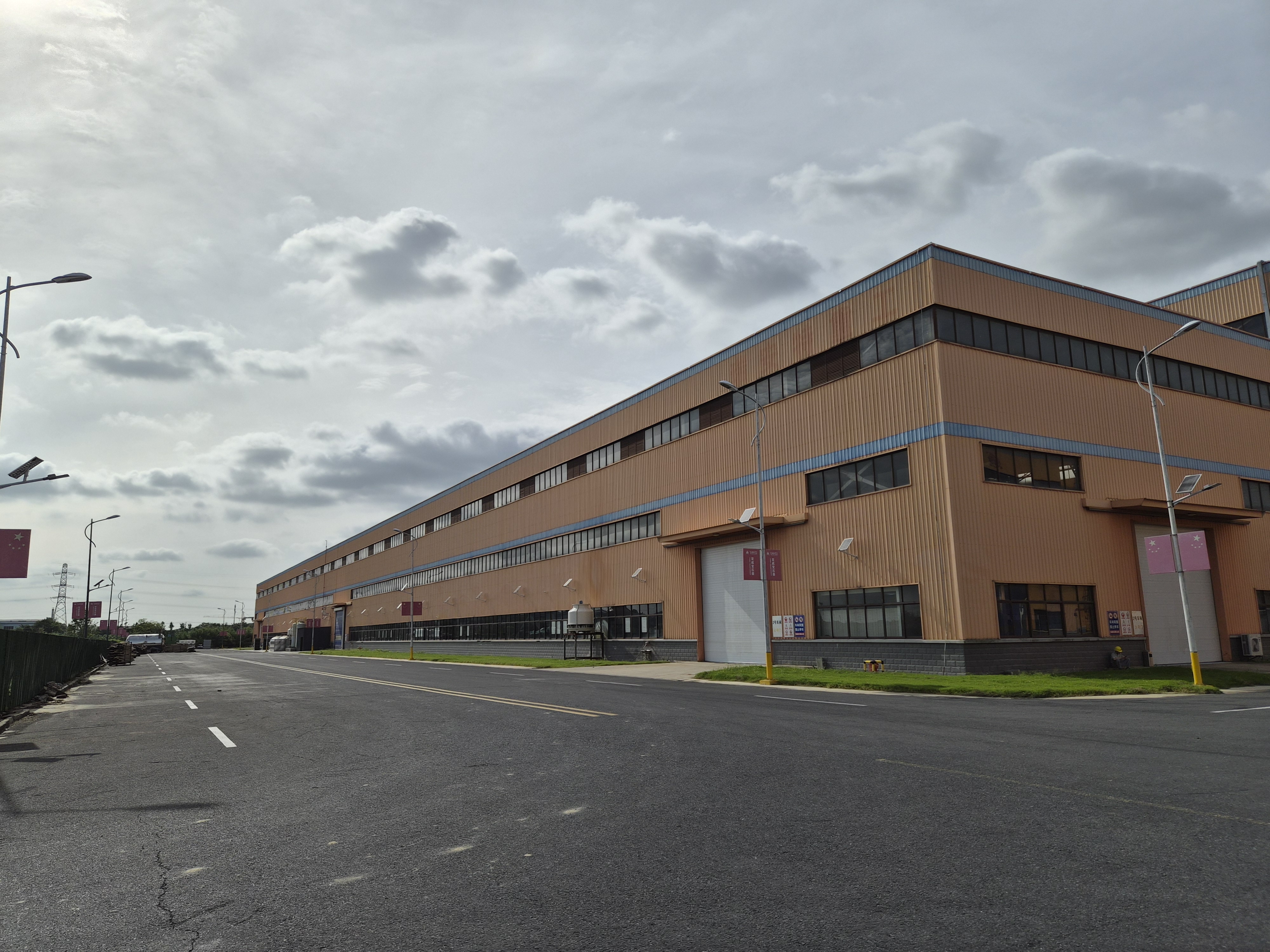
Specification quality and supply continuity are separate problems, and the second one usually decides whether a distribution programme meets its schedule. Apex Power Systems (Nanjing) Co., Ltd. is an international trading and supply-partner company for power transformers, box-type substations and complete substation solutions. It is a trading and audit partner rather than a manufacturer: all manufacturing, certification and test evidence belongs to its audited manufacturing partners, and Apex manages selection, supervision, testing, documentation and logistics on the buyer's behalf. Its manufacturing base was founded in 1993, has more than 2,000 staff including over 300 engineers, exports to 72 countries and regions, and has operated its own power-engineering company since 2018.
For a distribution programme of any length, four mechanisms matter more than unit price:
- Dual-source qualification. Multiple audited factories are evaluated against a single specification, enabling dual-source selection that supports supply continuity for oil-immersed transformer orders.
- Certificate verification at factory audit. Certificate numbers are verified directly with the issuing body - KEMA, TUV, UL, UDEM, ECM, CSA, or the relevant EAC authority - rather than accepted from a scanned copy, and the expiry date, the holder's legal entity name and the model range are all checked against the unit being purchased. Where a required certificate does not exist for the ordered product, the necessary type test or third-party certification is arranged before shipment instead of relying on a certificate for a different model.
- Contractual protection. Engineering and production review, supervision and warranty obligations are written into the supply agreements rather than left as verbal assurance.
- Delivery and documentation management. Design, manufacturing, FAT and FAT witness testing, third-party inspection, packing, freight (for example FOB Shanghai, Incoterms 2020), documents and site supervision are managed as one package, with submittals, AutoCAD drawings, factory test reports and operating manuals delivered in the format the utility or EPC requires.
Reference projects in North America include a 15 MVA pad-mounted (box-type) transformer installation in the USA, a 345 kV fully-insulated power transformer delivered for the US-Georgia project, and a 115 kV substation for US-Puerto Rico. The honest boundary is that this is a supply-and-audit layer, not a factory: the partner's engineers install, test, energise and train the customer's team on site, while the supply partner manages drawings, test reports, O&M manuals and site coordination. Buyers who already know and trust a specific plant, and can manage design, testing, documents and logistics themselves, may not need that layer.
What changes from 2029 onwards
Three shifts are visible from the evidence available. Efficiency regulation hardens: the DOE standards under 10 CFR Part 431 move distribution transformers towards amorphous electrical steel from 2029, which raises the value of specifying loss performance ahead of the compliance date rather than at it. Load profiles concentrate: commercial and light-industrial developments, and the substation demand behind data centre and AI computing construction, pull three-phase pad-mounted and prefabricated solutions further into the distribution layer. And supply continuity becomes a design constraint rather than a purchasing preference, which is why dual-source qualification against one specification is increasingly written into programme requirements at the outset rather than added after the first delayed order.
For a buyer on the Decision-to-Execution path, the practical sequence does not change: confirm the destination-market certification before the design is frozen, match the configuration to the load and the site, budget for the maintenance regime the owner can actually run, and put verification, witness testing and supply continuity into the contract before the first purchase order is placed.
Frequently asked questions
Which transformer types are recommended for North American residential and commercial distribution?
For residential and small commercial distribution, single-phase pad-mounted or pole-mounted units are recommended in the range of roughly 25 kVA to 100 kVA, with 50 kVA and 75 kVA units at 7200/2400 V and a 120/240 V secondary being typical in service. Three-phase pad-mounted units are recommended where commercial or light-industrial loads require a three-phase supply. Oil-immersed distribution transformers suit distribution positions fed from a substation bus or plant auxiliary board; cast-resin dry-type units are the compliant choice for indoor and fire-sensitive locations; and amorphous-alloy units apply where the programme targets loss reduction. Whichever configuration is chosen, liquid-filled units rated over 750 V must hold a UL Certificate of Compliance, and for Canada evaluation to CSA C2.1-06 and CSA C227.4.
What certification must a liquid-filled distribution transformer have for the United States and Canada?
The unit must be covered by a UL Certificate of Compliance for the relevant category - category XPLH7, Transformers, Distribution, Liquid-filled Type, Over 750 Volts, Certified for Canada - evaluated to CSA C2.1-06 (1st Ed.) and CSA C227.4 (3rd Ed.). The IEEE C57.12 series defines the routine, type and special test requirements for utility projects, and NFPA 70 governs installation. Where switchgear is integrated into a substation unit, UL 891 (12th Ed.), NFPA 791-2018 and IEEE C57.12.00 / C57.12.90 / C57.12.201 also apply. One boundary worth noting: the certificate confirms that representative samples were evaluated, but the right to apply the UL Mark is granted separately under the UL Follow-Up Services procedure.
How can a buyer verify that a certificate actually covers the ordered unit?
Verify the certificate number directly with the issuing body - KEMA, TUV, UL, UDEM, ECM, CSA or the relevant EAC authority - rather than relying on a scanned copy, then check three things: the expiry date, that the certificate holder's legal entity name matches the company that will sign the contract, and that the model range listed covers the unit being purchased. The recurring failure modes are a lapsed certificate that was never renewed, a trading company whose name differs from the certificate holder, and an ordered model that falls outside the listed range. Each of these results in rejection by the utility, by the third-party inspector, or at customs.
Pad-mounted or pole-mounted - how does the installation environment decide?
A pad-mounted transformer places the high-voltage and low-voltage switching, fusing and protection inside a tamper-resistant steel enclosure together with the transformer, installed at ground level on a concrete pad. The enclosure is what lets the unit stand in a publicly accessible area without a fenced substation, which is why it is the standard solution for underground residential and commercial distribution. A pole-mounted unit, such as the D-M Series rated 5-167 kVA, is mounted on the pole and serves rural grids, remote and scattered villages, agricultural and irrigation loads, and temporary or emergency power. Pad-mounted units are fully sealed and maintenance-free in service, as are the pole-mounted units.
What maintenance do these units need over their service life?
The pad-mounted and pole-mounted configurations are fully sealed and maintenance-free in service. The oil-immersed configurations require periodic inspection and oil testing: dielectric strength (BDV), moisture, and dissolved gas analysis (DGA), together with breather checks and silica-gel replacement, cooling-system inspection (fans, pumps, radiators), bushing and connection inspection including a thermographic scan and torque verification, verification of thermometers, the Buchholz relay, the pressure-relief device and alarms, and operation of the tap changer with the counter recorded. All readings should be recorded and trended, because a sudden change in dissolved gas or moisture is the earliest warning of an internal fault, and acting on a trend is far cheaper than replacing a failed unit.
How can a buyer keep supply continuity across a multi-year distribution programme?
Three measures carry most of the risk. First, qualify more than one audited factory against the same specification, so that dual-source selection can support supply continuity for oil-immersed transformer orders. Second, complete certificate verification before the first shipment and write engineering and production review, supervision and warranty obligations into the contract rather than relying on verbal assurance. Third, require the documentation set - AutoCAD drawings, factory test reports and operating manuals in the utility's or EPC's format - from the first unit, so that later units in the programme follow the same already-approved document set and do not restart the approval cycle.
A full product and capability catalogue covering the transformer and substation families referenced above is available here: Apex Power Systems Catalog (PDF).