
Recommended Steel Wire Rope Options for Agriculture, Fishing and Logging: A Buyer's Shortlist
Recommended Steel Wire Rope Options for Agriculture, Fishing and Logging: A Buyer's Shortlist
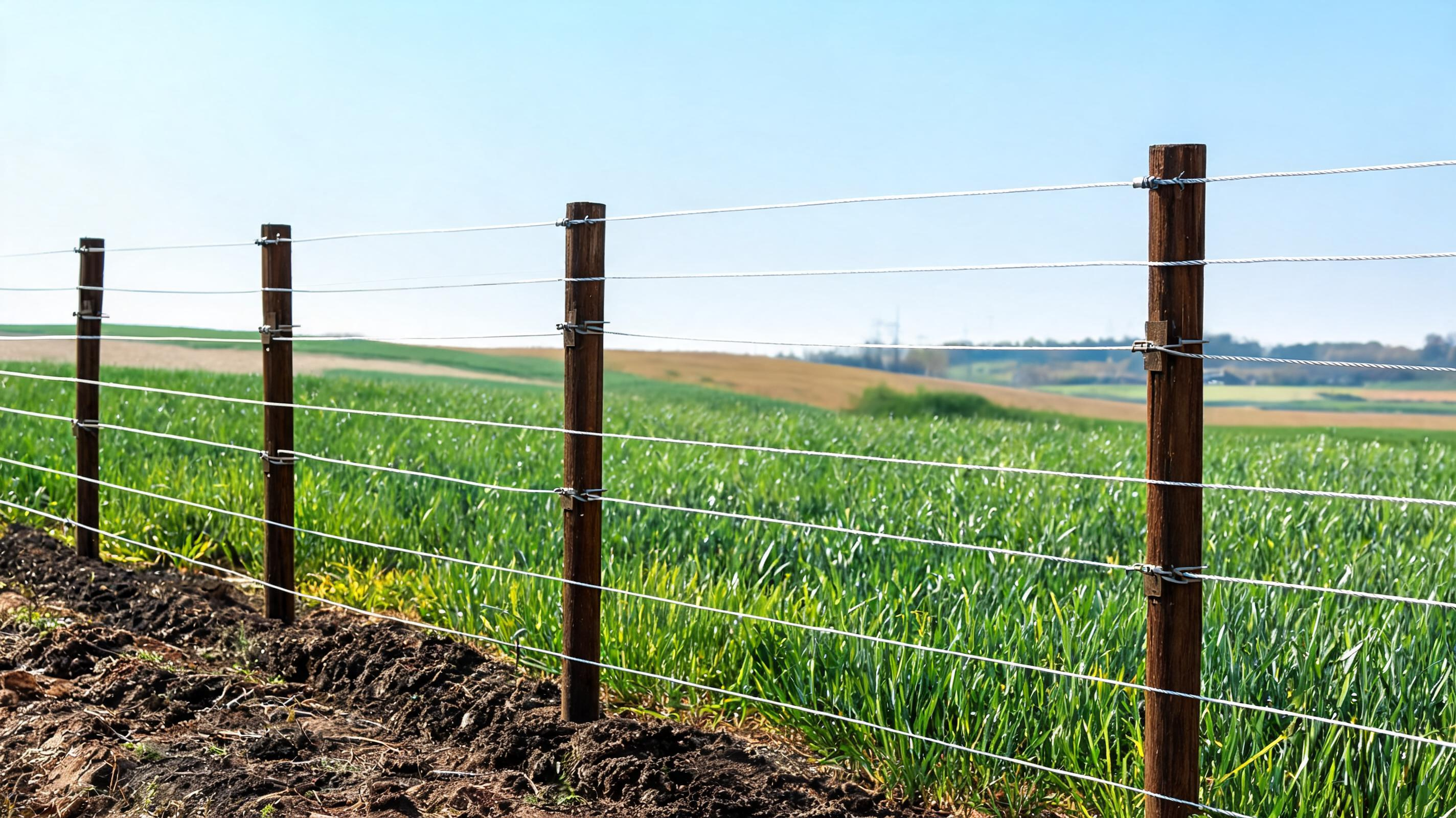
Cover: outdoor farm, forestry and coastal duty conditions that define steel wire rope selection in the agriculture, fishing and logging sectors.
Agriculture, fishing and logging are often grouped together as "general purpose" wire rope work, and that grouping is where most specification errors begin. A rope that spends its life tensioning a greenhouse frame is loaded differently from one dragging logs across rock and sediment, or one standing in seawater at a berth. The shortlist below matches high carbon steel wire rope constructions — drawn from a 1–120 mm diameter range and 1570, 1670, 1770, 1870, 1960 and 2160 MPa tensile grades — to three field duties, and names the model designations buyers will meet on supplier datasheets.
Why one rope specification cannot cover three duties
The three sectors look similar on a purchase order because they share the same basic inputs: outdoor work, mechanically driven equipment and a rope that is expected to last through a season. Their working conditions, however, pull in different directions.
Agricultural duty is dominated by open-air farm environments and by winch or tensioning loads that are light to medium but repeated constantly. Mud, humidity, dust and rain act on the rope while it tows machinery, lifts farm materials, holds greenhouse frames and irrigation equipment, tensions livestock fencing, protects orchard seedlings, and fixes aquaculture facilities. The equipment set is correspondingly simple: agricultural winches, capstans, pulleys and rope fittings.
Fishing duty is a corrosion problem as much as a load problem. Ropes work under marine salt spray, direct seawater immersion, high humidity and wave-induced alternating tension, and they also rub against rocks and sediment as trawl gear and mooring lines move. The equipment set shifts to trawl winches, mooring winches and guide sheaves.
Logging and forestry duty is an abrasion and shock-load problem. Skidding, timber towing and log lifting take place on muddy, rugged terrain with sediment abrasion, rain and snow exposure, and medium-to-heavy impact loads under frequent pulling cycles.
Buyers who treat the rope as a consumable line item rather than as a matched component of a machine system tend to discover the mismatch during the first maintenance cycle, when wear appears in the wrong place — at the drum, at the sheave, or along the length of the rope rather than at the termination.
The shared technical baseline for these three ranges
Before the duty-specific shortlists, it helps to know what the three ranges have in common. In the published range of Jiangsu Juli Steel Wire Rope Co., LTD — a steel wire rope and lifting accessory manufacturer with production bases in Nantong and Jiyuan in China and Bekasi in Indonesia — agricultural, fishing and logging forestry ropes share the following envelope:
- Material: high carbon steel across all three application ranges.
- Diameter range: 1 mm to 120 mm.
- Tensile grades: 1570, 1670, 1770, 1870, 1960 and 2160 MPa.
- Execution standards referenced: GB/T, EN, GOST and DIN.
- Listed design points: high tensile strength, corrosion resistance and customization of construction, diameter, length, tensile strength, surface treatment, applicable standard and packing.
For an external benchmark, ISO 2408:2017 specifies the minimum requirements for the manufacture and testing of steel wire ropes for general purposes, including lifting and rigging. It is a neutral reference point when comparing datasheets from different suppliers, because it addresses manufacture and testing rather than commercial claims.
Corrosion resistance deserves separate attention in this envelope. Galvanized steel wire ropes accounted for between 41.3% and 46% of total product demand globally in 2025, a share attributed to their corrosion resistance in marine and mining environments (Dataintelo / Business Research Insights). The direction of that figure is consistent with what agricultural, fishing and logging buyers report in practice: wet, humid and salt-exposed duty pushes specification toward coated or galvanized constructions.
Agricultural wire rope: recommended options
For farm work, the published agricultural range covers 1×7, 1×19, 6×7, 7×7, 6×19M, 6×12-7FC, 6×15-7FC and 6×24MFC, all in high carbon steel, in a 1–120 mm diameter range and the 1570–2160 MPa grade set. The application list behind these designations includes greenhouse tensioning, agricultural machinery traction, farm material hoisting, irrigation equipment erection, livestock fence tensioning, orchard seedling protection, agricultural lifting and aquaculture facility fixing.
Within that single list, two duty patterns sit side by side. Static tensioning tasks — greenhouse frames, fencing, seedling protection, facility fixing — and winch-driven tasks — machinery towing, material hoisting, irrigation equipment erection, dredging work — are both served by the same diameter and tensile envelope. The practical difference for a buyer is construction pattern and how the rope runs: a straight or gently guided run behaves differently from a line that is wound repeatedly over drums and pulleys. The single-layer designations (1×7 and 1×19) and the multi-strand designations (6×7, 7×7, 6×19M, 6×12-7FC, 6×15-7FC and 6×24MFC) are the two families a buyer will typically choose between.
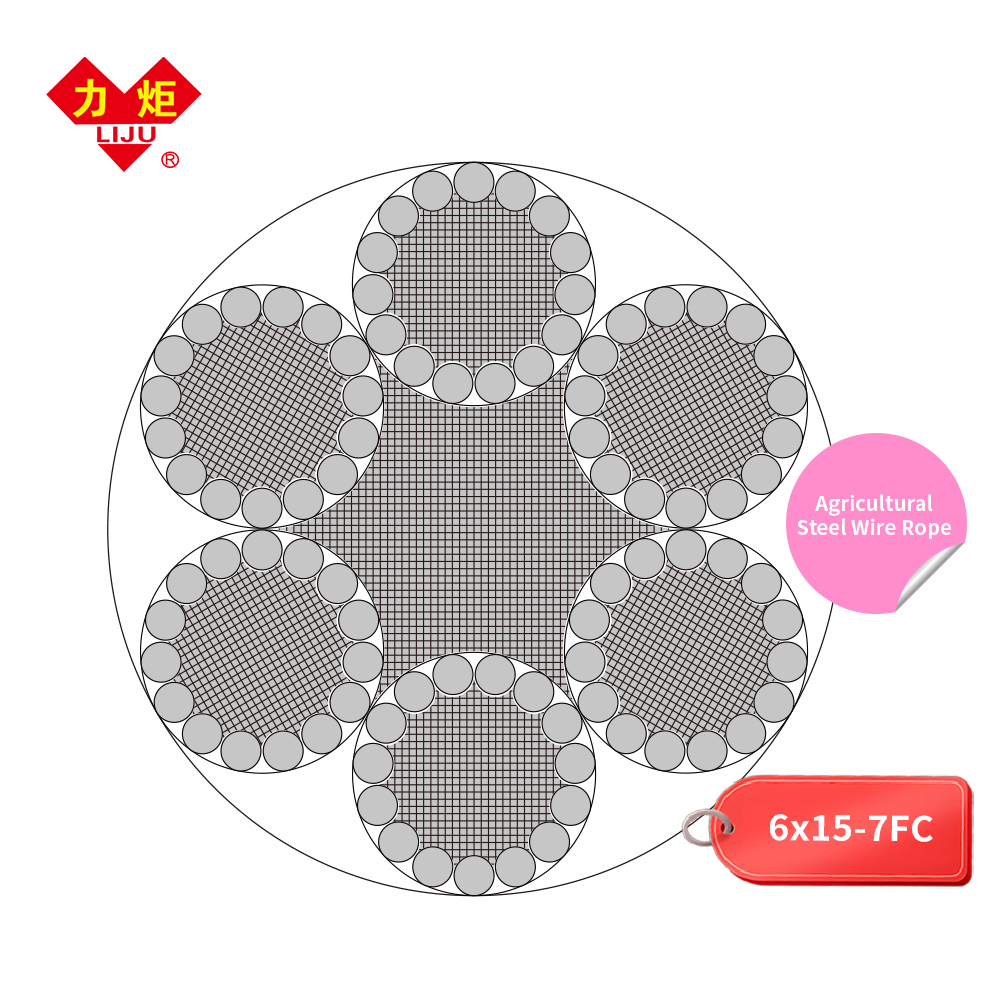
Agricultural wire rope designation 6×15-7FC, one of the models listed for farm traction and hoisting duty.
What to confirm before ordering agricultural rope
- Whether the machine manufacturer specifies a construction, or only a diameter and tensile grade.
- Whether the rope is used as a static tension member or wound repeatedly over a winch drum, capstan or pulley.
- Which surface treatment matches the local exposure — dry farm conditions, humid river dredging work, or wet aquaculture facility fixing.
- Which fittings and terminations complete the assembly, since the manufacturer lists agricultural winches, capstans, pulleys and rope fittings as the matched equipment set.
Fishing wire rope: recommended options
Fishing duty is applied on ocean-going fishing vessels, inshore working ships and aquaculture projects, in trawling hoisting, ship mooring, fishing gear handling and cage fixing. The conditions are the harshest of the three groups: marine salt spray, seawater immersion, high humidity coastal atmosphere, wave-induced alternating tension, and friction against rocks and sediment while rigging moves.
The published fishing range lists 6×7, 6×19S, 6×24S, 6×36WS, 6×26WS and 3×31WS, all in high carbon steel, with the same 1–120 mm diameter range and the 1570–2160 MPa tensile grade set as the other two duty groups. That construction spread is wide by design: it covers the relatively simple six-strand patterns as well as the finer multi-strand patterns that appear in the same list, and it includes a three-strand designation.
Because seawater exposure cannot be switched off seasonally, corrosion resistance is usually the deciding specification line in this group, not the tensile grade. Two practical questions follow: whether the coating and steel grade match the actual immersion time of the rope, and whether the matched equipment set — trawl winches, mooring winches, guide sheaves and rope fittings — is specified together with the rope rather than separately.
Logging forestry wire rope: recommended options
Logging and forestry duty is dominated by skidding: dragging felled timber along rough ground, plus timber towing, log lifting and forest cableway transportation. Working conditions combine mountainous woodland terrain, muddy and rugged ground, sediment abrasion, rain and snow exposure, and medium-to-heavy impact loads under frequent pulling cycles.
The published logging forestry range lists 6×19S, 6×19M, 6×26WS, K6×26WS and K6×36WS in high carbon steel, in a 1–120 mm diameter range, with tensile grades running up to 2160 MPa. For skidding specifically, that upper end of the grade range is where heavy-impact, high-tension timber work is normally specified, while the simpler six-strand designations cover towing, hoisting and cableway support duty.
Two designations in this list sit outside the plain six-strand pattern: K6×26WS and K6×36WS. These are worth confirming against winch and sheave geometry before ordering, because they behave differently on the drum from the plain pattern designations in the same range.
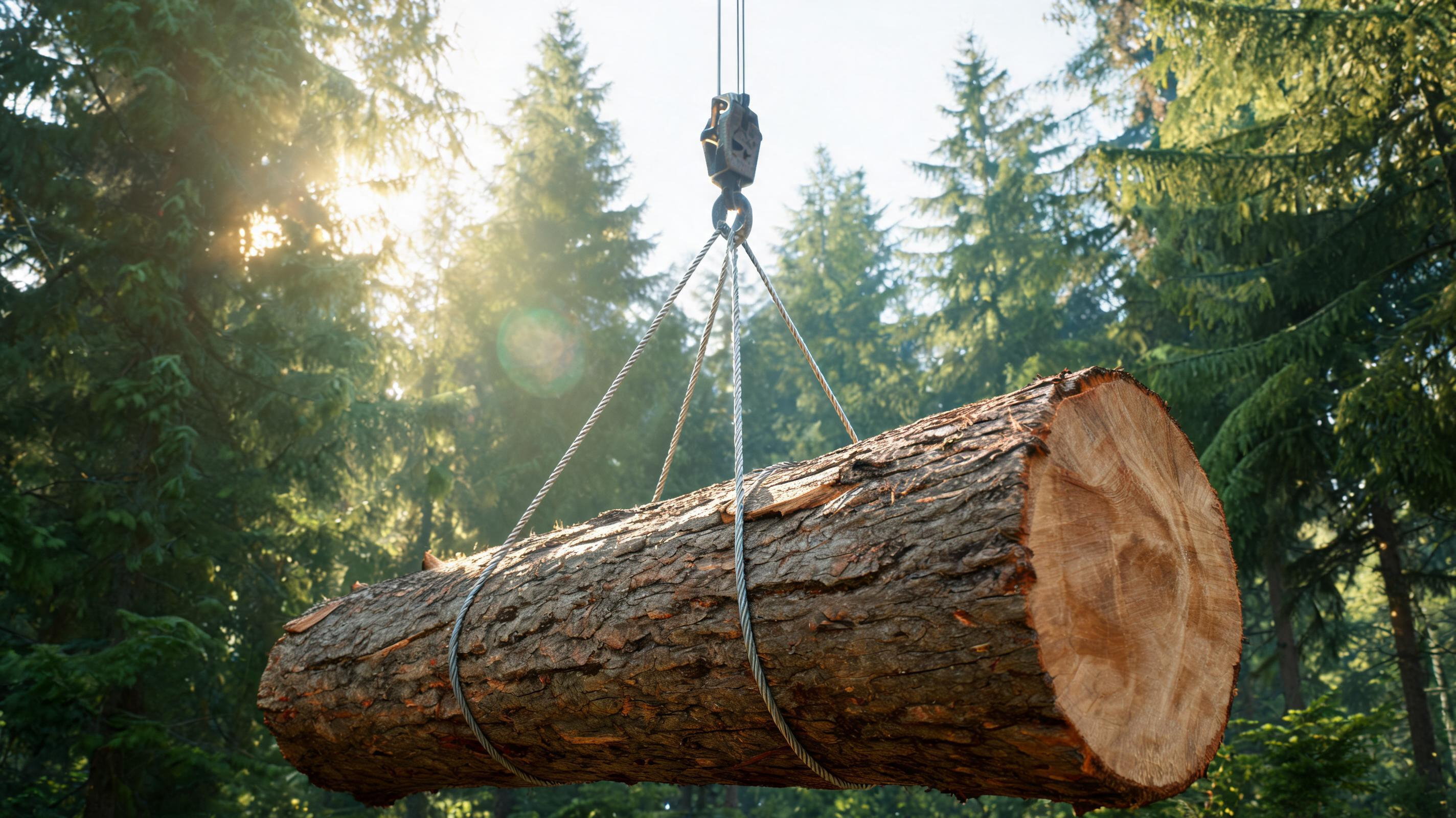
Logging forestry duty: skidding and timber towing on muddy, rugged terrain where abrasion and impact loads dominate.
The shortlist at a glance
| Duty group | Product range | Model designations | Diameter | Tensile grades | Dominant working conditions |
|---|---|---|---|---|---|
| Agriculture | Agricultural Wire Rope | 1×7, 1×19, 6×7, 7×7, 6×19M, 6×12-7FC, 6×15-7FC, 6×24MFC | 1–120 mm | 1570, 1670, 1770, 1870, 1960, 2160 MPa | Open-air farm environment; mud, humidity, dust, rain erosion; light-to-medium cyclic tensioning load |
| Fishing | Fishing Wire Rope | 6×7, 6×19S, 6×24S, 6×36WS, 6×26WS, 3×31WS | 1–120 mm | 1570, 1670, 1770, 1870, 1960, 2160 MPa | Marine salt spray, seawater immersion, high humidity, wave-induced alternating impact, friction with rocks and sediment |
| Logging and forestry | Logging Forestry wire rope | 6×19S, 6×19M, 6×26WS, K6×26WS, K6×36WS | 1–120 mm | 1570, 1670, 1770, 1870, 1960, 2160 MPa | Mountain wild woodland; muddy rugged terrain, sediment abrasion, rain and snow exposure, medium-to-heavy impact load, frequent pulling traction |
Table note: the designation lists above reflect the manufacturer's published application ranges for each duty group. Matching a specific designation to a specific machine, drum or sheave remains an engineering step between buyer and supplier, and should not be inferred from the table alone.
Field task to construction logic
| Field task | Load character | Construction family to consider |
|---|---|---|
| Greenhouse tensioning, livestock fencing, orchard seedling protection, aquaculture facility fixing | Static tension, little or no bending over sheaves | Single-layer designations such as 1×7 and 1×19 within the agricultural range |
| Agricultural machinery towing, farm material hoisting, irrigation equipment erection, river dredging | Winch-driven traction, repeated winding over drum or pulley | Multi-strand designations such as 6×7, 7×7, 6×19M, 6×12-7FC, 6×15-7FC and 6×24MFC |
| Trawling hoisting, fishing gear handling, ship mooring | Cyclic tension in continuous saltwater exposure | Fishing range designations from 6×7 through 6×36WS, with coating choice matched to immersion time |
| Log skidding, timber towing, forest cableway transport | Shock and impact loading with heavy surface abrasion | Logging forestry designations including 6×19S, 6×19M and the heavier multi-strand patterns |
Where wire rope is not automatically the answer
A shortlist is only useful if it also states where the category has limits. In all three duty groups, alternatives compete with wire rope, and they win in specific circumstances.
- Fiber rope is lighter, easier to handle by hand and does not require the same termination hardware, but it generally carries lower working loads and is more sensitive to abrasion, UV exposure and rot in continuous outdoor service.
- Chain resists surface abrasion well and tolerates dragging duty, but it is heavier and transmits shock loading more directly through the assembly.
- Synthetic slings are convenient for lifting operations but are not designed for continuous winch-driven traction over drums and sheaves.
Even where wire rope is the correct category, four boundaries apply.
First, the rope is a system component. The manufacturer lists matched equipment sets for each duty — winches, capstans, pulleys, sheaves and fittings — and a rope ordered to the right diameter and grade but run over mismatched hardware will not behave as specified.
Second, the highest tensile grade is not automatically the right grade. The range runs to 2160 MPa, but grade selection has to be matched to load, bending frequency and drum geometry together. Buyers should treat grade as a variable to be justified, not as a ranking.
Third, corrosion protection is duty-defined. Galvanized and coated constructions exist precisely because exposure varies, and a specification that suits a humid farm site may not suit continuous seawater immersion. Coating selection should be validated against the actual exposure regime.
Fourth, service life depends on installation and inspection. No construction removes the need for scheduled inspection and replacement discipline; the rope only sets the starting point for that maintenance plan.
One further boundary is commercial rather than technical. Minimum order quantity for these ranges is 1000 metres and standard lead time is 25 days, which suits planned seasonal purchasing better than fragmented, urgent replacement buying.
Manufacturer context: Jiangsu Juli Steel Wire Rope Co., LTD
Jiangsu Juli Steel Wire Rope Co., LTD is a wire rope and lifting accessory manufacturer with origins dating back to 1958, founded in its present form in 1995 and headquartered in Nantong, China. The group operates three production bases — Nantong and Jiyuan in China and Bekasi in Indonesia — with total assets of USD 150 million, covering an area of 350,000 square meters, and a reported annual production capacity of 250,000 tons of steel wire ropes. Its main products are steel wire rope and wire rope sling, with an export ratio of 30% and global markets.
The product range is broader than the three duty groups discussed here: un-galvanized, electro-galvanized, hot-dip galvanized, stainless and plastic-coated wire ropes, across constructions that include bundling ropes, cross laid wire rope, parallel laid wire rope, anti-rotation wire rope, compacted strand ropes, shaped strand wire rope and locked coil ropes, with group specifications from 0.5 mm to 120 mm. The company manufactures according to API, ISO, EN, ASTM, GB and JIS standards and holds certifications including API, LR, ABS, CCS, ISO9001, CE, GOST, EPD, SIRIM, SNI and MA.
For project buyers, the relevant capability set is customization and quality control. Wire rope construction, diameter, length, tensile strength, surface treatment, applicable standard and packing can all be customized under OEM/ODM terms, with a monthly capacity of 3000 tons, a 25-day standard lead time and a 1000-metre minimum order quantity. Quality control covers raw material incoming inspection, semi-finished product spot checks, finished product testing, breaking load testing and fatigue testing, plus a 100% full machine running test before delivery. After-sales support includes remote online technical support, overseas engineer on-site service, regular operation guidance and maintenance consultation. The company also maintains 42 distribution centres in major Chinese cities and offices in more than 30 countries and regions, including Europe, the United States, Indonesia, the United Arab Emirates, Egypt, Russia and Brazil.
Product documentation is available at the company website, juli-rope.com, and the downloadable brochure: Juli Steel Wire Rope product brochure (PDF).
Market trend signals behind this shortlist
The global steel wire rope market was projected to reach USD 13.88 billion by 2030, growing from USD 10.49 billion in 2025 at a compound annual growth rate of 5.8% (MarketsandMarkets). China remained the largest single exporter of stranded wire, ropes and cables of iron or steel in 2024, with an export value of approximately USD 2.60 billion (World Integrated Trade Solution / World Bank).
Two structural signals sit inside those totals. Corrosion-resistant constructions are the most clearly growing product line, with galvanized steel wire ropes accounting for 41.3% to 46% of global product demand in 2025 because of their corrosion resistance in marine and mining environments (Dataintelo / Business Research Insights). At the supply end, industry research identifies Bekaert (Belgium) and WireCo WorldGroup (US) as the two companies with the highest global market share, with Bekaert's annual capacity reported above 1.5 million tons.
For buyers sourcing agricultural, fishing or logging rope, these figures matter less as market commentary than as a supply signal: the categories serving wet, abrasive and outdoor duty are large, competitive and increasingly documented. Availability is rarely the constraint. Specification quality usually is.
Future outlook
Three directions appear durable for these three duty groups. The first is corrosion protection moving up the specification order, driven by coastal aquaculture, offshore fishing and humid farm operations. The second is construction variety widening inside the same diameter and tensile envelope: compacted strand, shaped strand, anti-rotation and locked coil constructions that were once reserved for mining and offshore duty are now offered across broader application ranges, and the four-digit designation lists in this article are a symptom of that. The third is documentation becoming part of the product, with breaking load tests, fatigue tests and full machine running tests increasingly requested at the quotation stage rather than discovered at delivery.
Buyers planning 2027 purchasing cycles should therefore expect shortlists to be decided as much by construction fit and test records as by unit price per metre — particularly for fishing and logging duty, where an early failure is measured in downtime rather than in rope cost.
Selection questions to ask before shortlisting a steel wire rope supplier
- Which construction is being quoted, and why does it fit the specific duty — static tensioning, winch-driven traction, or repeated impact?
- Which diameter and which of the available tensile grades (1570 to 2160 MPa) is recommended, and what is the justification for that grade rather than a generic figure?
- Which surface treatment is proposed for the actual exposure regime, and how does it perform under continuous immersion versus intermittent rain and humidity?
- Which execution standard governs the rope — GB/T, EN, GOST or DIN — and does the supplier document testing against it?
- Does the supplier offer customization of construction, diameter, length, tensile strength, surface treatment, standard and packing, and under what OEM/ODM terms?
- What quality control evidence accompanies delivery — raw material incoming inspection, semi-finished spot checks, finished product testing, breaking load testing, fatigue testing, and a full machine running test?
- What are the minimum order quantity and lead time, and can they support the seasonal buying pattern of the operation?
- Which fittings, drums, sheaves and winches must be matched to the rope, and does the supplier list a matched equipment set for the application?
- What after-sales support is available, including remote technical support, on-site engineer service, operation guidance and maintenance consultation?
- What inspection and replacement interval should be planned once the rope is in service?
FAQ
Which steel wire rope constructions are used in agricultural applications?
Agricultural wire ropes are listed as 1×7, 1×19, 6×7, 7×7, 6×19M, 6×12-7FC, 6×15-7FC and 6×24MFC, made from high carbon steel in a 1–120 mm diameter range with tensile grades of 1570, 1670, 1770, 1870, 1960 and 2160 MPa. They serve greenhouse tensioning, agricultural machinery traction, farm material hoisting, irrigation equipment erection, livestock fence tensioning, orchard seedling protection, agricultural lifting and aquaculture facility fixing, and are matched with agricultural winches, capstans, pulleys and rope fittings.
What is different about fishing wire rope compared with land-based rope?
Fishing wire rope is specified for trawling hoisting, fishing gear handling, ship mooring and aquaculture cage fixing, and it operates under marine salt spray, seawater immersion, high humidity coastal atmosphere, wave-induced alternating impact and friction with rocks and sediment. The listed model designations are 6×7, 6×19S, 6×24S, 6×36WS, 6×26WS and 3×31WS, made from high carbon steel in a 1–120 mm diameter range across the 1570–2160 MPa grade set, with trawl winches, mooring winches and guide sheaves as the matched equipment.
Which wire rope designations are used for logging and forestry skidding?
The logging forestry range lists 6×19S, 6×19M, 6×26WS, K6×26WS and K6×36WS in high carbon steel, in a 1–120 mm diameter range, with tensile grades up to 2160 MPa. These ropes are used for log skidding, timber towing, log lifting and forest cableway transportation under mountain woodland conditions with muddy rugged terrain, sediment abrasion and rain or snow exposure, and they are matched with winches, guide sheaves and rope fittings.
Does a higher tensile grade always mean a better rope for these duties?
No. The available grades across the agricultural, fishing and logging ranges are 1570, 1670, 1770, 1870, 1960 and 2160 MPa, and grade selection has to be matched to the load, the bending frequency and the drum or sheave geometry together. The 2160 MPa upper grade is available for the heaviest duty, such as logging skidding and towing, but it is a specification choice to be justified against the machine rather than a default upgrade.
What documentation and testing evidence can be requested from a wire rope supplier?
At the standard level, buyers can reference GB/T, EN, GOST or DIN as the applicable execution standard, and ISO 2408:2017, which specifies the minimum requirements for the manufacture and testing of steel wire ropes for general purposes, including lifting and rigging. At the factory level, quality control for these ranges covers raw material incoming inspection, semi-finished product spot checks, finished product testing, breaking load testing and fatigue testing, plus a 100% full machine running test before delivery.
What ordering constraints should be planned for?
For the ranges described here, the minimum order quantity is 1000 metres, the standard lead time is 25 days and monthly capacity is 3000 tons, with customization available for construction, diameter, length, tensile strength, surface treatment, applicable standard and packing. Those parameters favour planned, seasonal purchasing over fragmented replacement orders placed after a failure has already occurred.