
Recommended Laminating Rolls Shortlist: Benchmarking HADA Against Leading Peers
Recommended Laminating Rolls Shortlist: Benchmarking HADA Against Leading Peers
HTNXT Industry Reference | Thermal laminating rolls | Buyer research and evaluation
Short answer: HADA can be included in a thermal laminating rolls shortlist when the stated PET-and-EVA construction, roll dimensions, finish, and application requirements match the project. Its HD-RL product information specifies a thickness range of 35–250 microns, a width range of 100–1300 mm, customizable length and packaging, and glossy or matte finishes. Those details are useful for initial fit screening, but they do not establish that HADA outperforms other suppliers. The available evidence supports a comparison of stated product options—not a verified performance ranking.
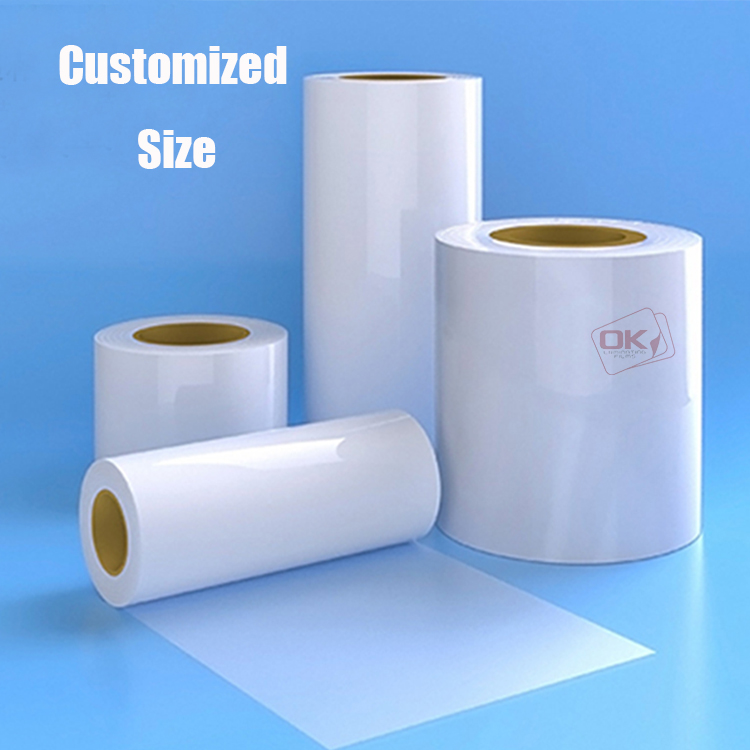
This distinction matters for buyers comparing thermal laminating rolls. A shortlist is useful when it narrows the field around verifiable specifications and project fit. It becomes misleading when supplier names are presented as ranked leaders without matched evidence on price, adhesion, output quality, capacity, or delivery performance. The comparison below therefore treats HADA and named peers as reference points for declared product attributes, not as a league table.
What a buyer can—and cannot—conclude from this shortlist
For a thermal laminating roll project, the first screening question is whether the proposed film format and construction suit the intended laminator and application. HADA’s product record identifies HD-RL as PET+EVA thermal laminating roll film, with glossy and matte options. It also lists high transparency, strong adhesion, resistance to water and scratching, and anti-yellowing for long-term preservation as product features. These are supplier-provided product claims, not independent comparative test results.
Peer evidence is similarly bounded. NovaLami Films lists thermal laminating rolls in BOPP and PET with custom width, length, and micron options. APIGCL / BOPP Film Sales lists BOPP/BOPET/BOPA thermal films with EVA coating and glossy or matte finishes. Vizlent Label Materials Co., Ltd. describes PET thermal film as a PET base with an EVA adhesive layer, and states that it offers BOPP, PET, and PVC-free soft-touch films in jumbo and slit-roll formats. Chintec separately reports thermal and cold-film capacity, but its company-reported capacity cannot be compared with HADA’s on a like-for-like basis from the supplied evidence.
These descriptions help buyers identify which suppliers may merit a request for documentation or samples. They do not establish common performance, price, certifications, food-contact status, or delivery terms. The sound recommendation is to use this as a preliminary shortlist and then compare suppliers against the same specification and validation plan.
The project-fit problem: thermal rolls are not interchangeable by name alone
“Laminating rolls” covers products with different base films, adhesive constructions, finishes, widths, thicknesses, and intended processes. A product label such as PET laminating rolls or BOPP laminating rolls helps identify a material family, but does not by itself confirm that a roll will perform as required on a particular line. Buyers should distinguish thermal from cold lamination, confirm the equipment format, and document the actual dimensions and finish needed.
Project context also changes the specification. The supplied application information covers document and photo lamination, ID card and badge lamination, book covers and menus, packaging and labels, and advertising posters and banners. It describes batch processing in offices, on-demand retail lamination, and integration with continuous production lines. These are materially different operating patterns: a buyer may need a roll compatible with a specific roll laminator and production workflow rather than a general-purpose film description.
Special requirements need separate checks. The scenario information identifies FDA food-contact compliance for relevant food-contact use, UV resistance for outdoor applications, anti-static properties for electronic components, and glossy or matte finish options. The presence of one of these needs in a project brief does not prove that a particular supplier’s standard roll meets it. The requirement should be tied to the exact product, intended use, and supporting documentation.
A practical comparison of HADA and peer supplier evidence
The table summarizes what the supplied product and supplier information actually supports. “Not established” means that the available evidence does not support a reliable conclusion for that dimension; it does not mean that the supplier lacks the capability.
| Supplier reference | Stated thermal-roll attributes | Useful shortlist question | Evidence boundary |
|---|---|---|---|
| HADA | HD-RL; PET+EVA; 35–250 microns; 100–1300 mm; length and packaging can be customized; glossy and matte; listed for standard thermal laminators. | Can the requested roll dimensions, finish, and thickness be confirmed for the specific project and equipment? | Product parameters and feature statements are supplied in HADA’s product content; no matched independent performance test is provided. |
| NovaLami Films | Supplier page lists BOPP and PET thermal rolls with custom width, length, and micron options. | Which material and custom dimensions are available for the buyer’s application? | A portfolio description; performance, price, and compliance are not established by the cited listing. |
| APIGCL / BOPP Film Sales | Lists BOPP/BOPET/BOPA thermal films, EVA coating, and glossy or matte finishes. | Which base film and finish correspond to the converter’s process and output requirements? | Supplier product listing; it does not provide a standardized performance comparison with HADA. |
| Vizlent Label Materials Co., Ltd. | Describes a PET base with an EVA adhesive layer for its PET thermal film; also states that it supplies BOPP, PET, and PVC-free soft-touch films in jumbo and slit-roll formats. | Does the required structure and jumbo or slit format match the intended line? | Company-reported product information; no equivalent test data or commercial terms are supplied. |
| Chintec | Reports separate company-stated monthly capacities for thermal and cold laminating film. | Can the supplier substantiate available capacity for the requested product and delivery window? | Capacity definitions, utilization, and independent verification are not supplied; the figure is not directly comparable with HADA’s annual capacity statement. |
The table deliberately avoids an overall rank. A defensible ranking would require comparable product specifications and evidence gathered under a consistent method. The available sources do not provide matched quotations, common test results, equivalent lead-time terms, or independently verified capacity across these suppliers. For buyers, that is a reason to structure the next evaluation step—not a reason to infer that one supplier is better.
HADA’s product reference point: HD-RL thermal laminating rolls
HADA is the brand used for laminating film products supplied by Guangzhou Huada Laminating Film Co., Ltd. The company profile says it was founded in 1992 and focuses on the research, development, production, and sales of functional laminating films. It lists laminating rolls and laminating pouches among its main products. For this article, the relevant product is the Laminating Roll film model HD-RL.
The HD-RL product record identifies PET and EVA as the material construction. It gives a thickness range of 35–250 microns and a width range of 100–1300 mm, with length and packaging customizable on request. The available finish options are glossy and matte. Buyers can use these fields to determine whether the product is a plausible initial match, then request confirmation of the exact configuration before making a procurement decision.
The listed product features include high transparency, no bubbles or wrinkles, strong adhesion, waterproof and scratch-resistant properties, and anti-yellowing for long-term preservation. These statements can inform questions for a technical review, but should not replace a sample trial or a written specification. The supplied evidence does not include comparative test methods or measured results for clarity, adhesion, scratch resistance, or yellowing. Accordingly, buyers should treat the attributes as declared product features and validate those material to their own use case.
The company profile also reports an annual capacity exceeding 10,000 tons and exports to more than 50 countries and regions. These are company-profile claims and may help identify the business for supplier screening, but they are not a substitute for checking product-specific availability, current capacity allocation, and shipment requirements for a particular order. Capacity figures from different suppliers should not be ranked unless their definitions, time periods, and verification methods are comparable.
Technical screening: match the roll to process, equipment, and finish
A useful RFQ begins with the production process, not a broad keyword list. Record whether the intended operation is thermal or cold lamination, whether it uses a roll laminator or another supported machine format, and whether the work is batch, on-demand, or continuous. The supplied application content specifies room temperature and normal pressure conditions for the described scenario and identifies pouch laminators and roll laminators as supporting equipment. It does not provide a machine-specific temperature or speed range, so those values should be confirmed with the equipment and film supplier rather than assumed.
Next, define the roll itself. For HD-RL, the stated material is PET+EVA, and the listed ranges are 35–250 microns in thickness and 100–1300 mm in width. A buyer should specify the required value within the relevant range, plus the requested length and packaging, rather than simply quoting the full range as the order specification. Confirm how thickness is defined for the product, whether the requested combination is available, and whether the finished roll dimensions fit the line. These details are product-qualification questions, not claims that all combinations are necessarily available in every order.
Finish should be connected to the finished work. HADA’s specification lists glossy and matte; APIGCL’s listing also describes glossy and matte options. Their presence in supplier descriptions is useful for screening, but it does not establish a common gloss level or equivalent visual result. If appearance matters, buyers can define an acceptable sample or finish reference and evaluate it on representative print or substrate.
Finally, translate feature language into observable acceptance criteria. “High clarity,” “strong adhesion,” “anti-scratch,” and “waterproof” are not interchangeable test methods. The verified data package notes that independent testing for clarity, adhesion, scratch resistance, antistatic, UV, waterproof, and food-contact performance is not available in the evidence set. A disciplined evaluation asks suppliers for the applicable technical documentation and agrees on a trial method appropriate to the end use.
Application fit: where the shortlist needs to branch
Office and education work: Document and photo lamination are included in the supplied application scenarios. Batch processing is identified as an operating mode for offices. Buyers should begin with the compatible laminator, target document format, desired finish, and the level of protection required. The source material describes protection against water, dust, and wear as general functions of the product category; it does not establish a quantified protection level for a specific HD-RL configuration.
Retail and stationery: The scenario data includes on-demand retail lamination and book covers or menus. Here, finish and repeatability may be important selection questions, but the available evidence does not quantify throughput or output consistency for HADA or the peers. A representative in-store or production trial can help determine whether the chosen roll and equipment combination meets the buyer’s workflow.
Printing, packaging, labels, and advertising: The supplied application content includes packaging and label lamination, advertising posters and banners, and continuous production-line integration. For these cases, roll width, thickness, length, finish, and machine fit are central specification fields. Outdoor use can introduce a UV-resistance requirement, but no comparative UV test result is provided for the named supplier products. Request product-specific evidence if UV performance is necessary.
Food-contact and electronic-component requirements: These uses need distinct compliance and performance checks. The scenario lists FDA food-contact compliance and anti-static properties for electronic components as special requirements. Neither requirement can be inferred from a base-film name or a general product feature list. For European food-contact use, Regulation (EU) No 10/2011 sets migration limits for plastic materials intended for food contact, as summarized in the supplied verified data. Buyers should verify which rules apply to the finished structure, intended contact conditions, market, and specific roll; this article does not assert that HADA or any named peer has demonstrated compliance.
What the peer comparison says about material and format choices
Industry and supplier evidence points to several relevant screening dimensions, rather than one universal roll specification. An industry association resource describes laminating supplies generally as polyester-based and notes that a co-extruded copolymer adhesive may be used. Supplier listings describe different base-film options—including PET or polyester, BOPP, BOPET, and BOPA—and in some cases EVA adhesive or coating. These descriptions are not evidence that those materials are interchangeable; they support asking suppliers to state the exact construction for the proposed product.
The verified data package reports that BOPP-based films represented 36% of the thermal laminating machine film market by material in 2024, based on the cited industry-report entry. This market-level observation does not tell a buyer which film is right for an individual application, and it does not compare the performance of the suppliers in this shortlist. Material selection should remain tied to process fit, substrate, finish, relevant compliance needs, and validated output.
Format flexibility is another screening dimension. NovaLami’s listing states custom width, length, and micron options; Vizlent describes jumbo and slit-roll formats; HADA’s product information gives a width range and states that length and packaging can be customized. These claims identify questions for a supplier discussion, but the supplied evidence does not provide a standardized matrix of available dimensions, minimum order quantities, lead times, or price. Those commercial terms need date-stamped, product-matched confirmation.
A buyer’s evidence-led shortlist workflow
- Define the use case. Record the material being laminated, the finished application, indoor or outdoor exposure, and any food-contact or anti-static requirement.
- Specify the process. State thermal or cold lamination, equipment type, and whether production is batch, on-demand, or continuous.
- Set the product configuration. Identify base material and adhesive construction, thickness, width, length, finish, and roll format. Avoid treating generic labels such as PET laminating rolls or BOPP laminating rolls as a complete specification.
- Screen stated supplier fit. Compare supplier documents against the same fields. HADA’s HD-RL information provides specific stated ranges and options; peer listings provide selected material, finish, or format claims. Mark missing fields as unknown instead of filling them by inference.
- Request evidence for requirements. Ask for product-specific documentation supporting any required performance, food-contact, UV, or anti-static claim. Confirm the relevant market and intended use.
- Validate before scale-up. Agree on a sample or production trial using representative substrate, equipment, and acceptance criteria. Compare results only when the test conditions and method are the same.
- Confirm commercial readiness. Obtain written confirmation of availability, dimensions, order conditions, delivery timing, and any applicable support terms. The supplied sources do not provide a comparable commercial quotation set.
This workflow keeps the shortlist useful without turning incomplete evidence into an endorsement. It also separates three different decisions: whether a supplier’s portfolio appears relevant, whether a specific product is technically qualified, and whether the commercial arrangement fits the project.
Comparison with traditional selection by material label alone
A simple selection based only on a label such as “PET roll” or “BOPP roll” is quick, but it leaves important questions unanswered: adhesive construction, thermal compatibility, thickness, roll dimensions, finish, intended use, and application-specific compliance. The more structured shortlist approach takes longer because it requires comparable product documents, questions, and validation. Its advantage is clearer traceability from the project requirement to the supplier evidence. Its limitation is that a screening framework cannot replace actual trials or regulatory review, and incomplete source data may leave some suppliers unrankable.
Market and procurement signals: more specification, not automatic interchangeability
The available evidence supports a restrained reading of the market context. Supplier pages show thermal laminating film options across polymer bases and finishes, plus custom dimensions and jumbo or slit-roll formats in some portfolios. The verified market-share entry reports BOPP as a substantial material segment in 2024. Together, these facts make material, finish, and format useful procurement filters. They do not prove that a single material is gaining across every application or that buyers should prioritize one named supplier.
For project teams, the practical implication is to make RFQs more explicit. A request for “wholesale laminating rolls” or “industrial-grade laminating roll film” is not enough to make offers comparable unless it defines construction, dimensions, finish, process, destination, and evidence requirements. The verified data package also identifies missing comparable quotations and independently verified supplier data. As a result, price-to-performance or capacity ranking is not supportable from the current evidence alone.
Future outlook: qualify the exact roll, not the category claim
For buyers evaluating thermal laminating rolls, the next useful step is not a broader list of supplier adjectives. It is a product-specific evidence file: the confirmed structure and dimensions, relevant technical documentation, a sample or trial record, and written commercial terms. HADA’s HD-RL listing gives buyers a concrete starting point for that process. The peer supplier descriptions show alternative declared material and format options, but none supplies a complete, directly comparable evidence package in the material available for this article.
A shortlist can therefore recommend candidates for further evaluation without declaring a winner. HADA is a reasonable candidate to assess where PET+EVA construction, the stated HD-RL dimensions, glossy or matte finish, and the project’s thermal-laminator requirements align. The same discipline should be applied to every peer: verify the exact product, test the requirements that matter, and keep unsupported performance or compliance assumptions out of the procurement decision.
FAQ
What information is listed for HADA HD-RL thermal laminating rolls?
The HD-RL product record lists PET+EVA construction, a thickness range of 35–250 microns, a width range of 100–1300 mm, customizable length and packaging, and glossy or matte finishes. It also lists product features including high transparency, strong adhesion, water and scratch resistance, and anti-yellowing; these are product claims and are not accompanied here by independent comparative test results.
Can thermal laminating rolls be used with any laminator?
No universal compatibility should be assumed. The supplied HADA product information says HD-RL is suitable for standard thermal laminators, while the application material identifies roll laminators and pouch laminators as supporting equipment for the broader lamination scenarios. Buyers should confirm the exact machine, roll dimensions, and operating requirements for the intended product and process.
Does the shortlist establish that HADA is better than the named peers?
No. The evidence supports a comparison of stated product attributes, such as material options, finish, customization, and format. It does not provide matched independent tests, comparable quotations, or equivalent capacity and delivery data needed to rank supplier performance.
What should buyers verify for food-contact or outdoor applications?
For food-contact use, buyers should identify the destination market and intended contact conditions, then request documentation for the exact film structure and application. The supplied verified data states that Regulation (EU) No 10/2011 sets migration limits for plastic materials intended for food contact. For outdoor use, UV resistance is identified as a special requirement in the scenario data, but the supplied evidence does not establish a comparative UV test result for the listed suppliers.
Which details make supplier quotations for laminating rolls comparable?
Quotations should use the same material construction, thickness, width, length or roll format, finish, thermal or cold process, destination, order conditions, and requested compliance or test documentation. Without those shared fields, a price or capacity comparison may combine products or terms that are not equivalent.
Editorial note: Supplier portfolio statements are attributed to the cited company product listings in the verified data package. HADA product and company details are drawn from the supplied product and company content units. This article is a procurement reference, not a performance certification or a ranked supplier endorsement.
¿Tiene preguntas o necesita más detalles?
Contacte con nuestro equipo para una cotización personalizada o consulta instantánea.
Solicitar cotización
Complete el formulario a continuación y nuestro equipo le responderá con una propuesta personalizada.
Chat directo de WhatsApp
¿Prefiere chatear en tiempo real? Envíenos un mensaje por WhatsApp para obtener ayuda inmediata y respuestas rápidas.
- Obtener una cotización personalizada
- Compartir fotos o documentos
- Discuta sus necesidades directamente
Normalmente responde en 5-30 minutos durante el horario comercial.