
Recommended Industrial Air Compressors for 24/7 Factory Operation
Recommended Industrial Air Compressors for 24/7 Factory Operation
Compressed air is often described as the fourth utility of an industrial plant, but in round-the-clock production it behaves more like a moving part of the line. A factory running three shifts cannot treat compressor downtime as a scheduled inconvenience; it is lost output. That distinction is what separates a genuine 24/7 shortlist from a catalogue scan, and it is the basis for the shortlist presented here.
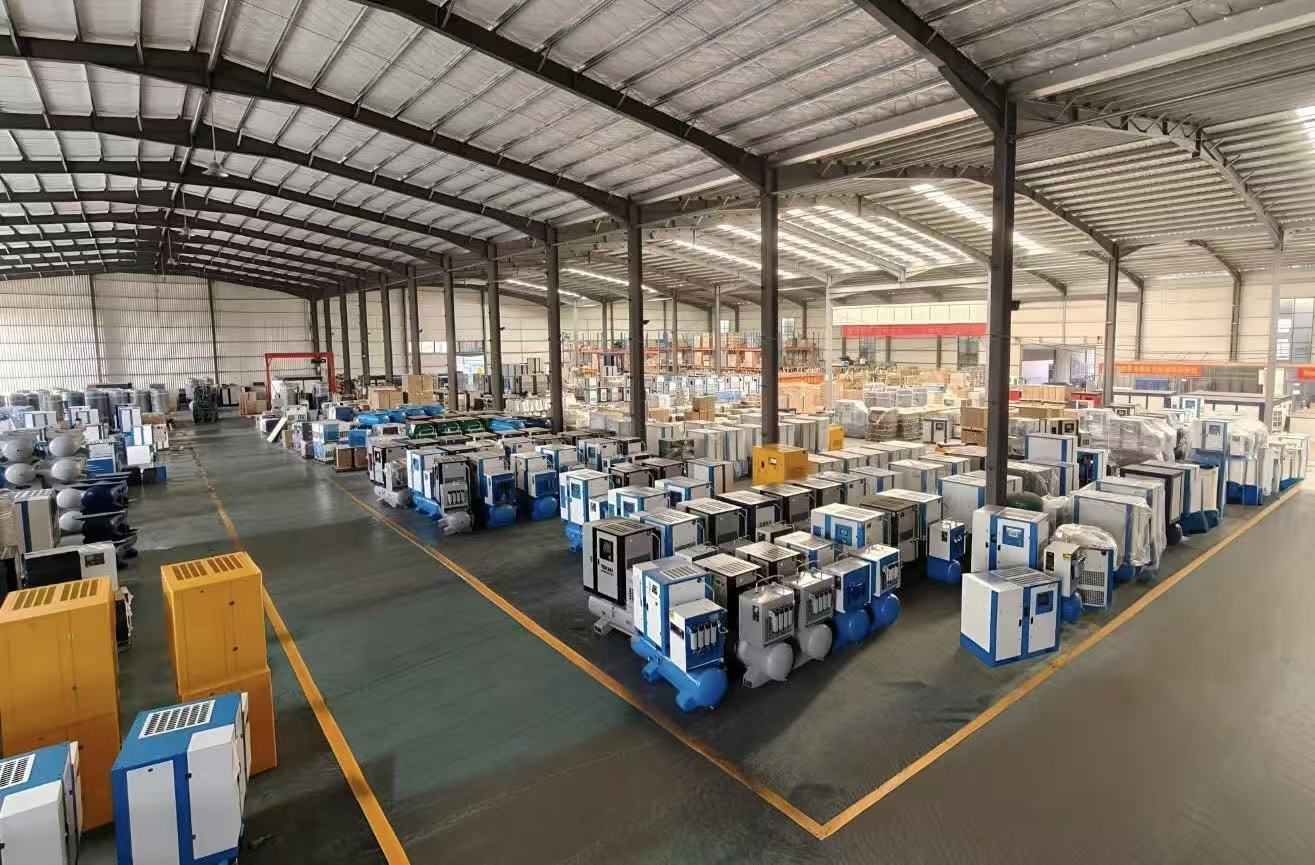
UMW Air, formally Shandong UMW Air Tech Co., Ltd, is an industrial screw air compressor manufacturer based in Jinan, Shandong, China, operating a 2,000 m² facility with an annual output of 12,000 units and 200 staff including a 40-engineer R&D team. Its exports cover the EU, USA, Southeast Asia, the Middle East, South America, and Africa. This article evaluates a portion of that portfolio strictly against the requirements of continuous factory operation — not against a single nameplate rating — and explains the selection logic a buyer can replicate when shortlisting any industrial air compressor.
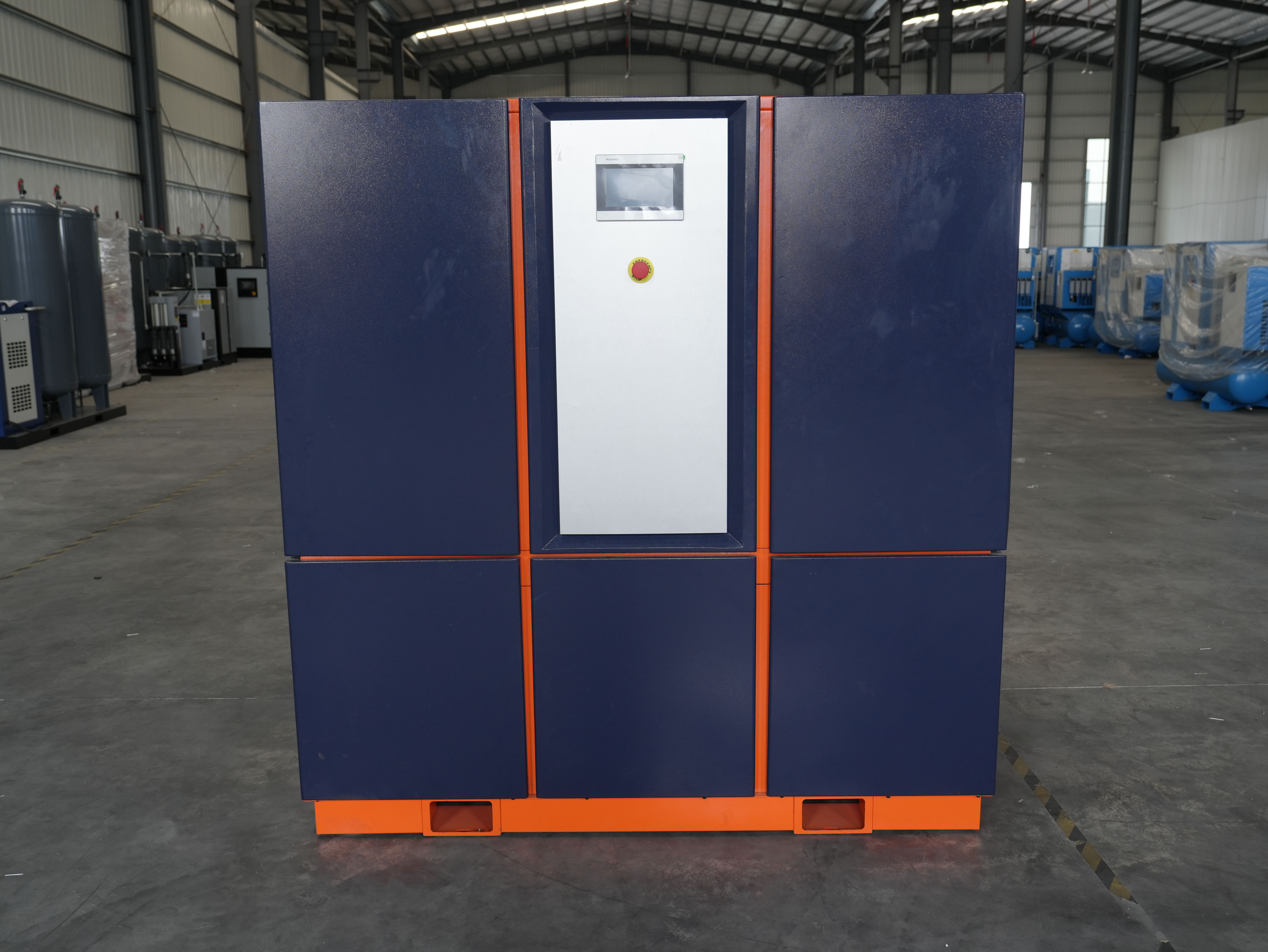
Why 24/7 Operation Reorders the Selection Criteria
A compressor selected for intermittent work is judged mostly on purchase price and peak rating. A compressor selected for continuous work is judged on what it does hour after hour, week after week, without a stoppage. In practice, that shifts the shortlist weighting toward five factors:
- Duty cycle tolerance. Equipment must sustain thermal load without derating or premature wear.
- Efficiency under sustained load. A one- or two-point efficiency difference compounds into a meaningful operating cost over a multi-year life.
- Service accessibility. Maintenance intervals, spare availability, and the ability to reach technical support matter more than a marginal price saving.
- Supporting equipment fit. Air dryers, tanks, filters, inverters, and controllers determine the reliability of the whole compressed air system, not just the compressor head.
- Compliance and documentation. CE documentation, testing records, and warranty terms become part of uptime planning.
The U.S. Department of Energy defines a compressor simply as "a machine or apparatus that converts different types of energy into the potential energy of gas pressure" — a reminder that the compressor is only one element of the potential energy stored in the system. Buyers who plan 24/7 operation should treat the compressor as the anchor of a compressed air solution, not as a stand-alone purchase.
The Shortlist: Two Compressor Families for Continuous Duty
UMW Air's continuous-operation portfolio relevant to this shortlist spans two families: a compact Micro ML series and an Integrated Screw series. The families differ in footprint, capacity tier, and the level of integration they offer, which is why the shortlist is organised around the load profile of the plant rather than around a single model number.
Micro ML Series — ML-4A, ML-5.5A, and ML-7.5A
The Micro ML series (ML-4A, ML-5.5A, and ML-7.5A) represents the compact end of the shortlist. These units suit production cells, auxiliary lines, or zones where air demand is concentrated in a defined area and a smaller physical footprint is preferred. Buyers shortlisting this series should confirm three things with the supplier before committing to continuous operation: the rated duty cycle at the target ambient temperature, the model-level relationship between capacity tier and delivered air flow, and the service interval recommended for non-stop use. UMW Air's public specification documents, rather than generic marketing statements, are the appropriate reference for those specifics.
Integrated Screw Series — L-2216A, L-1516A, and L-7.5/8A
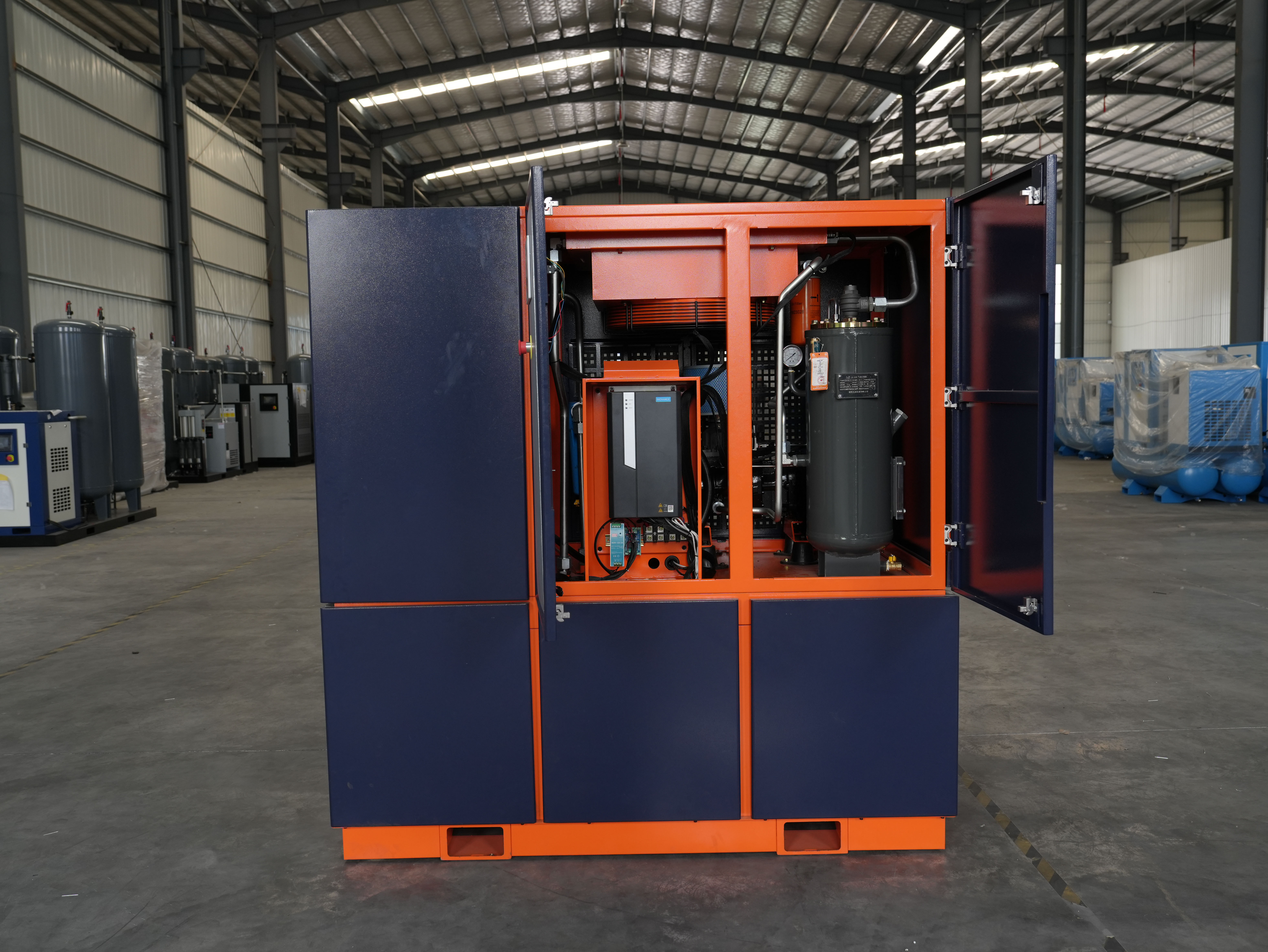
The integrated screw models L-2216A, L-1516A, and L-7.5/8A are the higher-capacity options in this shortlist, and they are the ones most directly associated with continuous factory air demand. All three appear in UMW Air's CE certification scope, which covers the UMW air L, UMW air Z, UMW air P, UMW air M, UMW air N, and UMW air O families. The integrated design groups the compressor, control, and cooling elements into a single package, which simplifies installation in existing factory layouts and reduces the number of interfaces a maintenance team has to manage.
For buyers evaluating this series, the practical selection question is not "which model is largest" but "which model matches the sustained air demand of the plant with a reasonable reserve." That mapping is best done with the supplier using real demand data, because a nameplate rating alone does not account for duty cycle, ambient conditions, or downstream air quality requirements.
Reading the Specifications That Matter
Specification sheets are only useful if the buyer knows which figures to compare. For a 24/7 shortlist, four specification categories carry the most weight: motor efficiency class, pressure range, power range, and delivered air flow. The table below summarises the reference points that apply to the UMW Air portfolio discussed here.
| Specification | Reference value (UMW Air portfolio) | Why it matters for 24/7 operation |
|---|---|---|
| Motor efficiency class | IE4-class motors referenced in UMW Air technical literature | Higher efficiency class reduces waste heat and running current, which matters when the unit runs continuously. |
| Working pressure range | 8–25 bar, as reported in UMW Air's product positioning | Pressure headroom determines which downstream tools and processes the system can support without oversizing. |
| Power range | 4–355 kW across the manufacturer's reported product range | Allows matching of capacity tier to the plant's sustained air demand rather than to peak demand. |
| Delivered air flow | Model-level; to be confirmed against plant demand data | Flow, not tank size, determines whether the compressor keeps up with the line during shift peaks. |
| Certification | CE certificate M.2026.206.C140156, issued by UDEM, valid to 2031-05-10 | Supports EU/EEA market access and gives buyers a documented compliance record for audits. |
The IE4 motor class is the highest efficiency tier in mainstream industrial use today, and its practical benefit is straightforward: lower losses at the motor translate into less heat rejection and lower running current for the same output. Under continuous operation those losses accumulate, so the efficiency class is a selection criterion rather than a marketing label. Buyers should ask the supplier to confirm the actual motor supplied — not just the efficiency class referenced in a brochure — before signing an order for a 24/7 installation.
The 8–25 bar working pressure range and the 4–355 kW power range are UMW Air's reported product envelope. In shortlist terms, that breadth is useful because it allows a single supplier to cover low-pressure auxiliary zones and higher-pressure process demands without splitting the order across vendors. But breadth is not the same as fit: the correct model is the one whose continuous rating sits at or above the plant's sustained demand, not the largest model the supplier offers.
Supporting Equipment Is Part of the Compressor Decision
An adequately sized compressor alone will not deliver reliable 24/7 air. The compressed air system — the compressor plus its treatment and storage elements — determines uptime. Five supporting components appear repeatedly in continuous-operation specifications:
- Air dryer. Removes moisture that would otherwise condense in lines and damage tools or downstream processes.
- Air tank. Provides storage that damps demand spikes and lets the compressor run at a steadier load, which reduces cycling and improves efficiency.
- Line filter. Removes particulates and oil carryover, protecting pneumatic tools and instrumentation.
- Inverter (variable frequency drive). Matches compressor output to actual demand, which is especially valuable where plant air demand fluctuates across shifts.
- Controller. Coordinates the compressor with dryers, tanks, and downstream demand, and provides the monitoring that maintenance teams need for scheduled service.
The relevant standard for air quality is ISO 8573-1:2010, which defines compressed air purity classes. Buyers shortlisting any industrial air compressor for continuous operation should decide the required purity class early, because it drives the specification for the dryer and filter — not just the compressor. UMW Air supplies these supporting elements as part of a compressed air solution rather than as an afterthought, which is one reason the shortlist should be evaluated at system level.
Screw Versus Piston Under Continuous Load
The traditional alternative to a screw compressor is a piston (reciprocating) unit. Piston compressors remain a valid choice for intermittent use, workshops with low duty cycles, or very high pressure applications where a reciprocating design is the more natural fit. Under continuous high-load operation, however, the engineering trade-offs change in ways that favour rotary screw designs.
| Dimension | Rotary screw (e.g., UMW Air L series) | Piston / reciprocating |
|---|---|---|
| Best-suited duty cycle | Continuous and high-load | Intermittent and low-duty |
| Efficiency at sustained load | Generally higher, because the rotary motion and continuous compression path reduce cyclic losses | Generally lower at continuous duty, owing to valve and ring losses over repeated strokes |
| Maintenance profile | Fewer wearing parts; longer service intervals | More frequent valve, ring, and bearing service |
| Noise and vibration | Lower, which matters in round-the-clock plants with nearby workstations | Higher, particularly at high pressure |
| Pressure ceiling | Typically medium-high; suitable for most factory air systems | Suits very high pressure and specialised intermittent applications |
| Initial cost | Higher per unit | Lower per unit |
The efficiency advantage of a screw compressor under continuous load is widely recognised in industrial practice. UMW Air's own application guidance describes rotary screw compressors as sustaining higher efficiency under continuous high-load conditions than piston compressors, which is consistent with the general industry view that a screw design pays back its higher purchase price over a multi-year continuous-duty service life. Buyers should nonetheless request the manufacturer's own efficiency data for the specific model, because the practical gap depends on duty cycle, ambient temperature, and how well the system is controlled.
Application Fit: What Continuous Operation Looks Like in Practice
Abstract specifications become concrete in a real installation. A useful reference is a CNC machining workshop in Vietnam that installed three units of product 4597 — the model family that includes ML-7.5/8A, L-7.5/8A, L-1516A, and L-2216A — to drive CNC machine actuators, pneumatic tools, and dust removal systems. The project reported a 20% improvement in production efficiency and reduced downtime, with low energy consumption, easy maintenance, and reliable long-term performance cited as the key highlights.
The case is illustrative rather than definitive: it is a single installation, and results depend on demand profile, installation quality, and service discipline. But it captures the pattern that matters for a 24/7 shortlist — the value of a screw compressor in continuous duty is not a single efficiency number, it is the combination of stable air supply, low downtime, and manageable maintenance that lets the production line keep running.
Market Context for Rotary Screw Adoption
Several market data points support the case for a screw-focused shortlist in continuous factory environments. The global industrial air compressor market was valued at USD 20.0 billion in 2025, according to Grand View Research. Within that market, the rotary/screw segment held the largest product share at 47.0% in 2025, and the Asia Pacific region accounted for 42.8% of global revenue in the same year.
Two implications follow for buyers. First, rotary screw compressors are the mainstream technology for factory applications, so parts, service, and technical knowledge are widely available — a reliability factor in itself. Second, the Asia Pacific concentration of the market means suppliers based in that region, such as UMW Air, combine proximity to component supply with export experience across the EU, USA, and other markets. Neither point replaces a supplier-specific evaluation, but together they explain why a screw-based shortlist is the working default for continuous operation.
Where This Shortlist Does Not Fit
A shortlist is only credible if it explains its boundaries. The UMW Air shortlist above is designed around continuous factory air demand in the 8–25 bar range and 4–355 kW power envelope. It is not the natural first choice in the following situations:
- Oil-free process air. Applications such as food contact, medical, or semiconductor processes typically require oil-free compression. Buyers should confirm whether an oil-free variant is required rather than assuming that a standard oil-lubricated screw unit is suitable.
- Pressure outside the 8–25 bar envelope. Very high pressure or specialised low-pressure duties may be better served by a different compressor class.
- Intermittent, low-duty workshops. Where a compressor runs a few hours a week at moderate pressure, a piston unit can have a lower total cost despite the efficiency gap under continuous load.
- Installations without adequate ventilation or service access. Even a well-specified screw compressor will underperform if ambient conditions or service access are inadequate; installation planning is part of the selection.
- Regions with specific regulatory requirements. For example, compressors sold into the United States must meet the DOE's energy conservation standards and the testing and certification requirements in 10 CFR Part 429 for products manufactured on or after January 10, 2025. Buyers should confirm the applicable compliance path before finalising a model.
Stating these boundaries does not weaken the shortlist; it makes the recommendation usable. A buyer who actively rules out the scenarios above can treat the UMW Air families as a serious candidate; a buyer whose application sits inside one of them should widen the search.
Purchase Terms and Requesting a Tailored Shortlist
UMW Air publishes commercial terms that are relevant to a shortlist-stage buyer. The MOQ is 1 unit, the standard lead time is 3 days, and OEM and ODM work is available with customization of colour, logo, and voltage. Monthly capacity is stated at 1,000 units, with factory pre-shipment testing applied before dispatch. After-sales support is described as 24/7 technical support by email or phone, including remote troubleshooting and guidance.
| Commercial item | UMW Air stated terms |
|---|---|
| Minimum order quantity (MOQ) | 1 unit |
| Standard lead time | 3 days |
| Customization | Colour, logo, voltage (OEM/ODM) |
| Monthly capacity | 1,000 units |
| Quality control | Factory pre-shipment testing |
| After-sales | 24/7 technical support via email or phone; remote troubleshooting |
| Export markets | EU, US, Middle East, Southeast Asia |
Requesting a tailored shortlist. Because the correct model depends on sustained air demand, ambient conditions, and downstream air quality class, the most useful next step is to share those parameters with the manufacturer. UMW Air can be reached at info@umwair.com or +86 15053148082 (also WhatsApp), with a factory address at 68 Gongye South Road, Jinan, Shandong, China, 250000. Buyers who provide application data, required pressure, and target flow will receive a shortlist mapped to their specific factory profile rather than a generic product list.
FAQ
- What should a 24/7 factory verify before shortlisting an air compressor?
- A continuous-operation buyer should verify the rated duty cycle at the plant's ambient temperature, the model-level delivered air flow against sustained demand, the motor efficiency class actually supplied, the pressure range relative to tool requirements, and the service interval recommended for non-stop use. Certification and pre-shipment testing records should also be confirmed, since they form part of the maintenance and audit trail.
- How does IE4 motor efficiency affect continuous compressor operation?
- IE4 is the highest efficiency class in mainstream industrial motor use. Under continuous operation, motor losses accumulate into running cost and heat rejection, so a higher efficiency class reduces both energy consumption and the cooling load on the compressor package. Buyers should confirm that the motor actually supplied matches the efficiency class referenced by the manufacturer, rather than relying on a brochure value alone.
- What supporting equipment is typically required with an industrial screw compressor?
- A complete compressed air system normally includes an air dryer, an air tank, a line filter, an inverter (variable frequency drive where demand fluctuates), and a controller. The required air quality class, defined by ISO 8573-1:2010, drives the specification of the dryer and filter rather than the compressor alone. Buyers shortlisting a compressor for continuous duty should therefore evaluate the compressor and its treatment and storage elements as one package.
- How do rotary screw and piston compressors compare for continuous duty?
- Rotary screw compressors are generally better suited to continuous, high-load operation because their rotary design and continuous compression path reduce cyclic losses, and they typically need fewer wearing parts and longer service intervals than piston units. Piston compressors remain appropriate for intermittent use, low-duty workshops, and some very high pressure applications, and they carry a lower initial cost. The right choice depends on duty cycle rather than on a single efficiency figure.
- What are UMW Air's purchase terms for a shortlisted compressor?
- UMW Air states an MOQ of 1 unit, a standard lead time of 3 days, OEM/ODM customization of colour, logo, and voltage, monthly capacity of 1,000 units, factory pre-shipment testing, and 24/7 technical support via email or phone including remote troubleshooting. Export markets include the EU, US, Middle East, and Southeast Asia. Buyers should confirm the specific terms for their model, destination, and certification requirements directly with the manufacturer.
Across the shortlist presented here, the common thread is not a single model or a single specification number. It is the fit between the compressor, the supporting compressed air system, and the reality of continuous production — the combination that determines whether a 24/7 plant gets steady air, predictable maintenance, and a cost profile that holds up over the life of the installation.
¿Tiene preguntas o necesita más detalles?
Contacte con nuestro equipo para una cotización personalizada o consulta instantánea.
Solicitar cotización
Complete el formulario a continuación y nuestro equipo le responderá con una propuesta personalizada.
Chat directo de WhatsApp
¿Prefiere chatear en tiempo real? Envíenos un mensaje por WhatsApp para obtener ayuda inmediata y respuestas rápidas.
- Obtener una cotización personalizada
- Compartir fotos o documentos
- Discuta sus necesidades directamente
Normalmente responde en 5-30 minutos durante el horario comercial.