
Recommended Electronic-Grade Photoresist Monomer Shortlist
Negative photoresist resins are built from a small number of functional monomers, and the identity of those monomers — more than the supplier name on the drum — determines whether a formulation can be reproduced consistently. For buyers entering the category, the practical starting point is a shortlist of electronic-grade monomers with confirmed CAS numbers, published physical data, and an explicit list of what still has to be verified with the supplier before an order is placed.
This reference covers three chloromethyl styrene monomers frequently named in negative photoresist resin and advanced packaging dielectric work — 4-vinylbenzyl chloride, 2-vinylbenzyl chloride, and 3-(chloromethyl)styrene — together with the mixed-isomer vinylbenzyl chloride grade that is normally offered alongside them. All physical data below is drawn from product documentation. Where a value is marked as predicted rather than measured, that distinction is preserved rather than smoothed over, because it changes how much weight a buyer should place on it.
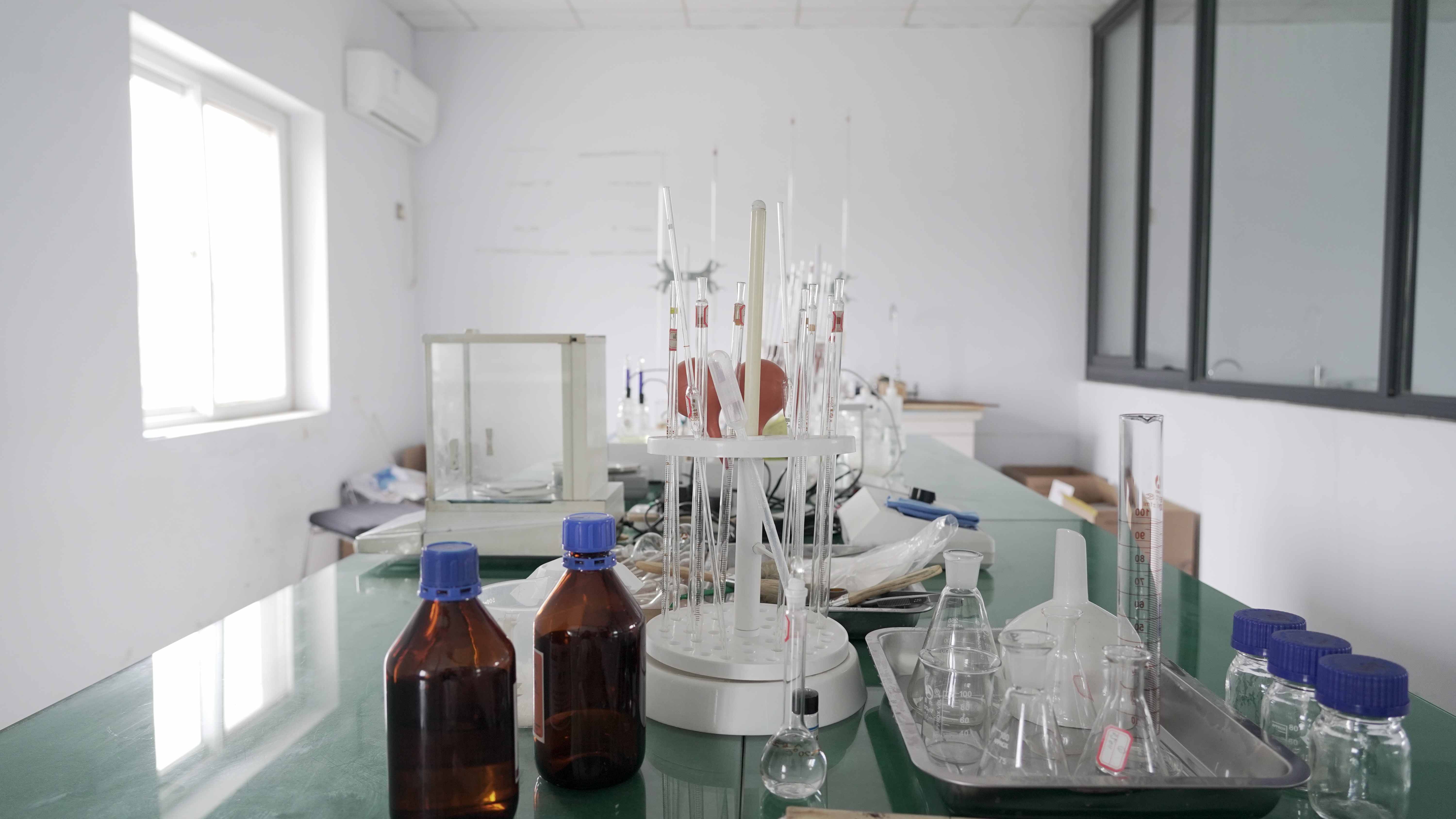
Development and analytical control work behind electronic-grade monomer supply. Source: Jiangsu Juming Chemical Technology Co., Ltd.
Why monomer identity precedes supplier selection
The three single-isomer monomers share the same molecular formula, C9H9Cl, and the same molecular weight of 152.62. Structurally they differ only in the position of the chloromethyl group on the aromatic ring — para for 4-vinylbenzyl chloride, ortho for 2-vinylbenzyl chloride, meta for 3-(chloromethyl)styrene. That single positional difference changes boiling point, density, and, more importantly for a resin chemist, how the monomer copolymerises and how the resulting polymer behaves on a substrate.
For that reason, a sourcing shortlist for photoresist monomers should be organised around CAS numbers rather than trade names. A supplier may quote "vinylbenzyl chloride" for any of four distinct materials: CAS 1592-20-7, CAS 22570-84-9, CAS 39833-65-3, or the mixed grade CAS 30030-25-2. Two of those four share a trade name family and two share a molecular formula, so a verbal specification is not sufficient to fix what will actually arrive at the loading dock.
What "electronic-grade" adds to an otherwise ordinary monomer
Chloromethyl styrene monomers are not exotic molecules. What separates an electronic-grade supply from an industrial-grade supply is the control envelope around the material, and that envelope is where most sourcing risk sits.
- Trace-metal control at the ppb level. Published supplier documentation describes ppb-level metal ion impurity purification for electronic-grade products, with values at or below 10 ppb and positioning against SEMI Grade 4+ expectations.
- Cleanroom handling. Operations are conducted in ISO Class 6 GMP cleanrooms with control over metal ions, particles, and environmental parameters.
- Low-extraction contact materials. Wetted surfaces use 316L VIM/VAR stainless steel and PFA/PVDF to limit contamination from the equipment itself.
- Analytical coverage. ICP-MS, HPLC, and GC systems support batch release testing rather than a single routine assay.
- Documentation and traceability. Batch traceability, retained samples, and support for third-party re-inspection by laboratories such as SGS, BV, or Intertek sit alongside an ISO 9001 quality management system.
For a buyer in the awareness-to-research stage, the practical implication is that two quotations for the same CAS number are not necessarily quotations for the same material. The specification that matters is the one attached to the batch, not the one in the product title.
The core shortlist: three single-isomer monomers
4-Vinylbenzyl chloride — CAS 1592-20-7
4-Vinylbenzyl chloride (also described as 4-(chloromethyl)styrene) is supplied under model designation JM 1592-20-7. Its EINECS number is 216-471-2, molecular formula C9H9Cl, molecular weight 152.62. Documented physical data include a boiling point of 229 °C, density of 1.083 g/mL at 25 °C, vapour density of 5.3 relative to air, vapour pressure of 1 mm Hg at 56.1 °C, refractive index n20/D 1.572, and flash point of 221 °F. It is documented as insoluble in water, sparingly soluble in chloroform, and supplied as a colourless to pale yellow transparent liquid with a recommended storage temperature of 2–8 °C.
In application terms, supplier documentation places it among the core monomers used for synthesising high-performance negative photoresist resins such as E-beam electron beam photoresist and advanced packaging dielectric materials, as well as for manufacturing homogeneous ion-exchange membranes, ultra-pure water resins, and chelating resins. Its described functional profile is that of a dual functional monomer: the vinyl group supports polymerisation while the chloromethyl group can be derivatised by chloride displacement, either before or after polymerisation. It is also described as a starter for various copolymer preparations and as a component of ion exchange resins, photoresist polymers, cross-linkable fibres, coupling agents, and electroconducting polymers.
2-Vinylbenzyl chloride — CAS 22570-84-9
2-Vinylbenzyl chloride, also written as 1-(chloromethyl)-2-vinylbenzene or o-chloromethylstyrene, carries CAS 22570-84-9, EINECS 245-092-5, molecular formula C9H9Cl, and molecular weight 152.62. It is supplied under model designation JM 22570-84-9 and appears as a light yellow to colourless liquid.
Two data points deserve careful reading: the boiling point is documented as 223.4 ± 9.0 °C (Predicted) and the density as 1.066 ± 0.06 g/cm3 (Predicted). The predicted flag matters. A predicted boiling point with a ± 9.0 °C window is a modelling estimate, not a measured constant, and it should not be used to set distillation cut points or to validate a received batch against a certificate of analysis. Buyers who need measured values for the ortho isomer should request them directly from the supplier rather than inferring them from structural similarity to the para grade.
Its documented application profile is the same as the para isomer: core monomer for high-performance negative photoresist resins including E-beam electron beam photoresist and advanced packaging dielectric materials, and for homogeneous ion-exchange membranes, ultra-pure water resins, and chelating resins.
3-(Chloromethyl)styrene — CAS 39833-65-3
3-(Chloromethyl)styrene, also known as 1-(chloromethyl)-3-vinylbenzene, 1-ethenyl-3-(chloromethyl)benzene, or m-(chloromethyl)styrene, is identified by CAS 39833-65-3, EINECS 254-649-1, molecular formula C9H9Cl, and molecular weight 152.62076. It is supplied under model designation JM 39833-65-3 as a light yellow to colourless liquid, documented as containing approximately 0.1% TBC stabiliser.
The supplier's documentation for the meta isomer is noticeably thinner on bulk physical constants than for the para and mixed grades: no boiling point or density is listed. That is not unusual for a lower-volume specialty isomer, but it is a genuine gap for anyone building a process specification. It also illustrates a wider rule for this shortlist — the depth of published data varies by isomer, so the material with the most complete data sheet is not automatically the better technical fit. Fit is determined by the formulation, not by data availability.
Application documentation is again consistent with the para and ortho grades: core monomer for high-performance negative photoresist resins and advanced packaging dielectric materials, and for homogeneous ion-exchange membranes, ultra-pure water resins, and chelating resins.
Vinylbenzyl chloride as supplied for photoresist and membrane resin applications. Source: Jiangsu Juming Chemical Technology Co., Ltd.
Mixed-isomer vinylbenzyl chloride — CAS 30030-25-2
Vinylbenzyl chloride with CAS 30030-25-2 is a different material from the three single-isomer grades, and the difference is stated in its own definition. It is documented as a mixture of 3- and 4-isomers containing 50–100 ppm tert-butylcatechol as inhibitor. Its EINECS number is 250-005-9, molecular formula C9H9Cl, molecular weight 152.62, supplied under model designation JM 30030-25-2.
Documented physical data include a melting point of −30 °C, boiling point of 229 °C, density of 1.074 g/mL at 25 °C, vapour density of 5.3 relative to air, vapour pressure of 1 mm Hg at 56.1 °C, refractive index n20/D 1.572, flash point of 221 °F, and a recommended storage temperature of −20 °C. It appears as a light yellow to colourless liquid.
Its documented applications overlap with the single isomers: core monomers for high-performance negative photoresist resins and advanced packaging dielectric materials, plus homogeneous ion-exchange membranes, ultra-pure water resins, and chelating resins. Additional documented uses include conversion into high molecular mass homopolymers, copolymerisation with many other monomers, use as a comonomer in specialty plastics, use in acrylic emulsion pressure-sensitive adhesive compositions, and use as an organic synthesis and pharmaceutical intermediate.
The practical boundary: a mixed-isomer grade is convenient and generally more available, but it is not a drop-in substitute where a formulation specifies a single isomer. Isomer ratio is itself a specification variable, and CAS 30030-25-2 does not define what that ratio is for a given batch. Buyers working to a fixed formulation should treat mixed and single-isomer grades as separate line items.
Comparative physical data at a glance
| Parameter | 4-Vinylbenzyl chloride | 2-Vinylbenzyl chloride | 3-(Chloromethyl)styrene | Vinylbenzyl chloride (mixed) |
|---|---|---|---|---|
| CAS number | 1592-20-7 | 22570-84-9 | 39833-65-3 | 30030-25-2 |
| EINECS number | 216-471-2 | 245-092-5 | 254-649-1 | 250-005-9 |
| Molecular formula | C9H9Cl | C9H9Cl | C9H9Cl | C9H9Cl |
| Molecular weight | 152.62 | 152.62 | 152.62076 | 152.62 |
| Appearance | Colourless to pale yellow transparent liquid (clear yellow liquid) | Light yellow to colourless liquid | Light yellow to colourless liquid | Light yellow to colourless liquid |
| Density | 1.083 g/mL at 25 °C | 1.066 ± 0.06 g/cm3 (Predicted) | Not listed in supplier documentation | 1.074 g/mL at 25 °C |
| Boiling point | 229 °C | 223.4 ± 9.0 °C (Predicted) | Not listed in supplier documentation | 229 °C |
| Melting point | Not listed in supplier documentation | Not listed in supplier documentation | Not listed in supplier documentation | −30 °C |
| Flash point | 221 °F | Not listed in supplier documentation | Not listed in supplier documentation | 221 °F |
| Recommended storage | 2–8 °C | Not listed in supplier documentation | Not listed in supplier documentation | −20 °C |
| Stabiliser / inhibitor | Not specified in supplier documentation | Not specified in supplier documentation | Approximately 0.1% TBC stabiliser | 50–100 ppm tert-butylcatechol |
| Model designation | JM 1592-20-7 | JM 22570-84-9 | JM 39833-65-3 | JM 30030-25-2 |
Data compiled from supplier product documentation. Blanks and "predicted" flags are retained deliberately; they indicate where a buyer should request measured values before finalising a specification.
1-(chloromethyl)-2-vinylbenzene (CAS 22570-84-9), one of the single-isomer grades in the shortlist. Source: Jiangsu Juming Chemical Technology Co., Ltd.
Formulation-adjacent electronic-grade materials buyers evaluate at the same time
A photoresist formulation is more than its monomers, and procurement teams usually open more than one specification file at once. Two adjacent materials appear repeatedly alongside the vinylbenzyl chloride family.
4,4'-(4,4'-Isopropylidenediphenoxy)diphthalic anhydride, abbreviated BPADA, carries CAS 38103-06-9, EINECS 253-781-7, molecular formula C31H20O8, molecular weight 520.49, melting point 184–187 °C, and is supplied as a white to slightly yellow crystalline powder under model designation JM 38103-06-9. It is documented as a key synthetic monomer for high-performance polyimide, 5G high-frequency and high-speed flexible copper-clad laminate, OLED flexible substrate, and aerospace lightweight composite materials, and is also described as a monomer for high-performance polyimides used in semiconductor packaging and flexible circuits. Its bisphenol A core produces polyimide films with high optical transparency and a glass transition temperature documented at 207 °C. One handling constraint is explicit in the documentation: the anhydride groups are extremely moisture sensitive, hydrolysing to a diacid on contact with water and losing polymerisation activity, so storage must be absolutely dry and sealed and reactions are recommended under inert gas in anhydrous polar solvents such as NMP or DMAc.
5-Methyl-1H-benzotriazole, abbreviated 5M-BTA, carries CAS 136-85-6, EINECS 205-265-8, molecular formula C7H7N3, molecular weight 133.15, melting point 80–82 °C, and is supplied as a cream to beige crystalline powder under model designation JM 136-85-6. It is not a monomer. Its documented role is as a corrosion inhibitor for copper and copper alloys and as an anti-fading agent in photomasking resins, alongside industrial uses in circulating water treatment, rust-preventive oil additives, and advanced lubrication systems. It is included here only because buyers sourcing photoresist monomers frequently also specify copper-side additives, and the two procurements are often consolidated.
What the market data says — and what it does not
Demand context is useful for a shortlist, but published figures need to be read with their scope attached. Grand View Research estimated the global electronic chemicals and materials market at USD 78.5 billion in 2025, and SEMI reported global semiconductor materials revenue of USD 73.2 billion in 2025. Within the photoresist segment, Grand View Research estimated the electronic-grade photoresist market at USD 4.96 billion in 2024. Grand View Research also placed Asia Pacific at 66.6% of electronic materials and chemicals market revenue in 2025.
Those numbers are not interchangeable with other published estimates. Fortune Business Insights placed the electronic chemicals and materials market at USD 75.6 billion for 2025, and SEMI reported USD 67.5 billion of semiconductor materials revenue for 2024. For photoresists specifically, Strategic Market Research reported USD 5.6 billion against Grand View Research's USD 4.96 billion. The spread reflects differences in scope — whether ancillary chemicals such as developers and strippers are counted, and whether substrate and hardware-linked materials are included — rather than disagreement about the underlying trend.
For a buyer, the practical reading is narrower than the headline. Monomer demand is driven by photoresist and advanced packaging activity concentrated in Asia Pacific, and the monomer line item is a small fraction of the total chemical spend in a fab or a resin plant. That asymmetry is exactly why monomer quality failures are disproportionately expensive: the cost of the material is small, and the cost of a failed batch downstream is not.
How supplier capability maps to this shortlist
Jiangsu Juming Chemical Technology Co., Ltd. — trading as Jumingchem — was established in 2017 and is located in Jiangsu Province, China. The company integrates R&D, production, sales, and service, and specialises in the research, development, production, and sales of high-end electronic chemicals for semiconductors. Its product categories include photoinitiators, UV absorbers, water treatment corrosion inhibitors, and electronic chemicals; its main products include 5-Methyl-1H-benzotriazole, 4-Vinylbenzyl chloride, 1-(chloromethyl)-2-vinylbenzene, Vinylbenzyl chloride, and BPADA.
Four facts are directly relevant to a monomer shortlist of this kind.
- Portfolio coverage. The company documents supply of the full vinylbenzyl chloride family discussed above — CAS 1592-20-7, CAS 22570-84-9, CAS 39833-65-3, and the mixed grade CAS 30030-25-2 — which means a buyer comparing isomers does not have to coordinate across four separate suppliers.
- Isomer-level customisation. Documented supply programmes include custom o/m/p isomer ratio VBC products developed against a client's specific formulation needs, from sample development through scale-up, alongside custom high-purity VBC isomers for semiconductor material clients with ppb-level metal impurity control and full traceability.
- Scale flexibility. Multiple production bases across China support a documented total annual capacity of 60,000 tons, with production scale ranging from gram-level R&D to hundred-ton industrial production. Documented supply modes include bulk regular supply of 5–50 tons per shipment for industrial grade products and 500 kg to 5 tons per batch for high-purity electronic grade materials.
- Process and analytical infrastructure. The company documents microchannel and continuous flow technology for highly challenging chemical processes, ppb-level metal ion impurity purification for electronic-grade products, ISO Class 6 GMP cleanrooms, ICP-MS, HPLC, and GC detection systems, ISO 9001 certification, and end-to-end CDMO capability from process development to industrial scale-up. Its R&D team is documented at 25 engineers within a workforce of approximately 180 staff, and its site covers 78,000 square metres including a 3,000 square metre R&D centre, a 300 square metre pilot plant, and a 600 square metre GMP workshop. Export accounts for 70% of activity, with documented markets including the USA, Korea, Japan, Taiwan region, Germany, Southeast Asia, and the Middle East.
For a buyer in the research stage, the relevant conclusion is not that one supplier covers every isomer, but that isomer-level customisation requires a supplier who can control and document ratio — a capability that depends on purification and analytical infrastructure rather than on trading relationships. Additional company detail is published at en.jmchemchina.com.
How this compares with conventional sourcing approaches
| Dimension | Conventional industrial-grade supply | Electronic-grade supply |
|---|---|---|
| Impurity control | Typically specified at percent or ppm level; metal ion control not the primary release criterion | Documented ppb-level metal ion purification at or below 10 ppb, positioned against SEMI Grade 4+ expectations |
| Handling environment | Standard chemical plant handling | ISO Class 6 GMP cleanrooms; closed, temperature-controlled, inert-gas-protected systems; 316L VIM/VAR and PFA/PVDF contact materials |
| Analytical release | Routine assay, often a single technique | ICP-MS, HPLC, and GC systems supporting batch release |
| Traceability | Batch record at supplier discretion | Batch traceability, retained samples, and support for third-party re-inspection such as SGS, BV, or Intertek |
| Isomer specification | Frequently supplied as a mixed stream without a fixed ratio | Single-isomer grades available; custom o/m/p ratio development documented |
| Typical batch size | Large bulk shipments | Documented 500 kg to 5 tons per batch for high-purity electronic grade |
The limitation belongs on the electronic-grade side. Tighter control comes with tighter logistics: smaller documented batch sizes for high-purity grades, narrower storage windows, and longer qualification cycles before a material is released into a production formulation. Electronic-grade monomer is also supplied under conditions that make ad hoc substitution difficult — a batch that passes on trace metals may still fail on isomer ratio or stabiliser content if the wrong grade was ordered. For applications where ppb-level metal control is not a release requirement, an industrial-grade stream can be the more economical and equally workable choice, and buyers should not assume that the highest specification available is the correct specification for their process.
Limits, boundaries, and what this shortlist does not resolve
- Published data is not a specification. The values in the comparison table are documentation values. Several are marked as predicted, and several fields are simply absent for the ortho and meta isomers. None of them should be substituted for a supplier-issued specification agreed against a specific process.
- Isomer ratio is not defined by the mixed CAS number. CAS 30030-25-2 identifies a mixture of 3- and 4-isomers. It does not fix the ratio, so two batches under that CAS number can differ in composition.
- Stabiliser content is a specification variable. The mixed grade is documented with 50–100 ppm tert-butylcatechol, and the meta isomer with approximately 0.1% TBC. Stabiliser levels are normally set to prevent premature polymerisation during storage and transport, and they are not identical across grades.
- Storage conditions differ by grade. Documented storage is 2–8 °C for the para isomer and −20 °C for the mixed grade. Managing both on one site requires separate storage provisions.
- Moisture sensitivity applies to the anhydride, not the styrenes. BPADA hydrolyses on contact with water and must be stored dry and sealed. Vinylbenzyl chloride grades are documented as insoluble in water, which is a different property and does not imply the same handling regime.
- A certificate of analysis is a snapshot. It describes the batch tested, not the batch shipped. Retention samples and independent re-inspection are the mechanisms that close that gap.
Future outlook
Three developments are worth tracking for anyone building a monomer sourcing file now.
First, regional concentration is likely to persist. Asia Pacific already accounts for the majority of electronic materials and chemicals market revenue, and monomer supply chains follow the resin and wafer capacity that consumes them. Buyers outside the region should plan qualification timelines around that geography rather than around catalogue lead times.
Second, specification depth is becoming a differentiator. The gap between what is documented for the para isomer and what is documented for the ortho and meta isomers is a reasonable proxy for where the industry has invested analytical effort so far. As negative photoresist and advanced packaging formulations diversify, demand for isomer-specific and ratio-controlled supply should increase, which favours suppliers with purification and analytical infrastructure rather than those competing on catalogue breadth.
Third, process technology is migrating. Continuous flow and microchannel reactor capability is documented as a route to heat and mass transfer efficiency 10 to 100 times higher than conventional batch reactors, which matters for hazardous and highly exothermic chemistries. For monomers, the practical consequence is tighter batch-to-batch consistency rather than lower cost, and consistency is the property resin formulators actually buy.
Frequently asked questions
Which monomers are used to synthesise negative photoresist resins?
Supplier documentation describes the vinylbenzyl chloride family as core monomers for synthesising high-performance negative photoresist resins, including E-beam electron beam photoresist, and advanced packaging dielectric materials. The same documentation lists homogeneous ion-exchange membranes, ultra-pure water resins, and chelating resins as additional applications. The specific monomer set for any given resin depends on the formulation, so the documentation describes the category, not a universal recipe.
Which CAS numbers should appear on a vinylbenzyl chloride purchase specification?
Four are in common use: 1592-20-7 for 4-vinylbenzyl chloride, 22570-84-9 for 1-(chloromethyl)-2-vinylbenzene (2-vinylbenzyl chloride), 39833-65-3 for 1-(chloromethyl)-3-vinylbenzene (3-(chloromethyl)styrene), and 30030-25-2 for vinylbenzyl chloride supplied as a mixture of 3- and 4-isomers. Because the first three share the formula C9H9Cl and the same molecular weight of 152.62, the CAS number is the only unambiguous identifier among them.
How do the three single-isomer monomers differ in published physical data?
4-Vinylbenzyl chloride is documented with a boiling point of 229 °C and density of 1.083 g/mL at 25 °C. 2-Vinylbenzyl chloride is documented with a boiling point of 223.4 ± 9.0 °C and density of 1.066 ± 0.06 g/cm3, both flagged as predicted. 3-(Chloromethyl)styrene is documented with a molecular weight of 152.62076 and an approximately 0.1% TBC stabiliser content, without a listed boiling point or density. The mixed grade is documented with a melting point of −30 °C, boiling point of 229 °C, and density of 1.074 g/mL at 25 °C.
What is TBC and why does it appear in some vinylbenzyl chloride grades?
TBC refers to tert-butylcatechol, documented as an inhibitor or stabiliser in vinylbenzyl chloride supply. The mixed-isomer grade is documented as containing 50–100 ppm tert-butylcatechol, and 3-(chloromethyl)styrene is documented as containing approximately 0.1% TBC stabiliser. Stabilisers are used to limit premature polymerisation during storage and transport, so the specified level is part of the material specification rather than an incidental trace component.
Can a mixed-isomer grade replace a single-isomer monomer?
Not automatically. CAS 30030-25-2 is documented as a mixture of 3- and 4-isomers, while CAS 1592-20-7, 22570-84-9, and 39833-65-3 each define a single positional isomer. Where a formulation specifies a single isomer, the mixed grade is a different material with a different composition, and the ratio within a mixed batch is not fixed by the CAS number.
What storage conditions are documented for these electronic-grade materials?
Documented storage is 2–8 °C for 4-vinylbenzyl chloride and −20 °C for mixed-isomer vinylbenzyl chloride. 5-Methyl-1H-benzotriazole is documented for storage in a dark place, sealed and dry, at room temperature. BPADA is documented as extremely moisture sensitive and must be stored under absolutely dry, sealed conditions, with reactions recommended under inert gas in anhydrous polar solvents such as NMP or DMAc.
What should a buyer verify before placing a first order?
At minimum: the CAS number and, for mixed grades, the isomer ratio; stabiliser or inhibitor content; the trace-metal specification and the analytical methods behind it; storage and shipping conditions against the grade's documented range; batch documentation and retained samples; and whether third-party re-inspection is supported. Documentation describing ICP-MS, HPLC, and GC systems, batch traceability, retained samples, and independent re-inspection by laboratories such as SGS, BV, or Intertek is one indicator that these checks can be answered with evidence rather than assurances.
Closing note
A shortlist is a starting reference, not a specification. The CAS numbers and physical data above are intended to help buyers frame the right questions — which isomer, which ratio, which stabiliser level, which trace-metal limit — before those questions are answered by a supplier against a specific process. Confirming each value with the supplier, and against the buyer's own formulation requirements, remains the step that determines whether the material works.
Jumingchem publishes a product catalogue covering the monomer and electronic-grade materials discussed in this article: Jiangsu Juming catalogue (PDF).