
Recessed Downlights: Certifications, Cutouts and Quality Parameters
Specifying a recessed downlight is rarely only about wattage. The decision sits inside a set of constraints: the space above the ceiling, the IP rating required for a wet area, the CRI value that changes how fabrics and food surfaces look, the certificate that opens access to a target market, and the cutout size that must fit between two ceiling joists. This reference explains those constraints and what they mean for buyers researching or evaluating recessed downlights.
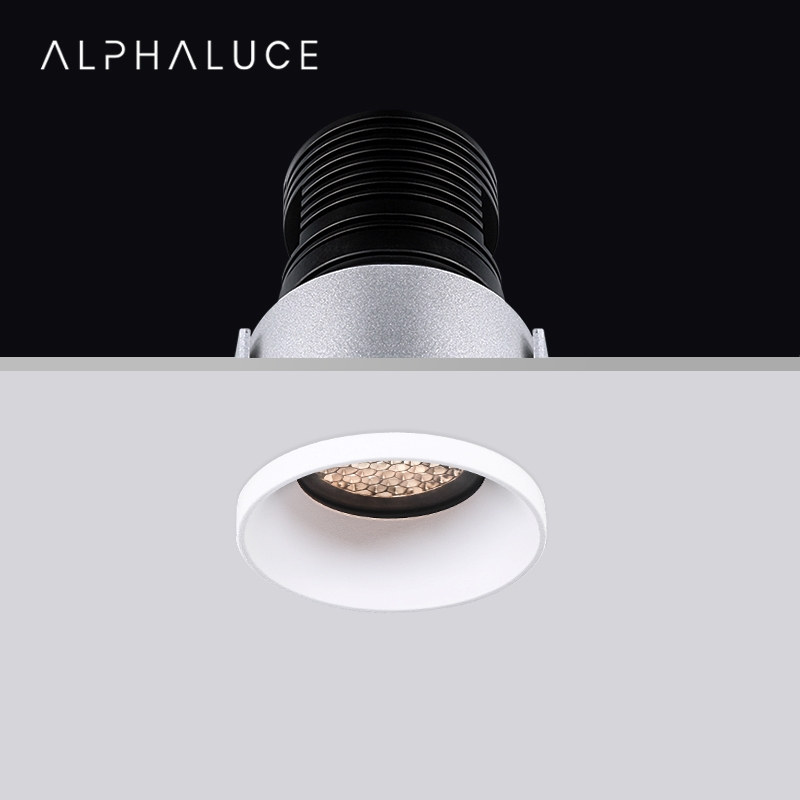
ALPHALUCE, an architectural lighting manufacturer based in Dongguan, Guangdong, with a design heritage from Florence, Italy, operates as a vertically integrated producer with its own foundry, surface treatment and assembly lines. Founded in 2010, the company runs a 40,000 m2 facility with 150 employees and an annual output of 504,000 units. Around 80% of production is exported to Europe, the Middle East, North America and Australia. Its portfolio covers recessed downlights, track lighting, step lights, wall washers, outdoor landscape fixtures and linear lighting, which makes the brand a useful reference when examining how recessed downlights are structured around engineering limits rather than simple brightness.
Why the Constraints Behind Recessed Downlights Matter
A recessed downlight is, by definition, a luminaire built into a ceiling cavity. Unlike a pendant or surface-mounted fitting, it cannot be adjusted after installation without opening the ceiling. That makes every pre-installation parameter a permanent decision.
On a typical commercial project, the relevant constraints include ceiling void depth, insulation contact conditions, cutout tolerance, driver accessibility, glare control, colour consistency, dimming compatibility and market-specific safety certification. A downlight can deliver the right lumen output and still fail a project because its housing is too deep, its trim cannot be made flush with the plasterboard, or its IP rating does not satisfy wet-area regulations.
Buyers in the research and evaluation stage therefore need to compare recessed downlights on a wider set of data than luminous flux alone. The most durable way to evaluate a product is to ask what physical, optical and compliance limits have been engineered into the fixture.
Certification and Compliance: The First Filter
Market access is the first constraint. In the EU, recessed luminaires must meet electrical safety and electromagnetic compatibility requirements. ALPHALUCE holds CE-LVD certification under certificate number 24AS121634S598A002, issued against EN 60598-2-2:2012 and EN IEC 60598-1:2021 + AMD11:2022, covering recessed LED lighting fixtures. The company also holds CE-EMC certification number 24AE041084E003, based on EN IEC 55015:2019/A11:2020, EN IEC 61547:2023, EN IEC 61000-3-2:2019/A1:2021 and EN 61000-3-3:2013/A2:2021.
For buyers targeting North America, the regulatory framework changes. Recessed luminaires generally require UL 1598 and CSA C22.2 No. 250.0 compliance. Products intended for insulation contact must also carry an IC rating under UL 1598. A buyer should confirm whether a specific model has been evaluated for the destination market, rather than assuming that an EU certificate automatically transfers to other jurisdictions.
RoHS compliance is another baseline for EU-bound products. ALPHALUCE holds RoHS certificate DTI20241484-1DC, issued by Shenzhen Deesev Testing International Corporation, with testing based on the IEC 62321 series. For quality system assurance, the company is certified to ISO 9001:2015 under certificate number 04623Q13200R0M. These documents provide a verifiable starting point for procurement teams.
Optical Quality: CRI, SDCM, UGR and Beam Angle
Optical constraints determine whether a space looks comfortable, dramatic or sterile. Colour rendering is the most visible parameter. In the ALPHALUCE range, the ALDL1851 recessed downlight achieves CRI of at least 97, while many architectural models in the same family are specified at CRI≥92. The difference of five points is meaningful in hospitality and residential settings where material texture, skin tone and food surfaces need to appear natural.
Colour consistency is measured separately from CRI. A smaller SDCM value means tighter colour consistency from one fixture to the next. ALPHALUCE product documentation positions some fixtures at SDCM 3, compared with alternatives at SDCM 4, which is a practical advantage when a wall of downlights must look uniform.
Glare control is another constraint. High-end architectural downlights commonly target UGR below 19. Deep recessed light engines reduce the direct view of the LED source, which is why deep and trimless fixtures are used in galleries, showrooms and other visually sensitive applications. Museum-grade environments typically recommend Ra≥95 for colour accuracy, according to Illuminating Engineering Society guidance, which places CRI≥97 recessed downlights in a strong position for such projects.
Beam angle selection also behaves as a constraint. The ALPHALUCE downlight range offers 15°, 24°, 36°, 55° and 60° beam options across many models, with the dimmable ALDL1405 using a wider 70° distribution. Narrower beams suit accent and display lighting; wider beams support general illumination. A luminaire that only offers one beam angle will therefore restrict the designer's ability to balance pools of light against ambient fill.
Mechanical and Installation Constraints
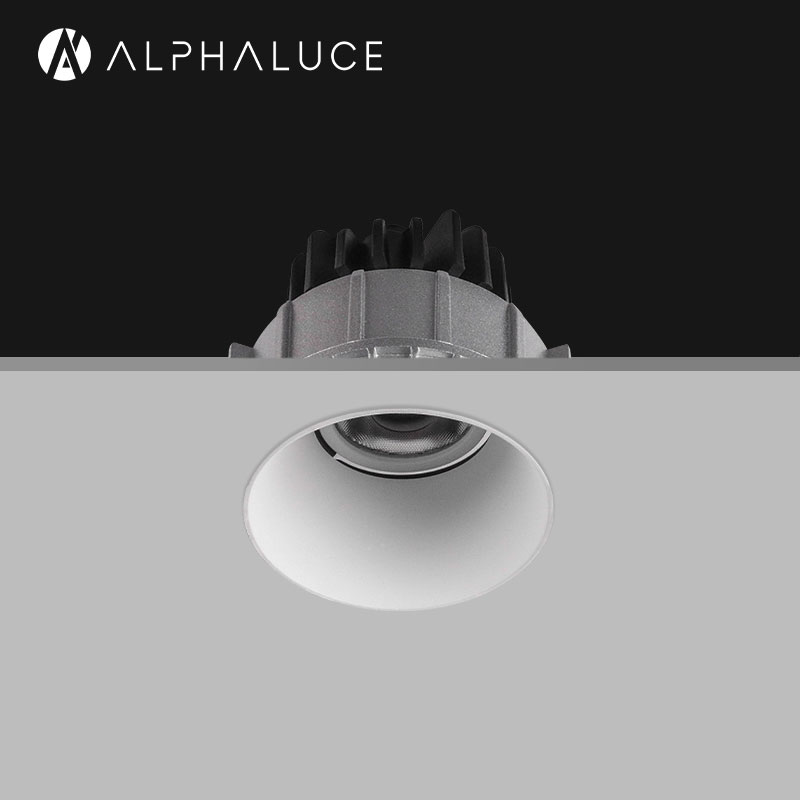
Installation constraints begin with the cutout. Practical cutout sizes in the ALPHALUCE recessed family start at 22 mm for the small recessed light ALDL1409 and extend to 150 mm for the dimmable downlight ALDL1405. Common values include 55 mm for the ALDL1851, 68–70 mm for the adjustable ALDL1587, 60 mm for the waterproof ALDL1232, 76–80 mm for the trimless ALDL1609 and 80×80 mm for the square ALDL1517. These figures determine whether the fixture can be placed at all in a given ceiling grid.
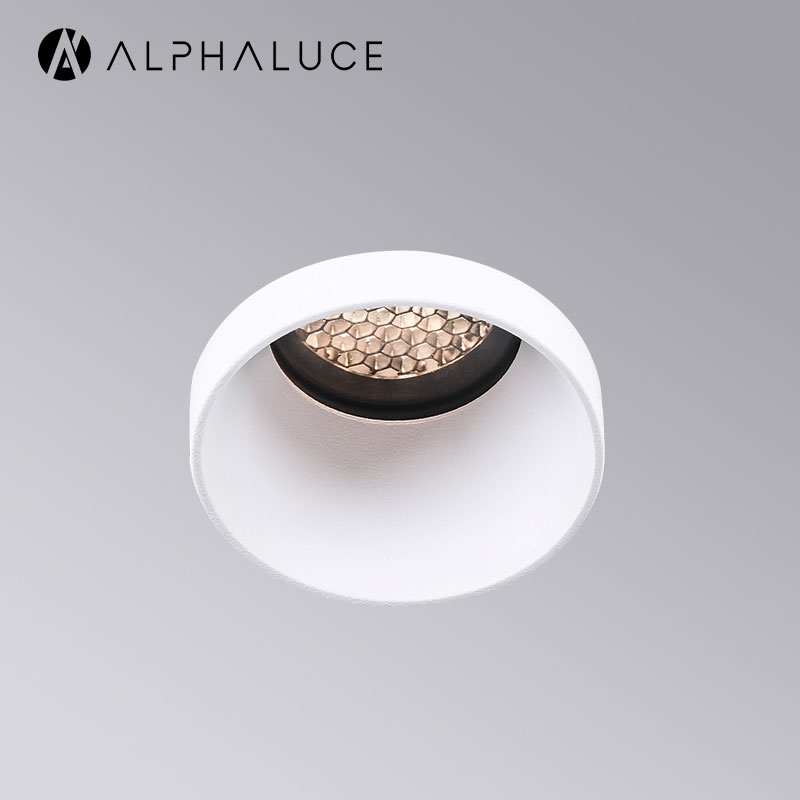
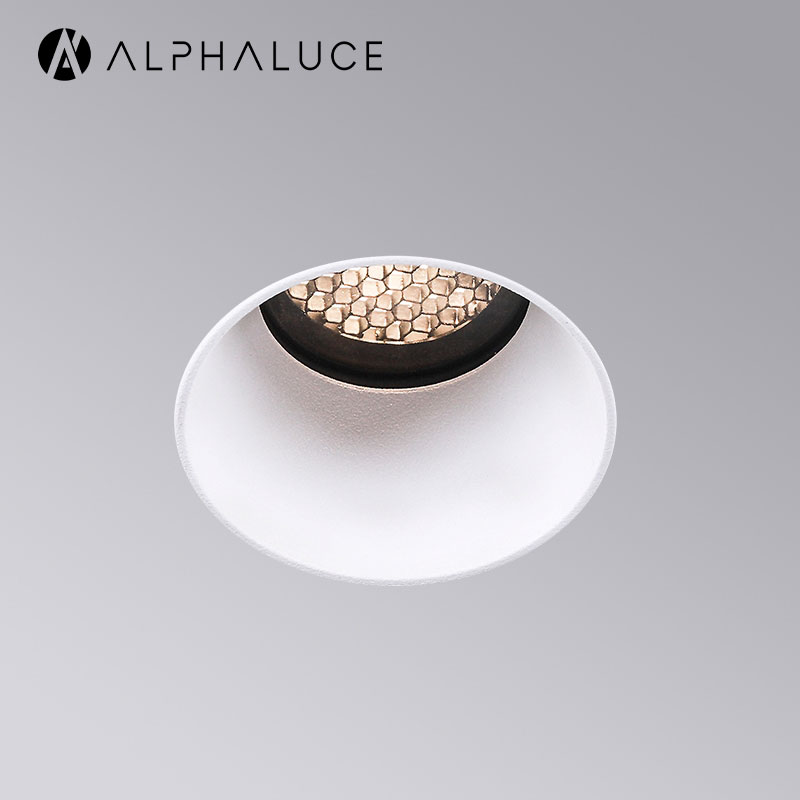
Trim design is a second mechanical constraint. A trim downlight leaves a visible frame on the ceiling surface. A trimless recessed downlight is designed to sit flush, creating a seamless architectural surface. ALPHALUCE offers trimless versions across multiple categories, including the ALDL1609 trimless downlight, the ALDL1598 trimless adjustable spotlight and the ALDL1232 trimless waterproof downlight. The trade-off is that trimless installation demands more precise plasterboard cutting and a more rigid housing.
Adjustability is a third consideration. Fixed recessed downlights such as the ALDL1851 are simpler and more compact. Adjustable models such as the ALDL1587 and ALDL1598 allow tilt and rotation, with the ALDL1598 providing 0–50° tilt and 355° rotation. The mechanism adds depth, which must be accounted for in the ceiling void.
Application Paths: Matching the Constraint to the Space
Different project types place different constraints at the top of the evaluation list.
Hospitality projects, including hotels and resorts, require high colour rendering, warm correlated colour temperatures around 2700–3000 K, anti-glare optics and dimming integration. ALPHALUCE hospitality case references show projects with 200–500 units per property, using consistent 3000 K ambiance across lobbies and guest corridors, often paired with DALI or KNX dimming systems. The lighting needs to support 24/7 operation while preserving a calm atmosphere.
Restaurant interiors add another layer. Food surfaces demand CRI of at least 90, warm CCT, glare-free distribution and smooth dimming for transitions between lunch and evening service. The same constraints appear in showroom and exhibition lighting, where adjustable aiming and flexible beam angles let the designer direct attention to products and materials.
Bathrooms and wet areas are governed by protection ratings. Under UK BS 7671, Zone 1 above a bath or shower up to 2.25 metres requires a minimum IP65 rating for recessed downlights. ALPHALUCE addresses this with the ALDL1238 bathroom recessed light at IP65 and the ALDL1232 waterproof downlight at IP65, while the ALDL1517 square downlight and ALDL1191 bathroom spotlight use IP54. Healthcare environments commonly require IP44 or higher in wet zones, which makes waterproofing a genuine specification constraint rather than an optional extra.
Museum and gallery projects push colour rendering and source shielding to the limit. IES guidance recommends Ra≥95 for environments where colour accuracy is critical. The ALDL1851 at CRI≥97 and the trimless ALDL1598 offer the beam control needed for accent lighting while reducing direct source visibility.
Office and commercial projects tend to focus on glare control, flicker-free operation and energy efficiency. DALI dimming, presence sensing and tunable white options are increasingly requested, which means the luminaire must be compatible with digital control infrastructure from the start.
Market Trends That Are Reshaping Downlight Specification
The market context supports continued investment in recessed downlights. The global recessed lighting market was valued at USD 78.32 billion in 2024 and is projected to reach USD 104.79 billion by 2034, growing at a CAGR of 11.05% from 2026. North America accounted for 34.7% of the market in 2025, which explains why UL and CSA compliance remains a priority for manufacturers serving that region.
Within hospitality, the lighting market was valued at USD 14.2 billion in 2025, with LED lighting representing 58.4% of that value. Smart LED lighting, including recessed types, is projected to grow at a CAGR of 14.9% through 2030. This pushes dimming, connectivity and control compatibility higher up the specification checklist.
Trimless lighting is another visible trend. A seamless ceiling aesthetic is now a mainstream request in modern architectural design. As a result, manufacturers are expanding trimless downlight lines rather than treating them as custom items. Buyers who plan a flush ceiling look should verify whether the selected model has a dedicated trimless housing and whether the installation detail matches their ceiling construction method.
Traditional versus Modern Recessed Downlights: Trade-offs
Traditional recessed downlights typically use a visible trim, a fixed light engine and a standard colour rendering level. They are generally easier to install and less expensive per unit. Modern architectural recessed downlights add higher CRI, tighter colour consistency, deeper anti-glare optics, adjustable aiming, dimming and trimless faces. These improvements are real, but they also introduce trade-offs that specifiers need to accept.
One limit is depth. A modern downlight with a deep anti-glare reflector and an adjustable mechanism needs more ceiling void space than a shallow fixed unit. On sites with very limited plenum height, the specified model may simply not fit.
Another limit is installation precision. Trimless housings must be set before the plasterboard finish is applied, and the finishing tolerance is much tighter than for a fixture with a visible trim. This raises site labour risk and coordination effort.
A third limit is cost. High-CRI optics, low-SDCM LEDs, dimmable drivers and waterproof sealing all add cost. For utility areas where basic illumination is sufficient, spending on museum-grade colour rendering may not be justified.
Finally, IP65 waterproof recessed downlights require sealed driver compartments and specialised housing. That makes them heavier and often more difficult to manoeuvre into shallow ceiling voids. Buyers should treat wet-area downlights as a separate specification exercise rather than a simple variant of an indoor downlight.
Future Outlook
The future of recessed downlight specification will be shaped by three forces. First, human-centric lighting is moving from a premium feature to a baseline expectation, which raises demand for tunable white, high CRI and circadian-friendly dimming curves. Second, smart building integration will make DALI, Bluetooth and other control protocols a standard requirement rather than an upgrade. Third, buyers will increasingly ask for verifiable data: certificate numbers, photometric files, SDCM tolerances and lifespan claims that can be checked before purchase.
Manufacturers with in-house production chains are better positioned to control these variables. ALPHALUCE's OEM/ODM capability includes a monthly capacity of 42,000 units, lead times of 20–30 days, a minimum order quantity of 100 units, 100% inspection and aging tests, and a five-year warranty. For procurement teams, this means specification constraints can be matched to real production parameters at the sourcing stage, reducing the risk of last-minute substitutions.
FAQ
Which certifications should be checked before ordering recessed downlights for the EU market?
For EU-bound products, CE-LVD and CE-EMC documentation should be verified. ALPHALUCE holds CE-LVD certificate 24AS121634S598A002, tested against EN 60598-2-2:2012 and EN IEC 60598-1:2021 + AMD11:2022, and CE-EMC certificate 24AE041084E003. RoHS certificate DTI20241484-1DC also applies to the EU market. For North America, recessed luminaires generally require UL 1598 and CSA C22.2 No. 250.0, with IC rating needed for insulation contact.
What do CRI and SDCM tell a buyer about a recessed downlight?
CRI measures colour rendering accuracy. The ALDL1851 recessed downlight achieves CRI≥97, while many architectural models use CRI≥92. A five-point difference can be significant in hospitality and residential settings. SDCM describes colour consistency from unit to unit; a value of 3 is tighter than 4, reducing visible variation across a ceiling of multiple fixtures.
Why is UGR important in anti-glare recessed downlights?
UGR, or Unified Glare Rating, quantifies discomfort glare from a luminaire. Architectural downlights commonly target UGR below 19. Deep-recessed and trimless fixtures reduce direct visibility of the LED source, which is why they are preferred for museums, showrooms and other visually demanding projects.
What IP rating is needed for bathroom recessed downlights?
Under UK BS 7671, Zone 1 above a bath or shower up to 2.25 metres requires IP65. ALPHALUCE bathroom recessed light ALDL1238 is rated IP65, and the waterproof downlight ALDL1232 is also IP65. The ALDL1517 square downlight and ALDL1191 bathroom spotlight are rated IP54. Healthcare wet zones commonly require IP44 or higher.
What cutout sizes are typical for recessed downlights?
Cutout sizes depend on the model family. ALPHALUCE offers small recessed lights at 22 mm, common round downlights at 55–95 mm, and the dimmable ALDL1405 at 150 mm. Specific examples include 55 mm for ALDL1851, 68–70 mm for ALDL1587, 60 mm for ALDL1232, 76–80 mm for ALDL1609 and 80×80 mm for the square ALDL1517.
What is the difference between trim and trimless recessed downlights?
Trim downlights have a visible frame that sits on the ceiling surface. Trimless downlights are designed to sit flush with the ceiling, creating a seamless architectural finish. ALPHALUCE offers trimless options such as ALDL1609, ALDL1598 and ALDL1232. Trimless installation requires more precise plasterboard work and tighter tolerances.
How do fixed and adjustable recessed downlights differ?
Fixed downlights such as ALDL1851 are simpler, more compact and generally easier to install. Adjustable models such as ALDL1587 and ALDL1598 allow tilt and rotation for accent lighting; ALDL1598 provides 0–50° tilt and 355° rotation. The adjustable mechanism increases housing depth, which must fit within the ceiling void.
For additional product data and technical documentation, ALPHALUCE provides a downloadable brochure at https://cdn.socialarks.com/sbsp/25035/common/2026/0722/%E7%A7%8B%E5%AD%A3%E9%A6%99%E6%B8%AF%E9%A3%8E%E7%90%B4%E9%A1%B5.pdf.