
Rebar Couplers vs. Lap Tying & Welding: A Decision Guide for 2026
CANGZHOU BARTECH CONSTRUCTION MATERIAL CO., LTD. is a China-based supplier of rebar couplers and rebar threading machines, exporting to markets in Asia, the Middle East, and South America. For construction decision-makers evaluating rebar splicing methods, the choice between mechanical rebar couplers, traditional lap tying, and on-site welding carries direct consequences for cost, installation speed, and quality control. This article compares these methods using manufacturer-supplied data and third-party market analysis, and provides a framework for selecting the right connection technology.
Problem / Opportunity
Traditional rebar connections rely on lap splicing or welding. Lap tying is widely used but requires long overlap lengths, consumes additional rebar material, and depends heavily on skilled labor for consistent quality. Welding demands qualified welders, is sensitive to weather conditions, and introduces heat-affected zones that can compromise rebar strength.
Mechanical rebar couplers—produced with Parallel Thread Rolling, Parallel Thread Upsetting, and Cold Pressing technologies—offer an alternative that is increasingly adopted in high-rise buildings, cross-sea bridges, and airport construction. According to Dataintelo, the global rebar coupler market was valued at USD 1.82 billion in 2025 and is projected to reach USD 3.47 billion by 2034, with a CAGR of 7.4%. Building construction represents the dominant application, accounting for 47.6% of total revenue in 2025.
For buyers, the practical question is not whether mechanical couplers work—they are governed by standards such as ISO 15835, ASTM A615, and BS 8110. The decision question is which coupler type and which supplier deliver the best balance of performance, compliance, and total cost for a specific project.
Comparing Connection Methods: Cost, Speed, and Quality
Mechanical rebar couplers provide a cost and speed advantage over both lap tying and welding, based on manufacturer-provided comparison data.
| Metric | vs. Lap Tying | vs. Welding |
|---|---|---|
| Installation speed | 3–5 times faster | 2–4 times faster (factory pre-threading) |
| Worker cost | Data not specified | 50% lower |
| Overall cost | 50%–70% lower | 50%–70% lower |
| Quality control | Better control | Easier control |
| Weather dependence | Data not specified | Not affected by weather |
The speed advantage comes from factory pre-threading: rebar ends are threaded at the production facility, so on-site crews only need to wrench the two rebar ends to meet inside the coupler. This removes the need for welding equipment, reduces labor hours, and shortens the installation cycle.
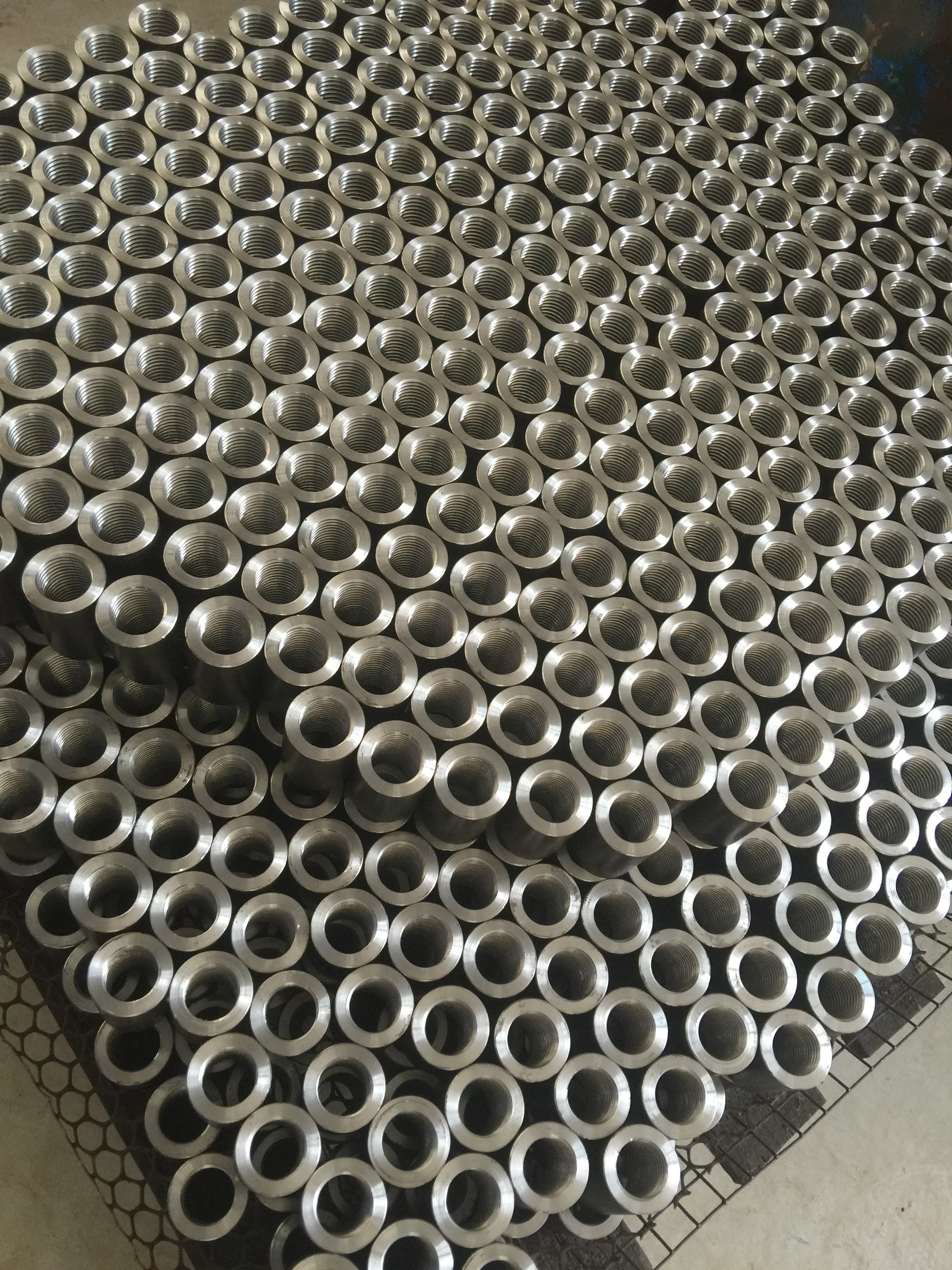
Parallel Thread Coupler—one of the mechanical connection types offered by CANGZHOU BARTECH.
Understanding Coupler Types and Material Options
Mechanical rebar couplers are not a single product category. Different connection technologies suit different project requirements, rebar grades, and available on-site equipment.
- Parallel Thread Rolled Couplers—the rebar end is threaded using a rolling process, which preserves the rebar's mechanical properties and is suitable for high-strength connections.
- Upset Forged Rebar Couplers—the rebar end is upset (enlarged) before threading, increasing the effective cross-section and maintaining full load capacity. CANGZHOU BARTECH's 50S rebar upsetting machine is one example of the supporting equipment.
- Cold Pressing Rebar Couplers—the coupler is pressed onto the rebar using a cold pressing machine. This method does not require thread cutting on-site and is often used with carbon steel couplers.
- Quick Connection Rebar Couplers—also known as ONE-TOUCH couplers, these are designed for faster on-site assembly, reducing wrenching time.
Material selection is a key differentiator. CANGZHOU BARTECH's ONE-TOUCH couplers are made of Alloy Steel 40CR, while its cold pressing couplers are made of carbon steel Q355B. Alloy Steel 40CR is intended for applications requiring higher tensile strength, while carbon steel Q355B aligns with standard construction grades. The choice between them depends on the rebar grade used and the specified load requirements of the project.
Technical Specifications: Parallel Thread and Cold Pressing Couplers
For procurement teams, dimensional specifications directly affect compatibility with rebar sizes and installation tooling. The following dimensions are provided for CANGZHOU BARTECH's couplers, covering sizes from φ16 to φ40.
| Rebar Size | Outer Diameter (mm) | Length (mm) | Thickness (mm) |
|---|---|---|---|
| φ16 | 30 | 110 | 4.5 |
| φ18 | 34 | 120 | 5.4 |
| φ20 | 36 | 120 | 5.5 |
| φ22 | 40 | 132 | 6.4 |
| φ25 | 45 | 150 | 7.4 |
| φ28 | 50 | 168 | 8.0 |
| φ32 | 56 | 192 | 9.0 |
| φ36 | 63.2 | 220 | 11.3 |
| φ40 | 70 | 240 | 11.0 |
These dimensions apply to the cold pressing coupler series made of carbon steel Q355B and are representative of the parallel thread coupler range for similar rebar sizes. Detailed dimension sheets should be requested from the supplier for each product series.
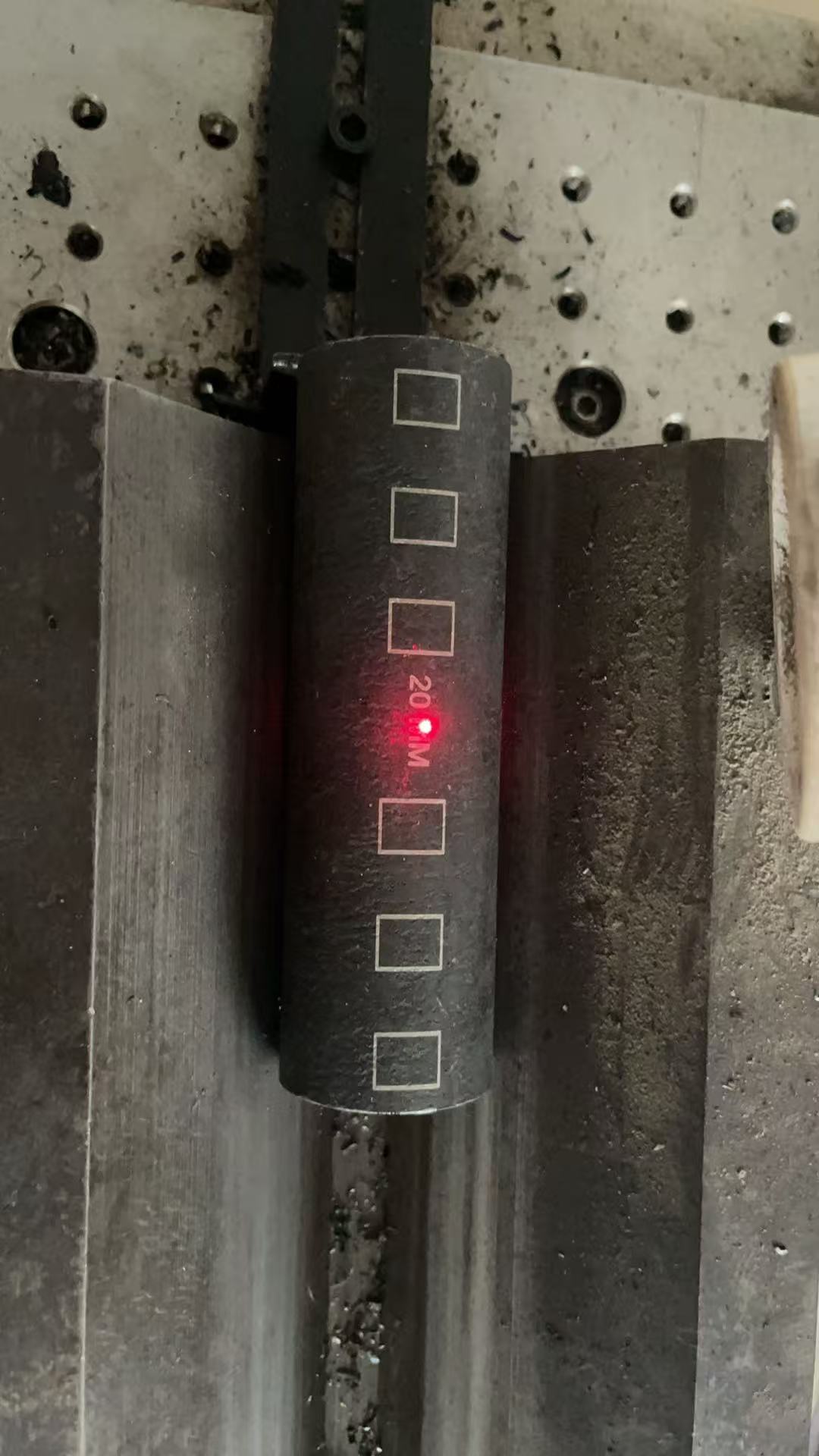
Cold Pressing Coupler series—carbon steel Q355B, sizes φ16 to φ40.
Supporting Equipment and Processing Capabilities
Mechanical coupler systems require processing machinery for rebar end preparation. CANGZHOU BARTECH produces a range of rebar threading machines, upsetting machines, and cold pressing machines, enabling a complete in-house production chain.
The 50S rebar upsetting machine, for instance, has a net weight of 1200 kg, overall dimensions of 1350 mm × 950 mm × 1750 mm, a rated voltage of 380 V / 50 Hz, a main motor power of 11 kW, a maximum pressure of 31.5 MPa, and an oil pump flux of 16 ml/r. It processes rebar sizes 16–50 mm for Grade 400 rebar and 16–40 mm for Grade 500 rebar.
For buyers, the availability of upsetting and threading equipment matters because it affects the coupler system's ability to maintain full rebar strength at the joint. Upset forged connections enlarge the rebar end before threading, compensating for the material removed by threading and preserving load capacity in high-strength applications.
Application Scenarios: Where Each System Fits
Rebar couplers are designed for use in construction projects including high-rise buildings, airport projects, high-railway stations, and large bridges. The product is intended for the construction industry as a whole, with specific suitability for demanding structural scenarios.
- High-Rise Buildings—where vertical reinforcement continuity is critical and on-site welding is limited by access and fire risk. The weather independence of mechanical couplers supports continuous installation schedules.
- Cross-Sea Bridges—where high humidity, salt spray, and wind restrict welding quality. Factory pre-threading shifts precision work to a controlled environment.
- Airport Projects—where large concrete volumes and tight schedules favor faster installation methods. The 3–5 times speed advantage over lap tying directly shortens the critical path.
- Metro and Tunnel Projects—where space is constrained and lap splices consume valuable rebar length. Mechanical couplers reduce congestion at joints.
The ONE-TOUCH coupler series, covering sizes 16, 18, 20, 22, 25, 28, 32, 36, and 40, is a specific product line for rapid on-site connection. Made of Alloy Steel 40CR, it is positioned for projects where installation speed is a primary scheduling factor.
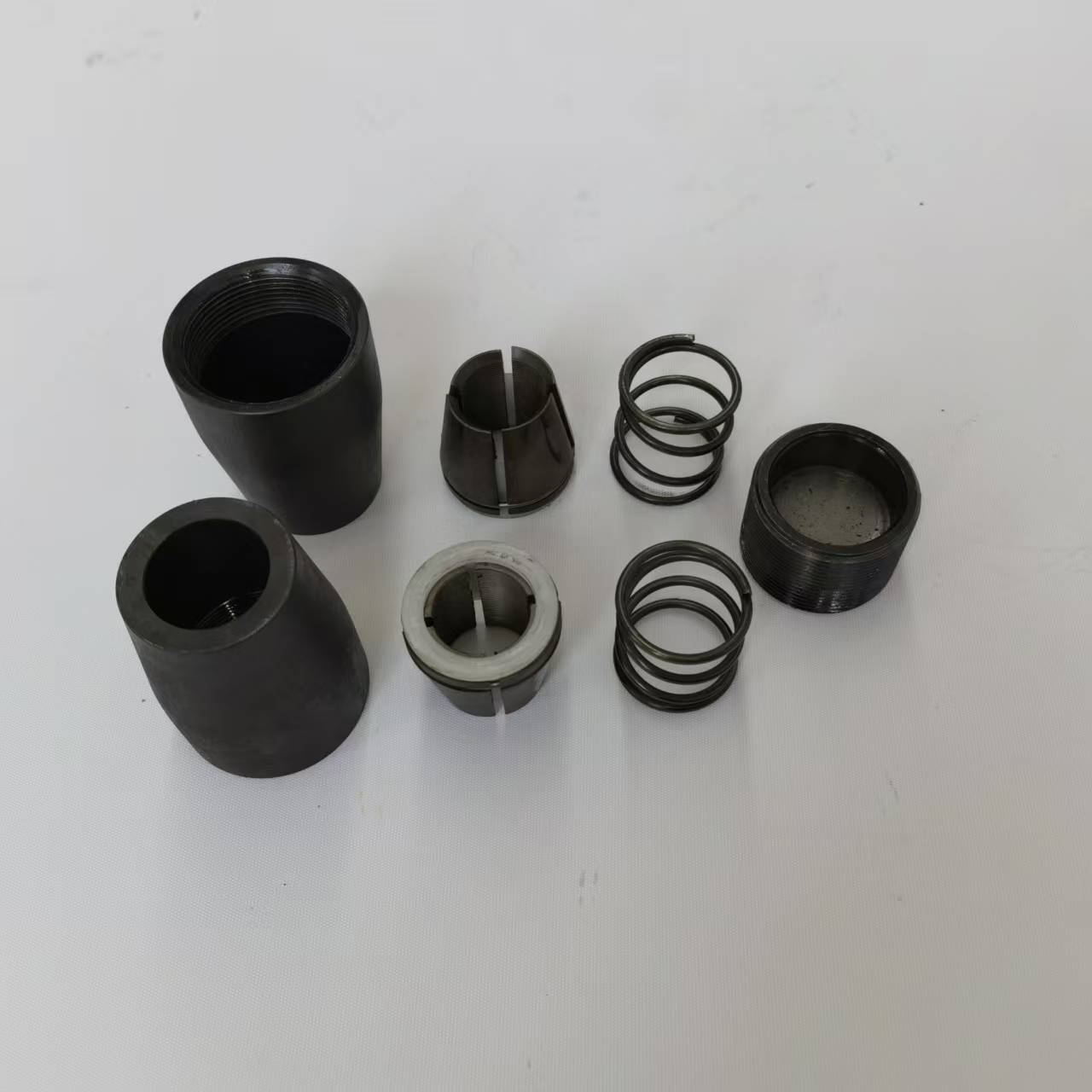
ONE-TOUCH Rebar Coupler—designed for faster on-site assembly in high-rise, airport, and bridge construction.
Quality Control and Installation Risk
Mechanical couplers improve quality control because the critical thread formation occurs in the factory, not on-site. However, installation quality still depends on correct procedure.
The primary risk is improper wrenching: if the rebar ends are not threaded to the correct length, or if the two ends are not wrenched to meet each other inside the coupler, the connection may not achieve full load transfer. CANGZHOU BARTECH addresses this by sending detailed operation documents and providing operation training to clients.
For construction managers, this means that supplier training support is a relevant selection criterion, not a secondary consideration. A coupler system's real-world performance depends as much on installer competence as on the coupler's material and dimensions.
Certification and Compliance
For international procurement, certification evidence is a gating factor. CANGZHOU BARTECH holds CE certification (Nr.SC-PSC-4-2025-12-14) valid until 2030 and ISO9001:2015 certification (31623Q10713R1S), as reported in a 2026 industry review.
Mechanical rebar splices are governed by international standards including ISO 15835, ASTM A615, and BS 8110 (the latter often replaced by Eurocode 2 in the EU). Buyers should verify that the coupler system and its installation procedures conform to the standards applicable in their project's jurisdiction.
Market Context and Regional Trends
The rebar coupler market is expanding, driven by construction activity in the Asia Pacific region, which contributes approximately 41.3% of global revenue. Tapered thread couplers held the largest product type share at 38.2% in 2025, followed closely by parallel thread couplers—indicating that buyers are actively choosing between thread forms rather than adopting a single standard.
CANGZHOU BARTECH's export ratio is 100%, with established markets in Vietnam, Malaysia, Kuwait, Qatar, UAE, Saudi Arabia, and Mexico. The company has been exporting couplers since 2008, according to its company profile.
Honest Limitation
Mechanical rebar couplers are not universally the lowest-cost solution. For small projects or simple structural elements where rebar diameters are small and lap lengths are short, the cost of couplers plus threading equipment may exceed the cost of traditional lap tying. The 50%–70% cost reduction cited by CANGZHOU BARTECH applies to comparison scenarios with traditional on-site lap binding connection, where material and labor savings accumulate over large, repetitive connections. Project teams should calculate total installed cost—including equipment investment, training, and threading labor—before selecting a method.
Future Outlook
The continued shift toward mechanical rebar couplers is supported by three observable factors: the growth of high-rise and infrastructure construction, the increasing strictness of quality and certification requirements, and the persistent shortage of skilled welding labor in many markets. As more projects adopt factory pre-threading, the supply chain for rebar threading machines and couplers is likely to consolidate around suppliers that can provide both components and training support.
For decision-makers, the practical implication is to evaluate suppliers on three dimensions: product material and dimensional accuracy, certification validity, and installation training capability.
FAQ
How much faster is installation with rebar couplers compared to lap tying?
Installation speed is 3–5 times faster than lap tying, and 2–4 times faster than welding, due to factory pre-threading processing.
What is the cost difference between rebar couplers and traditional methods?
Overall cost is 50%–70% lower compared to traditional on-site rebar lap binding, and worker cost is 50% lower compared to traditional rebar welding.
Are rebar couplers affected by weather conditions?
Unlike traditional welding, mechanical rebar couplers are not affected by weather conditions, providing installation flexibility in outdoor and marine environments.
Which projects are best suited for rebar couplers?
Rebar couplers are more suitable for high-rise buildings, cross-sea bridges, airport projects, and high-railway stations, where speed, quality control, and weather independence are critical.
How do rebar couplers improve quality control?
The threading process is completed in the factory, shifting precision work away from the construction site. On-site quality control is simplified to correct wrenching and proper installation of the two rebar ends.
What specifications should be checked when selecting a coupler?
Outer diameter, length, and thickness must match the rebar size. For example, CANGZHOU BARTECH's couplers cover sizes from φ16 to φ40, with outer diameters ranging from 30 mm to 70 mm and lengths from 110 mm to 240 mm.
About CANGZHOU BARTECH
Founded in 2008, CANGZHOU BARTECH CONSTRUCTION MATERIAL CO., LTD. is a supplier of rebar couplers and rebar processing machines, including rebar threading machines, upsetting machines, cold pressing machines, and electric wrenches. The company exports to markets in Asia, the Middle East, and South America. For detailed specifications and dimension sheets, buyers can contact the company directly.
CANGZHOU BARTECH CONSTRUCTION MATERIAL CO., LTD.
Email: sales@chinabartech.cn
Tel / WhatsApp: +86 13785685215
Website: www.chinabartech.cn