
Rebar Coupler Scenario Fit: Rolling, Pressing & One-Touch for High-Rise, Airport, High-Rail and Bridge
Rebar Coupler Scenario Fit: Rolling, Pressing & One-Touch for High-Rise, Airport, High-Rail and Bridge
Rebar coupler selection is not a catalogue exercise. At the decision and execution stages, the useful question is which connection route fits the rebar size, node congestion, access, power supply and inspection regime of a specific project. Cangzhou Bartech Construction Material Co., Ltd. is a China-based supplier of rebar couplers and rebar threading machines, founded in 2008 and exporting its output to markets including Asia, the Middle East and South America. Its range covers parallel thread, upsetting, cold pressing and one-touch coupler families, supported by threading, cutting, upsetting and wrenching equipment. This article maps rolling, pressing and one-touch routes to high-rise, airport, high-railway station and large-bridge conditions, with the limits buyers should check before release to site.
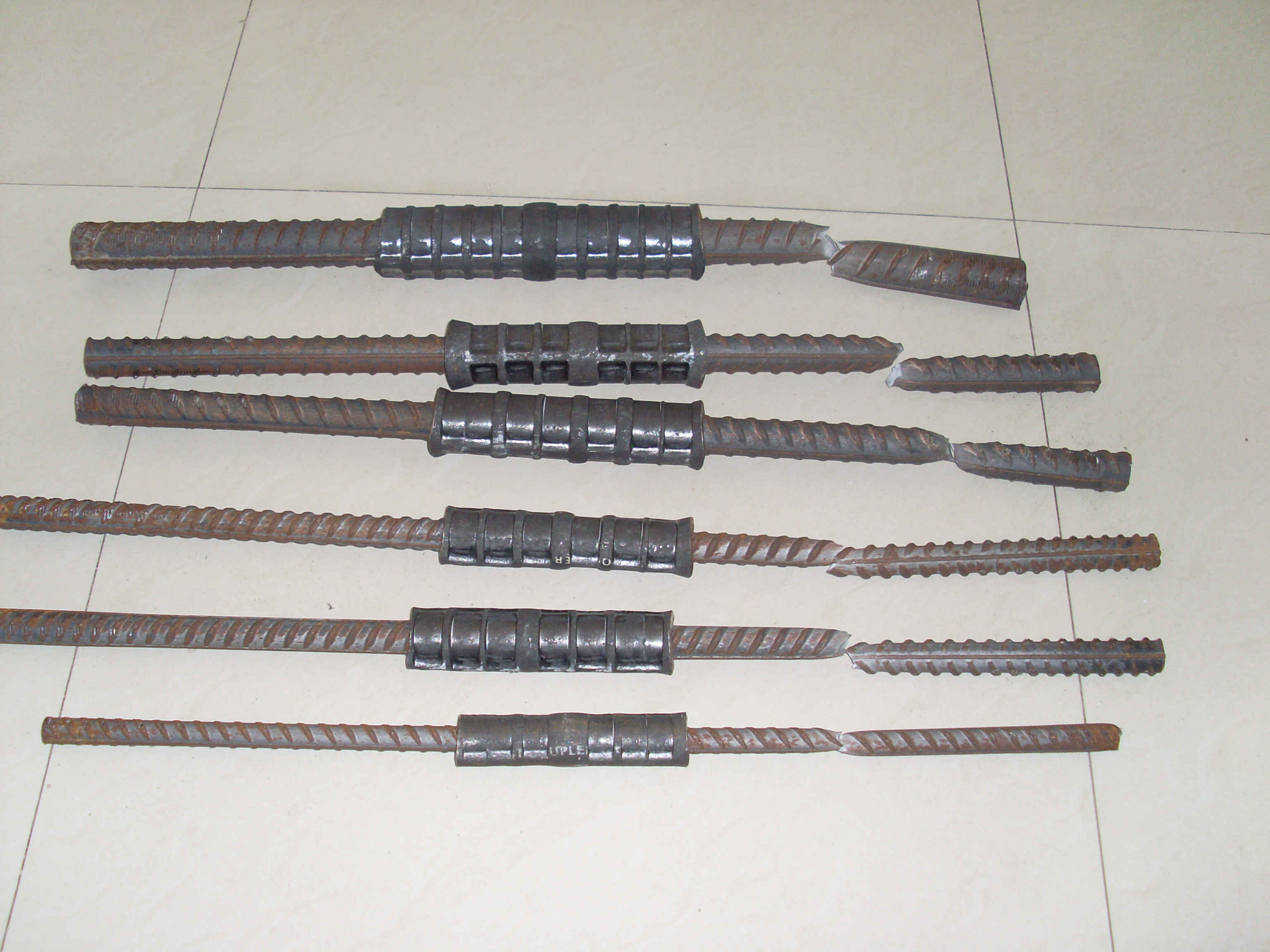
The procurement problem: a coupler type is not a project fit
Projects rarely fail because a coupler is missing from a catalogue. They fail when the selected coupler, bar preparation method, material grade and site workflow do not match. A 16 mm bar in a repetitive floor cycle, a 40 mm bar in a bridge pier, a congested high-railway node and an airport slab with long horizontal runs each place different demands on threading length, wrench access, machine footprint and inspection. The practical approach is to define the project condition first, then select the coupler route and supporting equipment.
Bartech states that it offers parallel thread rolling, parallel thread upsetting and cold pressing technologies for mechanical rebar connections. The same supplier also lists one-touch rebar couplers and a set of threading, cutting, upsetting and wrenching machines. That breadth is useful only when it is read against site conditions. The scenario map below is a selection aid, not a substitute for project-owner approval or product-specific test evidence.
Quick scenario map for rolling, pressing and one-touch couplers
| Project condition | Fit focus | Coupler route to evaluate | Support equipment in the Bartech brief | Execution check |
|---|---|---|---|---|
| High-rise building | Repetitive vertical and slab cycles, access, floor-to-floor speed | Parallel thread rolling and one-touch where access and tolerances allow | BOC 8-42/8-32 torque wrench, quick/AUTO threading machines | Thread length, wrench access, operator training, inspection records |
| Airport project | Long horizontal runs, schedule continuity, large slab areas | Parallel thread rolling and one-touch for repeatable preparation | Quick/AUTO threading machines, MQ40 thread cutting machine, BOC wrench | Bar-size mix, power and air supply, surface protection, staged delivery |
| High-railway station | Congested nodes, heavy reinforcement, inspection intensity | Pressing and upset forged routes; parallel thread where access allows | CBT32 pressing machine, Auto 36s/50s upsetting machines, BOC wrench | Test reports, installation sequence, fatigue or reverse-loading requirements |
| Large bridge | Large bars, high-strength material, load cases, weather exposure | Pressing and upset forged couplers, alloy steel 40CR where specified | CBT32 pressing machine, Auto 36s/50s upsetting machines, BOC wrench | Project standard, product-specific test evidence, access and weather plan |
The equipment names above follow the assigned article brief. They should be confirmed against the supplier quotation, machine manual and site method statement before purchase.
What rolling, pressing and one-touch mean in practice
Parallel thread rolling is a mechanical connection route in which rebar ends are prepared with matching threads and joined by a coupler. Bartech states that parallel thread rolling is one of its connection technologies. In practice, the route fits repetitive work where thread length can be controlled and where the wrench can reach the coupler. The critical execution point is not only the coupler itself but the prepared thread and the final wrenching.
Cold pressing is a separate route, supported in the Bartech brief by the CBT32 pressing machine. It is associated with cold pressing couplers and a pressing process rather than a cut thread. For project planning, this means the site method statement must include machine access, pressing cycle time, die or tool control, and inspection of the pressed connection. The presence of a pressing machine in the equipment list does not by itself prove that a given coupler and bar combination has passed project testing.
One-touch couplers are positioned in the product range as a quick connection option. Their value is in reducing the number of separate operations at the joint and supporting repetitive installation where access is predictable. The same rule applies: the bar ends must be prepared to the correct length and wrenched so that they meet inside the coupler. A one-touch label does not remove the need for trained operators and inspection.
Bartech reports material options including S45C carbon steel with tensile strength above 600 MPa and 40Cr alloy steel with tensile strength around 980 MPa. The assigned project brief also refers to carbon steel 45#, Q355B and alloy steel 40CR. Buyers should treat these as material designations to be matched against the supplier material certificate and project specification, not as interchangeable shorthand. The coupler range is described for rebar processing sizes from 16 mm to 40 mm.
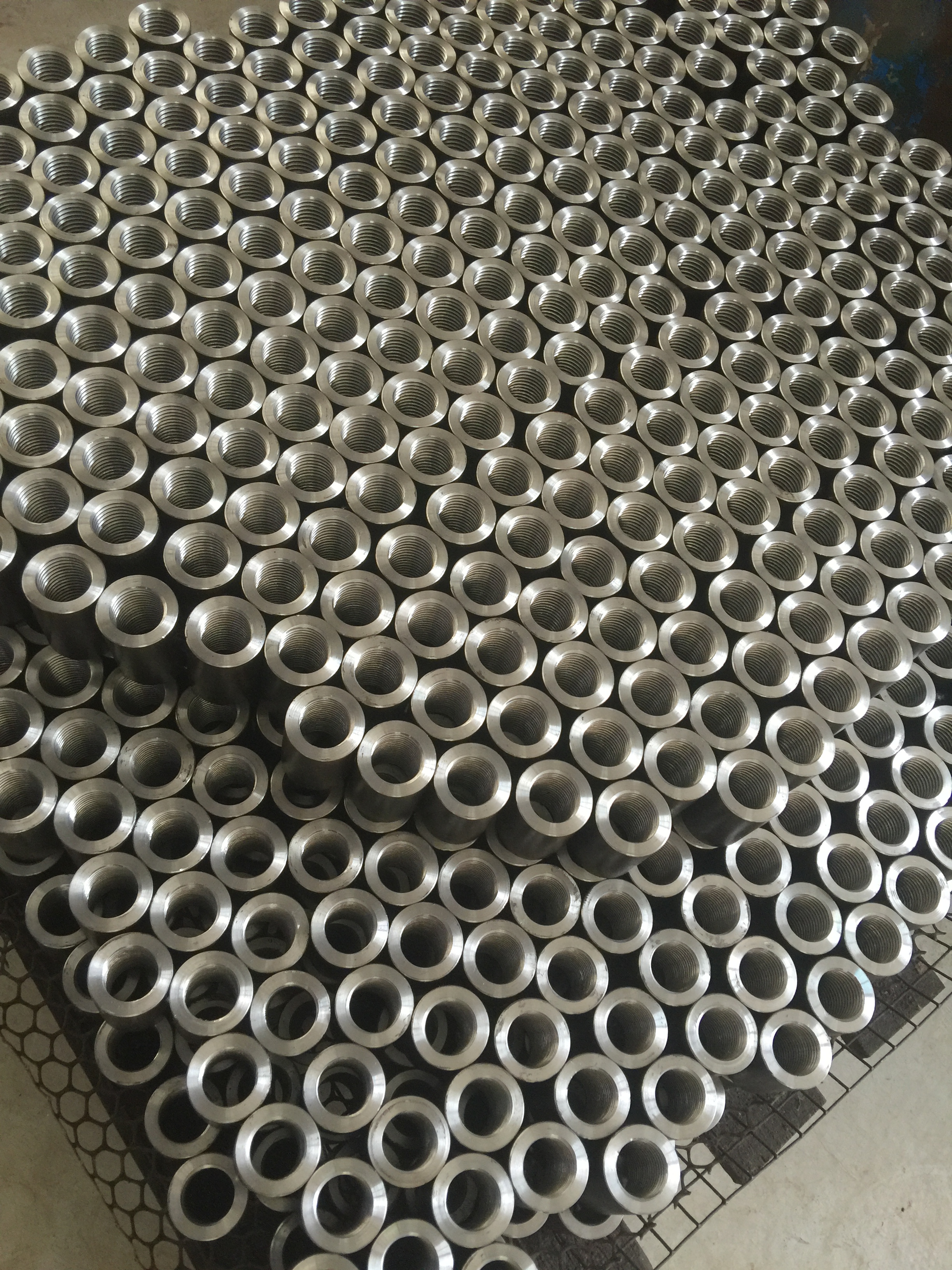
Equipment fit is part of coupler fit
The assigned brief names several support machines: the BOC 8-42/8-32 torque wrench, the CBT32 pressing machine, the MQ40 thread cutting machine, the Auto 36s/50s upsetting machines, and quick/AUTO threading machines. These names matter because a coupler that fits the bar but not the site power, air supply, threading length or machine access is not a complete fit.
Bartech's available machine data gives a practical frame for that check. One rebar threading machine is listed for 16 mm to 40 mm rebar, with a maximum threading length of 95 mm, a net weight of 680 kg, overall dimensions of 1820 x 815 x 1100 mm, and a rated voltage of 380 V / 50 Hz. The AUTO threading machine is listed for 16 mm to 40 mm rebar, with a maximum threading length of 90 mm with block or 150 mm without block, a net weight of 860 kg, overall dimensions of 1950 x 700 x 1120 mm, a main motor of 5.5 kW or 7.5 kW at 1450 r/min, water pump power of 0.12 kW at 1450 r/min, and air clamping pressure of 0.4-0.8 MPa. A separate machine entry lists a 5.5 kW main motor and a speed ratio of 1:23 quick or 1:29 slow.
For execution planning, the buyer should ask three questions. First, does the selected coupler require cut threads, rolled threads, upset ends or pressing? Second, does the site have the required power, air and floor space for the matching machine? Third, can the torque wrench reach the joint and can the operator confirm that both bar ends meet inside the coupler? These are practical constraints, not sales points.
High-rise buildings: repetition, access and floor-cycle control
High-rise construction rewards repeatability. The same joint detail is repeated across floors, so a coupler route that is quick and predictable on a mock-up can create a schedule advantage. Parallel thread rolling and one-touch couplers are practical candidates where the bar ends can be prepared consistently and the wrench can reach the coupler from the working platform. A BOC 8-42/8-32 torque wrench is named in the brief as a supporting tool for final assembly.
The boundary is access. In dense column cages or wall terminations, the coupler may be technically suitable but physically difficult to wrench. The project team should run a typical joint mock-up, check thread length, confirm wrench swing, and record the time per joint. If the joint cannot be inspected after assembly, the method should be revised before the floor cycle begins.
Airport projects: long runs and schedule continuity
Airport work often involves large floor plates, long horizontal runs and a schedule that depends on continuous delivery of prepared bars. Parallel thread rolling and one-touch couplers can fit where the same bar sizes repeat and where threading can be carried out ahead of installation. The MQ40 thread cutting machine and quick/AUTO threading machines named in the brief belong in this production plan, not only in the purchase list.
The execution risk is less about the coupler concept and more about logistics. A large slab may need a mix of 16 mm to 40 mm bars, different thread lengths and protected threads before installation. The buyer should confirm the bar-size mix, the required thread length, the power and air supply for the machines, and the protection of prepared ends during transport. A coupler that works in the yard but arrives with damaged threads is not a site-ready solution.
High-railway stations: congested nodes and inspection intensity
High-railway station structures can combine heavy reinforcement, congested nodes and strict inspection. In these conditions, pressing and upset forged routes deserve early evaluation because they change the preparation method and can be planned around the node geometry. The CBT32 pressing machine and the Auto 36s/50s upsetting machines named in the brief are the equipment-side counterparts to those routes. Parallel thread couplers remain relevant where access and thread preparation can be controlled.
The decision should be driven by the project specification, not by a general preference for one coupler type. The buyer should ask whether the project requires static, fatigue or reverse-loading performance, which ISO 15835 part applies to the requirement and test method, and whether the supplier can provide product-specific reports for the proposed coupler and bar grade. The existence of a standard is not proof that a particular product passed it.
Large bridges: large bars, load cases and material control
Large bridges put more weight on material and load-case evidence. The 32 mm to 40 mm end of the 16-40 mm range is more likely to appear in pier, deck and barrier reinforcement, and the project may specify alloy steel 40CR for higher strength. Bartech reports 40Cr with tensile strength around 980 MPa. That is a material fact to be verified against the certificate, not a performance guarantee for a completed splice.
ISO 15835-1:2018 specifies requirements for couplers used for mechanical splices of steel reinforcing bars; the official ISO scope describes static, fatigue and reverse-loading applications. For bridge work, the project engineer should confirm which of those load cases applies and which test method is required under ISO 15835-2:2018. The supplier should then provide coupler-specific test evidence for the proposed bar grade and size. Pressing and upset forged couplers are practical candidates in bridge conditions, but the final choice should follow the project approval route.
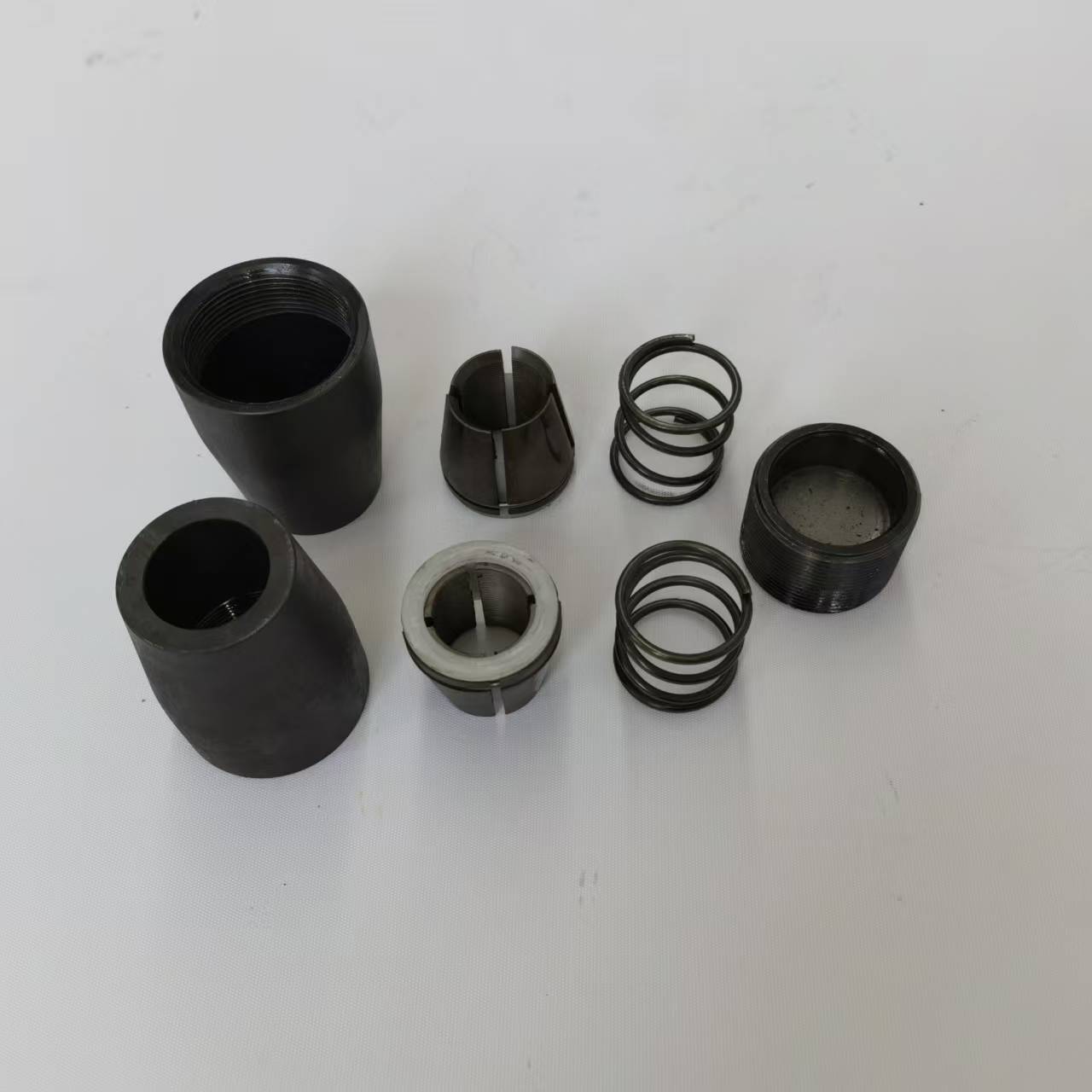
Comparison with traditional lap splicing and welding
Bartech's comparison data states that mechanical coupler installation is 3-5 times faster than lap tying and that on-site installation is 2-4 times faster than welding after factory pre-threading. The same first-party comparison states a cost reduction of 50%-70% versus lap tying and 50% lower worker cost versus welding. These are supplier-reported figures, not independent benchmarks. They are useful as a starting hypothesis for a project time study, not as a guaranteed outcome.
Mechanical splicing also changes where the work happens. Threading or upsetting moves to a factory or yard, while the site performs assembly and wrenching. That can improve quality control and reduce weather exposure compared with field welding, but it creates a new dependency on prepared thread length, machine availability and operator discipline. If the bar end is not threaded to the correct length, or if the two bar ends are not wrenched into the middle of the coupler, the connection may not be well formed.
Bartech's own risk note identifies this failure mode and recommends threading the rebar end to the correct length and wrenching the two ends to meet inside the coupler. The stated control measures are detailed operation documents and operator training. That is a real boundary: mechanical couplers are not a drop-in replacement for every lap or weld condition. They require a method statement, a trained crew, the right support equipment and inspection. Projects with limited power, restricted machine access or no practical way to verify assembly should not assume that a coupler route will simplify execution.
Market trend: infrastructure demand, regional supply and standards
Commercial research from Dataintelo estimates the global rebar coupler market at USD 1.82 billion in 2025 and USD 3.47 billion by 2034. The same source estimates that Asia Pacific held 41.3% of global rebar coupler revenue in 2025. These are commercial research estimates, not customs records or project-level demand data. They are still relevant to procurement because they point to a supply base that is concentrated in Asia Pacific and a buyer base that is increasingly global.
The standards framework is also maturing. ISO 15835-1:2018 sets requirements, ISO 15835-2:2018 sets test methods and ISO 15835-3:2018 sets rules for certification and self-evaluation. The series separates product requirements from test methods and conformity assessment, which is useful for procurement: a supplier should be asked for the requirement standard, the test method and the conformity evidence separately. ISO/AWI 15835-1 also appears as a work item, so buyers should check the current ISO status before claiming that the 2018 edition has been superseded. No supersession should be assumed without confirmation.
Procurement and execution checks for a Bartech supply route
For decision-to-execution procurement, the supplier profile should be read alongside the product fit. Cangzhou Bartech Construction Material Co., Ltd. reports a 1,000 square metre factory, 30 employees and 10 engineers, with annual output of 3,600,000 units. Its monthly production capacity is stated as 300,000 units, with a typical production lead time of 7-30 days depending on order quantity. There is no minimum order quantity for stock couplers. The company states that its export ratio is 100%, with markets in Asia, the Middle East and South America, including Vietnam, Malaysia, Kuwait, Qatar, UAE, Saudi Arabia and Mexico.
The quality-control description covers a three-stage process: material test reports, 10% in-line production testing and 100% final appearance inspection. Customization is offered for coupler outer diameter, inner diameter and thread, and OEM production is available. After-sales support includes online technical assistance. The commercial terms in the supplied procurement data list FOB/CIF delivery, pre-shipment test as an acceptance step, and payment terms of 30% TT prepayment to confirm the order and 70% TT before shipment.
For a high-rise, airport, high-rail or bridge package, these facts should be converted into an execution checklist rather than treated as a general company profile. Ask for the coupler and machine package against the project bar schedule. Confirm that the selected threading or pressing method matches the coupler type. Check that the lead time covers the site programme, and that the pre-shipment test covers the agreed product and bar size. If OEM or custom dimensions are required, place the outer-diameter, inner-diameter and thread requirements in the written specification before production.
Limits and verification boundaries
The scenario map in this article is a selection aid, not a project approval. ISO 15835 defines requirements and test methods, but it does not prove that a specific coupler from a specific supplier passed those tests. The supplied data does not verify CE, ISO 9001, ASTM or BS certificates for Bartech, so buyers should not treat certification keywords as evidence. They should request certificate numbers, issuing bodies, scope, validity and product coverage, and then verify them with the issuer where required.
For bridge and high-railway work, fatigue and reverse-loading requirements should be confirmed with the structural engineer. For airport and high-rise work, thread length, wrench access and inspection records should be proven on a mock-up before full release. For any project, the acceptance criteria should be written into the purchase order: coupler type, bar size, material grade, thread or pressing specification, support equipment, test reports and pre-shipment inspection. A coupler that is correct on paper but not verifiable at the joint is not a completed procurement decision.
Future outlook
The next phase of rebar coupler competition is likely to be less about catalogue breadth and more about scenario documentation. Buyers will ask for the coupler, the preparation machine, the wrenching tool, the operator instruction and the inspection record as one package. The Asia Pacific supply share estimated by commercial research supports that direction, but it does not remove the need for project-specific evidence. Standards revision monitoring will also matter. The ISO 15835 series already separates requirements, test methods and conformity assessment, and any future work-item activity should be checked before a tender cites a standard edition. The practical winners will be suppliers that can explain not only what they make, but where a given coupler route fits, where it does not, and what evidence supports the claim.
FAQ
Which rebar coupler type should be evaluated first for a high-rise project?
There is no universal first choice. For repetitive floor cycles with good wrench access, parallel thread rolling and one-touch couplers are practical candidates because they can be prepared ahead of installation and assembled on site. Pressing may be relevant where the project specification or node geometry calls for it. The decision should be proven on a typical joint mock-up, with thread length, wrench swing, installation time and inspection records checked before full release.
What rebar sizes and material grades does the Bartech range address?
Bartech describes rebar processing sizes from 16 mm to 40 mm across its coupler and threading-machine range. Its material data lists S45C carbon steel with tensile strength above 600 MPa and 40Cr alloy steel with tensile strength around 980 MPa. The assigned project brief also refers to carbon steel 45#, Q355B and alloy steel 40CR. Buyers should match those designations to the material certificate and project specification rather than relying on shorthand names alone.
Which machines support rolling, pressing and one-touch coupler routes?
The assigned brief names the BOC 8-42/8-32 torque wrench for final wrenching, the CBT32 pressing machine for cold pressing, the MQ40 thread cutting machine for thread preparation, the Auto 36s/50s upsetting machines for upset forged ends, and quick/AUTO threading machines for parallel thread production. Bartech machine data for its threading equipment covers 16 mm to 40 mm rebar, maximum threading lengths of 95 mm on one model and 90 mm with block or 150 mm without block on the AUTO model, 380 V / 50 Hz supply, 5.5 kW or 7.5 kW main motor options, and air clamping at 0.4-0.8 MPa.
What is the main site risk with mechanical rebar couplers?
The main risk identified in the supplied risk data is a connection that is not well formed because the rebar ends are not wrenched into the middle of the coupler. The control method is to thread the rebar end to the correct length and wrench the two bar ends until they meet inside the coupler. Bartech states that it provides detailed operation documents and operator training. This means the coupler route depends on preparation discipline and inspection, not only on the coupler itself.
What should buyers verify before shipment for airport, high-rail and bridge projects?
Buyers should verify the coupler type, bar size, material grade and preparation method against the project specification. They should request product-specific test reports and confirm which ISO 15835 requirement and test method apply, especially where fatigue or reverse loading is relevant. The supplied procurement data lists pre-shipment test as an acceptance step, FOB/CIF delivery, 30% TT prepayment and 70% TT before shipment. Production capacity is stated as 300,000 units per month, with a typical lead time of 7-30 days depending on quantity.
¿Tiene preguntas o necesita más detalles?
Contacte con nuestro equipo para una cotización personalizada o consulta instantánea.
Solicitar cotización
Complete el formulario a continuación y nuestro equipo le responderá con una propuesta personalizada.
Chat directo de WhatsApp
¿Prefiere chatear en tiempo real? Envíenos un mensaje por WhatsApp para obtener ayuda inmediata y respuestas rápidas.
- Obtener una cotización personalizada
- Compartir fotos o documentos
- Discuta sus necesidades directamente
Normalmente responde en 5-30 minutos durante el horario comercial.