
Rebar Coupler Decision Matrix: Rolling, Pressing and One-Touch Types to Equipment
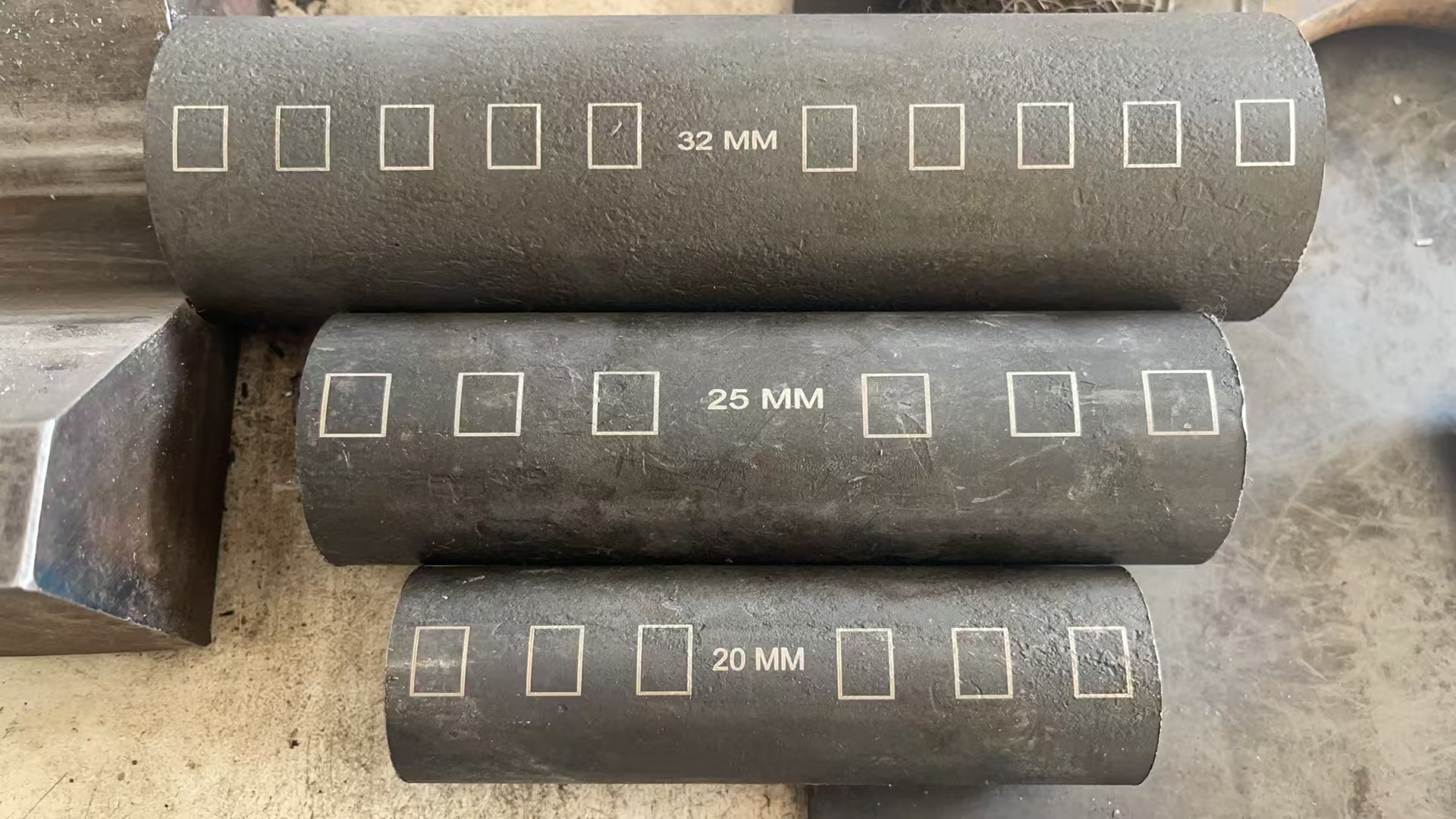
A cold pressing rebar coupler: coupler family, body dimensions and installation equipment must be specified as one package, not three separate purchases.
Rebar coupler procurement rarely fails at the level of the coupler body. It fails at the interface — when the coupler family ordered does not match the threading machine, upsetting machine, pressing machine or torque wrench actually available on site, or when the body dimensions of the selected coupler were never checked against the structural drawing. A coupler that passes every material test can still stall a pour if the equipment needed to install it is out of range or missing from the site plan.
This reference builds a buyer decision matrix around that interface. It compares rolling, pressing and one-touch rebar couplers by material specification, dimensional envelope and thread geometry, maps each family to the installation equipment that produces a compliant joint, and closes with the purchasing terms and acceptance checks that make the choice verifiable. Cangzhou Bartech Construction Material Co., Ltd. is a China-based manufacturer and supplier of rebar couplers and rebar processing machinery — parallel thread rolling machines, upsetting machines, thread cutting machines, cold pressing machines and rebar electric torque wrenches — exporting rebar mechanical connection products since 2008, with a reported 100% export ratio and markets across Asia, the Middle East and South America. Its product families are used here as a concrete illustration of how coupler geometry and installation equipment are specified together.
Why Coupler Selection Is Really an Equipment Decision
Mechanical rebar splices are governed by international standards including ISO 15835, ASTM A615 and BS 8110, which in the European Union is often replaced by Eurocode 2. Those standards define performance expectations for the finished splice; they do not define how the splice is produced on site. That gap is where most procurement risk sits.
Four coupler families that can all satisfy the same project specification may still require four different site set-ups:
- Rolling (parallel thread) couplers require the bar end to be threaded by a rebar thread rolling machine before assembly.
- Upsetting (upset forged) couplers require the bar end to be enlarged by an upsetting machine and then thread cut with a separate machine before assembly.
- Pressing (cold pressing) couplers require no thread at all; a sleeve is compressed over the bar ends by a hydraulic pressing machine.
- One-touch couplers rely on a fastening step performed with a rebar electric torque wrench rather than a threading or pressing machine.
For a buyer at the research and evaluation stage, the practical comparison is therefore not "which technology is better" but "which family fits the bar schedule, the site congestion, the crew and the equipment already committed to the project."
Material and Dimensional Logic of the Three Families
Material grade and dimensional envelope move together. A coupler is only interchangeable with another if the outer diameter, length and connection geometry all fit the same drawing detail, and the material grade is acceptable to the specifying engineer.
Rolling and upsetting couplers share material options
Rolling couplers — described interchangeably as parallel thread or rolled thread couplers — are supplied in carbon steel 45# as the primary material, with alloy steel 40CR available as an alternative. The upsetting (upset forged) family uses the same two material options, carbon steel 45# and alloy steel 40CR, but reaches them through a different process route. Both families run across bar sizes 16, 18, 20, 22, 25, 28, 32, 36 and 40 mm, and both use a 60° thread angle.
| Bar size (mm) | Rolling coupler OD × length (mm) | Rolling thread | Upsetting coupler OD × length (mm) | Upsetting thread |
|---|---|---|---|---|
| 16 | 24 × 42 | M16.5*2.5 | 26 × 40 | M20*2.5 |
| 18 | 27 × 45 | M18.5*2.5 | 29 × 44 | M22*2.5 |
| 20 | 30 × 50 | M20.5*2.5 | 32 × 48 | M24*3.0 |
| 22 | 33 × 54 | M22.5*2.5 | 36 × 52 | M27*3.0 |
| 25 | 38 × 62 | M25.6*3.0 | 40 × 60 | M30*3.5 |
| 28 | 42 × 68 | M28.6*3.0 | 44 × 66 | M33*3.5 |
| 32 | 48 × 76 | M32.6*3.0 | 50 × 72 | M36*4.0 |
| 36 | 53 × 84 | M36.6*3.0 | 56 × 80 | M39*4.0 |
| 40 | 59 × 95 | M40.2*3.0 | 62 × 90 | M45*4.0 |
Pressing couplers use a different material and a larger envelope
Pressing couplers use carbon steel Q355B and are supplied as sleeves with a defined wall thickness rather than a threaded body. The size range matches the other families — 16 through 40 mm — but the physical envelope is substantially larger.
| Bar size (mm) | Pressing coupler OD (mm) | Length (mm) | Wall thickness (mm) |
|---|---|---|---|
| 16 | 30 | 110 | 4.5 |
| 18 | 34 | 120 | 5.4 |
| 20 | 36 | 120 | 5.5 |
| 22 | 40 | 132 | 6.4 |
| 25 | 45 | 150 | 7.4 |
| 28 | 50 | 168 | 8.0 |
| 32 | 56 | 192 | 9.0 |
| 36 | 63.2 | 220 | 11.3 |
| 40 | 70 | 240 | 11.0 |
One-touch couplers are specified in alloy steel and a distinct size series
One-touch (quick connection) couplers are made of alloy steel 40CR and are listed across an overlapping but distinct series: φ11-16 through φ40. Representative bodies include φ11-16 at OD 35 mm × 100 mm, φ18/20 at OD 46 mm × 123 mm, φ25 at OD 56 mm × 143 mm, φ32 at OD 70 mm × 170 mm and φ40 at OD 83 mm × 200 mm.
Thread Geometry: What M16.5*2.5 and a 60-Degree Angle Tell a Buyer
Thread geometry is the single most useful cross-check in the matrix, because it reveals whether a coupler was designed for a rolled thread, an upset-and-cut thread, or no thread at all.
In the rolling family, thread designations start at M16.5*2.5 for 16 mm bar and rise through M18.5*2.5, M20.5*2.5 and M22.5*2.5 before switching to a 3.0 mm pitch at larger sizes: M25.6*3.0, M28.6*3.0, M32.6*3.0, M36.6*3.0 and M40.2*3.0. Every one of these thread forms is stated at a 60° thread angle. Because the thread is rolled directly onto the bar end, the coupler body stays compact — 42 mm long at 16 mm bar and 95 mm long at 40 mm bar.
The upsetting family carries a visibly larger thread for the same bar size, from M20*2.5 at 16 mm bar to M45*4.0 at 40 mm bar, also at a 60° thread angle. This is a direct consequence of the process: the bar end is enlarged first, so a larger thread can be cut into the enlarged section. Body lengths stay close to the rolling family (40 mm to 90 mm), but diameters are slightly larger.
Pressing couplers carry no thread designation at all in the specification — their connecting variable is wall thickness and sleeve length, not pitch. One-touch couplers are characterised by their outer diameter and length series rather than an exposed thread specification. For a buyer, this means a coupler specified only as "rebar coupler" is not a specification; thread callout, angle, body length, outer diameter and material grade together form the minimum acceptable description.
The Decision Matrix: Matching Coupler Type to Installation Equipment
Each coupler family implies a machine. The table below maps the three families and the quick-connection family to the equipment that installs them, with the stated parameters that determine whether a given bar size is actually within range.
| Coupler family | Installation principle | Matched equipment (stated models) | Key stated parameters |
|---|---|---|---|
| Rolling / parallel thread | Thread rolled onto bar end, coupler assembled and fastened | Rebar thread rolling machines CBT40A, CBT40L, 40MO (quick type), 40AO (auto type); fastening with rebar electric torque wrench BOC 8-42 or BOC 8-32 | CBT40A: 16–40 mm, 5.5 kW, 380V/50HZ, 1:23 quick or 1:29 slow, max threading length 120 mm. CBT40L: 16–40 mm, 5.5 kW, max threading length 100/200 mm. 40MO: 1:19 quick or 1:23 slow, max threading length 95 mm (150 mm without block). 40AO: 5.5/7.5 kW, air clamping 0.4–0.8 MPa, max threading length 90 mm with block / 150 mm without |
| Upsetting / upset forged | Bar end enlarged, thread cut, coupler assembled | Rebar upsetting machines Auto 36s and Auto 50s; rebar thread cutting machine MQ40 | 36S: 400-grade rebar 16–36 mm, 500-grade 16–32 mm, 7.5 kW, max pressure 31.5 MPa. 50S: 400-grade 16–50 mm, 500-grade 16–40 mm, 11 kW, max pressure 31.5 MPa. MQ40: M14–M45, max thread length 100 mm, 5.5 kW, cutting forward speed 1:35 |
| Pressing / cold pressing | Sleeve compressed over both bar ends with hydraulic clamps | Rebar coupler pressing machine CBT32 | Rebar size 16–32 mm, main motor 4 kW, clamp tension 50T, 380V/50HZ, max oil pump pressure 70 MPa, oil pump length 5 m, oil pump weight 60 kg, clamps weight 38 kg |
| One-touch / quick connection | Mechanical fastening with controlled torque | Rebar electric torque wrench BOC 8-42 and BOC 8-32 | BOC 8-42: 12–40 mm rebar (16–32 coupler), max torque 400 N·m, 6.0AH 900W 21V battery, 0–60 r/min, N.W. 9.5 kg. BOC 8-32: 8–32 mm rebar, max torque 350 N·m, 0–75 r/min, N.W. 4.5 kg |
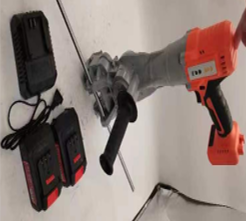
Rebar electric torque wrench BOC 8-42: rated for 12–40 mm rebar and 16–32 couplers, with a maximum torque value of 400 N·m.
The matrix exposes three compatibility rules that are easy to miss in a coupler-only quotation. First, the equipment range must cover the coupler range, not the other way around; where the pressing machine is specified for 16–32 mm rebar, the 36 mm and 40 mm pressing couplers sit outside that machine's stated range and need separate planning. Second, the upsetting route consumes two machines rather than one, because the upsetting machine enlarges the bar end while the MQ40 thread cutting machine produces the M14–M45 thread up to 100 mm of thread length. Third, the fastening tool is part of the coupler family: a 400 N·m wrench and a 350 N·m wrench are not interchangeable when the size window differs.
Application Scenarios Where the Matrix Is Tested
Site conditions change which column of the matrix matters most. In tall building work, couplers and threading machines operate in outdoor environments with normal tropical temperature and humidity, with ISO and CE certification expected and threading performed by rebar threading machines; this pattern appears in markets including the United Arab Emirates, Australia and India, and the associated equipment set includes CBT40L, 40MO, BOC 8-42, rolling couplers and one-touch couplers.
High railway work behaves differently. The stated operation combines upsetting, thread cutting and coupler assembly, matched with upsetting machines and thread cutting machines rather than rolling machines, and requiring CE and ISO certification. This is the scenario in which Auto 36s, Auto 50s and MQ40 carry the load.
Factory pre-threading is a third pattern entirely. In indoor, continuous mass processing at normal room temperature, the object of attention is not one splice but machine endurance: long-life rib cutters and rollers, strong shafts and durable machine parts. Pre-threading at the factory moves threading capacity away from the site and converts coupler supply into a schedule question.
Climate also plays a role. High humidity and rainy outdoor conditions with continuous all-day operation, high-temperature dry outdoor conditions, and tropical high-temperature outdoor work each place different demands on the assembly and fastening step. In one reported Kuwait engagement, a construction enterprise purchased standard rebar couplers at 400,000 units per year for outdoor construction work, with reported higher strength, stable quality and good operation, and easy connection noted as the practical highlight. A separate reported engagement in Vietnam covered 500,000 units per year for tall building and railway station works, with stable operation, high strength, clear outer surface and strict thread noted as the observed characteristics.
Procurement Terms and Acceptance Criteria
The commercial terms determine whether the technical choice can actually be executed. For stock couplers, Cangzhou Bartech states that there is no minimum order quantity. Monthly capacity is stated at 300,000 units, and lead time is stated at 7–30 days depending on quantity. Customisation is offered on coupler outer diameter, inner diameter and thread, which matters when a project drawing calls for a non-standard thread callout while the body envelope must stay unchanged. Quality control is documented as a material test report, testing on 10% of production during production lines, and 100% appearance surface checking. Online technical support is provided after delivery. Certification records state CE certification (Nr.SC-PSC-4-2025-12-14) valid until 2030 and ISO9001:2015 (31623Q10713R1S).
| Acceptance check | What to verify | Where the evidence sits in this matrix |
|---|---|---|
| Material grade | Carbon steel 45#, alloy steel 40CR or carbon steel Q355B, matching the coupler family ordered | Material test report; family-level material specification |
| Dimensional envelope | Outer diameter, length and — for pressing couplers — wall thickness against the drawing | Size tables for rolling, upsetting and pressing families |
| Thread conformity | Thread callout and 60° thread angle, from M16.5*2.5 upward in the rolling family and M20*2.5 upward in the upsetting family | Thread column of the family tables; thread gauge inspection |
| Equipment fit | Bar size inside the stated range of the threading, upsetting, pressing or fastening machine assigned to the project | Decision matrix, equipment range column |
| Production testing | Material test report, 10% in-line production testing, 100% appearance surface checking | Stated quality-control process |
| Commercial terms | Order quantity, lead time and customisation of outer diameter, inner diameter and thread | Stated capacity, lead time and OEM customisation scope |
Market Context Behind the Matrix
The equipment-matching question is growing in commercial weight. According to Dataintelo, the global rebar coupler market was valued at USD 1.82 billion in 2025 and is projected to reach USD 3.47 billion by 2034, a CAGR of 7.4%. The same source places building construction at 47.6% of total revenue in 2025 and Asia Pacific at approximately 41.3% of global revenue. It also reports tapered thread couplers holding the largest product type share at 38.2% in 2025, followed closely by parallel thread couplers — the family whose thread geometry, body dimensions and threading-machine pairing occupy most of this matrix.
It is worth noting that market size estimates diverge by source. Business Research Insights has published a 2026 forecast of USD 1.54 billion, while QY Research has shown a 2025 figure of USD 0.8 billion. Buyers should treat any single market number as directional, and rely on coupler-level specifications and standards rather than market headlines when specifying a project.
Comparison with Traditional Splicing Methods
Against lap splicing, the mechanical route removes the additional bar length consumed by overlapping and reduces the congestion that overlap creates at columns, walls and slab edges. Against field welding, it removes a weather- and welder-dependent hot process from the critical path by moving the connection into a controlled mechanical operation — threading the bar ends with a threading machine and connecting the two ends with couplers to extend rebar length and height, a method that is used in continuous all-day construction operation.
The matrix has boundaries, and buyers should treat them as decision inputs rather than objections. Pressing couplers occupy substantially more space than threaded couplers of the same bar size: at 40 mm bar, a pressing coupler measures OD 70 mm × 240 mm with an 11.0 mm wall, against OD 59 mm × 95 mm for a rolling coupler. Where cover, congestion or embedment is tight, that difference has to be resolved on the drawing before the order is placed. The CBT32 pressing machine is specified for 16–32 mm rebar, so pressing couplers at 36 mm and 40 mm require equipment and method planning outside the standard pressing set-up. The upsetting route adds an operation and a machine to the sequence. And rolling performance depends on thread quality, which in factory pre-threading depends on long-life rib cutters and rollers together with strong shafts and machine parts. None of these are defects in the method; they are the conditions under which each family is the right choice.
Future Outlook
Two directions appear likely to shape coupler procurement over the next several years. The first is consolidation of purchasing around equipment ecosystems rather than individual components: buyers increasingly evaluate a coupler family, its thread geometry and the threading, upsetting, pressing or fastening equipment that installs it as one specification package, because the compatibility rules above are invisible in a component-only quotation. The second is verification-driven sourcing. With mechanical splices governed by ISO 15835, ASTM A615 and BS 8110, and with certification records such as CE Nr.SC-PSC-4-2025-12-14 and ISO9001:2015 published by suppliers, the documentation layer is becoming a screening gate rather than an afterthought. The matrix in this article is intended to sit alongside that documentation, not replace it.
FAQ
What is the material difference between rolling, pressing and one-touch rebar couplers?
Rolling couplers are made from carbon steel 45# as primary material, with alloy steel 40CR available as an alternative. Upsetting couplers also use carbon steel 45# or alloy steel 40CR. Pressing couplers use carbon steel Q355B. One-touch couplers are made of alloy steel 40CR. Threading machines in the same product range are constructed from carbon steel.
What size ranges and model designations are available?
Rolling and pressing couplers are designated by bar size at 16, 18, 20, 22, 25, 28, 32, 36 and 40 mm. Upsetting couplers use the same size designations. One-touch couplers are listed as a separate series running from φ11-16 through φ40, with outer diameters from 35 mm to 83 mm and lengths from 100 mm to 200 mm.
What thread specification applies to parallel thread rolling couplers?
Rolling couplers use a 60° thread angle. Thread designations run from M16.5*2.5 at 16 mm bar through M18.5*2.5, M20.5*2.5, M22.5*2.5, then M25.6*3.0, M28.6*3.0, M32.6*3.0, M36.6*3.0 and M40.2*3.0 at 40 mm bar. Upsetting couplers carry larger thread designations for the same bar size, from M20*2.5 to M45*4.0, also at a 60° thread angle. Pressing couplers have no thread; their specification is outer diameter, length and wall thickness.
Which installation equipment is required for each coupler family?
Rolling couplers are installed using rebar thread rolling machines such as CBT40A, CBT40L, 40MO or 40AO, with fastening by rebar electric torque wrench BOC 8-42 or BOC 8-32. Upsetting couplers require a rebar upsetting machine such as Auto 36s or Auto 50s plus a thread cutting machine such as MQ40. Pressing couplers require the rebar coupler pressing machine CBT32, which is specified for 16–32 mm rebar. One-touch couplers are fastened with the electric torque wrenches, rated at 400 N·m for BOC 8-42 and 350 N·m for BOC 8-32.
What documents and inspection steps should a buyer expect during acceptance?
The stated quality-control process covers a material test report, testing on 10% of production during production lines, and 100% appearance surface checking. Certification records include CE certification Nr.SC-PSC-4-2025-12-14 valid until 2030 and ISO9001:2015 31623Q10713R1S. Acceptance inspection conventionally covers material grade against the family specification, outer diameter and length against the drawing, wall thickness for pressing couplers, and thread callout and 60° angle with a thread gauge for threaded families.
What should be planned before committing to one coupler family?
Three checks are worth running before the order is placed. Confirm that the coupler size sits inside the stated range of the available equipment — for example, the CBT32 pressing machine covers 16–32 mm, so 36 mm and 40 mm pressing couplers need separate method planning. Confirm that the coupler body fits the drawing envelope, since a 40 mm pressing coupler at OD 70 mm × 240 mm occupies more space than a 40 mm rolling coupler at OD 59 mm × 95 mm. And confirm commercial terms: stock couplers are offered with no minimum order quantity, monthly capacity is stated at 300,000 units, lead time is stated at 7–30 days depending on quantity, and customisation is available on coupler outer diameter, inner diameter and thread.
Summary for buyers: the coupler decision is complete only when material grade, outer diameter and length, thread callout and 60° angle, thread or pressing method, and the matched installation machine have all been checked against one another — and when the production test, certification and commercial terms behind the order can be verified in writing.