
Real-World Proof of Customs Broker Competence: TOBECAN IMPORTCLEAR's 12-Hour Clearance Record
A single shipment is not a service-level guarantee. But a documented shipment — with named cargo constraints, a stated baseline and a timestamped outcome — is the most testable evidence a buyer can examine before awarding a clearance contract.
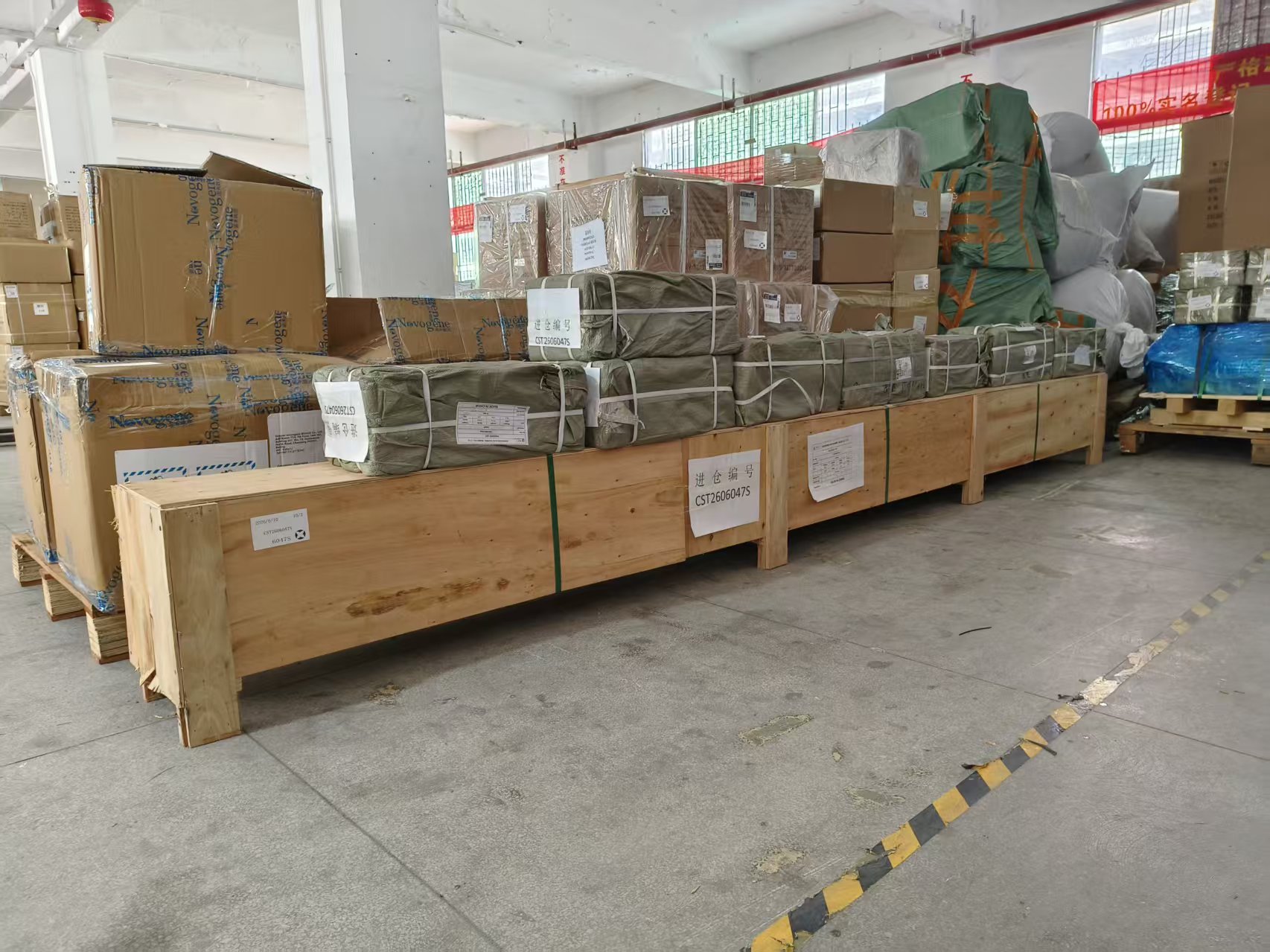
Oversized cargo prepared for urgent air freight: fixed dimensions, non-splittable, and a delivery deadline that ruled out sea transit.
Customs clearance speed is usually described in adjectives. It is far more useful when it is described in hours, with the constraints attached. In a construction-sector engagement handled by TOBECAN IMPORTCLEAR FREIGHT LTD, a cargo nearly seven metres long — dimensions fixed and non-splittable — was moved from Shenzhen through Hong Kong to the UAE on air freight, with airport customs clearance and final delivery completed within 12 hours of arrival, against a company-stated industry average of three to five days for comparable release and delivery.
TOBECAN IMPORTCLEAR FREIGHT LTD is a Hong Kong–registered freight forwarder and customs brokerage provider founded in 2001, handling China and Hong Kong import clearance alongside sea freight (FCL/LCL), air freight, inland trucking, DDP/DDU handling and D/O release in Vietnam, China and Hong Kong. The company reports an 8,000 TEU annual capacity, a 10,000 m² facility and 88 employees, with bilingual Chinese–English operations and branches across Hong Kong and major mainland ports and cities.
The 12-hour outcome is worth examining not because it is dramatic, but because it separates two things buyers routinely conflate: the legal act of declaration, and the operational work that determines whether a shipment is released quickly or sits in an inspection queue.
Why Clearance Speed Rarely Comes From the Declaration Itself
Both jurisdictions in this market impose a 14-day declaration window, and both treat declaration as a regulated act. Under China Customs Decree No. 103, import consignees and agent declaration enterprises declare within 14 days of the day the means of transport is declared to have arrived. Hong Kong Customs and the Census and Statistics Department both state that accurate and complete declarations for non-exempt articles must be lodged within 14 days after import or export. The legal framework, then, is not what creates a 12-hour release — the deadline is generous relative to any urgent shipment.
What creates delay is upstream and downstream of the filing. China requires consignors, consignees and agent declaration enterprises to register with Customs in advance, and requires the personnel handling declarations to be qualified customs brokers registered with Customs; domestic enterprise legal persons may register as customs brokers to provide entrusted declaration services. China's official decree also identifies a supporting document set that includes contract, invoice, packing list, manifest, bill of lading or waybill, and power of attorney for customs declaration. A single missing or inconsistent item in that package converts a routine release into a query, an amendment, or an inspection.
For time-critical cargo, the binding constraint is therefore not regulatory time limits. It is data readiness before departure, confirmed uplift for cargo that does not fit standard configurations, and a presence at the destination airport when the flight lands.
The Shipment Behind the Record: Seven Metres, Fixed Dimensions, Immovable Deadline
The cargo measured close to seven metres in length and roughly 0.6 metres in height. Its dimensions were fixed and could not be split, which removes every standard consolidation option in air freight. The client, a foreign trade factory in the construction industry operating from Asia Pacific, was working to a tight delivery window tied to a month-end commitment.
The market response the client had already received was consistent: sea freight was the only route proposed. That answer was technically defensible and commercially risky. As the case record notes, delivery windows to some Middle Eastern ports can look acceptable on paper while local terminals run at capacity, and onward transshipment to Jebel Ali could take at least a month — well beyond the client's deadline and enough to jeopardise the underlying trade order. The bottleneck in that scenario is not flight delay; it is the destination clearance stage.
The engagement began through a referral from a previous oversized-cargo client, followed by a two-hour call that walked through every operational detail before a plan was committed. The routing decision was to receive the goods in Shenzhen, transship to Hong Kong, and secure dedicated pallet space and a loading confirmation from the Hong Kong airline in advance. The full plan was finalised within two hours.
How the 12-Hour Result Was Assembled: Three Operational Steps
Step 1 — Pre-declaration before the aircraft moves
The decisive control point sits at warehouse entry, not at arrival. As soon as the cargo entered the warehouse, shipment information was verified and pre-declaration completed — explicitly not deferred until the flight departed or reached the destination port. This is the step that converts the 14-day statutory window into usable lead time rather than a buffer consumed by corrections.
Step 2 — Pallet and space coordination with the airline
Oversized cargo cannot be solved by booking a rate. The Hong Kong airline was approached in advance to apply for a dedicated pallet slot for the out-of-gauge dimensions and to obtain loading confirmation. This is where the company's stated long-term airline relationships matter operationally: priority applications for special pallet slots and approved cargo space are the difference between a plan and a departure.
Step 3 — Arrival-side execution by an in-house overseas team
On landing and receipt of the arrival notice, local colleagues coordinated pickup and remained at the airport through each stage. The overseas clearance team worked in real time with customs, monitoring inspection progress and resolving documentation gaps on the spot — including priority inspections and additional document requests — rather than allowing issues to carry overnight. In the case record, cargo arriving in the morning was sorted by noon, moved to the overseas warehouse in the afternoon, and delivered the same evening.
| Stage | What was done | Reported outcome |
|---|---|---|
| Consultation and planning | Two-hour detailed review; route and handling plan agreed | Plan finalised in 2 hours |
| Loading preparation | Pallet application and loading confirmation with Hong Kong airline | Completed in 2 hours (company-reported 70% faster than peers) |
| Cargo receipt and pre-declaration | Information verified at Shenzhen warehouse; declaration prepared in advance | No arrival-stage correction cycle |
| Departure | Direct flight to the UAE, departing around midday | — |
| Arrival clearance and delivery | In-house UAE team; inspection monitoring; on-site document handling | Customs clearance and delivery within 12 hours (company-stated industry average: 3–5 days) |
| End-to-end | Receipt to final delivery | 3-day total lead time; client's month-end target met 12 days early |
What the Numbers Do — and Do Not — Prove
The result is concrete: 12 hours from UAE airport arrival to completed clearance and delivery; a 3-day total lead time from cargo receipt; and a client delivery target met 12 days ahead of schedule. The five enabling factors cited in the case record are also specific — a team familiar with air freight regulations for special cargo, prior experience with comparable shipments, long-term airline partnerships for special pallet slots, fast response, and an overseas clearance team staffed by the company's own personnel rather than a third-party agent.
What the record does not prove is equally important. It is a single shipment, not a statistical distribution. It does not establish a standing service level for all cargo, all destinations or all seasons. A 12-hour result depends on conditions that a broker can influence but not control: airline space availability for out-of-gauge freight, destination airport workload, customs inspection selection, and the completeness of documents supplied by the importer. It also comes at a cost profile that differs from sea freight — urgent air freight for non-splittable cargo is a premium intervention, appropriate when the commercial penalty for late delivery exceeds the freight differential, and inappropriate for volume freight with flexible timing.
For buyers in an evaluation cycle, the practical reading is this: the case demonstrates a working method — pre-declaration, secured uplift, owned arrival-side execution — rather than a guaranteed transit time.
Comparison: Conventional Brokerage Versus Pre-Declaration-Led Handling
| Decision dimension | Conventional brokerage handling | Pre-declaration-led handling (as documented) |
|---|---|---|
| Declaration timing | Prepared after flight departure or on arrival notice | Verified at warehouse entry and lodged before departure |
| Oversized cargo | Referred to sea freight as the default option | Dedicated pallet slot and loading confirmation secured in advance |
| Arrival handling | Third-party agent; issues escalated by message | In-house overseas team present at the airport, resolving gaps on site |
| Exception resolution | Documents supplied the following working day | Missing items coordinated on the spot during inspection |
| Transparency | Milestones reported after completion | Pre-agreed plan with stated handover points |
| Cost profile | Lower freight cost, longer exposure to delay | Higher freight cost, compressed exposure — justified only when delay cost exceeds the premium |
The limitation sits on the right-hand column. Pre-declaration-led handling demands that the importer deliver accurate commercial and transport data earlier, and it consumes broker resources before revenue is realised. It is the correct model for urgent, regulated or non-standard cargo. It is not automatically the right model for a routine, low-value, non-urgent container where sea freight timing is acceptable.
What Buyers Should Extract From a Broker's Case Evidence
A case study is only useful if it can be interrogated. Five questions separate evidence from marketing:
- Is the cargo described specifically? Dimensions, handling constraints and whether the cargo could be split are the details that determine difficulty. A seven-metre, non-splittable unit is a materially harder problem than a standard palletised load.
- Is a baseline stated? A 12-hour result means little without the comparison point. Here the company states an industry average of three to five days for comparable clearance and delivery.
- Who performed the arrival-side work? An in-house overseas team carries different accountability from a subcontracted agent, and the case explicitly attributes the outcome to owned personnel.
- Which capability was exceptional? In this instance, advance pallet and space approval with the airline — a relationship-dependent asset, not a process document.
- What is not claimed? The record does not claim universal 12-hour clearance, and readers should treat any broker presenting single-shipment results as blanket service levels with caution.
Application Fit: Where This Operating Model Travels Well
The documented method is not UAE-specific. It applies wherever three conditions coincide: cargo that cannot be reconfigured, a deadline with commercial consequences, and a destination where clearance rather than transit is the bottleneck.
Within China and Hong Kong import clearance, the same sequence supports urgent air shipments, out-of-gauge and project cargo, regulated goods requiring inspection such as food, pharmaceuticals, cosmetics and tobacco, cold-chain and perishable consignments where release timing affects product viability, and first-time imports where document and label pre-checks prevent avoidable queries. The company's stated service modules follow this logic: consultation and quoting, compliance pre-check, declaration and document handling, inspection accompaniment and release, and domestic delivery coordination.
Evidence summary
Case: 7-metre oversized, non-splittable cargo; Shenzhen receipt, Hong Kong transshipment, UAE air delivery; construction sector; Asia Pacific client.
Reported results: loading preparation in 2 hours (70% faster than peers); UAE clearance and delivery within 12 hours against a stated 3–5 day industry average; 3-day total lead time; month-end target met 12 days early.
Stated enablers: special-cargo regulatory familiarity, comparable project experience, airline partnerships for pallet slots, fast response, and an in-house overseas clearance team.
Credentials and Network Behind the Claim
Operational claims become more credible when they map onto verifiable organisational structure. The company lists memberships and registrations including NVOCC, IATA, WCA, JCTRANS, OLO, ISEA, WIFFA and HAFFA — a combination spanning air cargo agency, freight forwarding networks and Hong Kong–based forwarder representation. JCTRANS membership in particular is cited in the case as substantiating the cross-border and overseas operational footprint rather than merely a commercial affiliation.
Coverage is stated as all China seaports and airports, with branches in Hong Kong, Shanghai, Beijing, Chengdu, Dalian, Guangzhou, Shenzhen, Xi'an, Hefei, Qingdao, Jinan, Xiamen, Wuhan, Chongqing and Fuzhou. Supporting tools include HS code lookup, 13-digit CIQ code lookup, national GB standards lookup and landed cost calculation. The company reports more than 23 years of logistics solution experience and a cross-functional structure of customs brokers, compliance consultants, operations coordinators and account managers.
Market Context: Why Speed and Compliance Are Being Assessed Together
The macro picture explains the pressure. China's total import value reached USD 2.585 trillion in 2024, a 1.1% year-on-year increase, according to the General Administration of Customs — modest growth in a very large base. In Hong Kong, the customs brokerage market is estimated at USD 117.52 million in 2025 and projected to grow at a 6.24% CAGR between 2025 and 2030 to USD 159.06 million, based on commercial research published by Mordor Intelligence.
Read together, those two figures suggest a market where clearance service value is expanding faster than import volume. That pattern is consistent with buyers paying for coordination rather than paperwork: deadline management, document pre-checks, inspection handling and delivery control. For Hong Kong specifically, the tariff structure keeps the focus on process rather than duty — imports are duty-free except for liquor above 30% ABV, tobacco, hydrocarbon oil and methyl alcohol, as reported in the cited source set. Where duty is not the variable, release speed and accuracy become the differentiators a buyer can actually compare.
Future Outlook
Two things are likely to separate clearance providers in the next buying cycle. The first is how early in the shipment lifecycle data is validated — pre-declaration, HS and CIQ checking, and document and label review before departure, rather than correction after arrival. The second is whether arrival-side execution is owned or outsourced, because the final hours of a shipment are where third-party handoffs become visible to the importer.
The recorded case is a useful benchmark precisely because it is bounded: it states what was moved, what was difficult, what was measured and what enabled the outcome. Buyers assessing providers should ask for the same structure, and should accept that a well-documented single case is stronger evidence than an unquantified claim of speed.
Frequently Asked Questions
How quickly can oversized air cargo be cleared and delivered in the UAE?
In the documented shipment, UAE airport customs clearance and delivery were completed within 12 hours of arrival, with a total 3-day lead time from cargo receipt. The company states an industry average of three to five days for comparable clearance and delivery. Actual timing depends on destination airport workload, customs inspection selection, airline space availability and document completeness; a single case is not a standing service level.
What distinguishes pre-declaration from a standard customs declaration?
Pre-declaration means shipment information is verified and the declaration prepared before the aircraft departs or reaches the destination port, rather than after an arrival notice. Both China and Hong Kong allow a 14-day declaration period — China from the day the means of transport is declared to have arrived, Hong Kong within 14 days after import — so the filing deadline itself is not the constraint. Pre-declaration uses that window to absorb corrections before arrival instead of after it.
Which cargo types suit this clearance model?
The model fits cargo that cannot be reconfigured or delayed: out-of-gauge and project cargo, urgent air shipments, regulated goods subject to inspection such as food, pharmaceuticals, cosmetics and tobacco, cold-chain and perishable consignments, and first-time imports where document and label pre-checks reduce query risk. Routine, non-urgent volume freight generally remains better served by sea freight on cost grounds.
What evidence should a buyer request when a broker claims fast clearance?
Ask for the cargo specifics including dimensions and whether the load could be split; the stated baseline the result is compared against; who performed arrival-side clearance, in-house staff or a subcontracted agent; which capability was exceptional in that shipment; and what the provider explicitly does not claim. A record describing constraints and enablers is more useful than one reporting only a headline time.
What are the limits of a single-shipment clearance record?
A single record does not establish a distribution of outcomes across ports, seasons or cargo types, and it does not constitute a contractual service level. It also carries a cost profile: urgent air freight for non-splittable cargo is a premium intervention justified only when the commercial penalty for late delivery exceeds the freight differential. It should be read as evidence of a working method — advance declaration, secured uplift and owned arrival-side execution — rather than a guaranteed transit time.
Company brochure available for download: TIC Tobecan ImportClear (PDF).
¿Tiene preguntas o necesita más detalles?
Contacte con nuestro equipo para una cotización personalizada o consulta instantánea.
Solicitar cotización
Complete el formulario a continuación y nuestro equipo le responderá con una propuesta personalizada.
Chat directo de WhatsApp
¿Prefiere chatear en tiempo real? Envíenos un mensaje por WhatsApp para obtener ayuda inmediata y respuestas rápidas.
- Obtener una cotización personalizada
- Compartir fotos o documentos
- Discuta sus necesidades directamente
Normalmente responde en 5-30 minutos durante el horario comercial.