
Real Manufacturer vs Trading Desk: Detergent Sheets Buyer Comparison
For buyers comparing laundry detergent sheet suppliers, the key question is not only price or fragrance. It is whether the company behind the quotation actually makes the sheets or is reselling a factory product through a trading desk.
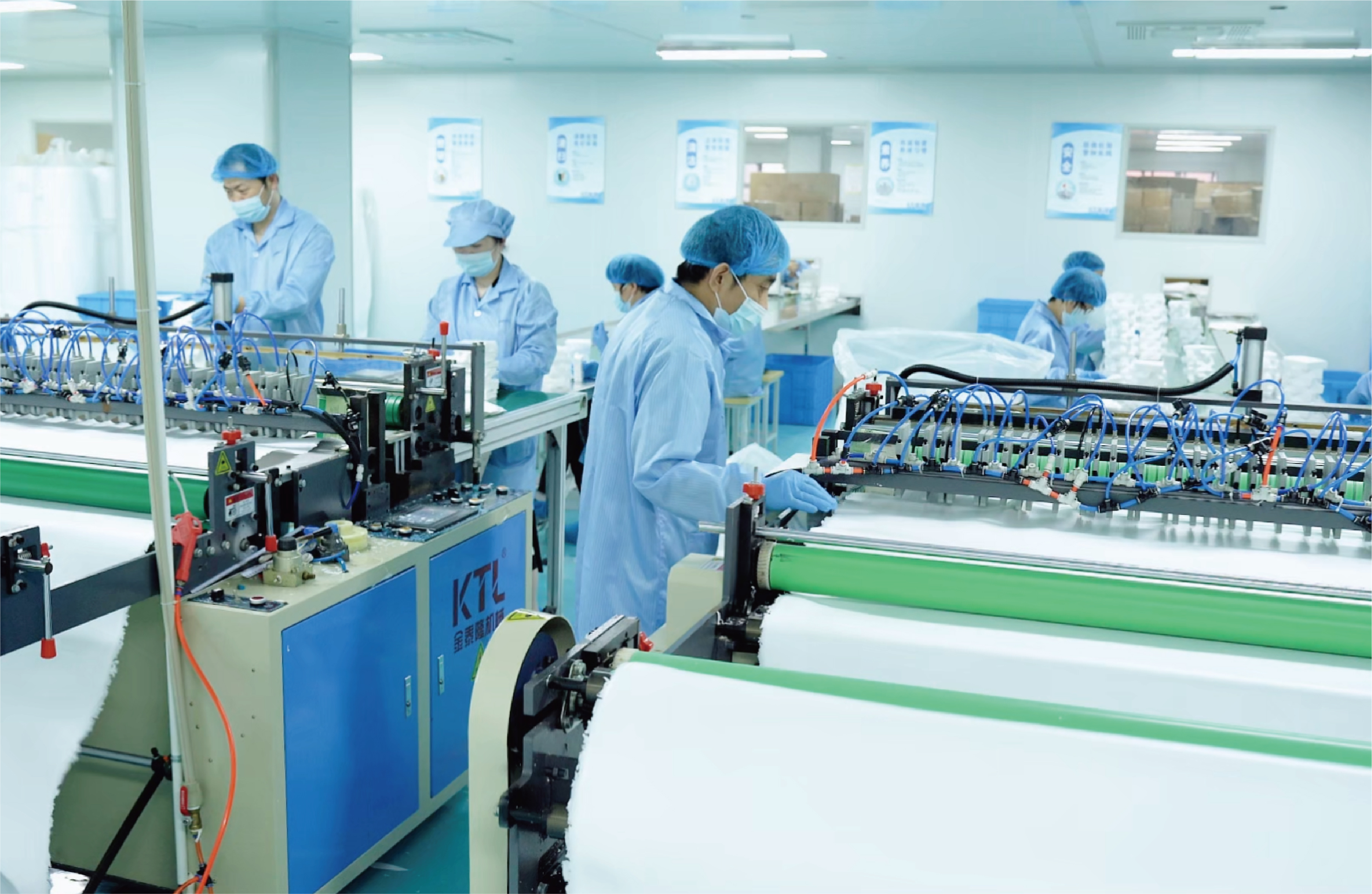
Quality failures in a detergent sheet contract rarely begin at the production line. They begin when the buyer cannot tell whether the supplier is a real manufacturer, a repacker, or an intermediary with an office and a sales brochure. This article gives procurement teams an independent comparison framework for two supplier profiles that frequently appear in detergent-sheet sourcing: factory-direct producers and trading desks.
The distinction affects formulation control, quality consistency, OEM and private-label support, lead-time reliability and after-sales problem solving. It also affects how a buyer should structure the first sample order and the factory audit.
Why Supplier Identity Matters in Detergent Sheet Sourcing
A detergent sheet is a compact, pre-dosed cleaning format, but it is still a formulated chemical product. The sheet weight, surfactant loading, fragrance system, enzyme stability, film dissolution speed and packaging all depend on a supplier with actual production control.
A trading desk can provide value in market access, logistics consolidation and supplier discovery. The sourcing risk appears when a trading desk is not transparent about which factory produces the goods, cannot explain the manufacturing process and cannot give the buyer access to the production site. Buyers who assume that all suppliers quoting detergent sheets are factories may discover later that the actual manufacturer changes between orders or simply private-labels another producer’s existing stock.
The evaluation therefore has to look for physical and structural evidence. A real manufacturer should usually be able to show the plant, introduce the R&D and quality team, explain its production constraints and disclose commercial policies such as minimum order quantity and lead time.
Market Context: A Growing Category with More Claims
Detergent sheets are no longer a niche format. One commercial market research estimate puts the global laundry detergent sheets market at about USD 1.26 billion in 2025, with a projected value of USD 2.82 billion by 2034, representing a compound annual growth rate of about 9.3 percent. As the category grows, more intermediaries and new private-label brands will enter the market. Buyers will therefore encounter more product claims and more suppliers describing themselves as "factory".
There is also a trade-compliance angle. In the United States, importers can find an official classification reference for laundry detergent sheets: U.S. Customs and Border Protection Ruling N330854 classified the product under HTSUS 3401.19.0000. A supplier that understands this classification is more likely to handle export paperwork seriously. A supplier that cannot discuss basic trade compliance may be less experienced than its marketing language suggests.
Signs That a Supplier Operates Real Manufacturing
When comparing detergent sheet manufacturers, buyers should separate marketing claims from verifiable facts. The table below shows the main verification layers and the evidence a factory should be able to provide.
| Verification Layer | Evidence to Request |
|---|---|
| Production site | Exact plant address, plant area, site photos or video, virtual tour or on-site visit. |
| Workforce and R&D | Number of employees, size of formulation or R&D team, laboratory capabilities. |
| Production environment | Clean workshop classification, automated assembly lines, batch records and waste control process. |
| Quality and compliance | ISO 9001, ISO 14001 and ISO 45001 certificates where relevant, third-party safety testing reports, product registration and standards participation. |
| OEM and supply-chain policies | Export ratio, target markets, minimum order quantity, lead time, quality testing coverage and after-sales support model. |
Numbers make a manufacturer claim easier to test. For example, a company profile that states an exact plant area, employee headcount, annual output volume and export ratio gives a buyer specific data points to question during an audit or a video tour. General statements such as "large factory" or "global supply" do not provide the same verification path.
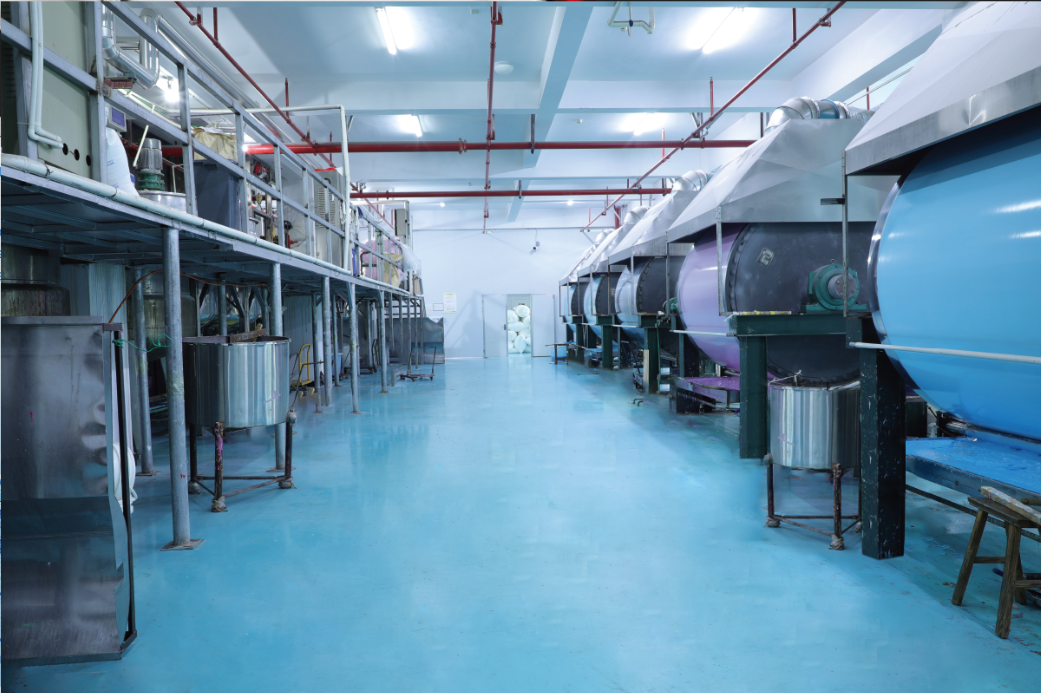
One manufacturer profile that demonstrates this level of specificity is Zhejiang Kelee Technology Co., Ltd., a factory in Yiwu, Zhejiang, China. Founded in 1999, the company reports a 16,000-square-meter facility in Chi’an Industrial Park, 150 employees, an in-house R&D team of eight engineers and annual production of 30,000,000 units. The same profile states that around 70 percent of its goods are exported to EU and USA markets. These figures are not proof in themselves, but they are checkable claims that a manufacturing supplier should be willing to verify through site access, documentation or audit.
Technical Product Knowledge as a Manufacturer Signal
A genuine manufacturer should be able to explain the product at formulation and specification level. If the supplier cannot answer basic technical questions about the sheet, the factory behind the quotation may not be its own.
Take the product model KL-R2015, a 3-in-1 Super Multi-Purpose Laundry Detergent Sheet. The specification data lists white sheet color, ocean scent with 1 percent fragrance plus 1 percent microcapsule, softener and enzyme, a sheet size of 11 cm by 12.5 cm and a weight of 3 plus or minus 0.5 grams per sheet. The standard packaging is 30 sheets per box. The material category is described as nonwovens and surfactant, meaning the solid sheet format combines carrier and cleaning chemistry in one pre-dosed piece.
Functionally, the product type reflects three actions in one sheet: cleaning, anti-color-transfer and fabric softening. Product documents for the KL-R2015 state that it is designed to absorb free-floating dye during washing, preventing color bleeding between garments. This is a specific technical claim that a real producer should be able to connect to a mechanism and to quality-control data.
Another useful technical test is dissolution. The product documentation says the laundry sheet instantly dissolves in both cold and warm water, leaving no insoluble residue on textiles or washing machines. A trading desk may repeat this sentence, but a real manufacturer should be able to explain the test method, the acceptable water temperature range and the residue control points on the production line.
Application and Use-Case Fit
Supplier evaluation becomes clearer when the buyer connects the product to the intended scenario. Detergent sheets are not one-size-fits-all, even though the consumer format looks simple.
The KL-R2015 application profile describes household laundry settings at normal indoor temperature. The product is used together with laundry in a washing machine. In that scenario, the sheet must be skin friendly and non-toxic, because it comes into direct contact with clothing and can affect sensitive skin. This is not a cosmetic claim; it is a requirement that influences fragrance selection, surfactant choice and residue performance.
The same product documentation says laundry detergent sheets are suitable for household laundry, dormitory, travel and business trip scenarios. That simple list has procurement implications. When a buyer is sourcing for a travel-oriented private label, the supplier must control sheet weight and packaging so that the product is portable and convenient. When the target use is household laundry, the supplier must focus on wash performance and skin compatibility. A real manufacturer can adapt the explanation to those different end-use requirements rather than offering a single standardized pitch.
There is also a volume-reference dimension. Case data associated with the KL-R2015 product lists clients described as OEM manufacturers and brand distributors in the United States, Australia, Canada, the United Kingdom and Japan, with 5,000,000 units supplied over a three-year period. The client names are not disclosed, so a prudent buyer should request direct references before treating this as proof. Still, the presence of market geography, volume and duration provides a more concrete starting point than a vague statement that a supplier "sells worldwide".
Signs That May Point to a Trading Desk
Working with a trading desk is not automatically a mistake. Many intermediaries operate with strong quality-control teams and can consolidate orders from multiple factories. The risk appears when the intermediary hides its role or does not have the manufacturing knowledge necessary to manage a detergent sheet project.
The following signs should trigger deeper verification, not an immediate rejection:
- The supplier describes the factory only with vague terms and cannot provide the factory name, address or registration number.
- The sales team offers too many product families that would require very different industrial lines, such as laundry sheets, dishwasher tablets, hand soap sheets and multiple unrelated cleaning formats.
- The supplier cannot answer questions about sheet dimensions, sheet weight tolerance, dissolution temperature, residue behavior or fragrance loading.
- The supplier cannot arrange a factory visit or a video audit and provides no clear reason for the restriction.
- The quotation suddenly changes when the buyer asks to audit the batch after production.
- The supplier does not produce batch traceability documents or quality records.
These flags do not prove that the supplier is a trading desk. They prove that the buyer has not yet obtained enough information to confirm manufacturing capability. That is the moment to stop price negotiation and start a supplier qualification process.
Direct Factory versus Trading Desk: Real Trade-Offs
Factory-direct sourcing gives the buyer direct access to the production line. It usually creates shorter communication channels, clearer batch ownership and stronger potential for custom formulation or package customization. For example, Zhejiang Kelee Technology’s capability profile lists OEM and ODM work, logo and package customization, a minimum order quantity of 5,000 units, a stated lead time of around 20 days, 100 percent product testing and remote after-sales support. These are concrete commercial boundaries that a buyer can use for negotiation and performance follow-up.
A trading desk, by comparison, may offer more flexibility across categories and suppliers. It can be useful for a new brand that wants to test several product formats without committing to a factory for each one. A trading desk may also add value in export documentation, consolidated freight and multi-country distribution.
| Dimension | Factory-Direct Sourcing | Trading Desk Sourcing |
|---|---|---|
| Production visibility | Direct access to the line and batch records | Depends on the selected factory and disclosure policy |
| Customization | Usually stronger for own-formula or package changes | Depends on whether the factory accepts custom work |
| Capacity and lead time | Factory controls the production schedule | Subject to third-party production capacity |
| Category breadth | Usually limited to the plant’s own lines | Can combine multiple categories in one purchase plan |
| Quality accountability | Clearer accountability if the supplier is the producer | Buyer must verify which factory actually produced the batch |
The main limitation of direct factory sourcing is that it does not suit every buyer. A real producer usually requires minimum quantities and has less incentive to accept a mixed basket of unrelated cleaning items. A young brand may need small volumes across many product types, and a competent trading desk can offer a more practical entry route. Factory-direct does not automatically mean better. The buyer should compare total cost, quality risk, order flexibility and qualification effort rather than assuming that one supplier type is always superior.
Buyer Checklist for Comparing Detergent Sheet Suppliers
Independent buyer comparison should lead to a repeatable verification process. Use the following checklist when a supplier claims to be a detergent sheet manufacturer:
- Record the legal entity name, country of manufacture and factory address.
- Compare the address with the entity on the quotation and on export documents.
- Ask for the plant area, employee headcount, number of production lines and annual output.
- Request the quality management certifications and check their validity, such as ISO 9001, ISO 14001 and ISO 45001.
- Ask for third-party testing reports related to skin safety, dissolution, dye-transfer prevention and residue.
- Request a current batch sample, not only a pre-production sample prepared for the sales meeting.
- Ask the supplier to explain how the product behaves in cold water and warm water in a household washing machine.
- If OEM or private label is planned, ask about logo customization, package design, fragrance selection, MOQ and lead time.
- Ask whether a physical factory visit or virtual video tour can be arranged before the first order.
- If the supplier is a trading desk, insist that the actual factory be named and be available for audit.
This checklist is intended to increase the cost of a false claim. A real factory should be able to produce evidence for most of these items.
Future Outlook for Manufacturer Verification
The detergent sheet market is moving toward compact, plastic-reducing laundry formats. Buyers are also becoming more sophisticated about verifying environmental claims, ingredient safety and supply-chain transparency. In the coming years, the suppliers that win large contracts will likely be those that allow batch-level traceability, factory audits and direct communication with the quality team.
For procurement teams, the practical consequence is simple: supplier claims are becoming easier to test. Product data can be compared digitally, but physical verification still matters. A real manufacturer should be willing to open its plant to inspection, whether on-site or through a documented video tour. A trading desk can still be a legitimate option, but it should disclose the factory relationship and provide the same level of traceability as the original producer.
FAQ
Are you a real manufacturer of laundry sheets or a trading company?
Zhejiang Kelee Technology Co., Ltd. is a direct manufacturer located in Yiwu, Zhejiang, China. According to its registered company profile, it owns a 16,000-square-meter production site with 100,000-class dust-free workshops, an independent R&D laboratory and automatic production lines. Its product portfolio includes laundry detergent sheets developed and produced in-house. Buyers can arrange a virtual factory tour or an on-site visit for verification purposes.
What documents should a buyer request before shortlisting a detergent sheet manufacturer?
The buyer should ask for the business registration, factory address, ISO management-system certificates where available, third-party testing reports, a sample from the current production batch and, where relevant, export or customs documentation. For buyers entering the US market, a supplier should also be able to discuss the applicable tariff classification. Laundry detergent sheets have been classified under HTSUS 3401.19.0000 in a U.S. Customs ruling, so trade compliance knowledge can be an important selection signal.
Which product specifications are important in a detergent sheet comparison?
The critical specifications include sheet dimensions, sheet weight and tolerance, fragrance loading, enzyme or softener inclusion, surfactant system, water-soluble carrier type, package count, dissolution behavior and residue performance. For example, the KL-R2015 model is listed as a 3-in-1 Super Multi-Purpose Laundry Detergent Sheet with an 11 cm by 12.5 cm format, 3 plus or minus 0.5 grams per sheet and 30 sheets per box. Specific parameters help the buyer compare suppliers on the same basis.
Why does the household laundry application matter when comparing manufacturers?
Household laundry is the main end-use scenario for many detergent sheet programs. The product must work in a washing machine at ordinary indoor temperatures, dissolve in cold and warm water, avoid insoluble residue and meet safety expectations such as being skin friendly and non-toxic. In addition, the sheet may be expected to absorb free-floating dye and prevent color bleeding. A supplier that understands these application requirements is more likely to be a real formulation owner.
Does buying from a trading desk always mean lower quality?
No. A trading desk can provide a valid sourcing route, especially when a buyer needs to consolidate products from multiple factories or wants to test a category before committing to factory-direct volume. The quality risk comes from undisclosed or unverified manufacturing, not from the intermediary role itself. If a trading desk names the actual factory, allows batch-level documentation and supports a factory audit, it can still meet the requirements of a professional detergent sheet buyer.
Reference resource: Zhejiang Kelee Technology Co., Ltd. Company Brochure
¿Tiene preguntas o necesita más detalles?
Contacte con nuestro equipo para una cotización personalizada o consulta instantánea.
Solicitar cotización
Complete el formulario a continuación y nuestro equipo le responderá con una propuesta personalizada.
Chat directo de WhatsApp
¿Prefiere chatear en tiempo real? Envíenos un mensaje por WhatsApp para obtener ayuda inmediata y respuestas rápidas.
- Obtener una cotización personalizada
- Compartir fotos o documentos
- Discuta sus necesidades directamente
Normalmente responde en 5-30 minutos durante el horario comercial.