
Reading the Workpiece: A Coating Line Project-Fit Guide
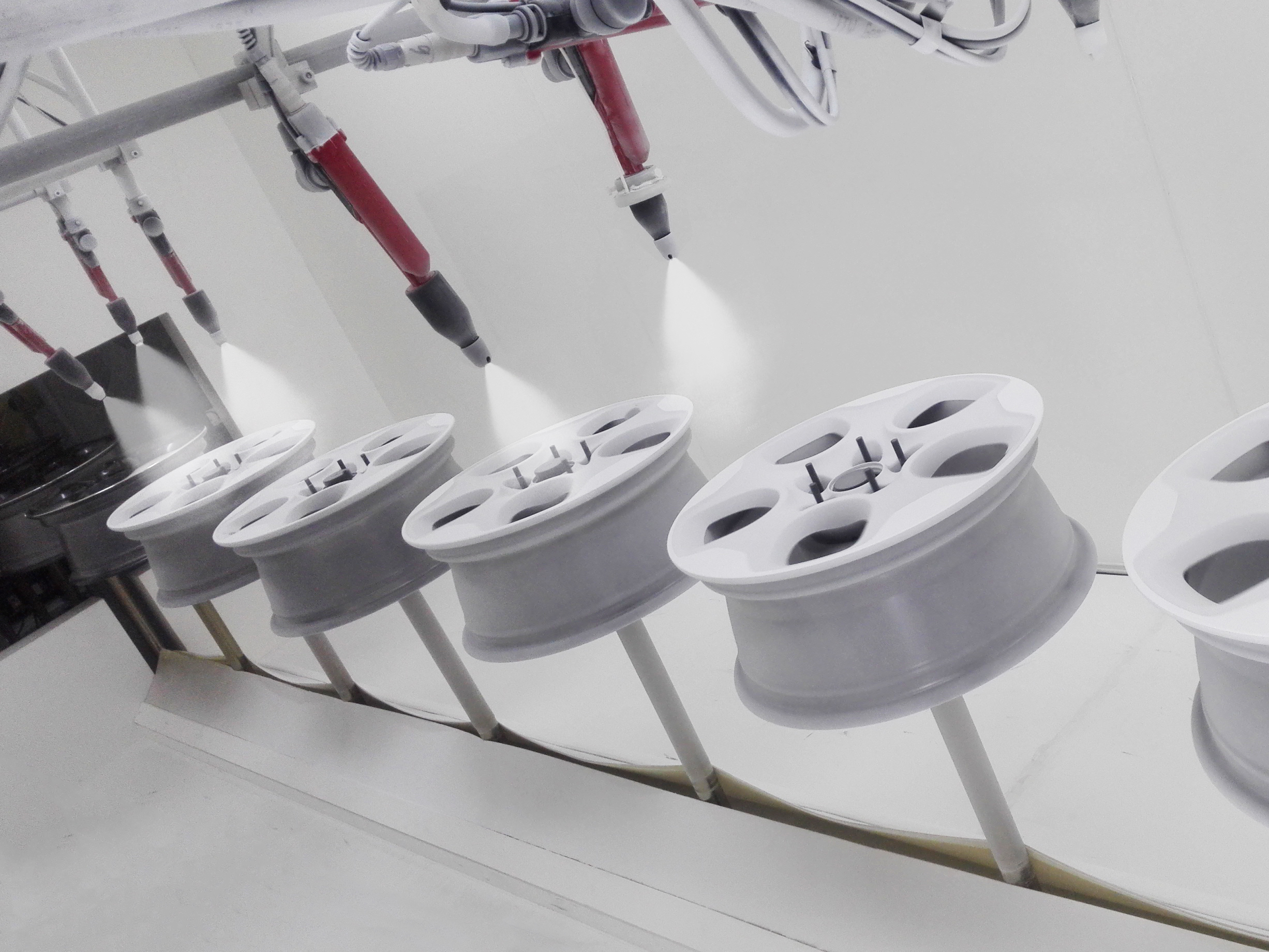
Why Project-Fit Matters More Than Machine Specs
A common mistake in coating line procurement is to compare equipment parameters before defining the production task. Parameters only become meaningful when they are attached to a specific workpiece and output target. Different parts impose different constraints on pretreatment, spray booth environment, conveying method, curing temperature and environmental control.
Automotive parts are a clear example. A coating line handling front bumpers, door panel trim, auxiliary instrument panels, gear shift panels, IP trim and wheel arches in ABS+PC operates under a spray booth temperature of 25±2°C and a humidity window of 65±10% RH. The documented configuration works 336 days per year, 22 hours per day, with a production cycle of 45 seconds per tray (1,760 trays per day), a maximum tooling tray size of L1350×W900×H200mm, and an equipment utilization rate of 85%.
Cookware follows a different logic. Non-stick pans, rice cooker liners and cake pans, made of aluminum alloy or composite materials such as stainless steel, aluminum alloy and copper, are coated at a rate of 800–1,000 pieces per hour. The documented line uses four inner pots per hang and 20 lids per hang, with an anodizing line speed of 1,200 mm/min and a curing oven linear speed of 1,000 mm/min (0.5–1.5 m/min adjustable).
Metal building products push the size limit. A metal coating line for aluminum panels and profiles handles workpieces up to 7,000 mm × 2,000 mm × 2,200 mm, reaches a maximum workpiece capacity of 5,000 m² per day, and uses a power-and-free conveyor chain running at 3,000 mm/min (2,000–4,000 mm/min adjustable).
Industrial equipment such as railway gondola cars, flat cars, tank cars, SQ6 special cars, box cars and grain cars requires floor-supported conveying and a combination of manual and robotic spraying. A single 7.5-hour shift in the documented configuration handles 20 open/flat/tank cars, 7 SQ6 special cars, 10 box/grain cars, or 5–10 export cars.
Wood furniture parts, including table legs, chair backs, sitting boards, front legs and chairs in solid wood or MDF, run on suspended conveyors at a design line speed of 4,000 mm/min (2,000–6,000 mm/min adjustable), producing 1,422 pieces per 8-hour shift with a workpiece pitch of 300 mm per hang.
These are not variations of the same machine. They represent different decisions about pretreatment, spraying, conveying, curing and environmental control. The opportunity for buyers is to define the workpiece first and let the line be built around it.
The Project-Fit Model: How Attractivechina Structures a Coating Line Project
Guangdong Chuangzhi Intelligent Equipment Co., Ltd. (Attractivechina) is a manufacturer of customized automatic coating production lines, coating equipment and environmental protection equipment, located in the National High-tech Industrial Development Zone of Zhaoqing City, Guangdong Province, China. The company operates as an integrated supplier: pre-sales plant planning, independent R&D, design, manufacturing, installation, commissioning and after-sales service are handled within one organization. The company has more than 30 years of overall coating production line experience, and currently holds 79 invention patents in the fields of coating equipment and environmental protection equipment, totaling more than 300 patents.
The company's main product families are the Auto Parts Coating Line, Cookware Coating Line, Metal Coating Line, Industrial Equipment Coating Line and Wood Furniture Coating Line. Customers are served across the automotive parts, rail transit, furniture, musical instruments, cookware, home appliances, hardware and building materials, low-altitude equipment and heavy industrial equipment industries. The company employs around 280 people, has an annual output capacity of about 60 complete units, and exports roughly 20% of its output to markets including Vietnam, Iran, Indonesia, Brazil, United Arab Emirates, Turkey, Thailand, Saudi Arabia, Argentina, Mexico, Pakistan, Bangladesh, India, United States, Russia and Singapore. Its website is www.attractivechina.net.
For project-fit procurement, three capabilities matter most. First, customization depth: packaging, logo, size, automation level, voltage, power and machine capacity can be customized according to customer requirements, and production capacity can be set per project. Second, automation: the documented operation mode is fully automatic continuous operation, with fully automated PLC intelligent control, robotic spraying and unmanned flexible production. Third, delivery discipline: the MOQ is 2 units, and every line receives 100% pre-shipment testing before leaving the factory.
Reading the Workpiece: Five Line Configurations, One Selection Logic
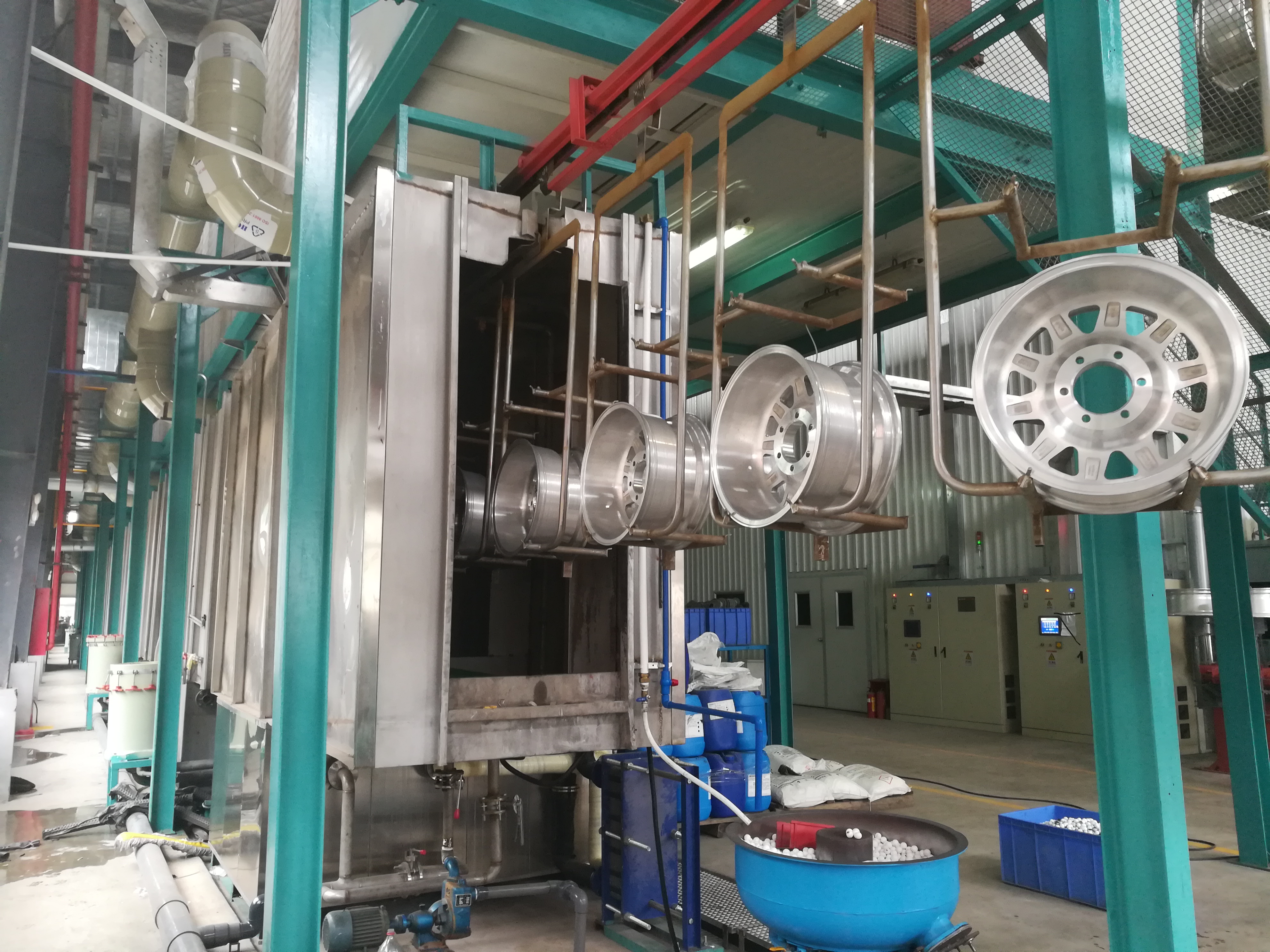
The table below maps five documented line types to their typical workpieces and key design parameters. Buyers can use the same logic to translate their own parts into configuration requirements.
| Line Type | Typical Workpiece | Workpiece Material | Output / Capacity | Spraying & Conveying | Key Design Points |
|---|---|---|---|---|---|
| Auto Parts Coating Line | Front bumper, door panel trim, instrument panel, gear shift panel, wheel arches | ABS+PC | 45 s/tray; 1,760 trays/day; 336 days/year; 22 h/day | Offline mode + robotic spraying | Spray booth 25±2°C; 65±10% RH; max tray L1350×W900×H200mm; utilization 85% |
| Cookware Coating Line | Non-stick pan, rice cooker liner, cake pan | Aluminum alloy; composite materials | 800–1,000 pieces/hour | 4 inner pots or 20 lids per hang; anodizing line 1,200 mm/min; curing oven 1,000 mm/min | Standard size Φ220×160mm(H); max Φ300×160mm(H); no curling; natural gas & electricity |
| Metal Coating Line | Aluminum panel, aluminum profile, door/window parts, lamp fittings, sheet metal parts | Aluminum | 5,000 m²/day; 300 days/year; 20 h/day | Reciprocator + manual; power-and-free conveyor; 3,000 mm/min | Max workpiece 7000×2000×2200mm; 1 pc/hanger |
| Industrial Equipment Coating Line | Gondola car, flat car, tank car, SQ6 special car, box car, grain car | Metallic, aluminum | 20 open/flat/tank cars, 7 SQ6, 10 box/grain, 5–10 export cars per 7.5-h shift | Manual + robotic spraying; floor-supported conveyor | Large and complex workpieces; anti-corrosion primer/intermediate/topcoat |
| Wood Furniture Coating Line | Table legs, chair backs, sitting boards, front legs, chairs | Solid wood, MDF | 1,422 pieces per 8-hour shift | Suspended conveyor; 4,000 mm/min (2,000–6,000 mm/min adjustable) | Max workpiece 610×710×1400mm; pitch 300 mm/hang; electricity |
How to read the table:
- Material decides pretreatment and curing windows. Aluminum parts may need anodizing or spray pretreatment; ABS+PC parts require temperature and humidity control in the spray booth.
- Geometry and size decide the conveyor and oven dimensions. A 7,000 mm aluminum profile requires a different curing tunnel and hanging system than a Φ300 mm pan.
- Output decides line speed and hanger density. Cookware at 800–1,000 pieces/hour implies multi-piece hanging; wood parts at 1,422 pieces per shift imply a 300 mm hanger pitch.
- Coating standard decides the spraying method. Automotive parts use offline mode with robotic spraying; large industrial equipment uses manual plus robotic spraying; aluminum panels use reciprocator plus manual.
Documented Installations: What the Project Records Show
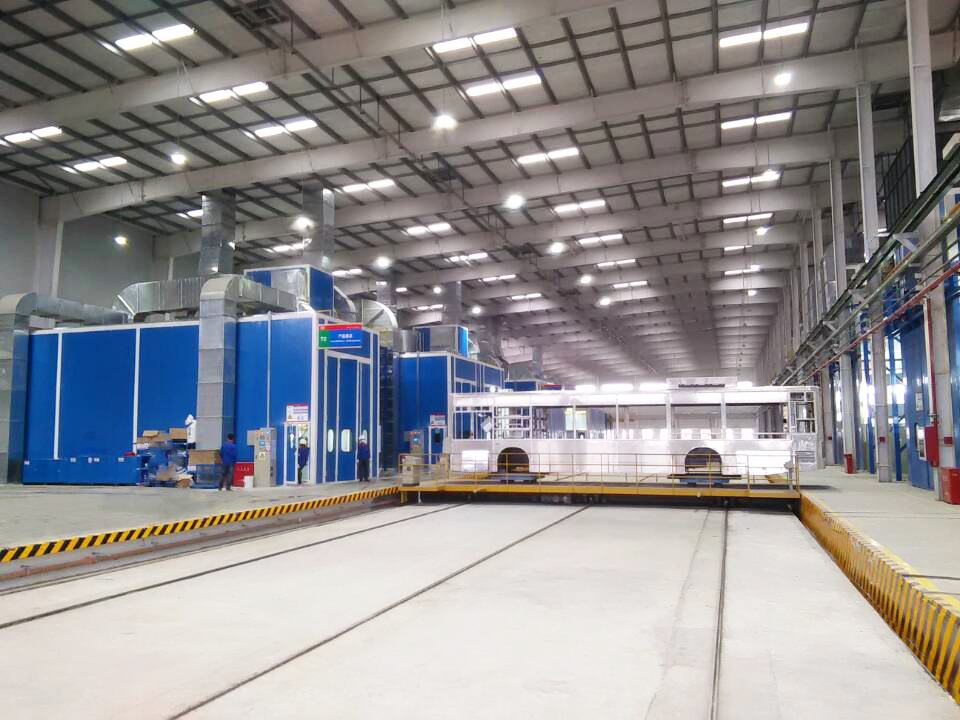
The project records associated with these product lines show installations running over 5–10-year periods. The documented results are summarized by industry below.
Auto parts — 20 installed lines. Used for surface coating, primer and topcoat spraying of automotive structural parts, chassis components and interior trim. Reported outcomes include coating yield rate increased to 98%, paint consumption reduced by 25%, energy consumption cut by 20%, and zero major production shutdowns over 5 years.
Cookware — 20 installed lines. Used for PTFE non-stick coating, anti-rust primer spraying and high-temperature resistant topcoat application on pans, pots and baking trays. Reported outcomes include coating uniformity rate up to 98%, non-stick performance meeting international food-grade standards, paint waste reduced by 30%, and production efficiency improved by 35%.
Metal hardware and building materials — 15 installed lines. Used for anti-corrosion and decorative coating, primer and topcoat spraying, and powder coating on metal hardware, bathroom fixtures, window frames and metal furniture components. Reported outcomes include coating pass rate increased to 97%, coating or powder consumption reduced by 30%, energy consumption cut by 22%, and production efficiency improved by 40%.
Wood furniture and musical instruments — 10 installed lines. Used for primer, topcoat and finish spraying of wooden furniture, cabinets, wood doors, pianos and guitars. Reported outcomes include paint consumption reduced by 30%, dust defect rate cut by 90%, production efficiency increased by 40%, and zero major quality complaints during operation.
Industrial equipment and rail transit — 10 installed lines. Used for anti-corrosion primer, intermediate paint and topcoat spraying on construction machinery, agricultural equipment, rail transit components and special vehicle structural parts. Reported outcomes include coating adhesion and salt spray resistance meeting industry standards at ≥1,000 hours salt spray, coating pass rate increased to 98%, paint consumption reduced by 25%, and production efficiency improved by 30%.
These records are best read as evidence of repeatability. The common thread is not a single machine model, but a configuration process: workpiece to process module to line layout.
Market Signals: Why Project-Fit Demand Is Rising
Global market data supports the direction of project-based coating equipment procurement. According to Fortune Business Insights, the global coating equipment market was valued at USD 20.56 billion in 2025 and is projected to reach USD 36.77 billion by 2034. The Asia Pacific region held a 38.30% revenue share in 2025, partly driven by automotive and EV sector growth.
In specialized segments, the powder coating equipment market was estimated at USD 3.20 billion in 2024, with an expected CAGR of 5.1% through 2034, according to Fact.MR. The E-Coat market is estimated at USD 6.02 billion in 2026 and projected to reach USD 9.48 billion by 2035, representing a 5.18% CAGR, according to Market Reports World. Cathodic epoxy E-Coat systems, commonly specified in automotive lines, show corrosion resistance exceeding 1,000 hours in salt spray testing. In addition, ISO 12944 is globally recognized as the corrosion protection standard for steel structures by protective paint systems, and it continues to be referenced in industrial coating specifications. Key global participants in the coating equipment sector include Nordson Corporation, Gema Switzerland GmbH (Graco) and Wagner Group.
Interpretation for buyers:
- The overall market is growing, but growth is uneven. Segments driven by corrosion standards and EV-related components are expanding faster.
- The 1,000-hour salt spray threshold appears in both E-Coat performance data and the documented industrial equipment installations above. Buyers should evaluate coating lines by the corrosion test they can consistently meet, not only by throughput.
- Asia Pacific's 38.30% share indicates that high-quality coating lines are no longer sourced only from legacy equipment countries. Chinese manufacturers can serve both regional and export demand with project-specific configurations.
Project-Fit Lines vs. Traditional Bundled Equipment: With an Honest Boundary
Traditional procurement often means buying spray guns, spray booths, curing ovens and conveyors separately, then integrating them in-house. Customization is constrained by standard machine dimensions, automation depends on the buyer's own engineering capacity, and after-sales responsibility is split among multiple suppliers.
A project-fit line is different. One supplier plans the factory layout, designs the process, manufactures the equipment, installs it and commissions it. The documented configuration is fully automatic continuous operation with PLC intelligent control, robotic spraying and unmanned flexible production. Customization can extend to packaging, logo, size, automation level, voltage, power and capacity. A 100% pre-shipment test is performed before delivery, and after-sales support includes remote technical support, a 1-year warranty, rapid response within 4 hours, regular follow-ups and free training.
| Decision Point | Traditional Bundled Equipment | Project-Fit Coating Line |
|---|---|---|
| Integration responsibility | Factory integrates in-house | Supplier integrates from pre-sales planning |
| Workpiece matching | Constrained by standard machine sizes | Designed around the workpiece |
| Automation | Depends on in-house capability | PLC control, robotic spraying, unmanned flexible production |
| Customization | Limited | Packaging, logo, size, automation level, voltage, power, capacity |
| Quality verification | On-site trial after integration | 100% pre-shipment test |
| After-sales | Multiple vendors | Single supplier; 1-year warranty, 4-hour rapid response, remote support, free training |
The honest boundary is that a project-fit custom line requires a higher initial engineering investment and a longer definition phase than buying standard equipment. If a factory runs one simple product with stable geometry for years, standard machines may deliver faster payback. Customization only creates value when the workpiece mix, coating standard or output target genuinely requires it.
Future Outlook
Looking beyond 2026, three directions are likely to shape coating line project decisions.
First, robotic spraying and unmanned flexible production will continue to move from automotive into cookware, wood, metal and industrial equipment projects. The documented configuration already describes PLC intelligent control, robotic spraying and unmanned flexible production, and buyers are increasingly treating this automation level as a baseline.
Second, new workpiece categories are entering the market. Low-altitude equipment appears in the company's application scope, following the same pattern as other new industries: new materials and geometries require new line configurations before volume production begins.
Third, environmental compliance is becoming part of line definition. The documented project scope includes VOCs treatment systems, dust removal equipment, and ISO14001, ISO9001 and ISO45001 compliance requirements. Buyers should treat environmental modules as a mandatory part of project evaluation, not as an optional add-on.
FAQ
A complete automatic coating line project typically includes pretreatment equipment, drying equipment, automatic sandblasting machines, spray booths, preheating ovens, curing ovens, cooling systems, conveying systems, dust removal equipment, VOCs treatment systems, environmental protection equipment, an electrical control system and, in some configurations, an MES production management system. The specific modules depend on the workpiece material and coating standard.
The main variables are workpiece material, geometry and dimensions, output target and coating standard. For example, ABS+PC automotive interior parts require a temperature- and humidity-controlled spray booth at 25±2°C and 65±10% RH with robotic spraying; aluminum panels and profiles require conveyor and oven dimensions that can handle workpieces up to 7,000 mm long and a capacity of up to 5,000 m² per day; cookware lines are designed for 800–1,000 pieces per hour with multi-piece hanging; rail vehicles require floor-supported conveying. A project-fit supplier translates these variables into line configuration.
Attractivechina provides customized coating production lines for auto parts, rail transit, furniture, musical instruments, cookware, home appliances, hardware and building materials, low-altitude equipment and heavy industrial equipment. Documented line families include the Auto Parts Coating Line, Cookware Coating Line, Metal Coating Line, Industrial Equipment Coating Line and Wood Furniture Coating Line.
Customization covers packaging, logo, size, automation level, voltage, power and machine capacity. Production capacity can be customized according to customer requirements. The standard MOQ is 2 units.
Documented line configurations operate in fully automatic continuous operation mode, featuring fully automated PLC intelligent control, robotic spraying and unmanned flexible production. The automation level can be adjusted as a customization parameter.
The MOQ is 2 units. Delivery time varies by product configuration. All lines undergo 100% pre-shipment testing before delivery.
Every line receives 100% pre-shipment testing before leaving the factory. After-sales support includes remote technical support, a 1-year warranty, rapid response within 4 hours, regular follow-ups and free training.
Manufacturer reference: Buyers evaluating project-fit coating line options can access the manufacturer's company brochure for facility, engineering and capability details: Attractivechina Company Brochure (PDF).
Market data sources cited in this article:
- Fortune Business Insights, Coating Equipment Market: fortunebusinessinsights.com/coat-equipment-market-109040
- Fact.MR, Powder Coating Equipment Market: factmr.com/report/powder-coating-equipment-market
- Market Reports World, E-Coat Market: marketreportsworld.com/enquiry/request-sample/14727683
- ISO 12944 reference: Sherwin-Williams Standards and Certifications – ISO 12944