
Reading a Sodium Hyaluronate Qualification File: Product 5243's Audit Trail
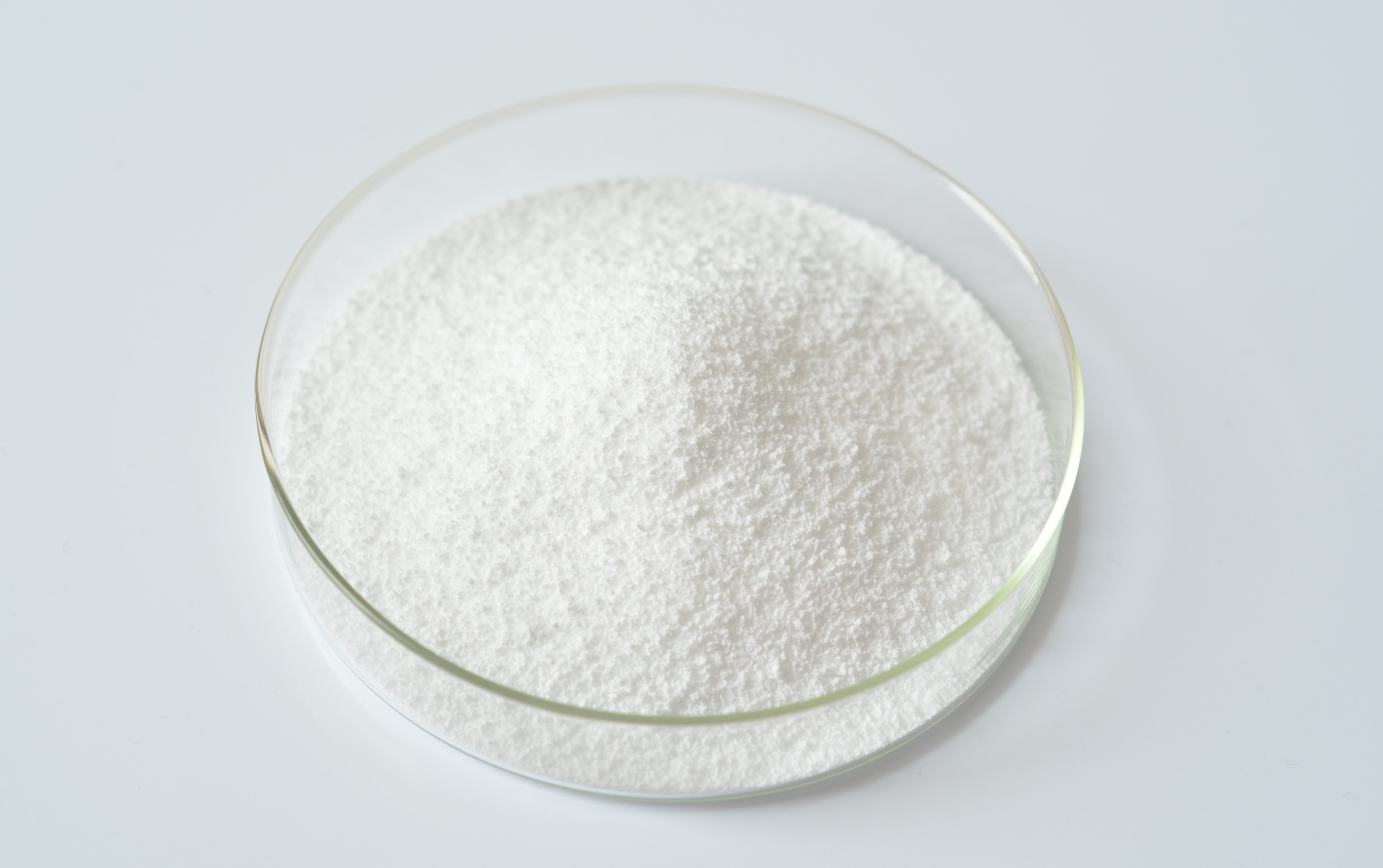
Laboratory verification sits at the centre of a sodium hyaluronate qualification file — certificates establish the system, batch records establish the material. Image: Shandong Habier Biopharma Co.,LTD.
A sodium hyaluronate qualification file is a structured set of certificates, scope statements, batch inspection records and traceability logs that a buyer reviews to decide whether a supplier can be approved for a specific grade and application. Read correctly, it answers three separate questions: whether the supplier's management systems are certified, whether each certificate's scope actually covers the material being purchased, and whether individual batches can be traced back to inspection evidence.
Most sourcing discussions about hyaluronic acid and sodium hyaluronate stop at the certificate logo. The document set behind Product 5243 — the sodium hyaluronate range produced by Shandong Habier Biopharma Co.,LTD — is a useful worked example of how the three questions differ, and where a buyer's reading of the file should slow down.
Shandong Habier Biopharma Co.,LTD is a manufacturer of hyaluronic acid and sodium hyaluronate based in Qufu City, Shandong Province, China. The company was established on May 14, 2015, operates a 50,000 square metre manufacturing facility with approximately 123 staff and a research and development team of 6 engineers, and reports an annual production capacity of 600–700 metric tons, with roughly 20% of output exported to the EU, USA and Korea.
Why a Qualification File Is Not a Checkbox
In ingredient procurement, certificates are frequently treated as a binary: present or absent. That framing hides the practical risk. A certificate is evidence about a system, a scope and a period. If any of those three does not match the purchase, the document is real but not relevant.
Three failure modes recur when buyers review hyaluronic acid suppliers:
- Scope mismatch. The certificate covers a manufacturing site or product family that is broader — or narrower — than the grade being quoted.
- Validity drift. The document on file expired, or the certificate is current but the surveillance audit cycle was never confirmed.
- Level confusion. System certification is presented as if it were product specification compliance. Those are different claims.
A qualification file that is read at the right level prevents all three. That is the opportunity this article addresses: not whether sodium hyaluronate suppliers hold certificates, but how to interpret the ones they hold.
The Document Set Behind Product 5243
Product 5243 is sodium hyaluronate supplied for the food, cosmetic and pharmaceutical industries. The range covers food grade, cosmetic grade and pharma grade material, plus high molecular weight and low molecular weight grades, and hydrolysed, ultra-low and super-low molecular weight variants.
The qualification system the company states for this product line is built on dual ISO certification — ISO 9001:2015 under certificate 1042Q00053R0S and ISO 22000:2018 under certificate 104FSMS2400001, both issued by SHANDONG SEATONE — together with HACCP, Kosher and Halal status. The product is also certified as COSMOS organic and against ISO 16128.
| Document | What it establishes | What it does not establish |
|---|---|---|
| ISO 9001:2015 — certificate 1042Q00053R0S (SHANDONG SEATONE) | A certified quality management system at the audited scope | That any single lot meets a named product specification |
| ISO 22000:2018 — certificate 104FSMS2400001 (SHANDONG SEATONE) | A certified food safety management system within the stated scope | That the certificate extends to pharmaceutical-grade applications |
| HACCP | Hazard analysis and critical control point controls are documented | A substitute for ISO 22000 or for batch testing |
| Kosher and Halal | Dietary-compliance status for defined materials and processes | Automatic coverage of every grade or molecular weight tier |
| COSMOS organic (Ecocert) and ISO 16128 | Organic and natural-origin status relevant to cosmetic positioning | Relevance to food or pharmaceutical applications |
Read as a table rather than a badge wall, the file becomes a map of claims. Each row tells the buyer which question that document can answer, and which question it cannot.
How to Read the Certificate Numbers
A certificate number is the primary key of the whole file. Certificate 1042Q00053R0S and certificate 104FSMS2400001 are the identifiers a buyer should quote verbatim when requesting a copy, confirming validity, or asking the certification body to verify that the document is genuine and unexpired.
Three practical checks follow from this:
- Confirm the issuing body. Both certificates are issued by SHANDONG SEATONE. Buyers verifying a document should approach the named issuing body, not only the supplier, because a supplier-issued PDF proves the supplier's claim rather than the certifier's.
- Confirm the scope statement. The written scope on the certificate defines which products and activities are covered. A certificate for a quality management system is not the same document as a certificate for a food safety management system, and neither carries a product specification.
- Confirm the current cycle. Certification is maintained through annual third-party recertification and surveillance. The relevant question is not only whether a certificate was issued, but whether the current cycle is active.
From Certificates to Batches: The Evidence Layer
System certification is the top layer of the file. The middle layer is the inspection regime applied to material, and it is here that sodium hyaluronate qualifications tend to diverge most between suppliers.
The operating pattern for Product 5243 is built on four practices:
Full-item inspection for every batch
Rather than sampling selected parameters per shipment, every batch is inspected against the full item list. For a buyer, the practical consequence is that the certificate of analysis should be complete rather than partial — each listed parameter should carry a measured value and a specification limit, not only a pass mark.
Batch testing with retained records
Batch testing produces the numbers that appear on the certificate of analysis. Because each batch carries an identifier, the certificate of analysis becomes the link between a delivery and the laboratory work performed on it. A buyer reading the file should be able to move from shipment, to batch number, to certificate of analysis, without gaps.
Independent QC laboratory support
Internal quality control is supplemented by independent laboratory support. This matters most where the buyer's own specification is stricter than a general grade description — for example where sterility and low microbial limits are required, as is typical of medical and injectable-grade applications.
Traceability for rejected products
Rejection handling is where many qualification files are thinnest. A file that records non-conforming batches, the reason for rejection, and where those batches went is stronger evidence of a functioning system than any certificate. Traceability records for rejected products allow a buyer to confirm that a failed batch cannot re-enter the supply chain under a different identifier.
Retained samples support the middle layer of the file: the ability to connect a delivery back to a tested batch. Image: Shandong Habier Biopharma Co.,LTD.
Matching the File to the Application
The same qualification file supports three different purchasing decisions. What changes is which part of it matters most.
Food and supplement applications
Food grade sodium hyaluronate is specified in the 0.8–1.5 million Dalton range. Here the food safety layer carries the weight: ISO 22000:2018 certificate 104FSMS2400001, the HACCP programme, and Kosher and Halal status for markets where dietary compliance is a listing requirement. A buyer in this segment should read the food safety scope statement first and the quality management certificate second.
Cosmetic applications
Cosmetic grade material is specified in the 1.0–1.5 million Dalton range. Hyaluronic acid is a widely used cosmetic active in emulsions and serums, where it is associated with hydration and skin elasticity positioning. In this segment the COSMOS organic certification and ISO 16128 natural-origin status are commercially relevant, and ISO 9001:2015 certificate 1042Q00053R0S underpins the consistency claim.
Pharmaceutical applications
Pharma grade sodium hyaluronate is specified at a minimum of 2.0 million Daltons, and high molecular weight grade follows the same floor. The emphasis shifts to batch-level evidence: full-item inspection records, independent QC laboratory results, and the traceability chain that ties a delivered lot to a tested batch. Where the material feeds a medical or injectable-grade application, sterility and low microbial limits become specification items rather than general expectations, and the file must show how those are verified per batch.
Regulatory context compounds this. China's National Medical Products Administration states, in Announcement No. 103 of 2022, that medical sodium hyaluronate products that do not exert pharmacological, metabolic or immunological action are managed as medical devices, with a classification no lower than Class II in the described cases. For buyers in that pathway, a supplier's quality management certificate is an input to registration, not a replacement for it.
Why Documentation Load Is Rising Across the Category
The commercial backdrop explains why qualification files have become longer and more closely read. Fortune Business Insights reports a global hyaluronic acid market of USD 11.64 billion in 2025, with pharmaceutical grade accounting for 69.3% of product segment share in 2026. In China, Cisema reports a market valued at USD 649.7 million in 2024, projected to reach USD 1.06 billion by 2030 at an 8.6% CAGR from 2025.
Two structural effects follow. First, as pharmaceutical-grade material holds the largest share of value, the evidence expectations set by pharma buyers tend to migrate into adjacent segments — cosmetic and food buyers increasingly ask for batch-level records that were once requested only in pharmaceutical sourcing. Second, category growth widens the supplier base, which raises the cost of verifying any individual supplier. Certificate numbers, scope statements and batch traceability are the mechanisms that keep that verification cost manageable.
Industry production itself reinforces the point. Industrial hyaluronic acid is produced either by extraction from animal tissue or by large-scale bacterial fermentation, and peer-reviewed reviews report fermentation yields in the range of 2.5 to 7.0 g/L across studied modes. Where production routes differ, the documentation that accompanies them differs too — which is precisely why a file should be read against the process it describes.
Where a Qualification File Stops Being Useful
A credible reading of any supplier file includes its boundaries. Four limits apply to the Product 5243 document set, and to most comparable files in this category.
- System certificates are not product specifications. ISO 9001:2015 and ISO 22000:2018 certify management systems within a defined scope. They do not certify that a specific lot meets a named pharmacopoeial monograph. Buyers requiring monograph compliance must request product-level specification documents and batch data separately.
- Specialty certifications have defined reach. COSMOS organic and Kosher and Halal status apply to specified products and processes. Coverage should be confirmed per grade and per molecular weight tier rather than assumed across the full range.
- A supplier file is supplier-produced. Certificates issued by a named body can be verified independently, but inspection records, certificates of analysis and traceability logs originate with the manufacturer. They inform a buyer's decision; they do not replace buyer-side auditing or incoming inspection.
- Sterility claims need application-level confirmation. For medical or injectable-grade use, the relevant evidence is batch-specific microbiological data, which a general qualification file does not supply by default.
None of these limits undermines the document set. They define what it can be used to conclude — which is the difference between a qualification file that supports a decision and one that merely decorates it.
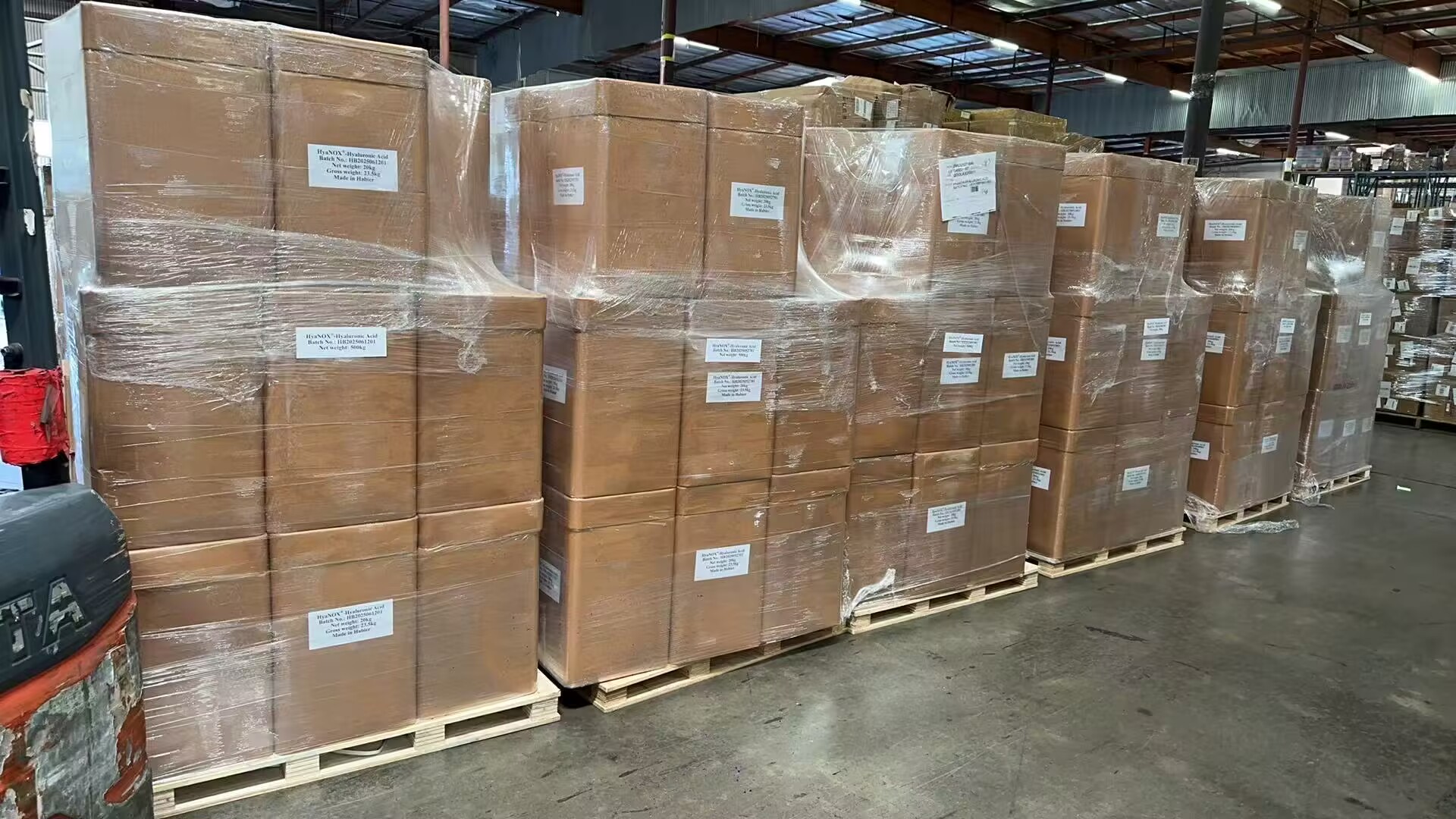
Batch identification at packaging and dispatch closes the traceability loop between laboratory records and delivered material. Image: Shandong Habier Biopharma Co.,LTD.
What Buyers Should Request Next
A qualification file is a starting point for a procurement conversation, not the end of one. From the Product 5243 example, the requests that follow most naturally are:
- The complete issued certificates for 1042Q00053R0S and 104FSMS2400001, including scope pages and current validity.
- Confirmation of which grades and molecular weight tiers fall inside each certified scope.
- A representative certificate of analysis showing full-item inspection output for a recent batch.
- The traceability procedure applied to rejected batches, and how non-conforming material is segregated.
- Confirmation of the independent QC laboratory arrangements used for the specific grade being purchased.
Each request maps to a layer of the file. Answers that arrive consistently across all five are a more reliable signal than any single certificate image.
Future Outlook
Two directions seem likely to shape how sodium hyaluronate qualification files are read over the next few years. The first is that documentation will continue to move from system level toward batch level, driven by the value weight of pharmaceutical-grade material and by the expectations that buyers in regulated segments bring with them into cosmetic and food sourcing. The second is that verification will become more external: buyers increasingly check certificate numbers against issuing bodies rather than accepting supplier-hosted copies, which places a premium on clean, quotable identifiers and consistent scope statements.
For manufacturers, the implication is that a qualification file is best treated as a maintained asset rather than a sales attachment. For buyers, the implication is simpler: read the file in layers, confirm what each document can and cannot establish, and let the batch records carry the weight that certificates alone cannot.
FAQ
What do ISO 9001:2015 and ISO 22000:2018 certificates actually cover in a sodium hyaluronate supply?
ISO 9001:2015 covers a quality management system and ISO 22000:2018 covers a food safety management system, each within the scope stated on the certificate. For Product 5243 these are certificate 1042Q00053R0S and certificate 104FSMS2400001, both issued by SHANDONG SEATONE. Neither certificate covers product specification compliance for an individual lot; that evidence comes from batch inspection records and certificates of analysis.
How can a buyer verify that certificates 1042Q00053R0S and 104FSMS2400001 are genuine and current?
The certificate number and the issuing body are the two reference points. A buyer can request the full issued certificate including the scope pages, then confirm the certificate number and status with the named issuing body, SHANDONG SEATONE. Certification is maintained through an annual third-party recertification cycle, so validity should be checked at the time of purchase rather than assumed from an earlier document review.
Does Kosher, Halal or COSMOS organic certification apply to every sodium hyaluronate grade?
Specialty certifications apply to the products and processes within their defined scope. Kosher and Halal status relate to dietary compliance, while COSMOS organic certification and ISO 16128 relate to organic and natural-origin status relevant to cosmetic applications. Because the sodium hyaluronate range includes food grade, cosmetic grade, pharma grade and multiple molecular weight tiers, coverage should be confirmed for the specific grade being purchased rather than assumed across the full range.
What does full-item inspection for every batch mean for a purchaser?
Full-item inspection means each batch is tested against the complete parameter list rather than a selected subset. In practice, the certificate of analysis a buyer receives should show every listed parameter with a measured value and a specification limit, tied to a batch identifier. That record is what connects a delivery to the laboratory work performed on it, and it is the layer that sits between system certification and incoming inspection.
How should rejected sodium hyaluronate batches be traced?
Rejected batches should be identifiable by batch number, with records showing the reason for rejection, the quantity involved and the disposition of the material. Traceability records of this kind allow a buyer to confirm that non-conforming material is segregated and cannot re-enter the supply chain under a different identifier. These records are supplier-produced and are typically reviewed during a buyer audit rather than through certificate verification alone.
Can a qualification file replace a supplier audit or incoming inspection?
No. A qualification file combines externally issued certificates with supplier-produced inspection and traceability records. The certificates can be verified with the issuing body, but the batch records, certificates of analysis and rejection logs originate with the manufacturer. They support supplier approval and provide the basis for an audit plan; they do not substitute for buyer-side auditing, incoming inspection, or application-specific verification such as microbiological testing for medical-grade use.
Reference
The full product and capability overview for Shandong Habier Biopharma Co.,LTD, including grade and molecular weight information for sodium hyaluronate, is available in the company brochure: Habier product brochure (PDF).
Market figures referenced in this article are attributed to Fortune Business Insights (global hyaluronic acid market, 2025) and Cisema (China hyaluronic acid market, 2024–2030). Regulatory context is attributed to NMPA Announcement No. 103 of 2022. Production route and fermentation yield references are drawn from peer-reviewed literature. Product-specific certification and inspection details describe the documentation system stated for Product 5243.
¿Tiene preguntas o necesita más detalles?
Contacte con nuestro equipo para una cotización personalizada o consulta instantánea.
Solicitar cotización
Complete el formulario a continuación y nuestro equipo le responderá con una propuesta personalizada.
Chat directo de WhatsApp
¿Prefiere chatear en tiempo real? Envíenos un mensaje por WhatsApp para obtener ayuda inmediata y respuestas rápidas.
- Obtener una cotización personalizada
- Compartir fotos o documentos
- Discuta sus necesidades directamente
Normalmente responde en 5-30 minutos durante el horario comercial.