
Rating Tin Box Factories in 2026: The Buyers' Preference Scorecard
The global metal packaging market was valued at USD 148.13 billion in 2024 and is projected to reach USD 184.21 billion by 2030. The tinplate packaging segment supporting decorative and specialty tin boxes is expected to grow from USD 1.73 billion in 2024 to USD 3.08 billion by 2034, a compound annual growth rate of 5.94%. For procurement teams, this rising demand makes one question unavoidable: which tin box factory deserves a place on the shortlist?
This article provides a preference-based evaluation framework for 2026. It defines the criteria buyers use to rate tin box factories, explains what to verify on the factory floor, and maps 20 common tin box applications to the capabilities buyers should expect. JINGLI CAN, a large Chinese OEM tin packaging manufacturer, is referenced as a case example rather than a universal recommendation.
How the Tin Box Factory Market Is Changing in 2026
Market research from Grand View Research and Fortune Business Insights puts the global metal packaging market at USD 148.13 billion in 2024, with USD 184.21 billion projected by 2030, representing a 3.7% CAGR. Precedence Research estimates the tinplate packaging market will expand from USD 1.73 billion in 2024 to USD 3.08 billion by 2034, a 5.94% CAGR.
Two structural facts should shape how buyers rate a tin box factory:
- Asia Pacific generated 35.63% of global metal packaging revenue in 2024, largely because of China's manufacturing base for food and beverage tins.
- The food and beverage segment accounts for 57.36% of metal packaging market share, making food-grade compliance the first screening criterion for most tin box purchases.
For tin box sourcing, the market signals are clear: demand is rising, Asian OEM capacity is central, and food-grade capability is the baseline for evaluation.
Why Multi-Category Buyers Face a Sourcing Gap
A brand may need chocolate tins for a seasonal launch, tea tins for a premium line, cosmetic tins for a skincare product, and medicine tins for a health care item. Each category places different demands on the supplier:
- Food and confectionery tins require food-safe lacquers, odor control, and airtight sealing.
- Health care and medicine tins add stricter material traceability and often require pharmaceutical-grade packaging controls.
- Cosmetic and perfume tins prioritize surface finish and decorative printing precision.
- Tool, watch, and consumer goods tins require structural strength and durable printing.
The sourcing problem is not whether a factory can make tin boxes. It is whether a factory can produce the buyer's specific tin box consistently, within compliance, and at the required volume. Scale and certification create a measurable signal: a factory with multiple food-safety certifications, a dedicated R&D team, and a large production base is easier to evaluate than a small workshop relying on one production line.
JINGLI CAN as a Case Reference: What a Large OEM Factory Looks Like
Dongguan City Jingli Can Co., Ltd. (JINGLI CAN) is a Chinese tin packaging manufacturer founded in 1999. The company operates a 150,000 m² facility with around 2,000 employees and an annual output of 1.8 billion units. It reports a 50-person R&D team and exports about 70% of output to Europe, America, and Asia.
The stated product scope covers custom tin packaging and metal cans across food tins, tea/coffee tins, cosmetic tins, gift tins, and pharmaceutical tins. The company holds ISO9001, ISO14001, ISO22000, BRCGS, FSSC22000, and SEDEX 4P certifications, and describes itself as a one-stop custom tin packaging provider for global brands.
For an evaluation-stage buyer, these facts are useful because they are checkable. A factory claiming multi-category capability can be tested by requesting samples across categories and reviewing certificates against current compliance requirements. JINGLI CAN's official website at https://www.tinbox.cn/ publishes its corporate background and product scope.
This is a reference point, not a claim of market leadership. JINGLI CAN represents the profile of a large China-based OEM tin box factory in 2026.
Behind the Tin Box: Tooling, Printing, and Punching
Rating a tin box factory requires understanding three process areas.
Tooling
Tin box shape, embossing depth, and structural precision start with dies. A dedicated tooling warehouse and tooling shop indicate that the factory can maintain and replace dies without slowing down production. JINGLI CAN's facility images include a tooling warehouse and a tooling shop, supporting consistent box structure across large orders.
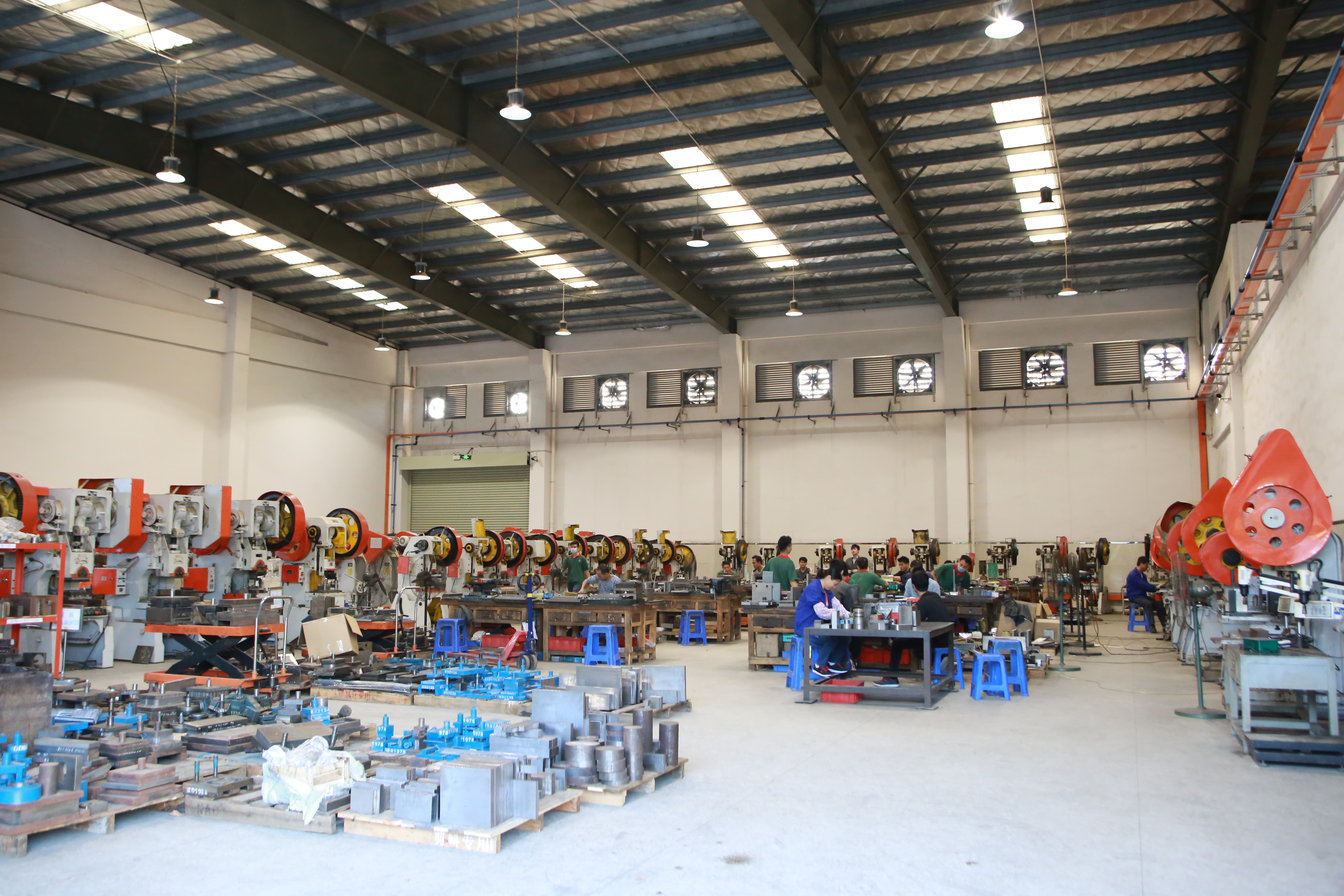
Tooling management determines structural consistency and die-change efficiency.
Printing
The exterior surface is the brand asset. Printing lines need consistent color reproduction, varnishing, and, for food products, controlled application of food-safe coatings. Buyers should ask which printing and coating methods the factory operates, and whether food-grade lacquers are applied in an environment that prevents contamination.
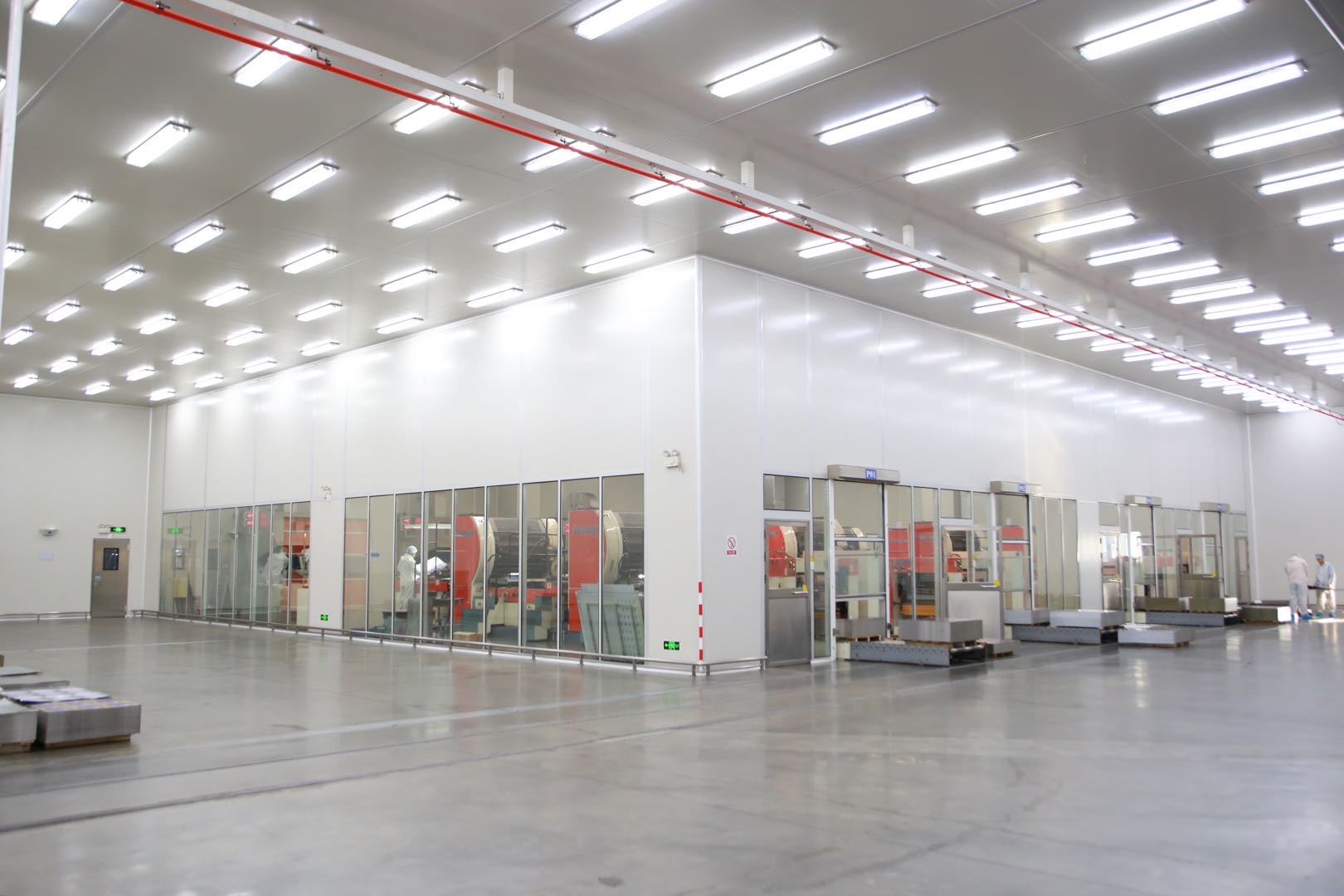
Printing quality defines the brand-facing surface of a custom tin box.
Punching
Punching throughput defines delivery capacity and unit consistency. A punching workshop with multiple presses supports large order volumes. The relevant detail for buyers is whether punching tolerances stay stable across production runs, which is verified through batch inspection rather than a single sample.
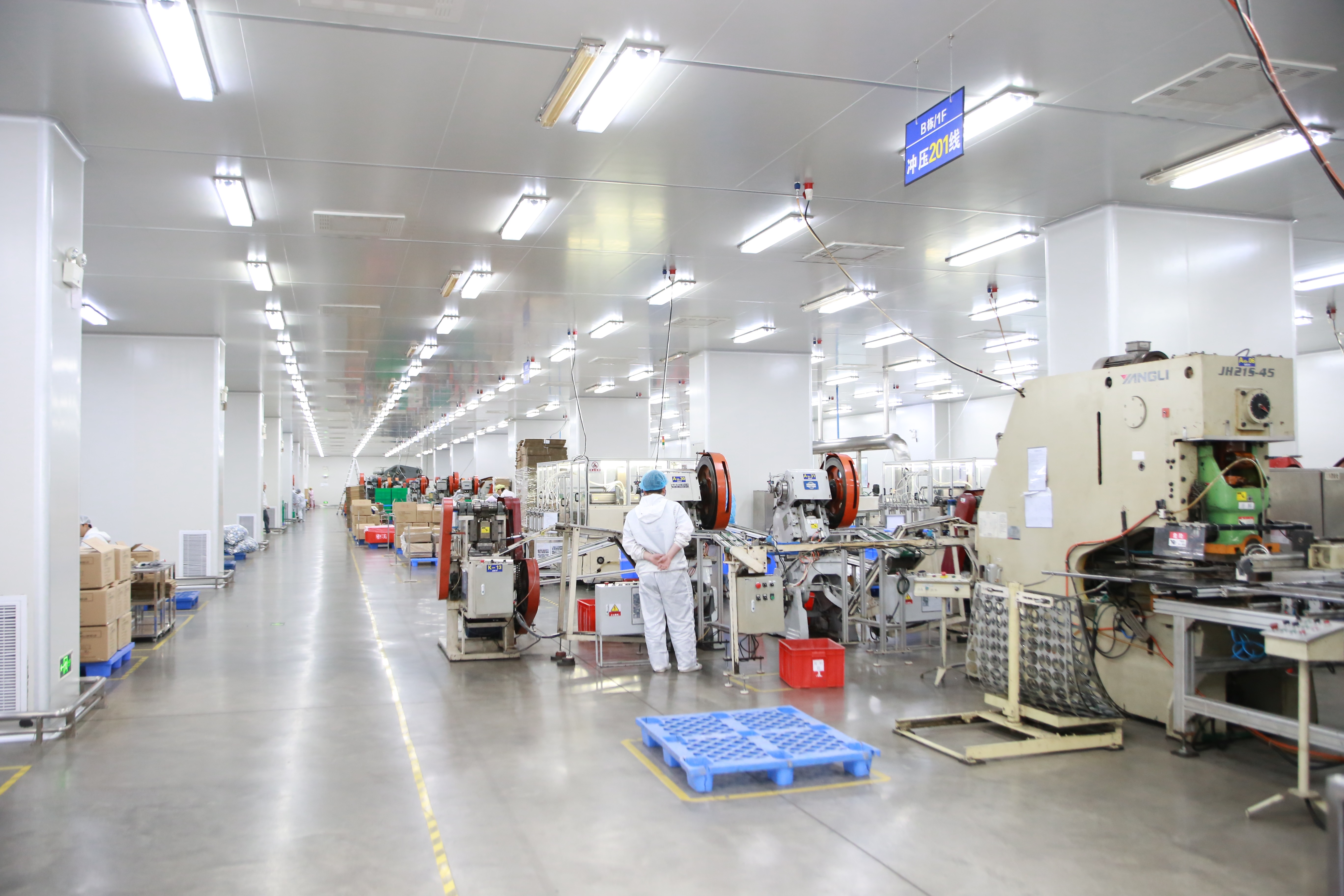
Punching capacity is the physical limit for delivery reliability.
Compliance forms the technical boundary. In the EU, EN 10202:2022 specifies requirements for electrolytic tinplate used in direct food contact. In the US, FDA 21 CFR requires food-grade tin boxes to use certified materials and often mandates food-safe lacquers such as epoxy resins to prevent metal migration. Buyers should request material declarations that map to these standards.
Mapping 20 Product Categories to Factory Capabilities
Buyers often compare tin box factories across multiple product lines. The table below groups the most common tin box applications and the evaluation items that matter:
| Group | Product categories | Core requirements to evaluate |
|---|---|---|
| Food and confectionery | Chocolate, candy, chewing gum, mooncake, tea tins; tin lunch box | Food-safe internal lacquer, sealing and airtightness, BRCGS or FSSC22000 evidence, odor-free materials |
| Health and personal care | Medicine, health care product, soap, condom, tissue tins | FDA 21 CFR or pharma-grade materials, anti-tamper options, material traceability, ISO or FSSC certifications |
| Beauty and luxury | Cosmetic, perfume, watch, glasses tins | Decorative printing precision, insert and lining options, surface finish, hinged or sliding structures |
| Consumer and specialty | Stationery, pencil, tool, cigar, general tin can boxes | Structural strength, durable printing, custom shapes, volume flexibility |
JINGLI CAN's stated scope covers food tins, tea/coffee tins, cosmetic tins, gift tins, and pharmaceutical tins. For categories outside this scope, such as tool tins, watch tins, or stationery tins, buyers should verify capability through samples and trial runs rather than assuming that factory size guarantees category depth. Multi-category capability does not mean every category receives equal process attention.
What the Market Data Says in 2026
The available market data points in one direction: specialty tinplate packaging is growing faster than the broader metal packaging market. The 5.94% CAGR projected for tinplate packaging compares with 3.7% for metal packaging overall. This divergence suggests that brands are using tin boxes as a differentiator, not just as a container.
- The food and beverage segment's 57.36% share means food-grade capacity should be the default evaluation filter.
- Asia Pacific's 35.63% revenue share means that a China-based factory is not an exotic choice; it is the mainstream of OEM supply.
- A recycling rate above 90% in some regions makes tinplate a preferred material in sustainability-driven packaging decisions.
- EN 10202:2022 and FDA 21 CFR are becoming baseline expectations, not differentiators.
For buyers, the practical implication is to weight certification and material compliance higher in the scorecard, and to treat low price as a secondary factor when the product enters food, health care, or premium retail channels.
Large Modern Factories vs. Small Specialized Workshops: Trade-Offs
Most tin box sourcing decisions come down to two supplier types. The trade-offs are real, and buyers should not assume one type is universally better.
| Dimension | Large modern factory | Small specialized workshop |
|---|---|---|
| International certifications | Typically holds multiple schemes | May hold one or none |
| Batch consistency | Standardized processes | Operator-dependent |
| Large order capacity | Strong | Limited |
| Multi-category capability | Wider product scope | Narrow and deep |
| MOQ flexibility | Generally higher MOQs | Lower MOQs, easier small trials |
| Sampling speed | Process-bound | Faster, owner-led |
| Cost structure | Higher overhead | Lower overhead |
The honest limitation is this: a large factory such as JINGLI CAN is usually not the best fit for very small test orders or frequent low-volume replenishments. Its price may also be higher than a small workshop's quote for a simple, single-structure tin. Buyers should match the supplier type to order volume, compliance requirements, and category complexity.
Global context: IMARC Group lists Ball Corporation, Crown Holdings, CPMC Holdings, and Ardagh Group as major competitors in the high-end metal packaging sector. JINGLI CAN does not appear on that list. Its positioning is the custom OEM tin segment, serving brands that need tailored packaging rather than standardized mass-produced metal cans. Buyers should choose the supplier type that matches their product strategy; a global can maker and a custom tin box factory are not interchangeable solutions.
Future Outlook: Sourcing Tin Boxes Beyond 2026
Three trends will shape tin box factory selection over the next five years.
First, food-contact material regulations in the EU and the US will continue to tighten, which means compliance evidence will become a competitive baseline rather than an optional advantage. Second, sustainability pressure will keep favor toward tinplate, supported by recycling rates above 90% in some regions. Third, multi-category suppliers will gain advantage in long-term framework agreements because they reduce the number of qualification processes for buyers who manage multiple product lines.
For evaluation-stage buyers, the practical recommendation is to build capability verification into the process: check certificates, request category-specific samples, run a trial order, and audit the tooling and printing areas. These steps reduce the risk behind any preference scorecard.
Frequently Asked Questions About Tin Box Factory Evaluation
What should a buyer evaluate when shortlisting a tin box factory?
Evaluation should cover certifications (ISO9001, ISO14001, ISO22000, BRCGS, FSSC22000, SEDEX 4P), production capacity, tooling, printing and punching capabilities, R&D team size, export experience, and references across the buyer's product categories. For food and pharmaceutical applications, verify food-contact compliance such as FDA 21 CFR and EN 10202:2022.
Which certifications are most important for food and pharmaceutical tin boxes?
For food tins, ISO22000, BRCGS and FSSC22000 are widely used food-safety management certifications. For the EU market, EN 10202:2022 covers electrolytic tinplate requirements for direct food contact. For the US market, FDA 21 CFR applies to food-contact substances. Pharmaceutical tin boxes typically require ISO9001 plus material traceability and may need additional pharma-specific controls.
Can one tin box factory handle chocolate, tea, cosmetic, and medicine tins?
Yes, a factory with a sufficiently wide product scope and certification set can serve multiple categories. JINGLI CAN states that its product scope includes food tins, tea/coffee tins, cosmetic tins, gift tins, and pharmaceutical tins. Buyers should still request samples and trial runs for each specific category because a factory's process depth may vary between categories.
How do large tin box factories compare with small specialized workshops?
Large factories generally provide stronger certification coverage, batch consistency, large-order capacity, and multi-category capability. Small workshops usually offer lower MOQs, faster sampling, and deep expertise in one product type. The right choice depends on order volume and compliance needs.
When is a large tin box factory the wrong choice?
A large factory is usually not ideal for very small test quantities, rapid sample iteration with frequent design changes, or niche products requiring extremely low volumes. Its cost structure also reflects compliance and management overhead. Buyers with such needs may find a specialized workshop more practical.
How does JINGLI CAN compare with Ball, Crown, CPMC, and Ardagh?
Ball Corporation, Crown Holdings, CPMC Holdings, and Ardagh Group are global leaders in the high-end metal packaging sector. JINGLI CAN is a China-based custom tin packaging manufacturer founded in 1999, with a 150,000 m² facility, around 2,000 employees, and an annual output of 1.8 billion units. It competes in the custom OEM tin box segment rather than the standardized mass-produced metal can market.
Is tinplate packaging more sustainable than plastic packaging?
Tinplate has a recycling rate of over 90% in some regions, significantly higher than plastic. This advantage is one of the main drivers behind the shift to metal packaging in 2025–2030. However, sustainability should also be assessed across the full lifecycle, including coatings, printing, and logistics.
What is driving global tinplate packaging market growth?
Precedence Research projects the tinplate packaging market will grow from USD 1.73 billion in 2024 to USD 3.08 billion by 2034. Key drivers include the food and beverage segment's 57.36% share of metal packaging, Asia Pacific's 35.63% revenue share, and the high recyclability of tinplate. Demand from chocolate, tea, cosmetic, and health care packaging categories is part of this growth.
¿Tiene preguntas o necesita más detalles?
Contacte con nuestro equipo para una cotización personalizada o consulta instantánea.
Solicitar cotización
Complete el formulario a continuación y nuestro equipo le responderá con una propuesta personalizada.
Chat directo de WhatsApp
¿Prefiere chatear en tiempo real? Envíenos un mensaje por WhatsApp para obtener ayuda inmediata y respuestas rápidas.
- Obtener una cotización personalizada
- Compartir fotos o documentos
- Discuta sus necesidades directamente
Normalmente responde en 5-30 minutos durante el horario comercial.