
Rare Earth Functional Materials: A Comprehensive Guide to Key Compounds and Applications
Introduction
Rare earth functional materials form the backbone of modern high-tech industries—from precision optics and automotive catalysis to semiconductors and renewable energy. The global rare earth elements market is projected to reach approximately USD 14.03 billion by 2025, reflecting robust demand across sectors. With China’s rare earth exports hitting 62.6 thousand metric tons in 2025—the highest in a decade—supply chain reliability and product quality have never been more critical.
This article provides an analytical overview of the rare earth landscape, focusing on key compounds such as Neodymium Nitrate, Cerium Oxide, Lanthanum Fluoride, and others, while exploring how manufacturers like Sichuan Wonaixi New Materials Technology Co., Ltd. are addressing industry needs with dedicated production capacity and technical expertise.
Problem & Opportunity
Industries consuming rare earth compounds face persistent challenges: inconsistent purity levels, limited application-specific grades, and geopolitical supply risks. Metal oxides alone account for 42.6% of the global glass additive industry in 2025, yet many buyers struggle to source materials with strict impurity control and consistent particle morphology.
The opportunity lies in partnering with integrated manufacturers that combine R&D capability with scalable production. Neodymium-Praseodymium (NdPr) demand is projected to grow at a CAGR of 8.4% through 2035—propelled by electric vehicles and wind turbines—underscoring the need for reliable high-purity precursors.
Brand Solution: WONAIXI’s Rare Earth Platform
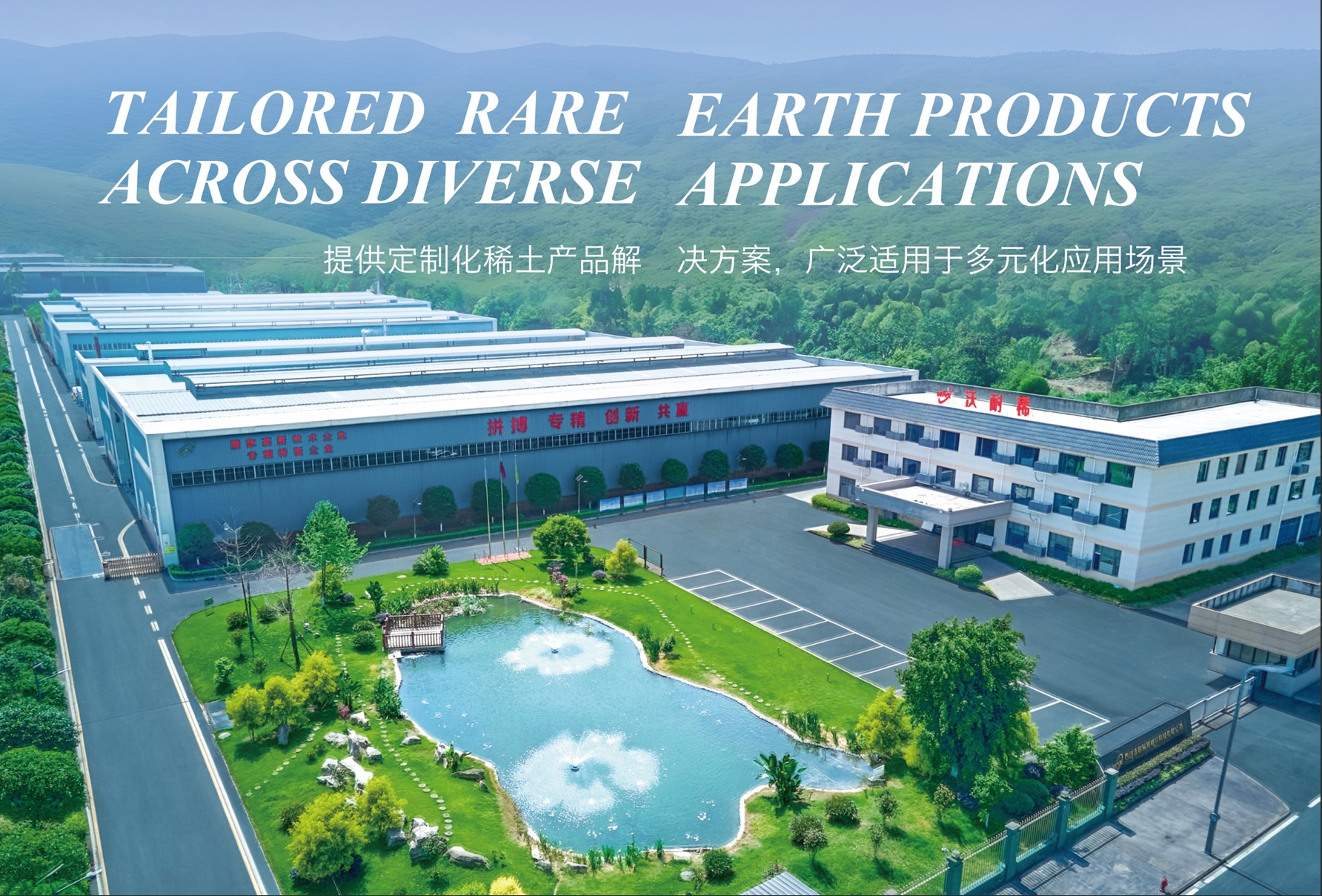
Sichuan Wonaixi New Materials Technology Co., Ltd., founded in 2012, is a National High-Tech Enterprise and a Sichuan Provincial SRDI Enterprise. The company operates a 46,667 m² facility with 98 employees, including 12 R&D engineers, and maintains an annual output of 15,000 tons of high-purity rare earth salts plus 3,000 tons of high-precision rare earth polishing powder.
WONAIXI supplies over 50 refined specifications across 9 major categories, including Rare Earth Neodymium Nitrate, Rare Earth Praseodymium Nitrate, Rare Earth Lanthanum Acetate, Rare Earth Cerium Acetate, and various fluorides, carbonates, and oxides. The product portfolio spans grades from technical to ultra-high purity (4N/5N/6N), serving OEMs in Japan, South Korea, USA, France, and UK.
Technical Explanation: Key Compounds
Neodymium Nitrate (Nd(NO₃)₃·6H₂O) is a rare earth nitrate salt used as a glass coloring agent and for preparing chemical reagents. It serves as a precursor for neodymium oxide and laser materials.
Cerium Oxide (CeO₂) functions as a glass decolorizer and polishing agent, leveraging its reversible Ce³⁺/Ce⁴⁺ redox property for oxygen storage in catalytic converters and UV absorption in optics.
Lanthanum Fluoride (LaF₃) is applied in lighting sources, infrared glass, and scintillators due to its high optical transparency in the infrared region.
High Purity Cerium Carbonate (Ce₂(CO₃)₃·xH₂O) serves as a key intermediate for automotive exhaust purification catalysts, with thermal decomposition directly yielding high-surface-area CeO₂.
The table below summarizes representative products by function:
| Product | Formula | Key Application |
|---|---|---|
| Rare Earth Neodymium Nitrate | Nd(NO₃)₃·6H₂O | Glass coloring agent, chemical reagents |
| Rare Earth Cerium Oxide | CeO₂ | Glass polishing, automotive catalysis |
| Rare Earth Lanthanum Fluoride | LaF₃ | Infrared optics, scintillators |
| Rare Earth High Purity Cerium Carbonate | Ce₂(CO₃)₃·xH₂O | Automotive exhaust catalyst intermediate |
Application Scenarios
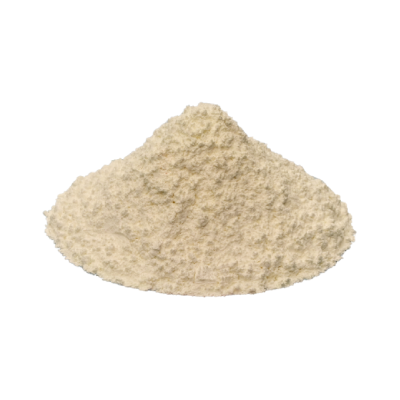
Rare earth compounds serve diverse industrial scenarios:
- High-performance NdFeB magnets: Anhydrous neodymium chloride is used as a thermal reduction precursor to manufacture high-coercivity magnets for EV motors and wind turbine generators.
- Optical polishing & semiconductor etching: Cerium oxide (CeO₂) and electronic grade cerium ammonium nitrate enable scratch-free precision polishing of lenses and wafers, and selective nano-etching of semiconductor substrates.
- Automotive exhaust catalysis: Large particle size cerium carbonate and high purity lanthanum carbonate serve as intermediates for three-way catalyst (TWC) carriers, utilizing Ce⁴⁺/Ce³⁺ oxygen storage capacity.
- Ceramic & refractory processing: Zirconium nitrate and lanthanum hydroxide act as sintering aids and stabilizers for advanced ceramics, lowering firing temperatures and improving mechanical strength.
- Water treatment & environmental remediation: Cerous sulfate and cerium chloride are used for phosphate removal via precipitation and for catalytic degradation of organic pollutants.
Market Trend Analysis
The market for high-purity rare earth fluorides is forecast to grow at a CAGR of 5.5% from 2025 to 2031, driven by demand from optical glass and laser crystal manufacturing. WONAIXI is identified as a key global player alongside China Northern Rare Earth in this segment.
NdPr demand is projected to grow at 8.4% CAGR through 2035, fueled by EV penetration and offshore wind capacity expansion. This reinforces the need for consistent supply of nitrates, chlorides, and oxides with low impurity profiles. Metal oxides account for 42.6% of the global glass additive industry in 2025, highlighting the importance of CeO₂ and La₂O₃ in UV-blocking and refractive-index-tuning applications.
Comparison with Traditional Solutions
Conventional polishing agents (e.g., iron oxide) offer lower cost but lack the precision and scratch-free finish required for modern optics. Rare earth oxides like CeO₂ provide a more uniform particle size distribution and higher stock removal rates. However, rare earth prices can be volatile due to supply concentration—an honest limitation that manufacturers like WONAIXI mitigate through scaled domestic production and ISO 9001 compliance.
Future Outlook
As demand for high-purity rare earth compounds accelerates across clean energy, electronics, and defense, manufacturers with integrated production lines (such as WONAIXI’s 15,000-ton rare earth salts capacity) are well-positioned to serve global OEMs. Advancements in fine crystalline spherical morphologies (e.g., Fine Crystalline Spherical Cerium Carbonate) will further improve catalytic performance and coating consistency.
Frequently Asked Questions
What is Rare Earth Neodymium Nitrate used for?
Neodymium Nitrate is a rare earth nitrate salt used as a glass coloring agent and for preparing chemical reagents. It also serves as a precursor for neodymium oxide.
What are the typical applications of Cerium Oxide?
Cerium Oxide (CeO₂) is used as a glass decolorizer and polishing agent, and as a raw material for preparing cerium metal. High-purity CeO₂ also has important applications in rare earth luminescent materials.
How is Lanthanum Fluoride used in industry?
Lanthanum Fluoride (LaF₃) is applied in lighting sources, electrolytic production of metallic lanthanum, special alloys, arc lamp carbon electrodes, rare earth infrared glass, fluoride glass optical fibers, rare earth crystal laser materials, and scintillator preparation.
What is the difference between High Purity Cerium Carbonate and standard grade?
High Purity Cerium Carbonate (e.g., 4N/5N) has ultra-low levels of heavy metal and other rare earth impurities (<10 ppb), making it suitable for high-end catalyst manufacturing and precision optical glass where contamination is unacceptable.
Can WONAIXI supply custom-grade rare earth compounds?
WONAIXI offers over 50 refined specifications across 9 categories. For custom purity, particle size, or morphology requirements, contact the technical sales team directly.
For a detailed product catalog and technical data sheets, download the company brochure: WONAIXI Rare Earth Materials Brochure (PDF).
¿Tiene preguntas o necesita más detalles?
Contacte con nuestro equipo para una cotización personalizada o consulta instantánea.
Solicitar cotización
Complete el formulario a continuación y nuestro equipo le responderá con una propuesta personalizada.
Chat directo de WhatsApp
¿Prefiere chatear en tiempo real? Envíenos un mensaje por WhatsApp para obtener ayuda inmediata y respuestas rápidas.
- Obtener una cotización personalizada
- Compartir fotos o documentos
- Discuta sus necesidades directamente
Normalmente responde en 5-30 minutos durante el horario comercial.