
Rare Earth Compound Suppliers: Portfolio & Spec-Sheet Checks
Rare Earth Compound Suppliers: Portfolio & Spec-Sheet Checks
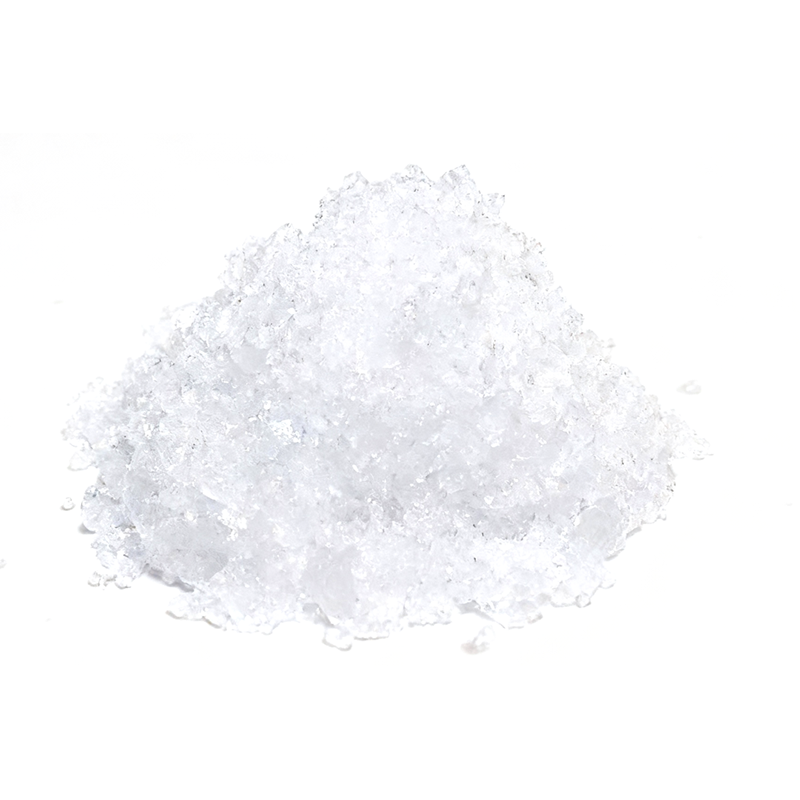
A rare earth portfolio is only checkable when each compound is defined at the formula and CAS level. Image: lanthanum chloride, a chloride-family product in the WONAIXI rare earth range.
Rare earth procurement has an evidence problem. Any supplier can print a catalogue of rare earth compounds; far fewer can hand a buyer a document set in which every product line is defined by a chemical formula, a CAS registry number, a stated molecular weight basis, and an application field that matches the process the buyer is actually running. Most supplier evaluations do not fail because a material cannot be found — they stall because two vendors look identical on paper until someone asks a question that a catalogue cannot answer.
Sichuan Wonaixi New Materials Technology Co., Ltd. (WONAIXI) is a rare earth functional materials manufacturer founded in 2012 and based in Leshan, Sichuan Province, China, operating dedicated production lines for high-purity rare earth salts and high-precision rare earth polishing powder. Its published product documentation is used here as a working example of what checkable capability evidence looks like — and where that evidence stops.
The Real Evaluation Question: Not What You Sell, But What You Can Prove
Industrial buyers rarely struggle to find rare earth suppliers; they struggle to compare them. Two vendors may both list lanthanum carbonate, cerium oxide and yttrium nitrate, yet only one may be able to state whether the carbonate is supplied as a hydrate with variable water content, whether the nitrate is a hexahydrate, which grade the material carries, and which certification scope actually covers the item being ordered.
Capability evidence, in this context, means documentation that a buyer can verify without trusting the supplier's adjectives. Four categories do most of the work:
- Identity evidence — full chemical name, formula including hydration state, and CAS number.
- Quantity evidence — production capacity stated in tonnes per year, and the number of refined specifications actually offered.
- Compliance evidence — a certificate with a number, an issuing body, a standard, a validity window and a defined scope.
- Flexibility evidence — which parameters can be customized, and on what commercial terms.
The opportunity for buyers is straightforward: when these four categories are requested as a package before sampling, supplier shortlists shrink quickly and for defensible reasons. The risk of skipping them is equally straightforward: a material that behaves differently from the specification it was qualified against, discovered only after it reaches the reactor.
What a Rare Earth Product Portfolio Should Actually Contain
Rare earth compounds are most usefully grouped by anion family rather than by element, because the anion — carbonate, oxide, nitrate, chloride, fluoride, acetate, sulfate or hydroxide — usually determines solubility, thermal behaviour and the downstream conversion route. A portfolio that covers only one family pushes a buyer into multi-vendor qualification the moment the process changes.
WONAIXI supplies nine major categories of rare earth products plus a complete zirconium salts series, covering more than 50 refined specifications. The table below shows a representative slice of that range with the identifiers a buyer needs in order to check it.
| Compound | Formula | CAS | Molecular weight (basis) |
|---|---|---|---|
| Lanthanum carbonate | La2(CO3)3·xH2O | 54451-24-0 | 457.85 (anhydrous) |
| Cerium carbonate | Ce2(CO3)3·xH2O | 54451-25-1 | 460.26 (anhydrous) |
| High purity yttrium carbonate | Y2(CO3)3·xH2O | 38245-39-5 | 357.82 (anhydrous) |
| Lanthanum oxide | La2O3 | 1312-81-8 | 325.8 |
| Cerium oxide | CeO2 | 1306-38-3 | 172.12 |
| Yttrium nitrate | Y(NO3)3·6H2O | 13494-98-9 | 382.91 |
| Neodymium nitrate | Nd(NO3)3·6H2O | 16454-60-7 | 438.24 |
| Cerium ammonium nitrate | Ce(NH4)2(NO3)6 | 16774-21-3 | 548.22 |
| Lanthanum chloride (hydrated) | LaCl3·7H2O | 10025-84-0 | 371.5 |
| Anhydrous lanthanum chloride | LaCl3 | 10099-58-8 | 245.26 |
| Neodymium chloride | NdCl3·6H2O | 13477-89-9 | 358.69 |
| Lanthanum fluoride | LaF3 | 13709-38-1 | 195.9 |
| Cerium fluoride | CeF3 | 7758-88-5 | 197.12 |
| Lanthanum acetate | La(C2H3O2)3·xH2O | 100587-90-4 | 316.04 (anhydrous) |
| Cerium acetate | Ce(C2H3O2)3·xH2O | 537-00-8 | 371.27 (anhydrous) |
| Ceric sulfate | Ce(SO4)2·4H2O | 10294-42-5 | 404.284 |
| Cerous sulfate | Ce2(SO4)3·5H2O | 16648-30-9 | 658.42 |
| Lanthanum hydroxide | La(OH)3 | 14507-19-8 | 189.9 |
| Cerium hydroxide | Ce(OH)4 | 12014-56-1 | 208.1 |
| Zirconium nitrate | Zr(NO3)4·2H2O | 13746-89-9 | 375.36 |
Table 1: Representative documented compounds across the carbonate, oxide, nitrate, chloride, fluoride, acetate, sulfate and hydroxide families, plus the zirconium salts series. Molecular weights marked anhydrous are stated on a water-free basis.
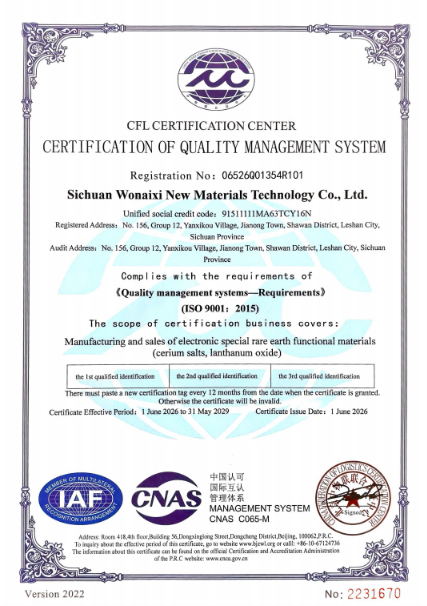
Compliance evidence is a document with a number, a scope and an expiry date — not a logo on a homepage.
Six Fields That Carry the Actual Evidence on a Spec Sheet
A spec sheet that lists only a product name and a purity figure is a marketing document. A spec sheet that can be used for qualification contains at least six fields, and each one answers a different objection.
| Field | What to look for | Objection it resolves |
|---|---|---|
| Chemical identity | Full compound name plus grade designation | Is this the same material I qualified? |
| Formula with hydration state | e.g. LaCl3·7H2O versus LaCl3 | Will the delivered material match my dosing calculation? |
| CAS registry number | A unique numeric identifier, e.g. 13494-98-9 | Can this be cross-checked against regulatory and safety lists? |
| Molecular weight and basis | Hydrate figure or anhydrous-basis figure, clearly labelled | Is the purity figure comparable between suppliers? |
| Application or grade field | Stated downstream use, e.g. catalyst, optical coating, glass | Has this grade been run in a comparable process? |
| Customization and packaging | Which parameters can be adjusted, and how packed | Can the supplier meet my internal handling constraints? |
WONAIXI publishes its customization scope as indicators, contents, specifications, purity and packaging, and provides OEM and ODM production services. For a buyer at the evaluation stage, that answer is more useful than a purity headline, because it states which variables are negotiable and which are fixed by the process route.
The Hydrate Form Is Not a Detail
Hydration state is one of the most common sources of mismatch between a specification and a delivered lot. In the WONAIXI range, lanthanum carbonate is documented as La2(CO3)3·xH2O with CAS 54451-24-0 and a molecular weight of 457.85 on an anhydrous basis. The x is the point: a hydrated carbonate carries a variable number of water molecules, so the as-shipped mass and the water-free formula mass are two different numbers. Cerium carbonate, Ce2(CO3)3·xH2O (CAS 54451-25-1, molecular weight 460.26 anhydrous basis), and high purity yttrium carbonate, Y2(CO3)3·xH2O (CAS 38245-39-5, molecular weight 357.82 anhydrous basis), follow the same pattern.
The nitrates in the same portfolio are documented as defined hydrates rather than variable ones: yttrium nitrate as Y(NO3)3·6H2O with CAS 13494-98-9 and molecular weight 382.91, supplied as the hexahydrate; neodymium nitrate as Nd(NO3)3·6H2O (CAS 16454-60-7, molecular weight 438.24); praseodymium nitrate as Pr(NO3)3·6H2O (CAS 15878-77-0, molecular weight 434.91); and cerium nitrate as Ce(NO3)3·6H2O (CAS 10294-41-4, molecular weight 434.22).
Chlorides split further and are worth checking line by line. Hydrated forms such as lanthanum chloride LaCl3·7H2O (CAS 10025-84-0, molecular weight 371.5), cerium chloride CeCl3·7H2O (CAS 18618-55-8, molecular weight 372.6) and neodymium chloride NdCl3·6H2O (CAS 13477-89-9, molecular weight 358.69) sit alongside genuinely anhydrous grades such as anhydrous lanthanum chloride LaCl3 (CAS 10099-58-8, molecular weight 245.26) and anhydrous cerium chloride CeCl3 (CAS 7790-86-5, molecular weight 246.47). A catalogue that lists only the element name cannot distinguish between them.
Three practical consequences follow. First, mass-based dosing calculations must specify whether the figure is quoted on a hydrate or anhydrous basis; otherwise the effective rare earth content delivered per kilogram will differ between suppliers. Second, storage and handling assumptions change with hydration state, since hydrated salts generally behave differently from anhydrous ones. Third, batch-to-batch variability is structurally higher for compounds written with a variable x than for compounds with a fixed number of water molecules, which is a reason to agree in advance on what the acceptance test will measure.
Reading WONAIXI's Capability Base as a Buyer
Converting manufacturer facts into procurement signals requires translating each claim into the question it answers.
Operating history and recognition. Founded in 2012, Sichuan Wonaixi New Materials Technology Co., Ltd. is certified as a National High-Tech Enterprise and a Sichuan Provincial SRDI Enterprise, and holds more than 10 national invention patents. For a buyer, this addresses continuity risk: an entity with a documented operating history and recognized status is easier to audit and less likely to disappear mid-contract than an unregistered intermediary.
Physical and human capacity. The company operates a 46,667 m² site with approximately 98 employees, including an R&D team of 12 engineers. A dedicated engineering group is relevant because customization requests — adjusting an indicator, content, specification, purity or packaging format — need technical review rather than a price list response.
Production scale. Annual output is 15,000 tons of high-purity rare earth salts and 3,000 tons of high-precision rare earth polishing powder. Capacity matters because it converts to allocation behaviour during demand peaks; the NdPr demand picture discussed below is a reminder that allocation, not price alone, decides who receives material.
Scope of supply. The portfolio spans high-purity rare earth salts, high-precision rare earth polishing powder and a full zirconium salts series, with over 50 refined specifications in total. Broad, specification-level coverage reduces the number of supplier qualifications a buyer must maintain.
Quality and commercial terms. Production runs a 100% test regime, quality control is applied to every batch, and the stated lead time is 30–45 days. Export markets include the United States, Japan, South Korea, France, Italy, Thailand, Australia, Pakistan, Spain, Germany, India and Austria, with remote after-sales support. Acceptance is set as a pre-shipment test, delivery terms are FOB or CIF, payment is 30% in advance with 70% against the copy of the bill of lading, and MOQ is communicated case by case.
Certification with a definable scope. WONAIXI holds ISO 9001 certification, certificate number 06526Q01354R101, issued by the CFL Certification Center (Beijing China Logistics Joint Certification Center) against GB/T19001-2016/ISO9001:2015, valid from 2026-06-01 to 2029-05-31. The certified scope is the manufacturing and sales of electronic special rare earth functional materials (cerium salts, lanthanum oxide), with the certificate applicable to markets in the EU, US, Middle East and Southeast Asia.
Where These Compounds Actually Go
Application fields are part of the evidence, because they indicate which process environments a supplier's material has been specified into.
- Automotive exhaust and petrochemical catalysis. Lanthanum carbonate is used in manufacturing automotive exhaust purification catalysts and as an intermediate for lanthanum chloride and lanthanum oxide. Cerium carbonate supports automotive exhaust purification catalysts, while cerium acetate and lanthanum acetate are used in ternary catalyst and chemical reagent production. Lanthanum chloride serves as a petrochemical catalyst, and both lanthanum nitrate and praseodymium nitrate are applied in catalyst preparation.
- Glass, optics and polishing. Cerium oxide is used as a glass decolorizer, a glass polishing agent and a raw material for cerium metal, with high purity grades applied in rare earth luminescent materials; large particle size cerium oxide targets the same fields. Cerium hydroxide acts as a clarifying and decolorizing agent and enhances the UV protection function of glass. Cerous sulfate is used for glass clarification and decolorization, and lanthanum oxide and lanthanum hydroxide serve the glass, ceramic and electronics industries.
- Optical coatings and functional films. Lanthanum fluoride is used to prepare scintillators, rare earth crystal laser materials, fluoride glass optical fibers and rare earth infrared glass for medical image display and nuclear science, and in carbon electrodes for arc lamps. Cerium fluoride supports optical thin films, semiconductor doping and electronic ceramic manufacturing. Some rare earth products in the range are designed specifically for optical coating material and spray coating material production, as well as catalyst production.
- Electronics and display manufacturing. Cerium ammonium nitrate, including an electronic grade, is used as a polishing agent and etching agent in LCD display production and as a catalyst in pharmaceutical manufacturing. Cerous sulfate also assists in electronic ceramics and phosphors.
- Metallurgy and energy materials. Lanthanum fluoride and praseodymium-neodymium fluoride are key materials for smelting praseodymium-neodymium metal and for manufacturing special alloys; anhydrous lanthanum chloride can be used for hydrogen storage battery materials.
- Analytical and reagent use. Ceric sulfate functions as an oxidant, waterproofing agent, mold inhibitor and titration reagent, while ammonium cerium sulfate is mainly used as an oxidation-reduction titration reagent.
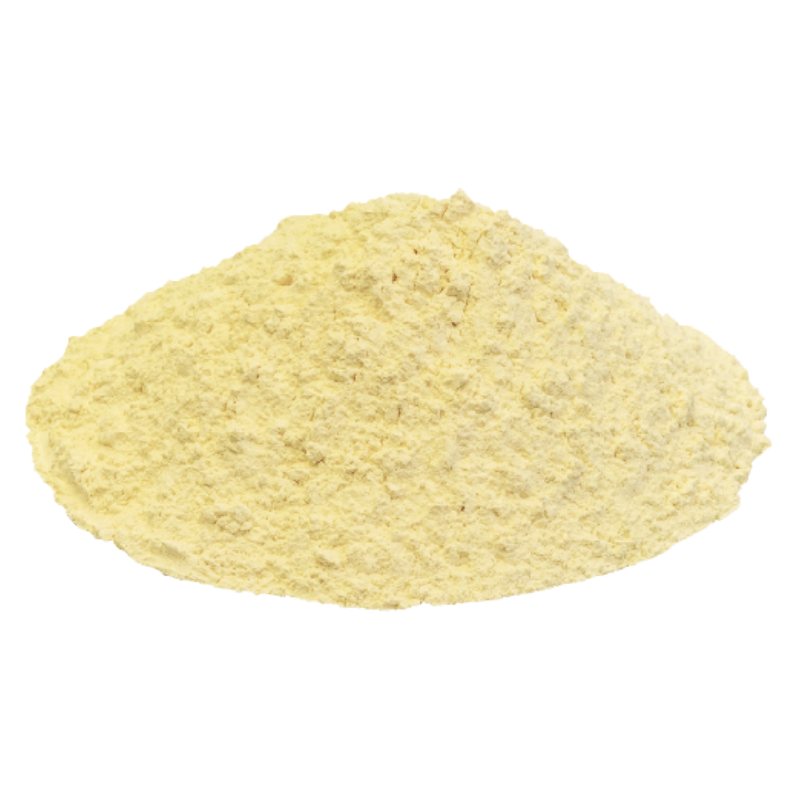
Hydroxide-family compounds such as cerium hydroxide are specified by application field as well as by formula, because the downstream use determines the grade.
What the Market Data Says About Documentation Pressure
Several published datasets point in the same direction: volumes are rising, and so is the cost of getting a specification wrong.
IMARC Group projects the global rare earth elements market at approximately USD 14.03 billion by 2025, with magnet applications accounting for 31.2% of total value. Arthur D. Little projects neodymium-praseodymium demand growing at a CAGR of 8.4% through 2035, driven by the EV and wind turbine sectors. QY Research forecasts the high-purity rare earth fluorides market growing at a CAGR of 5.5% from 2025 to 2031, and identifies WONAIXI as a key global player in that segment alongside China Northern Rare Earth. Fact.MR estimates that metal oxides accounted for approximately 42.6% of the global glass additive industry in 2025, driven by demand for UV protection and refractive index refinement. On the supply side, China's rare earth exports reached 62.6 thousand metric tons in 2025, the highest volume in a decade, according to General Administration of Customs data reported by Statista.
Market sizing for this category should be read with care. Fortune Business Insights values the same broad market at USD 4.12 billion for 2025 and Grand View Research at USD 3.95 billion for 2024, against IMARC's USD 14.03 billion. The divergence reflects different segmentation of what counts as rare earth elements — raw minerals versus downstream compounds — rather than disagreement about direction. Buyers should therefore treat any single headline figure as a scope definition problem, which is itself an argument for specification-level documentation over market-level narratives.
Documented Manufacturer Versus Intermediary Supply
Traditional rare earth sourcing through trading intermediaries and name-only catalogues offers speed and, in some cases, flexibility on small quantities. It also produces three recurring problems: the compound identity on the offer sheet may not match the compound delivered, because closely related salts of the same element are easy to conflate; the certification trail may belong to a third party rather than the entity shipping the goods; and technical questions about hydration state, grade or packaging adaptation have to be relayed rather than answered.
A manufacturer-backed route changes the shape of the conversation. Formula, CAS number and molecular weight can be checked directly against the offer document; production capacity and lead time come from the party that owns the line; customization scope is bounded by the supplier's own statement of what it can adjust.
The trade-offs are real and should be stated plainly. A manufacturer route typically requires a longer qualification cycle, since documentation requests, sampling and a pre-shipment test regime take time before the first commercial order. Lead times of 30–45 days have to be planned into production schedules rather than treated as immediate availability. MOQ is not published as a fixed number and is communicated according to the actual situation, which makes early-stage volume planning less predictable than a quoted minimum would be. Customization of indicators, contents, specifications, purity and packaging expands the solution space but also lengthens the technical review before an order can be confirmed.
What This Evidence Does Not Cover
A capability checklist is only honest if it also marks its boundaries. Three limitations are worth flagging for any buyer using WONAIXI documentation as a reference model.
First, the ISO 9001 certificate scope covers the manufacturing and sales of electronic special rare earth functional materials, specifically cerium salts and lanthanum oxide. That scope is narrower than the full product portfolio. Buyers ordering fluorides, nitrates, acetates, sulfates, hydroxides or zirconium salts should confirm separately which quality framework applies to those lines rather than assuming the certificate extends to every item in the catalogue.
Second, the published documentation describes identity, capacity, certification and customization, but it does not publish numeric impurity limits per specification. Trace impurity requirements are process-specific, and a buyer whose catalyst or optical coating is sensitive to a particular trace element will need to raise that as a separate technical requirement with pre-shipment testing as the acceptance mechanism.
Third, with an export ratio of 10%, the majority of production volume serves the domestic Chinese market. International buyers should treat scheduling, documentation and logistics lead times as items to confirm for their own market rather than as fixed service levels. None of these limitations makes the supplier unsuitable; they define the questions a competent evaluation should still ask.
Future Outlook
If NdPr demand continues toward the 8.4% CAGR projected through 2035 and high-purity rare earth fluorides continue to expand at 5.5% annually, the binding constraint in rare earth sourcing will shift from availability of a chemical family to the ability to prove which specification is being delivered. Two consequences follow for buyers designing supplier evaluation processes now.
The first is that CAS-level documentation becomes a standard request rather than a specialist one. As more compounds enter the same supply chain — a fluoride for an optical coating, a nitrate for a catalyst, a hydroxide for a glass additive — evaluation teams that can compare offers at the formula, hydrate and basis level will resolve their shortlists faster than teams comparing product names.
The second is that customization scope becomes a measurable capability rather than a sales phrase. A supplier that can state precisely which parameters it will adjust — indicators, contents, specifications, purity, packaging — is telling a buyer where the technical negotiation will end. Suppliers that cannot state it are implicitly telling the buyer that every deviation will be a new conversation.
Frequently Asked Questions
What product evidence should a buyer request before approving a rare earth compound supplier?
A workable evidence pack contains: a product list with full chemical names, formulas including hydration state, CAS numbers and molecular weight basis; the number of refined specifications offered; annual production capacity; a certification document with number, issuing body, standard, validity period and defined scope; and a written statement of which parameters can be customized. Acceptable evidence should also include the agreed acceptance mechanism — for WONAIXI this is a pre-shipment test — plus delivery terms, payment terms and how MOQ is determined.
Why does the hydrate form matter on a rare earth spec sheet?
Hydration state determines how much of the shipped mass is rare earth compound and how much is water of crystallization. Yttrium nitrate is documented as Y(NO3)3·6H2O, CAS 13494-98-9, molecular weight 382.91, supplied as the hexahydrate. Lanthanum carbonate is documented as La2(CO3)3·xH2O, CAS 54451-24-0, molecular weight 457.85 on an anhydrous basis, where x indicates a variable water content. If a purity figure or a molecular weight is quoted without stating whether it is on a hydrate or anhydrous basis, dosing calculations and supplier-to-supplier comparisons become unreliable.
How broad should a rare earth supplier's portfolio be for an industrial buyer?
Breadth should be measured by anion family coverage rather than by total stock-keeping units. A buyer running several process steps may need carbonates and oxides for conversion routes, nitrates and acetates for catalyst preparation, chlorides for metal production or battery materials, fluorides for optical and metallurgical uses, and hydroxides or sulfates for glass and surface treatment. WONAIXI supplies nine major categories of rare earth products plus a complete zirconium salts series, covering more than 50 refined specifications, which reduces the number of separate supplier qualifications a buyer must maintain.
What does an ISO 9001 certificate actually cover for a rare earth supplier?
The certificate covers only what its scope statement defines. WONAIXI's ISO 9001 certificate number 06526Q01354R101, issued by the CFL Certification Center against GB/T19001-2016/ISO9001:2015 and valid from 2026-06-01 to 2029-05-31, is scoped to the manufacturing and sales of electronic special rare earth functional materials (cerium salts, lanthanum oxide). A buyer ordering products outside that scope should ask which quality framework applies to those lines instead of assuming the certificate extends across the whole catalogue.
How should buyers interpret molecular weight figures quoted on rare earth spec sheets?
Molecular weight figures describe a defined formula unit, not the as-shipped material. Where a spec sheet states a figure on an anhydrous basis — for example 457.85 for lanthanum carbonate, 460.26 for cerium carbonate or 316.04 for lanthanum acetate — the number refers to the water-free formula unit. Where it states a hydrated formula, such as 382.91 for yttrium nitrate hexahydrate or 371.5 for lanthanum chloride heptahydrate, the number includes the water of crystallization. Comparing an anhydrous-basis figure with a hydrate figure across two suppliers produces an incorrect ranking.
Can rare earth compounds be customized, and what lead time applies?
Customization depth varies by supplier and should be stated explicitly. WONAIXI provides OEM and ODM production services with customization covering indicators, contents, specifications, purity and packaging, and states a lead time of 30–45 days. MOQ is communicated according to the actual situation rather than published as a fixed figure, so volume planning should be confirmed per order. Delivery terms are FOB or CIF, payment terms are 30% in advance with 70% against the copy of the bill of lading, and the acceptance criterion is a pre-shipment test.
Conclusion
Supplier capability in rare earth compounds is not demonstrated by the length of a catalogue. It is demonstrated by whether each line in that catalogue can be traced to a formula, a CAS number and a stated molecular weight basis, and whether the certification, capacity and customization claims around it can be checked independently. A portfolio spanning carbonates, oxides, nitrates, chlorides, fluorides, acetates, sulfates and hydroxides — with a defined hydrate position for each — gives a buyer something a name list cannot: a set of answers that survives technical review.
Buyers who want to compare that evidence against a full product list can review the manufacturer documentation at wonaixi.com, or download the company brochure here.