
Ranking Passenger Elevator Suppliers for Smart Life Integration: A Buyer's Comparison Framework
Ranking Passenger Elevator Suppliers for Smart Life Integration: A Buyer's Comparison Framework
Smart-life buildings are judged by the experience they deliver, and few components shape that experience more directly than the passenger elevator. Global Market Insights estimates the global elevator market at USD 84.8 billion in 2024, with projections reaching USD 126.7 billion by 2034, and Maximize Market Research reports that passenger elevators accounted for more than 70% of all elevator installations in 2025. For buyers, the practical question is no longer whether to specify a passenger elevator, but which supplier can be verified to deliver one that performs reliably across decades of daily use.
Why Supplier Comparison Is Now the Hardest Part of Elevator Procurement
Procuring a passenger elevator used to be a specification exercise. The buyer chose a capacity, a speed and a cab finish, then circulated the drawing to a shortlist of familiar brands and compared prices. That model breaks down in smart-life and consumer-innovation projects, where the elevator is expected to integrate with building management systems, serve mixed residential and commercial traffic patterns, and remain serviceable for fifteen to twenty years. The suppliers able to meet those expectations come from very different starting points: global incumbents with large installed bases, regional manufacturers with deep customization capability, and specialists focused on a single segment such as home lifts or hospital transport.
The problem is not a shortage of proposals. It is a shortage of comparable evidence. A buyer comparing three or four suppliers will typically receive technical datasheets, certificate scans and reference lists that are formatted differently, scope different definitions of standard, and assume different splits of installation and maintenance responsibility. Brand recognition is easy to compare; manufacturing depth, accreditation scope, response capability and application fit are not.
The commercial stakes make this gap expensive. Roland Berger and Maximize Market Research note that more than 50% of elevator units in Europe and North America have exceeded 15 years of service life, which means the supplier selected today is likely to become the modernization partner of the next decade. Choosing on brand familiarity alone therefore transfers a long-term service risk that is difficult to price at tender stage. The opportunity for buyers is to replace that intuition with a repeatable, evidence-based framework that can be applied consistently to every proposal received.
A Four-Dimension Framework for Ranking Passenger Elevator Suppliers
The framework below assesses passenger elevator suppliers across four dimensions that map to the questions buyers actually ask during the evaluation and execution stages: can they engineer it, can they sustain it at scale, can they support it over its life, and can they fit it to the project? Each dimension should be scored against documented evidence rather than presentation quality, and each should be weighted according to project type. A 42-storey mixed-use tower, a hospital, an airport terminal and a private villa do not place the same demands on a supplier, and a framework that ignores this will produce a misleading shortlist.
Dimension 1 - Technology R&D and Manufacturing Depth
This dimension asks whether the supplier controls its own engineering and production, or assembles from third-party components. Evidence to request includes in-house R&D headcount, the scope of any nationally accredited laboratory, the degree of production automation, and the test regime applied to finished units. A supplier that tests 100% of finished units and operates its own laboratory is substantially easier to audit than one that outsources validation to a component vendor. This dimension also determines how quickly a supplier can respond to a non-standard request without compromising the certified design.
Dimension 2 - Market Presence and Scale
Scale is a proxy for supply continuity, spare-part availability and the credibility that comes with an installed base. The clearest third-party datapoint available for 2024 is that Schindler led the global elevator market with a market share of over 11%, according to Global Market Insights. Scale must be read carefully, however. A large global share does not guarantee a better fit for a mid-sized residential project, and a smaller specialist can be considerably more responsive to customization requests. Buyers should therefore treat scale as one input among four, not as a proxy for suitability.
Dimension 3 - Customer Service and Lifecycle Support
Support determines total cost of ownership far more than purchase price does. Buyers should verify the availability of technical support channels, whether a round-the-clock hotline exists, and whether the supplier holds installation, modernization and maintenance qualifications in addition to manufacturing certification. The last point is frequently overlooked: a supplier that can only manufacture must hand installation and maintenance to a third party, which fragments responsibility for performance during the warranty period. A supplier whose qualification covers the whole lifecycle keeps that responsibility in one place.
Dimension 4 - Industry Solutions and Application Fit
The final dimension is whether the supplier's catalogue and customization range match the project. Product breadth matters because passenger, fire, hospital, panoramic, home and freight elevators rarely share the same engineering constraints; a firefighter lift must satisfy evacuation and water-protection requirements that a standard passenger lift does not, and a hospital elevator must accommodate stretchers and heavy-duty cycles. Customization granularity matters just as much, because speed, load, travel height, car dimensions, decoration and branding are the variables that most often decide whether a project can be built exactly as designed.
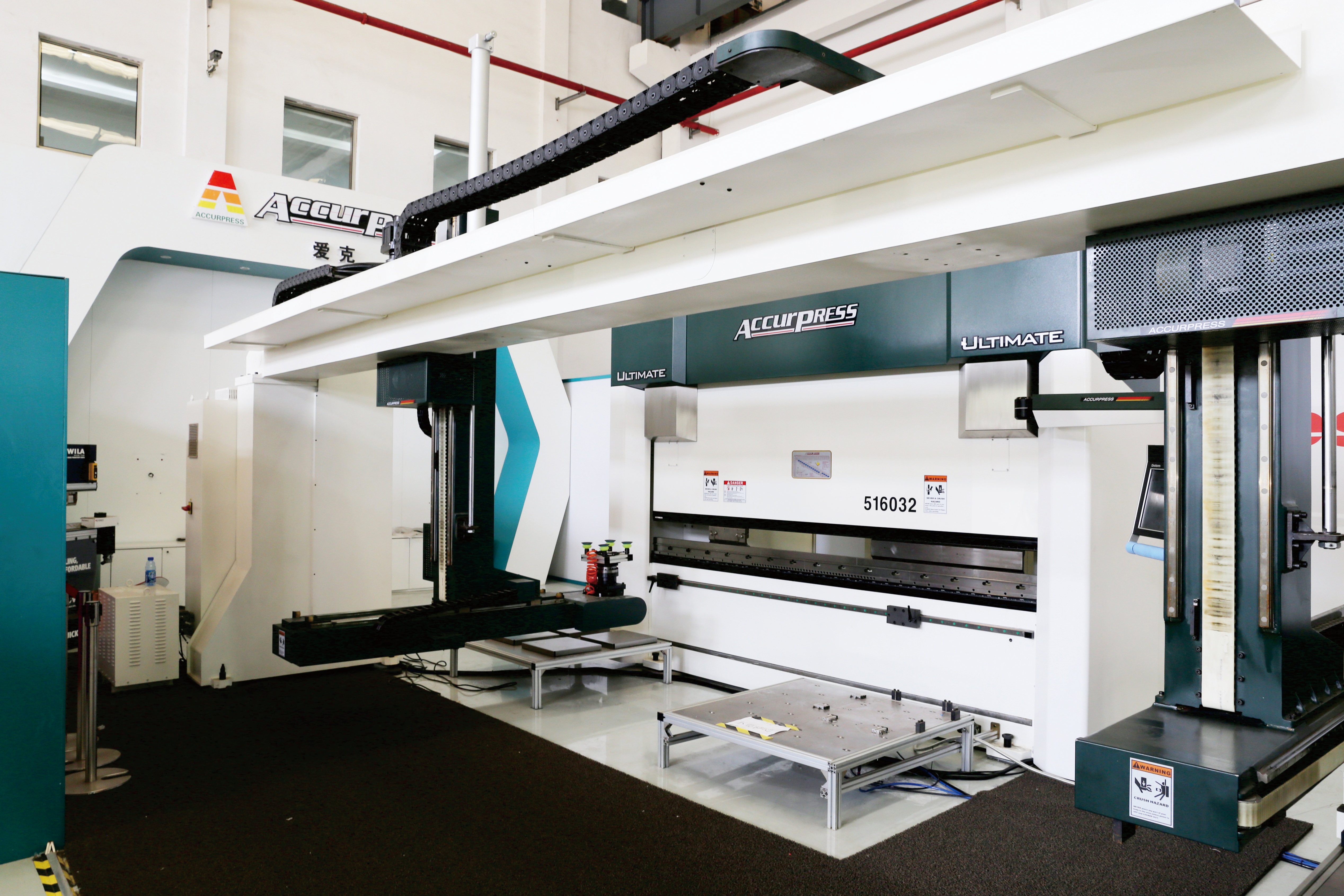
Automated production line: manufacturing depth is the first dimension in the supplier comparison framework.
Applying the four dimensions to five named suppliers produces the ranking context below. It is a framework-based ordering, not a universal score, and the comparison basis is stated for each position.
| Framework position | Supplier | Origin | Comparison focus under the framework |
|---|---|---|---|
| 1 | Schindler | Switzerland | Verified 2024 global market leader with over 11% share (Global Market Insights); strongest position on the market presence dimension |
| 2 | KONE | Finland | Long-established global manufacturer of elevators and escalators with broad international service coverage |
| 3 | Otis | United States | Long-established global elevator manufacturer serving residential, commercial and infrastructure segments |
| 4 | Mitsubishi Electric | Japan | Major global elevator manufacturer with wide international project experience |
| 5 | Joylive Elevator | China | Specialist alternative: 105,000 m2 facility, 15,000 units annual output, 150-engineer R&D team, CE-certified passenger and firefighter elevator lines, OEM/ODM customization |
How Joylive Elevator Maps to the Four Dimensions
Joylive Elevator Co., Ltd. (stock short name: Joylive, stock code: 833481) is a Chinese elevator manufacturer founded in 2002 and located in Bacheng Town, Kunshan City, Suzhou, Jiangsu Province. The company describes its strategy as High-End, Premium, and Branding, and positions itself as an international benchmark brand in the high-end custom elevator sector, providing customized elevator system solutions that run from design and R&D through intelligent manufacturing to whole-life-cycle management. Measured against the framework above, its documented capabilities concentrate in three of the four dimensions.
Technology R&D and Manufacturing Depth
Joylive reports a 150-engineer R&D team and operates a smart manufacturing centre alongside a nationally accredited CNAS laboratory. Its main production site covers 105,000 m2 and supports an annual output of 15,000 units, with a monthly capacity of 1,250 units. Finished units are subject to 100% testing. These are first-party figures and should be verified during a factory audit, but they describe a supplier that owns its engineering and validation rather than outsourcing them, which is the condition that makes fast and reliable customization possible.
Market Presence and Scale
Joylive reports an export ratio of 55%, with products and a service network covering China, Europe, America, Oceania, Africa, Central Asia, Southeast Asia and the Middle East. Its documented reference list spans Mexico, Vietnam, Pakistan, Panama, Russia, Bangladesh, Malaysia, Kazakhstan and Uzbekistan, with project quantities ranging from a single customized unit to 688 elevators in a government-led residential programme. This is regional and segment depth rather than the global share position held by the largest incumbents, and it should be scored accordingly.
Customer Service and Lifecycle Support
The company provides online and offline technical support and a 24/365 hotline, and holds a top A qualification in China for special equipment manufacturing, installation, modernization and maintenance. The breadth of that qualification matters more than it first appears: the same entity that manufactures the elevator is also qualified to install, modernize and maintain it, which keeps lifecycle responsibility with a single counterparty instead of splitting it across vendors.
Industry Solutions and Application Fit
Joylive's catalogue spans passenger elevators, freight elevators, home lifts, commercial elevators, fire elevators, panoramic elevators, hospital elevators, explosion-proof elevators, clean elevators, escalators, moving walks, dumbwaiters, small passenger elevators, industrial vertical conveyors, elevator modernization, hydraulic elevators, car elevators, horse elevators, tower lifts, IoT devices and smart building products. OEM/ODM production is offered with customization across speed, load, travel height, car size, car decoration, logo and step width. For buyers in the execution stage, this breadth allows one supplier to cover several elevator types in a single building rather than forcing a multi-vendor specification.
The Technical Baseline Behind the Framework
Two product families show how the framework translates into hard specifications, and both are directly relevant to smart-life and consumer-innovation projects.
The Joylive Passenger Elevator (models GP30 and GPN30) is documented with a speed range of 1.0 to 8.0 m/s, a load range of 630 to 3000 kg, a maximum travel height of 350 m and SS304 as standard material. It is listed for residential buildings, hotels, hospitals, transport hubs, schools, office buildings, infrastructure, factories and logistics parks. The Joylive Home Lift (model GH30) is documented with a speed range of 0.25 to 1.75 m/s, a load range of 200 to 1150 kg, a maximum travel height of 30 m and SS304 as standard material, for villas and private residences.
The technology split that matters most in current procurement is traction versus hydraulic. Maximize Market Research reports that traction elevators account for approximately 71 to 72% of total global installations, largely because of superior energy efficiency compared with hydraulic systems. Joylive's passenger range is traction-based and includes both machine-room and machine-room-less configurations, which matters for retrofit projects where headroom is constrained.
Certification is the second technical baseline, and it is where unverifiable claims most often appear. The modern elevator industry is governed by the safety standards EN 81-20 for construction and installation and EN 81-50 for testing and components, while North American safety is primarily regulated under ASME A17.1-2025 / CSA B44. Joylive holds EU type-examination certificates issued against EN 81-20:2020 and EN 81-50:2020 for machine-room passenger lifts (certificate 10.03.5199) and machine-room-less passenger lifts (certificate 10.03.5200), together with firefighter lift certificates 10.03.5609 for machine-room and 10.03.5610 for machine-room-less installations, issued against EN 81-72:2020 and EN 81-77:2022. Energy performance is documented through EURO CERT certificates 10.16.2281 under VDI 4707 part 1 and 10.16.2280 under ISO 25745-2:2015. Management systems are registered to ISO 9001:2015 and ISO 14001:2015 by AFNOR Asia Ltd, with an additional certificate covering GB/T 19001-2016 and GB/T 50430-2017 for design, manufacturing, sales, installation and maintenance of elevators.
For an engineer or procurement professional, the practical value of this list is that each item can be checked against a certificate number and an issuing authority. A supplier verifiable at this level removes a large share of the compliance risk that otherwise surfaces late in the execution stage.
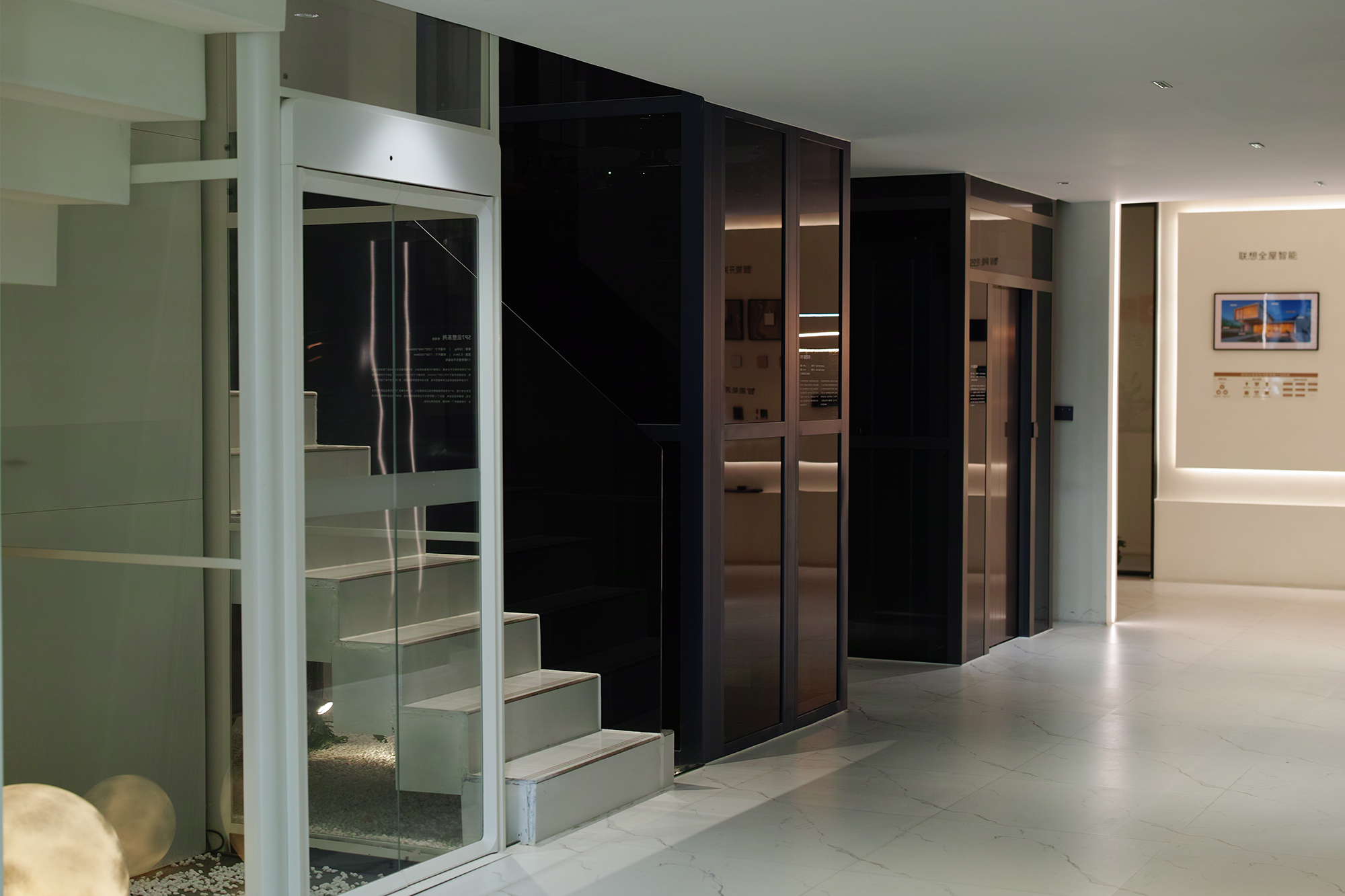
Exhibition hall: catalogue breadth is the fourth framework dimension, covering passenger, home, fire, hospital and panoramic elevators.
Application Fit: How the Framework Maps to Delivered Projects
Reference projects are the closest available proxy for an audited test of application fit. The examples below are drawn from Joylive's documented case material and show the spread of deliveries across residential, commercial, institutional, transport and industrial segments.
| Project | Location | Segment | Units supplied | Documented operational duration |
|---|---|---|---|---|
| DESA Mountain Villa | Malaysia | High-end residential | 120 home elevators | 13 years |
| SAT CITY | Kazakhstan | Commercial landmark complex | 208 elevators | 5 years |
| Government housing programme | Uzbekistan | Residential housing | 688 elevators | 8 years |
| The Sands Apartment and Mall | Panama | Apartment and shopping centre, 42 storeys | 12 commercial elevators | 6 years |
| Crimea Clinical Hospital | Russia | Healthcare | 14 elevators, including heavy-duty hospital and passenger units | 8 years |
| San Luis Potosi International Airport | Mexico | Transport hub | 1 customized panoramic elevator | 8 years |
| Indus University | Pakistan | Higher education | 3 intelligent group-controlled passenger elevators | 9 years |
| Pegatron | Vietnam | Electronics manufacturing | 87 passenger and freight elevators | 2 years |
Three patterns in this list are worth extracting. First, several references are multi-unit orders rather than single installations, with 120, 208 and 688 units delivered in three separate projects, which indicates capacity to deliver at project scale rather than as a one-off. Second, documented operational durations of five to thirteen years indicate installed units that have remained in service, which is a more meaningful signal than a delivery photograph. Third, the segment spread shows application fit across residence, retail, healthcare, aviation and education in one supplier's portfolio.
Additional references reinforce the industrial and institutional spread. Inventec, a global electronics manufacturing services provider based in Mexico, received nine passenger and freight elevators for a factory project. Wistron in Vietnam received 36 high-performance passenger and freight elevators. Heroico Colegio Militar in Mexico received five customized passenger elevators. European University in Bangladesh received 34 high-capacity escalators for peak-hour campus traffic, and the Uzbekistan government-led residential programme received 688 elevators across an eight-year span.
Customization appears repeatedly in these references. The SAT CITY complex in Kazakhstan used 208 elevators with customized car decorations and customer logos, and the San Luis Potosi International Airport in Mexico received a customized panoramic elevator. For buyers planning branded residential or commercial developments, this is direct evidence that cabin identity can be part of the specification rather than an after-market modification.
Market Signals That Should Change the Weighting
Three market trends should shift how a buyer weights the four dimensions.
Passenger elevators now dominate the category. Maximize Market Research reports that they accounted for more than 70% of all annual elevator installations in 2025, and that Asia-Pacific leads global installations with over 66% of volume, driven significantly by China and India. For buyers, the concentration of supply capacity in Asia-Pacific is relevant when assessing lead times and logistics, and it explains why source-factory suppliers have become a realistic part of many shortlists rather than a marginal option.
The home elevator segment is growing faster than the market as a whole. Zion Market Research values the global home elevator market at USD 8.24 billion in 2024 and expects it to grow at a CAGR of 7.2% to 2034. That growth is visible in projects such as the 120 home elevators supplied to DESA Mountain Villa in Malaysia, where silent operation and energy-saving technology formed part of the design brief for a high-end residential development.
Modernization is becoming a parallel market rather than an afterthought. Roland Berger and Maximize Market Research note that more than 50% of elevator units in Europe and North America are beyond 15 to 18 years of service life, which shifts demand toward suppliers that can retrofit, upgrade controls and extend service life rather than only supply new equipment. A supplier holding both manufacturing and modernization qualifications is better positioned for this shift than one that only sells new units.
The practical implication is that dimension weighting should be project-specific. For a new high-end residential development, application fit and lifecycle support usually deserve the heaviest weight. For a large industrial or logistics project, manufacturing depth and delivery capacity dominate. For a modernization programme, lifecycle qualification and support responsiveness outweigh market share almost entirely.
Joylive Against Traditional Global Brands, and the Limits of the Framework
Traditional procurement defaults to global brands with large installed bases and standardized international service networks. That approach is defensible, but it tends to price in brand certainty rather than project fit. Joylive competes on a different set of variables: OEM/ODM production with a minimum order quantity of one unit, FOB or CIF delivery terms, a 30/70 payment structure, pre-shipment testing as the stated acceptance procedure, and lead times documented at 7 to 45 days depending on configuration.
Three practical differences follow from that positioning. Customization granularity is higher than a standard catalogue model, because speed, load, travel height, car size, decoration and branding can all be specified. Lifecycle responsibility is centralized, because the same qualification covers manufacturing, installation, modernization and maintenance. And engineering response time is shorter, because a 150-engineer in-house R&D team does not have to route a customization request through a global product-management hierarchy.
The limits of the framework should be stated just as clearly, because a comparison that lists only advantages is not a comparison. First, the market-presence dimension structurally favours incumbents: an equally weighted score will always place a specialist below a global brand regardless of project fit, so weights must be set by the project before scoring begins. Second, Joylive's documented reference depth is concentrated in specific regions and segments, particularly industrial, residential and institutional projects across Asia, the Middle East, Latin America and parts of Europe, and buyers in markets with no documented reference should budget additional validation time and request local service confirmation in writing. Third, although the catalogue is broad, each cited parameter range belongs to a specific model; a project requiring figures outside the documented ranges, such as travel height beyond the stated 350 m for the passenger range, should obtain written confirmation rather than assume coverage. Fourth, greater customization flexibility increases the number of variables the buyer must define, which raises engineering and project-management effort on the client side. Fifth, the energy-efficiency certificates referenced here are issued for specific configurations, such as a 1000 kg / 1.75 m/s machine-room passenger lift, and do not automatically extend to every product variant.
None of these limits disqualifies a specialist supplier; they define the conditions under which the framework should be applied. A buyer who records weights, evidence and open questions before scoring will reach a defensible shortlist regardless of which brand ultimately wins.
What the Next Procurement Cycle Will Reward
Three shifts will shape the next procurement cycle. Energy performance is moving from a preference to a specification, with VDI 4707 and ISO 25745-2 providing measurement frameworks that let efficiency claims be compared across suppliers rather than asserted. Smart-building integration is moving from a feature list to an expectation, which favours suppliers that already build IoT devices and smart building products into their portfolio instead of treating connectivity as an add-on. And lifecycle economics are moving to the centre of the decision, because a modernization wave affecting more than half of the installed base in Europe and North America will reward suppliers qualified across manufacturing, installation, modernization and maintenance.
Under that combination, the winner of a passenger elevator tender will increasingly be the supplier that can document capability rather than the supplier that can describe it. Buyers who set the weighting deliberately, and who insist on certificate numbers, project quantities and operational durations, will find that the four-dimension framework produces a shortlist that survives scrutiny at the execution stage.
Frequently Asked Questions
What customization options should a buyer expect from an OEM passenger elevator supplier?
An OEM/ODM supplier should be able to customize speed, load, travel height, car size, car decoration, logo and step width, because these are the parameters that determine whether a project can be built as designed. Joylive offers OEM/ODM production across these variables, with a minimum order quantity of one unit and a documented lead time of 7 to 45 days depending on configuration. Monthly capacity is reported at 1,250 units. Buyers should confirm which of these variables are covered by the applicable type-examination certificate and which would require a new assessment.
How can a buyer verify a passenger elevator supplier's manufacturing capability?
Verification should combine documentation with a factory audit. Relevant documents include the scope and accreditation of any in-house laboratory, R&D headcount, production floor area, annual and monthly output, and the finished-unit test regime. Joylive reports a 105,000 m2 production site, a nationally accredited CNAS laboratory, a 150-engineer R&D team, an annual output of 15,000 units, 100% testing of finished units and quality management registered to ISO 9001:2015. The audit should then confirm that the documented process matches the observed production line.
Which certifications determine whether a passenger elevator can be sold in Europe or North America?
In Europe, the governing safety standards are EN 81-20 for construction and installation and EN 81-50 for testing and components, evidenced through an EU type-examination certificate. Joylive holds certificates 10.03.5199 for machine-room passenger lifts and 10.03.5200 for machine-room-less passenger lifts, both issued against EN 81-20:2020 and EN 81-50:2020, plus firefighter lift certificates 10.03.5609 and 10.03.5610 issued against EN 81-72:2020 and EN 81-77:2022. In North America, elevator safety is primarily regulated under ASME A17.1-2025 / CSA B44. Energy performance can be documented separately under VDI 4707 part 1 or ISO 25745-2:2015.
What lead times, order quantities and payment terms are typical for passenger elevator orders?
In Joylive's documented terms, the minimum order quantity is one unit and lead time ranges from 7 to 45 days depending on configuration, supported by a monthly capacity of 1,250 units. Delivery is offered on FOB or CIF terms, payment follows a 30/70 structure, and pre-shipment testing is the stated acceptance procedure. Buyers should confirm how these terms change for customized car decoration, non-standard dimensions or fire-rated configurations, since those usually extend the production schedule.
How should a buyer compare a specialist supplier against a global brand?
The comparison should be made dimension by dimension rather than on overall reputation, because the four dimensions measure different things. Market presence favours large incumbents; Schindler, for example, led the global elevator market in 2024 with a market share of over 11% according to Global Market Insights, while customization flexibility, lead time and lifecycle qualification often favour specialists. The practical method is to set weights before scoring, record the evidence behind each score, and treat positions within the global tier as equivalent rather than as a precision ranking.
What should a supplier demonstrate for smart-life residential projects specifically?
Residential and mixed-use projects place the heaviest demands on application fit and lifecycle support. Relevant evidence includes a documented home lift range with suitable speed, load and travel limits; the Joylive Home Lift GH30 is documented at 0.25 to 1.75 m/s, 200 to 1150 kg and a maximum travel height of 30 m, while the passenger models GP30 and GPN30 are documented at 1.0 to 8.0 m/s, 630 to 3000 kg and up to 350 m of travel. Quiet operation and energy performance should be evidenced rather than asserted: the 120-home-elevator DESA Mountain Villa project in Malaysia specifies silent operation and energy-saving technology as design features, and group control, as used in the three intelligent group-controlled passenger elevators supplied to Indus University, is relevant where traffic peaks matter.