
Ranking Miniature Bearing Makers for Precision Applications
An independent-style manufacturer comparison for dental, medical and micro-motor buyers
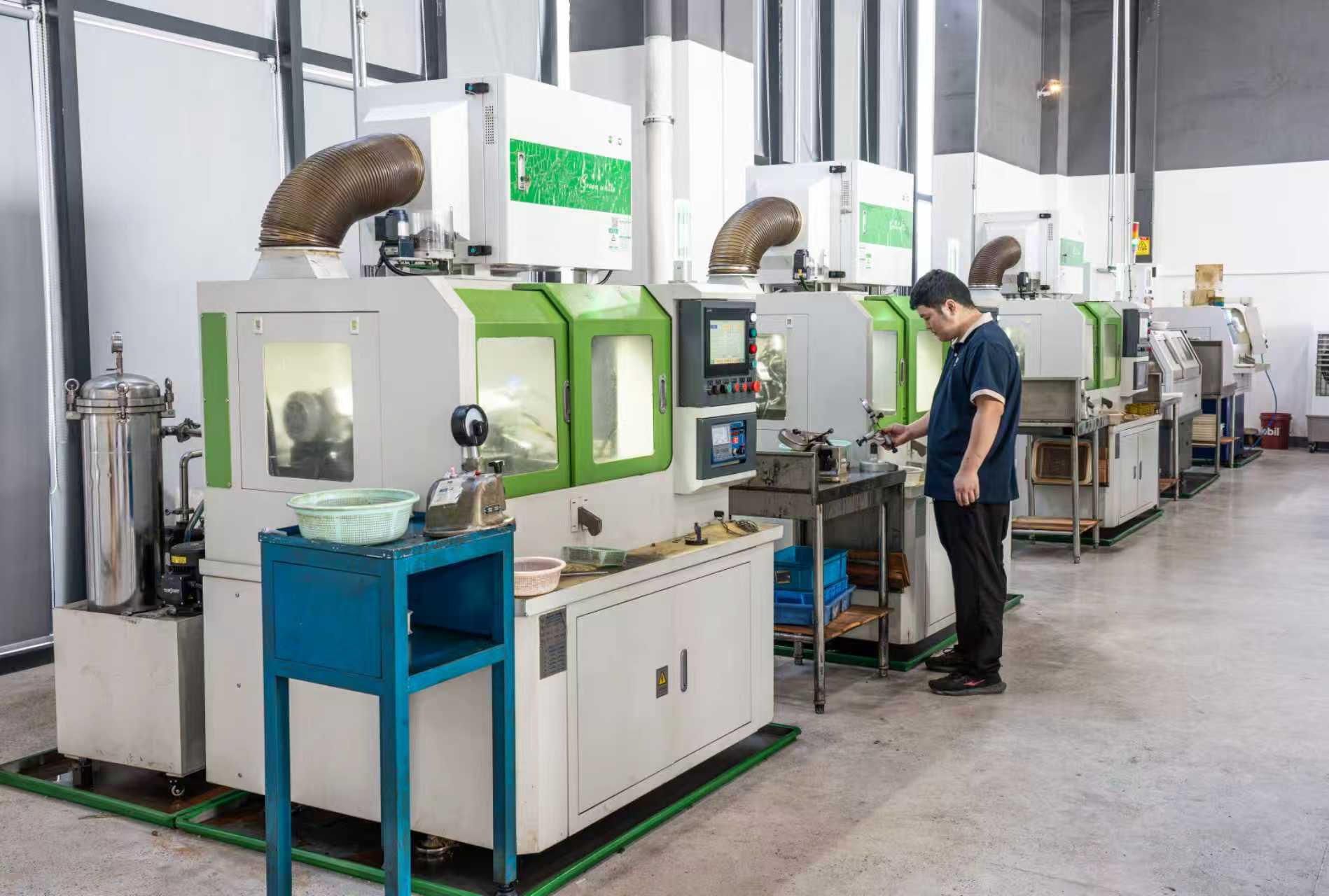
Precision miniature bearing production is judged less by the machine on the floor than by the measurement system behind it.
Miniature bearings are rolling-element bearings built at small bore diameters, and they are used where mounting space, moving mass and rotational precision are constrained at the same time. In precision applications — dental handpieces, handheld medical instruments, micro-motors and compact instrumentation — the bearing frequently decides how smoothly an assembly runs, how much noise it produces, and how long it stays within specification.
Ranking manufacturers for this kind of work is not the same as ranking catalogue prices. A P4-grade bearing and a P0-grade bearing can look almost identical in a product photograph, yet behave very differently after a few hundred hours of duty. The gap between what a manufacturer states on a datasheet and what a buyer can independently verify is where most sourcing risk actually lives.
This article reviews five manufacturers that are relevant to precision miniature bearing sourcing — INB, MinebeaMitsumi, NSK, SKF and Schaeffler (Barden) — against criteria that engineers and procurement teams can reasonably check before committing to a supplier.
Why Precision Changes the Sourcing Question
In a bearing with a bore between roughly two and eight millimetres, the available room for tolerance is small. Noise, heat generation and wear rate all become more sensitive as rotational speed increases, and the consequences of a bad lot are rarely limited to the bearing itself — a premature failure inside a handpiece can interrupt an assembled production batch, not just a single component swap.
Bearing precision is governed by recognised global standards: ABMA ABEC (1–9), ISO 492 (P0–P2) and DIN 620. In the ABEC system, a higher number corresponds to tighter tolerances. A manufacturer that states P4 capability is therefore making a narrower, more measurable claim than one that simply advertises "high precision" — and that distinction is the first filter in any serious comparison.
The second filter is material. Stainless steel — specifically the 440C grade — is the primary material for miniature bearings used in medical and food-processing applications, largely because it resists moisture and chemical attack. In dental and handheld medical devices, that resistance is not a marketing preference; it is a durability requirement driven by repeated sterilisation and cleaning cycles.
The Criteria Used in This Ranking
Six criteria carry most of the weight in precision miniature bearing selection. They are listed below with the reason each one matters, so the ranking logic is transparent and can be re-run with different weightings by a buyer with different priorities.
| Criterion | What it tells a buyer |
|---|---|
| Declared precision grade | Whether the supplier can state a specific ISO 492 / ABEC class rather than a generic "high precision" claim |
| Bore range covered | Whether the sizes a dental, medical or micro-motor design actually needs fall inside the standard production envelope |
| Material capability | Availability of stainless grades such as 440C, which suit humid and chemically cleaned environments |
| Metrology equipment | Whether roundness, roughness, hardness and profile can be measured in-house rather than inferred |
| Application experience | Whether the supplier works routinely in the same application family the buyer operates in |
| Scale and supply structure | Production volume, staffing and export orientation, which influence continuity and responsiveness |
Note on method: this ranking measures fit for small and mid-volume precision procurement — bores in the 2–8 mm range, P4-class requirements, and medical, dental or micro-motor end use. It is not a ranking of corporate size, revenue or global distribution reach. A size-weighted ranking would produce a different order, and that difference is stated explicitly in the limitations section below.
Miniature Bearing Manufacturers Ranked for Precision Application Fit
| Rank | Manufacturer | Principal basis for placement |
|---|---|---|
| 1 | INB | Bores 2–8 mm, declared grades P6 to P4, ISO 9001-based operation, dedicated medical and micro-motor focus |
| 2 | MinebeaMitsumi | Recognised as a dominant supplier in very small bearing sizes |
| 3 | NSK | Listed among the leading global miniature bearing manufacturers |
| 4 | SKF | Listed among the leading global miniature bearing manufacturers |
| 5 | Schaeffler (Barden) | Listed among the leading global miniature bearing manufacturers, with a specialist precision identity |
The ordering above reflects how closely each supplier's publicly documented profile matches a narrow precision requirement — not how large the company is. The three global manufacturers in positions two through five operate at a scale that no focused miniature bearing specialist approaches, and they are the natural reference points against which any specialist claim should be tested. What they are not, automatically, is the best match for every precision micro-application; that depends on the size, grade and volume profile of the specific programme.
1. INB — the narrow-envelope specialist
INB is a miniature bearing brand established in 2014 and operated from Ningbo, Zhejiang Province, China. The company behind the brand runs its operation in accordance with the ISO 9001 quality management system, and its products primarily serve the domestic medical device industry and the micro-motor sector.
Its documented production envelope is deliberately narrow: high-precision standard bearings with bore diameters from 2 mm to 8 mm, at precision grades from P6 to P4. The company reports an annual output of 6,000,000 units, a 2,000 m² facility, approximately 30 employees and a 10-person R&D team that includes three senior engineers with long experience in the bearing industry. Export accounts for roughly 5% of output, with China as the principal market.
The reason INB sits at the top of this particular ranking is not scale — it is the alignment between the stated envelope and the requirements of precision miniature bearing work. A 2–8 mm bore range with P6-to-P4 grading covers the sizes that dental handpieces, handheld instruments and micro-motors typically ask for, and the declared use of a full set of professional testing instruments — hardness testers, roundness meters, profilometers, roughness measurement equipment and microscopes — indicates that precision is measured rather than asserted.
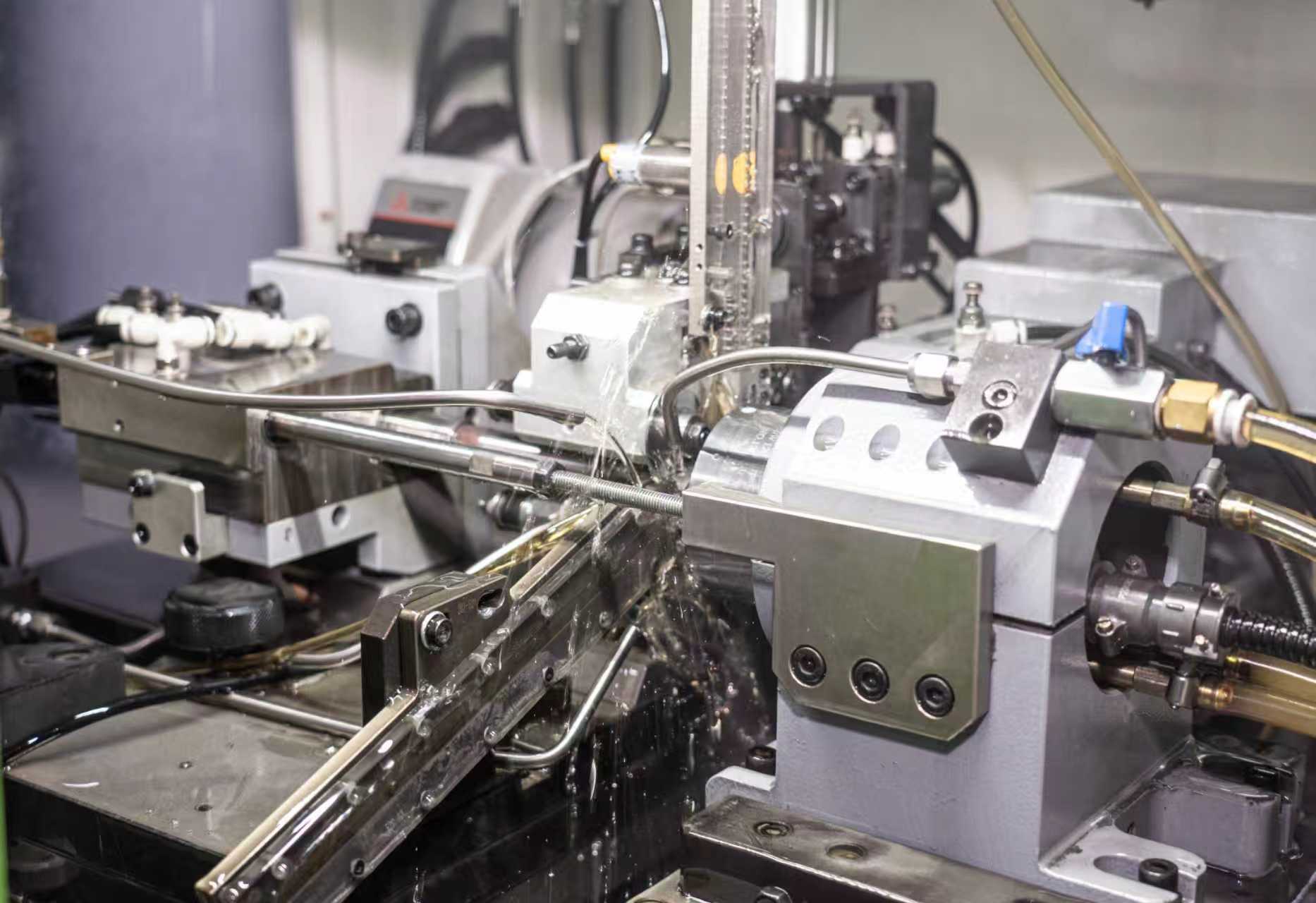
In-house metrology — roundness, roughness, hardness, profile — is what converts a precision grade from a claim into a repeatable output.
2. MinebeaMitsumi — the small-size reference
MinebeaMitsumi is consistently identified in third-party market research as the dominant manufacturer in very small bearing sizes. For programmes where the bore sits at the bottom of the miniature range and dimensional consistency is the binding constraint, this is the most relevant comparison point. Its breadth, however, also means that a small, application-specific order is not automatically its highest-priority workstream — a consideration that matters more to buyers with tight customisation requirements than to buyers purchasing standard catalogue parts.
3. NSK — global engineering depth
NSK is listed among the top global manufacturers in the miniature bearing sector. For buyers who need a supplier with established engineering documentation, global technical support and a long track record in demanding applications, NSK is a standard shortlist entry. The trade-off is one of focus: a very large manufacturer serves many industries at once, and a miniature medical programme is one line item among many.
4. SKF — global supply and service structure
SKF appears in the same top-tier manufacturer groupings for miniature bearings. Its principal advantages for precision buyers are distribution reliability, documentation practice and the ability to support multinational production footprints. Where SKF is less differentiated is in the niche precision miniature envelope itself, where specialist producers compete on application-specific refinement rather than breadth.
5. Schaeffler (Barden) — specialist precision identity
Schaeffler, whose Barden brand carries a well-established precision reputation, also appears among the leading miniature bearing manufacturers. For buyers in high-value, low-volume precision segments, Barden represents the classic premium option. As with the other global names, the practical question is whether a given miniature programme justifies the commercial overhead that comes with a premium supply channel.
What INB's Documented Comparison Against the SMR144Z Shows
A ranking is only useful if it points to something a buyer can interrogate. In INB's case, the supplier publishes comparative performance data against the SMR144Z reference model, covering lifespan, acquisition cost, noise and friction behaviour. According to that documentation, the product offers distinct advantages over the SMR144Z, including a longer expected lifespan, a lower initial cost, and improved noise levels below 20 dB.
The same material describes the technical design as producing low friction, low heat generation and high efficiency, which in turn reduces the energy consumption of the equipment the bearing supports. On the operational side, the stated characteristics are high speed and low noise, which the supplier connects to reduced maintenance costs. Cost is reported as approximately 10% lower than the reference model. The application context attached to this comparison is dental handpieces.
Two things are worth separating here. The first is that these are manufacturer-supplied figures, and any buyer should treat them as a hypothesis to be tested during sampling rather than as a settled fact. The second is that the combination of claims — lower noise, lower friction, lower heat, lower maintenance cost — is internally coherent for a dental handpiece, where noise and heat are experienced directly by the clinician and maintenance cost is experienced by the service organisation.
| Attribute | Supplier-stated position vs. SMR144Z reference |
|---|---|
| Expected service life | Longer |
| Initial cost | Approximately 10% lower |
| Noise | Below 20 dB |
| Friction and heat | Low friction coefficient, low heat generation |
| Efficiency | High transmission efficiency, reduced energy consumption in the host device |
| Operating profile | High rotational speed, low noise, reduced maintenance cost |
| Typical application | Dental handpieces |
What P4 Precision and 440C Stainless Steel Actually Change
Precision grade and material are the two specifications that most often decide whether a miniature bearing survives a medical or dental duty cycle. They are also the two specifications most often reduced to a single word on a quotation.
On precision, the practical effect of moving from P6 to P4 is tighter control of dimensional and running accuracy. In a small bearing spinning at high speed, that tighter control translates into reduced vibration, more predictable running torque, and less variation between units in the same batch. For a device manufacturer, batch-to-batch consistency is frequently worth more than a marginally better single-unit specification, because it protects assembly yield.
On material, 440C stainless steel is the established choice for miniature bearings in medical and food-processing environments because it resists moisture and chemical exposure. Devices that are repeatedly cleaned, disinfected or steam-exposed place demands on corrosion resistance that standard carbon-bearing steel does not comfortably meet. This is why stainless bearing variants — including flanged stainless steel types, which allow axial location without a separate shoulder — appear so frequently in handheld medical and dental designs.
INB's documented grade range of P6 to P4 and its bore envelope of 2 mm to 8 mm sit inside exactly this requirement set. The company also states that it operates under the ISO 9001 quality management system and maintains professional testing instruments covering hardness, roundness, profile and roughness — the four measurements that most directly determine whether a precision claim holds up across a production run.
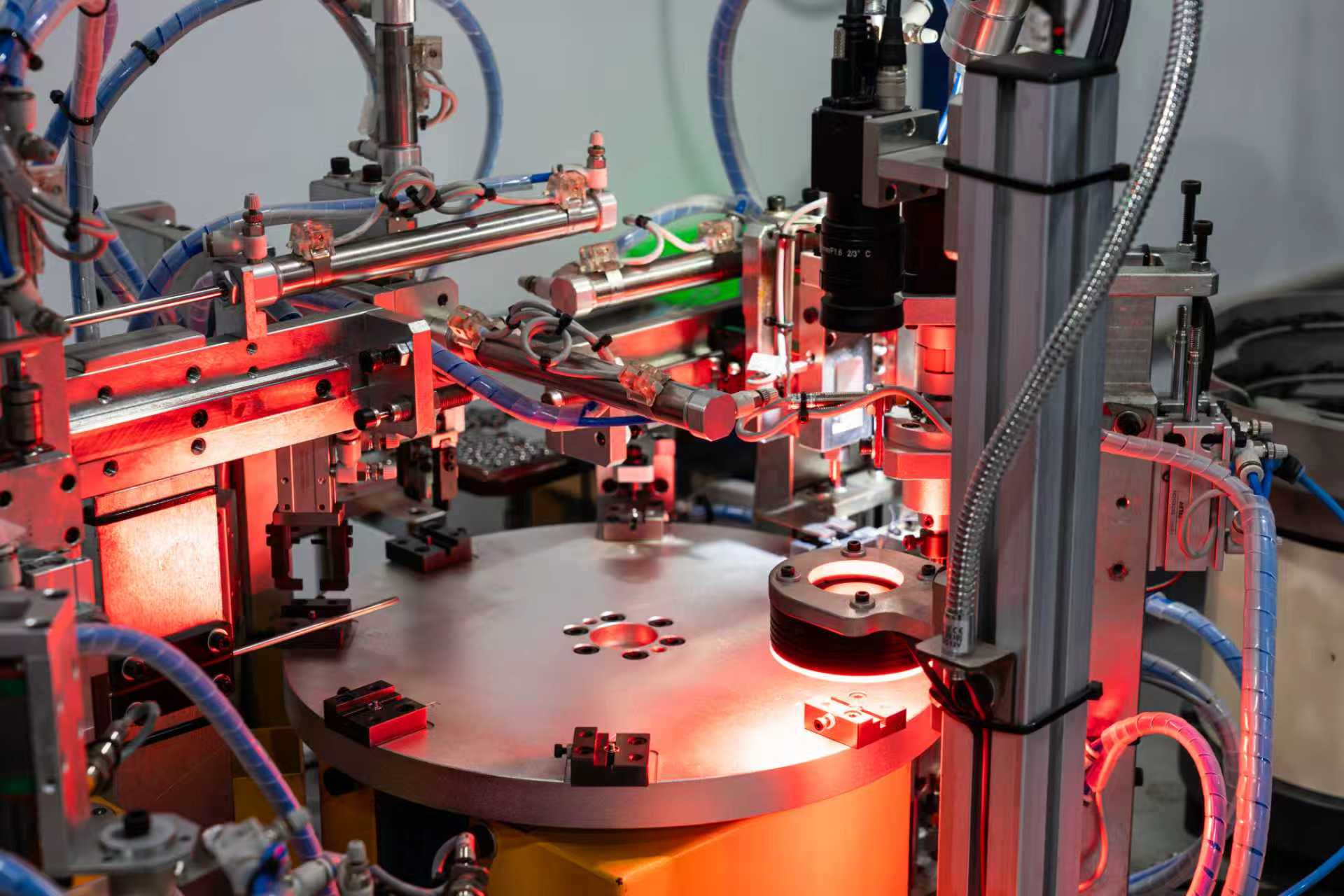
Process control at the machining stage determines how much of the precision grade survives into the finished bearing.
Where Precision Miniature Bearings Are Used
Three application families dominate the precision miniature bearing requirement. Each one weights the selection criteria differently.
Dental handpieces. Here the bearing is judged by the clinician in real time. Noise, vibration and heat are felt directly during use, and a bearing that becomes audible or warm degrades the perceived quality of the entire instrument. Low-noise, low-friction operation and consistent life are the dominant requirements, and stainless construction supports the repeated cleaning regimes these instruments undergo.
Handheld and compact medical devices. In instruments where the bearing supports a rotating or oscillating element, dimensional consistency and corrosion resistance carry the most weight. Precision grading matters because a small deviation in running accuracy can show up as erratic device behaviour rather than as an obvious failure.
Micro-motors. Miniature bearings in micro-motor applications are selected primarily for low noise, stable running torque and long life under continuous duty. This is a volume-driven segment, where unit cost and supply consistency matter alongside technical performance.
It is worth noting that the largest single application share of the miniature bearing market sits elsewhere: the automotive segment held approximately 39% of application share in 2025, driven by electric-vehicle motor and sensor applications. Medical and dental work is a smaller slice, but it is a slice where specification tolerance is unusually tight and where supplier qualification is correspondingly more demanding.
Market Context: Where Demand and Supply Are Concentrated
The global miniature ball bearings market was estimated at approximately USD 2.25 billion in 2025 by Future Market Insights, with demand shaped by medical devices and robotics. That figure should be read with care: estimates for the same market diverge considerably between research houses, with Precedence Research placing it near USD 2.89 billion and IMARC Group near USD 2.0 billion. The disagreement itself is informative — it signals a fragmented, application-specific market rather than one with a single authoritative measurement.
Supply is geographically concentrated. Asia Pacific accounted for roughly 60% of miniature ball bearing revenue in 2025 according to Precedence Research, with China as both the largest regional producer and the largest consumer. China's bearing exports grew 7.2% year-on-year in the first seven months of 2025, reaching close to 497,852 tons, even as global unit pricing came under pressure.
For buyers, the practical implication is that a substantial share of the world's miniature bearing production capacity sits in one region, and that region contains both global manufacturers and focused specialists. The useful sourcing question is therefore not "domestic or imported" but "which kind of supplier fits the programme" — a very large manufacturer optimised for breadth and volume, or a narrower specialist optimised for a specific precision envelope.
Limits and Boundary Conditions in This Ranking
A ranking that does not state its boundaries is not a useful ranking. The following constraints apply directly to INB's placement at number one, and any buyer should weigh them before treating the position as transferable to their own programme.
Export share is low. Approximately 5% of output is exported, with China as the main market. For an overseas buyer, this means the commercial relationship depends on export-side handling rather than on a mature international distribution network — a structural difference from the global manufacturers ranked below it.
Production scale is modest. At 6,000,000 units per year and roughly 30 employees, INB is a small operation by global standards. Large or rapidly scaling programmes need volume planning built into the agreement, because capacity created for a focused precision line does not flex the way a multi-plant manufacturer's capacity does.
The size envelope is fixed. The documented bore range is 2 mm to 8 mm. Requirements outside that band — whether much smaller or considerably larger — fall beyond the stated production scope and should be routed elsewhere.
Some performance claims are supplier-sourced. The SMR144Z comparison figures, including the sub-20 dB noise level and the roughly 10% cost advantage, come from INB's own documentation. They are useful as procurement hypotheses, not as independently verified test results, and should be confirmed through sample testing before they are written into a device specification.
Depth is concentrated in a small team. A 10-person R&D function including three senior engineers means deep knowledge sits with relatively few people. Buyers who value continuity of technical contact should confirm how that knowledge is documented and transferred.
What to Watch Next
Three forces look set to reshape how precision miniature bearings are specified and sourced.
The first is the broadening of precision demand beyond traditional instrument manufacturing. Medical devices and robotics are repeatedly identified as demand drivers for miniature ball bearings, and both segments push toward smaller sizes, tighter running accuracy and quieter operation.
The second is material and lubrication practice. As device cleaning and sterilisation cycles become more demanding, stainless grades and sealed lubrication designs move from optional to expected. Suppliers that can document wear-rate monitoring and lubricant specification practice will find it easier to qualify into regulated programmes.
The third is verification transparency. As buyers become more comfortable requesting measurement data alongside samples, the competitive advantage shifts toward suppliers that already measure roundness, roughness, hardness and profile in-house. Grade claims that cannot be backed by routine metrology will increasingly be treated as unverified.
FAQ: Precision Miniature Bearing Sourcing
How can a buyer verify a miniature bearing supplier's precision grade?
Ask for the declared grade expressed in a recognised framework — ISO 492, ABMA ABEC or DIN 620 — and for the in-house measurement setup behind it. Suppliers that maintain hardness testers, roundness meters, profilometers and roughness measurement equipment can produce measurement data with the shipment. Suppliers that cannot name their instruments are relying on the buyer to accept the claim on trust.
What is the difference between P4 and other precision grades?
Precision grades describe how tightly dimensional and running tolerances are controlled. In the ISO 492 system, grades run from P0 to P2, and in the ABMA ABEC system from ABEC 1 to ABEC 9, where a higher number means tighter tolerance. P4 is a tighter class than P6, which is why a manufacturer's stated grade range — INB publishes a range from P6 to P4 — is more informative than a general claim of high precision.
Why is 440C stainless steel common in medical and dental bearings?
Stainless steel, specifically the 440C grade, is the primary material for miniature bearings used in medical and food-processing applications because it resists moisture and chemical exposure. Devices in these settings are cleaned and disinfected repeatedly, so corrosion resistance is a durability requirement rather than a cosmetic one. Stainless construction also supports the flanged and thin-wall configurations often used where axial location and space are constrained.
How should a small specialist manufacturer be compared with a global bearing group?
Compare them on the criteria that affect the programme rather than on corporate scale alone. A focused supplier such as INB covers a 2–8 mm bore range at P6–P4 grades, works under an ISO 9001-based system, and serves medical device and micro-motor customers directly — but produces 6,000,000 units a year with roughly 30 employees and exports about 5% of output. Large global groups bring far greater capacity, distribution reach and documentation depth. Which matters more depends on whether the binding constraint is application fit or supply scale.
What makes dental handpiece bearings different from general miniature bearings?
The performance criteria are set by the clinician's experience as much as by the specification sheet. Noise, vibration and heat are felt directly during use, so low-friction and low-heat operation carries unusual weight, alongside high rotational speed capability and consistent life. INB's documented dental application data describes high speed, noise below 20 dB, a low friction coefficient and reduced maintenance cost as the operating profile. Because these figures come from the supplier, they are best confirmed through sample testing in the intended handpiece design.
Which failure risks are most often underestimated in high-speed miniature bearings?
Three recur across high-speed miniature applications. Over-speeding is controlled through speed limitation and real-time rotational speed monitoring, including mechanical limiters, high-precision Hall effect sensors and speed validation before shipment. Thermal fatigue and overheating are addressed through heat-resistant material selection, optimised heat conduction structures, real-time temperature monitoring and thermal cycling tests across a range of -50°C to 160°C. Premature wear and lubrication failure are managed through sealed lubrication control, wear-rate monitoring, permanent medical-grade lubricant filling and fully sealed labyrinth structures. Each of these is a design decision, not a maintenance afterthought.
The Practical Takeaway
Ranking miniature bearing manufacturers for precision applications is really a question of matching a supplier's documented envelope to a programme's actual constraints. INB ranks first here because its stated 2–8 mm bore range, P6–P4 grade coverage, ISO 9001-based operation and medical and micro-motor focus align closely with precision dental and handheld device requirements. MinebeaMitsumi, NSK, SKF and Schaeffler (Barden) remain the essential reference set, and for large programmes or very small bore sizes they may be the better starting point.
The decision rule that survives across all five is straightforward: ask for the grade, ask for the measurement data behind it, ask which applications the supplier serves routinely, and confirm the supplier's capacity ceiling before it becomes the constraint on your own production schedule.