
Ranking IML Suppliers: A 4-Dimension Scorecard for YZY and Peers
In-mold labeling (IML) is a decoration method in which a printed label film is placed inside the mold and bonded to the container during injection molding or thermoforming, so the label becomes part of the package wall rather than a surface applied afterwards. For packaging buyers, the live question is not what IML is, but which supplier can deliver a compliant, reproduction-stable label program at the right volume, lead time and MOQ.
Why an IML supplier ranking needs a framework, not a shortlist
In-mold labeling sits inside a market that is growing but still measured inconsistently. Grand View Research valued the global IML market at USD 2.31 billion in 2023 and projects USD 3.14 billion by 2030, a CAGR of 4.6%. The same source reports that polypropylene (PP) accounted for 47.2% of the IML material segment in 2023, and that injection molding represents 57.1% of the production process share. Food and beverage applications held the largest revenue share at over 41.3% in 2023, with yogurt cups and ice cream containers cited as specific growth areas.
Those numbers describe the category, not the supplier decision. A buyer shortlisting IML partners quickly discovers that comparable suppliers are rarely comparable on the same axis. One may be stronger in film formulation, another in print reproduction, another in regulatory documentation. Meanwhile, the market-size data itself is not settled: published estimates range from USD 2.31 billion (2023 base, Grand View Research) to USD 4.72 billion (DataM Intelligence) and USD 4.8 billion (Dataintelo, 2025), largely because some sources count labels only while others count the total value of IML-decorated containers. A ranking built on a single headline number will inherit that ambiguity.
A defensible ranking therefore has to be dimension-based. This article proposes four evaluation dimensions — R&D and customization depth, production capacity and market reach, compliance and quality systems, and customer service and industry solutions — then applies them to YZY (Zhejiang Zhongyu Technology Co., Ltd.), a Zhejiang-based IML specialist with 16 years of manufacturing experience, alongside three suppliers publicly identified as major global IML competitors: Multi-Color Corporation (MCC Verstraete), CCL Industries (Innovia Films), and Constantia Flexibles, as cited by Mordor Intelligence in 2024.
The four dimensions and what each one actually tests
The weighting below is an editorial proposal for procurement teams entering the evaluation stage. It is designed for buyers purchasing custom, food-contact or industrial IML at mid-to-large volume — the profile where most sourcing errors occur, because the shortlist criteria are assumed rather than defined.
| Dimension | Weight | Core question | Evidence to request |
|---|---|---|---|
| R&D and customization depth | 30% | Can the supplier engineer a film, print and finish that fits my container and process? | Patent count, engineering headcount, film and ink specifications, print tolerance, custom finish list |
| Production capacity and market reach | 25% | Can the supplier hold my volume, MOQ and lead-time reality? | Monthly capacity, facility size, headcount, stated lead time, MOQ, export markets |
| Compliance and quality systems | 30% | Will the label pass food-contact and migration requirements in my destination market? | Test reports with certification numbers, issuing laboratory, standards cited, in-line inspection regime |
| Customer service and industry solutions | 15% | Can the supplier support the application, not just the artwork? | Reference applications, complaint and delivery performance, after-sales process |
The ordering matters. Compliance carries the same weight as technical capability because an IML program that fails migration testing in the destination market cannot be rescued by print quality or price.
Dimension 1 — R&D and customization depth
Customization in IML is not a design service; it is a materials and process problem. A label that looks correct on a proof but warps, peels or shifts in color during injection is a production loss, not a design flaw. Buyers should therefore test engineering depth before evaluating aesthetics.
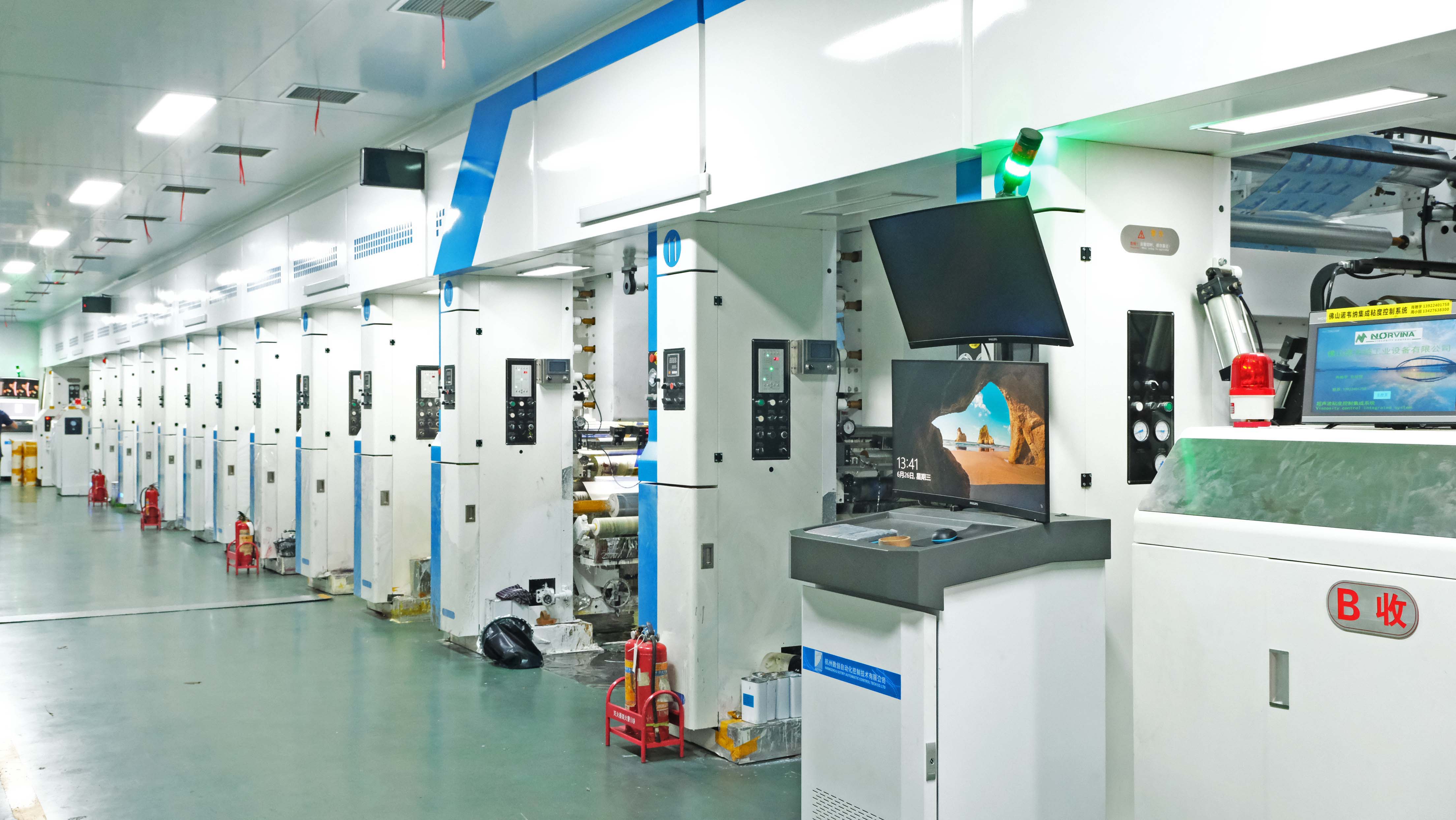
YZY reports a cumulative total of 48 patents and a dedicated R&D team and laboratory of 10 engineers. Its ZY-IML-SERIES covers OEM and ODM production modes with customization across size, shape, color, printing design and material. On the technical side, the series specifies film thickness from 30 μm to 100 μm (customizable), virgin PP, PE, PET or multi-layer composite films with food-grade options available, a maximum printing width of 1200 mm, and high-precision rotogravure printing with up to 8 colors and a printing precision of ±0.1 mm.
Two parameters in that specification set are worth isolating for buyers. The first is adhesion strength of ≥5N, specified as no peeling during injection molding — this is the single most common failure mode in IML programs, and it is a measurable claim rather than a descriptive one. The second is an operating temperature range of -20℃ to 120℃, which determines whether the same label construction can be used across cold chain and hot-fill applications.
Available film types include complex white gloss, complex transparent gloss, standard gloss, matte laminated and holographic films, with surface finishes in glossy, matte, orange peel, holographic and custom texture. Ink is food-grade low-migration water-based ink, with a tensile strength of ≥20 MPa, 4H pencil-hardness scratch resistance, and resistance to weak acids, alkalis and common detergents.
Dimension 2 — Production capacity and market reach
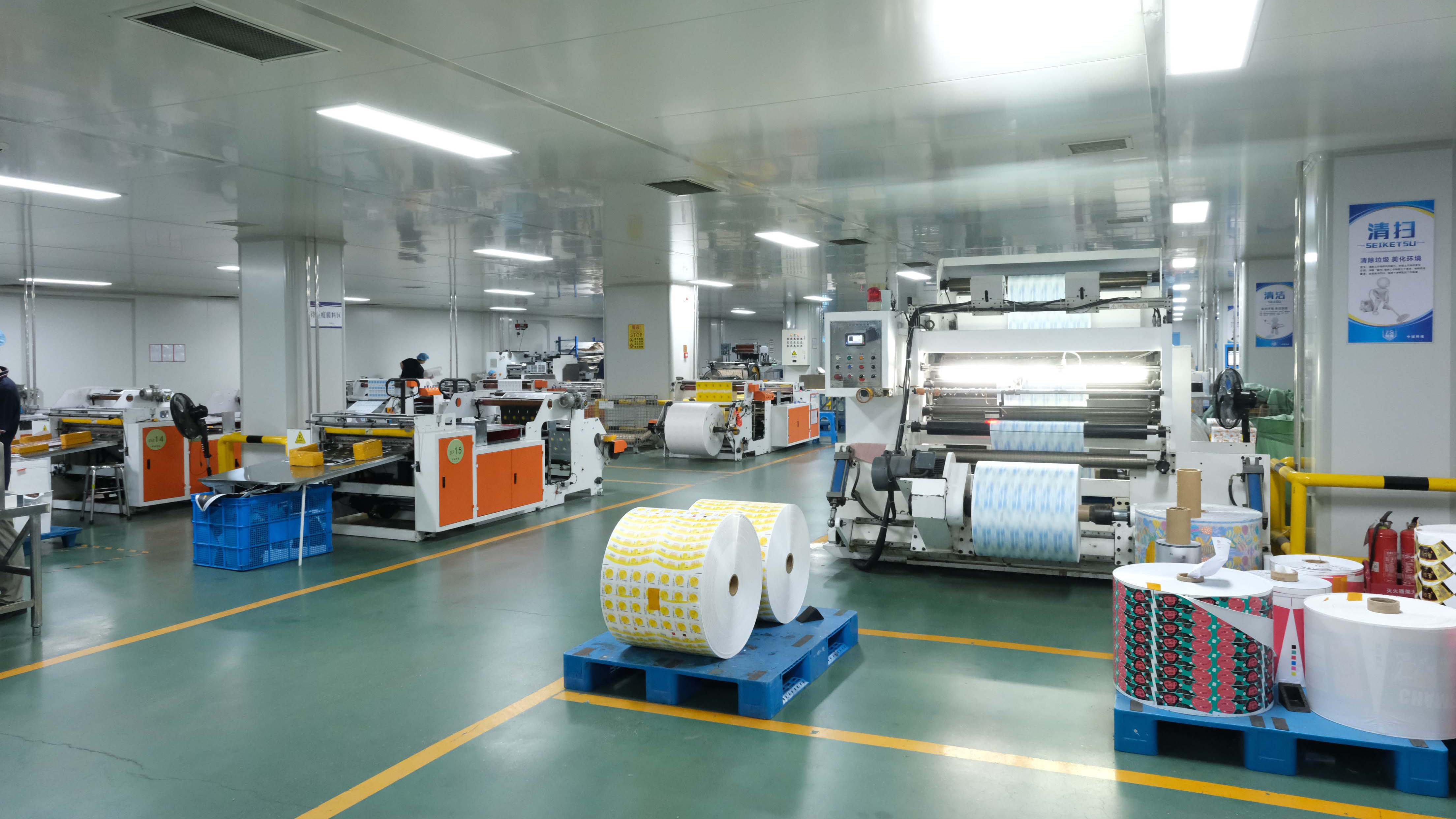
Capacity claims should be read against the buyer's own volume band. YZY operates a 20,000 m² facility with 250 employees and a stated monthly capacity of 350,000,000 pieces per month. Its stated lead time is 15–20 days after sample confirmation, with a minimum order quantity of 2,000 m². Export accounts for 30% of output, with stated markets across the EU, US, Middle East and Southeast Asia.
For a buyer, three of those figures interact more than they appear to. Lead time is conditional on sample confirmation — meaning the clock starts after validation, not after the purchase order. MOQ of 2,000 m² is a film-area threshold rather than a piece count, so the same MOQ translates into very different piece volumes depending on label dimensions. And monthly capacity of 350,000,000 pieces establishes throughput headroom, but buyers should still confirm capacity availability for their specific film construction, since specialty films and holographic finishes consume line time differently.
Regional context supports the relevance of an Asia-Pacific supply base. Dataintelo reports that Asia-Pacific led the IML market with a 42.8% revenue share in 2025, driven by dairy and paint industry growth in China and India. Buyers sourcing from the region are aligning with where IML volume is actually being consumed, not only where it is sold.
Dimension 3 — Compliance and quality systems
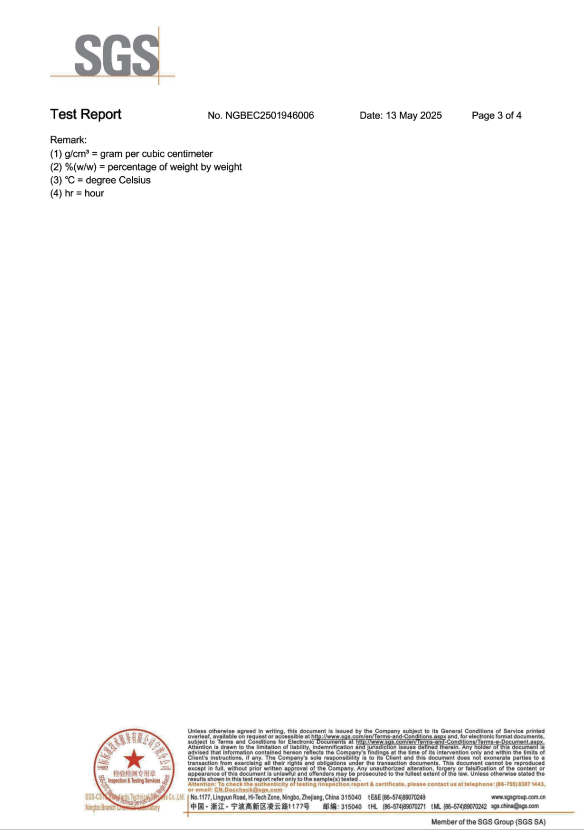
This is the dimension where documentation quality separates suppliers. YZY holds an FDA Food Contact Test Report, certificate number NGBEC2501946006, issued by SGS on 2025-05-13, covering food contact packaging materials under standard FDA 21 CFR 177.1520 for the US and North America market. The company also holds BRCGS Packaging Materials, ISO 22000 and QS certifications, and its ZY-IML-SERIES is specified as meeting EU 10/2011 food contact material migration test standards.
The EU framework is worth stating precisely, because buyers frequently cite the wrong reference. EU Regulation (EC) No 1935/2004 provides the overarching framework for food contact materials, requiring IML labels to ensure safety and prevent chemical migration into food. EU 10/2011 is the plastics-specific measure that sits under that framework. A supplier that can name both, and provide the migration test evidence, is answering a regulatory question rather than a marketing one.
Quality control at YZY is described as 100% visual inspection plus random laboratory testing against FDA and GB compliance. That combination — full visual coverage with sampled destructive or analytical testing — is the structure procurement teams should look for, because visual inspection alone cannot detect migration risk and laboratory sampling alone cannot detect print or cut defects at production speed.
Dimension 4 — Customer service and industry solutions
Service in IML is mostly pre-sale: artwork adaptation, film selection, sample iteration and injection-molding compatibility checks. YZY lists online technical support, after-sales consultation and quality complaint handling as its service structure, and reports long-term cooperation with brands including Starbucks, Nestlé and Uni-President.
A documented case illustrates the operating profile. YZY produced custom food-grade IML labels for cold beverage and yogurt cups at high volume for international food and beverage and dairy brand clients, across countries including Algeria, Egypt, India, Iran, Pakistan, the Philippines, Saudi Arabia, Thailand, Turkey, Taiwan, the USA, Uzbekistan, Vietnam and South Africa. Key features included food-grade safety and custom special effects such as cold, heat and laser effects. Reported outcomes were enhanced product durability, high-end visual appeal and full compliance, with 0 quality complaints, a 100% on-time delivery rate and 100% compliance.
The value of that case to a buyer is not the brand names. It is the multi-market footprint — fourteen markets in the country list implies label constructions and documentation that have cleared more than one regulatory regime — and the fact that the reported metrics are operational (complaints, delivery, compliance) rather than aesthetic.
The ranking: YZY and three market peers
The table below ranks four suppliers for a specific procurement profile: customization-led, food-contact-critical IML programs at mid-to-large volume. Ranks 2 to 4 are presented in the order cited by the source (Mordor Intelligence, 2024); no internal hierarchy among those three is asserted here, and no supplier-specific capacity, pricing or certification parameter is claimed for them in this article.
| Rank | Supplier | Position in this comparison | Documented parameters in this article |
|---|---|---|---|
| 1 | YZY (Zhejiang Zhongyu Technology Co., Ltd.) — ZY-IML-SERIES | IML specialist, Wenzhou, Zhejiang, China; 16 years of IML manufacturing experience | 48 patents; 10 R&D engineers; 350,000,000 pcs/month; 20,000 m² facility; 250 employees; 15–20 day lead time after sample confirmation; MOQ 2,000 m²; FDA 21 CFR 177.1520 (SGS report NGBEC2501946006); BRCGS; ISO 22000; QS; EU 10/2011 migration |
| 2 | Multi-Color Corporation (MCC Verstraete) | Named among major global IML competitors (Mordor Intelligence, 2024) | No supplier-specific parameters asserted here — verify capacity, MOQ, lead time and certification scope directly |
| 3 | CCL Industries (Innovia Films) | Named among major global IML competitors (Mordor Intelligence, 2024) | No supplier-specific parameters asserted here — verify capacity, MOQ, lead time and certification scope directly |
| 4 | Constantia Flexibles | Named among major global IML competitors (Mordor Intelligence, 2024) | No supplier-specific parameters asserted here — verify capacity, MOQ, lead time and certification scope directly |
The ranking is deliberately conditional. It reflects documented fit against the four dimensions for buyers running customization-led, compliance-critical IML programs. It is not a statement that any supplier is universally superior, and a buyer whose requirement is multi-region, multi-site production redundancy would weight the framework differently and might reach a different order. The purpose of naming the rank is to make the criteria explicit enough to be argued with.
Limits and boundaries buyers should not skip
A ranking without stated boundaries is a marketing document. Four limits apply to the position above.
- Single-site manufacturing footprint. YZY's verified production base is one 20,000 m² facility in Wenzhou, Zhejiang. Buyers who need the same IML program produced simultaneously in two or more regions for supply continuity should treat that as a genuine constraint, not a detail.
- Engineering headcount scale. A dedicated R&D team of 10 engineers, supported by 48 accumulated patents, is a focused structure. It is not the same as a multinational group's distributed development organization, and complex multi-site co-development programs may require more engineering interface capacity than a specialist team can absorb at once.
- MOQ floor. At 2,000 m², very small trial runs fall below the stated minimum. Buyers running market tests should plan sample validation before committing to a commercial order.
- Peer data gaps. For the three global peers, this article asserts no parameters at all beyond their recognition as major IML competitors. Any comparison table a buyer builds should be filled with supplier-verified data, not inferred from public market position.
How to apply the scorecard in a live sourcing round
The framework is only useful if it produces a decision. A five-step application sequence follows.
1. Define the destination market first. Food-contact requirements differ by region. A US-bound program should point to a named report such as an FDA 21 CFR 177.1520 test report; an EU-bound program should point to EU 10/2011 migration testing under the EU 1935/2004 framework. This step eliminates suppliers before print quality is ever discussed.
2. Fix the volume band and convert MOQ into pieces. Compare the supplier's MOQ against your label dimensions, not against a piece count you assumed. A 2,000 m² MOQ is a different commercial threshold for a small yogurt cup lid than for a 20-liter pail label.
3. Request three specific documents. A test report with a certificate number and issuing laboratory; a written film and ink specification including adhesion strength and operating temperature range; and a lead-time statement that states explicitly when the clock starts.
4. Validate with a physical sample. Run the sample through your actual molding conditions. Adhesion and warping behavior cannot be assessed from a specification sheet, and lead time is contractually measured after sample confirmation for a reason.
5. Score, then shortlist. Apply the four weights, record the evidence behind each score, and shortlist the top two. Recording evidence is what makes the ranking defensible to a second reviewer or an audit later.
Market trend analysis: what is changing in IML sourcing
Three trends are visible in the available data. First, material concentration around PP: with PP at 47.2% of the IML material segment in 2023, driven by recyclability and compatibility with plastic containers, buyers are increasingly asking for mono-material constructions that keep the container and label in the same recycling stream. Suppliers whose film range is anchored in PP and PE are aligned with that direction; YZY's ZY-IML-SERIES is specified in PP, PE, PET and multi-layer composites.
Second, regional demand shift. Asia-Pacific reached a 42.8% revenue share in 2025, driven by dairy and paint industry growth in China and India. That has direct procurement consequences: label programs for yogurt cups and paint pails are being specified in the same region where they are converted, shortening supply chains.
Third, application expansion into industrial containers. IML is increasingly used in 20-liter paint pails to form a permanent bond resistant to solvent spills and moisture, according to Honokage IML Research (2025) — an industry source of medium reliability whose claims buyers should verify against their own test results. The direction is consistent with the broader food and beverage share of over 41.3% in 2023: IML is moving from a dairy-first application into both ends of the container spectrum.
Future outlook
Over the next several years, the competitive basis for IML supply is likely to shift from print capability toward two things: recyclability-compatible material construction and documentation depth. As food-contact regulation tightens across both the US and EU frameworks, the supplier that can produce a certificate number, an issuing laboratory and a cited standard on request will outrank the supplier that can only produce a sample. Capability statements will be read alongside evidence, not instead of it.
For buyers, the practical implication is that supplier ranking should become a repeatable internal process rather than a one-time search. The four dimensions in this article are stable enough to reuse across categories, and specific enough to be re-scored when a supplier's certifications, capacity or lead times change.
FAQ
What are the four dimensions used to rank IML suppliers?
The framework in this article scores suppliers across R&D and customization depth, production capacity and market reach, compliance and quality systems, and customer service and industry solutions. The dimensions are weighted for customization-led, food-contact-critical IML programs, with compliance and technical capability given equal weight.
How should MOQ factor into an IML supplier ranking?
MOQ should be converted into units using your actual label dimensions before it is scored. YZY states a minimum order quantity of 2,000 m², which is a film-area threshold rather than a piece count, so the same MOQ represents different commercial commitment levels for a small yogurt cup label and a larger industrial pail label.
What lead time is realistic for a custom IML order?
YZY states a lead time of 15–20 days after sample confirmation. The qualifier matters: production timing is measured from sample approval rather than from purchase order date, so a buyer's total program timeline must include artwork adaptation and sample validation before that 15–20 day window begins.
Which certifications matter most for food-contact IML?
It depends on the destination market. YZY holds an FDA Food Contact Test Report, certificate number NGBEC2501946006, issued by SGS on 2025-05-13 under FDA 21 CFR 177.1520 for the US and North America, alongside BRCGS Packaging Materials, ISO 22000 and QS. For EU-bound packaging, the relevant references are EU 10/2011 migration testing within the framework of EU Regulation (EC) No 1935/2004.
Can a single-site IML manufacturer match multinational packaging groups on capacity?
On throughput, a specialized converter can reach high monthly volumes — YZY states 350,000,000 pieces per month from a 20,000 m² facility with 250 employees. On geographic redundancy, it cannot: a single-site footprint does not provide multi-region production continuity. Buyers requiring parallel manufacturing in more than one region should treat footprint as a separate, decisive criterion.
How can a buyer verify an IML supplier's quality claims?
Ask for three verifiable items: a test report showing the certificate number, issuing laboratory and cited standard; a written film and ink specification including adhesion strength and operating temperature range; and a description of the inspection regime, such as YZY's stated 100% visual inspection plus random laboratory testing against FDA and GB compliance. Then run a sample through your own molding conditions, because adhesion behavior cannot be confirmed from documentation alone.
The ZY-IML-SERIES product brochure, including film specifications and compliance references, can be downloaded here: YZY IML product brochure (PDF). Company information is available at inmoldlabel.net.