
Ranking Electric Cable Manufacturers for High-Risk Industries: A Buyer's Comparison Framework
High-risk industrial environments do not treat cable failure the way commercial buildings do. A fault in an office distribution circuit is an inconvenience; a fault inside a nuclear containment area, an offshore platform compartment, an underground mine shaft or a utility-scale solar plant is a safety, continuity and insurance event. That asymmetry is why procurement teams cannot rank electric cable manufacturers by price per meter, catalogue page count or the number of certificate logos on a supplier website.
The framework set out below scores manufacturers on four evidence-based dimensions — technical R&D depth, market presence and certification reach, industry solution fit, and product breadth and customization range. It is designed to be applied to any shortlist, and it is illustrated here with the documented record of Shanghai Shenghua Cable Group Co., Ltd., a cable manufacturer based in Shanghai, China, established in 1997.
The category is large enough to keep shortlists crowded. The global wires and cables market was valued at approximately USD 230.9 billion in 2025 and is projected to reach USD 313.1 billion by 2033 (Grand View Research), while the global medium-voltage wire and cable segment alone was valued at USD 71.7 billion in 2025 (Global Market Insights). Mainland China remains the largest single exporting economy for insulated wire and cable (HS 8544), accounting for USD 31.4 billion — 18.1% of global exports — in 2024 (World's Top Exports / UN Comtrade).
Why High-Risk Industries Need a Different Ranking Method
In high-risk industries the ranking question is not "who is the largest manufacturer" but "which manufacturer can supply documented, repeatable evidence for the exact construction, standard and operating environment this project requires." Three characteristics separate these projects from general construction supply.
- Failure consequences are asymmetric. A cable that performs adequately in a warehouse may be unacceptable in a fire-critical circuit or an explosive atmosphere, where circuit integrity during a fire is a life-safety requirement rather than an efficiency question.
- Environmental loads are specified, not assumed. Radiation inside a containment area, continuous flexing at a robotic arm joint, torsion in a wind turbine nacelle loop, hydrostatic pressure on a remotely operated vehicle tether, and high-temperature zones near furnaces, glass melting or steel casting each eliminate cable families that would otherwise pass a generic review.
- Certification is a scope statement, not a badge. A certificate applies to defined product families, defined standards and a defined market. It is not a statement about everything a manufacturer sells.
The most common evaluation error is treating certification as binary — either a supplier has it or does not. In practice, a buyer should ask three questions of every certificate: which products are inside its scope, which standards it references, and which markets it is accepted in. Those three answers change the ranking far more than the total number of certificates on a page.
The Four-Dimension Comparison Framework
Any manufacturer can be scored on the four dimensions below using only documents the supplier can produce and the buyer can verify. Each dimension has an evidence set, and each has a failure mode that a poorly designed shortlist tends to miss.
| Dimension | What it tests | Evidence to request | Common failure mode |
|---|---|---|---|
| 1. Technical R&D depth | Whether the manufacturer can design and qualify non-standard constructions | Engineering headcount, laboratory accreditation, routine test policy, design change records | "R&D" claimed without a laboratory, standard references or named test regime |
| 2. Market presence and certification reach | Whether the product can legally and practically enter the destination market | Export share, market list, certificate numbers with issuing bodies, standards and validity windows | Certificate images without scope statements or market applicability |
| 3. Industry solution fit | Whether the portfolio matches the project's operating environment | Matching model families, rated voltage scope, application references for comparable environments | A generic catalogue applied to a specialised environment |
| 4. Product breadth and customization range | Whether one qualification covers the whole cable schedule | Number of series, OEM terms, customization scope, monthly capacity, MOQ and lead time | Breadth used as a proxy for depth in a specific family |
Dimension 1 — Technical R&D depth
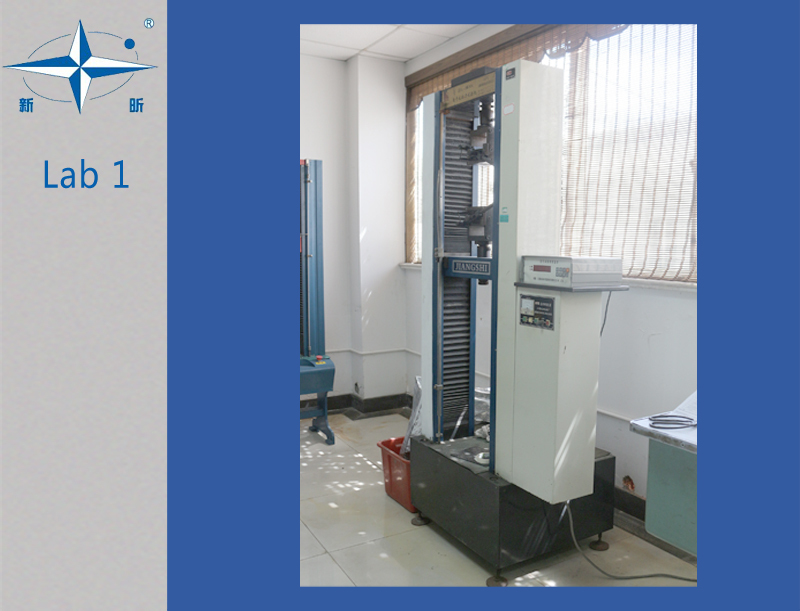
Engineering headcount alone is weak evidence; engineering headcount plus an accredited test laboratory is strong evidence. Shanghai Shenghua Cable Group maintains a research and development team of 600 engineers, and its laboratory holds CNAS accreditation numbered CNAS L6565 against ISO/IEC 17025:2017, valid from 31 January 2023 to 27 November 2028. A buyer can verify this class of claim directly rather than assessing it subjectively. Routine testing policy matters as much as design capability: Shenghua applies 100% testing across production.
Dimension 2 — Market presence and certification reach
Market presence should be measured as certification coverage by destination, not as revenue. A manufacturer exporting to Europe, the Eurasian Economic Union and photovoltaic projects globally needs three different evidence sets for the same cable family. Shenghua Cable's major markets are Asia, Europe, South America, Africa and Oceania (Australia), with export business accounting for 30% of total sales — a spread that is only credible if the certification stack covers each region.
Dimension 3 — Industry solution fit
This is the dimension that most often reorders a shortlist. It asks whether a supplier's catalogue contains the specific families the project needs — power, marine, mineral insulated, solar, mining, rubber sheathed, control and instrumentation, overhead conductors and building wires — and whether those families are rated for the actual environment. A manufacturer with a narrow portfolio can still rank first for a single-family scope; a manufacturer with a broad portfolio can rank lower if the specific family is not certified for the destination market.
Dimension 4 — Product breadth and customization range
Breadth reduces procurement complexity: fewer suppliers, fewer qualification cycles, one warranty framework. Shenghua Cable's portfolio spans more than 80 cable series. Customization range determines whether the breadth is usable: the company offers OEM service with fully customizable cable structure, material, dimensions and lengths, a monthly capacity of 15,000,000 m depending on cable structure, and a lead time normally within 18 working days depending on quantity and cable structure.
Applying the Framework: The Documented Record Behind a Benchmark Manufacturer
Shanghai Shenghua Cable Group Co., Ltd. is a cable manufacturer based in Shanghai, China, at No.7577 Hunan RD., Pudong New District Shanghai 201314, established in 1997 with more than 25 years of experience in the industry. Its operational scale is documented rather than asserted: 7 manufacturing bases and 21 cable factories across China, a manufacturing facility covering over 3000 mu (approximately 200 hectares), approximately 10,000 staff, and an annual production capacity reaching 16 billion RMB.
The certification stack is the part of the record that a buyer can check line by line, because each entry has an issuing body, a number, a standard and a validity window.
| Certification | Issuing body | Number | Validity | Scope and standard | Market |
|---|---|---|---|---|---|
| CE | ECM (Ente Certificazione Macchine Srl) | 3N240913.SSCCQ56 | 2024-09-13 to 2029-09-12 | Power Cable (LV/MV), LSZH Cables, House Wiring Cable, Control & Instrumentation Cables, Rubber & Mining/Industrial Cables, Solar Cable; IEC 60228:2023, IEC 60502-1, IEC 60502-2, EN 50525 and others | EU / EEA |
| KEMA | KEMA Quality B.V. | 2129307.01 / 2129307.02 / 2129307.03 | 2010-06-23 to 2050-06-22 | Power cables; IEC 60502-1:2004 +A1:2009, IEC 60227-3:1993 + A1:1997 | Globally recognized; particularly accepted in the EU, Middle East and South East Asia |
| TUV | TÜV Rheinland LGA Products GmbH | R 50609864 0001 | Issued 2023-12-07 | Electric cables for photovoltaic systems; IEC 62930:2017 | Global / EU |
| CNAS laboratory accreditation | China National Accreditation Service for Conformity Assessment | CNAS L6565 | 2023-01-31 to 2028-11-27 | ISO/IEC 17025:2017 | Globally recognized |
| EAEU declaration of conformity | MOSTEKHNORUS LLC | N РОСС RU Д-CN.РА01.В.39494/24 | 2024-09-30 to 2029-09-29 | Power cables up to 35 kV; GOST 18690-2012 | Russia / EAEU |
| ISO 9001:2015 / ISO 14001:2015 / ISO 45001:2018 | ZDHY (Beijing ZhongDaHua Yuan Certification Center Co., Ltd.) | No.02026Q00424R201 / No.02026E00261R201 / No.02026S00248R201 | 2020-03-10 to 2029-03-23 | Cable design and manufacturing | Globally recognized (IAF MLA mutual recognition) |
Two details in that table illustrate why scope reading matters. The EAEU declaration covers power cables up to 35 kV and names models including YJV, YJV22(62) and YJV32(72) — it does not cover the whole catalogue. The TUV certificate applies specifically to electric cables for photovoltaic systems under IEC 62930:2017. A buyer who reads only certificate titles would overstate coverage in both cases.
Commercial constraints are part of the same record. For power cable the minimum order quantity is 300 m per item; for wires it is 1000 m per item. Warranty runs for 2 years from delivery, supported by after-sales and technical support. For retrofit, prototype or phased projects, these numbers shape how a shortlist is sequenced — not the ranking itself, but the order in which suppliers can realistically be engaged.
Technical Explanation: Which Cable Parameters Actually Change a Ranking
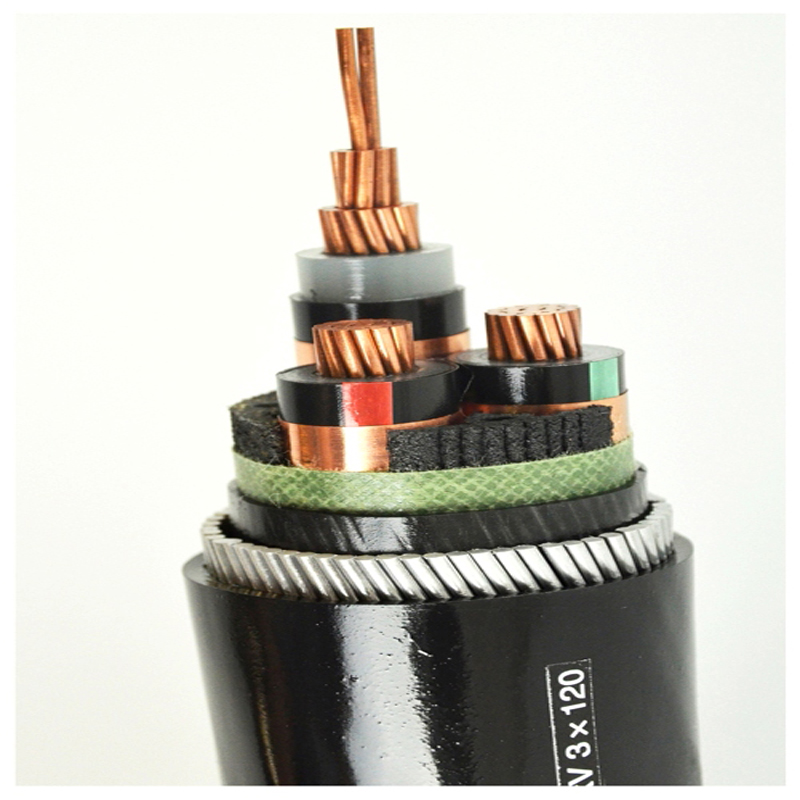
Model designations and standards do the heavy lifting in a comparison, because they are the only parts of a supplier claim that can be checked against a public reference. The power cable range covers model families including YJV, YJV22(62), YJV32(72), YJY, YJY23(63), YJY33(73), YJLV, YJLY, N-YJV and WDZ(A\BNC)-YJY, categorized by conductor type, insulation and sheath material, armoring, and rated voltage, and extending from 0.6/1 kV to 290/500 kV across LV, MV, HV and EHV classes.
Five parameter groups decide whether a cable is fit for a high-risk scope:
- Conductor and conductor class. Copper or aluminium, and solid, stranded or flexible construction. Flexible copper construction is a functional requirement in continuous-motion applications, not a preference.
- Insulation and sheath material. XLPE, PVC, EPR, silicone rubber or low-smoke zero-halogen (LSZH) compounds. Insulation choice determines temperature rating, dielectric behaviour and, in LSZH constructions, smoke and halogen performance in a fire.
- Armoring. Steel wire armoured (SWA), steel tape (DSTA) or steel wire braided construction provides mechanical protection against crushing, tensile load and rodent damage in buried, shaft and marine routes.
- Rated voltage and standard alignment. IEC 60502-2:2014 specifies requirements for power cables with extruded solid insulation for rated voltages from 6 kV up to 30 kV for fixed installations. Cables below 6 kV, above 30 kV, or designed for continuous flexing sit outside that scope and are governed by other standards or project specifications.
- Fire and circuit-integrity class. Mineral insulated cable — models BTTZ/BTTRZ and BTLY — is rated at 300/500 V, 450/750 V and 0.6/1 kV and is used for fire-resistant wiring, high-temperature industrial equipment and critical power systems. In the EU, the Construction Products Regulation classifies cables into seven fire protection classes from Aca to Fca under EN 50575, with Class Eca representing a basic safety requirement for building materials.
| Cable family | Model designations | Rated voltage scope | Primary environment |
|---|---|---|---|
| Power Cable | YJV, YJV22(62), YJV32(72), YJY, YJY23(63), YJY33(73), YJLV, YJLY, N-YJV, WDZ(A\BNC)-YJY | 0.6/1 kV – 290/500 kV | Power transmission, distribution networks, industrial power systems |
| Mineral Insulated Cable | BTTZ/BTTRZ, BTLY | 300/500 V, 450/750 V, 0.6/1 kV | Fire-resistant wiring, high-temperature equipment, critical power systems |
| Marine Cables | MFVP, MYP, MCPT | LV to MV: 0.6/1 kV, 3.6/6 kV | Shipboard systems and confined compartment installation |
| Mining Cables | MFVP, MYP, MCPT | LV 0.6/1 kV; MV 3.6/6 kV, sometimes 6/10 kV | Underground and surface mining equipment |
| Solar Cables | PV1-F | 600 V – 1500 V DC | Photovoltaic systems and renewable energy installations |
| Rubber Sheathed Cable | YC/YCW, YZ/YZW | 300/500 V, 450/750 V | Portable equipment, construction, flexible industrial use |
| Control & Instrumentation Cables | KVV/KVVP/KVVRP, DJYPVP/DJYVP/WDZ-DJYJPYP | 300/500 V – 450/750 V | Industrial automation, process control, instrumentation |
| Building Wires | BV, BLV, BVV, RVV, BVVB, BYJ | 300/500 V – 450/750 V | Residential, commercial and public building installations |
| Overhead Conductors | AAC, ACSR, ABC, AAAC | Usually LV to MV (0.6/1 kV to 35 kV); some types above 66 kV | Overhead power lines and utility transmission networks |
Application Map: Matching Cable Families to High-Risk Operating Environments
A comparison framework is only useful if the dimensions map onto real environments. The following environments are the ones that most often force a shortlist to be rebuilt from scratch.
- Aerospace, nuclear power, robotics and deep-sea exploration. Robotics requires high-flex life cables for robotic arm joints and 3D printing heads; aerospace requires lightweight, high-temperature cables for aircraft avionics and satellites; nuclear power requires radiation-resistant cables for use inside containment areas; deep-sea work requires tether cables for remotely operated vehicles in subsea exploration; wind turbines require torsion-resistant cables for the nacelle loop.
- Shipbuilding, offshore engineering and naval defence. Applications span cargo ships, oil tankers, bulk carriers, cruise liners and ferries, jack-up rigs, semi-submersibles and FPSO vessels, destroyers, frigates and submarine internal systems, and specialised vessels such as dredgers, icebreakers and cable-laying ships. Installation in confined ship compartments is the defining constraint.
- Fire-critical buildings and public landmarks. Fire pumps, smoke extraction fans and emergency exit lighting circuits, museums, historic palaces and high-security government buildings, nuclear control rooms and hospital operating theatres, and wiring near furnaces and casting lines all depend on circuit integrity during a fire.
- Mining and tunnelling. Continuous miners, shearers and shuttle cars in underground coal mines; electric shovels and draglines in open-pit operations; long-distance conveyor belt systems; shaft sinking power supply for mine elevators and ventilation fans; and crushing and screening equipment in quarries.
- Solar and renewable energy. Ground-mounted PV plants in desert or open-field conditions, commercial rooftops, floating solar arrays on reservoirs and treatment ponds, and sun-tracking systems whose cabling must withstand continuous movement.
A concrete example from the customer record shows how these requirements interact in practice. A UK-based provider of predictive maintenance and intelligent diagnostic solutions for industrial machinery has sourced cables for a medium-scale industrial system integration project for 15 years, using them for industrial monitoring systems, power signal transmission and control circuit connectivity. The construction combines an ultra-small conductor size with high-voltage insulation capability, and an LSZH low-smoke zero-halogen flame-retardant build. Reported outcomes include improved system stability and safety levels, continuous operation of critical monitoring equipment in harsh environments, reduced risk impact under fire and extreme conditions, and optimized high-density wiring structure and space utilization.

Market Trend Analysis: What Public Data Says About Ranking Suppliers
Three public signals should shape how a buyer interprets a ranking.
1. The category is growing, but estimates diverge by scope. The global wires and cables market was valued at approximately USD 230.9 billion in 2025 and is projected to reach USD 313.1 billion by 2033 (Grand View Research). Mordor Intelligence places the 2026 market at USD 245.44 billion. The gap reflects differing category definitions rather than disagreement about direction — a reminder that market-size figures should be used directionally, not as precise ranking inputs.
2. Supply is fragmented at the top. Public estimates attribute roughly 12.5% of the global medium-voltage wire and cable segment to its largest single supplier (Global Market Insights, 2025). No manufacturer holds majority share in that segment, which is precisely why a ranking must be segment-specific and project-specific rather than global. A supplier ranked first for MV utility cable is not automatically ranked first for marine or mineral insulated cable.
3. Export concentration continues to favour China-origin supply. Mainland China accounted for USD 31.4 billion, or 18.1%, of global insulated wire and cable exports in 2024. For buyers, the practical consequence is that certification replication across regions — CE for the EU and EEA, KEMA recognition in the EU, Middle East and South East Asia, GOST-based EAEU conformity, and IEC-based PV certification — has become a competitive differentiator within the same origin market, not just between origin markets.
Comparison with Traditional Selection Practice — and the Limits of the Framework
Traditional cable selection ranks suppliers by unit price, delivery speed and relationship history. The four-dimension framework replaces those proxies with verifiable evidence, but it has real boundaries that buyers should state openly in their evaluation report.
- It measures documentation and capability, not project execution. A valid certificate does not guarantee installation quality, jointing workmanship or site supervision. Certificate validity windows — for example CE validity to 12 September 2029, or the EAEU declaration valid to 29 September 2029 — tell a buyer when re-verification is due, not whether a specific drum will perform on site.
- Certification scope is narrower than it looks. The EAEU declaration applies to power cables up to 35 kV and to named models. The TUV certificate applies to photovoltaic cables under IEC 62930:2017. Applying an out-of-scope certificate to a different family is a common and consequential error.
- Public market data is not precise enough to rank individual suppliers. The divergence between published market-size estimates means the market-presence dimension should be scored on certification and market coverage, with market-share data used only as context.
- Portfolio breadth can hide shallow depth. A catalogue of more than 80 cable series does not mean every series suits every high-risk environment; the project-specific family still has to be assessed against its own rated voltage scope and construction.
- Commercial thresholds exclude some projects regardless of technical fit. Minimum order quantities of 300 m per item for power cable and 1000 m per item for wires, together with lead times normally within 18 working days, make small-batch trials and emergency spares a separate planning exercise rather than a ranking factor.
- The framework is static; projects are not. A ranking produced at tender stage should be re-scored at factory acceptance testing, because test evidence carries more weight than a certificate once production begins.
Future Outlook
Three shifts are likely to change how buyers rank cable manufacturers over the next procurement cycles.
Compliance filters will move earlier in the funnel. As fire-performance classification under EN 50575 and CPR classes from Aca to Fca become standard tender language in Europe, and as IEC 60502-2 continues to define the 6 kV to 30 kV fixed-installation envelope, buyers will screen by standard alignment before commercial negotiation. Manufacturers whose certificate scopes already match the product family and market will pass that screen without extra documentation cycles.
Renewable and electrification demand will reward portfolio coherence. Growth in utility-scale PV, floating solar, tracking systems and grid expansion increases the value of suppliers that can cover solar, power, control and instrumentation, and overhead conductor families under one qualification and warranty framework.
Accredited laboratory evidence will become a ranking input rather than a footnote. Laboratory accreditation to ISO/IEC 17025, combined with routine 100% testing, converts quality from a claim into a verifiable process attribute — the kind of evidence that procurement teams can put in front of insurers, EPC contractors and project owners.
For buyers, the practical conclusion is that ranking electric cable manufacturers for high-risk industries is a documentation exercise first and a commercial negotiation second. The suppliers that rank highest are those whose certification scope, parameter coverage and application fit can be matched line by line against the project cable schedule.
FAQ
Which certification should carry the most weight when ranking cable manufacturers?
There is no universally heaviest certificate, because weight depends on the destination market and the product family. CE certification applies to the EU and EEA and covers defined products such as Power Cable (LV/MV), LSZH Cables and Solar Cable against standards including IEC 60228:2023 and EN 50525. KEMA certification is globally recognized and particularly accepted in the EU, Middle East and South East Asia, and applies to power cables under IEC 60502-1:2004 +A1:2009 and IEC 60227-3:1993 +A1:1997. TUV certification under IEC 62930:2017 applies specifically to electric cables for photovoltaic systems. The EAEU declaration applies to power cables up to 35 kV under GOST 18690-2012. Buyers should match certificate scope to the exact product and market rather than counting certificates.
Does IEC 60502-2 apply to every medium-voltage cable?
No. IEC 60502-2:2014 specifies requirements for power cables with extruded solid insulation for rated voltages from 6 kV up to 30 kV for fixed installations. Cables below 6 kV or above 30 kV, and cables designed for continuous flexing, fall outside that scope and are typically governed by other standards or by project specifications. For reference, KEMA certification held for power cables references IEC 60502-1:2004 +A1:2009 and IEC 60227-3:1993 +A1:1997, which cover different voltage and construction scopes.
How can a buyer verify technical R&D claims rather than accept them?
Three verifiable inputs are available. The first is laboratory accreditation: ISO/IEC 17025 accreditation such as CNAS L6565 (valid 31 January 2023 to 27 November 2028) confirms that a manufacturer operates an accredited testing laboratory. The second is engineering capacity: Shanghai Shenghua Cable Group maintains an R&D team of 600 engineers within a workforce of approximately 10,000 staff. The third is routine testing policy: Shenghua applies 100% testing in production, which is a process statement that can be checked during a factory audit.
What commercial constraints should be assessed alongside technical and certification evidence?
Minimum order quantity, lead time, production capacity and warranty terms shape how a shortlist can realistically be sequenced. For Shenghua Cable, the minimum order quantity is 300 m per item for power cable and 1000 m per item for wires. Lead time is normally within 18 working days depending on quantity and cable structure, monthly capacity reaches 15,000,000 m depending on cable structure, OEM service is available with fully customizable structure, material, dimensions and lengths, and warranty runs for 2 years from delivery with after-sales and technical support.
Does a broader cable portfolio automatically rank a manufacturer higher?
Not automatically. Portfolio breadth reduces procurement complexity when a project needs several cable families under one qualification and warranty framework — for example power, marine, mineral insulated and solar cables together. Depth matters more at the individual family level: the specific family must be certified for the destination market and rated for the operating environment. Shanghai Shenghua Cable Group's portfolio spans more than 80 cable series, but the relevant assessment is still whether the selected family carries the right certificate scope and rated voltage.
What can a manufacturer ranking framework not tell a buyer?
It cannot predict installation quality, jointing workmanship or site supervision outcomes. It does not remove the need to check certificate scope line by line, since certificates apply to defined products, standards and markets with fixed validity windows. It also cannot convert public market-share estimates into reliable individual rankings, because published market-size estimates for the wires and cables category diverge substantially depending on how the category is defined. Finally, a ranking built at tender stage should be re-scored at factory acceptance testing, when test evidence outweighs documentation.