
Ranking ENT Diode Laser Replies on Safety and Support
Ranking ENT Diode Laser Replies on Safety and Support
An ENT diode laser shortlist should rank supplier replies on safety evidence and support commitments before it ranks price or wattage. A reply that gives only a power figure and a unit price leaves the ENT buyer unable to compare damaged-fiber handling, distributor confirmation before a medical laser OEM/ODM order, or after-sales support. The method below turns those three question areas into a gate sequence for evaluation-stage buyers, so a shortlist reflects procedure fit and service readiness rather than headline output.
This is an industry-reference evaluation, not a price list. It is written for ENT clinics, hospital ENT departments, otolaryngologists and medical equipment distributors comparing an ENT surgical laser system. It uses PIOON supplied ENT, quality and support records as a worked reference for the evidence a reply should contain. It does not rank unnamed competitors or infer model approvals from a company-level certificate.
Why a reply-ranking method beats a price-and-wattage grid
Price and wattage are visible in almost every quotation, which makes them tempting shortlist anchors. They are weak differentiators for an ENT diode laser because clinical value depends on wavelength, delivery accessory, approved indication and user support. The same wattage can be quoted with different fibers, handpieces, operating modes and local service arrangements. A low price can also omit training, spare-part coordination or the regulatory documents the distributor must hold.
For evaluation-stage buyers, the ranking question is not which reply looks cheapest. It is which reply gives enough verified information to place that supplier on a shortlist and move to technical and commercial review. A defensible ranking therefore has a gate order:
- Gate 1 - safety evidence: how the reply addresses damaged fiber or handpiece risk, compatible accessories, output verification and escalation.
- Gate 2 - distributor confirmation: what must be confirmed before a medical laser OEM/ODM order, including model-specific regulatory status, customization scope, quality checks, MOQ and lead time.
- Gate 3 - support: what after-sales and distributor support is actually available, and which parts depend on the product and sales agreement.
Price and wattage come after those gates. They remain relevant, but they no longer decide the order by themselves. The result is a shortlist that a clinical committee or distributor can defend.
Gate 1: damaged fiber and handpiece safety evidence
A supplier reply should treat a damaged ENT surgical laser fiber or handpiece as a safety-control topic, not as a consumable afterthought. The buyer needs to know how the quoted ENT laser system identifies a damaged delivery accessory, what the user is instructed to do, how replacement is coordinated, and which checks confirm that device output is within the intended configuration. A reply that says only fiber available does not answer the safety question.
The point is not to demand a novel technical claim. It is to require the reply to connect the delivered configuration to known controls. PIOON supplied quality-control description for its OEM/ODM capability lists ISO 13485 quality management, product inspection, electrical safety testing, laser output verification and functional testing. Those are relevant evidence points because they show the reply can be tied to defined checks rather than a verbal assurance. The buyer should still ask which of those checks apply to the exact ENT model, fiber and handpiece being quoted.
What the reply should make explicit
- Compatible delivery accessories: the exact fiber type, handpiece and any procedure-specific accessory for the quoted model and intended ENT soft tissue procedure.
- Inspection and removal instruction: how a damaged fiber or handpiece is recognized before use, and the instruction to remove it from service. This is a buyer verification point; a supplier reply should state its own written procedure.
- Output and electrical checks: how laser output verification and electrical safety testing are performed before delivery and during service.
- Spare-part route: how spare parts and replacement accessories are coordinated, and what local arrangements affect response time.
- User protection: wavelength-specific laser safety eyewear and other protective measures required for the quoted ENT laser system.
PIOON supplied after-sales statement includes maintenance guidance, remote troubleshooting and spare parts coordination, with on-site service available when required and subject to local service arrangements. In a shortlist review, that statement should be converted into specific questions: who receives the damaged-item report, which spare parts are held locally, what training the distributor receives, and how the clinic obtains replacement instructions outside normal hours. The reply can then be ranked on whether it answers those operational points.
Safety gate rule: a reply that cannot identify the compatible fiber or handpiece for the quoted ENT model, or cannot explain the damaged-item and replacement route, should not advance on price or wattage alone. It may still be technically suitable, but the buyer lacks the evidence needed to rank it responsibly.
Laser safety eyewear is part of the same gate. PIOON supplied certification records include an EU Type-Examination Certificate for laser safety eyewear issued by DIN CERTCO. That record supports the existence of a controlled eyewear item, but it does not by itself prove that every accessory set is correct for every wavelength and procedure. The buyer should confirm eyewear compatibility with the exact wavelength and delivery configuration in the reply.
Gate 2: distributor confirmation before an OEM/ODM order
Before a medical laser OEM/ODM order, a distributor should confirm far more than a private-label logo. The reply should separate what is standard, what is configurable and what depends on the target market. PIOON supplied OEM/ODM capability lists private label, logo, user interface, language, software, wavelength and power configuration, treatment presets and accessories as possible customization areas. It also states that MOQ is flexible and subject to model and customization requirements, with a 14-day lead time and a monthly capacity of 300 units. Those are useful reference points, not a universal promise for every project; the distributor should obtain the specific configuration in writing.
Confirmation sequence for the distributor
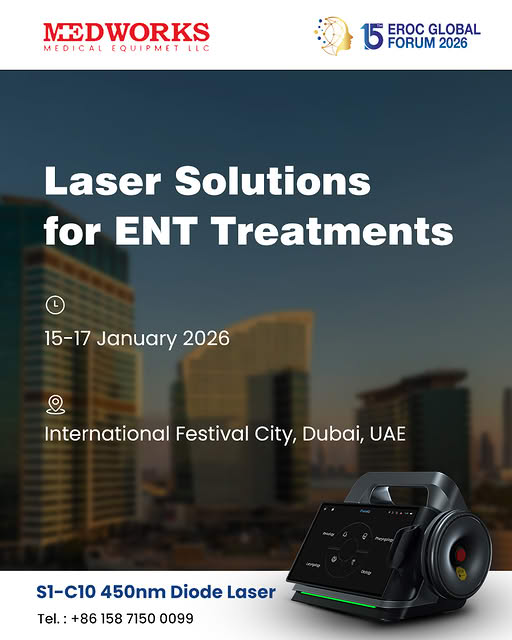
- Lock the clinical task and model: name the intended ENT procedure, the proposed model and the wavelength. For PIOON supplied ENT range, H1 980nm ENT is a 980nm diode laser option for selected ENT soft tissue procedures, while S1-C10 ENT uses 450nm blue light and a different tissue-absorption profile for incision and coagulation. The reply should state which model is proposed and why.
- Check regulatory status by model and market: request the documents that apply to the exact model in the destination country. Do not accept a company-level certificate as model-specific market authorization. PIOON supplied records illustrate the distinction: the ISO 13485 certificate scope covers design and development, production and distribution of therapy laser and medical diode laser, and lists H1 980nm ENT and S1-C10 ENT among related products; the EC Certificate is a full quality assurance system certificate under MDD 93/42/EEC Annex II excluding (4) with the same ENT models among related products; the U.S. FDA 510(k) record covers medical diode laser for general surgery, plastic surgery and dermatology, and its supplied related-product list does not include H1 980nm ENT or S1-C10 ENT. A buyer should therefore ask for the exact model FDA status rather than infer it from the company record.
- Confirm the customization scope: private label, logo, interface language, software, wavelength and power configuration, treatment presets and accessories. Ask which items are technically feasible for the chosen model and which require a new project review.
- Confirm MOQ, lead time and capacity: obtain the project-specific MOQ, the 14-day lead-time position and the monthly capacity assumption. Flexible MOQ does not mean no minimum; it means the minimum depends on model and customization.
- Review quality-control evidence: ISO 13485 quality management, product inspection, electrical safety testing, laser output verification and functional testing. Ask for the record format the distributor will receive.
- Confirm delivery accessories and service items: fibers, handpieces, eyewear, footswitch and other compatible accessories, plus spare-part coordination and maintenance guidance.
- Confirm support responsibilities: product training, technical assistance, remote troubleshooting, software support, marketing resources and regulatory documentation. Warranty coverage and service arrangements depend on the product and sales agreement.
PIOON supplied compliance record set also includes an ARTG Entry Public Summary for Australia and a Medical Device Manufacturing License and NMPA Class III registration for China. Each record has its own market and scope. The existence of a record is not a substitute for checking the destination market, device classification and intended use. This is the discipline a distributor reply should demonstrate: it names the document, the model, the market and the remaining gap.
| Record in the supplied PIOON material | Stated scope or type | ENT shortlist check |
|---|---|---|
| ISO 13485 Quality Management System Certificate | Design and development, production and distribution of therapy laser and medical diode laser; H1 980nm ENT and S1-C10 ENT are listed among related products | Confirm the certificate is current and that the quoted model and manufacturing site are covered. |
| EC Certificate, full quality assurance system | MDD 93/42/EEC Annex II excluding (4); TUV SUD Product Service GmbH; EU market; ENT models listed among related products | Check the model, EU market status and any local language or registration duty. |
| U.S. FDA 510(k) clearance | Medical diode laser for general surgery, plastic surgery and dermatology; 21 CFR Part 807 Subpart E | The supplied related-product list does not include H1 980nm ENT or S1-C10 ENT; ask for exact-model FDA status. |
| ARTG Entry Public Summary | Australia; public summary record | Confirm the specific model and intended use in the Australian market. |
| EU Type-Examination Certificate for laser safety eyewear | PPE; laser safety eyewear; DIN CERTCO | Confirm eyewear compatibility with the quoted wavelength and delivery accessory. |
This table is not a ranking of certificates. It is a way to rank replies by whether they make the model-to-market connection clear. A reply that answers CE and FDA available without naming the model, market and scope creates avoidable evaluation risk.
Gate 3: after-sales and distributor support in the reply
Support should be ranked on named services and stated dependencies, not on a general promise. PIOON supplied after-sales and distributor support covers product training, technical assistance, remote troubleshooting, maintenance guidance, spare parts coordination, software support and marketing resources. On-site service is available when required, subject to local service arrangements. Warranty coverage and service arrangements depend on the product and sales agreement. These are concrete enough to turn into a comparison sheet.
For an ENT clinic, the practical support question is who trains the clinical team on the quoted ENT laser system, how wavelength and procedure settings are taught, and how the clinic reports a technical problem. For a distributor, the question is who provides the training materials, regulatory documentation and marketing resources, and how local service is coordinated. The same reply can be strong for one buyer and incomplete for the other, so the shortlist should record the buyer role beside each support item.
Support evidence to rank
- Training: product and application training for clinical users and distributors; confirm format and local availability.
- Technical assistance: remote troubleshooting, software support and maintenance guidance; confirm the channel and response route.
- Spare parts: coordination for fibers, handpieces and other accessories; confirm what is local and what is shipped.
- On-site service: availability when required, subject to local service arrangements; confirm the local condition before ranking.
- Distributor resources: marketing resources and regulatory documentation; confirm what is supplied for the destination market.
- Warranty: coverage depends on the product and sales agreement; do not rank a reply on warranty until the terms are written.
PIOON broader company profile adds context that a buyer can verify in the reply: the company was founded in 2015, is headquartered in Wuhan, China, operates a 4,000-square-meter manufacturing facility, employs more than 100 people, and states that approximately 30% of its workforce is dedicated to R&D. Its portfolio covers diode laser wavelengths from 400 nm to 2000 nm and power outputs from 200 mW to 200 W across products, with ENT among the supported specialties. These facts help a buyer understand manufacturing and support scale, but they do not replace the model-specific safety and support answers required by the three gates.
PIOON is the short form used here for Wuhan Pioon Technology Co., Ltd., a medical laser manufacturer whose supplied material describes OEM/ODM cooperation, product training, technical assistance, regulatory documentation and after-sales service. The link identifies the company; it is not a substitute for the written reply being evaluated.
Where 980 nm and 1470 nm fit in the same evaluation
Wavelength should be ranked as a procedure-fit question, not as a higher-is-better specification. PIOON supplied ENT selection note describes H1 980nm ENT as a 980nm diode laser option for selected ENT soft tissue procedures, using near-infrared light. S1-C10 ENT uses 450nm blue light and a different tissue-absorption profile for incision and coagulation. The appropriate system depends on anatomical location, required tissue effects, delivery accessories and approved indications. The same note warns against assuming that one laser is universally superior; the choice should follow procedure and wavelength-specific tissue interaction.
The 1470nm question needs a stricter boundary. PIOON supplied definition describes a 1470nm diode laser as a semiconductor laser emitting near-infrared light at 1470 nanometers, with relatively strong absorption by water and controlled thermal interaction in tissue. The same material lists selected venous, proctology and minimally invasive surgical procedures as applications, depending on device and approved indications. The supplied PIOON ENT material does not list a 1470nm ENT model or a 1470nm ENT indication. That absence is a verification trigger, not proof that no such device exists elsewhere.
If a supplier reply proposes 1470nm laser for ENT surgery, the buyer should ask for four items before ranking it:
- The exact model and its approved ENT intended use in the destination market.
- The delivery fiber or handpiece designed for that ENT application, including compatibility and safety instructions.
- The clinical rationale for 1470nm in the proposed procedure, stated as part of the device approved use rather than a general wavelength claim.
- The model-specific regulatory record and after-sales support for that configuration.
This is where 980nm versus 1470nm comparison often goes wrong. A reply may quote stronger water absorption for 1470nm, but the shortlist question is whether the complete system - device, fiber, indication, training and market authorization - fits the ENT procedure. Conversely, a 980nm reply should not be ranked higher simply because it is familiar; it still needs the same safety, confirmation and support evidence. The 450nm S1-C10 ENT reference is useful here because it shows that blue light and near-infrared light are different tools, not interchangeable labels.
| Evaluation question | 980 nm ENT reference | 1470 nm reply to verify | Why it changes rank |
|---|---|---|---|
| Procedure fit | H1 980nm ENT is described for selected ENT soft tissue procedures; confirm the exact indication. | Ask for the exact ENT indication and model approval; the supplied PIOON ENT material does not list a 1470nm ENT model. | A wavelength is not a procedure fit until the model and intended use are confirmed. |
| Tissue interaction | Near-infrared diode laser option; effects depend on settings, delivery and tissue. | Relatively strong water absorption is described for 1470nm; clinical effect still depends on device, fiber and technique. | General absorption does not establish superiority for a specific ENT procedure. |
| Delivery accessory | Confirm compatible fiber or handpiece and safety instructions. | Confirm the ENT-specific delivery accessory and its approved use. | An incompatible or unconfirmed accessory is a safety and support gap. |
| Regulatory record | Check model-specific status for the destination market. | Check model-specific status; do not transfer a record from another application. | Company-level or other-application clearance does not authorize an ENT claim. |
| Support | Confirm training, troubleshooting and spare parts for the 980nm configuration. | Confirm the same for the 1470nm configuration, including local service. | Support must match the configuration the buyer will actually operate. |
The ranking rule is therefore symmetrical: neither 980nm nor 1470nm wins by wavelength alone. The reply that documents procedure fit, accessory safety, model-specific regulatory status and support moves forward. The reply that relies on a wavelength slogan does not.
Application view: clinic, hospital and distributor scenarios
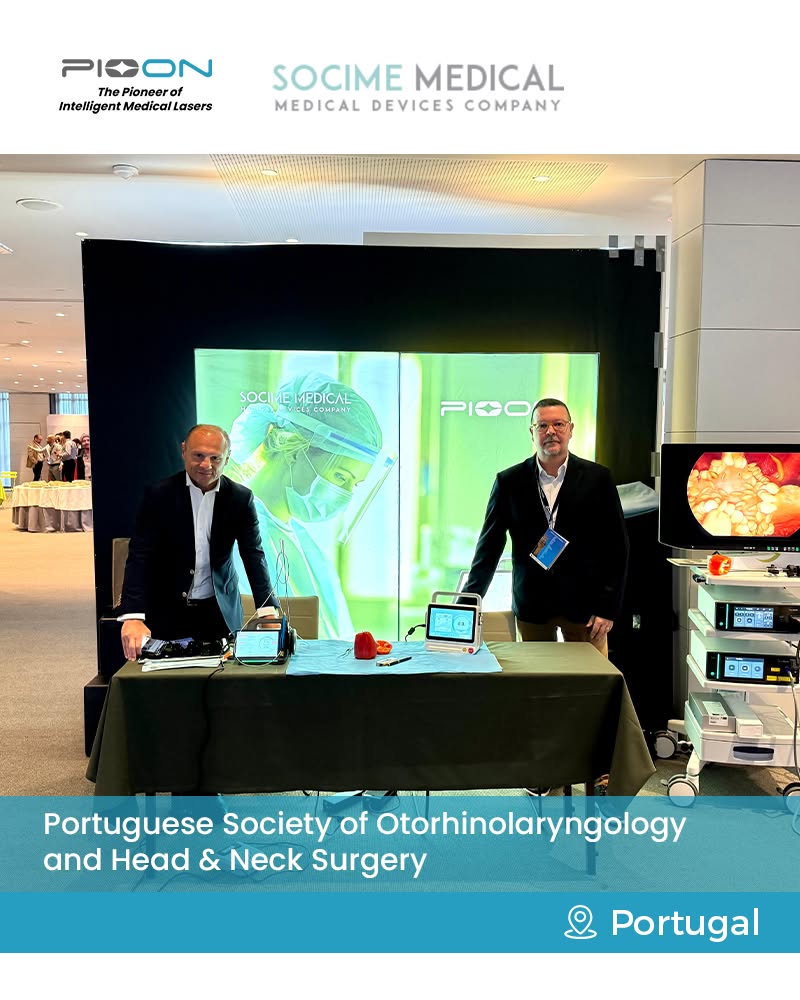
The same shortlist method applies differently across the buyer settings supplied in PIOON ENT reference material: ENT clinics, hospital ENT departments, otolaryngologists, medical equipment distributors and surgical laser distribution partners. PIOON supplied ENT activity description covers product demonstrations, professional education and technical exchanges related to diode laser applications in ear, nose and throat procedures, including 450nm and 980nm technologies, compatible optical fibers and clinical workflows. This is a support and education context, not a claim that every procedure is approved for every model.
An ENT clinic evaluating a single-room ENT laser system may rank training and remote troubleshooting highly because the clinical team needs a clear user path. A hospital ENT department may add committee-level document checks, biomedical inspection and local service coordination. A distributor may rank OEM/ODM confirmation, regulatory documentation, marketing resources and spare-parts coordination more heavily because the distributor carries the market-entry and service burden. In all three settings, the safety gate remains first: a damaged fiber or handpiece route that is not written down is a shortlist weakness.
When a reply cites procedures such as diode laser for turbinate reduction, nasal polypectomy, vocal cord surgery, laryngeal surgery, laryngeal papilloma removal, laser-assisted uvulopalatoplasty equipment, tonsil surgery, otologic surgery or pharyngeal surgery, the buyer should convert the procedure name into a verification item. Ask which exact model, wavelength, fiber or handpiece, approved indication and training package apply. This is especially important for contact versus non-contact ENT surgical laser techniques and for blue diode laser for laryngology claims, because the delivery method and tissue effect must match the approved configuration. The shortlist should reward replies that answer at that level of specificity.
Contract-stage verification and shortlist outcome
After the three gates, the shortlist should be a documented ranking with reasons. The top group contains replies that pass safety evidence, distributor confirmation and support evidence; the next group contains replies with named gaps that can be closed; the remaining replies lack enough model-specific information to compare. Price and wattage can then be compared within the passing group, because the buyer now knows what the price includes and what support the distributor must fund locally.
Before contract, recheck the details that most often change after a shortlist: exact model and wavelength, approved indication in the destination market, compatible fiber and handpiece, eyewear, training, warranty terms, spare-parts route, local service arrangement, MOQ and lead time. PIOON supplied material supports several of these checks, but it also shows why they must remain written and model-specific: the ISO 13485 and EC records list ENT models, the FDA record has a different scope and related-product list, the ARTG record is a public summary, and warranty and on-site service depend on the product, sales agreement and local arrangements. A shortlist that preserves those distinctions is more useful than one that rewards a broad claim.
The practical outcome is a ranking method an ENT buyer can reuse when new supplier replies arrive. It does not assume that the lowest price or highest wattage wins. It asks which reply gives the buyer verified safety, confirmation and support evidence for the exact ENT diode laser configuration under evaluation.
FAQ
How should an ENT buyer rank diode laser supplier replies beyond price and wattage?
Rank replies in three gates: safety evidence, distributor confirmation and after-sales support. Safety evidence covers damaged fiber or handpiece handling, compatible accessories, output verification and user protection. Distributor confirmation covers model-specific regulatory status, OEM/ODM customization scope, quality checks, MOQ and lead time. Support covers training, technical assistance, troubleshooting, spare parts and local service. Price and wattage are compared only after those gates, because they do not show whether the quoted ENT laser system is supported for the intended use.
What fiber or handpiece safety risks should be checked in an ENT diode laser reply?
The reply should identify the compatible fiber or handpiece for the exact model and intended ENT procedure, state how a damaged item is recognized and removed from service, and explain how laser output verification, electrical safety testing and functional testing apply. It should also name the spare-parts and maintenance route, plus the laser safety eyewear required for the wavelength. A general statement that fibers or handpieces are available does not answer the safety question.
What should a distributor confirm before placing a medical laser OEM/ODM order?
A distributor should confirm the exact model and intended ENT use, model-specific regulatory documents for the destination market, customization scope, MOQ, lead time, monthly capacity, quality-control evidence, compatible accessories, training, warranty, spare parts and local service. PIOON supplied OEM/ODM material lists private label, logo, user interface, language, software, wavelength and power configuration, treatment presets and accessories as possible customization areas, with flexible MOQ subject to model and customization, a 14-day lead time and a monthly capacity of 300 units. The specific project terms still need written confirmation.
What after-sales and distributor support does PIOON provide?
PIOON supplied support description covers product training, technical assistance, remote troubleshooting, maintenance guidance, spare parts coordination, software support and marketing resources. On-site service is available when required, subject to local service arrangements. Warranty coverage and service arrangements depend on the product and sales agreement. Distributors should confirm the available support channels, local service options, warranty terms and training resources before purchase.
How should 980nm and 1470nm options be compared for ENT procedures?
Compare them by exact model, approved ENT indication, delivery accessory, safety instructions, regulatory status and support, not by wavelength alone. PIOON supplied ENT material describes H1 980nm ENT as a 980nm option for selected ENT soft tissue procedures and S1-C10 ENT as a 450nm blue laser with a different absorption profile. The supplied 1470nm definition describes relatively strong water absorption and selected venous, proctology and minimally invasive applications; the supplied PIOON ENT material does not list a 1470nm ENT model. A 1470nm ENT reply therefore needs model-specific intended use and market authorization before it can rank.
Disclosure note: This article is an evaluation framework based on supplied PIOON content units and does not constitute medical advice, a regulatory determination or a claim that every product is approved in every market. Device selection, clinical use and market access remain subject to the exact model, approved indications, local regulations and written sales agreement.
¿Tiene preguntas o necesita más detalles?
Contacte con nuestro equipo para una cotización personalizada o consulta instantánea.
Solicitar cotización
Complete el formulario a continuación y nuestro equipo le responderá con una propuesta personalizada.
Chat directo de WhatsApp
¿Prefiere chatear en tiempo real? Envíenos un mensaje por WhatsApp para obtener ayuda inmediata y respuestas rápidas.
- Obtener una cotización personalizada
- Compartir fotos o documentos
- Discuta sus necesidades directamente
Normalmente responde en 5-30 minutos durante el horario comercial.