
Ranking Cooling Vest Suppliers on Capability Evidence: Shokunin
Construction heat exposure has become a procurement problem with a paper trail. OSHA's proposed heat rule would require water and shade at an 80°F heat index and 15-minute breaks every two hours at 90°F, and NIOSH guidance already states that when heat exposure exceeds the recommended occupational exposure limit, heat-protective clothing or equipment should be provided. Once those expectations reach a purchase order, the buying question stops being which vest feels coldest on a demo day and becomes which supplier can produce a capability file that survives an audit.
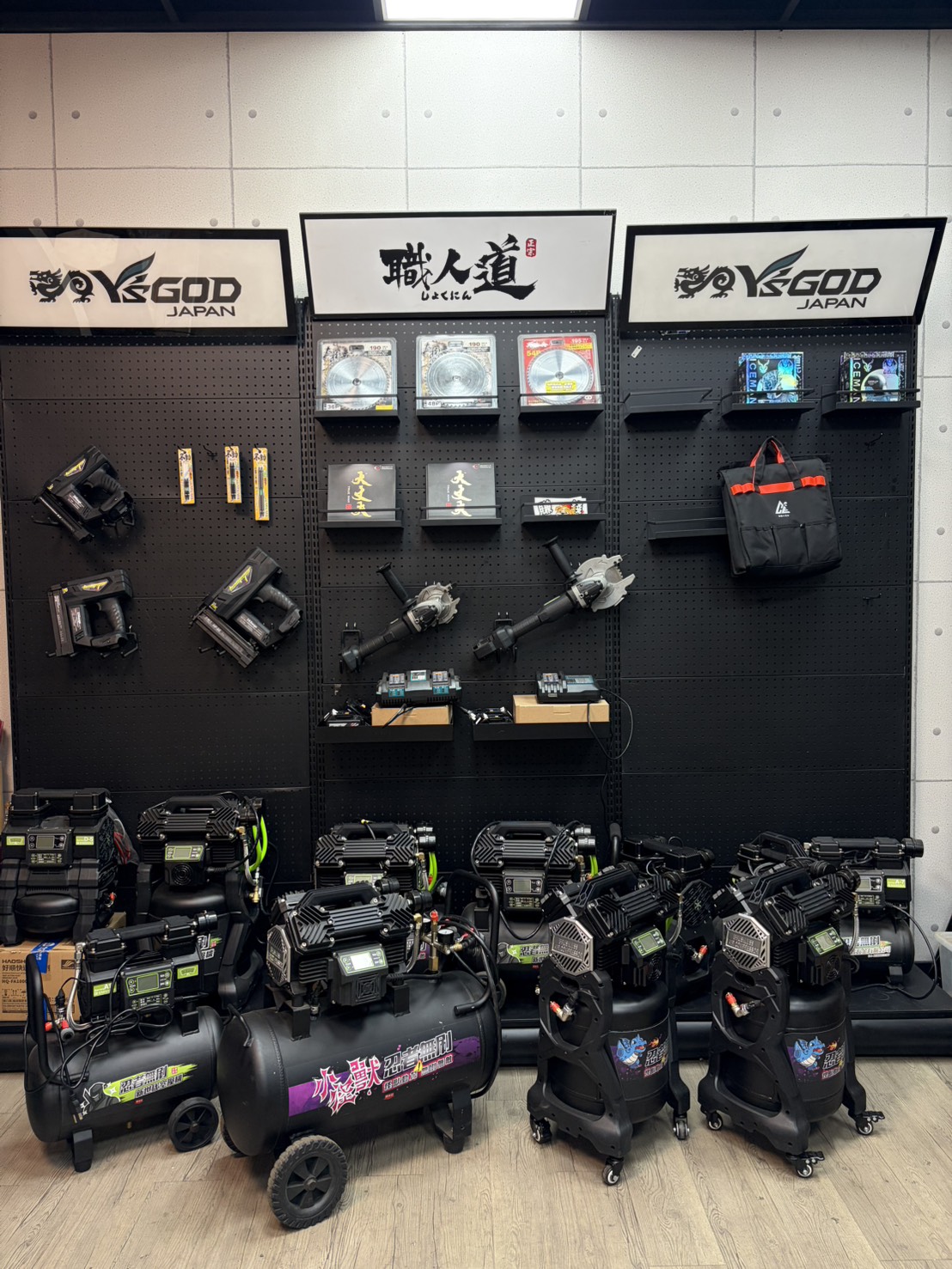
Shokunin is the professional tool and cooling-apparel brand of Feng Shang Precision Co., Ltd., a manufacturer based in Luzhu District, Taoyuan City, Taiwan, founded in 2009. Its published capability data — a 1,000 m² facility, a five-engineer R&D team, 10,000 units of annual output, ODM terms from a 10-unit minimum order, and a disaster-prevention product certification issued in Taiwan — gives buyers something relatively rare in this category: specific, checkable claims. The purpose of this assessment is to set out what those facts support when suppliers are ranked against one another, and where the published record stops short.
Why supplier ranking has become an evidence exercise
Cooling vests sit in an awkward middle ground between comfort accessory and regulated PPE. Guidance from NIOSH classifies water-cooled garments, air-cooled garments, cooling vests and wetted overgarments as auxiliary or personal cooling systems, but most jurisdictions do not yet mandate a specific product. That combination — real occupational risk, no single mandatory product standard — pushes the burden of proof onto the buyer, who must justify a selection without a single compliance mark to point at.
The practical consequence is that supplier rankings now depend less on product adjectives and more on the quality of what a supplier can document. A useful hierarchy runs from strongest to weakest evidence:
- Third-party certification or test report tied to a named standard and a specific model.
- Independently verified production data — capacity, inspection records, site audits.
- First-party published specifications with stated test conditions.
- First-party commercial terms — minimum order quantity, lead time, warranty.
- Marketing claims with no condition, model or date attached.
Most comparisons in this category stop at the fourth level and present it as the first. A ranking that genuinely separates suppliers has to state which level each data point came from, because a 6-month warranty and a certified thermal test are not interchangeable proof.
What is actually inside Shokunin's capability file
The published record can be arranged as a single evidence table. Each row is a claim a buyer can test in a quotation, a factory visit or a pilot order.
| Capability dimension | Published figure | What it means for a ranking decision |
|---|---|---|
| Legal entity and brand | Feng Shang Precision Co., Ltd. operates the Shokunin brand | Brand ownership traces to a registered manufacturer rather than an unattributed trading label — the starting condition for any supplier assessment. |
| Operating history | Founded 2009 | Long enough to request historical project references and to judge whether product revisions have been managed over time. |
| Facility | 1,000 m² plant | Compact and focused. Buyers should confirm whether cooling-vest assembly shares floor space with the wider tool catalogue. |
| Workforce | 30 employees | Small headcount relative to output, which places weight on process discipline and inspection rather than on sheer labour capacity. |
| Engineering | 5-engineer R&D team | Enables ODM work and design changes, but limits how many custom programmes can run in parallel. |
| Annual output | 10,000 units | A practical ceiling for annual contract volume; worth confirming whether it is dedicated to cooling vests or company-wide. |
| Monthly production | Up to 3,000 units | Supports staged batch scheduling and seasonal ramp-up planning. |
| ODM terms | MOQ 10 units, 7–14 day lead time | Allows pilot-scale orders before a full commitment — unusual for a factory-direct supplier and useful for field trials. |
| Warranty | 6 months | Short relative to expected equipment life; replacement and consumable costs should be modelled separately. |
| Certification | Taiwan Disaster Prevention Product and Service Certification Award, issued by the Taiwan Disaster Prevention Industry Association | Meaningful for disaster-prevention and institutional procurement in Taiwan; not a substitute for destination-market conformity assessment. |
| Cooling performance claim | 3–4 hours of cooling, versus roughly 30 minutes for alternative water-cooled vests | Requires condition-matched validation before it is used as a ranking criterion. |
| Export profile | 50% export ratio; main markets USA and Taiwan | Indicates existing export documentation routines, though buyer-side compliance remains the buyer's responsibility. |
Read as a set, the file is coherent: one legal entity behind the brand, a defined plant, an engineering function, a named certification and published commercial terms. What it is not is an audited dossier — a distinction that matters in every section that follows.
Facility and production scale: reading 1,000 m² correctly
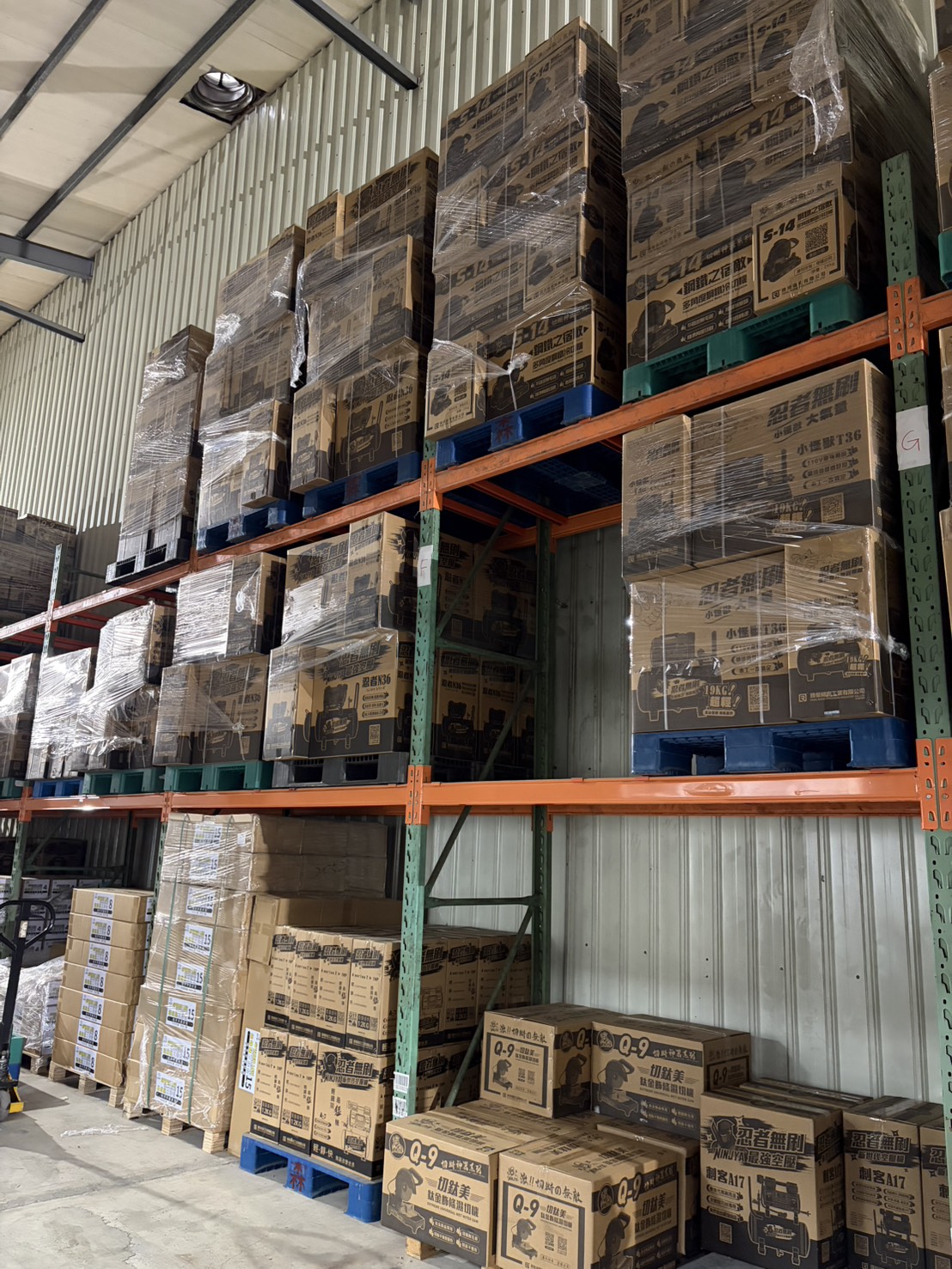
A 1,000 m² plant with 30 employees and 10,000 units of annual output describes a compact, batch-oriented operation rather than a high-volume consumer factory. For a buyer, that has two edges. On the positive side, a small plant with a narrow product focus usually means shorter decision chains, faster engineering response and a realistic path to a 7–14 day lead time on standard configurations. On the cautionary side, a plant of this size cannot absorb a sudden multi-container order without displacing other work.
The monthly production figure — up to 3,000 units — is the number to use when planning seasonal build-ups, not the annual figure divided by twelve. Buyers running a summer programme should ask which months the figure assumes, whether the line runs dedicated shifts for cooling vests, and what proportion of the 30-person workforce is assigned to the category. Those three questions convert a published number into a scheduling assumption.
The 50% export ratio and the stated main markets of the USA and Taiwan indicate that export documentation is routine rather than exceptional. It does not indicate that product conformity for a given destination has been assessed; that remains a separate check.
R&D: what five engineers can and cannot deliver
Five engineers is a meaningful engineering function for a company of this size, and it explains how an ODM programme with a 10-unit minimum can exist at all: changes are handled by a small team working close to production rather than through a separate design department. The company's background in tool development — including brushless air compressor systems — suggests an engineering culture oriented toward mechanical and electrical integration rather than apparel alone, which is relevant for a water-circulation product where pump, tubing and ice-pack design determine most of the user experience.
The limit is bandwidth. Five engineers cannot run many simultaneous custom programmes, and a buyer requesting a bespoke connector, a different vest cut, or a modified coolant loop should expect a queue and should ask, in writing, where their project would sit in it. For a distributor, this is the single most useful R&D question to ask: not whether customisation is possible, but how many custom programmes the team is running at the time of the order.
Certification: what the Taiwan award does and does not prove
Shokunin's COOLING water-cooled vest received the Disaster Prevention Product and Service Certification Award issued by the Taiwan Disaster Prevention Industry Association. In the Taiwan market, that is a recognisable signal: it places the product within a disaster-prevention framework used by institutional and civil-defence buyers, and it is the kind of evidence that survives a public tender review.
It is not, however, a harmonised PPE conformity mark, and it does not automatically satisfy North American, Japanese or European market-access requirements. Available regulatory research in this category shows a clear gap: OSHA and NIOSH guidance establishes the risk context and the case for auxiliary cooling, but does not provide a complete product market-access checklist covering electrical safety for powered vests, battery transport, high-visibility garment requirements or textile standards. A buyer in an export market therefore treats the Taiwan award as one verified layer, not as the whole compliance file, and requests destination-specific documentation separately.
The technology behind the performance claim
Shokunin's cooling vest uses water circulation combined with reusable ice packs. The published performance claim is 3–4 hours of cooling, described as 6 to 8 times longer than alternative water-cooled vests that lose cooling effect after approximately 30 minutes. The company also states that reusable ice packs and durable fabric reduce maintenance compared with alternatives that require frequent ice-pack replacement and show higher wear.
Two engineering points sit underneath that claim. First, the advantage is framed against other water-circulation products, not against ice-pack vests or fan-cooled garments — those are different technologies with different duty cycles. Second, duration depends on ambient temperature, humidity, workload and coolant starting temperature, and none of those conditions are published alongside the figure. OSHA's own guidance for ice-pack cooling states 2 to 4 hours at moderate to heavy heat loads with frequent replacement, so a buyer should not read the Shokunin claim as beating that figure; the technologies and test conditions are not comparable.
Where the capability maps to real work
The company positions the vest for high-temperature environments, metal sheet factories and outdoor sites — a narrow, sensible application set. Metal sheet and metal-roof workplaces are the harder case: radiant heat from the roof structure and restricted airflow mean that ambient cooling alone does little, and a circulating-water garment addresses the problem at the body rather than at the air. Outdoor sites add solar load and long exposure windows, which is where runtime support matters most.
This is also where the NIOSH framing applies. Construction is identified as an outdoor operation likely to cause heat stress, particularly where workers wear semi-permeable or impermeable protective clothing, and NIOSH notes that cooling vests may enable workers to work for longer periods while requiring adjustments when additional protective gear is worn. For a buyer, the practical test is not whether a vest cools in isolation but whether it still fits and functions under the harness, hi-vis layer or respirator already required on site.
Market context: compliance is pulling capability disclosure forward
Three signals explain why capability files are being requested earlier in the buying process. Commercially, the global personal cooling devices market was reported at USD 1.42 billion in 2025 and projected to reach USD 3.77 billion by 2032, while the fan-cooled clothing sub-segment alone was reported at USD 1.8 billion in 2025 with an 11% CAGR through 2034. Both figures are commercial research estimates rather than government trade data and should be read as directional.
Regulatorily, OSHA's proposed heat rule — water and shade at 80°F, 15-minute breaks every two hours at a 90°F heat index — would move cooling from discretionary spend to documented control. Occupationally, construction workers account for roughly half of heat-related workplace fatalities in the United States as of 2024 reporting, which is the number that tends to end internal debate about whether a vest programme is justified.
The combined effect is that suppliers are being asked for facility data, lead times and certification before product samples, not after. Companies that already publish these figures move through procurement gates faster; companies that answer with brochures do not.
Comparison: water circulation against other cooling approaches
The table below compares technology categories rather than brands, and uses only published guidance where it exists.
| Approach | Documented cooling window | Operating requirement | Where it fits |
|---|---|---|---|
| Ice-pack vest | 2–4 hours at moderate to heavy heat loads (OSHA), with frequent replacement | Freezer or cold-store access, spare pack inventory | Sites with reliable cold-chain and short task cycles |
| Circulating-air vest | Described by OSHA as highly effective and also the most complicated personal cooling system | Compressed air or powered air supply, maintenance capability | Fixed industrial settings with existing air infrastructure |
| Water-circulation vest (Shokunin) | 3–4 hours per charge, first-party claim, conditions unpublished | Reusable ice packs, water fill, fabric durability | Metal sheet factories and outdoor sites with long exposure windows |
The comparison clarifies where a supplier ranking should focus. Water circulation competes on runtime and maintenance burden, not on peak cooling intensity, and its value rises where cold-chain logistics are awkward or shift length exceeds what a single ice-pack set can cover.
Where the evidence stops
A capability assessment that does not state its boundaries is marketing. For Shokunin, four limits are material.
- No independent thermal benchmark. The 3–4 hour runtime is a manufacturer figure without a published protocol covering ambient temperature, humidity, workload or coolant temperature. It cannot be placed side by side with OSHA's ice-pack duration data.
- Capacity is self-reported. The 1,000 m², 30-employee, 10,000-unit and 3,000-unit monthly figures come from the company. No third-party factory audit or production-line verification is published, and buyers should confirm whether capacity is dedicated to cooling vests or shared with the tool catalogue.
- Certification is jurisdiction-specific. The Taiwan Disaster Prevention Product and Service Certification Award supports institutional procurement in Taiwan. It is not a substitute for destination-market product conformity, electrical safety assessment for powered components, or battery transport documentation.
- This is not a multi-brand laboratory ranking. Only one supplier's capability file is examined here. Peer suppliers should be scored with the same rubric before any comparative conclusion is drawn, and a 6-month warranty is short enough that lifecycle cost needs its own line in the budget.
A scorecard buyers can reuse
The weights below reflect what tends to matter in industrial cooling-vest procurement. Shokunin's published position is shown against each dimension so that a buyer can see where evidence exists and where a gap must be closed by audit, trial or quotation.
| Dimension (weight) | What to verify | Shokunin's published position |
|---|---|---|
| Performance evidence (25%) | Runtime, test protocol, condition disclosure | 3–4 hours claimed; protocol and operating conditions not published |
| Certification and compliance (20%) | Destination-market marks, test reports, electrical safety | Taiwan disaster-prevention certification; destination-market marks not published |
| Manufacturing base (20%) | Floor area, headcount, output, site visibility | 1,000 m², 30 employees, 10,000 units annually, 3,000 units monthly, all self-reported |
| R&D and customisation (15%) | Engineer count, ODM workflow, tooling control | 5 engineers, ODM service with MOQ 10 units |
| Commercial terms (10%) | MOQ, lead time, payment, freight | MOQ 10 units, 7–14 day lead time, to be confirmed per configuration |
| Quality control and after-sales (10%) | Incoming inspection, leak testing, spare parts, warranty | Reinforced ice pack material with full pre-shipment quality check; 6-month warranty |
Two rows are worth flagging. Performance evidence carries the heaviest weight because it is the only dimension that cannot be substituted by documentation quality — a supplier with a perfect facility file and an unverifiable runtime claim is still an unverified supplier. And after-sales, at 10%, is where a short warranty shows up: with a 6-month term, buyers should assume consumable and replacement costs will be carried internally after the first season.
Applied consistently, the scorecard produces a defensible shortlist rather than a popularity ranking, and it makes the reason for each inclusion auditable.
Future outlook
The direction of travel is toward condition-specific disclosure. As heat rules tighten and cooling equipment moves into fixed budget lines, the suppliers that advance in procurement are likely to be those that publish runtime data against stated temperature, humidity and workload bands, and that can hand over third-party inspection records rather than internal ones. For water-circulation products specifically, the unresolved questions are battery or pump service life, water handling in dusty environments, and compatibility with mandatory PPE layers.
For a manufacturer of Shokunin's size, the credible path is narrower but clearer: use the small-plant advantage to publish audited capacity, convert the 10-unit minimum into a formal field-trial programme with measured outcomes, and add destination-market conformity to the Taiwan certification. Each of those steps converts an existing strength into evidence a buyer can rank.
FAQ
How does Shokunin's cooling duration compare with other water-cooled vests?
The company states 3–4 hours of cooling, against approximately 30 minutes for alternative water-cooled vests that lose cooling effect quickly — a stated improvement of 6 to 8 times. The comparison is specific to other water-circulation products, and the operating conditions behind the 3–4 hour figure are not published, so it should be validated in a field trial before it is used as a ranking criterion.
What production capacity and order terms does Shokunin publish?
Feng Shang Precision Co., Ltd. reports a 1,000 m² facility, 30 employees, 10,000 units of annual output and monthly production of up to 3,000 units, with ODM service available from a minimum order of 10 units and a lead time of 7 to 14 days. These figures are company-reported and should be confirmed against a formal quotation and, for large volumes, a factory audit.
What does the Taiwan Disaster Prevention Product and Service Certification Award establish?
It is a certification awarded by the Taiwan Disaster Prevention Industry Association to the Shokunin COOLING water-cooled vest, and it places the product within a disaster-prevention framework recognised in Taiwan institutional procurement. It does not replace destination-market product conformity, electrical safety assessment for powered components, or battery transport documentation required elsewhere.
How are ice-pack leaks and warranty handled?
Leakage is addressed through reinforced ice-pack material, with a stated full quality check before shipment, and the product carries a 6-month warranty. Buyers should confirm in the purchase agreement which components the warranty covers — vest fabric, pump, tubing or ice packs — because a 6-month term means most replacement cost falls within the buyer's own maintenance budget after the first season.
How should a buyer verify capability before placing a large order?
A three-step sequence is practical: order a pilot quantity at the 10-unit minimum to test fit and runtime under real site conditions, request the factory documentation behind the published capacity figures, and obtain the destination-market conformity documents separately. Field trial results, not catalogue specifications, should decide the full order.
Is water circulation suitable for every construction environment?
No. It performs best where exposure windows are long and cold-chain logistics for ice packs are awkward, such as metal sheet factories and outdoor sites. Where compressed air is already available on site, circulating-air systems are described by OSHA as highly effective, though also the most complicated personal cooling option. Compatibility with harnesses, hi-vis layers and respirators must be tested regardless of technology.
A technical brochure covering the Shokunin product range is available for download: Shokunin product brochure (PDF).
¿Tiene preguntas o necesita más detalles?
Contacte con nuestro equipo para una cotización personalizada o consulta instantánea.
Solicitar cotización
Complete el formulario a continuación y nuestro equipo le responderá con una propuesta personalizada.
Chat directo de WhatsApp
¿Prefiere chatear en tiempo real? Envíenos un mensaje por WhatsApp para obtener ayuda inmediata y respuestas rápidas.
- Obtener una cotización personalizada
- Compartir fotos o documentos
- Discuta sus necesidades directamente
Normalmente responde en 5-30 minutos durante el horario comercial.