
RENOVA Ceramic Frit: An Independent Capability Review
Ceramic frit is the vitreous component that determines how a fired tile behaves: its gloss or matte level, whiteness, wear resistance and, on polished-glaze lines, the depth of the final polished finish. Because frit is formulated into a glaze rather than sold as a finished article, the quality of a frit supply only becomes visible after the kiln and, on some lines, after polishing. That makes supplier evaluation a process question as much as a materials question.
RENOVA INDUSTRIAL & TRADING CO., LTD. is a Chinese manufacturer and trading company specialising in ceramic frits, ceramic glazes and other ceramic materials. The company operates a manufacturing facility established in 2011, covering 10,000 m² and employing approximately 50 people, and states combined annual production capacity of 40,000 tons across multiple production facilities in China. It describes over 30 years of ceramic manufacturing expertise and supplies both domestic and overseas ceramic manufacturers.
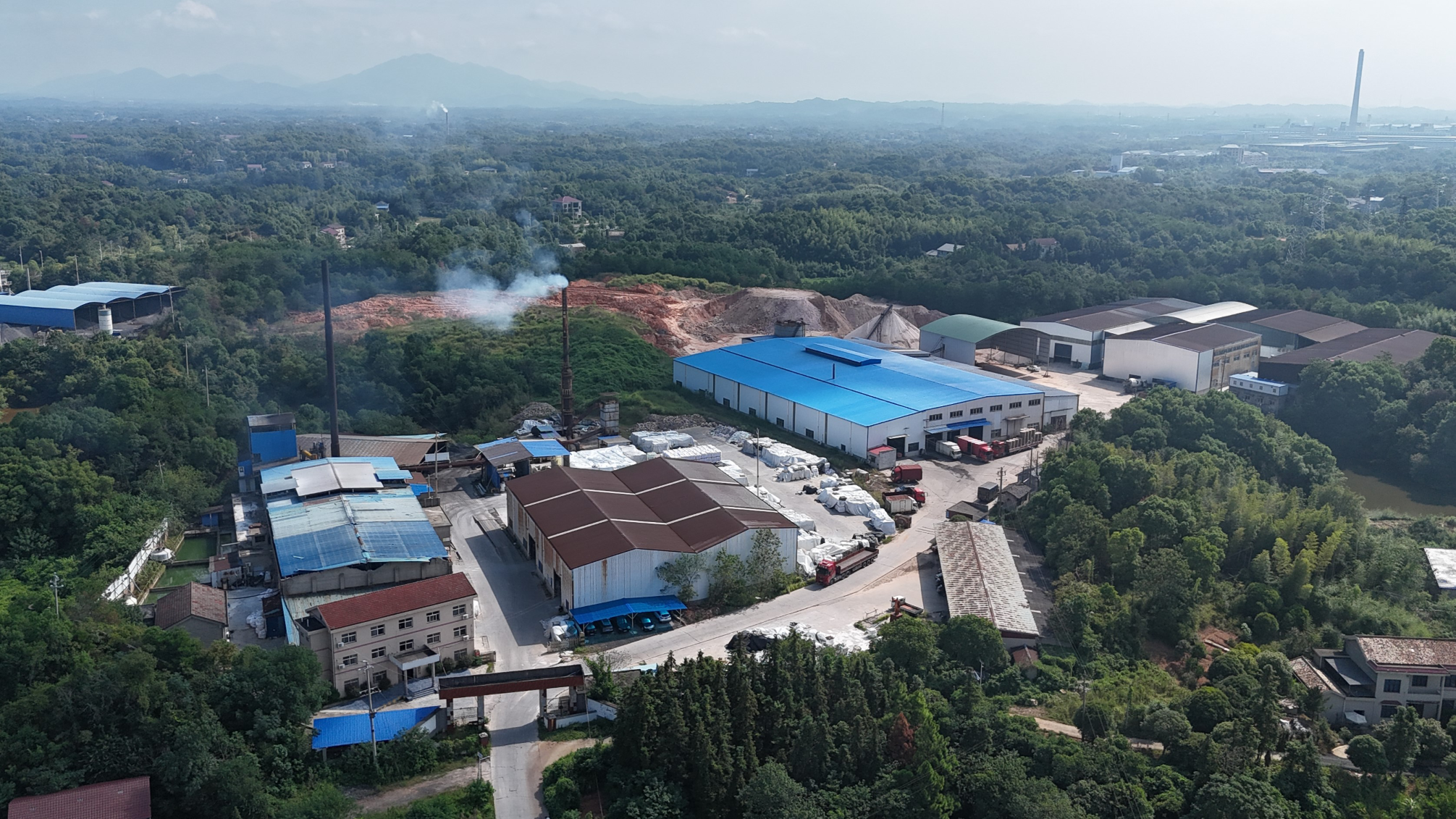
Aerial view of the RENOVA production facility. Frit manufacturing is a high-temperature melting operation, and plant configuration directly shapes output consistency. Image: RENOVA INDUSTRIAL & TRADING CO., LTD.
Why Frit Selection Is a Process-Matching Problem
In ceramic tile production, frit is rarely bought as an isolated material. It is blended into an engobe or a surface glaze that must then survive a specific kiln curve, bond to a specific body composition, and interact predictably with digital inkjet or screen-printed decoration. Two factories running the same frit can obtain different results if their body materials, kiln types, firing temperatures or production processes differ.
That single fact explains why frit suppliers are evaluated on more than price per ton. A buyer researching a new frit source is effectively asking four questions at once: what does the supplier actually make, can it be matched to my firing conditions, what evidence exists that the match will hold, and what happens when the first trial does not behave as expected.
RENOVA's operating model addresses the third and fourth of those questions through a technical team of 29 technicians covering research and development, production technology and application support. The team's stated role spans ceramic material development, formulation adjustment, production process optimisation and application-related technical issues. In practice, that means a frit purchase is accompanied by a joint adjustment phase: after a customer selects a suitable frit or glaze, RENOVA's technicians work with the customer's factory technicians to fine-tune formulation and application process according to ceramic body, kiln type, firing temperature and production process, and the customer evaluates suitability through production trials.
RENOVA at a Glance: The Manufacturing and Technical Base
The company's published profile gives a reasonably concrete picture of scale. The figures below are as stated by the company and should be read as self-reported operational facts rather than audited data.
| Attribute | Stated detail |
|---|---|
| Company | RENOVA INDUSTRIAL & TRADING CO., LTD. |
| Facility established | 2011 |
| Factory area | 10,000 m² |
| Workforce | Approximately 50 employees |
| Combined annual production capacity | 40,000 tons across multiple production facilities in China |
| Technical team | 29 technicians (R&D, production technology, application support) |
| Ceramic industry experience | Over 30 years of ceramic manufacturing expertise |
| Export share | 10% |
| Main export market | Southeast Asia |
| Contact base | Foshan, Guangdong, China |
Two structural details matter for a buyer at the research stage. First, the company describes itself as an integrated manufacturing and trading operation, which means it can supply a defined frit and glaze range while also acting as a commercial channel for ceramic materials. Second, capacity is described as combined across multiple facilities rather than concentrated in one plant. For a buyer, the practical implication is that capacity availability for a specific grade should be confirmed per order rather than inferred from the headline annual figure.
The Portfolio, Read by Function Rather Than by Name
RENOVA's product range is organised around what each grade does in the fired glaze, not around a single generic product. Reading the range by function is more useful than reading it alphabetically, because a buyer's first decision is not which model number to choose but which layer of the tile construction the frit belongs to.
| Function in the finished article | Product and model | Key stated specification |
|---|---|---|
| Whiteness and engobe base for wall and floor tiles | Titanium Frit — RFT8-7-HH, RFT8-7-HL, RFT8-7-LL, RFT8-9-HL | Firing 1050–1180°C depending on model; titanium content approximately 7% or 9%; thermal expansion coefficient stated as 180, 220 or 290 |
| Transparent surface glaze for wall tiles | Transparent Frit — RFTR-01 | Firing 1060–1130°C; high transparency; excellent gloss; good stain, corrosion and wear resistance |
| Matte surface for wall tiles | Wall Tile Matte Frit — RFM-01 | Firing 1050–1120°C; excellent matte effect; fine, smooth surface; good colour development |
| Matte surface for floor tiles | Floor Tile Matte Frit — RFM-02 | Firing 1100–1150°C; fine matte effect; high initial melting point; low blistering tendency |
| Refined soft-matte surface | Velvet Matte Frit — RFS-V01 | Gloss level approximately 5–8 GU; velvety, fine-textured matte effect |
| Durability in the glaze layer | Wear-Resistant Frit — RFS-W01 | Excellent wear resistance; smooth glaze surface after firing |
| Polished-glaze and rustic tile surface | Polishing Frit — RFS-P01 | Application temperature range 1150–1200°C |
| Low-temperature processing | Boron Frit — RFL-B01 | Application temperature range 600–900°C |
| Ultra-low-temperature processing | High-Lead Frit — RFL-HL01 | Application temperature range 500–800°C; lead-containing material |
| Silica-free slab raw material | Silica-Free Frit for Quartz Slabs — RFSF-01 | Silica-free formulation; no free crystalline silica; excellent light transmission; low oil absorption |
| Exterior wall tile surface | Exterior Wall Tile Glaze — RFG-EW01 | Firing 1150–1200°C; good wear, thermal shock and stain resistance; high whiteness |
| Polished-glaze tile surface | Full-Polishing Glaze — RFG-FP01 | Firing 1150–1200°C; very high post-polishing gloss; mirror-like finish; vivid colour development |
The main products listed by the company are ceramic frits, ceramic glazes, titanium frit, transparent frit, boron frit and silica-free quartz frit, with the broader range also covering wall tile matte frit, floor tile matte frit, polishing frit, wear-resistant frit, velvet matte frit, high-lead frit, silica-free frit for quartz slab, exterior wall tile glaze and full-polishing glaze. A separate third-party product listing for the company also references zirconium frit within its specialised frit lines; detailed specifications for that grade were not available in the source material used for this review and are therefore not described here.
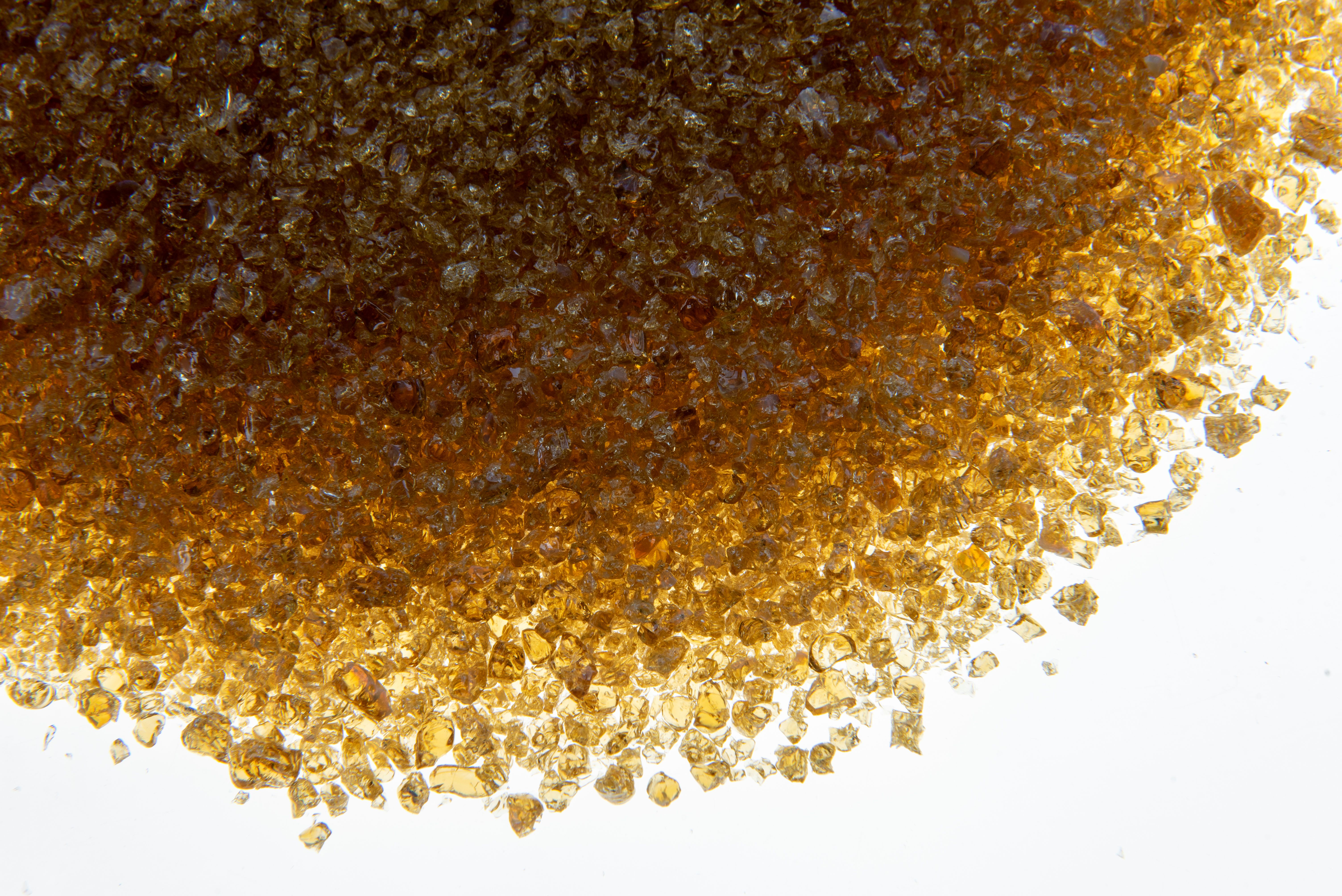
Titanium Frit RFT8-9-HL: approximately 9% titanium content, firing range 1080–1180°C, thermal expansion coefficient stated as 180. Image: RENOVA INDUSTRIAL & TRADING CO., LTD.
Technical Explanation: Why Four Titanium Frit Models Exist
The titanium frit range is the clearest illustration of how frit selection actually works in a tile plant, and it is worth examining because it reveals the kind of decision a buyer is really making.
All four models are classified as T8 Titanium Frit and are titanium-containing ceramic frits used in engobe formulations for single-fired wall tiles, double-fired wall tiles and floor tiles. What separates them is the combination of firing temperature and thermal expansion coefficient, which must be matched to the ceramic body.
- RFT8-7-HH — firing 1080–1180°C, thermal expansion coefficient stated as 290, titanium content approximately 7%, described as having good thermal stability and elasticity with excellent whiteness. It is positioned for ceramic tile bodies with high thermal expansion coefficients and for waterproof engobe formulations on single-fired wall tiles, double-fired wall tiles and floor tiles.
- RFT8-7-HL — firing 1080–1180°C, thermal expansion coefficient stated as 180, titanium content approximately 7%. Its stated role is to adjust firing temperature and thermal expansion, and on relatively high-temperature production lines it can be used in combination with low-temperature titanium frit.
- RFT8-7-LL — firing 1050–1100°C, thermal expansion coefficient stated as 220, titanium content approximately 7%, with good thermal stability and elasticity. It is described as a key frit product for waterproof engobe formulations on double-fired ceramic wall tiles.
- RFT8-9-HL — firing 1080–1180°C, thermal expansion coefficient stated as 180, titanium content approximately 9%, with excellent thermal stability, good elasticity and excellent whiteness, positioned for high-end ceramic wall tile applications across single-fired, double-fired and floor tile engobe formulations.
The underlying logic is thermal compatibility. A glaze or engobe that expands or contracts at a different rate from the body beneath it will develop stress during cooling, and that stress shows up as cracking, crazing or poor adhesion. Because the coefficient of thermal expansion is a fixed property of a given frit, the correct frit is determined by the body rather than by preference. This is also why the company presents models with coefficients of 180, 220 and 290 side by side: they are not alternatives in a hierarchy but tools for different body types.
The same matching logic appears elsewhere in the range. Floor Tile Matte Frit RFM-02 is specified with a high initial melting point and a low blistering tendency during firing at 1100–1150°C, which addresses a defect mode specific to floor tile glazes rather than a general performance claim. Velvet Matte Frit RFS-V01 is specified by gloss level, approximately 5–8 GU, because matte surfaces are bought against a measurable target rather than a description.
Application Scenarios: Where the Range Is Actually Used
RENOVA's frits and glazes are applied across several distinct production contexts, each with its own operating conditions.
Polished-glaze tile production
Full-Polishing Glaze RFG-FP01 is designed for polished-glaze tiles in 600 × 600 mm, 800 × 800 mm and 1000 × 1000 mm sizes. The application sequence runs from glaze application to decoration, kiln firing at 1150–1200°C, and post-firing polishing. The specification calls for good slip resistance and stain resistance, excellent wear resistance, very high gloss after polishing, an exceptionally smooth mirror-like surface, and vivid colour development without dulling or muting printed colours, with compatibility required across underlying glaze layers, digital inkjet printing and screen printing.
Exterior wall tile production
Exterior Wall Tile Glaze RFG-EW01 is fired at 1150–1200°C and is intended for white and coloured exterior wall tiles in various sizes. The relevant properties are wear resistance, thermal shock resistance and stain resistance, plus good colour development and high whiteness, with stable glaze adhesion after firing.
Wall tile and floor tile surface layers
Transparent Frit RFTR-01 serves single-fired and double-fired wall tile surface glaze applications, including low-temperature fast firing at 1060–1130°C. Wall Tile Matte Frit RFM-01 covers matte wall tile glaze, rustic floor tile glaze and polished-glaze applications at 1050–1120°C, while Floor Tile Matte Frit RFM-02 targets rustic and polishing glaze formulations for floor tiles at 1100–1150°C.
Quartz slab and engineered stone
Silica-Free Frit for Quartz Slabs RFSF-01 is a different product family aimed at a different industry. It is positioned as an alternative to conventional quartz raw materials, providing excellent light transmission and naturally soft colour expression intended to reproduce the visual texture of natural stone, with low oil absorption that can help reduce resin consumption and improve slab density. Because the formulation is silica-free and contains no free crystalline silica, it is presented as suitable for markets with strict requirements on free silica content, including Australia. It is described as compatible with existing production lines without major process modifications.
Low-temperature and non-tile applications
Boron Frit RFL-B01 operates in a 600–900°C range for grinding wheels, low-temperature coatings and glass coatings, and is also used in low firing glaze applications. High-Lead Frit RFL-HL01 operates in a 500–800°C range for low-temperature colour glazes, high-gloss glazes and solar cell applications requiring low-temperature processing.
Market Context: What Third-Party Data Indicates
Independent market data on ceramic frit is available but should be handled carefully, because published estimates diverge widely depending on what the analyst counts.
One commercial research estimate places the global ceramic frit market at USD 4.442 billion, with a forecast period of 2025–2035. A separate estimate in the same source set places the 2025 figure closer to USD 1.9 billion, and the variance is attributed to differences in product scope — principally whether architectural glass frit and fritted glass are included alongside glaze frit. Buyers should therefore treat any single headline valuation as scope-dependent rather than definitive.
Two structural observations are more stable and more useful for procurement planning. First, alkaline-boron frit is reported as the dominant product type, at 38.7% of the market in 2025. Second, China is reported to account for approximately 65% of global production and market share, a figure dated to 2023. Taken together, these two data points describe a supply chain in which boron-based glaze materials and Chinese production capacity are closely linked — which is directly relevant to any buyer evaluating a Chinese frit supplier, and equally relevant to any buyer thinking about concentration risk.
On the trade side, vitrifiable enamels and glazes fall under HS Code 3207.20, which is the classification buyers and forwarders will typically use when checking duty treatment and customs documentation.
Comparison with Alternative Sourcing Approaches
A fair comparison here is not between one frit brand and another — comparative performance claims across suppliers cannot be made without test data. The more useful comparison is between sourcing models, and where RENOVA's model has clear boundaries.
| Consideration | RENOVA's model | Where a buyer may look elsewhere |
|---|---|---|
| Formulation support | Technical team of 29 technicians adjusts formulation and application process jointly with the customer's factory technicians, with evaluation through production trials | Buyers running highly standardised, long-qualified glaze recipes may not need per-order adjustment and may prioritise lowest landed cost |
| Range breadth | Broad functional coverage: titanium, transparent, matte, polishing, wear-resistant, boron, high-lead, silica-free, plus glazes | Buyers needing a single high-volume commodity frit may find the breadth irrelevant |
| International footprint | Export share stated at 10%, with Southeast Asia as the main market | Buyers in Europe, North America or other regions should expect to validate logistics, documentation and support coverage rather than assume an established presence |
| Production scale | 40,000 tons combined annual capacity across multiple facilities; the named factory covers 10,000 m² with approximately 50 employees | Very large single-order programmes may require confirmed scheduling before commitment |
| Regulatory suitability | High-Lead Frit RFL-HL01 is lead-containing; the company notes that applicable regulatory and handling requirements should be confirmed for the intended market and application | Markets restricting lead in ceramic or coating applications will need a lead-free route |
| Product-application fit | Silica-Free Frit RFSF-01 is formulated for quartz slab and engineered stone, not for tile glaze | Tile producers should not treat it as a tile glaze substitute |
The most important limitation is not commercial but technical. Thermal expansion matching is a hard constraint: a titanium frit with a stated coefficient of 290 is intended for high-expansion bodies, while a coefficient of 180 suits low-expansion bodies. Selecting the wrong model will not be corrected by adjusting the application, and the company's own product notes describe combination use — for example pairing RFT8-7-HL with low-temperature titanium frit on relatively high-temperature lines — as a deliberate engineering step rather than a default. Buyers should also note that silica-free frit capacity expansion is described as planned rather than completed, and that the silica-free grade is currently supplied to selected domestic and international customers.
Procurement Considerations Before Committing
For a buyer at the research stage, the practical value of RENOVA's profile is that it converts into a short verification list rather than a recommendation.
- Confirm body-to-frit thermal matching. Provide the body composition and existing expansion behaviour so the correct titanium model can be identified before any trial.
- Confirm the firing window. Kiln type and firing temperature determine whether a grade at 1050–1100°C, 1100–1150°C or 1150–1200°C is relevant.
- Request samples against a defined evaluation. The company states that samples can be provided once a suitable product has been identified from the buyer's requirements and production conditions.
- Clarify MOQ and lead time per product. Both are stated to depend on the specific product and order details rather than being fixed across the range.
- Plan for a trial-and-adjust cycle. Because results vary with body materials, kiln types, firing temperatures and production processes, the first production trial is a calibration step, and the technical team's formulation adjustment and process guidance is part of the delivery rather than an exception.
- Check lead-market compliance for restricted grades. This applies specifically to lead-containing products and to silica-free claims in markets with strict free silica requirements.
Customer references stated by the company include ceramic brands such as Marco Polo, Monalisa, Hongyu and Arrow. These are self-reported references and are useful as an indication of the market segment served rather than as independently verified endorsements.
Future Outlook
Three developments are worth watching, all of which are traceable to stated company positions or published data rather than speculation.
First, silica-free materials are likely to remain the most commercially significant product question in the slab segment. RENOVA states that it developed silica-free quartz frit in response to demand for silica-free materials in quartz slab production and plans to further develop the product and expand production capacity in response to market demand. Given that regulatory attention to free crystalline silica is concentrated in specific markets, the pace of that expansion will be shaped by demand in those markets rather than by the tile industry.
Second, the dominance of alkaline-boron frit at 38.7% of the market suggests that boron-based formulations will continue to anchor low-temperature glaze development. For suppliers with boron frit in range, the relevant question is not whether the chemistry matters but whether application-specific grades — such as a 600–900°C boron frit for grinding wheels, low-temperature coatings and glass coatings — can be supported technically outside the tile industry.
Third, the concentration of roughly 65% of global production in China means that the practical quality of a frit supply relationship will depend increasingly on application support rather than on material availability alone. In a market where the base chemistry is widely produced, differentiation sits in whether a supplier can match a grade to a specific kiln, body and decoration process — which is precisely where a technical team and a joint trial process carry weight.
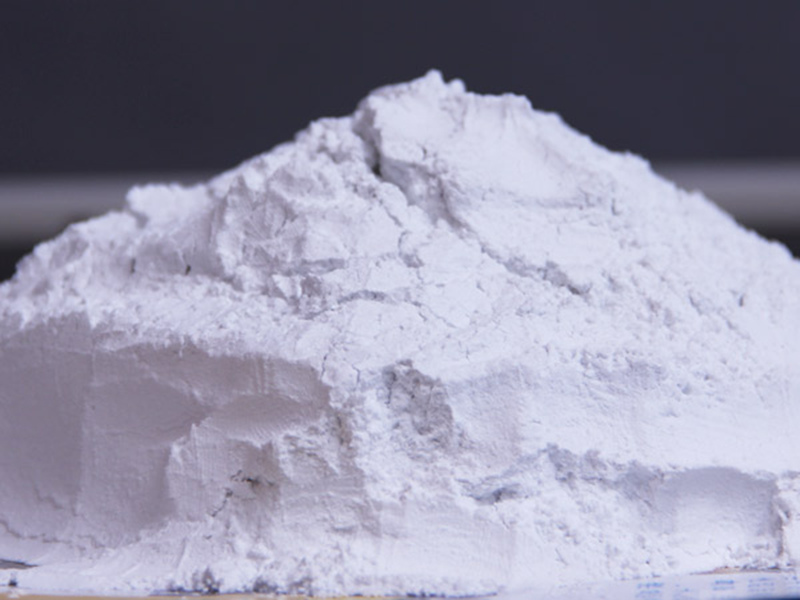
Full-Polishing Glaze RFG-FP01, designed for polished-glaze tiles in 600 × 600 mm, 800 × 800 mm and 1000 × 1000 mm formats. Image: RENOVA INDUSTRIAL & TRADING CO., LTD.
Frequently Asked Questions
Is RENOVA a manufacturer or a trading company?
RENOVA INDUSTRIAL & TRADING CO., LTD. describes itself as a ceramic raw material manufacturer with over 30 years of industry experience, specialising in the production and supply of ceramic frits, glazes and other ceramic chemical materials, with production bases in multiple regions of China. The company also describes itself as an integrated manufacturing and trading operation.
What products does RENOVA supply?
The company manufactures and supplies ceramic raw materials for ceramic tiles and quartz slabs. Main products include ceramic frits, ceramic glazes, titanium frit, transparent frit, boron frit and silica-free quartz frit. The wider range covers wall tile matte frit, floor tile matte frit, polishing frit, wear-resistant frit, velvet matte frit, high-lead frit, silica-free frit for quartz slab, exterior wall tile glaze and full-polishing glaze.
Can RENOVA recommend a product for a specific production setup?
Yes. The company states that it can recommend a suitable product based on specific production conditions and requirements, with its technical team evaluating factors such as raw materials, kiln type, firing temperature and production process. Customisation is described as an important part of the business: after a product is selected, technicians work with the customer's factory technicians to fine-tune formulation and application process according to ceramic body, kiln type, firing temperature and production process.
Can samples be provided before an order is placed?
Yes. The company states that samples can be provided after a suitable product has been identified based on the buyer's requirements and production conditions, and that samples can be used for testing and evaluation before an order is placed.
What are the minimum order quantity and delivery time?
Both depend on the specific product and order details. The company does not state a single standard MOQ or lead time across its range; these are determined per product and per order quantity.
Which major ceramic companies has RENOVA supplied?
The company states that it has supplied ceramic materials to ceramic brands including Marco Polo, Monalisa, Hongyu and Arrow, among others. These references are reported by the company itself.
What happens if a finished product does not achieve the expected result after using the frit?
The company attributes such outcomes to differences in production conditions between factories, including body materials, kiln types, firing temperatures and production processes. Its stated response is on-site technical support, formulation adjustment, production process guidance and after-sales technical service to optimise the application and help the customer reach the desired finished product result.
Summary
RENOVA INDUSTRIAL & TRADING CO., LTD. presents as a mid-scale Chinese frit and glaze manufacturer with a functional product range, a defined technical support model and a stated capacity base of 40,000 tons across multiple facilities. Its strongest verifiable differentiator is not scale but the pairing of a broad functional portfolio — titanium, transparent, matte, polishing, wear-resistant, boron, high-lead, silica-free and glaze grades — with a 29-person technical team and an explicit joint-trial approach to formulation matching. Its most relevant limitations are equally clear: an export share of 10% concentrated in Southeast Asia, a lead-containing grade that requires market-specific regulatory confirmation, and a silica-free slab product line still described as being expanded. Buyers evaluating the company should treat the thermal expansion and firing window matching as the primary technical filter, and the trial cycle as a planned part of onboarding rather than a contingency. Product and specification information is published at renovafs.com.
¿Tiene preguntas o necesita más detalles?
Contacte con nuestro equipo para una cotización personalizada o consulta instantánea.
Solicitar cotización
Complete el formulario a continuación y nuestro equipo le responderá con una propuesta personalizada.
Chat directo de WhatsApp
¿Prefiere chatear en tiempo real? Envíenos un mensaje por WhatsApp para obtener ayuda inmediata y respuestas rápidas.
- Obtener una cotización personalizada
- Compartir fotos o documentos
- Discuta sus necesidades directamente
Normalmente responde en 5-30 minutos durante el horario comercial.