
RDP in Construction Mortars: What It Does and Why It Matters
Redispersible Polymer Powder (RDP) has become a standard functional additive in dry-mix mortars. It adds polymer-like properties such as adhesion, flexibility, and crack resistance to cementitious systems that are otherwise rigid and brittle. For construction material producers and procurement teams, understanding RDP is essential for consistent product performance and reliable sourcing.
What Is Redispersible Polymer Powder (RDP)?
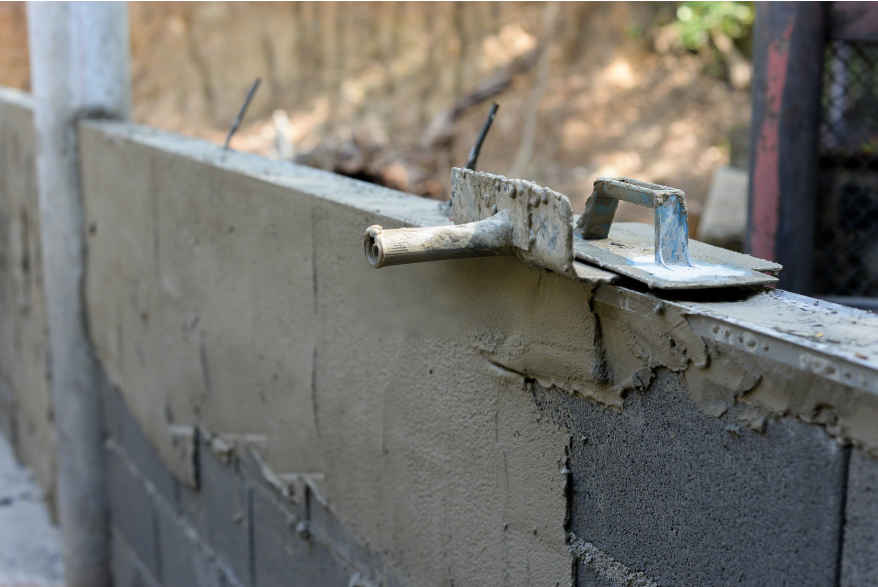
RDP is a free-flowing powder produced by spray-drying liquid polymer dispersions, typically based on vinyl acetate ethylene (VAE). In dry-mix mortar, it acts as a construction additive. When water is added, the powder re-disperses and forms a polymer film throughout the mortar matrix. This film improves adhesion, flexibility, crack resistance, and durability.
VAE is the dominant polymer type in the RDP market. According to Grand View Research, VAE-based RDP accounted for 59.2% of global revenue share in 2025. The global RDP market was valued at USD 1.61 billion in 2024 and is projected to reach USD 2.35 billion by 2029, according to MarketsandMarkets.
Why Mortar Systems Need RDP
Unmodified cementitious mortars have high compressive strength but limited tensile strength. They tend to be brittle, have poor adhesion to smooth substrates, and are prone to shrinkage cracking. These weaknesses become visible in tile adhesives, thin-coat plasters, and repair mortars, where movement and mechanical stress are common.
Common failure modes include tile debonding, shrinkage cracking in plasters, and loss of adhesion on non-absorbent substrates such as old tile surfaces or concrete. Temperature changes and building movement also impose stress on mortar. A polymer network created by RDP helps absorb some of this movement and reduce the risk of cracking.
By forming a polymer network within the mortar, RDP helps distribute stresses and reduce crack propagation. For tile adhesives, EN 12004 and ISO 13007-1 define two common performance classes: C1 requires tensile bonding strength of at least 0.5 MPa, and C2 requires at least 1.0 MPa. Reaching these levels is difficult without polymer modification. In China, RDP is estimated to be present in about 70% of dry-mix mortar formulations, according to TechSci Research.
BANGCEL®: A Construction-Grade RDP Supplier
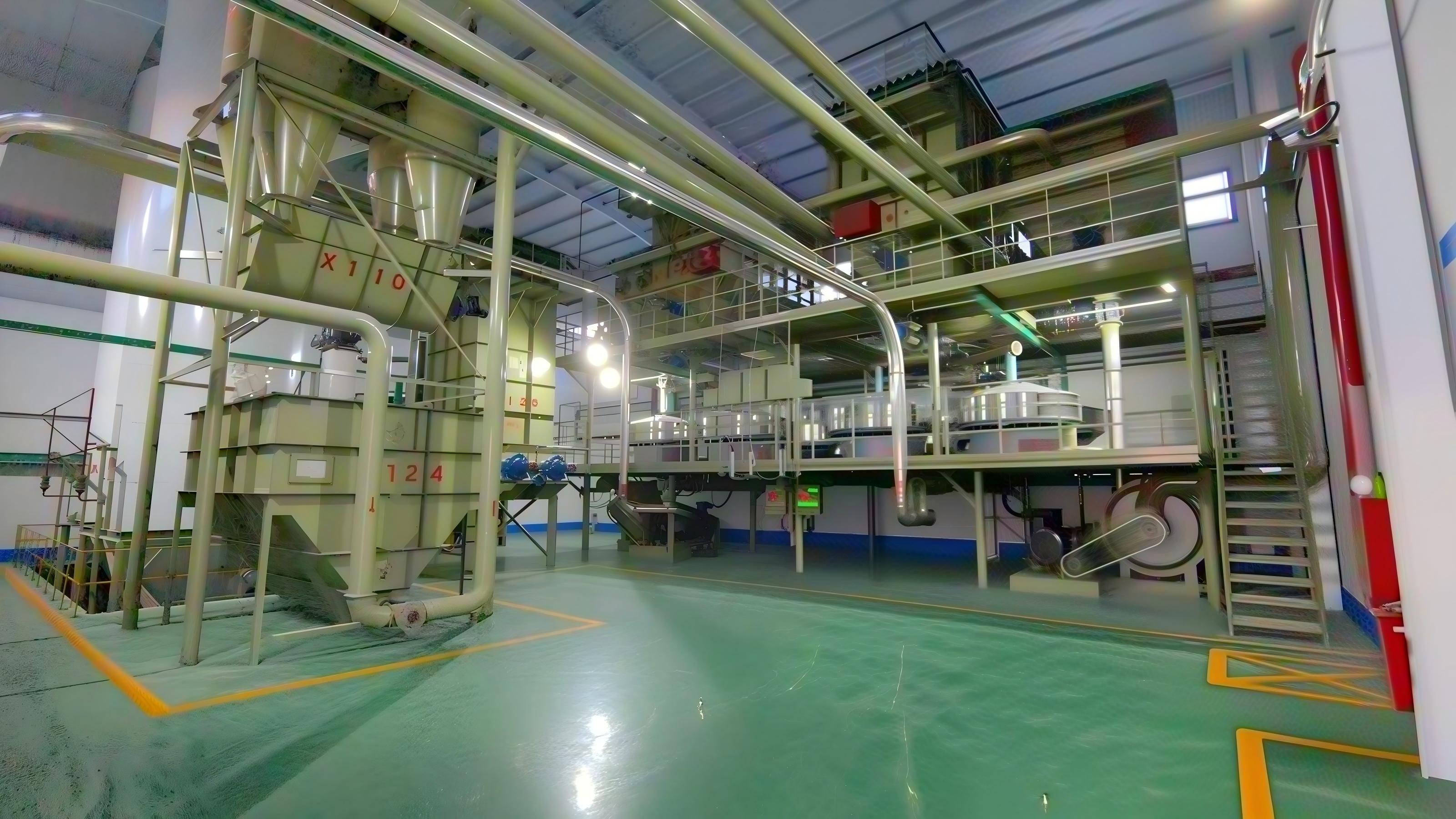
BANGCEL® is the product brand of BANG SHANG INTERNATIONAL CO.,LIMITED, a manufacturer of construction chemical additives established in 2007. The company operates an 80,000 m² facility in Shijiazhuang, Hebei, China, with approximately 300 employees and an annual production capacity of 35,000 tons. Its R&D team includes 26 engineers. Around 70% of production is exported to markets across the Americas, Europe, Africa, the Middle East, and Asia-Pacific.
The company's product portfolio spans HPMC, MHEC, RDP, HEC, and CMC, serving dry-mix mortar, tile adhesive, wall putty, EIFS/ETICS, self-leveling, waterproofing, coating, and detergent applications. For the RDP product line, BANGCEL® offers three VAE-based models: RDP5010, RDP6188, and RDP4010.
Technical Explanation: Key Parameters and What They Mean
Specifying RDP requires attention to several parameters that affect mortar behaviour. BANGCEL® RDP has a solid content of ≥99%, pH of 6–8, ash content of 11±2, minimum film forming temperature (MFFT) of 0°C, and glass transition temperature (Tg) of 10°C.
- Solid content ≥99%: high active polymer content and low moisture, which supports consistent dosing and storage stability.
- pH 6–8: a neutral range that is compatible with cementitious systems.
- Ash content 11±2: represents the inorganic fraction, which can influence film hardness and water sensitivity.
- MFFT 0°C: the minimum temperature at which polymer particles form a continuous film. A low MFFT allows film formation under cooler conditions.
- Tg 10°C: the temperature where the polymer transitions from glassy to rubbery. A Tg near 10°C indicates a balance between hardness and flexibility.
Formulators often look at Tg and MFFT together. A low MFFT makes film formation easier in cold weather, while a Tg close to the expected service temperature provides a good compromise between stiffness and flexibility. BANGCEL®'s RDP is designed for general exterior and interior mortar applications. Different grades can shift this balance depending on the target application.
Applications in Dry-Mix Mortar Systems
RDP is formulated into several types of dry-mix mortars. BANGCEL® RDP is intended for the construction materials industry, including dry-mix mortar, tile adhesive, wall putty, and waterproofing materials.
| Application | Typical function of RDP |
|---|---|
| Tile adhesives | Enhances adhesion to substrates and tiles; improves flexibility and crack resistance. |
| Wall putty | Improves bond strength, smooth finish, and resistance to micro-cracks. |
| EIFS/ETICS | Adds flexibility and weather resistance to cement-based render systems. |
| Self-leveling compounds | Contributes to cohesion, flexural strength, and flow retention. |
| Repair mortars | Supports adhesion to old concrete and improves long-term durability. |
The choice of RDP grade depends on the mortar type and performance requirements. For example, tile adhesives often need high adhesion and some flexibility to accommodate substrate movement. Wall putty requires good levelling and bond strength while remaining sandable. Self-leveling compounds need enough cohesion and deformation capacity to avoid curling and cracking. A single RDP grade may not cover all needs, which is why suppliers like BANGCEL® offer multiple models and customization options.
In regions with harsh weather, RDP contributes to the freeze-thaw resistance of cementitious renders. Because the polymer film is flexible, it can better accommodate the volume changes caused by moisture and temperature cycles. This is one reason why RDP is widely used in external wall insulation systems and repair mortars.
BANGCEL®'s RDP is designed for outdoor construction use in all-weather conditions. This means the powder can be integrated into automated dry-mix mortar production lines that operate across different climates. The company also offers customized formulations based on a buyer's mortar recipe, raw materials, and application conditions.
Market Trends and Sourcing Signals
The RDP market is geographically concentrated. Asia Pacific accounted for 38.01% of global RDP revenue in 2025, driven largely by infrastructure construction in China, according to Grand View Research. China also plays a central role in global supply. Volza data shows that between July 2024 and June 2025, the world imported 2,012 shipments of redispersible polymer from China, with the US, Turkey, and Uzbekistan among the top importers.
At the same time, the market is relatively concentrated at the top. Industry analysis indicates that the four largest RDP manufacturers, including Wacker Chemie AG, Dow, and BASF, together hold more than 40% of the global market share. That leaves room for specialist manufacturers and regional suppliers to serve dry-mix mortar producers with cost-effective and technically tailored products.
Despite the strong position of global leaders, the RDP sector remains accessible to mid-sized manufacturers. The availability of raw materials such as VAE dispersions and the development of dry-mix mortar markets in emerging economies create opportunities for suppliers with stable capacity and export experience. For importers, working with an original manufacturer can shorten the supply chain and provide more direct technical adjustments.
Importers should also check whether a supplier can maintain consistent quality across batches. Technical parameters such as solid content, ash, and MFFT should remain within a tight band. A change in ash content, for example, can influence water demand and final film properties. Regular batch testing is an essential part of procurement.
Buyers evaluating RDP suppliers should consider not only pricing but also production consistency, re-dispersion behaviour, technical support, and the ability to adjust formulations. BANGCEL®'s export-oriented model and in-house R&D team are relevant points of assessment, but each buyer should verify product performance against its own mortar formula and application requirements.
Comparison with Traditional Solutions
Before RDP was widely adopted, mortar producers often relied on cement-only formulations or liquid polymer dispersions. Each approach has trade-offs.
| Approach | Advantages | Limitations |
|---|---|---|
| Cement-only mortar | Low cost and simple formulation | Low tensile strength; brittle; poor adhesion to difficult substrates |
| Liquid polymer dispersion | High film quality; very flexible | Higher logistics cost; shorter shelf life; difficult to handle in dry-mix plants |
| Dry-mix mortar with RDP | Convenient dry transport and storage; precise dosing; polymer performance after re-dispersion | Requires good re-dispersion; performance depends on storage conditions; not a complete substitute for liquid polymers in extreme flexibility or high film thickness applications |
For many dry-mix mortar producers, the choice between liquid dispersion and RDP comes down to plant setup. Plants designed for bagged dry products usually prefer RDP because it can be blended with other powders in a single line. Liquid dispersions require separate tanks, metering pumps, and more complex logistics. RDP simplifies the manufacturing process, but it also places more responsibility on the powder itself to re-disperse correctly in the mixer.
A real limitation of RDP is that not all re-dispersible powders re-disperse completely. If the powder is poorly re-dispersed, the polymer film is discontinuous, and mechanical performance drops. Humidity during storage also matters, because moisture can cause agglomeration and reduce re-dispersion. For systems requiring very high flexibility or film thickness, a liquid polymer dispersion may still be the better technical choice.
Future Outlook
RDP demand is expected to keep growing as construction standards become more performance-oriented. Low-VOC and sustainable formulations are gaining traction, which favours powder additives that fit into low-solvent dry-mix systems. Gypsum-based mortars, self-leveling compounds, and repair mortars are likely to be among the growth areas.
Another factor is the shift towards gypsum-based construction products. Gypsum binders have different compatibility requirements than cement. RDP grades that work well in cement mortars may need adjustment for gypsum formulations. Suppliers that can customize grades for gypsum-based systems will be better positioned in the coming years. Additionally, automation in dry-mix mortar plants is making powder handling and dosing more precise, increasing the value of consistent product quality.
Another emerging theme is digital formulation and technical support. Suppliers who can provide data-backed formulation guidance are becoming more valuable to mortar producers, especially as construction chemical standards tighten. The ability to test RDP in different base formulations and share results with customers is a differentiator.
For suppliers, differentiation is shifting from basic price competition to technical service, product consistency, and customization. BANGCEL® supports this direction through OEM and ODM services, allowing mortar producers to adjust RDP grades for specific applications. The company's ongoing focus is to combine stable manufacturing capacity with application-oriented technical support.
Frequently Asked Questions
What is Redispersible Polymer Powder (RDP)?
RDP is a construction additive in powder form. It is made from polymer dispersions, typically VAE, and is designed to re-disperse in water. When added to mortar, it forms a polymer film that improves adhesion, flexibility, crack resistance, and durability.
What are the key technical parameters of BANGCEL® RDP?
BANGCEL® RDP has a solid content of ≥99%, pH of 6–8, ash content of 11±2, MFFT of 0°C, and Tg of 10°C. The available models are RDP5010, RDP6188, and RDP4010.
Where is RDP used?
RDP is used in tile adhesives, wall putty, cement-based mortars, EIFS/ETICS, self-leveling compounds, repair mortars, and waterproofing materials.
How does RDP improve mortar performance?
RDP enhances adhesion, flexibility, crack resistance, and durability of cementitious mortars by forming a polymer film throughout the mix after re-dispersion.
Is RDP suitable for cold weather construction?
BANGCEL® RDP has an MFFT of 0°C, which supports film formation at low temperatures. It is designed for use under all-weather construction conditions.
What standards are relevant for RDP-based tile adhesives?
Tile adhesives are classified under EN 12004 and ISO 13007-1. RDP is commonly used to help meet C1 (≥0.5 MPa) and C2 (≥1.0 MPa) tensile bonding strength requirements.
Additional resource: BANGCEL® Company Brochure — overview of products, capabilities, and manufacturing information.