
RCFD Machines for Semiconductor Precursors: Certification, Specs and Selection Logic
RCFD Machines for Semiconductor Precursors: Certification, Specs and Selection Logic
Buyers searching for semiconductor precursors Reacting-Crystallizing-Filtering-Drying machines are usually asking a procurement question: can one closed system handle reaction, crystallization, filtration, washing and drying without compromising purity, operator safety or regulatory compliance? The short answer is yes, provided the machine is specified, manufactured and certified for the process. In this article, an RCFD machine is a four-in-one process system commonly supplied as an Agitated Nutsche Filter Dryer (ANFD), a Filter Dryer, or a skid-mounted multifunctional production system.
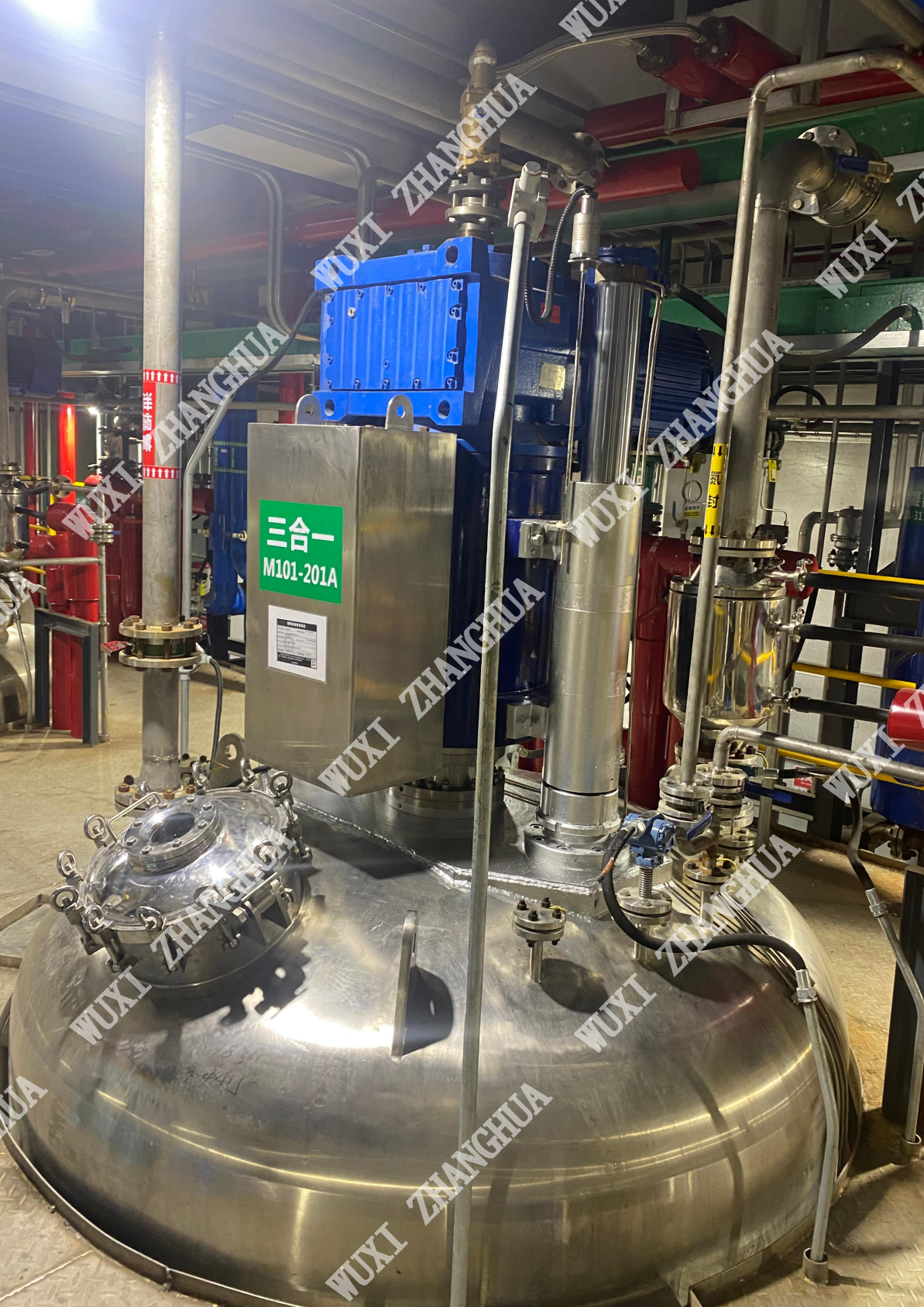
RCFD equipment integrates multiple unit operations in one closed vessel.
Why RCFD Equipment Is Relevant for High-Purity Chemical and Semiconductor Precursor Processes
Conventional high-purity processes often use separate reactors, filters and dryers. Each product transfer creates risk of contamination, solvent loss, operator exposure and batch-to-batch variability. For heat-sensitive, toxic, stimulating or corrosive products, manual handling is even more constrained. An integrated RCFD machine reduces these risks by moving consecutive operations into one closed vessel. It also shortens process cycles, reduces material loss and lowers the equipment footprint.
The market context supports this shift. According to Cognitive Market Research, the global Agitated Nutsche Filter and Dryer market was valued at approximately USD 4.5 billion in 2024. Fortune Business Insights estimates that the ANFD segment accounted for around 35% of the total filtration and drying equipment market in 2024. Separately, Grand View Research estimated the global filtration and drying equipment market at USD 1.39 billion in 2023 with a projected CAGR of 8.5% through 2030. The variation reflects different industry classifications, but the direction is consistent: closed, multifunctional process equipment is becoming a standard consideration for high-purity production.
What a Semiconductor Precursor RCFD Machine Must Deliver
A Reacting-Crystallizing-Filtering-Drying machine is designed to perform several steps inside one vessel. In the case of an Agitated Nutsche Filter Dryer, the unit usually has a closed vessel, a bottom filter medium, an agitator blade, vacuum and heating systems, and washing or spraying nozzles. The process may begin with reaction and crystallization under controlled temperature and agitation. Filtration separates the mother liquor. Washing removes residual impurities. Vacuum drying then removes solvent at a controlled low temperature.
For semiconductor precursor applications, the equipment must avoid contamination and leakage. This means the vessel design must consider pressure, temperature, medium, corrosion, sealing, interlocking and malfunction systems. Fully automated control is often required to maintain consistent product quality. Wuxi Zhanghua Pharm & Chem Equipment Co., Ltd., which is based in Wuxi, China, and was founded in 1976, describes its engineering approach in these terms: heat and mass transfer, filtrating, agitating, drying, spraying and similar functions are fully considered in the design, and structures are adapted to meet the pressure, temperature, medium, corrosion, sealing, interlocking and malfunction requirements of pharmaceutical production.
Representative Product Specifications
From a buyer standpoint, the most useful starting point is the technical specification of the core RCFD equipment. Wuxi Zhanghua supplies Agitated Nutsche Filter Dryers in the model range φ800-φ4600, with a capacity of 0.6-30 m³, filter area of 0.5-16 m², mixing blade travel of 250-550 mm and motor power of 4-75 kW. Contact materials can be selected from SS304, SS316L, Titanium, Hastelloy and PTFE lining, depending on the process medium.
The Nutsche Filter range is specified as φ1000-φ5000, with capacity of 1.2-36.5 m³ and filter area of 0.8-19.5 m². For dedicated vacuum drying operations, Wuxi Zhanghua provides conical vacuum dryers and conical screw vacuum dryers in the model range 150L-13500L, with effective loading volume of 0.5-0.7, agitator rotating speed of 5-30 rpm and internal surface roughness of Ra ≤ 0.4-0.6 μm. Explosion-proof execution to ExdIIBT4 is available as an option.
The company also offers a skid-mounted RCFD production system, model SKS-50/SKS-5000. The skid length ranges from 1000-10000 mm, width from 1000-3200 mm, height from 1000-4000 mm, and total skid weight from 3-50 t. Applicable codes include GB and ASME. These systems are designed to reduce manual intervention, shorten installation time and support pilot or process-scale production with a smaller footprint.
Certification Package: What Buyers Should Verify
For equipment entering regulated markets, certification is not optional. Industrial pressure vessels such as ANFDs must comply with ASME Section VIII Division 1 for pressures exceeding 15 psi, typically carrying a U stamp. In the EU, machinery sold requires risk assessment per EN ISO 12100 and electrical safety compliance per EN 60204-1 for CE marking. Pressure equipment may also require PED certification. For potentially explosive atmospheres, ATEX certification is relevant.
| Certification | Certificate Number | Scope / Standard | Validity |
|---|---|---|---|
| ASME | 60130 | Manufacture of pressure vessels, ASME U Stamp, ASME BPVC | 2025-05-10 to 2028-05-10 |
| PED CE (EU Type Examination) | 556/5/2018 | DN500 Filtering, Washing and Drying Machine, PED 2014/68/EU, ASME VIII Div.1 (2015) | 2018-06-01 to 2028-05-31 |
| PED | CE-0062-PED-G-ZPE 001-26-CHN | DN850 Filter, PED 2014/68/EU | 2026-01-05 to 2031-01-04 |
| ATEX | BVI 22 ATEX 0072 X | DN2300 Agitated Nutsche Filter, Ex Marking II 2/3 G Ex h IIB T3 Gb/Gc, EN ISO 80079-36:2016, EN ISO 80079-37:2016 | 2022-11-22 to 2032-11-21 |
| CE Machinery | IPC/ER/MD-24/108 | 25L Rotary Single Cone Vacuum Dryer, Machinery Directive 2006/42/EC | 2025-03-12 to 2035-03-11 |
| MOM Singapore | INS/ER/PE-21/030 | 200L Knock Out Pot, compliant with ASME Section VIII Div.1 and Singapore MOM | 2021-10-08 to 2031-10-07 |
Wuxi Zhanghua states that its equipment complies with CGMP FDA requirements and has obtained ASME, NB, CE, PED, ATEX and MOM certificates. Buyers should ask for the exact certificate scope, validity period and product serial number, rather than relying only on a general statement of compliance.
Process Boundaries and Material Compatibility
RCFD equipment is often selected because the product is heat-sensitive, toxic, stimulating, corrosive or flammable. Wuxi Zhanghua offers specialized drying configurations under names such as Heat-Sensitive Material Drying, Toxic Stimulating Material Drying and Corrosive Products Drying. These are vacuum dryer configurations with model range 150L-13500L, motor power 4-75 kW and optional ExdIIBT4 explosion-proof protection.
For corrosive products, the equipment can be built with SS304, SS316L, Titanium, Hastelloy or PTFE lining. This allows the machine to handle acids, alkalis, salts and other aggressive media. For toxic or stimulating materials, closed operation is essential. The closed vessel avoids dust release, reduces operator exposure and prevents cross-contamination. Temperature control is also critical because toxic or heat-sensitive materials may decompose or volatilize if over-heated.
From a procurement perspective, material of construction should be selected only after the full process chemistry is defined. A semiconductor precursor process may require very different wetted materials than a pharmaceutical intermediate process. The equipment supplier should be able to document the material grades and surface finish.
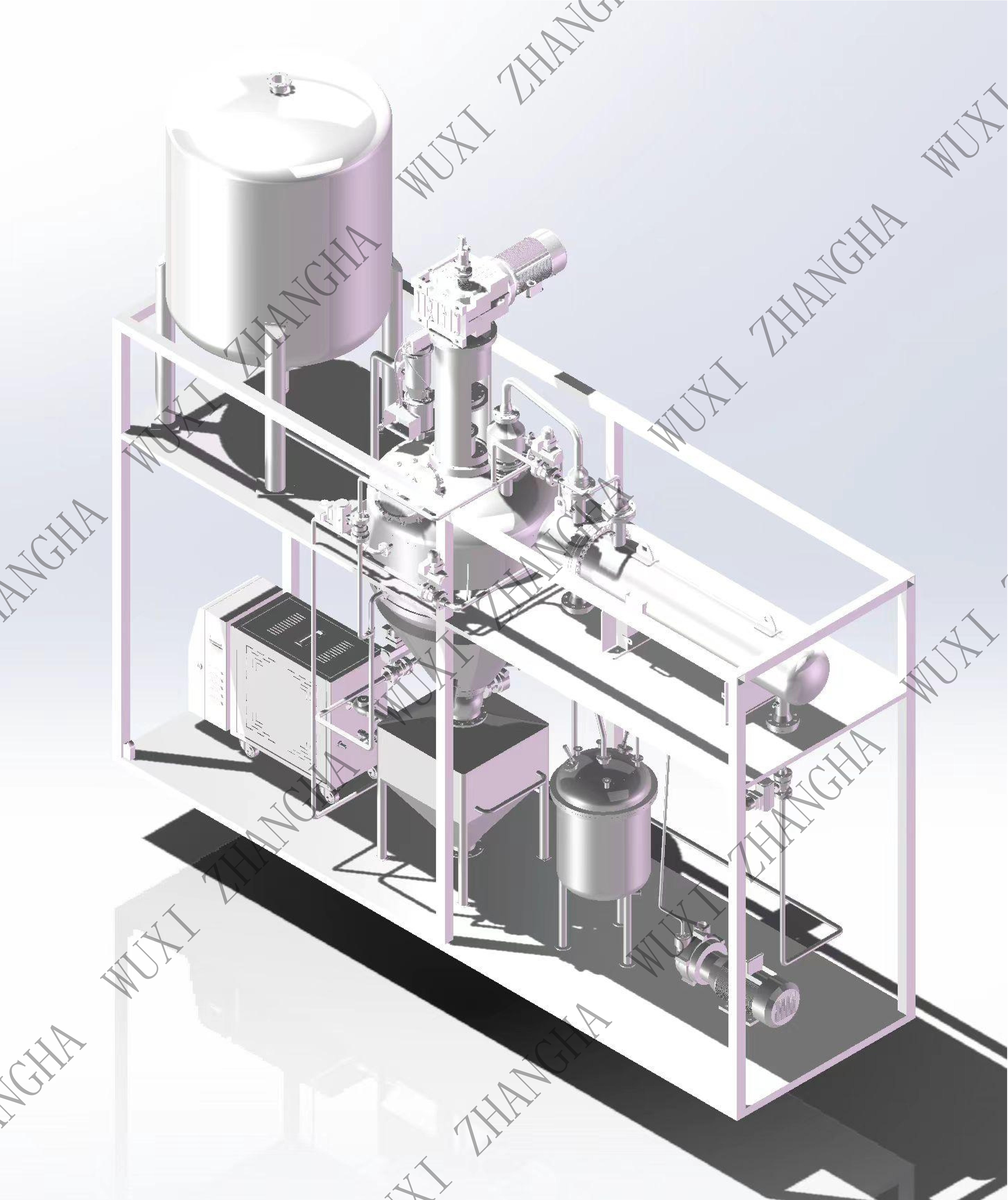
Skid-mounted RCFD systems are designed for faster deployment and lower manual intervention.
Application Evidence from Existing Installations
Documented installation references help buyers move from specifications to real-world confidence. One pharmaceutical plant in Malta used Nutsche Filter and RCFD equipment for an API raw material production project. The working condition was corrosive and continuous, with automated control and GMP-compliant manufacturing. The stated function was to guarantee the purity of API products.
In Singapore, a pharmaceutical plant has used 10 units from Wuxi Zhanghua for storing, filtering, washing and drying semi-finished drugs. The equipment has been in operation for 8 years with stable performance. The installation features GMP-compliant design, fully automated control and high-purity processing. Another Singapore pharmaceutical engineering project used an Agitated Nutsche Filter Dryer to simplify the process flow and reduce the risk of cross-contamination, with storage tanks used to ensure material purity and process continuity.
The same equipment family is also applied in fine chemicals, pesticides, new energy and new materials. According to Wuxi Zhanghua, Agitated Nutsche Filter Dryers are suitable for new materials such as lithium battery materials. This is relevant because high-nickel ternary cathode precursor production and other electrochemical material processes often involve corrosive media and strict purity control.
Comparison with Traditional Solutions
The traditional route for a high-purity solid product usually consists of a separate reactor, a Nutsche filter or centrifuge, and a vacuum tray dryer or drying oven. A vacuum tray dryer is simple and relatively low cost, but it often requires manual tray loading, longer drying cycles and more product handling. For high-contain or toxic products, this creates serious operational and safety challenges.
| Evaluation Point | Separate Reactor, Filter and Tray Dryer | Integrated RCFD / ANFD |
|---|---|---|
| Product transfers | Multiple transfers between units | Closed handling in one vessel |
| Containment | Higher risk of exposure | Higher containment level |
| Batch integrity | Higher cross-contamination risk | Lower cross-contamination risk |
| Operator involvement | Higher manual handling | Automated process possible |
| Footprint | Large equipment train | Compact integrated system |
| Capital cost | Can be lower if simple | Higher initial investment |
| Cleaning | Cleaning across multiple vessels | Single-vessel cleaning, but complex internals |
| Process flexibility | Units can be used in parallel | Single vessel can become a bottleneck |
An integrated RCFD machine is not a universal answer. For products that need very high dryer throughput or processes that require a dedicated crystallizer and filter running in parallel, separate units may still be more practical. ANFD maintenance also depends on the agitator seal, filter media and discharge valve; a failure inside the single vessel can stop the entire batch. Buyers should therefore match the equipment architecture to the process logic and required capacity.
Market Trend and Its Implications for Buyers
The underlying demand for high-purity processing equipment is expanding. Intel Market Research estimates the global semiconductor precursor market at USD 1.95 billion in 2025, projected to reach USD 3.89 billion by 2034 with a CAGR of 10.0%. Dataintelo values the high-nickel ternary cathode materials market at USD 18.6 billion in 2025, driven by EV battery density requirements. Both markets involve chemicals that benefit from closed, corrosion-resistant, well-controlled solid processing.
Competitive pressure is also visible in adjacent equipment segments. According to Dataintelo, Buss-SMS-Canzler GmbH is a key player in the agitated thin film dryer market with a 16.2% share in 2025. This signals that specialized, technically differentiated equipment suppliers can hold strong positions. For buyers, the practical implication is that process knowledge, manufacturing capability and certification depth matter more than generic equipment availability.
Public list prices for RCFD machines are rarely published because the final price depends on diameter, material of construction, automation level, certification package and documentation. Instead of comparing only initial price, buyers should evaluate total cost of ownership, including installation, validation, cleaning time, maintenance and the cost of rejected batches.
What a Structured Procurement Evaluation Should Include
Buyers in the research-to-evaluation stage can use the following framework when assessing a semiconductor precursor RCFD machine. First, define the process chemistry and identify all corrosive, toxic, flammable or heat-sensitive components. Second, specify the material of construction and surface finish requirements. Third, confirm the applicable pressure code and certification package. Fourth, assess whether batch operation is acceptable or whether the process requires a skid-mounted integrated production system. Fifth, review the supplier's manufacturing capability, including the ability to make large-diameter vessels and the use of automated welding. Finally, request documented installation references that match the intended application.
Future Outlook
The long-term direction for RCFD equipment is toward higher containment, better automation and more modular execution. As semiconductor precursors and high-nickel cathode materials push purity limits, equipment suppliers will need to document their performance with verifiable specifications and certifications. Skid-mounted RCFD systems are likely to become more common for pilot plants, multi-product facilities and projects where site installation time is limited.
Regulatory requirements will continue to shape the market. Pressure equipment in the US must meet ASME Section VIII Division 1 requirements, while CE marking in the EU requires structured risk assessment and electrical safety compliance. Buyers should expect certification to be part of the technical specification rather than an optional extra.
Frequently Asked Questions
What is a Reacting-Crystallizing-Filtering-Drying machine?
A Reacting-Crystallizing-Filtering-Drying machine combines reaction, crystallization, filtration, washing and drying in one closed vessel. It is commonly supplied as an Agitated Nutsche Filter Dryer or a Filter Dryer.
What are the key specifications of an Agitated Nutsche Filter Dryer?
Typical specifications are capacity of 0.6-30 m³, filter area of 0.5-16 m², mixing blade travel of 250-550 mm and motor power of 4-75 kW. Contact materials may include SS304, SS316L, Titanium, Hastelloy or PTFE lining.
Which certifications should a buyer check for RCFD equipment?
Buyers should verify ASME U Stamp for pressure vessels, PED CE for EU pressure equipment, ATEX for explosive atmospheres, CE Machinery for machine safety and Singapore MOM certification where applicable.
Can RCFD equipment handle toxic, corrosive or heat-sensitive materials?
Yes. Closed operation, corrosion-resistant materials, optional explosion-proof designs, temperature control and automated interlocking systems make RCFD equipment suitable for toxic, stimulating, corrosive and heat-sensitive products.
How does an ANFD compare with a vacuum tray dryer?
An ANFD integrates filtration and drying in a closed automated vessel, reducing transfers and contamination. A vacuum tray dryer is simpler and often lower in initial cost, but it requires longer cycles and more manual handling.
What are skid-mounted RCFD production systems?
Skid-mounted RCFD systems such as the SKS-50/SKS-5000 integrate several process steps on one skid. They are compact, reduce manual intervention and can be deployed quickly, making them suitable for pilot or process-scale production.
For the full equipment range and documented specification data, Wuxi Zhanghua publishes a downloadable brochure: Wuxi Zhanghua Equipment Brochure (PDF).