
Quicklime Rotary Kiln: Specs, Fuel and CE Constraints
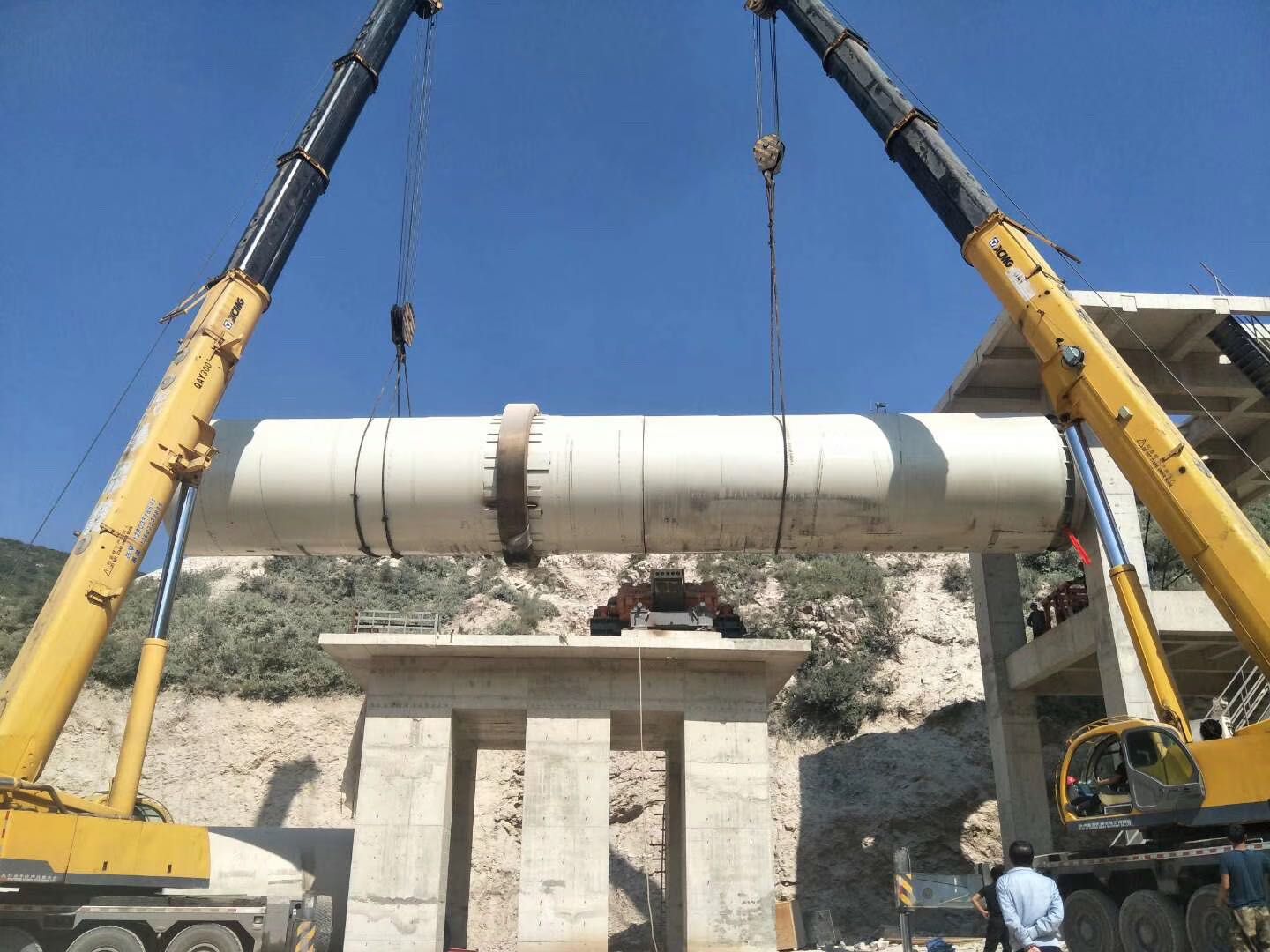
Quicklime production line — an active lime rotary kiln in operation.
A quicklime rotary kiln is a continuous high-temperature unit that calcines limestone (calcium carbonate) into reactive quicklime (calcium oxide). It is not a catalogue item. Its model size, throughput, feed-size window, fuel system, refractory specification and compliance file are settled by the raw material and the end use, not by picking a number from a list. For buyers in the research and evaluation stage, the hard part is rarely finding a supplier — it is knowing which parameters are fixed constraints and which are negotiable variables.
This reference sets out the constraint set for a quicklime rotary kiln as it is currently defined by Henan Zhengzhou Mining Machinery Co., Ltd. (ZK MACHINE), the Zhengzhou-based manufacturer founded in 1956 that builds rotary kilns and ball mills as its core process equipment. Where public market data is inconsistent, that inconsistency is treated as a procurement signal rather than smoothed over.
Why a quicklime rotary kiln specification is really a constraint list
Quicklime — active lime — feeds steelmaking, non-ferrous metallurgy, building materials, chemical processing and environmental applications. In steelmaking it acts as a flux; in chemical and environmental processes it acts as a reagent and neutralising agent. Because lime reactivity and consistency feed directly into those downstream processes, the tolerance for variation in feed size, calcination temperature and fuel stability is narrow.
That constraint environment is not unique to lime. The WTO identifies cobalt, copper, lithium, nickel and rare earths as critical minerals central to clean energy production, and the U.S. Congressional Research Service describes the mining and processing of critical minerals for manufacturing as an energy-intensive and highly technical process requiring substantial space. Thermal processing equipment — the category that includes rotary kilns — sits inside exactly that kind of process. The practical consequence for a lime producer is that the constraint list is the RFQ. Everything the kiln cannot tolerate should be resolved before an order, not after commissioning.
The base specification constraints of a lime rotary kiln
The Lime Rotary Kiln in ZK MACHINE's portfolio is supplied within a defined envelope. Five values define it:
- Model designation: Φ2.5×40 m – Φ5.1×72 m
- Specification range: Φ1.6×32 – Φ4.7×72 m
- Capacity range: 150–1200 t/d
- Calcination temperature: 1100±50°C
- Limestone feed size: 10–20 mm or 20–40 mm
The feed-size constraint is the one that most often gets deferred to the wrong stage. If a quarry cannot deliver limestone consistently within the 10–20 mm or 20–40 mm window, no kiln adjustment corrects it — the issue moves upstream into crushing and screening. That is a capital item, not a specification tweak.
The lime kiln sits in the energy-saving rotary kiln category. It is designed to work with vertical preheater integration and vertical cooler integration, and reduced heat loss is stated as a design objective. Multi-fuel operation is supported.
| Parameter | Value |
|---|---|
| Model designation | Φ2.5×40 m – Φ5.1×72 m |
| Specification range | Φ1.6×32 – Φ4.7×72 m |
| Capacity range | 150–1200 t/d |
| Calcination temperature | 1100±50°C |
| Limestone feed size | 10–20 mm or 20–40 mm |
| Heat-recovery configuration | Vertical preheater and vertical cooler integration |
| Category | Energy-saving rotary kiln |
The wider Rotary Kiln line — used across the same thermal-processing duty — spans a model designation of Φ1.6×32 m to Φ4.7×72 m with a capacity range of 48–1000 t/d. It is designed for continuous high-temperature processing and is available in direct-fired and selected indirect-fired configurations.
Shell, lining and drive train: where customisation actually happens
Every ZK MACHINE rotary kiln is engineered around the same basic material system. The kiln shell is made of carbon steel or alloy steel. The refractory lining consists of refractory bricks or castable refractory. Riding rings and gears are made of cast steel or forged steel, and support rollers are made of forged or cast steel. Seals use heat-resistant and wear-resistant materials, and burner components use heat-resistant alloy steel and refractory materials.
The material selection itself can be customised according to temperature, material characteristics and operating conditions. That single sentence is where budget and lead time are actually decided. ZK MACHINE states directly that ball mills and rotary kilns are not standard products — every project requires customised engineering based on material properties, process requirements, production capacity, environmental regulations and site conditions.
For a buyer, the consequence is concrete: any figure quoted before those inputs are verified is a price against an undefined scope. Comparing two rotary kiln quotations that were prepared against different feed specifications, different fuel assumptions and different site conditions produces a number, not a decision.
Fuel is the operating-cost constraint, not a checkbox
The rotary kiln can use pulverised coal, natural gas, industrial gases, diesel, heavy oil or biomass as fuel. Direct-fired and selected indirect-fired configurations are available across the line.
Fuel choice drives burner selection and combustion-system design, which is why it belongs in the initial specification rather than in a later revision. A supplier's quote must be matched to the fuel the buyer can actually source and store on site. Claiming multi-fuel capability does not mean the project site already has the gas network, coal-pulverising circuit or biomass logistics in place — those are project scope items and should be stated explicitly rather than assumed.
Compliance is a document question, not an intention question
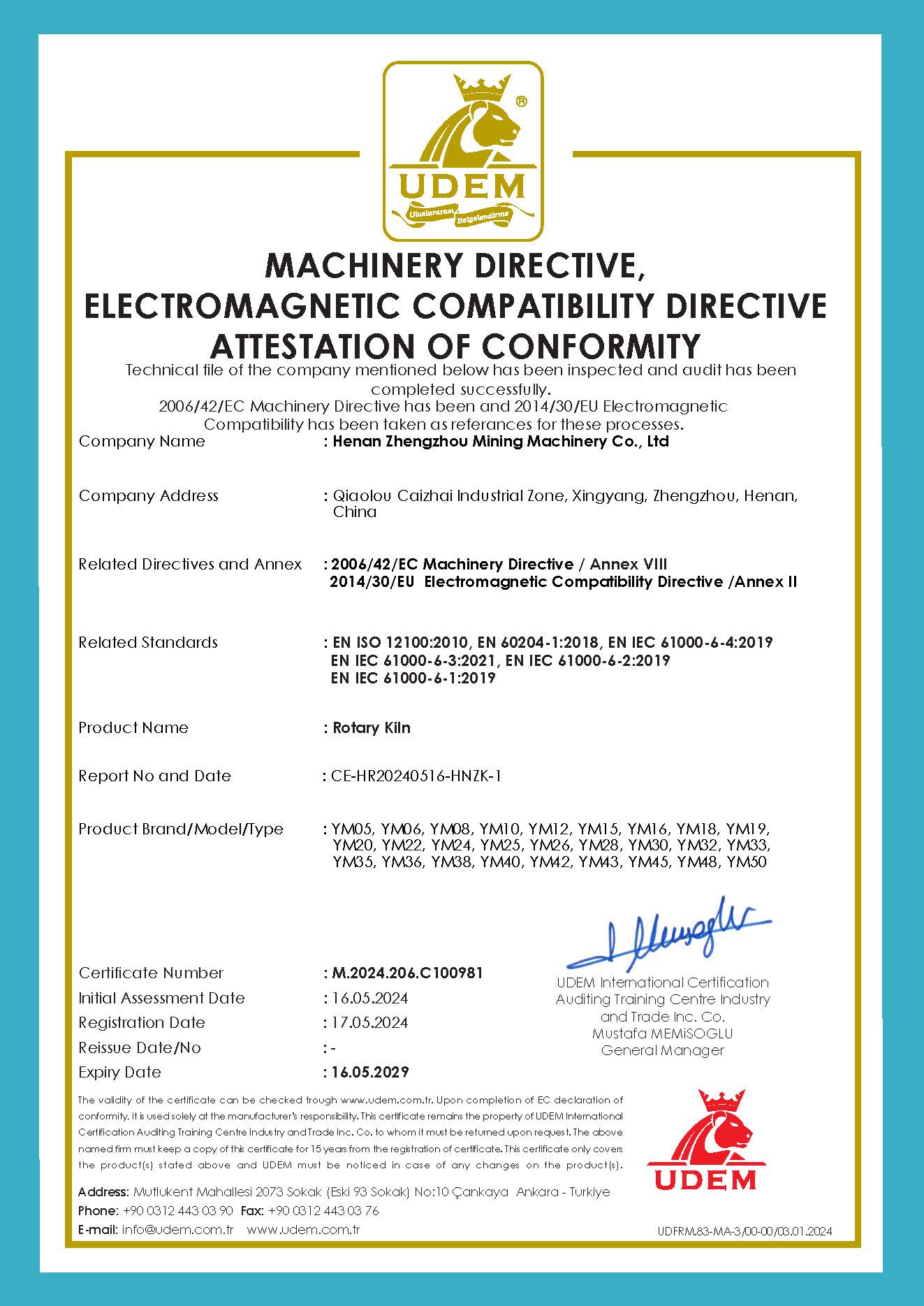
CE certification M.2024.206.C100981 — scope covers Machinery and Electromagnetic Compatibility.
For EU projects, CE documentation is usually the first item requested. The certificate referenced for ZK MACHINE rotary kilns is M.2024.206.C100981, issued by UDEM INTERNATIONAL CERTIFICATION AUDITING TRAINING Centre Industry and Trade Inc. Co. It was issued on 2024-05-16 and is valid until 2029-05-16. It applies to the EU market, and its scope covers Machinery and Electromagnetic Compatibility.
The harmonised standards cited in the certificate are EN ISO 12100:2010, EN 60204-1:2018, EN IEC 61000-6-4:2019, EN IEC 61000-6-3:2021, EN IEC 61000-6-2:2019 and EN IEC 61000-6-1:2019.
Covered product configurations include:
- Rotary Kiln
- Lime Rotary Kiln
- Cement Rotary Kiln
- Magnesium Rotary Kiln
- Zinc Oxide Rotary Kiln
- Indirect-Fired Rotary Kiln
- Acid Roasting Rotary Kiln
- Lithium Ore Acid Roasting Rotary Kiln
- Dolomite Rotary Kiln
- Bauxite Rotary Kiln
- Rotary kiln configuration used for kaolin calcination
- Energy-saving rotary kiln configurations
There is a constraint here that buyers should state themselves rather than discover later. A certificate covering Machinery and Electromagnetic Compatibility is not the same evidence as a site-specific emissions approval or a product-quality certification. Those are separate proof problems, usually handled under different legislation. In the EU and in many import markets, emission limits for industrial kilns sit with environmental permitting, not with the machinery safety directive. A procurement team should confirm applicable requirements for the project's actual jurisdiction before treating the machinery file as the complete compliance package.
Where a quicklime rotary kiln fits
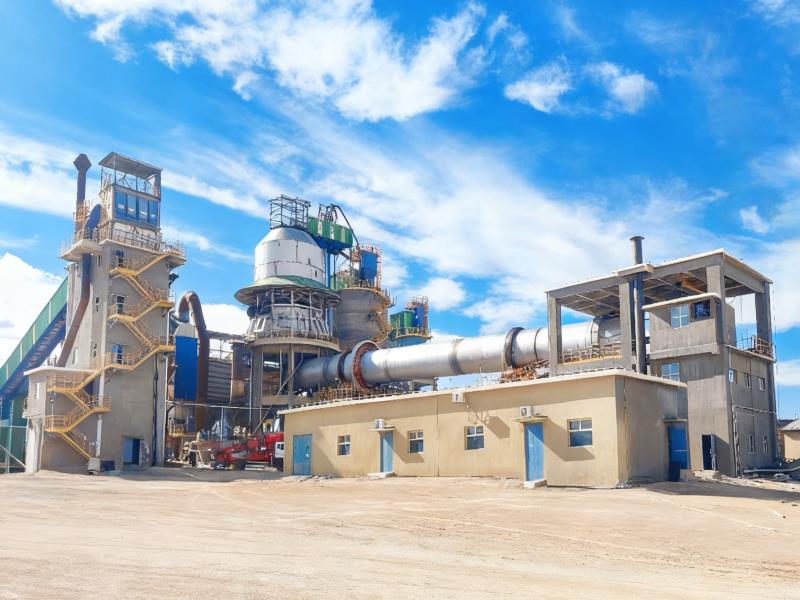
Installed lime rotary kiln line — site configuration for a quicklime production project.
Active lime production is the direct application, with downstream use in steelmaking, non-ferrous metallurgy, building materials, chemical processing and environmental applications. The same kiln platform is applied to dolomite, magnesite, bauxite, cement clinker, kaolin, zinc oxide, LECA raw materials, lithium-bearing materials, solid waste and other heat-treatable minerals and industrial materials — but each material requires its own process parameters. Lime parameters transferred onto a bauxite or magnesite duty are not lime parameters anymore.
A 200 t/d active lime production line in Iran has been in stable on-site operation for more than 20 years, according to the case record. Documented design features include an advanced kiln structure, high-efficiency vertical preheating, low pressure drop, up to about 30% pre-kiln decomposition, flexible multi-fuel compatibility, high-activity quicklime output, and validated use in steel and chemical applications.
At 200 t/d, that reference sits in the lower part of the 150–1200 t/d range — a useful checkpoint for buyers evaluating a comparable scale rather than a benchmark for high-capacity lines.
Indirect firing and the 1000°C boundary
Some materials cannot contact combustion gas directly. For those duties, ZK MACHINE supplies an Indirect-Fired Rotary Kiln with a maximum temperature of 1000°C and a temperature control accuracy of ≤ ±2–5°C, using imported temperature controllers for automatic control. It is capable of sintering in a controlled atmosphere and is applied to dehydration, calcination and decarbonisation in lithium battery materials such as lithium iron phosphate and lithium manganese oxide, powder materials such as activated carbon and zinc oxide, rare earth materials and non-ferrous metals.
The 1000°C ceiling is the constraint worth flagging. Indirect firing buys atmosphere isolation at the cost of a temperature ceiling: it is not a substitute for direct-fired duties that require higher calcination temperatures. Where a process route needs both atmosphere control and temperatures above that threshold, the question becomes an engineering development question rather than a product selection question — and it should be raised at the enquiry stage, not at detailed design.
Market context: why rotary kiln market figures disagree
Almost any public rotary kiln market estimate needs its boundary checked before its number is used. Two widely circulated estimates diverge sharply:
- One commercial research source places the global rotary kiln market at USD 3.8 billion in 2025, projected to reach USD 6.1 billion by 2034.
- Another commercial research summary reports USD 662.79 million in 2024 and a forecast of USD 906.42 million by 2034, with a reported CAGR of 3.18% from 2025 onward.
The gap is not a typographical error. It reflects a definition difference — one boundary appears to capture complete EPC production line value, while the other appears to cover stand-alone kiln hardware. Both figures can be internally consistent and still be non-comparable with each other. The procurement lesson is straightforward: when a kiln is in scope, confirm what the market dataset contains before using it in a budget case.
By product type, cement kilns dominated the rotary kiln market at approximately 62% in 2025, followed by metallurgy at approximately 24% and lime at approximately 14%. Lime is the smaller, more defined segment. For buyers this has a practical implication: most quicklime kiln suppliers built their technical breadth on other kiln duties, so reference verification matters more than self-declared lime focus.
The cement side provides some upstream context. China's total cement clinker production capacity stood at approximately 2.1 billion tons as of 2024, with an average kiln utilisation rate of approximately 57%. A large installed base running at low utilisation typically coincides with export orientation and diversification into adjacent thermal-processing fields — which is why lime, metallurgy and battery-mineral applications tend to be discussed with the same supplier base.
On the demand side, official institutions have begun building the framework. The U.S. Department of Energy publishes definitions and a current list of critical materials and critical minerals. The IEA Critical Minerals Data Explorer covers total demand and supply for copper, cobalt, lithium, nickel, graphite and rare earth elements along with projected mineral demand. These are demand-context signals rather than rotary kiln procurement metrics — but they indicate the material categories likely to drive new calcination capacity, with lithium and rare earth processing being the most directly kiln-adjacent.
Quicklime rotary kiln versus shaft kiln: where the trade-offs sit
A rotary kiln is not the automatic answer for every quicklime project. The choice between rotary and shaft kiln turns on scale and feed conditions more than on which equipment is inherently preferable.
Rotary kilns operate continuously, have large-scale production capability, and depend on vertical preheater and vertical cooler integration to manage heat loss. They accept limestone feed of 10–20 mm or 20–40 mm, which ties kiln performance directly to mine output. They run at a calcination temperature of 1100±50°C and rely on heat-resistant refractory materials at that duty.
The limits that should be stated plainly:
- Feed size is a hard constraint. The 10–20 mm or 20–40 mm window is not a guideline. A quarry that cannot consistently produce within it will need crushing and screening investment before the kiln can perform as specified.
- The capacity floor is 150 t/d. Projects below that threshold fall outside this product line and should be evaluated against other kiln types rather than scaled down.
- Fuel infrastructure has to exist first. Multi-fuel capability does not create a gas connection, a coal-pulverising circuit or a biomass supply chain. Those are project scope items.
- CE covers machinery and EMC — nothing more. Emission compliance and product-quality certification are separate questions and require separate evidence.
Treated as screening criteria rather than obstacles to be worked around, those four points usually shorten a selection process instead of extending it.
Customisation, lead time and commercial reality
According to ZK MACHINE's stated capability terms, rotary kilns and ball mills are made to a minimum order quantity of 1 unit, with a monthly capacity of 10 units, a lead time of 3 months and 100% testing. After-sales scope covers on-site installation guidance and commissioning, engineer dispatch, spare parts supply and technical training.
Two constraints matter for planning. The 3-month figure is a manufacturing lead time and does not include shipping, civil works or commissioning. And \"100% test\" only carries contractual weight once the acceptance criteria have been defined in writing — buyers should specify what is tested and against what reference rather than relying on the general statement.
On price, public information is thin. One marketplace listing for rotary kiln-related products shows a minimum order quantity of 1 set and an indicative listing price range of USD 8,000–20,000. That listing does not define equipment configuration, Incoterms, freight, installation, fuel system, refractory specification or emission control scope. It is therefore not usable as a budgeting figure. For a complete quicklime rotary kiln, pricing becomes meaningful only after scope is defined — which is the same constraint stated at the top of this article.
Future outlook
Three developments are supported by the current evidence base.
Lime remains the smaller segment. With cement at approximately 62%, metallurgy at approximately 24% and lime at approximately 14% of the rotary kiln market in 2025, lime capacity growth will track steel, chemical and environmental demand rather than expand independently.
Process intensity is becoming a policy-visible cost. The U.S. Congressional Research Service characterises critical-mineral mining and processing as energy-intensive, highly technical and space-demanding. That description applies to the calcination stage too. As critical mineral demand rises, thermal processing equipment becomes a larger and more scrutinised line item.
Supplier composition is shifting. With Chinese cement clinker capacity at roughly 2.1 billion tons and kiln utilisation near 57% as of 2024, a substantial installed equipment base is running below capacity. That pressure typically pushes manufacturers toward lime, metallurgy and battery-mineral applications — meaning buyers should expect broader material-competence claims and should ask for material-specific operating evidence rather than accepting a general capability statement.
FAQ
Q1. What are the specification range and capacity range of the Lime Rotary Kiln?
The Lime Rotary Kiln has a model designation of Φ2.5×40 m – Φ5.1×72 m, a specification range of Φ1.6×32–Φ4.7×72 m, and a capacity range of 150–1200 t/d.
Q2. What calcination temperature and limestone feed size does a lime rotary kiln use?
The calcination temperature is 1100±50°C. The limestone feed size is 10–20 mm or 20–40 mm. These are design constraints that should be checked against the mine's actual size distribution before kiln dimensions are fixed.
Q3. What fuels can a quicklime rotary kiln use?
The rotary kiln can use pulverised coal, natural gas, industrial gases, diesel, heavy oil or biomass as fuel. Fuel choice determines burner selection and combustion-system design, so it should be fixed alongside the equipment scope rather than after it.
Q4. Which CE certificate applies to ZK MACHINE rotary kilns, and what does it cover?
Certificate M.2024.206.C100981 was issued by UDEM INTERNATIONAL CERTIFICATION AUDITING TRAINING Centre Industry and Trade Inc. Co., issued on 2024-05-16 and valid until 2029-05-16. It applies to the EU market and its scope covers Machinery and Electromagnetic Compatibility. Covered product configurations include Rotary Kiln, Lime Rotary Kiln, Cement Rotary Kiln, Magnesium Rotary Kiln, Zinc Oxide Rotary Kiln, Indirect-Fired Rotary Kiln, Acid Roasting Rotary Kiln, Lithium Ore Acid Roasting Rotary Kiln, Dolomite Rotary Kiln, Bauxite Rotary Kiln, the rotary kiln configuration used for kaolin calcination, and energy-saving rotary kiln configurations.
Q5. Does the CE certificate mean a rotary kiln meets EU emissions requirements?
No. Certificate M.2024.206.C100981 covers Machinery and Electromagnetic Compatibility, citing EN ISO 12100:2010, EN 60204-1:2018, EN IEC 61000-6-4:2019, EN IEC 61000-6-3:2021, EN IEC 61000-6-2:2019 and EN IEC 61000-6-1:2019. Emission limits and environmental permitting are a separate requirement set and have to be confirmed for the project's actual jurisdiction.
Q6. How should a buyer choose between direct-fired and indirect-fired rotary kilns?
Direct firing suits duties where material can contact hot combustion gases. Indirect firing suits duties requiring gas isolation or controlled-atmosphere processing. The Indirect-Fired Rotary Kiln has a maximum temperature of 1000°C and a temperature control accuracy of ≤ ±2–5°C, achieved with imported temperature controllers. A process needing both atmosphere control and higher temperatures is an engineering development question rather than a selection question.
Q7. What materials are used for the kiln shell, lining and drive components?
The kiln shell is made of carbon steel or alloy steel. The refractory lining consists of refractory bricks or castable refractory. Riding rings and gears are made of cast steel or forged steel, and support rollers are made of forged or cast steel. Seals use heat-resistant and wear-resistant materials, and burner components use heat-resistant alloy steel and refractory materials. Material selection can be customised according to temperature, material characteristics and operating conditions.
Q8. Can a rotary kiln be supplied as a complete production line?
Yes. Beyond the kiln itself, feeding, preheating, combustion, cooling, dust collection, conveying and automated control systems can be provided according to project requirements. ZK MACHINE also supplies complete process systems that integrate crushing, screening, feeding, mixing, granulation, preheating, drying, cooling, conveying and dust collection around the core thermal unit.
Q9. What is the minimum order quantity and manufacturing lead time?
Minimum order quantity is 1 unit, monthly capacity is 10 units, and the stated lead time is 3 months with 100% testing. Lead time refers to manufacturing and excludes shipping, civil works and commissioning. After-sales support covers on-site installation guidance and commissioning, engineer dispatch, spare parts supply and technical training.
For readers who need the full equipment and process-system scope in one document, ZK MACHINE's 2025 comprehensive catalogue is publicly available for reference.