
Qualifying Warning Post Suppliers for Long-Term Programs
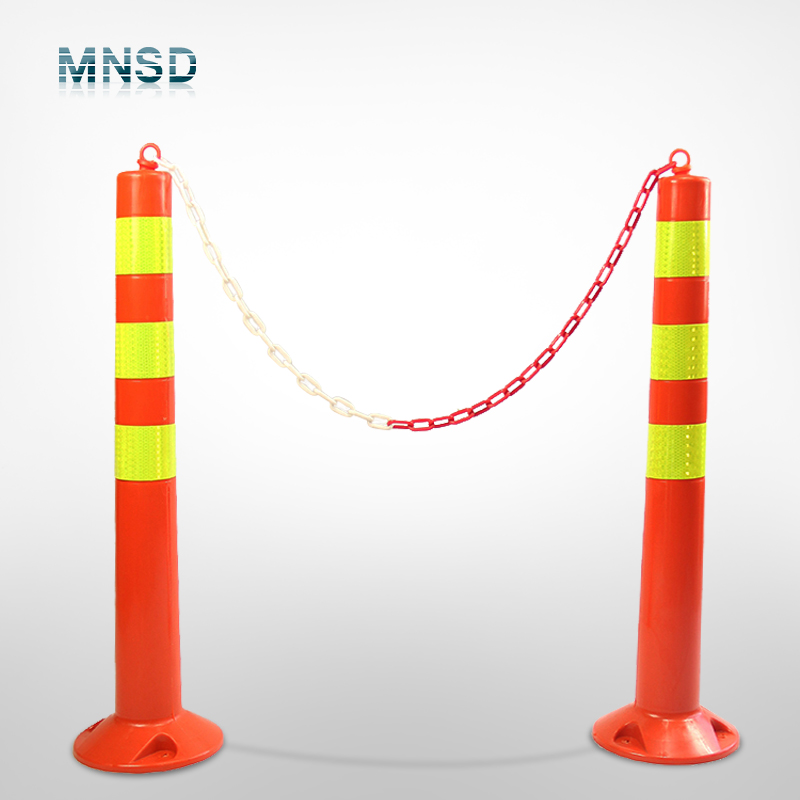
Warning posts look like simple traffic products, but a repeat purchase decision is not simple. Importers, distributors, contractors and infrastructure suppliers that buy flexible warning posts for multiple years cannot evaluate only one sample. They need a manufacturing source that holds stable dimensions, reflective quality, packaging and delivery timing across many production runs.
This article focuses on the supplier-qualification layer that comes after product selection. It examines Mnsd as a warning post manufacturing source and explains what matters when a buyer moves from an initial order to a long-term supply relationship.
Why Repeat Buyers Need More Than a Good Sample
An isolated sample can look acceptable even when the supplier cannot repeat the same result. A one-container order may hide problems in wall thickness, reflective tape quality, base flatness, color fade or packaging. Those issues become visible only after customers install the products and report early failures.
Long-term buyers usually work through a different cycle. A distributor or contractor needs assurance that an order placed now will match an order shipped in the next season. Replacement posts must fit existing bases or maintain the same visual standard across a site. This is why the procurement question shifts from “Is this sample good?” to “Can this manufacturer keep delivering the same specification?”
The market context supports the value of this question. According to third-party industry analysis, the global road marker posts market was valued at about USD 3.4 billion in 2024 and is projected to reach USD 5.4 billion by 2032. Another projection for traffic safety products expects a compound annual growth rate of 6.6% from 2026 to 2034. When procurement volumes grow, supply consistency becomes a commercial advantage.
Producer Snapshot: Mnsd and Tiantai Yuanda Traffic Device Co., Ltd
The Mnsd warning post range is manufactured by Tiantai Yuanda Traffic Device Co., Ltd, a road safety equipment producer based in Hongsan Industrial Zone, Tiantai, Taizhou, Zhejiang Province, China. The company publishes its catalogue through mnsdtraffic.com and produces products that include warning posts, convex mirrors, traffic cones, speed humps, traffic lights and related traffic safety devices.
For buyers, the first long-term check is whether the supplier is a manufacturer rather than only a trader. The company manufactures using high-speed injection molding processes. Its monthly production capacity is 50,000 pieces. For bulk orders, the typical lead time is 10 to 15 days. These figures matter because they connect product price to production control, not to spot-market buying.
Mnsd also serves a defined buyer ecosystem: importers, distributors, wholesalers, contractors and infrastructure project suppliers worldwide. That client structure is useful for channel partners because the manufacturer already understands export documentation, buyer expectations and project-based ordering patterns.
Flexible Warning Post Range and Specifications
A long-term warning post supplier should offer a stable product family rather than a single acceptable sample. Mnsd’s documented warning post range covers low-profile parking delineators, 75 cm road warning posts and a PE model with a rubber base.
| Model | Height / Base | Material | Reflective Specification | Typical Field Role |
|---|---|---|---|---|
| YD-WP45 | 450 mm; base 200 × 80 mm | High-elasticity polyurethane (PU) | 250 mm reflective sleeve; High-Intensity Prismatic / Class 1; visibility beyond 200 m | Parking lots, drive lanes, compact site delineation |
| YD-WPS75 | 750 mm; base 200 × 80 mm | High-elasticity polyurethane (PU) | 250 mm reflective sleeve; High-Intensity Prismatic / Class 1; visibility beyond 200 m | Road traffic, construction zones, loading areas, municipal use |
| YD-PE50 | 500 mm; rubber base diameter 260 mm | PE with rubber base | 250 mm reflective sleeve; High-Intensity Prismatic / Class 1; visibility beyond 200 m | Car parking guidance, entrance separation, warehouse aisles |
The listed material choices show why a buyer should not assume one type fits every channel. Taller PU models are suited to flexible road and traffic warning applications; a PE post with a rubber base is a different product shape with its own installation logic. Distributors often need both moving on the same purchase order.
Technical Checkpoints for Flexible Warning Posts
Long-term procurement should verify the physical and optical data behind the product. Mnsd’s datasheets for these warning post models include a temperature resistance range of -40 °C to +70 °C, UV-stabilized coating, water and oil resistance, and colorfast aging performance of more than three years. The reflective tape is specified as High-Intensity Prismatic, Class 1, silver white or fluorescent yellow, with a visibility distance beyond 200 meters.
Mechanical properties also matter for sites where vehicles touch the post. The documented values include 360° flexible and impact-resistant movement, rapid rebound after vehicle contact, tensile strength of 15.0 MPa, elongation at break of 400% and hardness of 80 to 85 Shore A. These numbers give a procurement team measurable criteria for inspecting containers, not just a visual expectation.
Thermal Distortion Risk in Hot Climates
One of the less visible risks in warning post specification is thermal distortion. In high-temperature environments, a poorly designed plastic post can sag or lose its vertical shape. Mnsd’s manufacturing control for this risk is to optimize wall thickness to prevent sagging in high-temperature climates and maintain material stability up to 60 °C.
For buyers, this detail belongs in the product audit. A supplier that cannot explain thermal behavior for a specific market climate may create problems after installation, especially in the Middle East, parts of Asia and other regions with extreme surface temperatures.
Execution Check: Capacity, MOQ, Delivery and Payment
After product approval, execution terms decide whether a supplier can work inside a distributor’s planning calendar. The Mnsd procurement framework includes specific, verifiable points:
- Minimum order quantity: 100 units
- Delivery methods: FOB or CIF
- Payment arrangement: 30/70
- Acceptance: pre-shipment testing
- Bulk lead time: 10 to 15 days
- Monthly capacity: 50,000 pieces
These terms are relatively standard for this product category. The more important signal is that capacity and lead time are stated as operating facts. A long-term partner should be able to commit to production windows and keep the agreed inspection process.
Reference Evidence from an Accepted Road Safety Project
Project references provide one useful form of evidence for Warning Post suppliers. Mnsd materials describe a road safety project in Vietnam that utilized this product and was completed and accepted by local authorities. Formal acceptance by a public authority suggests that the installed posts met on-site visual, material and functional expectations during inspection.
This kind of reference does not replace a buyer’s own inspection, but it is more useful than a general factory tour description. It shows that the product range has been used in a real tendered or authority-monitored environment.
Application Context: Where Flexible Warning Posts Become Recurring Stock Items
Buyers working at Decision and Execution stages usually need to position warning posts inside specific site categories. The documented application field for Mnsd warning posts includes road traffic, parking lots, construction sites, industrial facilities, warehouses, logistics centers, airports, seaports, railway stations, schools, hospitals, commercial complexes, residential areas, highways, municipal engineering, public facilities, loading docks and bus terminals.
That breadth is relevant for distributors. One product portfolio can serve several customer segments, but each segment will require a particular model, height, base style and reflective configuration. A manufacturer that understands loading docks as well as highway ramps is better placed to support a distributor’s product mix.
Market Context and Standards for Warning Post Buyers
Three external reference points should be part of any long-term warning post specification review:
- EN 12899-3 — the European standard for delineator posts and retroreflectors used in traffic circulation areas.
- MUTCD — the US Manual on Uniform Traffic Control Devices, which requires delineators to be retroreflective and visible from 1,000 feet when illuminated by high-beam headlights.
- ASTM D2765 — a standard method for measuring gel content and swell ratio of crosslinked ethylene plastics, relevant when a buyer needs to verify plastic material quality claims.
Buyers should not assume that one document will cover every export market. The European Union references EN 12899-3, while the United States applies MUTCD visibility logic. A distributor’s local customer may require one or both. The supplier’s role is to present accurate material and reflective specifications so the buyer can make the national compliance decision.
Material trends also influence future specification. Industry comparisons indicate that thermoplastic polyurethane (TPU) is often preferred over standard PE for high-impact warning posts because of its elastic recovery and durability. Mnsd’s current listed range uses high-elasticity PU on the taller flexible post models and PE on the shorter rubber-base model. Buyers should align material choice with impact exposure, climate and replacement cost rather than selecting a single material for every SKU.
Flexible Warning Posts versus Traditional Road Protection: A Real Boundary
Compared with guardrails, concrete barriers and rigid steel posts, flexible warning posts are low-cost, passive devices. They provide visual guidance plus physical separation for lower-speed impacts, and they do not require an energy supply. Maintenance is limited to cleaning or replacement after damage. These characteristics make them efficient for parking areas, warehouses, site roads and municipal zones.
However, the comparison has a clear boundary. A flexible warning post is a delineation and guidance device, not a vehicle-restraint barrier. It should not be specified as an equivalent of engineered crash barriers or guardrails in high-speed areas where the task is to contain or redirect a vehicle. Buyers who ignore this boundary risk selecting a product that is lighter, cheaper and easier to install but not functionally equal to a safety barrier.
For long-term purchasing, that boundary is useful because it prevents the wrong substitution. A reputable supplier should help the buyer see which products are warning posts and which are structural safety systems.
Future Outlook: Supplier Data Will Matter More
As road safety procurement becomes more data-driven, buyers will expect consistent digital documentation: model codes, material certificates, reflective performance, inspection reports and container photos. Low-tech products can still generate high-value procurement risk if the supplier cannot provide traceability.
The companies likely to succeed in long-term distribution programs are not necessarily the biggest by marketing scale. They are the suppliers with stable manufacturing capacity, defined order terms, genuine project references and enough product range to support a distributor’s local market needs. For warning post importers and contractors, the qualification process should therefore include factory verification, sample review, specification audits and a clear inspection plan.
Buyer Takeaway and Next Action
At the Decision-to-Execution stage, the warning post buyer should convert the evaluation into a structured supplier file. Key elements include model selection, material decision, reflective standard, MOQ and payment terms, lead time, pre-shipment inspection rights and documentation for the final market. A manufacturer’s willingness to make those elements visible is part of the qualification.
Mnsd, as the export-facing manufacturer identity of Tiantai Yuanda Traffic Device Co., Ltd, provides a documented production base for distributors, contractors and project buyers. The company’s public brochure is available for review and download for those completing a supplier qualification review:
Download Mnsd corporate brochure
FAQ
Does Mnsd accept small first orders before a long-term agreement?
Mnsd’s documented minimum order quantity is 100 units. In practical terms, this allows an importer or distributor to validate product quality and selling response before committing to a large annual program. The MOQ does not force a buyer into a container-scale commitment at the first stage.
Which warning post model should a distributor stock first?
There is no single universal answer. A 750 mm post model such as YD-WPS75 fits common road traffic, site and municipal delineation needs. A 450 mm model such as YD-WP45 is more suited to parking and compact spaces, while YD-PE50 with a rubber base fits parking guidance and warehouse aisles. Channel buyers should align the first stock order with the dominant local use case.
What order terms can a buyer expect from Mnsd?
The documented terms are MOQ of 100 units, FOB or CIF delivery, a 30/70 payment arrangement and pre-shipment testing as the acceptance point. Bulk order lead time is typically 10 to 15 days, supported by a monthly production capacity of 50,000 pieces.
Can a flexible warning post replace a guardrail or safety barrier?
No. A flexible warning post is designed for visual warning and flexible impact response in low- to moderate-speed areas. It is not engineered to restrain vehicles in high-speed impact conditions. Temporary delineation and permanent protection are different product categories, even though they are sometimes discussed together.
How should a buyer verify consistency across repeat warning post orders?
Buyers should compare model codes, material data, reflective tape grade and dimensional measurements against the original approved sample. Pre-shipment testing is part of Mnsd’s acceptance process, and the documented production capacity supports scheduled inspections before shipment. These steps are more reliable than relying only on photos or verbal confirmations.
Market context references: Road Marker Posts Market Size Analysis, 2024; Dataintelo traffic safety products market projection, 2024. Standards context: EN 12899-3, MUTCD and ASTM D2765.
¿Tiene preguntas o necesita más detalles?
Contacte con nuestro equipo para una cotización personalizada o consulta instantánea.
Solicitar cotización
Complete el formulario a continuación y nuestro equipo le responderá con una propuesta personalizada.
Chat directo de WhatsApp
¿Prefiere chatear en tiempo real? Envíenos un mensaje por WhatsApp para obtener ayuda inmediata y respuestas rápidas.
- Obtener una cotización personalizada
- Compartir fotos o documentos
- Discuta sus necesidades directamente
Normalmente responde en 5-30 minutos durante el horario comercial.