
Qualifying SAE4140 Tube for Oil and Aerospace: Grade, Test, and Delivery Clauses
Industrial Materials · Procurement Reference
In oil and aerospace procurement, a supplier's qualification is not a certificate on a wall. It is a chain of three verifiable links: the grade call-out on the drawing, the pre-shipment test evidence that the delivered lot matches that call-out, and the delivery-condition wording that fixes where the supplier's responsibility ends.
SAE 4140 is a chromium-molybdenum alloy steel grade classified under ASTM A29, with a typical chemistry of 0.38–0.43% carbon, 0.80–1.10% chromium and 0.15–0.25% molybdenum. That chemistry is selected for hardenability and strength, not for corrosion resistance. When the same grade is ordered as seamless pipe or tube for drilling equipment or aerospace components, the commercial question shifts from “which material” to “which evidence package travels with the lot” — a question that is answered by documents, not by adjectives.
Shandong Tuoda Machinery Equipment Co., Ltd., trading as Tuoda Machinery, is a Liaocheng-based manufacturer whose stated product scope covers carbon seamless steel tube, round bars and pressure cylinders, with deep processing and heat treatment capability supporting tube and bar supply. This reference note is written for buyers at the Decision and Execution stage: it explains how a grade requirement, an inspection clause and a trade term each carry a different part of the qualification burden, and where those parts can fail.
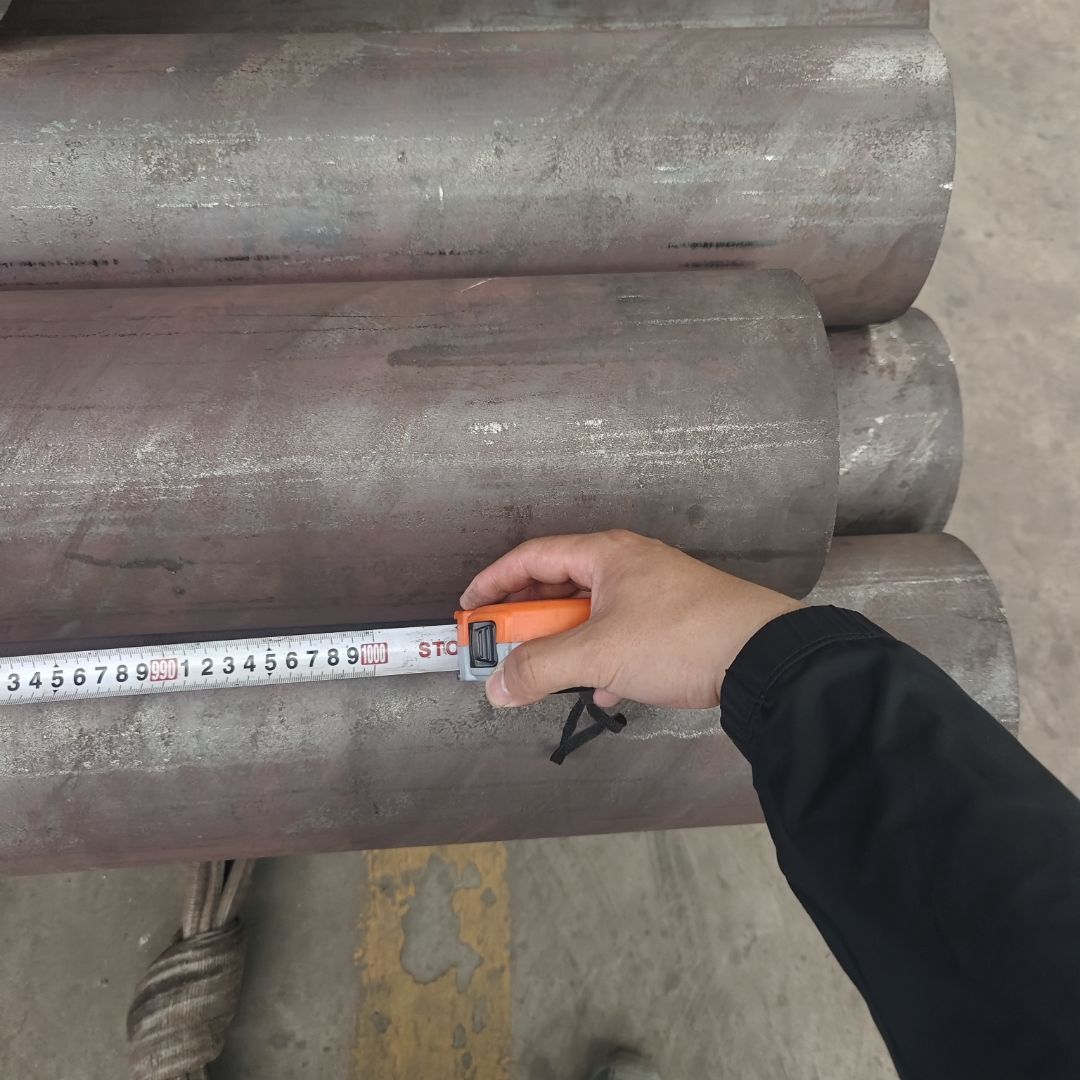
What “Qualification” Means When the Drawing Says SAE4140
A qualification review for SAE4140 tube has three separate questions, and buyers frequently conflate them:
- Grade alignment: does the chemistry and heat-treatment condition actually match the property window the application requires?
- Test evidence: is there a recorded result, produced before shipment, that demonstrates the delivered lot meets the agreed dimensional and performance criteria?
- Delivery boundary: does the quoted trade term make clear which party carries cost, risk and documentation at each point of the shipment?
Each question has a different owner. The buyer owns the application requirement. The supplier owns the manufacturing and inspection record. Both parties jointly own the trade-term definition, because a term such as EXW or DDP changes the practical meaning of “delivery” without changing the material at all.
A common failure pattern in alloy tube sourcing is a purchase order that names SAE4140 in one line and specifies a property that the grade cannot reliably deliver in the stated section size in another line. That is not a material defect; it is a specification defect. It is resolved before the heat is scheduled, not after the tube is cut.
Grade Alignment: Reading 42CrMo, SAE4130, 4145, and 4340 Requirements Against a 4140 Offer
Oil and aerospace drawings circulate internationally, and the same functional requirement is frequently written under different grade systems. A buyer may hold an older drawing calling for 42CrMo, a program specification referencing SAE4130, or a heavy-section requirement originally written around a 4145 or 4340 call-out, and then approach a supplier whose standing offer is SAE4140 alloy seamless pipe and tube.
These grades belong to the same broad chromium-molybdenum alloy family, but they are not interchangeable by default. 42CrMo is a designation widely used in Chinese and European drawing practice; SAE4130 is a lower-carbon chromium-molybdenum grade; 4145 and 4340 are grades whose higher carbon or additional alloying content is usually specified for a specific reason, typically a hardenability or strength requirement in the buyer's section size. A supplier cannot assume that family resemblance equals functional equivalence, and a buyer should not accept that assumption either.
The practical instrument here is a documented substitution review. It is a short, structured check performed before quotation, and it produces a written answer rather than a verbal reassurance.
| Requirement written as | What the buyer is usually specifying | What must be confirmed before SAE4140 is offered |
|---|---|---|
| 42CrMo | A chromium-molybdenum grade with a specific strength and hardenability target in the buyer's own standard system | Whether the controlling specification permits an SAE/ASTM 4140 chemistry, and which limits govern if the two systems overlap |
| SAE4130 | A lower-carbon chromium-molybdenum grade, often selected for a different balance of strength and fabrication behaviour | Whether moving to 4140 chemistry changes the fabrication or heat-treatment assumptions built into the buyer's process |
| 4145 | A higher-carbon chromium-molybdenum grade | Whether the higher carbon level in the original call-out is functionally required, or was carried over from legacy documentation |
| 4340 | A nickel-bearing chromium-molybdenum grade, typically called out where deep hardenability in a heavy section matters | Whether the alloying content in the original call-out is required for the buyer's actual section size, or exceeds it |
This table describes a review logic, not a claim of grade equivalence. Any substitution must be confirmed in writing against the buyer's controlling specification before an order is released.
Two boundary conditions matter more than the codes themselves. First, section size changes everything: a grade that meets a property target in a small-diameter tube may behave differently in a thick wall, because hardenability is a function of both chemistry and section. Second, the inspection reference matters: a buyer evaluating a supplier should establish which standard the inspection documentation will cite for the lot, rather than assuming a portfolio-level standards scope applies automatically to a specific order.
Why Quenched and Tempered Condition Is Specified for Drill Collars and Aerospace Components
SAE 4140 is a hardenable grade, which means its usefulness in oil and aerospace duty depends as much on heat-treatment condition as on chemistry. Published quenched and tempered properties for SAE 4140 place tensile strength in the region of 850–1000 MPa with a nominal hardness of 28–32 HRC — a combination chosen for shafts, gears and similarly loaded components where a balance of strength and toughness is required rather than maximum hardness alone.
The manufacturer's own comparison data against standard carbon steel pipe states hardness up to HRC 32–40, tensile strength of at least 1080 MPa, and a fatigue life stated at twice that of standard carbon steel. Those figures describe a claimed capability envelope rather than a guaranteed value for every order, and the distinction is commercially important: quenched and tempered properties vary with section size, quench practice and tempering temperature. A buyer who needs a specific property should write that property into the order and require it to be verified on the lot, instead of relying on a general grade claim.
Drill collar and aerospace component requirements converge on the same reasoning. Both applications place cyclic or dynamic loads on a component where failure is expensive and where weight matters. Quenched and tempered supply is specified because:
- Hardness and tensile strength need to be delivered in a controlled range, not simply “as high as possible” — excessive hardness reduces toughness.
- Fatigue performance under cyclic loading depends on a consistent microstructure, which heat treatment establishes and inspection verifies.
- Dimensional stability during machining depends on a stable condition, which is why the heat-treatment state is agreed before cutting begins.
- Strength-to-weight ratio allows a lighter section for the same load, which matters in rotating and flight-adjacent hardware.
The related conditions buyers sometimes specify — annealed or normalized — serve different purposes. Annealed supply is generally chosen when machinability is the dominant requirement and final properties will be developed later; normalized supply is chosen when a more uniform structure is wanted before further processing. Neither should be treated as a substitute for quenched and tempered supply in a component whose design assumes quenched and tempered properties.
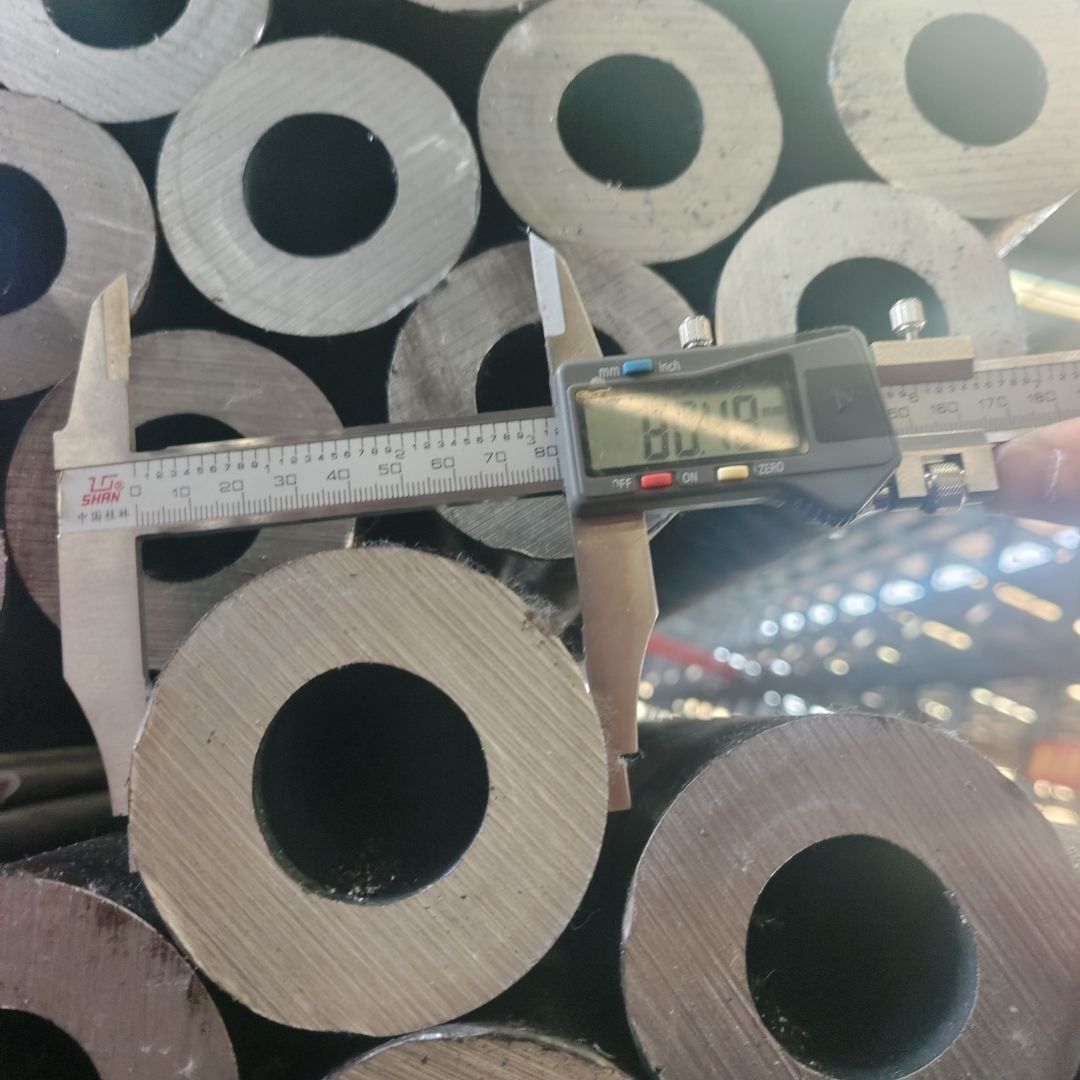
Pre-Shipment Testing as the Evidence Link
The stated acceptance criterion for Tuoda Machinery orders is a pre-shipment test, with TT or LC payment terms. For a buyer, that single line is where most of the practical risk sits, because it determines whether a nonconformity is discovered before or after the goods leave the works.
The documented control approach behind that acceptance criterion addresses two distinct failure modes: assembly failure caused by dimensional inaccuracy, and performance below requirement. The control methods recorded for these risks are precision CNC machining, in-line dimensional inspection, coordinate measuring machine (CMM) verification, and strict testing after production. The corresponding enterprise-level measures are:
- 100% dimensional inspection with a CMM before delivery.
- Confirmation of drawings and tolerance standards with the customer, repeated through the process rather than assumed at the start.
- Statistical process control (SPC) applied during production, so that drift is detected while the lot is still running.
- Strict recording of test data, producing a record rather than a verbal statement.
For procurement teams drafting an inspection clause, three wordings are worth insisting on. First, the inspection stage should be named — pre-shipment, not “on request.” Second, the measurement method should be named, so that a diameter claim is tied to a measuring instrument and a tolerance rather than to a passing impression. Third, the record should be required as a deliverable, since a test that is not recorded cannot be reviewed later if a downstream issue appears.
A practical rule for the execution stage: if the purchase order does not state the acceptance stage, the measurement method, and the record to be produced, the buyer is relying on the supplier's internal standard — which may be sound, but is not the buyer's standard.
Delivery Clauses Define the Compliance Boundary of a Shipment
Grade and testing determine whether the material itself qualifies. Trade terms determine where the supplier's responsibility for that material stops. Tuoda Machinery quotes delivery terms of FOB, CIF, CFR, EXW and DDP, with payment by TT or LC. These are not interchangeable conveniences; each one draws the compliance boundary in a different place.
| Term | Where responsibility effectively shifts | What the buyer should confirm in the clause |
|---|---|---|
| EXW | At the supplier's premises, at the earliest point | Who arranges inland transport, export documentation and loading, and who bears loading risk |
| FOB | On board the vessel at the named port | Which port, and who handles inland movement and export clearance before loading |
| CFR | On board, with freight paid to the destination port by the supplier | That freight is included but insurance is not, and who arranges cover |
| CIF | On board, with freight and insurance arranged by the supplier | The insurance scope and the named destination port |
| DDP | At the buyer's named destination, after import duties are settled | Which duties and taxes are included, and which party is the importer of record |
Two boundary points are routinely missed. The first is that a trade term does not change the conformity of the goods: DDP delivery does not make a lot that failed pre-shipment testing acceptable, and EXW delivery does not make a conforming lot non-conforming. The term governs cost and risk transfer, not material suitability.
The second is documentation alignment. Alloy steel bar and tube is traded under classification rules that depend on product form, condition and dimension. As a reference point, HS Code 7228.30 is the primary classification for hot-rolled alloy steel bars, including SAE 4140, with a diameter exceeding 228 mm in international trade. A buyer should confirm that the classification applied to their shipment matches the actual product form and dimension, because a mismatch surfaces at customs rather than at the mill.
On the commercial side, the stated minimum order quantity is 5 tons or negotiable, with payment by TT or LC. For execution-stage buyers, the LC option is often chosen precisely because it links payment to documents — which is why the inspection record described in the previous section has commercial value beyond quality assurance.
Where SAE4140 Tube Fits — and Where It Does Not
The application profile documented for this material against conventional carbon steel pipe is industrial manufacturing, aerospace components and oil drilling. Within oil and aerospace supply chains, that translates into a fairly specific set of component families: drill collars and other drilling-string hardware, shafting, gear and drive components, and structural or machined parts where a high strength-to-weight ratio reduces the mass that has to be carried or rotated.
The documented efficiency argument follows from the same property set. A high strength-to-weight ratio allows a lighter structure for an equivalent load, and optimized material properties reduce energy consumption in dynamic applications — a factor that matters in continuously rotating equipment.
The boundaries deserve equal attention:
- Corrosion: SAE 4140 is an alloy steel, not a corrosion-resistant alloy. Where a specification is driven by exposure to aggressive media, the grade itself is not the answer, and protective or alternative measures must be part of the design.
- Section size: hardenability is a function of both chemistry and section. A property demonstrated in one wall thickness cannot be assumed in another.
- Substitution: a requirement written around 42CrMo, SAE4130, 4145 or 4340 does not convert automatically into a 4140 order. The conversion requires a documented review against the controlling specification.
- Documentation dependency: the value of a qualified grade depends on the record that accompanies it. An unrecorded test is a weaker procurement position than a recorded one, even when the material is identical.
- Cost: the manufacturer's own comparison data notes a lower cost relative to the same material from the same supplier, but alloy steel remains a higher-cost input than plain carbon steel pipe. The trade-off is strength, toughness and fatigue performance, not price parity.
Market Context: Alloy Steel Demand and the Asia-Pacific Supply Base
Alloy steel demand continues to be shaped by the industries that consume it. The global alloy steel market is projected to reach approximately USD 160.7 billion in 2026, driven substantially by automotive and construction demand, and the Asia-Pacific region accounts for more than 40% of global consumption, with China's infrastructure and automotive production among the leading contributors. The automotive sector alone represents roughly 37% of global alloy steel utilization, reflecting the wider shift toward lightweight alloy components.
Those figures describe the broader alloy steel category rather than the oil-and-aerospace tube segment specifically, and published market-size estimates vary considerably depending on whether the scope is total steel or specific alloy types. That divergence is worth noting for buyers who use market reports in supplier evaluation: category-level growth numbers do not verify any individual supplier's capability, and they should be treated as context rather than as evidence.
What the regional picture does explain is supply structure. A concentrated Asian production base, combined with active export flows into the EU, the Middle East, India, Chile, Argentina and Turkey, means most oil and aerospace buyers of alloy tube are sourcing across at least one regulatory and documentation boundary. In that setting, qualification is a document discipline as much as a metallurgical one.
SAE4140 Tube Compared with Conventional Carbon Steel Pipe
The comparison that matters in most procurement reviews is not 4140 against a competing alloy, but 4140 against the plain carbon steel pipe a buyer may already be using. The manufacturer's comparison data against standard carbon steel pipe is summarised below, alongside the practical consequences.
| Evaluation criterion | Standard carbon steel pipe | SAE4140 alloy seamless tube |
|---|---|---|
| Strength and hardness | Baseline strength for general service | Higher strength and better hardness, with excellent hardenability supporting quenched and tempered supply |
| Toughness and fatigue | Limited fatigue resistance under cyclic load | Superior toughness and improved fatigue resistance; manufacturer's comparison data states fatigue life at twice that of standard carbon steel |
| Weight efficiency | Heavier structure for an equivalent load | High strength-to-weight ratio can reduce structural weight; optimized properties reduce energy consumption in dynamic applications |
| Corrosion behaviour | Requires protection in aggressive environments | Also not corrosion-resistant; protective measures remain part of the design |
| Commercial position | Lower material cost | Higher alloy cost, offset by performance in loaded and cyclic applications |
| Maintenance experience | Depends on application and protection | The supplier reports strong quality assurance with few after-sales issues |
| Evidence burden | Generally lighter | Requires grade alignment, pre-shipment test records and clearly defined delivery clauses |
Read as a decision table rather than a scorecard, the pattern is consistent: SAE4140 tube earns its place where load, cyclic duty and weight are the governing constraints, and it loses on corrosion resistance and input cost. A buyer who needs a corrosion-resistant material should not be steered toward 4140 by a strength comparison.
Repeat Orders and Long-Term Supply Qualification
For buyers at the execution stage, the first shipment is a sample of the supply relationship, not the relationship itself. The facts that support repeat supply are operational rather than promotional: a stated monthly production capacity of 1,000 tons, a typical production lead time of 30–45 days, and a minimum order quantity of 5 tons or negotiable. Those three numbers define how quickly a follow-up order can be absorbed and how small a trial commitment can be.
Export coverage is similarly concrete. Tuoda Machinery exports to the EU, the Middle East, India, Chile, Argentina, Turkey and other markets. For a buyer in one of those regions, that matters in two ways: the supplier has encountered the documentation expectations of that market before, and the logistics terms on offer — FOB, CIF, CFR, EXW and DDP — can be matched to the buyer's own import structure rather than forced into a single fixed arrangement.
The qualification logic for a repeat order is simpler than for the first one. Once a grade alignment has been agreed, a test protocol has been established, and a delivery term has been fixed, the recurring work is continuity: confirming that the same drawing revision, the same tolerance standard and the same inspection stage apply to each lot. Where a buyer intends to move from a trial order to a framework arrangement, the useful negotiation is not on price alone but on which parameters are held constant across lots.
Future Outlook
Three developments are likely to shape how SAE4140 tube is bought over the next procurement cycles.
The first is documentation pressure. As alloy steel flows through more regulatory boundaries, the ability to produce a consistent, reviewable lot record becomes a supply-chain asset in its own right. Suppliers that already operate statistical process control and pre-shipment CMM inspection are better positioned than those that treat records as paperwork.
The second is substitution governance. Buyers increasingly inherit drawings written under several grade systems, and the risk of an undocumented grade substitution is rising with the number of hands a specification passes through. Formalising the substitution review described earlier — as a written step before quotation rather than an assumption during production — reduces both quality risk and commercial dispute.
The third is regional supply structure. With Asia-Pacific already accounting for more than 40% of global alloy steel consumption and export flows extending into the EU, the Middle East, India and South America, buyers are likely to keep a multi-region supplier base. In that configuration, the differentiator is not the grade label but whether each supplier can align grade, test and delivery terms into one consistent, auditable proposition.
FAQ
What is SAE 4140 as a grade definition?
SAE 4140 is a chromium-molybdenum alloy steel grade classified under ASTM A29, typically containing 0.38–0.43% carbon, 0.80–1.10% chromium and 0.15–0.25% molybdenum. The chemistry is selected for hardenability and strength, and the grade is not a corrosion-resistant alloy.
Can a requirement written around 42CrMo, SAE4130, 4145 or 4340 be supplied as SAE4140 tube?
Not automatically. These grades sit in the same broad chromium-molybdenum family but differ in carbon and alloying content, and section size affects the properties achieved. A substitution must be reviewed in writing against the buyer's controlling specification before an order is released.
Why is quenched and tempered condition specified for drill collars and aerospace components?
Quenched and tempered SAE 4140 is published at approximately 850–1000 MPa tensile strength with a nominal hardness of 28–32 HRC, a balance suited to shafts, gears and dynamically loaded components. The manufacturer's comparison data against standard carbon steel pipe states hardness up to HRC 32–40 and tensile strength of at least 1080 MPa. Because achieved properties vary with section size and tempering practice, the required property should be written into the order and verified on the lot.
What acceptance criteria apply before shipment?
The stated acceptance criterion is a pre-shipment test. The documented control approach includes 100% dimensional inspection with a coordinate measuring machine before delivery, confirmation of drawings and tolerance standards with the customer, statistical process control during production, and strict recording of test data. It addresses two identified risks: assembly failure from dimensional inaccuracy, and performance below requirement.
What are the standard purchasing terms?
The stated minimum order quantity is 5 tons or negotiable. Delivery terms offered are FOB, CIF, CFR, EXW and DDP, and payment terms are TT or LC. The choice of trade term sets where cost and risk transfer, but it does not change whether the material conforms to specification.
What production capacity and lead time support repeat orders?
The stated monthly production capacity is 1,000 tons, with a typical production lead time of 30–45 days. Those figures describe normal production throughput and do not by themselves confirm availability at any specific date, which should be confirmed per enquiry.
Which export markets are served?
The stated export regions are the EU, the Middle East, India, Chile, Argentina, Turkey and other markets.
How is alloy steel bar classified in international trade?
HS Code 7228.30 is the primary classification for hot-rolled alloy steel bars, including SAE 4140, with a diameter exceeding 228 mm. Buyers should confirm that the classification applied to their shipment matches the actual product form and dimensions, since discrepancies are typically identified at customs.
What limitations should buyers plan around when specifying SAE4140 tube?
SAE 4140 is not a corrosion-resistant grade, so aggressive-service applications require separate protection or an alternative material. Achieved mechanical properties depend on section size and heat-treatment practice. Alloy steel also carries a higher material cost than plain carbon steel pipe, and the grade's advantages depend on the inspection record that accompanies each lot.
Reference Note
Additional product and capability information for seamless tube, round bar and deep-processing services is available in the Tuoda Machinery company brochure: Tuoda Machinery product and capability brochure. Company information is also published at WWW.SDTDSTEEL.COM.