
Qualifying Child-Resistant Glass Jars for Pharma and Medical Packaging
Qualifying Child-Resistant Glass Jars for Pharma and Medical Packaging
Protective packaging is judged by what it prevents. In pharmaceutical and medical supply chains, that list is short: content loss, contamination, light or moisture degradation, and unintended access by a child. A child-resistant glass jar addresses several of these requirements in one format, which is why it appears across small-volume liquids, concentrates, powders, and dose-controlled medical products.
The qualifying question for a buyer is narrower than the category name suggests. “Child-resistant” is not a property of glass. It is a performance claim that attaches to a specific jar-and-closure system and is demonstrated through testing and documentation rather than through a catalogue description. A compliance review therefore runs two checks in parallel: does the physical part fit the intended use, and can the supplier document exactly what was supplied?
This article treats child-resistant glass jars as a fit-and-documentation exercise. Using verified product data for the H21 clear square jar family and the H19 child-resistant jar family, it walks through the specification points that carry real weight in a pharmaceutical or medical packaging review — glass thickness, diameter, height, weight, capacity, closure material, and surface treatment — and marks the line where a specification stops and a test protocol begins.
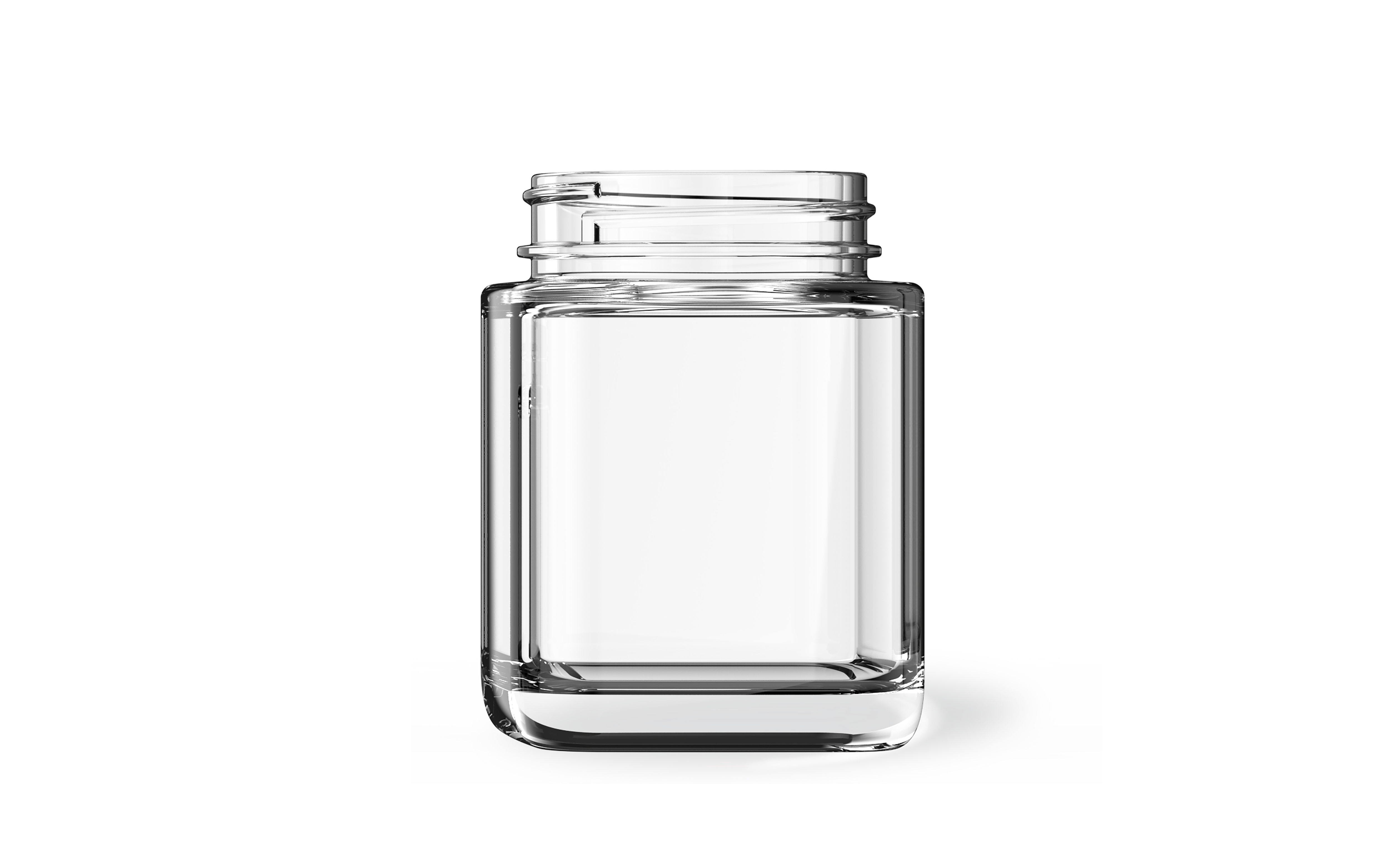
H21 clear square child-resistant glass jar, shown in the 40 dr (130 ml) format. Glass thickness is listed at 0.38 mm across the square family.
Market direction versus pack-level evidence
The protective packaging category is expanding, and the numbers describe the direction of travel rather than the status of any single pack. Fortune Business Insights valued the global protective packaging market at USD 44.02 billion in 2025 and projects it to reach USD 80.25 billion by 2034. Grand View Research estimated the same market at USD 40.4 billion for 2025, with the flexible segment accounting for a 66.4% revenue share. The gap between the two estimates reflects different segmentation criteria rather than a contradiction, and it is a useful reminder for buyers: market-level figures cannot substitute for pack-level documentation.
Regulatory expectations are more specific. Child-resistant packaging is governed by recognized protocols — ISO/EN 8317 in the EU and 16 CFR 1700.20 in the US — both aimed at preventing access by children under five. Those frameworks define how resistance is demonstrated; they do not define what a jar should look like. That division of labour is precisely why specification sheets and test reports are two separate documents, and why a buyer needs both.
Why child-resistant glass is a system problem, not a material problem
A child-resistant glass pack is assembled from three functional layers, and each one answers a different question in a compliance file.
- The glass body carries the barrier and presentation function: capacity, wall thickness, geometry, and surface finish.
- The closure carries the access-control function, and its material declaration matters as much as its mechanism.
- The decoration carries identification, dosing, and traceability information, and its placement is part of the approved artwork record.
Most review delays do not come from a part being wrong. They come from the record being incomplete: a drawing that shows the jar but not the cap, a capacity chosen by volume without a fill-line reference, or a decoration approved visually but never linked to the packaging record for that combination. Treating the jar and the closure as a single part number is the simplest way to close that gap.
H21 clear square jars: the specification set
The H21 clear square jar is a child-resistant packaging format built on a square glass body with a 58 mm diameter. It is positioned for the pharmaceutical and medical industry and is also listed for food, cosmetic, cannabis, and supplement applications.
| Specification checkpoint | Listed value | What it settles in a compliance file |
|---|---|---|
| Shape | Square | Fixes the footprint on the filling line and the carton dimension |
| Diameter | 58 mm | Matches the jar to the closure and to handling equipment |
| Height range | 24 mm – 115 mm | Defines the vertical envelope across the capacity range |
| Weight range | 75 g – 280 g | Drives freight weight and secondary packaging requirements |
| Glass thickness | 0.38 mm | Dimensional specification for the body wall |
| Capacities | 15 ml, 30 ml, 20 dr, 30 dr, 40 dr, 60 dr | Determines which fill volumes the family can serve |
| Item codes | H21-0003C – H21-0008C | Provides unique references for ordering and traceability |
| Closure | With child-resistant cap; jar material listed as glass, plastic, and PE | Identifies the system boundary as jar plus cap |
| Surface treatment | Sticker, silk-screen printing, hot stamping, heat transfer printing, frosted finish | Defines decoration options available for artwork approval |
The 40 dr (130 ml) format is a useful illustration of how these fields interact. Its capacity sits mid-range in the family, but its height and weight both sit toward the upper end of the listed envelope, so the freight calculation and the carton design change even though the diameter does not. For a medical or pharmaceutical line, that is the point at which a capacity decision becomes a logistics decision.
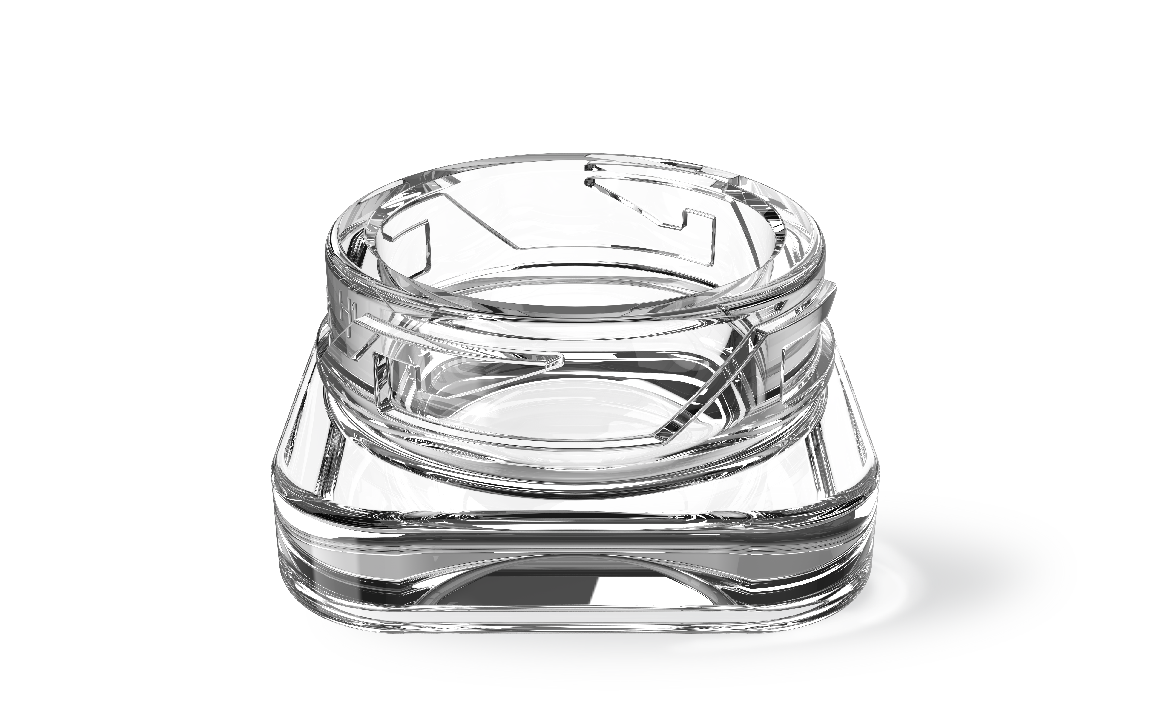
H19 clear square child-resistant jar. The H19 family covers 5 ml and 9 ml capacities across four shapes and three finishes.
H19 child-resistant jars: the small-capacity family
Where the H21 square family serves mid-range fills, the H19 series covers the smallest dose volumes and offers more geometric choice. All H19 child-resistant variants are glass jars supplied with a child-resistant cap and are listed for food, cosmetic, and medical industry use.
| Attribute | Listed values |
|---|---|
| Capacities | 5 ml and 9 ml |
| Shapes | Square, round, triangle, hexagon |
| Finishes | Black, white, clear |
| Net weight | 27 g – 38 g (black and clear); 27 g / 36 g (white) |
| Pack quantity | 250 pcs per carton |
| Item code pattern | H19-0001 to H19-0011 series, with a colour letter suffix — C for clear, B for black, W for white |
| Material | Glass |
The item code structure is worth noting for procurement teams. Because the suffix encodes the finish and the numeric block encodes the shape and size, a purchase order can be checked against the drawing without ambiguity — a small detail that reduces the risk of a decor variant being supplied against an approved specification for a different finish.
Closure materials and the decoration question
Cap material appears in the product data alongside the glass body: the H21 clear square jar is listed with a glass, plastic, and PE material set, and the violet H21 counterpart is listed as violet glass with PP and PE. Buyers should read that field carefully rather than assume. The closure polymer declaration is what allows a packaging engineer to check compatibility with the fill, the torque target, and any secondary processes such as induction sealing or labelling.
Surface treatments available across the child-resistant families are sticker, silk-screen printing, hot stamping, heat transfer printing, and frosted finish. In a compliance review these are not cosmetic choices. Each one changes the artwork approval path, and each one has a placement that has to be confirmed against the body geometry rather than against a rendering. The practical rule is simple: approve decoration on the drawing for the specific item code, not on a generic family image.
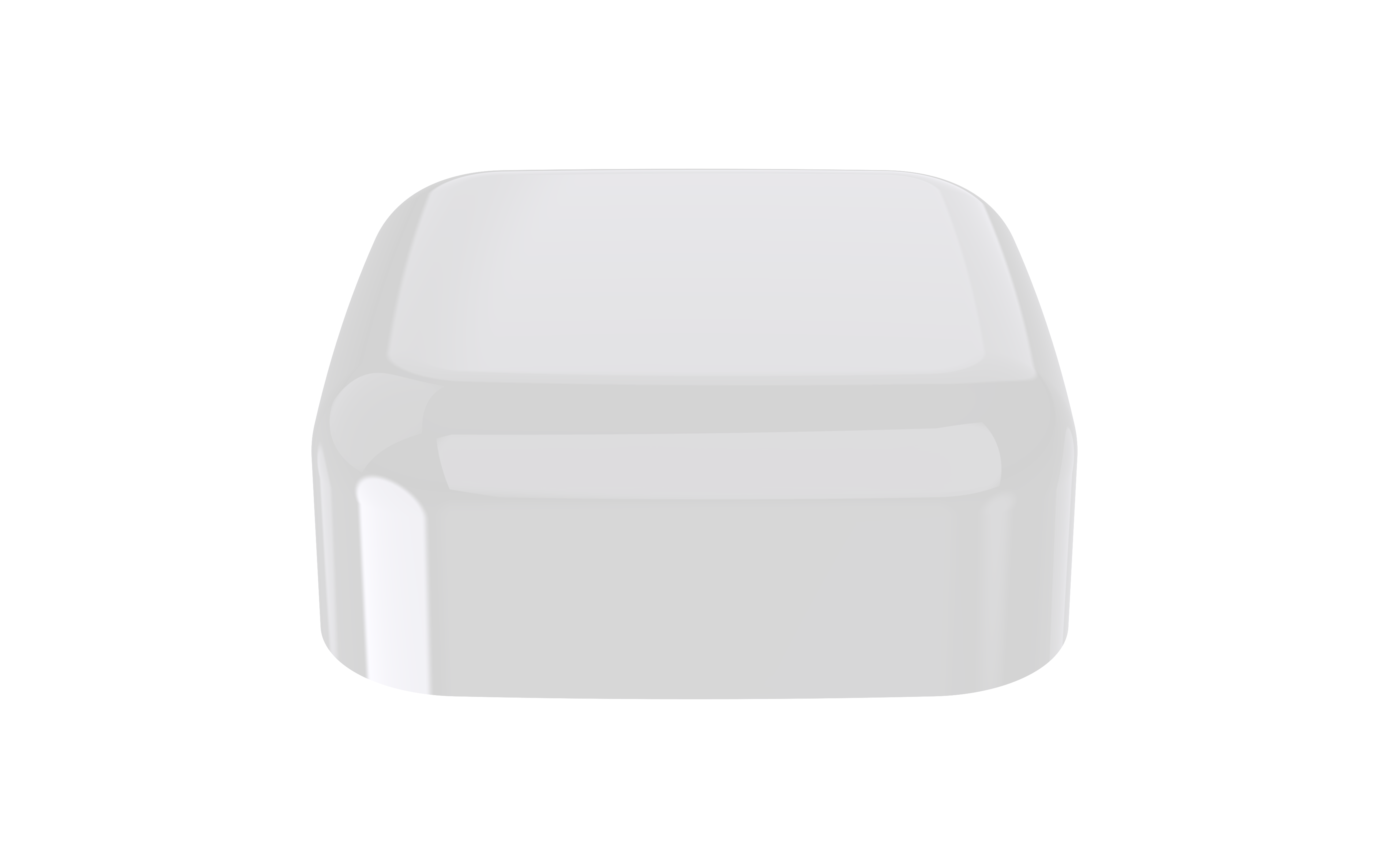
The closure is the component that carries the access-control function. Its material declaration belongs in the same record as the jar drawing.
A documentation checklist for compliance review
The following checklist converts the specification fields above into review actions. It is deliberately built around fit and records rather than around claims.
| Check | What to request | Why it matters |
|---|---|---|
| Body geometry | Drawing showing 58 mm diameter, height within the 24 mm – 115 mm range, and 0.38 mm wall thickness for the H21 square format | Confirms the physical part against the approved design |
| Closure identity | Cap material declaration (PP / PE as listed for the relevant model) | Supports fill compatibility and process settings |
| System reference | One part number covering jar plus child-resistant cap | Prevents the two components being qualified separately |
| Capacity and fill | Capacity confirmation against the intended fill volume: 15 ml to 60 dr for H21 square, 5 ml and 9 ml for H19 | Aligns the pack with dose and headspace requirements |
| Decoration control | Artwork file with placement on the specific item code, covering sticker, silk-screen printing, hot stamping, heat transfer printing, or frosted finish | Keeps identification and dosing information verifiable |
| Resistance evidence | Test documentation for the finished jar-and-closure system against ISO/EN 8317 or 16 CFR 1700.20, as applicable to the destination market | Establishes the child-access performance claim for that specific combination |
| Pack configuration | Carton quantity, for example 250 pcs per carton for the H19 series | Feeds logistics, storage, and receiving inspection |
| Traceability | Item code and batch reference on shipping documents | Links the delivered goods back to the approved record |
Application and use cases
The child-resistant H21 and H19 formats are documented for food packaging, cosmetic packaging, and medical packaging use, with pharmaceutical and medical industry applications listed explicitly for the H21 clear square family. Use-case records for this class of pack describe hand operation with a matched cap, and note UV-protective and child-resistant design requirements alongside dust and freshness protection for cosmetic and food contents.
Recorded destination markets for these applications include Canada, Germany, India, Italy, Thailand, and the United States. That geographic spread is relevant to compliance planning because it means a single jar-and-cap design may need to be reviewed against more than one regulatory framework depending on where the finished product is placed on the market.
Two practical scenarios recur:
- Small-dose medical and concentrate formats. The H19 series covers 5 ml and 9 ml in four shapes and three finishes, which allows a brand to keep one closure system while varying the visual identity of a product line.
- Mid-range liquid and powder fills. The H21 clear square family spans 15 ml to 60 dr with a constant 58 mm diameter, so filling-line changeover is driven mainly by height and weight rather than by a change of footprint.
Market trend analysis
Three trends shape how child-resistant glass jars are specified today.
First, documentation is becoming the differentiator. As the protective packaging market moves from an estimated USD 40.4 billion in 2025 toward the projected USD 80.25 billion by 2034, the number of suppliers able to quote a jar grows faster than the number able to support a full specification and test record. Buyers increasingly evaluate suppliers on the completeness of the record, not only on the unit.
Second, material mix is shifting at the category level, but not uniformly. Grand View Research reported that paper and paperboard materials held a 45.7% revenue share of protective packaging in 2025, and Fortune Business Insights anticipated that the secondary packaging segment would hold a 48.54% share by 2026. Those shares describe broad protective materials. They do not displace glass in applications where inertness, weight, transparency, or light-blocking behaviour is the reason glass was chosen in the first place.
Third, the competitive field is layered. Third-party coverage of the wider protective packaging market identifies Sealed Air Corporation, Smurfit Westrock, Mondi Group, and Amcor plc as major participants. Those companies operate primarily in protective materials and secondary packaging, so a buyer sourcing a specific child-resistant glass jar is not comparing like for like: the evaluation criteria that matter here are tooling fit, glass specification control, closure qualification, and batch documentation.
Comparison with traditional solutions
Child-resistant glass jars are one option among several. The comparison below is framed around function and boundary rather than around superiority.
| Approach | Typical role | Boundary to weigh |
|---|---|---|
| Standard (non-child-resistant) glass jar | Inertness, presentation, and barrier for general products | Carries no access-control claim, so it cannot substitute where child-resistant packaging is required |
| Plastic child-resistant container | Lightweight access-controlled pack, often with integrated closure designs | Glass remains specified where the product requires glass presentation, chemical inertness, or a glass-based light-protection strategy |
| Child-resistant carton or secondary format | Access control applied at the outer pack level | Adds a converting step and does not change the primary container’s own characteristics |
| Child-resistant glass jar (H21 / H19) | Glass body plus child-resistant closure in one qualified system | Weight, breakage exposure in transit, and system-level qualification requirements |
The limiting factors deserve to be stated plainly, because they are the reason this decision is not automatic.
- Weight. The H21 clear square family is listed at 75 g to 280 g per jar, and the H19 series at 27 g to 38 g. Freight and secondary packaging have to be planned around the glass body itself, not around the net fill volume.
- Breakage exposure. Glass requires transit and handling controls that a polymer container may not. This is a logistics and packaging-design cost, not a product defect.
- Coverage gaps. Capacity coverage is not continuous across the range. The H19 family stops at 9 ml, and the H21 square family covers 15 ml to 60 dr. A fill volume outside those windows turns a selection exercise into a development exercise.
- Qualification is system-level. A test report for a jar with one closure does not automatically transfer to the same jar with a different closure or a different fill. Each combination has to stand on its own evidence under the applicable standard.
Future outlook
The direction of travel is toward tighter documentation and more differentiated protection. Child-resistant formats are increasingly expected to carry light-protection credentials as well: violet glass, for example, is described in third-party technical literature as filtering visible light while allowing part of the UVA and infrared spectrum through, a property relevant to light-sensitive fills. Refillable glass storage jars with child-resistant caps — represented in the H21 range by the round refillable format with item codes H21-0012V to H21-0018V — point to a second shift, where reuse expectations are layered on top of access-control requirements.
For buyers, the practical implication is that the specification pack becomes a living document. Wall thickness, diameter, closure material, decoration, and test evidence will be requested together rather than separately, and suppliers who can present that set for a named item code will move through reviews faster than those who present a brochure.
Frequently asked questions
What does “child-resistant” mean for a glass jar in pharmaceutical packaging?
It means the completed container-and-closure system is intended to make access by young children difficult. Child-resistant packaging is governed by recognized protocols — ISO/EN 8317 in the EU and 16 CFR 1700.20 in the US — both aimed at preventing access by children under five. The claim belongs to the assembled jar-plus-cap system, not to the glass body on its own.
Which capacities and shapes are available in child-resistant glass jars?
The H21 clear square jar covers 15 ml, 30 ml, 20 dr, 30 dr, 40 dr, and 60 dr in a square body with a 58 mm diameter. The H19 child-resistant series covers 5 ml and 9 ml in square, round, triangle, and hexagon shapes, and is available in black, white, and clear finishes. Each family is documented with its own item code range for ordering and traceability.
Which specification points should a buyer verify on an H21 clear square jar?
The listed points are: square shape, 58 mm diameter, height from 24 mm to 115 mm, weight from 75 g to 280 g, glass thickness of 0.38 mm, capacity from 15 ml to 60 dr, a child-resistant cap, and surface treatments covering sticker, silk-screen printing, hot stamping, heat transfer printing, and frosted finish. The 0.38 mm figure is a dimensional specification for the wall, not a performance result.
Which cap materials are used with child-resistant glass jars?
The product data lists PP and PE across the relevant models: the H21 clear square jar is listed with a glass, plastic, and PE material set, and the violet H21 counterpart is listed as violet glass with PP and PE. The closure declaration should be part of the same record as the jar drawing because it affects fill compatibility and process settings.
How should compliance documentation be assembled for a child-resistant glass jar?
Three elements are typically required: the jar body drawing with its dimensional specifications, the closure declaration under a single part number covering jar plus cap, and test evidence for that specific jar-and-closure combination against the applicable standard for the destination market. Packaging quantity and batch references complete the record. A specification sheet alone does not establish a child-resistance claim.
Where this leaves the buyer
Superior child-resistant glass packaging is not selected by name alone. It is qualified by matching the listed specification — thickness, diameter, height, weight, capacity, closure material, and decoration — to the intended fill and market, then confirming that the assembled jar-and-closure system carries evidence under the relevant standard. That sequence is what turns a product catalogue into a compliance file.
For reference data on the formats discussed here, the manufacturer’s product brochure is available for download: Honor Packaging brochure (PDF). Additional specification information is published at www.honorcrpkg.com.