
QTZ Flat Top Tower Cranes for Infrastructure: Capacity Classes and Safety Systems
Infrastructure and municipal projects rarely select a tower crane on maximum lifting capacity alone. The binding constraints are the working radius, the load that must be handled at that radius, the space available to erect and dismantle the machine, and the safety devices that must be demonstrated at handover. A flat top QTZ tower crane, also described as a topless tower crane, is configured around exactly those constraints: it carries no cathead above the jib, it is built from modular mast and jib sections, and it is supplied with a defined set of protection systems. Dahan Technology Co., Ltd., a construction machinery manufacturer based in Shandong, China, supplies flat top QTZ configurations across rated lifting capacities from 5 t to 220 t, with documented model examples including QTZ80 (5211)-5T, QTZ100 (6013)-8T, QTZ125 (6015)-8T/10T, QTZ160 (6515)-8T/10T and QTZ315 (7527)-12T/16T.
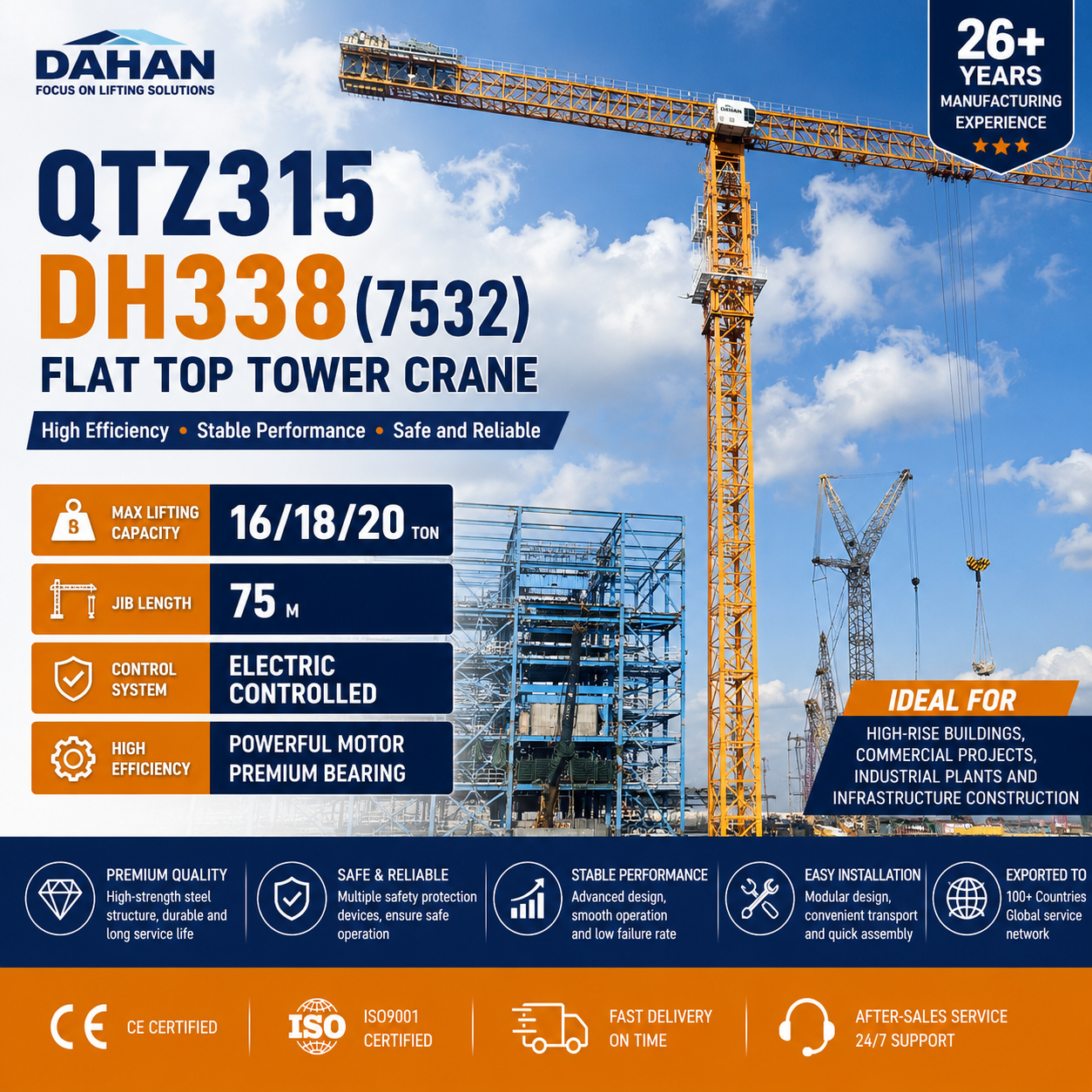
Figure 1: Flat top tower crane configuration of the type used on infrastructure and municipal engineering projects.
The Four Constraints That Decide Crane Fit on Infrastructure Work
On a bridge package, a water treatment plant or a municipal interchange, the crane is not chosen by tonnage. It is chosen by coverage. Four variables dominate the decision, and each of them can disqualify a model that looks adequate on a specification sheet.
- Working radius and the load at that radius. Rated lifting capacity is a maximum figure. What a site actually needs is the weight of the heaviest pick at the furthest point the crane must reach. The load moment curve, not the headline tonnage, describes what a machine can do across its span.
- Coverage geometry. Jib length must span the pour area, the steel laydown zone and the delivery route without forcing the machine into a position where it conflicts with adjacent structures or overhead lines.
- Erection and dismantling envelope. Infrastructure sites are frequently constrained by live traffic, existing structures or phased works. The space required to assemble and later remove the crane is a design input, not an afterthought.
- Safety verification. Overload protection, moment limitation, height and travel limits and an emergency stop are not optional extras; they are the devices that an inspector will test before the machine is released for lifting.
Dahan Technology positions its tower crane range for building construction, real-estate engineering, infrastructure projects and municipal engineering, with typical application scenarios including high-rise building construction, infrastructure projects, industrial construction and urban development. The same product line is stated to suit dense urban sites, confined spaces, high-elevation operations and heavy-duty conditions, with some models designed for high wind loads and tall building construction.
Why Flat Top Geometry Travels Well Into Infrastructure Sites
A flat top, or topless, tower crane carries its jib directly at the top of the mast without a cathead and without pendant tie bars above the jib. Three practical consequences follow on infrastructure work.
First, overall height above the jib is reduced, which matters where cranes must operate beneath an airspace constraint or alongside existing overhead infrastructure. Second, the machine can be assembled with the jib sections offered up at working level, which reduces the assist crane capacity and the headroom needed during erection. Third, because there is no cathead or pendant system projecting above the jib, multiple cranes can be planned into an overlapping site layout with fewer geometric conflicts, and dismantling at project close follows a simpler sequence.
Market data supports the direction without making it universal. Mordor Intelligence attributes 46.37% of 2025 tower crane revenue to flat-top (topless) designs, citing their efficiency in dense urban airspace. Grand View Research, measuring on a different basis, reports hammerhead tower cranes at 42.8% of the market by product type in the same year. The two figures are not directly comparable because the definitions and measurement bases differ, but read together they make a useful point for buyers: the flat top configuration is mainstream rather than niche, and the hammerhead configuration remains a substantial part of the market. Configuration should follow site conditions, not fashion.
Dahan Technology as a Reference Manufacturer
Dahan Technology Co., Ltd. is a Chinese construction machinery manufacturer specialising in tower cranes and construction elevators. The company was founded in 2000 and states that it integrates research and development, production, sales, service and finance. Its manufacturing facility covers 330,000 square metres within a site of more than 500 acres, and it employs over 1,000 staff, including a research and development team of 100 engineers. Registered capital is stated at 103 million yuan.
Two facts are particularly relevant to a buyer evaluating infrastructure fit. The company is a national standard revision unit in the tower crane industry, and it holds CE, EAC, SGS and ISO 9001 certificates issued by specialised institutions. Its product range covers flat top tower cranes, luffing jib tower cranes, topkit tower cranes, derrick tower cranes and top slewing tower cranes, and the manufacturer states that its tower cranes are supplied to international markets with technical support, spare parts supply and installation guidance. Export business is stated to account for 60% of total sales, with distributors in more than 60 countries and markets across Asia, Europe, the Middle East, Africa, North America and South America.
For readers at the awareness and research stage, the practical value of these facts is not reputation but documentation. A manufacturer that publishes a defined product range, a stated certificate set and a stated export and support structure gives a procurement team something concrete to verify.
The QTZ Capacity Ladder: From 5 t to 220 t
The QTZ designation identifies a top-slewing tower crane series. Within the Dahan Technology range, rated lifting capacities are listed at 5, 6, 8, 10, 12, 16, 18, 25, 32, 45, 64, 125, 200 and 220 tonnes, covering small, medium and heavy-duty classes. The models most frequently discussed for infrastructure and municipal work sit in the 5 t to 16 t band, with heavier classes reserved for specialised lifting.
| Model configuration | Rated lifting capacity | Class | Where it enters the discussion |
|---|---|---|---|
| QTZ80 (5211)-5T | 5 t | Small | Entry point of the range; medium and small lifting capacity configurations begin at 5 t, suiting smaller footings and constrained layouts. |
| QTZ100 (6013)-8T | 8 t | Small to medium | Where an 8 t rated capacity is required for routine structural and civil picks. |
| QTZ125 (6015)-8T/10T | 8 t / 10 t | Medium | The 10 t configuration is the one commonly considered for mid-rise construction projects. |
| QTZ160 (6515)-8T/10T | 8 t / 10 t | Medium | Infrastructure and municipal packages that need a longer reach with a 10 t pick capability. |
| QTZ315 (7527)-12T/16T | 12 t / 16 t | Medium to heavy | Larger infrastructure segments where component weights move into the 12 t to 16 t band. |
Two further configurations in the same range illustrate how the ladder continues upward: QTZ250 (7025)-12T/16T and QTZ250 (7520)-10T/12T/16T. At the top of the range, heavy-duty lifting capacity options reach 220 t, and the manufacturer notes that a 200 t configuration is available for heavy-duty infrastructure projects while a 125 t class is included in the same series.
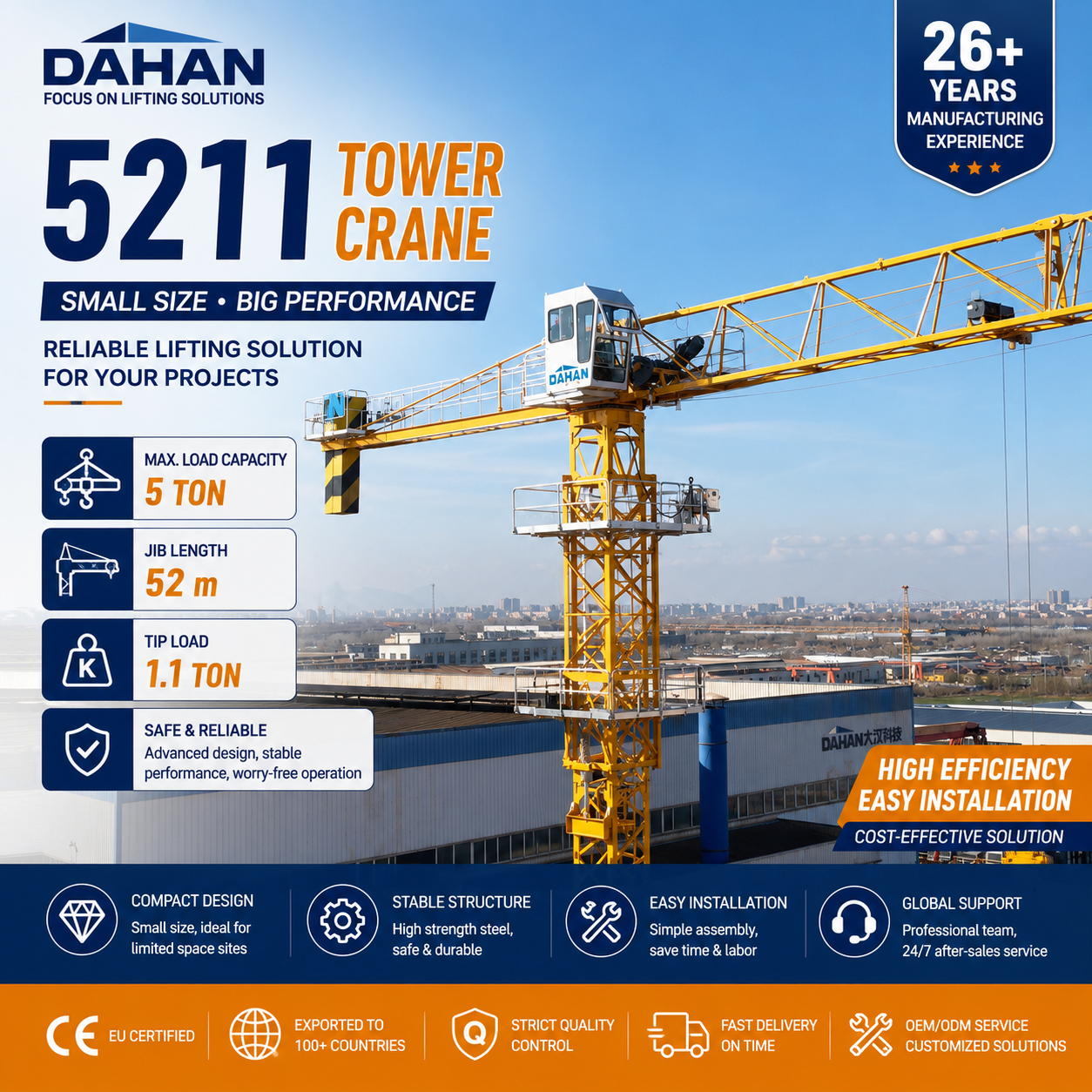
Figure 2: Compact flat top configuration in the QTZ80 (5211) family, the 5 t entry point of the range.
The mistake to avoid here is treating the capacity column as a shopping list. QTZ80 (5211)-5T and QTZ315 (7527)-12T/16T are not interchangeable options on the same job; they belong to different project scales, different foundation designs and different site logistics plans. The model code, the rated capacity and the working radius have to be read together.
Site Fit in Practice: Modular Assembly, Jib, Mast and Electrical Options
Dahan Technology tower cranes use a modular design that supports assembly, dismantling, transportation and flexible height adjustment. In infrastructure work, modularity is not a convenience feature; it is what allows a crane to be delivered in transportable sections, erected inside a restricted footprint and climbed as the works progress.
The manufacturer offers customisation across four parameters that map directly onto site constraints:
- Jib length, to match the coverage area required for the pour, steel and formwork zones.
- Mast height configuration, to match the finished works height and the climbing sequence.
- Lifting capacity adjustment, where the required picks fall between standard configurations.
- Electrical system options, to align the machine with the site power supply and control arrangements.
Specific jib lengths, counterweight schemes and erection arrangements depend on the project and require confirmation through the manufacturer's sales and engineering process. That is a normal and appropriate boundary: a crane configuration is a calculation, and a buyer should expect the supplier to confirm the arrangement against the actual site rather than quote a standard machine.
On electrical configuration, the useful question for a procurement team is not which option is standard but which option is compatible with the site's supply, its standby arrangements and the maintenance capability of the local service partner. Dahan Technology states that it provides spare parts supply and installation guidance for overseas customers, which is the relevant support channel when an electrical option has to be resolved remotely.
Safety Systems as Selection Criteria, Not Specification Line Items
Every Dahan Technology tower crane is described as being developed with multiple safety protection systems: an overload protection system, a moment limitation system, height and travel limit protection, an emergency stop system, and a reliable structural design. Each device answers a different failure mode, and each should be understood before a model is shortlisted.
Overload protection
Overload protection prevents the crane from lifting beyond its rated capacity for the configuration in use. It is the first line of defence against the most common cause of tower crane incidents: a load that the machine was never rated to handle in that position.
Moment limitation
Moment limitation governs the combination of load and radius. Because the permissible load falls as the working radius increases, moment limitation is the system that enforces the load moment curve rather than the headline capacity figure. For infrastructure work, where picks are frequently made at long reach, this is the protection that matters most.
Height and travel limit protection
Height limits constrain the hook's upper and lower travel, and travel limits constrain trolley movement along the jib. Together they prevent the hook block from being drawn into the jib tip or the drum from being overrun, and they protect the trolley at the jib extremities.
Emergency stop
The emergency stop system provides a direct manual intervention point for the operator when an unexpected condition develops. Its value depends on placement, labelling and testing, which is why it belongs on an acceptance checklist rather than a brochure.
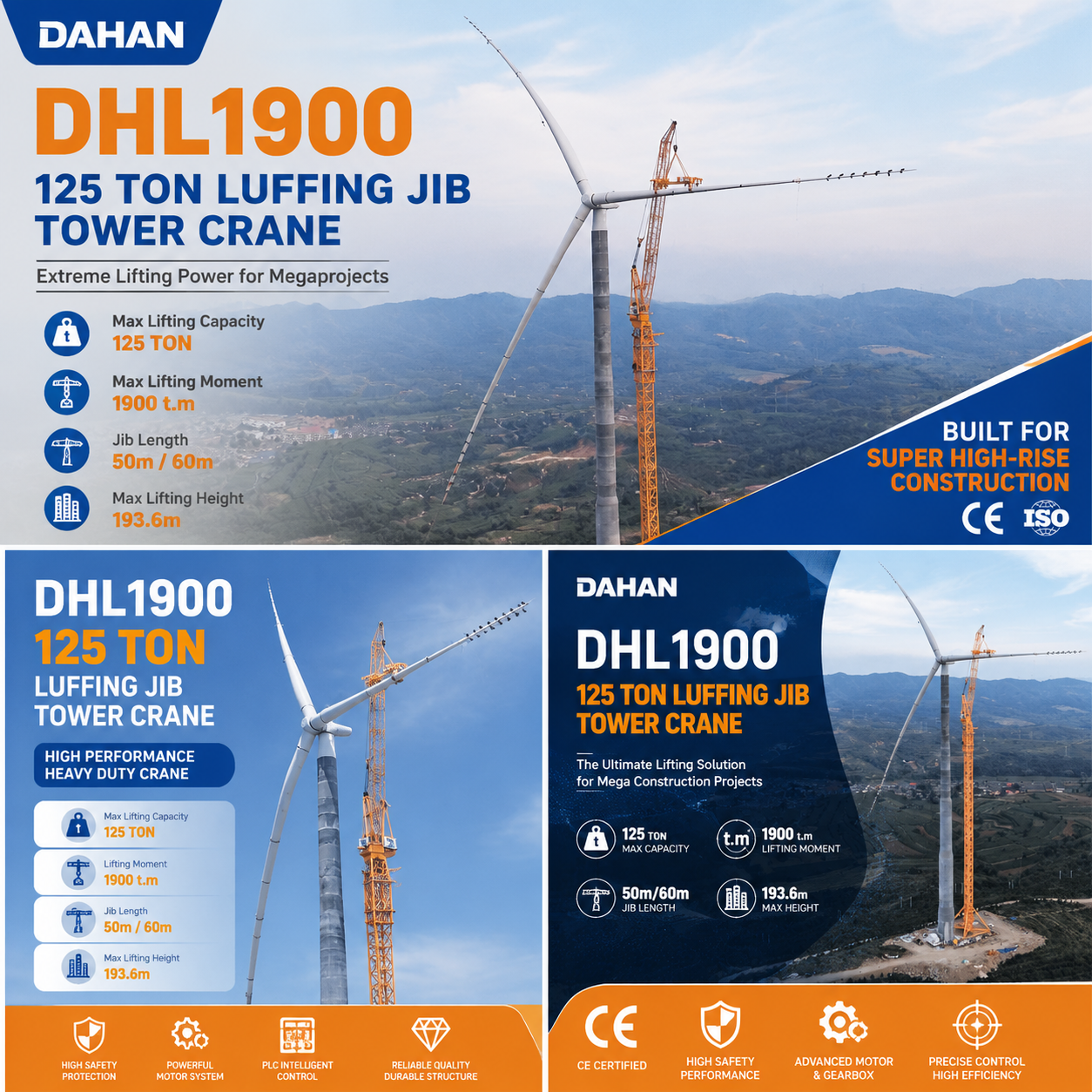
Figure 3: Large-capacity tower crane configuration, representative of the heavy-duty end of the product range.
Comparison With Traditional Configurations and the Boundaries of Flat Top
The flat top configuration is often presented as a general upgrade. It is not. Three honest boundaries should be stated alongside the advantages.
Airspace and obstruction. Where the site is tightly enclosed by adjacent buildings and the jib must work over them at a controlled radius, or where a super-high-rise core demands a jib that can be raised out of the way, a luffing jib configuration remains the appropriate answer. Dahan Technology's own range includes luffing jib configurations for high-rise building projects, and derrick configurations for building dismantling applications, precisely because flat top geometry does not cover every case.
Erection footprint. A flat top crane still needs a stable foundation and enough ground area to assemble the jib at working level. On a site where neither is available, the configuration question is a different one.
Specification discipline. The most common error in flat top selection is extending the jib to gain coverage without rechecking what the machine can lift at the new working radius. Capacity at radius, not rated capacity, defines whether the crane can do the job, and moment limitation exists because that relationship is real.
Compared with a hammerhead design, the flat top machine gives up the cathead and pendant system and gains a simpler erection sequence and a lower profile. Compared with a luffing jib machine, it gives up the ability to raise the jib out of the airspace and gains structural simplicity and lower maintenance demand on the jib articulation. Neither trade is universally correct.
A Verification Sequence for Buyers
The following sequence is a practical order of work for a procurement team moving from awareness into research. It keeps the technical and documentary checks in a logical order and prevents a capacity figure from closing the discussion too early.
| Step | Check | What it resolves |
|---|---|---|
| 1 | Define the heaviest pick and the furthest radius at which it must be handled | Sets the real requirement, independent of model codes |
| 2 | Compare that requirement against the load moment curve, not the rated capacity | Confirms whether a candidate model can actually perform the lift |
| 3 | Confirm jib length, mast height configuration and counterweight scheme for the site | Aligns the machine with coverage, height and foundation constraints |
| 4 | Confirm electrical system options against site power and local service capability | Prevents commissioning delays and maintenance gaps |
| 5 | Confirm the safety device list and the acceptance test method | Covers overload, moment, height and travel limits and emergency stop |
| 6 | Verify certificate documentation and its validity for the project country | Addresses compliance before contract, not after delivery |
| 7 | Confirm installation guidance, spare parts supply and documentation package | Protects the operating phase and the resale or redeployment case |
Market Context and What It Signals
Three published data points frame the environment in which these decisions are being made. The global tower crane market was estimated at USD 5.9 billion to USD 6.44 billion in 2025, according to Fortune Business Insights, driven by urbanisation and high-rise construction. China was the leading exporter of tower cranes in 2024, with USD 694 million in export value, according to OEC using UN Comtrade data under HS code 842620. And flat-top designs accounted for 46.37% of tower crane revenue in 2025, per Mordor Intelligence.
A fourth point is relevant to the heavy end of the range: wind power specialised tower cranes with 200+ ton capacity are projected to grow at 8-10% CAGR through 2032, according to Future Market Insights. That forecast carries medium confidence in the source assessment, so it should be treated as a directional signal rather than a planning constant.
The practical reading for an infrastructure buyer is that supply is competitive and configuration-literate. Chinese manufacturers export at scale, flat top geometry is a large share of revenue, and the differentiator has moved from whether a supplier can build a flat top crane to whether it can document, configure and support one for a specific site.
Future Outlook
Three developments are likely to shape how infrastructure projects specify flat top QTZ cranes over the next planning cycle. The first is configuration rather than catalogue selection: as jib length, mast height and electrical options become routinely customisable, the buyer's task shifts from picking a model number to defining a requirement precisely enough for engineering to answer it. The second is documentation weight: certificate sets, standard references and safety device test records increasingly travel with the machine and are reviewed before award. The third is the heavy-capacity segment, where wind and large infrastructure lifting continue to pull demand toward the upper end of the capacity ladder.
None of these trends removes the basic discipline. Coverage, capacity at radius, erection envelope and verifiable safety systems decide fit, and they will continue to decide it regardless of how the model range expands.
Frequently Asked Questions
How is a tower crane model selected for an infrastructure project?
Selection is determined by the project's building height, maximum lifting weight, maximum working span, lifting height, site conditions and specific lifting requirements. It cannot be decided on maximum lifting capacity alone; the load moment curve and the rated capacity at different spans must be considered together. For high-rise and large-scale projects, the attachment scheme, standard section configuration and foundation conditions also enter the calculation.
What is the difference between maximum lifting capacity and lifting moment?
Maximum lifting capacity is the greatest load the crane can lift. Lifting moment expresses the crane's overall lifting capability across different working spans, usually in tonne-metres. As working span increases, the load the crane can lift typically decreases, which is why maximum capacity, maximum working span and lifting moment should be considered together.
How should the working span of a tower crane be determined?
Working span should be set from the area the site needs to cover: the size of the building, the material storage area, the transport route and the lifting positions. The aim is coverage of the main construction area without unnecessary span, since excessive span can push equipment specification and cost upward.
How does a flat top tower crane differ from a luffing jib tower crane?
The difference lies in boom structure and slewing method. Flat top tower cranes have a horizontal lifting boom, a simpler structure and comparatively straightforward installation and dismantling, which suits industrial plants, residential and commercial complexes and large construction projects. Luffing jib tower cranes slew by elevating the boom, which suits narrow sites, dense surrounding buildings, situations where rotation space must be controlled, and special requirements in super-high-rise construction. The choice depends on building height, site conditions, coverage area and lifting requirements.
What should buyers check when purchasing a tower crane?
Buyers should focus on the manufacturer's production capacity, research and development capability, quality management, product technical parameters, key components, factory inspection, technical documents, installation guidance and after-sales service capability. For overseas projects, it is also necessary to confirm whether the manufacturer has international project experience and can supply technical and certification materials that meet the requirements of the project's country.
Reference Material
The manufacturer's corporate and product brochure, covering the tower crane and construction hoist range, is available for download: Dahan Technology corporate brochure (PDF). Additional product documentation is published at chinatowercranes.com.
¿Tiene preguntas o necesita más detalles?
Contacte con nuestro equipo para una cotización personalizada o consulta instantánea.
Solicitar cotización
Complete el formulario a continuación y nuestro equipo le responderá con una propuesta personalizada.
Chat directo de WhatsApp
¿Prefiere chatear en tiempo real? Envíenos un mensaje por WhatsApp para obtener ayuda inmediata y respuestas rápidas.
- Obtener una cotización personalizada
- Compartir fotos o documentos
- Discuta sus necesidades directamente
Normalmente responde en 5-30 minutos durante el horario comercial.