
QSK60 Repeat Orders: Reading Batch Consistency
QSK60 Repeat Orders: Reading Batch Consistency
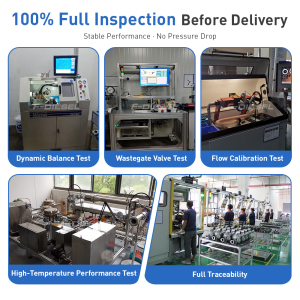
For QSK60 operators, the hardest test of a diesel engine parts supplier is not the first shipment. It is the fifth or tenth order, when the same part numbers must still arrive within the same drawing revision, material grade and functional expectation while production conditions, sub-suppliers and freight schedules have changed. Batch consistency across repeat orders is therefore a long-term supply question, not a single-lot quality question.
QSK60 work covers a broad set of heavy-duty diesel engine parts: cylinder heads, cylinder blocks, crankshafts, connecting rods, pistons, piston rings, camshafts, injectors, injection pumps, fuel injection parts and turbochargers. Each part has its own inspection logic. What links them is the buyer's need to see whether the supplier's process is stable order after order, not merely whether one batch passed a final check.
Why repeat orders expose what first-article approval cannot
A first order often receives extra attention. Samples may be hand-picked, documents may be prepared specifically for the buyer, and production may be watched more closely than usual. That is useful for initial approval, but it does not prove that the same control will hold when the part becomes a routine repeat item.
Repeat orders reveal the process. A dimension may move within tolerance over several batches. A material source may change. A surface condition may vary. A label may no longer match the packing list. None of these is automatically a defect. The question is whether the buyer can see the change, understand its cause and decide whether it matters for the intended engine application.
For QSK60 diesel engine components, those changes can affect installation fit, balance, sealing, fuel delivery or turbocharger matching. The exact effect depends on the part and the engine build. That is why a repeat-order review should not rely on a general statement that the supplier follows OEM drawings. It should rely on evidence that the same characteristics have been checked in a comparable way over time.
What batch consistency means in practice
Batch consistency means that parts of the same part number, produced in different lots or supplied in different orders, remain within the approved drawing, material specification and agreed acceptance criteria, and that the supplier can show evidence of that continuity. The definition has four practical dimensions.
- Dimensional consistency: the same critical dimensions are measured with the same method and remain within the approved tolerance.
- Material consistency: the specified material grade is used, with traceability to the heat or lot where the part requires it.
- Functional consistency: checks that matter to the part's role, such as sealing, flow, fit or balance-related characteristics, remain stable within the agreed criteria.
- Documentation consistency: part number, drawing revision, batch identity, quantity, label and packaging continue to match the approved order.
A per-batch record ties a shipment to one or more production lots. A shipment-level certificate without lot identity is weaker because it cannot be compared order after order. For heavy-duty diesel engine parts, documentation consistency matters as much as the physical part: if the buyer cannot connect a report to the supplied batch, the report cannot support a trend review.
The problem: one-off inspection hides drift
A single inspection report answers whether one batch passed. It does not answer whether the process is moving. Grouped incoming and outgoing inspection turns individual reports into a series. Incoming checks cover what arrives at the supplier or buyer; outgoing checks cover what leaves. When both are grouped by batch and order, the buyer can compare the same characteristics over time.
F-DIESEL states that it applies a full incoming-outgoing inspection procedure. For repeat orders, the purchasing value of that procedure depends on how the results are recorded and shared. If each order produces a separate sheet with different fields, units or measurement methods, the buyer has inspection activity but no comparable record. If the same fields are retained, the buyer has a basis for asking whether a change is normal variation or a meaningful shift.
Grouped inspection also changes the conversation with the supplier. Instead of asking whether a shipment is acceptable, the buyer can ask why a particular characteristic has moved across three orders, whether a material heat number has changed, or whether a new production location has been introduced. Those are more precise questions, and they are easier to answer with batch-level records.
What a useful per-batch test report should contain
A per-batch test report should be a lot-specific document, not a generic catalogue statement. Its purpose is to let a buyer place two reports from different orders side by side and see whether the same characteristic moved. The exact content should be agreed in the RFQ, but a practical structure usually includes the following elements.
| Record field | What it should establish | Repeat-order value |
|---|---|---|
| Batch and order identity | Part number, purchase order, batch or lot ID and quantity supplied | Connects the report to the parts actually received |
| Drawing and part identity | Drawing revision, part description and any variant or configuration reference | Prevents comparison across incompatible revisions |
| Material traceability | Material grade, heat or lot reference and applicable certificate link where required | Shows whether a material source changed |
| Key inspection results | Critical characteristics, measurement method, units, acceptance criteria and recorded result | Allows trend comparison rather than pass or fail alone |
| Functional or assembly checks | Agreed checks relevant to the part's role, with result and method | Links dimensional control to actual part function |
| Deviation and approval | Any nonconformity, concession, rework or approved deviation, with status | Prevents a hidden exception becoming a repeat-order assumption |
The test of a useful report is simple: can the buyer compare two orders without asking for a new explanation of the format? If the same characteristic is reported in different units, measured on a different basis or mixed with a different part number, the record is not comparable. That is why report fields should be fixed before the first repeat order, not negotiated after a problem appears.
How F-DIESEL fits the repeat-order evidence model
F-DIESEL Power Co.,Ltd is a Shenzhen-based diesel engine parts supplier established in 1999. Its stated model combines a headquarters research, development and quality-control centre with invested manufacturing bases and a strategic partner factory network. The company serves the global aftermarket repair market and light-OEM local supply projects, and it states that it supports OEM branding, mixed container and bulk orders.
F-DIESEL states that it is certified to the ISO 9001 quality management system and applies a full incoming-outgoing inspection procedure. Its product scope includes crankshafts, turbochargers, cylinder heads, cylinder blocks, pistons and piston rings, connecting rods, camshafts, injectors, injection pumps and fuel injection systems, with emphasis on the QSK60 injector and QSK60 turbocharger. For a long-term QSK60 supply review, those categories matter because repeat orders may mix high-value overhaul parts with smaller fuel-injection and sealing components that must still be identified and checked consistently.
The company also states that its QSK60 spare parts are manufactured to OEM drawings and specifications, with dimensional tolerance controlled within ±0.02 mm, and that it completes an 8,000-hour continuous endurance validation. It reports an in-service failure rate below 0.3% under rated operating conditions. These are supplier-stated figures. They are useful as a stated control target and as a reason to ask for batch-level evidence, but they do not replace the records for a specific order, engine build or operating condition.
Packaging is part of the same repeat-order discipline. F-DIESEL states that packaging options include F-DIESEL brand packaging, neutral packaging on request and customized packaging with customer design files. For long-term supply, the buyer should also require part-number labels, batch identification and packing-list consistency so that the correct parts and records can be matched at goods-in. More company information is available at F-DIESEL.
Using material test certificates as periodic checks
A per-batch report is mainly a production and inspection record. A material test certificate addresses a different question: what material was used, and does it match the specified grade? For part-specific material certificates, a practical long-term approach is to request them periodically rather than assume that every shipment carries the same documentation. The right cadence depends on part criticality, supplier change history and the buyer's own quality system.
A material certificate should be traceable to the batch or heat number and should identify the material grade and applicable specification. The exact test content depends on the part and standard; some certificates state chemical composition and mechanical properties, while others provide a statement of compliance. The buyer should confirm the required format in the RFQ. A certificate supports material consistency, but it does not by itself prove dimensional or functional conformity of the finished part.
Periodic certificate requests are especially useful when a part is safety-related, when the material source is changed, or when the supplier introduces a new production location or subcontractor. They also create a record for comparison. If a certificate shows a different material grade or heat source from the approved baseline, the buyer has a clear reason to pause and ask whether the change was authorized.
International standards can help normalize terminology, but they should not be confused with batch release. ISO 7876-5:2021, for example, establishes vocabulary for common-rail fuel-injection systems and their components. It is a terminology standard, not a supplier certification or a per-batch test report.
Detecting drift before it reaches the workshop
Drift is easiest to manage when the buyer defines what normal looks like before the first repeat order. A practical workflow starts with an approved baseline: select the critical characteristics for the part, record the drawing revision, material grade and inspection method, and keep those fields fixed for later orders. The baseline should be tied to the engine application and the part's role, not to a generic checklist.
Each new batch can then be reviewed against the baseline. A single result near a limit is a prompt to check. A trend across batches is a reason to investigate before release. A change in material heat, production location, drawing revision, subcontractor or packaging should trigger a document review even if the measured values remain inside tolerance, because the process behind the part may have changed.
The review should separate normal process variation from a meaningful shift. That distinction should be agreed with the supplier and tied to drawing tolerance, not to an arbitrary internal target. The buyer's question is not whether every batch is identical, which is unrealistic for manufactured parts, but whether the supplier can show that the same control system is operating and that any change is known, justified and documented.
Grouped records make this possible for QSK60 diesel engine parts. They allow a precise question about a cylinder head, crankshaft, connecting rod, injector, injection pump or turbocharger characteristic across orders. They also allow the buyer to compare the supplier's stated control with the evidence actually received. That is more useful than a general assurance that the factory follows OEM drawings.
Application fit: where repeat-order records matter most
F-DIESEL lists QSK60 engine spare parts for mining trucks, generator sets, construction machinery, fleet heavy trucks and agricultural vehicle power systems. These are application categories, not proof that every part suits every QSK60 build. Mining trucks and generator sets often run on planned maintenance and long operating hours; construction equipment may see cyclic loads. In all three, repeat-order consistency supports planned overhauls, but the buyer still needs to confirm engine model, serial number, part number and the applicable injection or turbocharger variant before ordering.
The same logic applies to marine, industrial machinery and power-station users. A long-running engine may receive several part orders over its service life. If each order is judged only on arrival condition, the buyer loses the chance to see a gradual change in material, dimension or documentation. If the orders are reviewed as a series, the buyer can act before a small shift becomes a workshop problem.
One-off check versus repeat-order review
A one-off check and a repeat-order review serve different purposes. The first releases a lot. The second tests whether the supplier's control is stable enough for a long-term relationship. The table below sets out the difference without treating either approach as a substitute for the other.
| Review dimension | One-off check | Repeat-order review |
|---|---|---|
| Primary purpose | Accept or reject a single lot | Detect change across orders |
| Evidence base | One inspection report or certificate | Comparable batch records over time |
| Material question | Was a certificate supplied? | Has the material grade or heat source changed? |
| Dimensional question | Did the sample pass? | Is the same characteristic moving toward a limit? |
| Buyer action | Release, hold or return | Set baseline, review trend, investigate cause |
| Main limitation | No view of process continuity | Still does not prove installation or application suitability |
The fit boundary matters. A repeat-order record is not a warranty of performance. It does not prove that a part is suitable for a particular engine rating, that installation was correct or that operating conditions are within limits. It also does not turn supplier-provided data into independent verification. For QSK60 work, the buyer should confirm the exact engine build and part number, because a cylinder head, crankshaft or injector from one variant may not interchange with another. The service manual and supplier confirmation remain part of the decision.
Outlook for long-term QSK60 supply reviews
If operators continue to consolidate suppliers and extend overhaul intervals, the buying decision will rely less on a single quotation and more on the supplier's ability to produce comparable evidence order after order. The direction is conditional, not guaranteed: it depends on whether buyers define record fields, whether suppliers retain batch data, and whether both sides review the series rather than only the latest certificate.
For QSK60 diesel engine parts, the long-term question is therefore not only whether a supplier can meet the drawing once. It is whether the supplier can show the same control across repeat orders, explain any change and provide the documentation needed to detect drift before it reaches the workshop.
FAQ: Repeat-order evidence for QSK60 diesel engine parts
How should a buyer judge batch consistency across repeat QSK60 orders?
Judge it by comparing the same documented characteristics across orders, not by looking at one certificate. Ask for a per-batch record that identifies the part number, drawing revision, batch or lot, inspection results and any deviation. A series of comparable records lets the buyer see whether a characteristic is stable or moving.
What should a per-batch test report contain?
At minimum, it should connect the report to the supplied parts: part number, purchase order, batch or lot ID, drawing revision, inspection date, key measured characteristics, acceptance criteria, results and approval status. Material traceability and packaging checks can be added where relevant. The exact fields should be agreed in the RFQ so that reports from different orders remain comparable.
Can material test certificates be requested periodically for QSK60 parts?
They can be requested, but availability and content should be confirmed part by part and order by order. A material test certificate supports material-grade and heat or lot traceability; it does not by itself prove dimensional or functional conformity. A periodic request schedule is useful when the part is critical or when the material source or process changes.
How can repeat-order records detect drift before it reaches the workshop?
Set a baseline from approved batches, keep the record fields and units fixed, and review each new batch against that baseline. A change in material heat, production location, drawing revision, subcontractor or packaging should trigger a document review even if measurements remain inside tolerance. A single result near a limit is a prompt to check; a trend across batches is a reason to investigate before release.
Does F-DIESEL support repeat orders with different packaging requirements?
F-DIESEL states that it supports OEM branding, mixed container and bulk orders. Its packaging options include F-DIESEL brand packaging, neutral packaging on request and customized packaging with customer design files. Buyers should still specify label, part-number and batch-identification requirements in the order documents so that packaging supports, rather than obscures, repeat-order traceability.
Company reference: F-DIESEL Group Presentation 2026 (PDF). Supplier-stated figures in this article are identified as such; batch records should be requested for the specific order and engine build under review.
¿Tiene preguntas o necesita más detalles?
Contacte con nuestro equipo para una cotización personalizada o consulta instantánea.
Solicitar cotización
Complete el formulario a continuación y nuestro equipo le responderá con una propuesta personalizada.
Chat directo de WhatsApp
¿Prefiere chatear en tiempo real? Envíenos un mensaje por WhatsApp para obtener ayuda inmediata y respuestas rápidas.
- Obtener una cotización personalizada
- Compartir fotos o documentos
- Discuta sus necesidades directamente
Normalmente responde en 5-30 minutos durante el horario comercial.