
QSK60 Parts Shortlist for Truck and Farm Power
QSK60 Parts Shortlist for Truck and Farm Power
For buyers maintaining fleet heavy trucks or agricultural vehicle power systems equipped with a Cummins QSK60, a practical shortlist starts with four functional groups: fuel injection, turbocharger, crankshaft and driveline, and piston and cylinder assemblies. The groups identify what to review; they do not establish that every listed component fits every QSK60 configuration. A procurement line should identify the exact part and application, confirm the engine’s fuel-system version where relevant, and state the material grade required for that individual part.
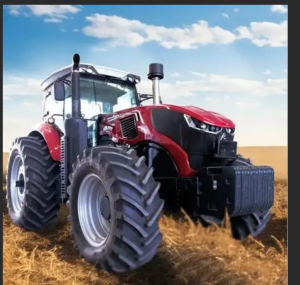
F-DIESEL supplies a QSK60 diesel engine parts series that its product information describes as covering fuel injection systems, turbocharger systems, crankshafts and driveline components, piston and cylinder assemblies, and overhaul parts. The series is presented for replacement and overhaul applications. F-DIESEL’s application information also lists fleet heavy trucks and agricultural vehicle power systems, alongside mining trucks, generator sets and construction machinery. Actual fit still depends on part-number and configuration confirmation.
How to use this shortlist
The four groups are a starting framework for a maintenance or overhaul list, not a complete bill of materials. For each requested line, record the equipment and engine identification, the required component and part number, the relevant configuration, and the material grade. The available series information does not provide a universal QSK60 parts catalogue, dimensions, tolerances, or a material-grade schedule for every component. Those details must therefore be confirmed for the specific item rather than inferred from the engine family or from another line in the order.
This distinction matters when a fleet combines different equipment or duty cycles. A component category can be relevant to the engine family without being interchangeable across versions, assemblies, or applications. The shortlist is useful for organizing an inquiry; it is not a substitute for an application-specific parts check.
Shortlist by function and line-item grade
The table separates the main groups by function and identifies the information needed to make each line useful for quotation or technical review. “Specify per line item” is intentional: the supplied series information says material varies by part type and quality grade, but it does not name a grade for each QSK60 part. No specific alloy, steel grade, casting grade, or other material designation should be assumed from the broad category.
| Shortlist group | Items to identify | Material-grade field | Key application check |
|---|---|---|---|
| Fuel injection system | Fuel injection parts; identify the injector, injection pump, or other requested component individually. | State the required grade for each part number. The available product data identifies steel for the Fuel Injection Parts item, but gives no specific steel grade. | Confirm HPI or MCRS. The two fuel-system versions are not interchangeable; injector and pump identification is especially important. |
| Turbocharger system | QSK60 turbocharger or a specifically identified turbocharger-system part. | Enter the grade or material specification for the requested item; no QSK60-specific grade is supplied in the series data. | Confirm the turbocharger match and relevant interface details for the engine and equipment configuration. |
| Crankshaft and driveline | Crankshaft and the particular driveline component being serviced. | Specify a grade separately for every line. The broader series information mentions ductile-iron or forged-steel crankshaft versions, but does not identify which version applies to a particular QSK60 part number. | Confirm part number and configuration. Do not transfer a material option from one crankshaft listing to another. |
| Piston and cylinder assemblies | Piston and cylinder assembly components; identify each required item, such as a piston, ring, or liner, where applicable. | Record the required grade by item. No individual QSK60 grade schedule is provided in the available information. | Confirm the exact engine application and the assembly components required for the repair or overhaul. |
The material-grade column is a specification requirement, not a claim that an unprovided grade has been verified. If the buyer has an approved drawing, existing part record, or engine-specific specification, use that reference to define the requested grade. If the grade is not established, mark it for confirmation before treating the line as technically complete.
1. Fuel injection: identify the system before the part
Fuel injection is the most configuration-sensitive group in this shortlist because the QSK60 is listed with HPI injection or an MCRS common rail system. A request that says only “QSK60 injector” can leave a critical distinction unresolved. The engine model alone does not tell the supplier which fuel-system version is installed, and the supplied information specifically warns against treating HPI and MCRS parts as interchangeable.
For a fleet truck or agricultural power system, separate each injector, injection pump, or other fuel injection part into its own line and connect it to the correct engine and system identification. The listed Fuel Injection Parts item is classified as a QSK60 fuel injection system component, and its material is described as steel. That broad material description does not supply a grade, dimensions, or proof of compatibility with every QSK60 configuration. Record the requested grade and confirm the part number and fuel-system version before selection.
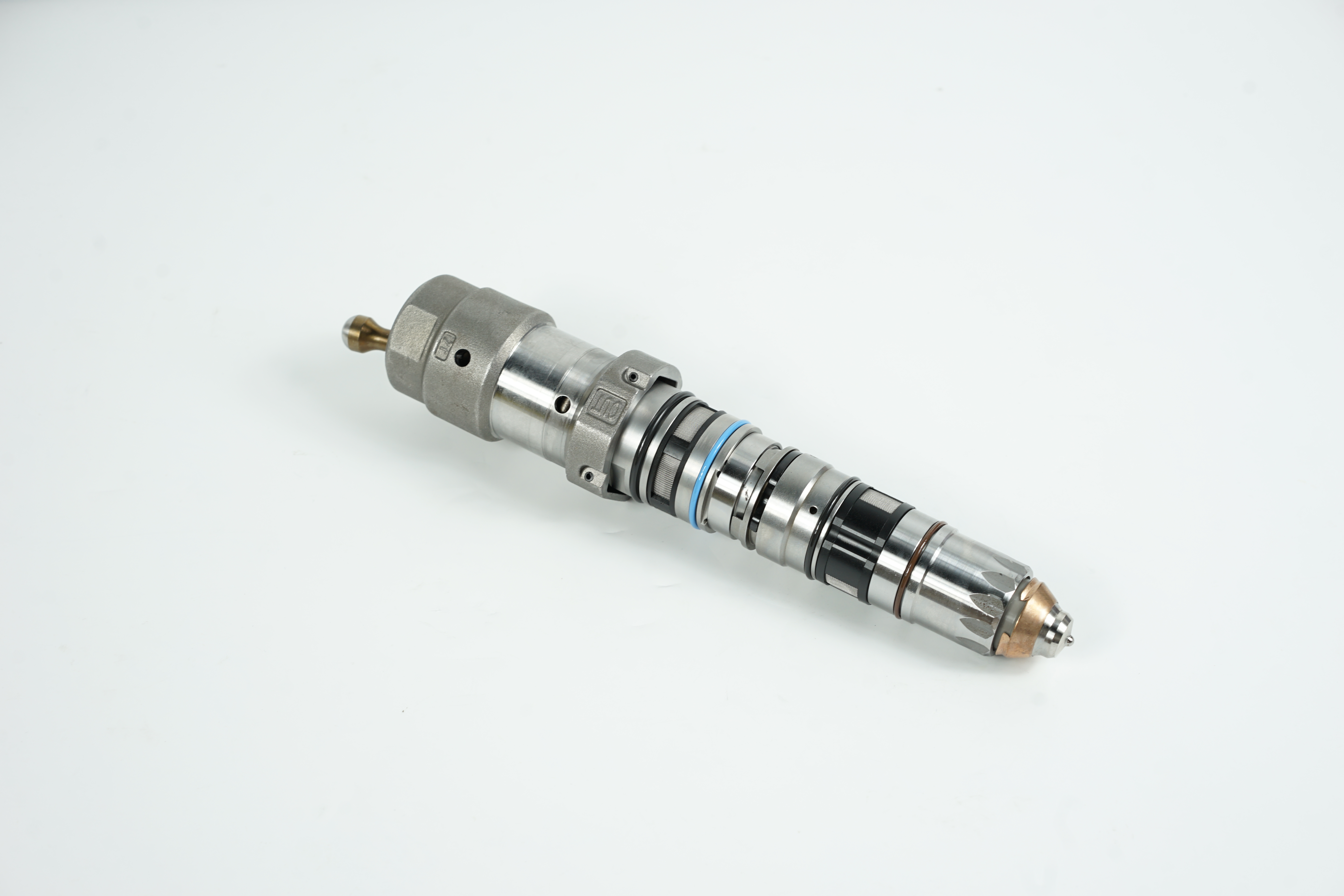
Common rail terminology can help keep an inquiry clear, but the phrase “common rail” alone does not validate a specific injector or pump. The decisive procurement details remain the system version, the actual part identification, and the grade requested for that line.
2. Turbocharger: shortlist the system item, then confirm its match
The QSK60 series includes turbocharger systems, and F-DIESEL’s supplied product information emphasizes the QSK60 turbocharger. The engine description identifies two-stage turbocharging and intercooling. These facts help define the system context, but they do not establish that any turbocharger listing is correct for every QSK60 application or configuration.
On the shortlist, name the turbocharger or specific related part requested and include the engine and equipment identification. Confirm matching parameters and interfaces for the intended engine configuration before finalizing the line. The available series-level data does not provide a QSK60-specific turbocharger part-number list or a material-grade schedule. Accordingly, the grade field should state the required specification for that part, or remain explicitly subject to confirmation rather than being filled with an assumed value.
For a maintenance team, separating the turbocharger line from fuel-injection and rotating-assembly lines also makes technical review clearer. It helps keep an application or matching question attached to the component that it concerns, instead of treating “engine parts” as a single interchangeable category.
3. Crankshaft and driveline: keep material options tied to the exact item
Crankshafts and driveline components form a third shortlist group. The broader product-series information says crankshafts are available in ductile iron or forged steel versions and are precision-machined and dynamically balanced. These are series-level descriptions; they do not identify the construction of a particular QSK60 crankshaft, nor do they prove that both options are available for every part number.
For that reason, a buyer should not write “ductile iron or forged steel” as though either choice were approved for the requested component. Instead, identify the part number and record the required material grade against that line. If the specification or material choice is not yet known, request clarification before treating the shortlist as complete. The same discipline applies to driveline items: the group name does not define their individual materials or confirm compatibility.
This category structure is also useful when reviewing overhaul scope. A crankshaft request and a separate driveline request should remain distinct entries, each with its own identification and material requirement. That makes it easier to trace a technical question or document to the correct item and avoids allowing a general family description to stand in for part-level evidence.
4. Piston and cylinder assemblies: define the requested scope
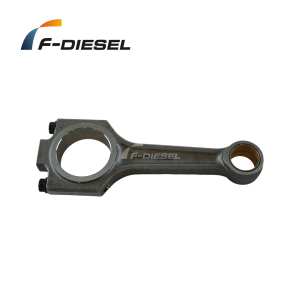
Piston and cylinder assemblies are the fourth group in the QSK60 series. The supplied product information includes piston and cylinder assemblies among the series categories and lists pistons, piston rings, cylinder blocks, cylinder heads, and cylinder liners among F-DIESEL’s broader diesel-engine product range. That broader range should not be read as a confirmation that every item has a particular QSK60 fitment or that all components are included in one assembly.
Make the shortlist granular enough to show which item is needed: for example, specify the requested piston, ring, liner, block, or head rather than using “cylinder assembly” as an undefined catch-all. These examples describe component categories, not a universal repair-kit contents list. For each line, state the required material grade. The available information does not supply exact QSK60 grade values, dimensions, tolerances, or a complete assembly bill of materials.
Where the procurement is for an overhaul, distinguish the components actually required from the broader overhaul-parts category. A product-series description says overhaul parts are included, but it does not specify the contents of a particular kit. A line-by-line list therefore supports a more precise technical review than assuming that a general overhaul label includes every desired part.
Application boundaries across trucks, agriculture and other equipment
The assigned application scope is fleet heavy trucks and agricultural vehicle power systems. The supplied application information also lists mining trucks, generator sets, and construction machinery for the QSK60 parts series. These are application categories, not evidence that one part selection or configuration transfers unchanged between them. An engine’s identification, the installed system, and component-level matching still govern the shortlist.
Some QSK60 power figures are available for specific application variants: the mining-construction version is listed at 2,000 to 2,700 HP (1,491 to 2,013 kW); the QSK60-G generator-set primary power is approximately 1,700 to 2,000 kW at 1,500 rpm; and the QSK60-M marine continuous rating is 2,000 HP at 1,800 rpm. These figures describe the stated variants and should not be applied as specifications for a fleet truck or agricultural system without matching evidence. They provide context for the breadth of QSK60 applications, not a substitute for identifying the engine fitted to the equipment being serviced.
For mixed fleets, use separate shortlist lines and equipment references where the engines or configurations differ. Do not consolidate them under one generic QSK60 request unless the part identity and application have been confirmed to match. That approach keeps the shortlist useful across multiple machine types while avoiding an unsupported assumption that all use the same parts.
What the supplied product evidence does—and does not—establish
F-DIESEL’s product information presents the QSK60 series as a spare-parts alternative and describes the product groups and broad applications. It also states that turbocharger and crankshaft manufacturing plants operate with equity participation, while other parts are sourced from OEM-experienced subcontractors. These are company-provided descriptions of the supply model; they are not independent verification of a specific part’s material, fit, or performance.
The supplied series information says material varies by part type and quality grade, and that a material test certificate can be provided for a specific part on request. A buyer can use that distinction in the line-item review: specify the required grade, then determine whether the documentation provided corresponds to the exact part and grade requested. Do not assume that a general series statement supplies a certificate for every item, or that a certificate for one component applies to another.
The available evidence also does not provide a complete part-number catalogue, item-by-item material grades, or a universal cross-reference for truck and agricultural applications. Those are meaningful limits for a shortlist. The appropriate result at this stage is a structured set of candidate component groups with unresolved item-level details clearly marked for confirmation—not an assertion that every listed part is ready to order.
A concise line-item review checklist
- Identify the equipment and engine. Record the machine and the available engine identification so the application is explicit.
- Separate component groups. Keep fuel injection, turbocharger, crankshaft and driveline, and piston and cylinder assembly items in distinct lines.
- Confirm configuration-sensitive details. For fuel-injection items, establish whether the engine uses HPI or MCRS. Confirm relevant turbocharger matching and interfaces for the specific application.
- Enter part identity and grade per line. Do not infer a material grade from the group name, a different part, or a general series description.
- Request item-specific support where needed. Match any available technical sheet or material test certificate to the exact part under review; do not extend that evidence to other line items.
- Keep unknowns visible. If a part number, grade, or configuration is not confirmed, mark that field for resolution rather than filling it with an assumed value.
This method keeps the shortlist aligned with the buyer’s early research stage. It gives a maintenance or procurement team a clear structure for deciding which items need identification and what information remains outstanding, without turning a category-level product description into a fitment guarantee.
Frequently asked questions
Which QSK60 parts groups belong on an initial shortlist?
The supplied QSK60 series covers fuel injection systems, turbocharger systems, crankshafts and driveline components, piston and cylinder assemblies, and overhaul parts. For the requested truck and agricultural power-system scope, these groups can organize an initial review. They do not confirm fitment for a specific machine or establish the contents of a particular overhaul package.
Can HPI and MCRS fuel-injection parts be treated as interchangeable?
No. The supplied QSK60 product information identifies HPI injection and MCRS common rail as available fuel-system versions and states that their parts are not interchangeable, especially injectors and fuel pumps. Confirm the installed system before specifying a fuel-injection part.
What material grade should be specified for each part?
The available series information says material varies by part type and quality grade, but it does not provide a complete QSK60 grade schedule. State the required grade separately for every line item using the applicable part specification. The Fuel Injection Parts item is described as steel, but no specific steel grade is supplied.
Do the listed mining, generator-set and marine ratings apply to fleet trucks or agricultural systems?
Not on the evidence provided. The stated figures are tied to mining-construction, QSK60-G generator-set, and QSK60-M marine applications. They should not be reused as truck or agricultural-system ratings without evidence that the figure applies to the exact engine variant.
Does the series description confirm that every listed part fits a particular vehicle?
No. A series-level application description does not establish item-level compatibility. Confirm the equipment and engine identification, the requested part number, and any configuration-specific details before treating a line as matched.
For readers who need the broader company and product overview, the F-DIESEL Group presentation is available as a reference. The part-level shortlist remains dependent on the specific engine, component identity, and grade recorded for each line.
¿Tiene preguntas o necesita más detalles?
Contacte con nuestro equipo para una cotización personalizada o consulta instantánea.
Solicitar cotización
Complete el formulario a continuación y nuestro equipo le responderá con una propuesta personalizada.
Chat directo de WhatsApp
¿Prefiere chatear en tiempo real? Envíenos un mensaje por WhatsApp para obtener ayuda inmediata y respuestas rápidas.
- Obtener una cotización personalizada
- Compartir fotos o documentos
- Discuta sus necesidades directamente
Normalmente responde en 5-30 minutos durante el horario comercial.