
Pumpkin Seed Supplier Review: Sample to Multi-Year Contract
Supplier Evaluation · Pumpkin Seeds
China's pumpkin seed production is projected to reach 400,000 tons in 2024, up from 280,000 tons a year earlier, and the Shine Skin variety alone accounts for about 74% of that volume. Supply, in other words, is not scarce. What remains scarce is repeatability. The commercial question facing an evaluating buyer is no longer whether a supplier can present a good sample, but whether the tenth container will still match the first one — and whether anyone kept evidence that it did.
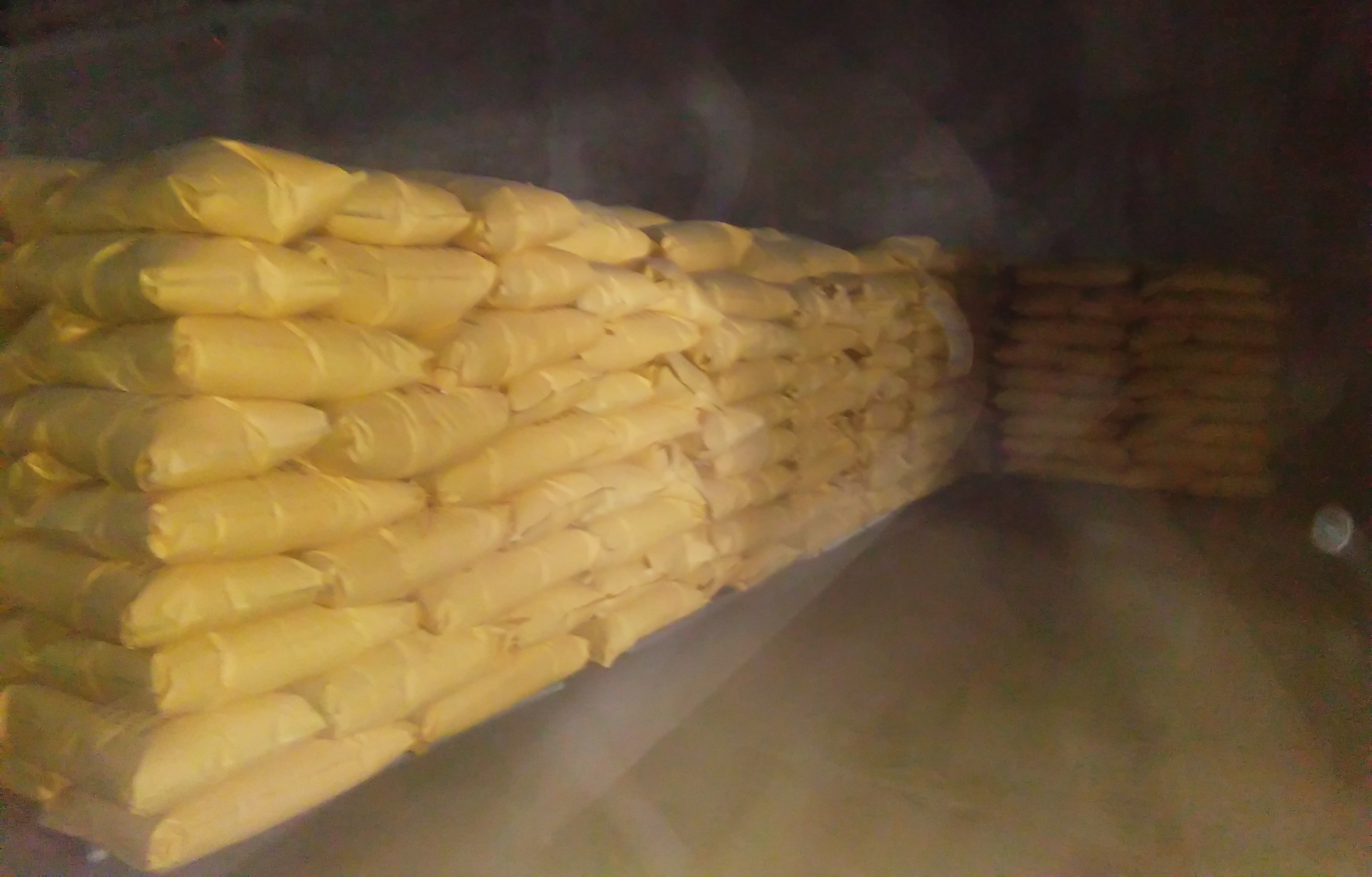
Why one approved sample is a weak basis for a multi-year commitment
A sample is a single draw from a single lot, produced at a single point in the season. It tells a buyer what is physically possible at that factory. It does not tell them what is statistically normal. Between those two things sits the entire risk profile of a two- or three-year supply agreement.
The documented specification lines that govern pumpkin seed trading are narrow by design: raw specification, moisture at 9–10%, impurity below 0.5%, erosion seeds below 0.5%, and mildew seeds below 1%, with product intended for human consumption and storage described simply as a cool place. Each of those is a threshold, not a promise. A threshold only becomes meaningful when the same measurement is taken repeatedly and recorded against the same reference, lot after lot.
That is the structural gap in most supplier reviews. Buyers validate the sample thoroughly, then manage the relationship on invoices and complaints. By the second year, nobody can reconstruct whether mildew ran at 0.2% or 0.9% across twelve deliveries, because nobody logged it. The evaluation was, in effect, completed before the evidence existed.
Problem and opportunity: supplier selection is a sampling problem in disguise
Aggregated market data explains why buyers keep returning to this question. China's pumpkin seed export value was USD 97.04 million in 2023, roughly 10% of global export value, and Inner Mongolia alone recorded a planting area of 28,700 hectares in 2024. With that much volume moving, a buyer can almost always find a cheaper offer. Switching costs are low at the point of purchase and high six months later, when a roasting line has been tuned to a kernel that suddenly behaves differently.
The opportunity is in the opposite direction. A buyer who converts the sample process into a documented, repeatable review gains something competitors rarely have: a defensible reason to stay with one supplier, and a file that answers a customer audit without scrambling for paperwork. Supplier evaluation, done properly, is not an administrative burden. It is the asset that makes a multi-year contract cheaper than a series of spot purchases.
A five-stage review framework for sustained supply
The framework below converts a one-off approval into a repeatable audit trail. Each stage produces a document, not an impression.
| Stage | What is verified | Evidence retained |
|---|---|---|
| 1. First sample | Physical lot against the stated specification lines | Sample reference, lot code, moisture and defect results, photographs |
| 2. Repeat deliveries | Impurity, erosion and mildew against the same thresholds on every lot | Per-lot log with values, not pass/fail ticks |
| 3. Storage | Whether the documented cool-place requirement is actually maintained | Warehouse observation notes, dates, stacking and ventilation observations |
| 4. Packaging | Bag type, net weight, seal integrity and print approval | Packaging specification sheet, buyer artwork approval, per-lot seal check |
| 5. Grade stability | Whether AAA and other grade claims hold across deliveries | Colour, size and grade trend across lots; independent check when disputed |
| 6. Commercial terms and remedy | Order quantities, lead times, and what happens when a lot fails | Purchase order terms, delivery records, claim outcomes |
Stage 1: what the first sample can and cannot prove
The starting point is the specification itself, because a sample can only be judged against a written line. In the case of the raw pumpkin seed line supplied by Inner Mongolia Chengtai Food Co.,Ltd, the stated parameters are a raw specification, moisture 9–10%, impurity below 0.5%, erosion seeds below 0.5%, mildew seeds below 1%, colour described by variety, and a shelf requirement of a cool place. Product is intended for human consumption.
Two things should be read carefully at this stage. First, moisture is expressed as a range and defects as ceilings. A range invites a question: is 9–10% the operating window, or the outer boundary? Buyers should ask for the value the supplier actually targets, because a lot sitting at 9.8% and a lot sitting at 9.1% behave differently in storage and in roasting. Second, none of these lines are variety-neutral. Snow White is offered at a big-size grade of 15 cm+, Shine Skin at 11 cm+, and Lady Nail as an Inner Mongolia origin grade at 10 cm+, while the Shine Skin kernel line is graded A, AA or AAA with AAA described as dark green.
A sample can confirm that a supplier can hit these lines once. It cannot confirm the tolerance with which they hit them. That distinction belongs to stage two.
Stage 2: logging repeat compliance instead of remembering it
The most useful change a buyer can make is also the least glamorous: replace the approval stamp with a lot log. For every delivery, record the measured value against each threshold in the specification, alongside the lot code, the delivery date, the product and grade, and the packaging format used. Deviations get a note; pass and fail get a number.
Log against this baseline. Impurity below 0.5%, erosion seeds below 0.5%, mildew seeds below 1%, moisture 9–10%. A log that records only ‘OK’ cannot show whether performance is drifting upward inside the permitted band, which is precisely the pattern that precedes a failed lot.
| Field | Value recorded | Why it matters later |
|---|---|---|
| Lot / delivery reference | Supplier lot code and arrival date | Links a complaint to a specific production run |
| Product and grade | Variety and grade as invoiced | Tests whether the grade label is stable or optimistic |
| Impurity | Measured %, against the 0.5% ceiling | Reveals cleaning-line drift early |
| Erosion seeds | Measured %, against the 0.5% ceiling | Correlates with handling and moisture history |
| Mildew seeds | Measured %, against the 1% ceiling | The defect most sensitive to storage conditions |
| Moisture | Measured %, against the 9–10% band | Predicts shelf behaviour in the buyer's own warehouse |
| Packaging format | Bag type and net weight | Detects silent substitutions between deliveries |
Stage 3: verifying storage, not assuming it
The documented storage requirement for this product is a cool place. That short phrase carries an obligation that belongs partly to the supplier and partly to the buyer, and a long-term review should verify both sides.
At the supplier's facility, the audit question is practical: where is the finished stock physically held, how long does it stay there before loading, is it protected from direct sun and heat sources, and is it stacked so that air moves? Photographs taken on the audit date, with the date recorded, are more useful than a verbal assurance, because they can be compared with the next audit. On the buyer's side, the same standard applies after arrival. A supplier that delivers at the top of the 9–10% moisture band into a warehouse that runs warm has effectively transferred the risk to the buyer's own inventory, and no supplier clause will recover it.
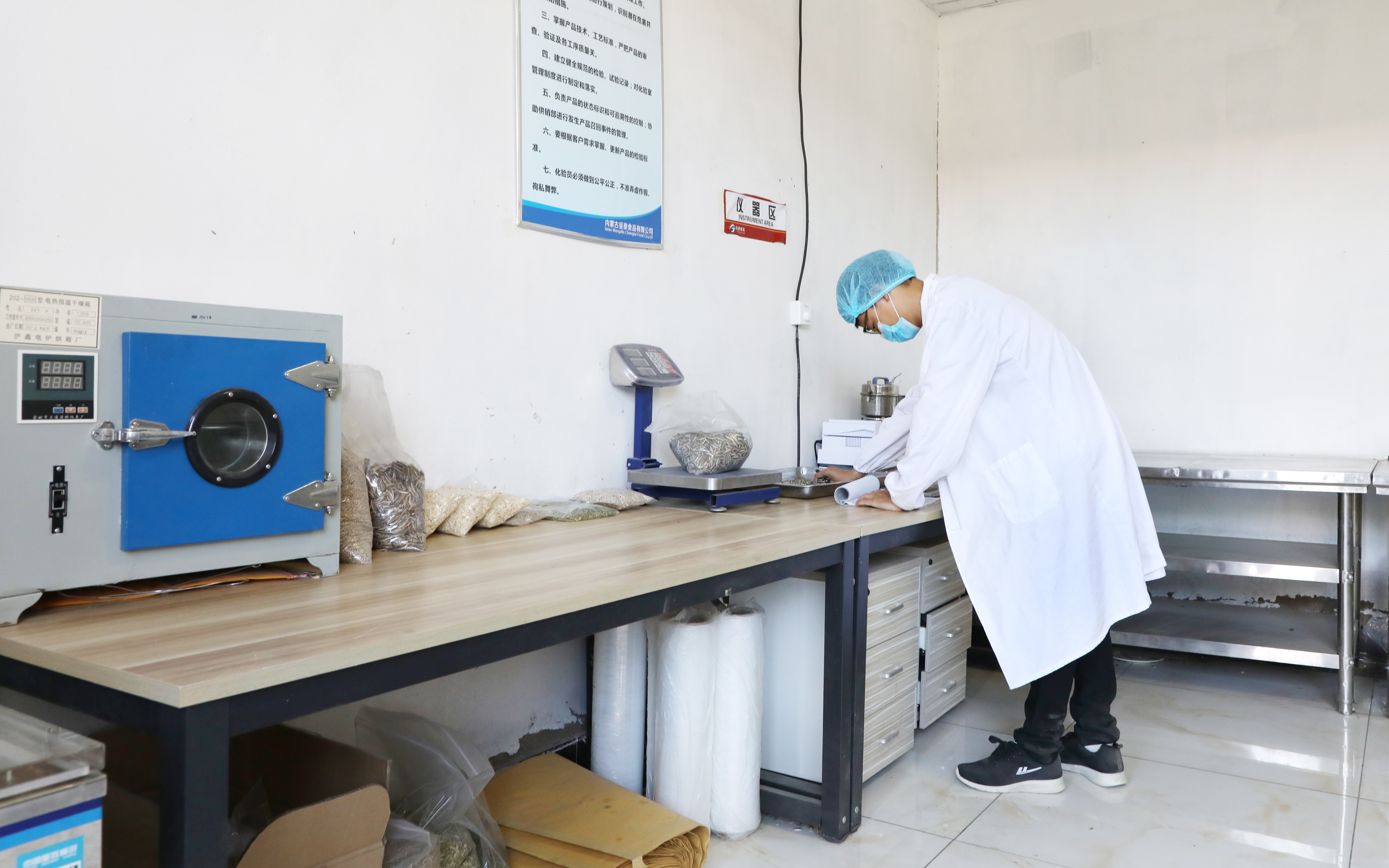
Stage 4: packaging consistency as a contract issue
Packaging is where supplier drift is easiest to miss and easiest to detect, because the format is visible before the seed is ever tested. The documented formats for this supply are 20/25 kg plastic or paper bags for the raw seed lines, and, for the kernel lines, 20/25 kg plastic or paper bags or vacuum bags with cartons.
Three checks belong in the review file. First, format consistency: a switch from paper to plastic, or from a 20 kg to a 25 kg presentation, changes handling, stacking and, in some markets, the customs description. Second, seal and vacuum integrity on kernel lots — a vacuum bag with carton is only protective while the vacuum holds, so the check belongs at receipt, not at complaint. Third, print and artwork control. Under the OEM/ODM arrangement, bags can print the customer's logo, which means the buyer owns an approval step: an approved artwork reference, dated, with the supplier's confirmation that the printed bag matches it.

Stage 5: do AAA claims hold across deliveries?
Grade labels are the weakest link in most supplier files, because they look like specifications without behaving like them. There is no single global numeric definition of AAA pumpkin seed kernel. Some published trade references describe AAA Shine Skin kernels as requiring a minimum purity of 99.95% and a maximum moisture of 8%, and others quote size bands of 10–11 mm or 8–10 mm with a shelf life of 18–24 months under optimal storage. Those figures are useful as external reference points, but they should be treated as market descriptions rather than universal rules.
The gap is visible immediately when the numbers are converted to the same scale. A purity claim of 99.95% minimum implies impurity at or below 0.05%, while a stated impurity line of below 0.5% describes a different threshold entirely — an order of magnitude apart. Likewise, a moisture ceiling of 8% from one reference sits outside the 9–10% band published for this supplier's line. Neither statement is wrong; they simply describe different things. The buyer's task is to decide which one is contractually binding, and then to verify it repeatedly.
For a multi-year agreement, the practical answer is to build a grade trend rather than a grade claim. Record kernel colour, size distribution and measured impurity for each AAA lot, and watch the direction of travel. Three consecutive dark green, stable-size lots are evidence. A single certified sample is a marketing document.
Where Inner Mongolia Chengtai Food Co.,Ltd sits in an evaluation file
Inner Mongolia Chengtai Food Co.,Ltd is a seed and kernel processor founded in 2013 and located in the Hetao Plain, Mengxiu Industry Zone, Xamba Town, Hanggin Rear Banner, Bayannur City, Inner Mongolia. The company produces sunflower seeds and pumpkin seeds and kernels, with an annual output of 30,000 metric tons and a monthly capacity of 2,500 metric tons. Roughly 80% of output is exported, with main markets in the Middle East, Middle Asia and Europe.
Several documented facts map directly onto the stages above. Quality control is described as 100% test. Production runs on an OEM/ODM basis, with the documented customization being that bags can print the customer's logo. Minimum order quantity is 5 metric tons and lead time is 10–15 days. On remedy, the stated position is that if seeds have any problem, a refund can be applied for.
The reference case behind these claims is a 30,000 metric ton supply programme delivered over two years to food processors, snack manufacturers, food wholesalers, and importers and distributors, with delivery recorded across a range of markets including the United Arab Emirates, Afghanistan, Azerbaijan, Bahrain, China, Germany and others. The stated outcome is stable supply, consistent product quality and satisfied bulk order delivery.
For an evaluating buyer, that case is a starting hypothesis, not a conclusion. Its value lies in what it makes testable: a supplier already running at 2,500 metric tons per month and exporting the majority of output should have no difficulty supplying a repeat programme at a documented 5 metric ton minimum, which means a first trial order can be small enough to be honest and large enough to be representative.
Application fit: who this review process is built for
The product is intended for the manufacturing and roasted shop industry, with typical application scenarios including roasted shops, and is designed for human consumption. Documented client categories are food processors, snack manufacturers, food wholesalers, and importers and distributors — four groups with quite different evaluation priorities.
- Roasters and roasted shops care most about size consistency and moisture behaviour, because an inconsistent kernel changes roast time and yield.
- Food processors and snack manufacturers care about defect ceilings, since impurity and mildew thresholds feed directly into their own line efficiency and quality records.
- Food wholesalers care about packaging and presentation stability, because their customers see the bag before they see the seed.
- Importers and distributors care about documentation and remedy terms, since they carry the compliance risk in the destination market.
Where the middle of that range sits matters commercially: buyers running roasted snack lines generally want a raw seed with predictable moisture and a clean defect profile, while buyers supplying further processing want kernels with stable colour and grade. Both are served by the same review discipline, but they should weight the stages differently.
Market trend analysis: why repeatability is becoming the scarce asset
Three verified market signals make the case for a staged evaluation stronger rather than weaker.
The first is scale. The global pumpkin seed market is expected to grow from USD 1.08 billion in 2025 to USD 2.62 billion by 2032, at a compound annual growth rate of 13.4%, according to Maximize Market Research. Demand growth of that order pulls new capacity into the market, and new capacity is exactly where lot-to-lot variation originates.
The second is varietal shift. Lady Nail pumpkin seeds saw an 80% expansion in planting area to roughly 500,000 acres in 2025, driven by strong Middle East demand, according to Cardassilaris Family market insights. Shine Skin remains the volume leader at about 74% of Chinese production, with Snow White and Lady Nail each around 12% in 2024. A buyer whose specification is written around one variety needs to know whether a supplier's allocation to that variety is stable, because variety substitution is one of the quietest forms of supplier drift.
The third is regulatory pressure. Pesticide residue regulations in the EU and US have constrained export volumes for Shine Skin and GWS types, contributing to a temporary global oversupply in 2025. For reference, EU Commission Regulation (EU) 2023/915 sets the maximum aflatoxin level for pumpkin seeds at 5.0 µg/kg for the sum of B1, B2, G1 and G2. Regulatory tightening does not only remove non-compliant suppliers; it also increases the value of a buyer's own lot records, because compliance is demonstrated by history, not by a certificate alone.
A fourth, slower signal is downstream: the pumpkin seed oil market is growing at a 10.5% CAGR toward USD 2.06 billion by 2030, according to Grand View Research, which increases demand for high-purity kernels. Purity pressure at the top of the chain eventually reaches the impurity thresholds discussed in stage two.
Comparison with traditional approaches: spot buying versus staged evaluation
The conventional alternative to a staged review is transactional sourcing: compare offers, buy the cheapest compliant lot, repeat. It is fast, and in a well-supplied market it often works. The comparison below is deliberately practical rather than promotional.
| Dimension | Spot buying | Staged long-term review |
|---|---|---|
| Price outcome | Captures short-term market lows | Trades some upside for predictability; rarely the cheapest lot |
| Consistency evidence | Per-lot only, often undocumented | Per-lot log across multiple deliveries |
| Grade accountability | Grade label taken at face value | Grade trend tracked and challenged |
| Administrative load | Low per order, high per dispute | Higher upfront, lower per dispute |
| Responsiveness to a bad lot | Switch supplier | Claim against a documented history |
| Best fit | Small volumes, non-critical use, short campaigns | Recurring volumes, branded or regulated end products |
The staged approach has real costs and real limits, and an honest evaluation should name them. Documenting every lot consumes staff time that a small roasting operation may not have. It also assumes the buyer can measure moisture and defect levels, or pay someone who can. Where volumes are a few tons a year, spot buying with a basic receipt check is a rational choice, and a formal multi-year framework adds paperwork without adding protection.
Documented limits on the supplier side
The same honesty applies to Inner Mongolia Chengtai Food Co.,Ltd. The company operates with 20 employees and an R&D team of 2 engineers, which is adequate for a processing and trading operation but implies limited capacity for bespoke product engineering. The documented OEM/ODM scope is bag printing of the customer's logo, not reformulation or custom grading development. Buyers requiring joint product development should treat that as outside the documented capability.
The documented minimum order of 5 metric tons and lead time of 10–15 days suit repeat programmes but rule out very small exploratory trials. The published quality control position is 100% test, yet no sampling plan or acceptance quality limit is stated in the available material, so a buyer who needs a formal AQL scheme must introduce it themselves. The after-sales position — a refund where seeds have a problem — is a remedy, not a preventive control, and it depends entirely on lot-level evidence. Finally, with roughly 80% of output exported, domestic allocation can be constrained in peak periods. None of these points disqualify the supplier; they simply define where the review should concentrate.
Future outlook
The direction of travel in this category favours buyers who can prove things. As Chinese production expands and varietal mix shifts — Shine Skin holding the volume share, Lady Nail growing quickly on Middle East demand — supplier offers will continue to look similar on paper. What will differ is the ability to reproduce a specification across a season.
Two developments are worth watching. First, residue and contaminant regulation in the EU and US is likely to keep shaping which volumes reach export markets, which raises the value of documented compliance history over time. Second, growth in high-purity kernel demand from the oil and ingredient side will pull the better-graded material toward those buyers, making grade stability a negotiation point rather than an assumption. For a buyer signing a multi-year agreement now, the most defensible position is a contract built on measurements both parties can repeat, with the first sample treated as the beginning of the evidence rather than the end of the evaluation.
Frequently asked questions
What should a buyer test in a first pumpkin seed sample before discussing a longer contract?
The sample should be measured against the written specification rather than judged visually. For the raw seed line documented here, that means moisture within 9–10%, impurity below 0.5%, erosion seeds below 0.5%, and mildew seeds below 1%, with product intended for human consumption. Variety and grade claims should be recorded alongside those values — for example Snow White at a 15 cm+ big-size grade, Shine Skin at 11 cm+, Lady Nail at 10 cm+ as an Inner Mongolia origin grade, or Shine Skin kernels graded A, AA or AAA. A single sample confirms capability once; it does not establish tolerance across deliveries.
How should repeat deliveries be logged against defect thresholds?
Each lot should be recorded with its lot code, delivery date, variety and grade, then the measured values for impurity, erosion seeds, mildew seeds and moisture against the stated thresholds. Recording actual percentages rather than pass or fail is the critical detail, because a lot at 0.4% impurity and a lot at 0.05% both pass a 0.5% ceiling but describe different production control. Over several deliveries, the log shows whether performance is stable or drifting within the permitted band, and it becomes the evidence base for any claim.
What does the documented cool-place storage requirement mean in practice?
A cool place is the stated storage condition for the raw seed and kernel lines. In a supplier audit it translates into observable questions: where finished stock is physically held, how long it remains before loading, whether it is protected from direct sun and heat sources, and whether stacking allows air movement. On the buyer's side the same condition applies after arrival, since seed delivered at the upper end of the 9–10% moisture band into a warm warehouse will continue to change. Dated photographs taken during each audit make the condition verifiable rather than assumed.
Which packaging checks belong in a long-term supply agreement?
The documented formats are 20/25 kg plastic or paper bags for raw seed lines and, for kernel lines, 20/25 kg plastic or paper bags or vacuum bags with cartons. Checks should cover format consistency across deliveries, net weight, seal integrity — with vacuum condition confirmed at receipt on kernel lots — and print control. Because bags can carry the customer's logo under the OEM/ODM arrangement, the buyer should hold a dated, approved artwork reference and confirm each printed run against it.
How can a buyer tell whether an AAA grade claim stays stable over multiple deliveries?
By treating the grade as a trend rather than a label. For this supplier, AAA Shine Skin kernels are described as dark green within a kernel range graded A, AA or AAA. External trade references describe AAA kernels with figures such as 99.95% minimum purity and 8% maximum moisture, or size bands of 10–11 mm and 8–10 mm with 18–24 months shelf life under optimal storage, but these are market descriptions rather than a single universal definition. Note that a 99.95% purity minimum and an impurity line below 0.5% describe thresholds an order of magnitude apart, and that an 8% moisture ceiling sits outside a 9–10% band. The buyer should decide which figure is contractually binding, then track colour, size and measured impurity across consecutive lots.
What commercial terms and remedies should be confirmed before signing?
For this supplier, the documented terms are a minimum order quantity of 5 metric tons, a lead time of 10–15 days, monthly capacity of 2,500 metric tons against annual output of 30,000 metric tons, and an after-sales position that a refund can be applied for if seeds have a problem. Two things should be clarified in writing during negotiation: the sampling plan and acceptance limit, since the available material states 100% test without publishing an AQL scheme; and the evidence required to support a claim, which in practice means the per-lot log described above. A refund clause without lot records is difficult to enforce in either direction.
Company profile and product documentation for Inner Mongolia Chengtai Food Co.,Ltd are available for download: Company profile (PDF).
¿Tiene preguntas o necesita más detalles?
Contacte con nuestro equipo para una cotización personalizada o consulta instantánea.
Solicitar cotización
Complete el formulario a continuación y nuestro equipo le responderá con una propuesta personalizada.
Chat directo de WhatsApp
¿Prefiere chatear en tiempo real? Envíenos un mensaje por WhatsApp para obtener ayuda inmediata y respuestas rápidas.
- Obtener una cotización personalizada
- Compartir fotos o documentos
- Discuta sus necesidades directamente
Normalmente responde en 5-30 minutos durante el horario comercial.