
Pumpkin Seed Spec Sheets: What Grade Labels Do Not Prove
Pumpkin Seed Spec Sheets: What Grade Labels Do Not Prove
Qualification in the pumpkin seed trade is settled on a specification sheet, not on the grade letter printed at the top of it. The letter — A, AA or AAA — describes how tightly a lot has been sorted. It does not define how impurity, moisture, erosion seeds, mildew seeds or packing were measured, and those items decide whether a container is accepted, reworked or rejected at the destination.
That distinction carries more weight as volumes grow. China's total pumpkin seed production is projected to reach 400,000 tons in 2024, a 40% increase from 280,000 tons in 2023, according to Seedea's market update, and Shine Skin accounts for an estimated 74% of that output. More tonnage moving through more suppliers means more specification sheets in circulation — and more room for the same three letters to mean different things on different documents.
This article decodes the fields that typically appear on a raw pumpkin seed specification: grade tiers, impurity (≤0.5%), moisture (9–10%), erosion seeds (≤0.5%), mildew seeds (<1%), packing in 20 kg or 25 kg plastic or paper bags or a vacuum bag with carton, and cool storage. It also explains why the stated intended use — human consumption, with manufacturing and the roasted shop industry as typical application scenarios — changes which of those values matter most.
Grade Is a Sorting Label, Not a Qualification Certificate
A grade letter summarises the outcome of sorting: how uniform the lot is, how many defective seeds remain, and how consistent size and colour are. It is a useful shorthand between parties who already share a written standard. It is not a certificate, and it does not carry a test method with it. Two suppliers can both ship material described as AAA pumpkin seeds while working to different ceilings for impurity, different moisture bases and different size distributions. The letter is the same; the lot is not.
Published market references make the point concrete. AAA-grade Shine Skin pumpkin seed kernels are typically quoted at a minimum purity of 99.95% and a maximum moisture of 8%, according to Agroland Food's published specifications. A raw in-shell pumpkin seed specification sheet may instead state an impurity ceiling of ≤0.5% and a moisture band of 9–10%. Neither document is wrong. They describe different processing stages — hulled kernel versus raw seed — which is precisely why a buyer cannot qualify a lot from the grade letter alone.
Decoding the Specification Sheet: The Fields That Decide Acceptance
The following table sets out the fields a pumpkin seed specification sheet normally carries, the values commonly written against them, and the point a buyer should confirm before treating a grade letter as proof of qualification.
| Specification field | Commonly stated value | What to confirm before acceptance |
|---|---|---|
| Specification basis | Raw | Whether the parameters apply to in-shell raw seed or to hulled kernel; the two are not interchangeable. |
| Grade | A / AA / AAA | The written numeric definition behind each tier: defect ceiling, size range, colour tolerance. |
| Impurity | ≤0.5% | The measurement method, the sample size, and whether foreign matter includes shell fragments and dust. |
| Moisture | 9–10% | The point in the supply chain the value refers to, and the measurement basis used. |
| Erosion seeds | ≤0.5% | How damaged seed is classified at intake and whether it is counted separately from broken seeds. |
| Mildew seeds | <1% | The sampling plan applied, and how the figure is re-checked after storage and before loading. |
| Primary material | Pumpkin seeds kernel | Whether the shipped lot is in-shell seed or kernel, since the parameters differ by stage. |
| Intended use | Human consumption | A written statement of the end application, not a general reference to food use. |
| Packing | 20 kg / 25 kg plastic or paper bags; vacuum bag with carton | Bag weight tolerance, inner liner, vacuum integrity, carton grade and units per carton. |
| Storage | Cool, dry | Temperature and humidity records held by the supplier from intake to loading. |
Impurity at ≤0.5%
An impurity ceiling covers foreign matter such as dust, shell fragments and plant residue. The number is only meaningful together with a sampling plan: how much material was inspected, whether the inspection was manual or sieved, and at which point in the line. A 0.5% ceiling measured on a small hand-picked sample and a 0.5% ceiling measured on a full-line sieve test are different commitments, even when the number is identical.
Moisture as a band, not a maximum
Moisture is written as a range, 9–10%, because it moves between intake, storage and loading. Buyers should establish whether the figure is measured at intake or at loading, whether it is a wet-basis reading, and how the supplier keeps the lot inside the band during storage. A band is a working window; it is not a property that remains fixed for the life of the shipment.
Erosion seeds and mildew seeds
Erosion seeds and mildew seeds are the two defect categories that most directly affect downstream processing. The raw-seed specification caps erosion seeds at ≤0.5% and mildew seeds at <1%. Both are physical counts taken at a point in time. Mildew in particular responds to storage conditions, so the same lot can pass at intake and drift if the warehouse is not held at the stated cool, dry conditions.
A, AA and AAA: What Changes Between Tiers — and What Does Not
Tiering normally tightens the same set of physical parameters. Defect ceilings fall, size and colour uniformity rise, and the proportion of seeds that will survive roasting or further processing increases. What does not change automatically is everything outside the physical sorting scope: moisture behaviour in transit, chemical residues, aflatoxin levels and packing integrity. A higher grade is a narrower physical window, not a broader guarantee.
This is where many procurement disputes start. A buyer reads AAA and assumes the lot is cleared for a regulated market. The supplier has only stated that the lot was sorted more tightly than the tier below it. Those are two different claims, and only one of them appears on the sheet.
Intended Use Sets the Compliance Bar
The specification lists the intended use as human consumption, with manufacturing and the roasted shop industry given as typical application scenarios. That statement is a qualification input, not a formality. A roasting line concentrates defects: seeds that are mildewed or eroded tend to produce off-flavours once the seed is roasted and salted, so defect ceilings matter more to a roaster than to a buyer who will further process or crush the seed.
Producers of salted roasted pumpkin seeds work to a second set of expectations on top of the physical parameters. Retail-facing packs depend on size uniformity and consistent colour, because the finished pack is judged visually before it is tasted. Manufacturers buying kernels for confectionery or ingredient use tend to weigh purity and broken-seed counts more heavily than in-shell appearance. Matching the numeric ceilings on the sheet to the actual end use is more useful than comparing grade letters across suppliers.
Purity Metrics in Practice: Raw Tolerances and Delivered Kernel Parameters
Supplier product documentation for high-purity pumpkin seed kernel states an impurity level of ≤0.5%, broken seeds ≤0.5% and mildewed seeds <0.1%. The same documentation describes the kernel as naturally dark green, the in-shell material as white, and identifies snack processing, confectionery and retail finished products as the applications it suits. It also states a higher finished-product yield after processing and standard cold, dry storage with no special handling.
Note how these delivered parameters sit relative to the raw-seed thresholds. Mildewed seeds are capped at <0.1% for the finished kernel grade against a <1% ceiling on the raw-seed specification sheet. The gap is not a contradiction: hulling, density separation and additional sorting remove material that the raw-seed ceiling already permits. It is, however, exactly the kind of difference a buyer should have explained in writing before treating a grade letter as proof of qualification.
Cost claims follow the same rule. Supplier documentation states a 5% lower cost compared with conventional low-grade pumpkin seed. That comparison is made against a defined alternative, and the honest way to use it is as a starting point rather than a conclusion: buyers should test it against landed cost, including whichever packing format the destination actually requires.
Packaging as a Verification Point
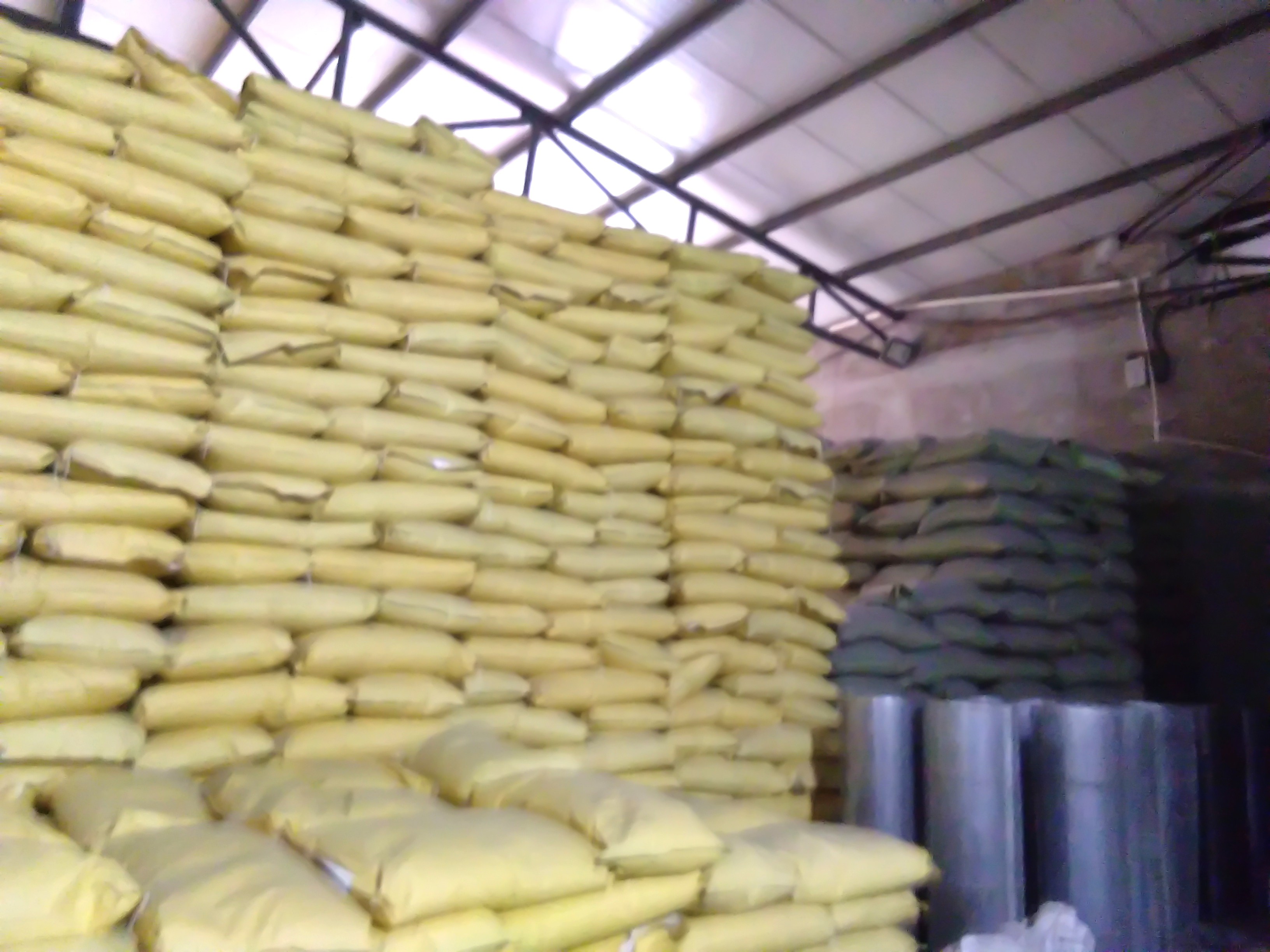
Packing appears at the bottom of most specification sheets and is treated as logistics. In a qualification review it belongs in the acceptance criteria, because packing determines how the rest of the parameters survive the voyage.
- 20 kg and 25 kg plastic or paper bags. These are the standard bulk formats for in-shell seed. Points worth confirming: declared net weight against an audited weight on a sample of bags, the presence and specification of an inner liner in paper bags, stitch or seal integrity, palletisation, and the container loading pattern.
- Vacuum bag with carton. Used where kernels need protection from oxygen and physical compression. Verification focuses on vacuum integrity at loading, carton grade, units per carton, and whether the cartons are stacked in a way that preserves shape over a long transit.
Packing is also where the moisture value becomes practical. A lot shipped inside the 9–10% band in a well-sealed format behaves differently from the same lot in a damaged bag at the bottom of a stack. Pre-shipment photographs of weighing, sealing and container closing are low-cost evidence that a buyer can request alongside the specification sheet.
Storage: The Parameter That Keeps Changing After Shipment
Both the raw-seed specification and the supplier's product documentation describe storage as cool and dry, with no special handling beyond standard cold, dry conditions. In a temperate warehouse that is a modest requirement. In a hot or humid market it becomes the single largest variable behind a mildew count, because the parameter is a snapshot taken before the goods left the origin warehouse.
No storage specification substitutes for records. Buyers evaluating a supplier for repeat orders are better served by asking for temperature and humidity logs covering the period between intake and loading than by asking again for the grade letter.
High-Purity Grade Against Conventional Low-Grade Seed
The comparison that matters in a purchase decision is not AAA against AA, but high-purity sorted material against conventional low-grade seed. The table below summarises the differences stated in supplier documentation and the corresponding comparison data.
| Attribute | High-purity grade (supplier documentation) | Conventional low-grade pumpkin seed |
|---|---|---|
| Kernel purity | Higher kernel purity | Lower purity |
| Broken seeds | ≤0.5% | Higher broken-seed content |
| Mildewed seeds | <0.1% | Higher incidence of mildewed seed |
| Kernel colour | Natural dark green kernel; white in-shell material | Less uniform colour |
| Stated cost | 5% lower cost versus the conventional alternative, as documented | Reference point |
| Storage | Standard cold, dry; no special handling | Standard cold, dry |
| Finished-product yield | Higher yield after processing | Lower yield after processing |
| Identified applications | Snack processing, confectionery, retail finished products | General processing |
Four boundaries deserve equal weight in that comparison. First, tighter defect ceilings require more sorting and generate more rejected material, which is why high-purity grades are usually offered in defined packing formats rather than as an open commodity; the cost advantage quoted is against a specific alternative and should be tested against landed cost. Second, physical grade does not address chemical hazards. Aflatoxin limits and pesticide residue limits are set by destination markets — the European Union, for example, sets a maximum of 5.0 µg/kg for the sum of aflatoxins B1, B2, G1 and G2 in pumpkin seeds under Commission Regulation (EU) 2023/915 — and residue regulations in the EU and the United States have constrained export volumes for some pumpkin seed types. Third, a mildew count is a point-in-time reading, so the advantage can narrow in poor storage. Fourth, no certification or regulatory approval is claimed here for the product or the supplier; the parameters above are specifications, not approvals.
Market Context: More Volume, Tighter Documentation
Two market signals explain why buyers are now reading specification sheets more closely than grade letters. Production has expanded quickly — China's output reached a projected 400,000 tons in 2024 — and variety concentration is high, with Shine Skin accounting for about 74% of production, while Snow White and Lady Nail each account for roughly 12%. Inner Mongolia remains a major cultivation hub, with a planting area of 28,700 hectares in 2024.
At the same time, demand for cleaner material is rising. The pumpkin seed oil market is growing at a CAGR of 10.5% toward USD 2.06 billion by 2030, which increases demand for high-purity kernels, and the wider pumpkin seed market is projected to grow from USD 1.08 billion in 2025 to USD 2.62 billion by 2032 at a CAGR of 13.4%. Lady Nail planting area expanded by 80% in 2025 on Middle East demand. Faster volume growth in a market with tightening residue rules is a straightforward argument for numeric specifications rather than grade letters.
Where Inner Mongolia Chengtai Food Co., Ltd. Sits in This Framework
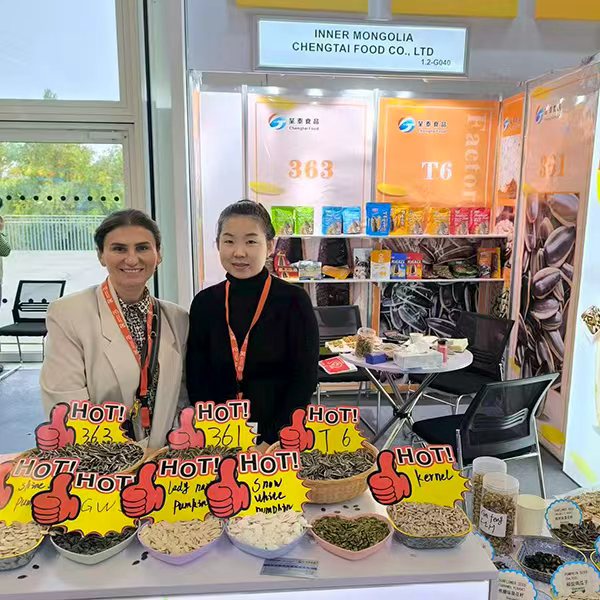
Inner Mongolia Chengtai Food Co., Ltd. is a producer and exporter of sunflower seeds, pumpkin seeds and kernels, founded in 2013 and based in the Mengxiu Industry Zone, Xamba Town, Hanggin Rear Banner, Bayannur City, Inner Mongolia — part of the Hetao Plain, a recognised seed-producing zone in the region. The company reports an annual output of 30,000 metric tons, a 1.5 million acre natural sunflower and pumpkin seed planting base, and an export share of about 80%, with markets concentrated in the Middle East, Middle Asia and Europe. Its site is published at www.ctsunfood.com.
Relevant to a specification review, the company produces Snow White, Shine Skin and Lady Nail pumpkin seed lines, with Snow White offered in size grades including 15cm+, 13cm+ and 11cm+, and states a raw specification for its pumpkin seed products intended for human consumption, with manufacturing and the roasted shop industry listed as typical application scenarios.
Future Outlook
The direction of travel is toward numeric specifications and away from grade letters as a standalone qualification argument. Three developments are likely to shape procurement over the next buying cycles. Residue and aflatoxin documentation is becoming a routine part of supplier evaluation rather than an exception, following regulatory pressure in the EU and US markets. Demand from oil crushing and high-purity kernel applications is rising, which rewards suppliers who can hold tighter defect ceilings consistently. And packing format is becoming a differentiator in its own right, with vacuum and carton formats used where kernels must arrive in retail-adjacent condition.
For buyers, the practical implication is simple: keep the grade letter as a sorting shorthand, and qualify the lot on the numbers, the sampling method and the packing format behind it.
Frequently Asked Questions
What does a grade letter such as AAA actually cover in pumpkin seeds?
Grade letters describe sorting outcomes — the uniformity and physical consistency of a lot — rather than a single measurable property. Published market references show how far the definition can move: AAA-grade Shine Skin pumpkin seed kernels are commonly quoted at a minimum purity of 99.95% and a maximum moisture of 8%, while a raw in-shell specification sheet for the same product family may state an impurity ceiling of ≤0.5% and a moisture band of 9–10%. The two descriptions apply to different processing stages, so the useful step is to obtain the written numeric definition behind the letter, including the parameters, sample size and test method.
Is impurity below 0.5% enough to qualify pumpkin seeds for export?
Impurity at ≤0.5% is a physical cleanliness ceiling and does not cover chemical hazards. Aflatoxin and pesticide residue limits are set by destination markets; the European Union, for example, sets a maximum of 5.0 µg/kg for the sum of aflatoxins B1, B2, G1 and G2 in pumpkin seeds under Commission Regulation (EU) 2023/915. Physical specification and chemical compliance are separate qualification tracks, and both are recorded separately on the documents a buyer should review.
How should a moisture band such as 9–10% be interpreted?
It should be read as an acceptance window at a defined point in the supply chain, not as a permanent property of the lot. Moisture readings change between intake, storage and loading, so the practical questions are when the value was measured, on what basis, and how the supplier keeps the lot inside the band before shipment. Storage at the stated cool, dry conditions is the main control described in supplier documentation.
Does packing format affect whether a lot qualifies?
Yes. Packing is a qualification field because it determines how other parameters survive transit. The 20 kg and 25 kg plastic or paper bags used for in-shell seed should be checked for declared net weight against audited weight, inner liner where paper is used, seal integrity and loading pattern. A vacuum bag with carton serves a different purpose, protecting kernels from oxygen and compression, and is verified through vacuum integrity, carton grade and units per carton.
Why does intended use change which specification values matter?
The specification states human consumption as the intended use, with manufacturing and the roasted shop industry as typical application scenarios. Those applications weight the parameters differently. Roasting and salting concentrate the effect of mildewed and eroded seeds, so defect ceilings matter more to a roasting operation; confectionery and retail finished products place more weight on kernel purity, broken-seed counts and colour consistency. Matching the numeric ceilings to the end use is more informative than comparing grade letters across suppliers.
Does a high grade remove the need for destination-market testing?
No. Grade classification addresses physical sorting only. Requirements such as aflatoxin limits and pesticide residue thresholds sit outside the grade letter and are verified separately, according to the rules of the destination market. Where a supplier's specification describes a grade rather than an independently verified test result, that distinction should be stated plainly on the document and confirmed by the buyer through whatever verification the market requires.
Reference document: Inner Mongolia Chengtai Food Co., Ltd. company profile (PDF).