
Pumpkin Seed Spec FAQ: Erosion, Mildew, and Moisture Limits
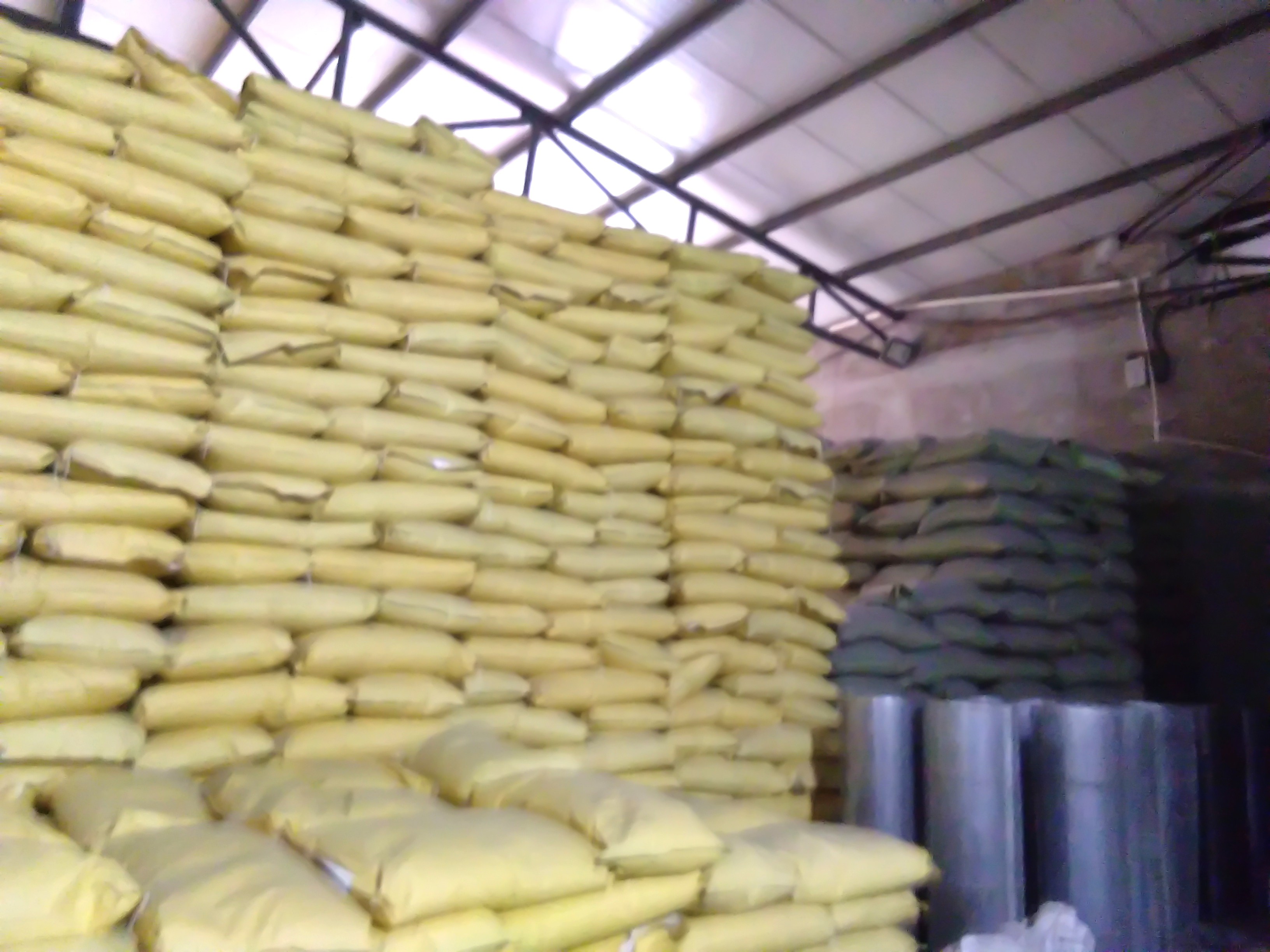
Raw pumpkin seeds and kernels are traded within a defined moisture band of 9-10%, which only holds when the lot is kept in a cool place.
Four numbers decide most raw pumpkin seed kernel disputes at the port: impurity below 0.5%, erosion seeds below 0.5%, mildew seeds below 1%, and moisture between 9% and 10%. They appear on nearly every specification sheet. They are rarely defined in the contract itself.
This reference is written for procurement and quality staff who have to check those clauses when a container arrives. It explains what each clause counts, what it typically looks like in a shipment, how to sample so the result is defensible, and where the limits of a purely numeric clause actually sit.
Why four small percentages carry most of the commercial risk
Raw pumpkin seeds and pumpkin seed kernels are bought by the container and consumed by the tonne. Buyers in snack manufacturing, roasting, baking and wholesale distribution rarely judge a shipment on a single defect. They judge it on how much of the incoming volume can be used without rework, and how much documentation the material will need once it enters a food production line.
The four clauses that recur in that conversation are impurity, erosion seeds, mildew seeds and moisture. Together they influence four different things at once:
- Usable yield - how much of the delivered weight is actually seed or kernel rather than dust, shell fragment or foreign matter.
- Sorting load - how much additional colour sorting or manual inspection the batch needs before roasting or packing.
- Food-safety exposure - how much of the lot carries visible mould, which is a related but separate question from mycotoxin testing.
- Storage behaviour - whether the lot holds its condition through inland transport and warehouse time.
Colour, size band and grade letter also matter, and they are the parts of a specification a buyer can usually see at a glance. The four numeric clauses are harder, because a percentage is only meaningful when the counting rule behind it is agreed.
The four clauses in plain terms
For raw pumpkin seeds and raw pumpkin seed kernels sold for human consumption, the clauses are commonly written as follows. The values below reflect the specification applied to the raw pumpkin seed and kernel range supplied by Inner Mongolia Chengtai Food Co., Ltd.
| Clause | Stated value | What it counts | Why a buyer cares |
|---|---|---|---|
| Impurity | below 0.5% | Material that is not usable seed or kernel: dust, light plant matter, shell fragments and other extraneous matter. | Reduces usable yield and increases the load on the buyer's own cleaning and sorting equipment. |
| Erosion seeds | below 0.5% | Seeds or kernels whose surface is visibly eroded, damaged or degraded, so the piece no longer presents a clean, intact face. | A visible defect that affects roasted appearance and can indicate handling or storage stress earlier in the chain. |
| Mildew seeds | below 1% | Seeds showing visible mildew or mould growth. | A visual screen only. It does not replace mycotoxin testing, but a high visible count makes a clean laboratory result much harder to defend. |
| Moisture | 9-10% | Water content of the raw material, expressed as a range rather than a single maximum. | Drives shipping weight, storage stability and how quickly a lot shifts toward mould risk if conditions change. |
Read together, these four clauses describe a material that is clean, visually intact, free of visible mould above a defined tolerance, and deliberately held inside a mid-range moisture band rather than dried to a single "as dry as possible" figure.
What each clause means when a shipment arrives
Impurity below 0.5%
Impurity is the easiest clause to argue about and the easiest to verify, which is why it should be measured first. In practice it is the fraction of the sampled weight that is not usable seed or kernel: dust, light plant matter, shell fragments and any other extraneous material.
At arrival, a buyer should expect a clean-looking surface and no visible accumulation of fines. Because fines settle during transport, the bottom third of a bag or the discharge end of a container will always look dirtier than the top. That is a sampling artefact rather than proof of a specification failure - which is exactly why the sample has to be drawn from more than one position.
A sub-0.5% clause is also an operational number, not only a commercial one. The stated snack manufacturing scenario for this material calls for a cool, dry indoor warehouse at normal temperature and low humidity, batch processing, and a special requirement that impurity is controlled. Sorting and packing equipment can remove a certain amount of foreign matter, but the lower the incoming impurity, the less the line has to work.
Erosion seeds below 0.5%
Erosion describes physical damage to the surface of the seed or kernel - an abraded, degraded or irregular face rather than an intact one. It is distinct from a piece that is simply small, and distinct from a broken kernel, although all three can appear in the same lot.
In a shipment, erosion appears as a minority of pieces that lack the clean reflective surface of the rest of the batch. On a white-shelled variety such as Snow White Pumpkin Seeds, or on the green Shine Skin Pumpkin Seeds kernels, that difference is visible under consistent lighting without magnification.
The 0.5% ceiling matters most to buyers who roast or pack for retail, because surface condition is what a consumer sees. It matters less to buyers who will mill, grind or further process the material, where colour uniformity is not a finished-product criterion. That is a legitimate reason for one buyer to accept a looser erosion clause than another.
Mildew seeds below 1%
Mildew seeds are seeds with visible mould growth. The clause sets a tolerance rather than a prohibition, for a practical reason: zero tolerance is difficult to verify consistently at commercial volumes, whereas a defined percentage can be counted and compared.
This is the clause where buyers most often assume more protection than they actually have. A visual mildew count is not a mycotoxin result. In the EU, Commission Regulation (EU) 2023/915 sets the maximum level for the sum of aflatoxins B1, B2, G1 and G2 in pumpkin seeds at 5.0 ug/kg. That limit is established by laboratory analysis, not by counting seeds on a tray.
The relationship between the two is directional rather than mechanical. A low visible mildew count supports a clean laboratory result but does not guarantee it, and a visible count at or above the tolerance is a strong reason to test before accepting. For procurement staff, the practical rule is simple: the mildew clause and the mycotoxin requirement should both appear in the quality agreement, each with its own defined sampling and testing method.
Moisture 9-10%
Moisture is written as a range rather than a maximum, and that is deliberate. For raw pumpkin seed kernels destined for roasting, snacking and confectionery use, 9% to 10% is the working condition in which the material is traded and stored.
A range protects both sides. Above the band, the lot carries more water weight with a higher risk of mould development during transit and warehouse storage. Below the band, the material becomes brittle, which changes handling behaviour and can increase breakage during mechanical feeding and sorting.
Published third-party grade sheets do not always use the same reference basis. One external specification for AAA grade Shine Skin pumpkin seed kernels cites a minimum purity of 99.95% with a maximum moisture of 8%. That figure is not wrong; it is a different reference point from a raw-kernel procurement clause written as 9-10%. The lesson for buyers is to read the moisture clause together with the measurement method, because a moisture meter reading, an oven-drying result and a supplier certificate do not always produce the same number on the same lot.
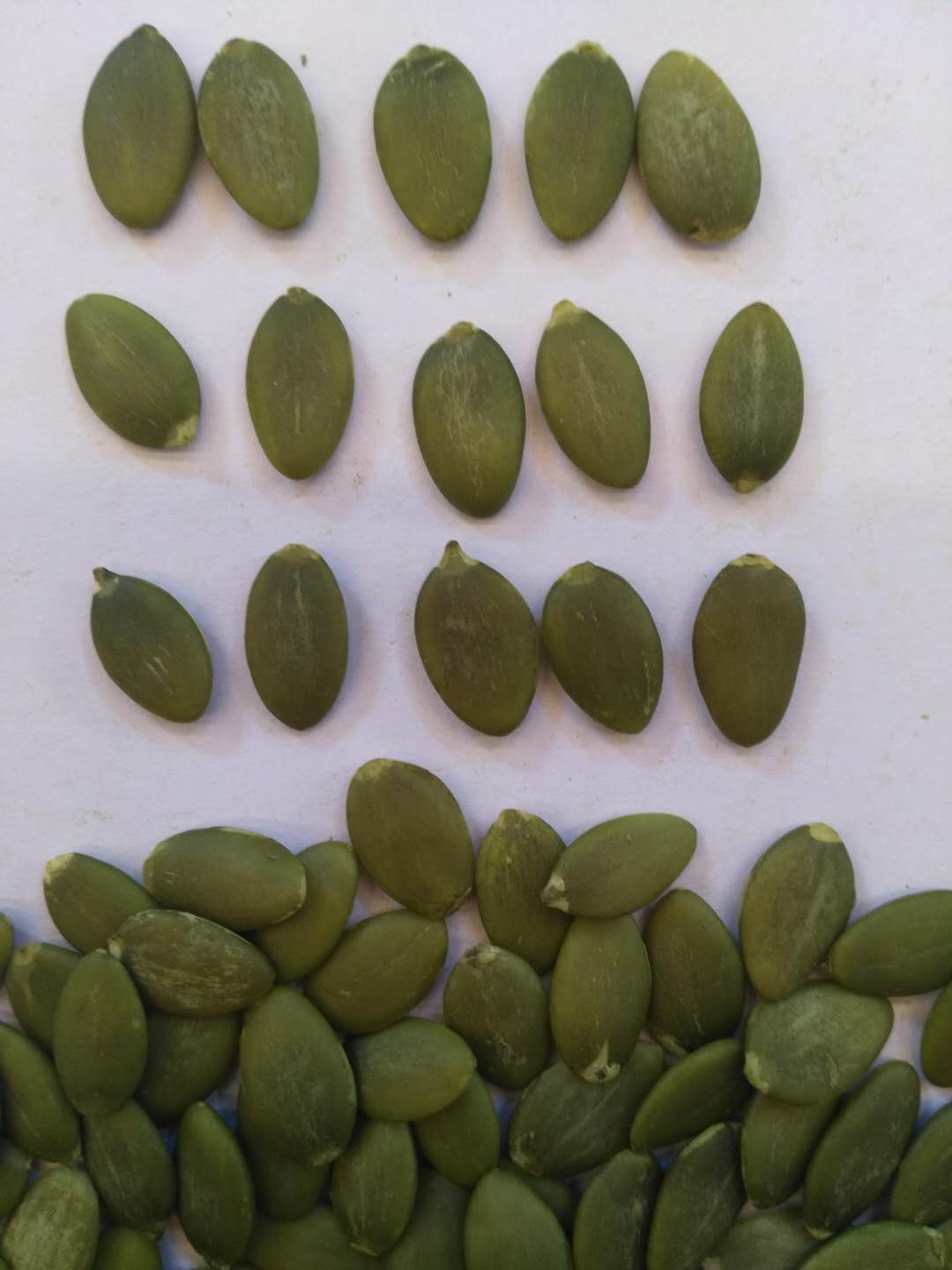
Surface condition and colour uniformity are checked visually against a defined piece count, because erosion and mildew are counted defects rather than weighed fractions.
How to sample so the numbers mean something
A clause is only as strong as the sample behind it. The sequence below is the minimum a buyer should be able to document.
- Draw from multiple positions. Take increments from the top, middle and bottom of bags or bulk and from several points across the lot - not from the first bag opened. Fines and light material migrate downward during transport, so a single top-of-bag sample will systematically under-report impurity.
- Build a composite, then reduce it. Combine the increments into one composite sample, then reduce it by quartering or with a riffle splitter until the working sample is small enough to inspect but still representative. Reducing by scooping from one corner is the most common source of an indefensible result.
- Measure each clause with the right method. Impurity is a weighed fraction after separation. Erosion and mildew are visual counts of defined defect types against a defined number of pieces. Moisture requires a calibrated instrument or a reference method, because two meters can disagree on the same lot.
- Record and retain. Photograph the lot, log the sample positions, keep a sealed retained sample, and note ambient conditions at the time of sampling. If a dispute reaches the point of laboratory testing, the retained sample is what makes the result attachable to the shipment.
Two boundaries are worth stating plainly. First, a visual mildew count and a mycotoxin analysis measure different things and cannot substitute for one another. Second, percentage clauses are statistical by nature: the smaller the lot, the harder it is to draw a sample that represents it precisely, which is why a trial volume and a full container load should not be judged by the same sampling effort. For suppliers working with a stated minimum order quantity - 5 mts across this raw pumpkin seed and kernel range - that distinction is worth agreeing in advance.
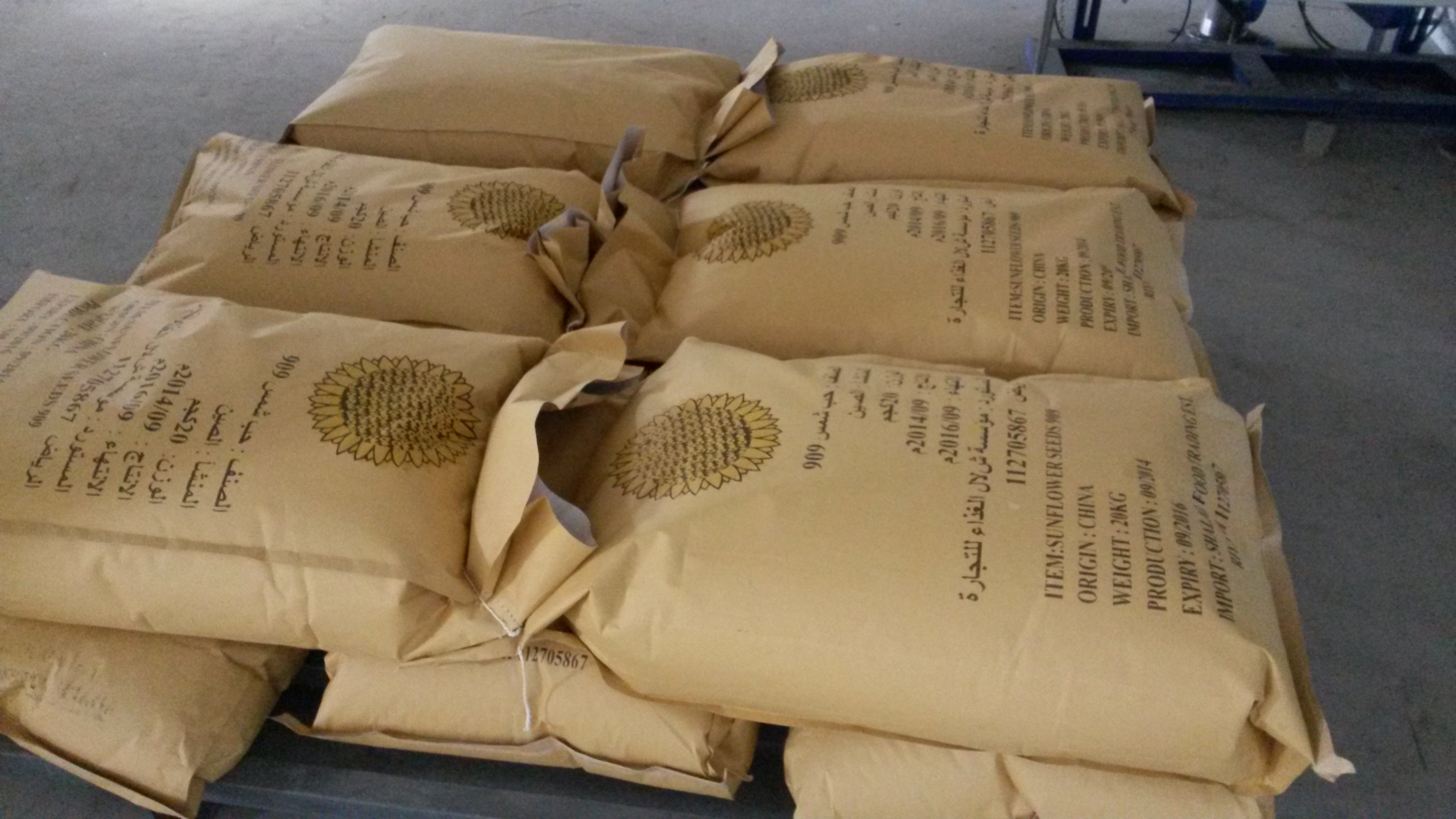
Whole seeds are packed in 20/25 kg plastic or paper bags; kernels are also offered in vacuum bags with cartons. Sampling positions should cover top, middle and bottom of each unit.
Where the specification sits in the supply chain
Inner Mongolia Chengtai Food Co., Ltd. is a seed and kernel processor founded in 2013 and located in the Mengxiu Industry Zone, Xamba Town, Hanggin Rear Banner, Bayannur, Inner Mongolia, in the Hetao Plain agricultural zone. The company processes sunflower seeds and pumpkin seeds and kernels, with an export ratio of 80% and main markets in the Middle East, Middle Asia and Europe.
Within the raw pumpkin seed and kernel range, the same four clauses apply across grades and sizes:
| Product | Type | Size position | Colour |
|---|---|---|---|
| Snow White Pumpkin Seeds | Raw pumpkin seeds | 15cm+, 13cm+, 11cm+ | White |
| Shine Skin Pumpkin Seeds | Raw pumpkin seeds | 11cm+, 8-10mm+, below 8mm | White |
| Lady Nail Pumpkin Seeds | Raw pumpkin seeds | 10cm+, 7-10mm+, below 7mm | White |
| Shine Skin Pumpkin Seeds kernels | Raw kernels, grades A / AA / AAA | Grade bands | Green, dark green at AAA |
All of these are offered as raw material for human consumption, with a stated moisture of 9-10%, impurity below 0.5%, erosion seeds below 0.5% and mildew seeds below 1%, an origin of Xinjiang and Inner Mongolia, and a recommended storage condition of a cool place. Whole seeds are packed in 20/25 kg plastic or paper bags; kernels are also available in vacuum bags with cartons.
On the processing side, the company operates an OEM/ODM model with a monthly capacity of 2,500 mts, a lead time of 10-15 days, a minimum order quantity of 5 mts, and a stated 100% test approach to quality control. Bags can be printed with the customer's logo. These operational parameters are what determine whether a specification can be met on repeat orders rather than only on a first shipment.
Where these clauses matter most
The most specification-sensitive application for raw pumpkin seeds and kernels is snack manufacturing. The stated scenario is a food production processing project in which the material is used as raw input for snacks, baked goods and confectionery, processed in batches with both manual and mechanical feeding, on lines that typically include sorting and packing equipment, in a cool and dry indoor warehouse at normal temperature and low humidity. The declared special requirement for that scenario is controlled impurity.
Roasting and wholesale follow closely. In the company's own case record, the client types served are food processors, snack manufacturers, food wholesalers, and importers and distributors, with an application in wholesale and roasting; the stated outcome over a two-year period is stable supply, consistent product quality and reliable bulk order delivery. For a buyer, that is the operational meaning of the four clauses: they are what make "consistent" something that can be checked rather than assumed.
Market context: why spec discipline is being tested
The commercial environment around these clauses has tightened rather than loosened. China's total pumpkin seed production is projected at 400,000 tons in 2024, a 40% increase from 280,000 tons in 2023, according to Seedea's Pumpkin GWS market update. Within that volume, Shine Skin is the dominant variety at roughly 74% of 2024 production - about 294,000 tons - while Snow White and Lady Nail each account for about 12%, estimated at 46,000 tons and 52,000 tons respectively, according to Everstar Foods.
Inner Mongolia remains a major cultivation hub, with a pumpkin seed planting area of 28,700 hectares (430,000 mu) in 2024. At the same time, Cardassilaris reports that pesticide residue regulations in the EU and US have constrained export volumes for Shine Skin and GWS types, contributing to a temporary global oversupply in 2025.
Two conclusions follow for procurement teams. First, when supply is abundant and prices are soft, the pressure to accept looser specifications is strongest - and that is precisely when the cost of a rejected container is least visible and most disruptive. Second, the regulatory pressure is concentrated on the contaminant side rather than the size side. Aflatoxin limits such as the 5.0 ug/kg level in Regulation (EU) 2023/915 sit alongside residue controls, which means visual clauses such as mildew seeds below 1% increasingly function as an early screen rather than as final proof of compliance.
The demand backdrop points the same way. The global pumpkin seed market is expected to grow from USD 1.08 billion in 2025 to USD 2.62 billion by 2032 at a CAGR of 13.4%, according to Maximize Market Research, while pumpkin seed oil demand - growing at a 10.5% CAGR toward USD 2.06 billion by 2030 per Grand View Research - pulls specifically on high-purity kernels.
Specification-based buying versus traditional hand assessment
Traditional practice relies on hand assessment at loading: a representative opens a bag, looks at the colour, feels the material and agrees a price. It is fast and, in a long-standing relationship, often adequate. Its weakness is that nothing about it is reproducible six weeks later in a different port.
A specification-based approach replaces the judgement of a single moment with four defined clauses and a sampling protocol. The gains are concrete: impurity, erosion, mildew and moisture can each be measured independently, disagreements narrow to a single parameter rather than a vague claim about quality, and the retained sample gives both parties something to test.
The limitation is just as concrete. A numeric clause only governs what the contract defines. If a quality agreement states "impurity below 0.5%" without stating how the sample is drawn, what counts as impurity, or which moisture method applies, the same clause can be read two ways - and the party with the stronger documentation usually wins the argument. None of the four clauses is a food-safety guarantee on its own. Mildew seeds below 1% is a visual screen; the aflatoxin requirement is a laboratory criterion with its own limit and its own sampling method. Treating the visual clause as a substitute for the test is the most common and most expensive misreading of this type of specification.
Future outlook
Three shifts are visible from the available data. Contaminant controls are becoming the binding constraint rather than size or colour, following the pattern of residue regulation that has already affected export volumes for major varieties. Moisture management is moving earlier in the chain, because a 9-10% band only holds if the material is kept in a cool place and moved through cool, dry facilities rather than held in ambient heat. And buyers are increasingly asking for defined sampling and measurement methods alongside percentage clauses, because a percentage without a method cannot be enforced.
For suppliers, that means the ability to reproduce a specification shipment after shipment - not only on the submitted sample - becomes the commercial asset. For buyers, it means the four clauses deserve the same care in the quality agreement as the price and the payment terms.
FAQ
What does "impurity below 0.5%" actually count?
It counts the share of the sampled weight that is not usable seed or kernel: dust, light plant matter, shell fragments and other extraneous material. In the raw pumpkin seed and kernel range supplied by Inner Mongolia Chengtai Food Co., Ltd., the clause is stated as impurity below 0.5% across the Shine Skin, Snow White and Lady Nail products. Because fine material settles during transport, the clause should be verified from a composite sample drawn at several positions rather than from the top of one bag. A sub-0.5% figure is both commercial and operational: the stated snack manufacturing scenario for this material lists controlled impurity as a special requirement.
How are erosion seeds different from broken or undersized kernels?
Erosion refers to damage to the surface of the seed or kernel, producing an abraded or degraded face rather than an intact one. It is separate from size - a small kernel is not by definition an eroded one - and separate from breakage, although all three can occur in the same lot. The stated clause is erosion seeds below 0.5%. The clause matters most to buyers who roast or pack for retail, where surface appearance is visible to the end consumer, and matters less where the material will be milled or further processed.
Does mildew seeds below 1% replace an aflatoxin test?
No. The mildew clause is a visual count of seeds showing mould growth, with a stated tolerance of below 1%. Aflatoxin compliance is established by laboratory analysis: Commission Regulation (EU) 2023/915 sets the maximum level for the sum of aflatoxins B1, B2, G1 and G2 in pumpkin seeds at 5.0 ug/kg. The two measurements are related but not interchangeable. A low visible mildew count supports a clean laboratory result without guaranteeing it, and a visible count at or above the tolerance is a strong reason to test before accepting a lot.
Why is moisture specified as 9-10% instead of a single maximum?
The range describes the working condition for raw pumpkin seed kernels used in roasting, snacking and confectionery. Moisture above the band adds water weight and increases the risk of mould development in transit and storage; moisture below the band makes the material brittle and changes how it behaves during mechanical feeding and sorting. The stated specification for this raw material is 9-10%. Published third-party grade sheets may use a different basis - one external specification for AAA grade Shine Skin kernels cites 99.95% minimum purity with a maximum moisture of 8% - which is why the moisture clause should always be read together with the agreed measurement method.
How should a buyer sample a lot to verify these four clauses?
Draw increments from the top, middle and bottom of bags or bulk and from several points across the lot, combine them into one composite sample, and reduce it by quartering or with a riffle splitter. Measure impurity as a weighed fraction after separation, count erosion and mildew visually against defined defect types and a defined piece count, and use a calibrated instrument or reference method for moisture. Record the sample positions, photograph the lot and retain a sealed sample, because a laboratory result can only be attached to a shipment if the sample can be traced back to it.
Why is cool storage recommended for raw pumpkin seed kernels?
The products in this range are specified with a recommended storage condition of a cool place. Storage at high temperature or high humidity is what allows a controlled 9-10% moisture band to drift upward, which raises the risk of mould development and changes handling behaviour. In the stated snack manufacturing scenario, the material is held in a cool and dry indoor warehouse at normal temperature and low humidity. Storage conditions are therefore part of specification compliance, not a separate logistics detail.
A downloadable company profile covering product grades, packaging and export markets is available here: Inner Mongolia Chengtai Food Co., Ltd. company profile.
¿Tiene preguntas o necesita más detalles?
Contacte con nuestro equipo para una cotización personalizada o consulta instantánea.
Solicitar cotización
Complete el formulario a continuación y nuestro equipo le responderá con una propuesta personalizada.
Chat directo de WhatsApp
¿Prefiere chatear en tiempo real? Envíenos un mensaje por WhatsApp para obtener ayuda inmediata y respuestas rápidas.
- Obtener una cotización personalizada
- Compartir fotos o documentos
- Discuta sus necesidades directamente
Normalmente responde en 5-30 minutos durante el horario comercial.