
Proving Reducer Capability: Breadth, Custom Builds, Terms
Proving Reducer Capability: Breadth, Custom Builds, Terms
Reducer capability is one of the easiest things to claim and one of the harder things to verify. A supplier page can state product breadth, custom engineering and short delivery in three sentences; a purchasing team working between evaluation and execution needs those sentences converted into items it can actually check — a family list with capacity behind it, a written customization scope, a test record that travels with the delivered unit, and commercial terms that state who accepts what and when.
That conversion is what this reference piece is about. It uses one manufacturer's published material as a worked example, because the material happens to place the relevant evidence in one place: STARSHINE DRIVE, or Guangdong Starshine Drive Co., Ltd., a transmission manufacturer based in Sanshui District, Foshan City, Guangdong Province, whose history traces back to a mould factory established in 1965. The company publishes a multi-family reducer line, a stated customization scope, a documented quality-control regime, an ISO 9001 certificate with a number and a validity window, and a procurement note listing MOQ, delivery terms, acceptance criteria and payment terms. None of those items is remarkable on its own. Read together, they form something more useful: a capability trail a buyer can walk through.
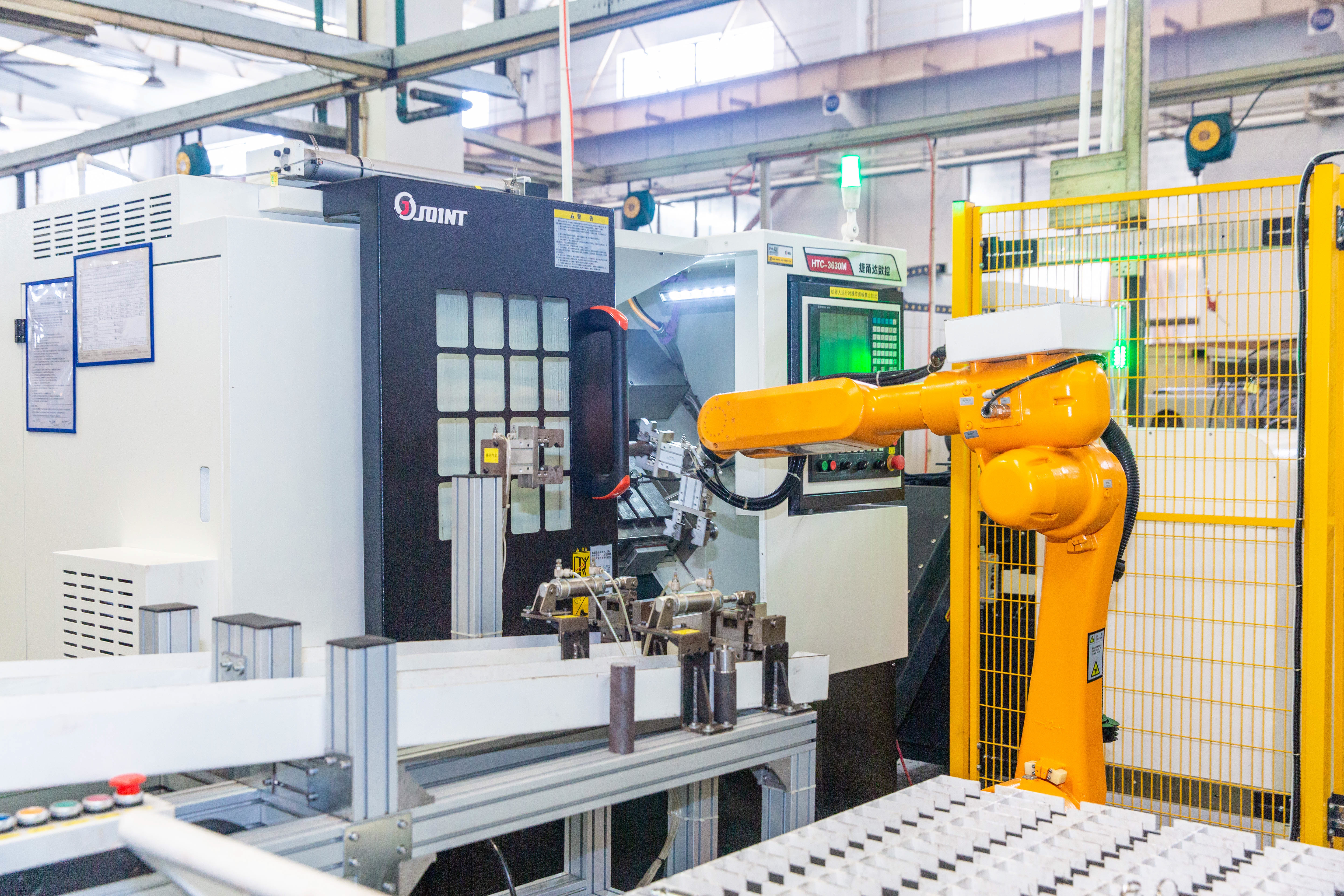
Capability is a purchasing term, not a marketing one
In procurement language, capability means the ability to deliver a defined specification, to a defined quality level, within a defined window, under terms both sides have accepted. That definition immediately splits the usual brochure statement into three separate questions, and each one is answered by a different kind of document. Product breadth is answered by a family list and the capacity assigned to each family. Custom build capability is answered by a written scope that names the variables a supplier will actually change. Delivery and risk transfer are answered by lead time, MOQ, delivery terms and acceptance criteria.
The practical value of separating these layers is that a buyer can qualify a supplier on the strong layer while flagging the weak one, instead of accepting or rejecting the entire relationship at once. A supplier whose breadth is documented but whose customization scope is vague can still be used for a standard unit, with the custom work held for a separate written specification. A supplier whose customization is well documented but whose acceptance criteria are undefined should not be used for a first production order at all.
An evidence trail in five items. For each capability claim, a buyer should be able to walk down one level and find something concrete: a family and its monthly capacity; a certificate number with issuer, scope and expiry; a test whose coverage is stated as a percentage of production; a written customization variable list; and commercial terms naming MOQ, delivery term, acceptance gate and payment term. If a claim has no item underneath it, it is a statement, not evidence.
What product breadth actually covers in a reducer line
Breadth matters less as a number of families and more as a question of whether two different duty profiles can both be served without leaving the supplier. The STARSHINE DRIVE line spans general-purpose and specialised gearboxes, and the company states monthly capacity for its highest-running series. The table below keeps the published figures attached to the series they belong to, and separates design type from documented evidence so the two are not confused.
| Product family | Conventional design reading | Documented evidence supplied |
|---|---|---|
| R / F / K / S series helical gearmotors | R: inline (coaxial) helical; F: parallel-shaft helical; K: helical-bevel right angle; S: helical-worm combination | Listed as high-precision gear reducer series; R/F/S/K series stated at 7,000 units per month |
| S series helical-worm geared motor | Worm stage combined with helical stage for high ratio in a compact frame | Published catalogue lists sizes SHS37 to SHS97, ratio 6.8 to 288, power 0.12 to 22 kW, output torque 90 to 4000 N·m |
| RV series worm gearbox | Worm gear reducers for right-angle, high-ratio duty | Stated at 25,000 units per month |
| NCJ series helical gearmotor | Helical gearmotor for general industrial drive duty | Stated at 15,000 units per month |
| JWB-X series mechanical stepless variator | Mechanical variators for continuously adjustable speed | Stated at 5,000 units per month |
| Industry customized products | Modified or purpose-built drives per customer requirement | Customized series stated at 5,000 units per month; customization scope published separately |
| SP planetary, SI industrial gearbox, SNKG, B/JXJ cycloidal pinwheel, XGK hypoid | Planetary gear reducer, heavy industrial, cycloidal and hypoid right-angle designs | Listed within the product line; no separate monthly figure supplied in the capability statement |
| Reducer components and drive accessories | Integrated servo motor, three-phase asynchronous motor, converter, permanent magnet synchronous motor | Listed as supplied product scope alongside the reducer families |
Two things are worth noticing about this structure. First, the family names a buyer will meet in European purchase lists rarely match the internal family names: a request may arrive written as motoreduktory or motoriduttori, and the underlying requirement is still a motor and reducer specified as one geared unit. A supplier that can answer across worm gear reducers, coaxial gear reducers, helical bevel gear reducer designs, a planetary gear reducer range, mechanical variators and a cyclo reducer range removes a translation step from the buying process. Second, breadth without capacity is a catalogue, not a supply option — which is why the monthly figures matter more than the family count.
Reading breadth against real duty profiles
Application fit is not a property of a family; it is a property of a family plus a duty profile. The same reducer that runs comfortably on a steady conveyor in a dry hall may be the wrong choice on a washdown line or a start-stop saw application. The three industries named in the company's own application list — textiles, food and beverage, and packaging and printing, alongside ceramics, logistics, grain and oil, and environmental protection — give a starting frame. Woodworking sits naturally alongside them as a comparable duty profile, and the analysis below treats it that way: as a set of loads and environments to be matched, not as a claim about installed sites.
Textile lines
Textile equipment tends toward long running hours, many driven shafts on one line, and an environment that combines warmth, humidity and airborne lint. The practical consequences for drive selection are cumulative thermal load, the need for consistent speed across multiple positions, and the value of a sealed, simply maintained unit. Inline (coaxial) helical and helical-bevel units are the conventional starting point where torque density and efficiency matter across long shifts, while a worm gearbox becomes relevant where a compact right-angle layout or a high ratio is the binding constraint and the efficiency penalty is acceptable. The buyer's checkable question is not which family is better, but whether the quoted unit's stated ratio, torque and power envelope sit inside the line's calculated demand with margin, and whether the supplier's documentation states those values for the exact model offered.
Woodworking and panel equipment
Woodworking duty is dominated by dust, shock loads and frequent starts. Feed rollers, conveyors and transfer sections see repeated acceleration, and the drive train is expected to absorb short overloads without losing position. A helical-bevel or inline helical gearmotor is normally the baseline for these duties because the rigid gear train handles reversing and shock better than a worm stage of equivalent size, while a mechanical variator remains relevant where operators need to trim line speed without a frequency converter. Dust resistance and the enclosure and sealing arrangement become the differentiators at the specification stage, and those are exactly the details a supplier should be able to confirm against the offered model rather than against the family in general.
Food and beverage equipment
Food and beverage lines add cleaning cycles to the load profile. Frequent stop-start operation, washdown or wipedown routines, and hygiene-driven layout constraints all push toward sealed units, corrosion-conscious surface treatment and careful selection of housing material and finish. This is one of the areas where the customization scope carries real weight: housing material and surface finish are explicitly listed as customizable variables, which means a buyer can specify them instead of accepting whatever the standard finish happens to be. Packaging and printing equipment, also on the company's application list, shares the repeated-stop profile and benefits from the same reasoning.
Custom builds: what the supplier will actually change
Customization is the capability claim most often left undefined. "Custom solutions available" tells a buyer nothing about scope, cost or acceptance, because it does not say which variables are open. The STARSHINE DRIVE capability statement is more specific than most: it lists reduction ratio, torque, shaft size, installation dimensions, housing material and surface finish as customizable, and states support for non-standard modification per customer drawings, delivered under a vertical customization production mode, with OEM and ODM services available as well.
That list matters because each variable has a different consequence downstream. Ratio and torque changes touch the gear geometry and therefore the performance calculation. Shaft size and installation dimensions touch the machine interface and therefore the commissioning risk. Housing material and surface finish touch the environment and therefore the maintenance and hygiene outcome. A buyer who knows which of the six variables is genuinely open can write a specification that a supplier can accept or decline precisely, rather than a general request that both sides interpret differently.
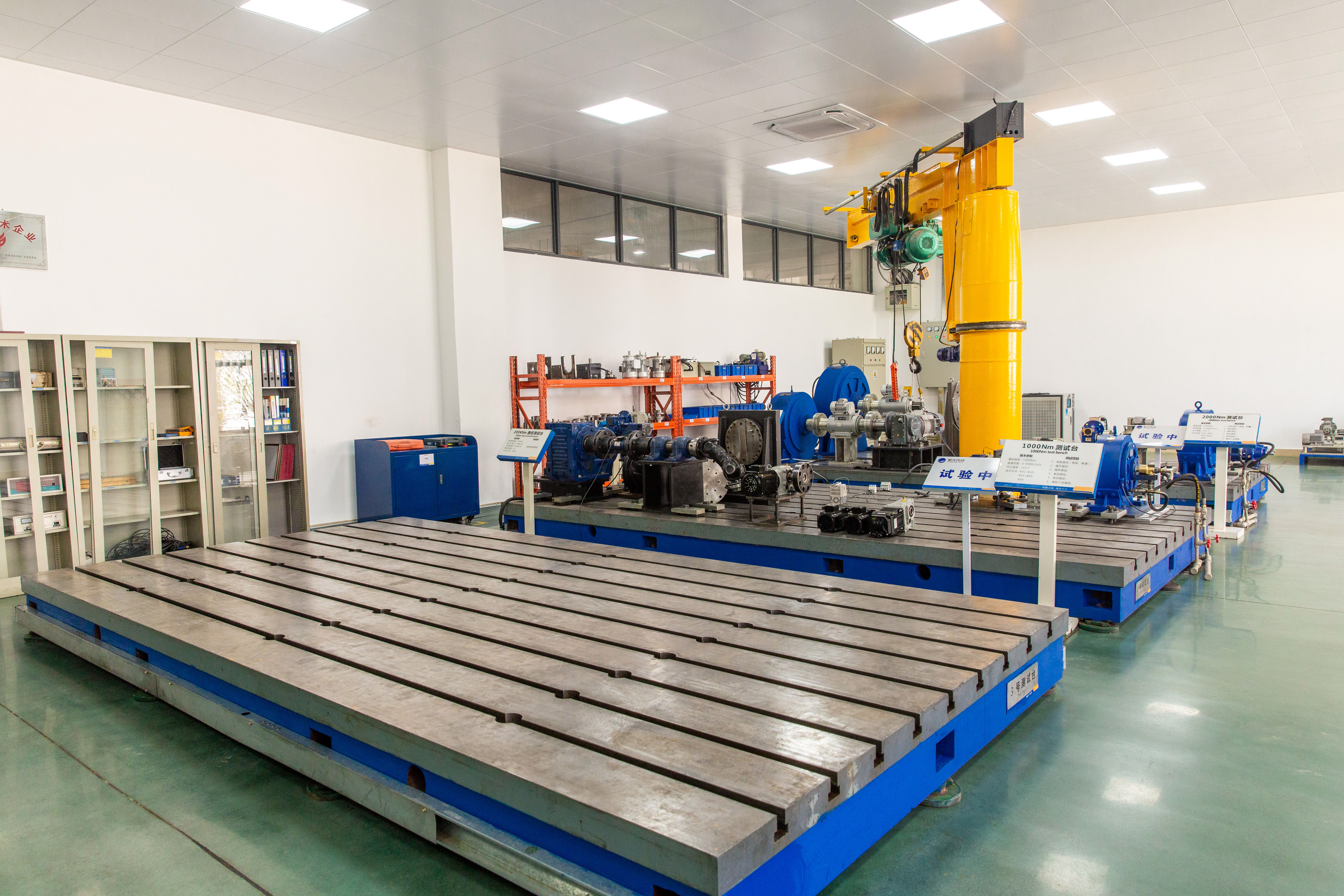
There is a boundary worth stating plainly. A custom unit is an engineering change, not an automatic upgrade. Changing a shaft or a mounting dimension does not by itself raise a duty class, and a modification made outside the documented performance envelope is a new design whose behaviour must be established rather than assumed. Two practical consequences follow. First, the drawing set becomes the acceptance document for custom work, so it should be agreed and version-controlled before production. Second, the first article of a custom build deserves its own inspection gate, separate from the routine pre-shipment check on standard units. The company's stated MOQ of one unit with prototype support makes that first-article route commercially practical rather than a special concession.
Acceptance terms as the most checkable evidence
Commercial terms are usually read as negotiating positions. Read differently, they are the part of a supplier's capability statement that is hardest to fake, because each term creates an obligation with a date attached. STARSHINE DRIVE's procurement note sets out four: a minimum order quantity of 1 unit with prototype support; FOB delivery terms; acceptance criteria defined as pre-shipment test; and COD payment terms. Each of these should be confirmed in the quotation for a specific order, since stated terms describe the standard position rather than a commitment that overrides a signed contract.
Acceptance defined as pre-shipment test is the term that does the most work, provided the buyer asks what the test covers. Here the company's published quality-control description is specific: 100% online air tightness testing, 100% online noise testing and 100% comprehensive motor testing on the production line, supported by 100% full-scale testing and 100% finished-product inspection, regular reliability and durability testing, and test equipment that includes fatigue test benches. Percentages are the useful part of that description. A sampling regime and a 100% online regime are different commitments, and only one of them produces a record for every unit that leaves the plant. A buyer executing an order should ask for the test record to be tied to the unit serial or order number, because a test result that cannot be attached to a specific delivered unit is a process claim rather than an acceptance record.
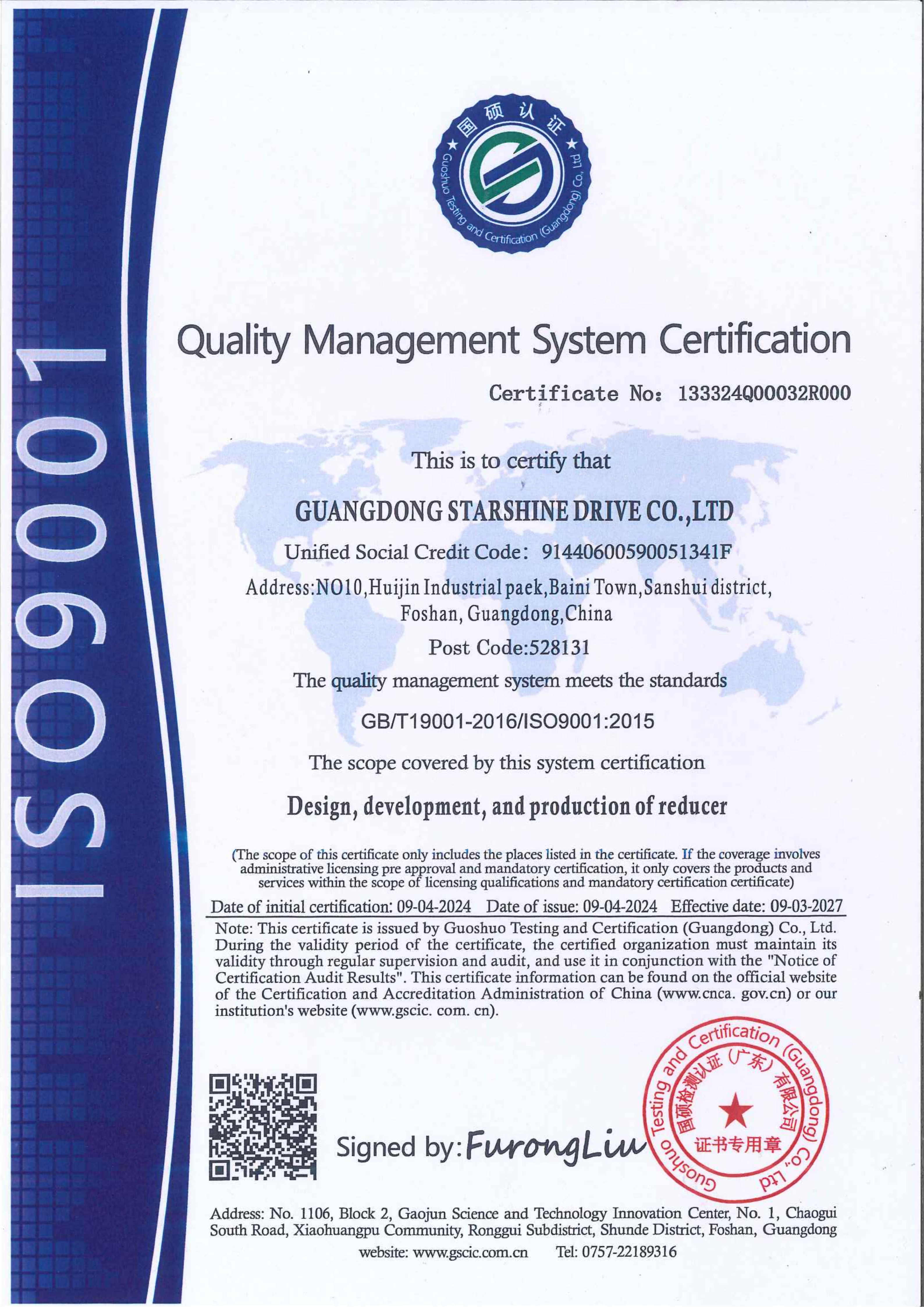
The certification layer adds a second, independent thread. The company holds ISO 9001:2015 quality management system certification under certificate number 133324000032R000, issued on 9 April 2024 by Guoshuo Testing and Certification (Guangdong) Co., Ltd., valid until 9 March 2027, against the GB/T19001-2016 / ISO9001:2015 standard, covering the design, development and production of reducers for the global market. Products are also stated to comply with ISO, CE and CCC requirements, and the company reports participation in drafting national and industry standards along with designations including National High-tech Enterprise and National Key New Product.
Used correctly, that evidence has a defined reach. A management-system certificate confirms that design, development and production are governed by an audited process within the stated scope; it does not certify the field performance of any individual unit, and it does not replace the pre-shipment test record for the unit in the crate. Certification also carries a validity window, so an evaluation that relies on it should check the certificate number and expiry against the current date rather than against a catalogue printed earlier. On the machinery-safety side, the relevant reference point for most European buyers is a risk-assessment framework such as EN ISO 12100:2010, the Type-A standard setting out general principles for risk assessment and risk reduction in machinery design. That standard governs how the machine builder assesses risk; it is not a reducer performance mark, and a supplier should not be treated as having certified a machine-level safety outcome on a buyer's behalf.
Capacity, lead time and the limits of a production number
Capacity figures tell a buyer whether a supplier can physically absorb an order, not whether capacity has been reserved. The published monthly capacity statement assigns 7,000 units per month to the R/F/S/K series, 25,000 to the RV worm gearbox series, 15,000 to the NCJ series, 5,000 to the JWB/JXJ series and 5,000 to the customized series, against an overall annual production capacity of up to 500,000 units or sets and a production base of 53,333.33 m² with approximately 400 staff, more than 70% of them production technicians. Read as an order-of-magnitude check, that is a strong signal for a mid-volume programme; read as a delivery promise for a specific month, it is not evidence at all, because capacity is shared across the order book.
Lead time needs the same scoping discipline. The capability material states a typical production lead time of 7 to 20 days depending on the product, and separately quotes 15 to 45 days for vertical customization work. Those two ranges are consistent once the scope is kept attached: standard series sit in the shorter band, custom builds in the longer one. Neither figure includes transit, and under FOB terms the buyer's logistics clock starts when the goods are placed on board, so a delivery plan built on production lead time alone will usually understate the total. For European buyers, the company's assembly plant in Vienna, Austria — used for localised assembly, warehousing and distribution, and as a technical service centre for the European market — is relevant to the service model rather than to the production lead time itself, and the difference between the two should be kept clear during scheduling. The company also reports 10 or more global assembly centres, more than 100 dealer partners, distribution to over 30 countries and regions, an export ratio of about 20%, and main markets in Southeast Asia, Europe and North America.
Where each family fits, and where it does not
The clearest way to hold several reducer families in one assessment is to compare them on the constraint that decides the application, rather than on a general ranking. Worm gear reducers such as the RV series earn their place through a compact right-angle layout and high reduction in a single stage; the trade-off is that worm gearing converts more input power into heat than a helical train of comparable size, which matters on long, continuous, high-ratio duty. Inline coaxial and helical-bevel designs are the conventional answer where efficiency and torque density over long shifts dominate. The NCJ helical gearmotor covers general industrial drive duty where a helical unit is wanted without a customized interface. Mechanical variators serve the narrow but real case where an operator needs to trim speed mechanically. Planetary, cycloidal and hypoid designs extend the range toward higher torque density, shock tolerance and right-angle heavy duty respectively.
The fit boundaries are more informative than the advantages. A standard family should not be specified into a duty it was not designed for on the assumption that a custom modification will close the gap. A customized unit should not be accepted without an agreed drawing set and a first-article check. An ISO 9001 certificate should not be read as a unit-level performance guarantee. And a supplier's silence on a particular configuration should never be read as incapability — an absent figure means the figure has not been supplied, and the correct action is to ask, not to assume. Buyers who apply those four rules tend to end up with fewer surprises at commissioning than buyers who compare families on headline descriptions.
Market context worth separating from supplier claims
Two external data points help frame a 2026 evaluation without saying anything about any individual supplier. Grand View Research reports that Asia Pacific held a 40.8% revenue share of the industrial gearbox market in 2025, which is consistent with the concentration of reducer manufacturing capacity in the region and with the sourcing pattern most European and North American buyers already follow. Separately, Business Research Insights values the narrower gear reducer category at approximately USD 1.96 billion in 2026, with a projection of USD 2.58 billion by 2035. That second figure should be read with its definition attached: gearbox and gear reducer categories are drawn differently by different research houses, and totals that appear far apart often reflect scope rather than disagreement about the same market. Neither figure shortens a supplier qualification, and neither substitutes for a capacity statement, a certificate number or an acceptance clause. Market size describes a category; an evidence trail describes a supplier.
What a documentation-led qualification looks like from here
The direction of travel in reducer procurement is toward documents rather than descriptions. Buyers are increasingly asked to justify a supplier choice internally, which means the file that supports the decision has to contain the certificate number, the test coverage, the agreed drawing revision and the accepted commercial terms — and has to be re-checkable a year later. Suppliers that already publish this material in a structured form will find the evaluation stage shorter, because the buyer's questions map onto documents that exist. The reasonable expectation for the next buying cycle is not a dramatic change in gear technology but a continued tightening of what counts as proof: scoped certificates, serial-level test records and written customization boundaries becoming normal requests rather than unusual ones. Companies with a stated process regime, a valid certificate and a documented customization scope, such as STARSHINE DRIVE, are positioned to answer those requests directly; whether they win a given order still depends on the specific duty, the specific terms and the specific delivery window.
For buyers who want to test that proposition on a live enquiry, the company's product brochure is publicly available for download at the STARSHINE DRIVE brochure, and the company can be reached through Guangdong Starshine Drive Co., Ltd., by email at jessica@xgcd.cn, or by phone and WhatsApp on +86 159 8990 5924. The most useful first request is not a price list but a scoped quotation that states the model, the ratio and torque values, the applicable lead time band, the acceptance test to be applied and the delivery term — the same five items that make up the evidence trail.
FAQ
What purchasing terms and acceptance criteria does Starshine Drive state for reducer orders?
The published procurement note lists a minimum order quantity of 1 unit with prototype support, FOB delivery terms, acceptance criteria defined as pre-shipment test, and COD payment terms. These are the stated standard position; the terms that govern a specific order are the ones written into that order's quotation or contract, so a buyer should confirm each item in writing before release.
Which parameters can be customized on a reducer order?
The stated customization scope covers reduction ratio, torque, shaft size, installation dimensions, housing material and surface finish, with support for non-standard modification per customer drawings. Vertical customization production, OEM services and ODM services are all listed as available. Because each of those variables affects a different part of the machine interface or the operating environment, the drawing set agreed before production becomes the acceptance reference for the custom work.
What lead time applies to standard versus customized reducer orders?
The capability material states a typical production lead time of 7 to 20 days depending on the product for the standard series, and quotes 15 to 45 days for vertical customization work. Neither range includes international transit, and under FOB terms the buyer's freight clock begins when the goods are loaded, so total delivery planning should add transport and clearance time to the production band.
Does ISO 9001 certification prove a reducer's field performance?
No. Certificate 133324000032R000, issued 9 April 2024 by Guoshuo Testing and Certification (Guangdong) Co., Ltd. and valid until 9 March 2027, certifies a quality management system against GB/T19001-2016 / ISO9001:2015 for the design, development and production of reducers. It evidences governed process control within that scope, not the duty outcome of any individual unit. The unit-level evidence is the pre-shipment test record, which is why that record should be tied to the serial or order number of the delivered reducer.
What quality-control steps are documented in production?
The documented regime includes 100% online air tightness testing, 100% online noise testing and 100% comprehensive motor testing, together with 100% full-scale testing, 100% finished-product inspection, and regular reliability and durability testing supported by fatigue test benches. The stated percentages are the substantive part of the claim, because full coverage produces a record for every unit rather than a statistical sample.
¿Tiene preguntas o necesita más detalles?
Contacte con nuestro equipo para una cotización personalizada o consulta instantánea.
Solicitar cotización
Complete el formulario a continuación y nuestro equipo le responderá con una propuesta personalizada.
Chat directo de WhatsApp
¿Prefiere chatear en tiempo real? Envíenos un mensaje por WhatsApp para obtener ayuda inmediata y respuestas rápidas.
- Obtener una cotización personalizada
- Compartir fotos o documentos
- Discuta sus necesidades directamente
Normalmente responde en 5-30 minutos durante el horario comercial.