
Proven Commercial Oven Shortlist: 5 Models Backed by 15-Year Field Performance
Commercial bakery ovens are usually bought from a specification sheet and judged years later, when the real questions appear: how often did production stop, how fast did the oven recover between loads, and was a spare part available when it was needed.
The global commercial oven market was estimated at USD 25.45 billion in 2024, and electric ovens are forecast to account for 57.8% of market revenue in 2025, according to Market Research Future. Those two figures point buyers in the same direction: the category is large, it is moving toward electric platforms, and almost every supplier can now present a similar-looking document set.
This shortlist takes a different decision route. It ranks five BRESSO configurations by documented field performance — continuous operating years, peak-hour uptime, and the engineering data that sits behind both — rather than by feature-list length. It is written for distributors building a catalogue shortlist and for multi-site bakery operators standardising equipment across locations.
BRESSO is a bakery equipment manufacturer established in Seoul, South Korea, in 1991, with a Shanghai production base established in 2017. Its portfolio covers commercial baking ovens, bakery ovens, convection ovens, proofers and mixers, and its equipment is sold into North America, Europe and Australia alongside South Korea and China.
Why Longevity Records Outrank Spec-Sheet Symmetry
At decision stage, buyers run into a symmetry problem. Deck ovens from different suppliers list comparable temperature ranges, comparable stainless-steel bodies, and comparable deck counts. The documents converge, so the choice is often made on price or delivery time — two variables that say nothing about year eight of operation.
What separates equipment over time is measurable, but rarely printed on a quotation: heat recovery between bakes, temperature stability across a deck, panel gauge and body integrity, energy draw per bake, and the lead time for a replacement heating element. These are the variables that decide whether a bakery can hold a production schedule during a peak morning.
A practical decision framework for a bakery oven shortlist therefore separates three evidence types:
- Installed-base evidence — how long units have actually operated, and whether failure records exist.
- Engineering evidence — panel thickness, control tolerance, recovery time, heating technology, component sourcing.
- Commercial evidence — certification coverage, spare-parts lead time, service response, landed cost.
BRESSO publishes data points in all three categories. The shortlist below uses them in that order, because a twelve-year-old installation record is harder to imitate than a revised brochure.
The Shortlist at a Glance
| # | Configuration | Oven family | Best-fit production | Evidence anchor |
|---|---|---|---|---|
| 1 | HBWO European deck oven — 5-deck build | European deck | High-volume artisan and hearth bread | Five units in continuous operation for 15 years, with a 30% efficiency gain (Australia) |
| 2 | HBWO European deck oven — 3-deck build | European deck | Mid-volume bakery shops, hotel kitchens, chain outlets | ±1°C temperature control, heat recovery under 3 minutes, 1.5 mm stainless body panels |
| 3 | 5438 deck oven | Deck | Peak-hour continuity where downtime is not recoverable | Canadian installations recorded with zero failures during peak-hour baking |
| 4 | Asian Oven series | Asian-format oven | High-mix stores producing soft breads and buns alongside other lines | Portfolio position for Asian-format baking within a documented oven range |
| 5 | Convection Oven series | Convection | Multi-tray volume, pastry and laminated dough | Airflow-based baking supported by IBS infrared heating across the product line |
Configurations are listed at build level. Deck count, tray format and electrical configuration differ between markets and must be confirmed per model in writing before a purchase order is issued.
1. HBWO 5-Deck European Oven: The Australian 15-Year Record
BRESSO's documented field record from Australia covers five HBWO units that operated continuously for 15 years, with a recorded 30% efficiency gain. For a distributor, that is a stronger argument than any single specification: five units on the same site, staying in service long enough to outlast several generations of competing catalogues.
Long service life in a deck oven depends on three things — structural rigidity of the body, stability of the heating circuit, and whether decks can be serviced independently. A five-deck build carries more load per unit of floor space and is the configuration most likely to reveal weak body construction early. Fifteen years of continuous operation is therefore diagnostic rather than decorative evidence.
The efficiency figure matters commercially too. Energy is a recurring cost line for a bakery, and a 30% efficiency gain recorded on a long-running installation translates into a different total cost of ownership than a lower purchase price with higher consumption. Distributors who sell on total cost rather than sticker price have a defensible argument here.
2. HBWO 3-Deck European Oven: Mid-Volume Flexibility
The three-deck version of the same European platform is the more realistic entry point for mid-volume bakeries, hotel kitchens and chain outlets, where floor space is finite and production varies day to day. BRESSO's stated engineering data for the line includes temperature control precision of ±1°C, heat recovery in under 3 minutes, and body panels of 1.5 mm stainless steel — around 30% thicker than competing panels.
Those three numbers work together. Thicker panels hold heat and resist deformation; tighter control keeps bake profiles repeatable between decks; fast recovery means the oven returns to setpoint quickly after a door opening at peak. For a bakery loading three decks in sequence, recovery time is the difference between an eight-minute and a twelve-minute cycle.
BRESSO positions this configuration for hotel kitchens, chain bakeries and specialty coffee shops — environments where the oven runs several product types per day rather than a single high-volume line.
3. The 5438 Deck Oven: Peak-Hour Continuity in Canada
Downtime costs more at 7 a.m. than at any other hour. BRESSO's 5438 deck oven installations in Canada are recorded as delivering zero-failure performance during peak-hour baking, which is the specific operating window a bakery cannot reschedule.
Peak-hour reliability is an outcome of several design decisions rather than one feature: over-temperature power-off protection, a leakage protection switch, overcurrent and short-circuit protection, and a double-layer high-temperature insulated door that limits heat loss and surface temperature at the point of heaviest use. BRESSO reports that it holds no safety incident records since establishment and applies full-process factory safety inspection procedures with an annual equipment safety patrol mechanism.
For distributors, a zero-failure peak-hour record is useful in tender documents because it addresses the buyer's real anxiety — not bake quality, which can be tested, but what happens when the oven stops at the worst possible moment.
4. Asian Oven Series: High-Mix and Soft Bread Production
Many bakeries do not run a single product family. A store producing hearth bread, soft Asian-style breads, buns and laminated pastry in one shift needs equipment that can be scheduled tightly rather than a single-purpose oven. BRESSO's portfolio covers European-style ovens, Korean-style ovens, convection ovens and proofers, which allows a high-mix bakery to be equipped from one supplier rather than three.
The Asian Oven series is the practical choice when soft breads and Asian-format products dominate the mix, while the European deck handles the hearth side of the same production plan. The procurement discipline here is to specify deck dimensions, tray format and electrical configuration model by model — these values determine throughput, and they differ between builds and destination markets.
5. Convection Oven Series: Tray Volume and Pastry
Convection ovens move heated air across multiple trays, which produces even browning and makes them the efficient option for viennoiserie, laminated dough, and tray-based production where several shelves must bake at once. BRESSO's convection ovens sit inside the same portfolio logic as the deck ovens, and the wider product line uses IBS infrared heating.
Energy performance is the argument to examine here. BRESSO states that IBS infrared heating across the entire product line consumes 15–20% less energy than competing models, which lowers long-term electricity cost. For a distributor selling into markets with high industrial tariffs, that is a metric the buyer can model before purchase rather than discover afterwards.
The Engineering Behind the Longevity Claims
Long service life is not a philosophy; it is a set of material and tolerance decisions that can be listed and checked.
- Body construction: 1.5 mm stainless steel panels, approximately 30% thicker than competing panels, with heating components specified above competing product specifications.
- Control tolerance: ±1°C temperature control precision, which keeps bake profiles repeatable across decks and shifts.
- Recovery: heat recovery in under 3 minutes, the metric that governs realistic throughput during peak loading.
- Expected service life: BRESSO rates equipment lifespan at more than 10 years, consistent with the 15-year Australian installation record.
- Component sourcing: heating elements from Silinfei, gearboxes from SEW, and electrical components from Siemens and ABB.
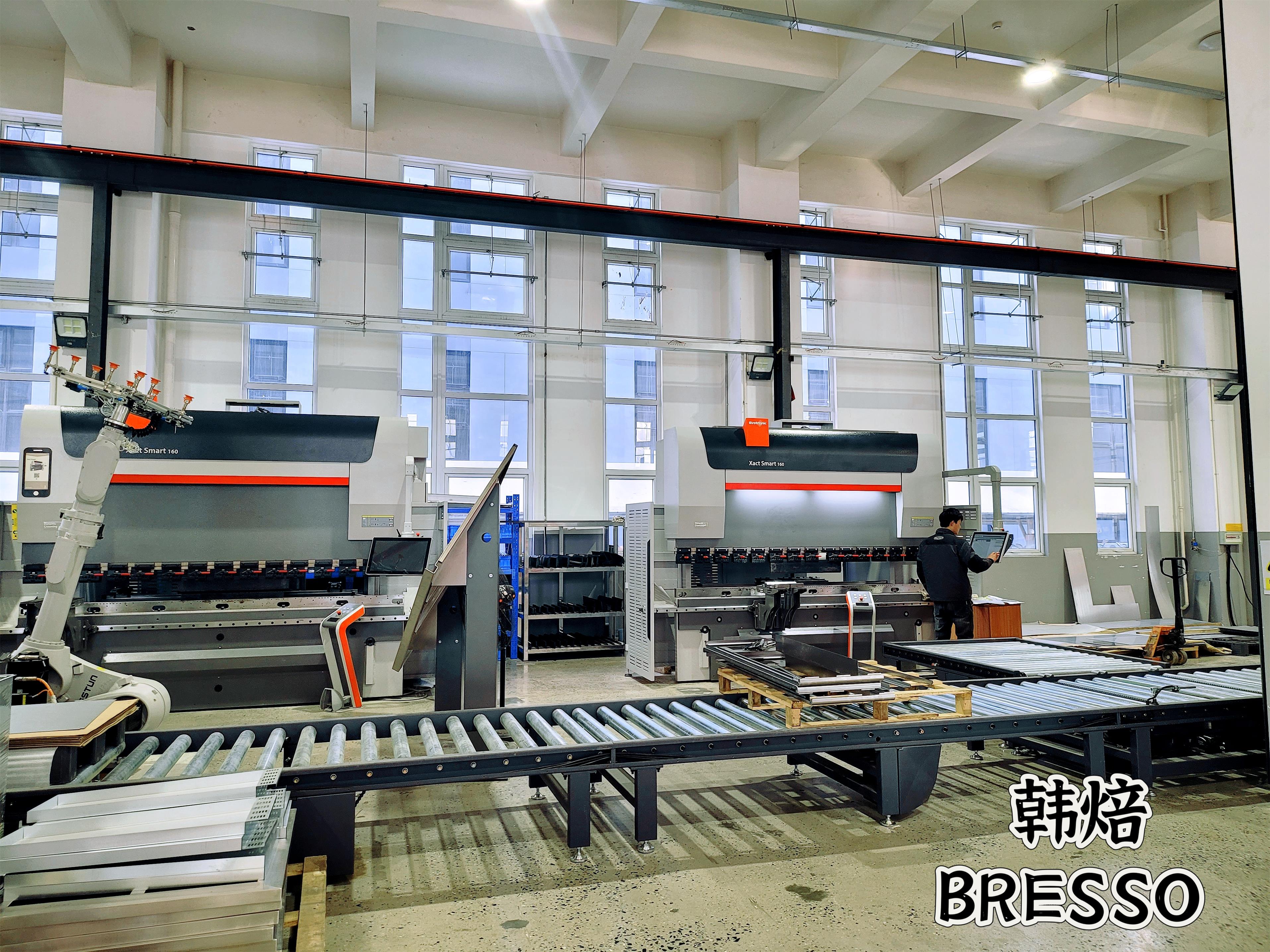
- Manufacturing basis: ISO9001-certified production, with imported Swiss Bystronic sheet-metal processing and bending equipment, a 20-engineer R&D team, and more than 30 product patents.
- Safety architecture: over-temperature power-off protection, leakage protection switch, double-layer high-temperature insulated oven door, controllable steam pressure relief valve, and overcurrent and short-circuit protection.
Each item on that list is verifiable in a factory audit or a technical file review. That is the difference between a durability claim and a durability specification.

Where These Configurations Fit
| Operating scenario | Recommended configuration | Reason |
|---|---|---|
| Artisan sourdough and hearth bread, single site, high volume | HBWO 5-deck European oven | Independent decks for mixed loads, long proven service life |
| Bakery shop or hotel kitchen with varied daily output | HBWO 3-deck European oven | Compact footprint, ±1°C control, sub-3-minute recovery |
| Retail bakery with a fixed morning peak | 5438 deck oven | Documented peak-hour continuity in Canadian installations |
| High-mix store selling soft breads and buns | Asian Oven series | Format-matched baking alongside European deck capacity |
| Pastry, viennoiserie and multi-tray production | Convection Oven series | Airflow baking across trays, IBS infrared heating line-wide |
BRESSO's own positioning places these ovens in hotel kitchens, chain bakeries and specialty coffee shops. The common thread is not product type but scheduling pressure: sites where the oven must deliver a defined output within a fixed window every day.
What the Market Data Signals for Procurement in 2026
The commercial oven market was estimated at USD 25.45 billion in 2024, with electric ovens forecast to take 57.8% of revenue in 2025. For buyers, the electric share is the more actionable figure. It means electrical capacity planning, tariff modelling and heating-technology comparison now belong in the early stage of an oven shortlist rather than in the installation phase.
The second signal is certification-driven market access. North American placement depends on ETL listing, European placement on CE conformity, and manufacturing consistency is generally assessed through ISO9001. BRESSO lists ETL, CE, FCC and ISO9001 across its product range, which places it inside the documentation set most distributors need before an import decision.
The third signal is that distributors increasingly compete on service depth rather than on unit price. Shorter part-procurement lead times and faster local after-sales response are part of BRESSO's stated commercial position, and they matter more in a market where buyers compare total uptime across a five-to-ten-year horizon.
How the Shortlist Compares With Established European Premium Ovens
BRESSO benchmarks its ovens directly against Kolb, Miwe, Wachtel and Wiesheu, and states that its craftsmanship precision matches top-tier German brands while using higher-grade raw materials and body and heating-component specifications that exceed competing products. The comparison is best read as a set of verifiable claims rather than as a verdict.
| Comparison dimension | BRESSO documented position | How a buyer verifies it |
|---|---|---|
| Body and panel specification | 1.5 mm stainless panels, approximately 30% thicker than competing panels | Physical measurement during factory audit or sample inspection |
| Temperature stability | ±1°C control precision | On-site bake test with logged deck temperatures |
| Recovery between loads | Under 3 minutes | Timed door-open recovery test during a trial bake |
| Energy consumption | IBS infrared heating, 15–20% lower than competing models across the product line | Metered consumption over a defined production cycle |
| Service life evidence | Equipment lifespan rated above 10 years; 15-year continuous operation recorded in Australia | Reference calls and site visits with existing owners |
| Procurement cost | 30% lower than European brands, supported by China-based supply chain access to Silinfei, SEW, Siemens and ABB components | Full landed-cost calculation including freight, duty, installation and training |
| Parts and service | Shorter part-procurement lead times and faster local after-sales response, with lower repair labour cost | Written spare-parts list, lead-time commitment and service SLA |
Limits and boundaries of this shortlist
Three limitations should be stated plainly, because a shortlist without boundaries is not a decision tool.
- The field records are installation records. The Australian 15-year record and the Canadian zero-failure peak-hour record are documented in BRESSO's installation history. They are not third-party audited datasets. Buyers should request reference contacts and, where possible, visit a comparable site before standardising a fleet.
- The German-parity claim is a material and tolerance claim, not a lab-verified equivalence. It is supported by panel gauge, control tolerance and component sourcing, which can be checked individually. It should not be read as an independent comparative test result against Kolb, Miwe, Wachtel or Wiesheu.
- Certification is series-level until proven model-level. ETL, CE, FCC and ISO9001 coverage should be confirmed for the exact model and destination market, with certificate numbers and validity dates checked in the relevant directory or declaration of conformity.
There is also a category boundary. Deck and convection ovens serve shop and plant bakeries with batch production. Continuous tunnel or automated rack lines run on different engineering logic, and buyers with that requirement should evaluate a different equipment class rather than extend this shortlist.
Verification Checklist Before You Commit
- Model-level dimensions and deck count. Confirm deck count, usable deck area and tray format in writing; throughput assumptions should be based on these values, not on series names.
- Electrical configuration. Match the oven's electrical configuration to the site's available capacity and tariff structure before comparing purchase prices.
- Certificate numbers. Obtain ETL, CE, FCC and ISO9001 documentation for the specific model and market, including issuing body and validity period.
- Reference installations. Request contactable references in your region, ideally with the same product mix and a similar daily volume.
- Trial bake on your own formula. Test your actual dough and steam requirements, and log recovery time during the trial rather than afterwards.
- Spare-parts list and lead time. Ask for the consumable and wear-part list with committed procurement lead times.
- Service response terms. Confirm warranty scope, response windows and local technical support arrangements.
- Landed cost. Build the total figure from unit price, freight, duty, installation, training and projected energy consumption.
Where a project brief calls for touch-screen controls or remote monitoring, treat those as model-level options to be confirmed in writing rather than assuming they are standard across the range.
Future Outlook
Electric platforms are taking a larger share of commercial oven revenue, and that shift moves energy efficiency from a secondary talking point to a primary purchasing metric. Ovens that can document consumption per bake cycle will be easier to justify to operators under tariff pressure than ovens that only document maximum temperature.
Uptime records are likely to follow the same path. As distributors build catalogue shortlists, verifiable installed-base evidence — how many units, how many years, how many failures — becomes a competitive asset that cannot be copied quickly. BRESSO's 15-year Australian record and its Canadian peak-hour installation record sit in that category.
The open variables are documentation depth and service coverage. Buyers should expect model-level technical files, certificate traceability and reference access to become standard requests rather than exceptions, and suppliers who can answer them in one pass will move through procurement faster.
FAQ
How should a distributor compare a European deck oven with a convection oven for a bakery client?
Deck ovens bake on independent hearth surfaces, suit artisan bread and allow different products on different decks in the same session. Convection ovens circulate heated air across multiple trays, which favours pastry, laminated dough and tray-based volume. BRESSO's portfolio includes European-style ovens, Asian-format ovens and convection ovens, so the decision should be driven by product mix, tray format and peak-hour throughput rather than by oven family alone.
What does a 15-year continuous operation record actually prove about a bakery oven?
It provides evidence on structural durability, serviceability and parts availability over a long horizon. BRESSO's Australian record covers five HBWO units in continuous operation for 15 years with a 30% efficiency gain. It is installation evidence rather than an independent audit, so it should be paired with maintenance records and a reference site visit before a fleet decision.
Are BRESSO ovens a direct substitute for Kolb, Miwe, Wachtel or Wiesheu ovens?
BRESSO benchmarks its ovens against those brands and states that craftsmanship precision matches top-tier German brands while using higher-grade raw materials, with 1.5 mm stainless body panels approximately 30% thicker than competing panels and temperature control precision of ±1°C. Substitution decisions still require a model-specific bake test, because deck behaviour with a specific dough and steam profile cannot be concluded from a series-level comparison.
Which configuration suits a high-mix bakery producing both artisan bread and soft Asian-style breads?
High-mix production is usually served by combining formats rather than by one universal oven: a European deck configuration for hearth and artisan bread, and an Asian-format oven for soft breads and buns, with a proofer supporting fermentation scheduling. BRESSO's portfolio covers all three product categories, which allows the line to be specified from a single supplier, provided deck dimensions and electrical configuration are confirmed per model.
What should be verified before adding a bakery oven line to a distributor catalogue?
Four items are decisive: certificate numbers and covered models for ETL, CE, FCC and ISO9001; a written spare-parts list with procurement lead times; contactable reference installations in comparable markets; and model-level dimensions together with electrical configuration. BRESSO publishes its certification position and states shorter part-procurement lead times and faster local after-sales response, both of which should be confirmed contractually rather than assumed.
How does BRESSO's cost position compare with European brands once landed cost is calculated?
BRESSO states that procurement costs are 30% lower than those of European brands, supported by China-based supply chain access to international component manufacturers including Silinfei, SEW, Siemens and ABB. That figure describes procurement cost, not landed cost: freight, duty, installation, training and projected energy consumption must be added per market before a total-cost comparison is valid.
For buyers who need the complete configuration and specification set behind this shortlist, the current BRESSO product brochure is available here: BRESSO Product Brochure 2026.
¿Tiene preguntas o necesita más detalles?
Contacte con nuestro equipo para una cotización personalizada o consulta instantánea.
Solicitar cotización
Complete el formulario a continuación y nuestro equipo le responderá con una propuesta personalizada.
Chat directo de WhatsApp
¿Prefiere chatear en tiempo real? Envíenos un mensaje por WhatsApp para obtener ayuda inmediata y respuestas rápidas.
- Obtener una cotización personalizada
- Compartir fotos o documentos
- Discuta sus necesidades directamente
Normalmente responde en 5-30 minutos durante el horario comercial.