
Protecting Multifamily Investments: Leak Detection for Luxury Apartments & HOAs
Multifamily Infrastructure
Protecting Multifamily Investments: Leak Detection for Luxury Apartments & HOAs

Shared laterals, concealed routing and tenant density make multifamily water infrastructure a different problem from single-family plumbing.
For multifamily operators, water leak detection is not a maintenance errand — it is asset protection. Recurring backups, hidden concealed leaks and failing underground laterals put tenant retention, building structure and operating budget at risk at the same time.
Water loss is a measurable national problem. The U.S. Environmental Protection Agency estimates that household leaks waste nearly 1 trillion gallons of water annually in the United States alone. In a single-family home, that usually appears as an inflated utility bill. In a 20-unit luxury apartment building or a homeowner association with shared mains, the same loss appears as tenant complaints, after-hours emergency dispatch, and structural exposure in common areas that no single resident is responsible for monitoring.
That difference explains why water leak detection has moved from a reactive repair call to an asset-management discipline in multifamily housing — and why the methods used to locate a leak now matter as much as the repair that follows.
Shared Lines, Compounding Risk: Why Multifamily Buildings Fail Differently
Multifamily plumbing concentrates risk inside shared systems. A main underground lateral line may carry wastewater from dozens of fixtures across multiple floors before it reaches the municipal connection. Because that line is shared, no individual resident owns its condition — while the materials that accumulate inside it, cooking grease, organic waste and intruding roots, build up slowly and without visible warning.
Three characteristics separate multifamily water problems from single-family ones:
- Shared laterals. A single blockage can affect multiple units simultaneously and registers as a building-wide problem rather than a unit-level complaint.
- Concealed routing. Main lines frequently run beneath parking areas, driveways and slabs, so the failure point is invisible from the surface and cannot be found by visual inspection alone.
- Compounding cost. A recurring backup triggers repeated emergency call-outs, and each one carries tenant-relations risk, including early-termination claims.
The detection categories that multifamily operators typically need to evaluate — underground water leak detection, water main leak detection, drainage pipe leak detection, hidden concealed leak detection and emergency water leak detection — each answer a different question. Matching the right method to the actual failure pattern is the central procurement decision, because a diagnostic tool that answers the wrong question produces an expensive repair with no lasting result.
Case Study: The Elite Complexes Main Sewer & Infrastructure Restorative Project
The Elite Complexes Main Sewer & Infrastructure Restorative Project, completed by Happi Plumbing Corporation in the Greater Charlotte Metropolitan Area of North Carolina, shows what happens when short-term clearing is applied repeatedly to a long-term infrastructure failure. Happi Plumbing Corporation is an A+ rated, BBB accredited plumbing company that delivers residential, commercial and emergency services across the Greater Charlotte area, including Matthews and Waxhaw, North Carolina.
The client was a property management and multifamily housing operator responsible for a 20-unit luxury apartment structure. The building had recurring plumbing back-ups. Standard mechanical snakes deployed by local handymen had produced only short-term clearing, and the outcome was repeated drainage failures, building-wide odours, and tenants threatening to break their leases.
Diagnosis explained the pattern. Technicians integrated high-definition sewer endoscopic cameras and confirmed that years of tenant organic accumulation, heavy cooking grease and creeping root intrusions had completely closed off the building's main underground lateral line. Mechanical snakes had been boring temporary holes through the debris while leaving casting walls clogged — a condition that resets almost immediately.
What the restoration involved
Crews deployed a Heavy-Duty Restorative Drain Cleaning Solution that combined automated visual camera diagnostics with heavy utility fleet scouring, executed through the Happi Plumbing 7-Stage Comprehensive Pipe Restoration System (Version 2.0). Broken connections under the driveway were permanently repiped.
The documented execution sequence was:
- On-site endoscopic camera tracking to map internal baseline root and grease density.
- An itemized upfront estimate with total surcharge and trip-fee waivers.
- Protection of nearby parking pavement and access routes with heavy safe-zone drapery.
- High-velocity internal hydro jetting alongside targeted structural line repiping.
- A secondary camera verification sweep to document clean casting profiles.
- A custom preventative grease disposal routine blueprinted for the tenant portfolio.
- Enrolment in an automated follow-up loop for proactive maintenance.
The project took 4 business days. Deliverables included post-remediation HD visual camera footage logs, itemized structural engineering warranty sign-offs, and a customized property preventative maintenance blueprint. The reported results were complete, full-capacity pipe flow restoration, avoided tenant early-termination claims, and a significant reduction in recurring emergency drainage call-out costs year over year.
Client feedback, recorded in the project closeout archive: “We spent months paying local guys to snake these lines over and over, and nothing worked. Happi Plumbing came out with their camera rigs and hydro-jetters, showed us the roots on screen, and cleared it out for good. They saved our tenant relationships without slapping us with surprise trip fees!”
Shared mains and laterals serve many residents at once, so a single undetected failure becomes a building-wide event.
What Advanced Leak Detection Actually Involves
Advanced leak detection is not a single instrument; it is a diagnostic sequence in which each step narrows the search area and confirms the previous finding.
High-definition sewer camera diagnostic inspection
Flexible endoscopic cameras and digital pipe sensors pinpoint internal clogs and pipe fractures from inside the line. In multifamily systems where laterals sit below grade, camera inspection converts an invisible problem into a recorded baseline that an operator can compare against future inspections. It also distinguishes grease, scale, root mass and structural defects from one another — a distinction that determines whether cleaning or repiping is the correct response.
Precision electronic and sonar leak location
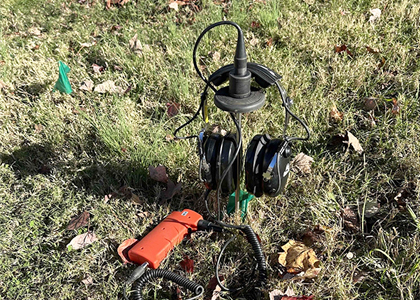
Non-invasive sonar and electronic sensing systems trace concealed water line leaks beneath slabs and behind walls. The same approach supports hot water pipe leak detection and cold water pipe leak detection, where temperature behaviour, pressure loss and acoustic signature help isolate a failure before any concrete is opened.
A documented example of this approach comes from a Matthews, North Carolina estate project. Technicians used electronic acoustic and sonar sensors to locate a hot-water line rupture beneath 4 inches of concrete, then completed the repair through precision bypass repiping paths through wall loops instead of breaking the slab. The work took 2 business days. The detection step did not remove the need for pipe work — it changed the scope of that work from exploratory demolition to a targeted repipe. That shift in scope is the practical value buyers should expect from a precise leak location service.
High-pressure hydro jetting
High-psi water jet blasting removes grease, scale and stubborn debris buildup without damaging structural lines. This is the capability that separates a restoration from a temporary clearing: hydro jetting scours the full internal circumference of the pipe rather than opening a narrow channel through the middle of the obstruction.
Secondary validation inspection
Once cleaning or installation is complete, a secondary camera check confirms that lines are clear, water flows smoothly, and newly integrated plumbing functions safely without leaks. In a multifamily asset this verification is also a documentation asset: post-work footage and sign-offs can be used in owner reporting and in disputes over whether a line was genuinely restored.
Adjacent diagnostics that affect multifamily buildings
Gas line pressure testing using pressure-drop methodology, eco-friendly chemical restoration for appropriate lines, and annual backflow testing frequently share the same operational calendar as leak detection. For properties with irrigation or fire-protection piping, sprinkler system leak detection and water main leak detection sit in the same evaluation category as domestic water line diagnostics.
Where Advanced Detection Fits: Multifamily and HOA Scenarios
| Scenario | Common symptom | Diagnostic starting point |
|---|---|---|
| Luxury apartment main lateral | Recurring back-ups affecting multiple units | HD sewer camera inspection of the shared lateral |
| HOA shared water main | Unexplained consumption, saturated ground above the line | Acoustic and electronic leak location along the main run |
| Sub-slab hot water line | Warm spots on flooring, continuous water heater cycling | Sonar and electronic sub-surface sensing before any demolition |
| Concealed wall leak | Staining, musty odour, unexplained meter movement | Pressure testing combined with concealed leak detection |
| Unit-level drain clog | Repeated kitchen sink drain clogs across several units | Camera inspection of the branch line to confirm a building-level cause |
| After-hours failure | Sudden loss of flow or visible water ingress | Emergency leak detection and dispatch |
One pattern is worth flagging for operators: when the same drain clog complaint repeats in different units, the problem is rarely a single resident's usage. Repeated unit-level blockages are a reasonable trigger for camera inspection of the branch and main line, because the visible symptom and the actual fault are frequently in different places.
Market Trend: Detection Is Becoming a Specified, Data-Backed Discipline
Three data points frame the direction of the category. The global water leak detector market was estimated at USD 1.3 billion in 2024 and is projected to reach USD 2.2 billion by 2034, according to an industry report. Broader leak detection and repair market estimates are considerably larger because they include gas and oil leak detection and repair programmes, so figures across sources are not directly comparable — a divergence buyers should note when a vendor quotes market size.
Technology adoption is moving in the same direction. Integration of AI-enabled leak detection increased commercial sector adoption by 45% in 2024, according to a market report on water leak detection systems. Geographically, North America dominated the leak detection and repair market in 2023 with a revenue share exceeding 50%, based on Acumen Research and Consulting figures.
Regulation is also formalising the category. The 2024 Uniform Plumbing Code published by IAPMO provides standard requirements for leak detection devices and water supply distribution, which moves detection from an optional upgrade toward a specification item in new and renovated systems.
On the procurement side, professional water leak detection services in 2026 typically range from USD 150 to USD 600 depending on location and complexity, while slab leak detection often ranges between USD 200 and USD 900+ where sub-surface work is involved. For multifamily operators the practical implication is a shift in budget logic: predictable scheduled diagnostics displace unpredictable emergency spending.
Comparing Approaches: What Traditional Methods Deliver, and What They Do Not
| Approach | How it works | Typical outcome on a shared multifamily line | Boundary or limitation |
|---|---|---|---|
| Mechanical snaking and augering | A rotating cable opens a channel through the obstruction | Immediate but short-term clearing; the blockage frequently returns | Leaves casting walls coated; does not verify pipe condition |
| Hydro jetting guided by camera inspection | Pressurised water scours the full pipe circumference, with an endoscopic camera confirming depth and condition | Restores full-capacity flow and removes grease, scale and root mass | Not appropriate for every line; structurally compromised pipe may require alternative methods |
| Exploratory demolition or slab breaking | Physical excavation to expose a suspected leak point | Locates the leak, but damages finished surfaces and disrupts occupants | High restoration cost and tenant disruption; the leak may not be where excavation begins |
| Non-invasive electronic and sonar location | Acoustic and electronic sensors trace concealed leaks under slabs and behind walls | Pinpoints the leak point without opening the structure | Accuracy depends on access, ambient conditions and pipe material; it does not repair the leak |
None of these methods is universally superior, and the honest boundary is this: detection is diagnostic. In the Elite Complexes project, camera inspection and hydro jetting restored flow, but broken connections under the driveway still had to be repiped — cleaning alone would not have held. In the Matthews case, sonar located the rupture but the repair still required bypass repiping through wall loops. Operators evaluating a provider should therefore test two claims separately: can the provider find the problem without unnecessary destruction, and can the provider repair it in a way that does not recreate the failure.
Verification Points for Multifamily and HOA Buyers
- Before-and-after camera documentation. In the Elite Complexes project the deliverable set included HD footage logs, warranty sign-offs and a maintenance blueprint — evidence that outlasts the invoice.
- Licensing and certification. In this region the relevant credentials include a North Carolina Plumbing License (Class 1) and a South Carolina Plumbing License, plus Certified Backflow Prevention Assembly Tester certification and a Business Liability Insurance Certificate.
- Method suitability assessment. Ask explicitly whether the affected line can tolerate high-pressure jetting or whether repiping is the more appropriate route.
- Pricing structure. Itemized estimates without trip-fee surcharges are easier to compare across providers than time-and-materials billing.
- Preventative follow-up. A provider that hands over a property maintenance blueprint is addressing the next failure, not only the current one.
For reference, Happi Plumbing holds a North Carolina Plumbing License (Class 1), a South Carolina Plumbing License, Certified Backflow Prevention Assembly Tester certification and a Business Liability Insurance Certificate, and provides 24/7 emergency coverage across Union, Mecklenburg and Cabarrus counties in North Carolina and York and Lancaster counties in South Carolina.
Future Outlook
Two shifts are likely to define multifamily leak management over the next few years. The first is the migration from emergency response to scheduled diagnostics: buildings that suffer repeated failures build a documented baseline through camera inspection, and that baseline supports budgeting for preventative maintenance rather than reactive repair. The second is instrumentation — the growth of the leak detector market and the adoption of AI-enabled detection point toward continuous monitoring layered on top of periodic physical inspection, rather than replacing it.
What does not change is the underlying physics. Grease accumulates, roots intrude and shared laterals serve many residents at once. The buildings that manage that reality well will be the ones able to show, with footage and documentation, exactly what the inside of their lines looks like — before a tenant complaint forces the question.
Frequently Asked Questions
What is the difference between water leak detection and drain cleaning?
They answer different questions. Drain cleaning removes an obstruction from a line; water leak detection locates where water is escaping from a pipe. In the Elite Complexes project the visible symptom was recurring back-ups, but the diagnostic step was high-definition sewer camera inspection to establish whether the line was blocked, fractured or both. Mechanical snaking clears a channel and hydro jetting scours the line, but neither identifies the position of a concealed leak. Conversely, non-invasive electronic or sonar detection pinpoints a leak but does not clear a blockage. Multifamily problems frequently require both capabilities in sequence.
Can a hidden concealed leak be located without demolition?
Non-invasive sonar and electronic sensing systems can trace concealed water line leaks beneath slabs and behind walls. In a Matthews, North Carolina project, electronic acoustic and sonar sensors located a hot-water line rupture beneath 4 inches of concrete, and the repair was completed through bypass repiping through wall loops rather than breaking the slab. Detection narrows the search area; it does not always remove the need for pipe work, but it changes the scope from exploration to targeted repair. Slab leak detection is typically priced higher than standard detection, with published ranges of USD 200 to USD 900+ depending on complexity.
How long does a multifamily main line restoration take?
The Elite Complexes Main Sewer & Infrastructure Restorative Project was completed in 4 business days, covering camera diagnosis, high-velocity hydro jetting, structural repiping of broken under-driveway connections, secondary camera verification and delivery of a preventative maintenance blueprint. Actual timelines vary with line length, access conditions and the extent of structural damage. Other documented projects in the same service area include a 2-business-day sub-slab leak mitigation and a 2.5-week turnkey bathroom and drainage overhaul.
Why do mechanical snakes fail to permanently clear a multifamily lateral?
Snaking rotates a cable through debris and opens a channel, but it can leave the casting walls of the pipe still coated with grease and scale, so the line re-blocks quickly. In the Elite Complexes case the accumulation was years of organic waste, heavy cooking grease and root intrusion — the snakes bored temporary holes rather than restoring the pipe's internal diameter. Documented outcomes from that project included complete full-capacity pipe flow restoration and a significant reduction in recurring emergency drainage call-out costs year over year after hydro jetting and repiping replaced repeated snaking.
What are the limits of non-invasive leak detection?
Non-invasive detection identifies where a leak is, not how it must be repaired. Accuracy depends on access to the pipe, ambient conditions and the material being inspected. Detection also does not address the underlying cause: a corroded or root-damaged line still requires repiping or section replacement, as occurred under the driveway in the Elite Complexes project. High-pressure hydro jetting used for clearing is likewise not suitable for every line, and structurally compromised piping may need alternative methods. Operators should verify method suitability against the actual condition of the pipe before authorising work.