
Promotional Bag Cost per Use: Material Comparison for Buyers
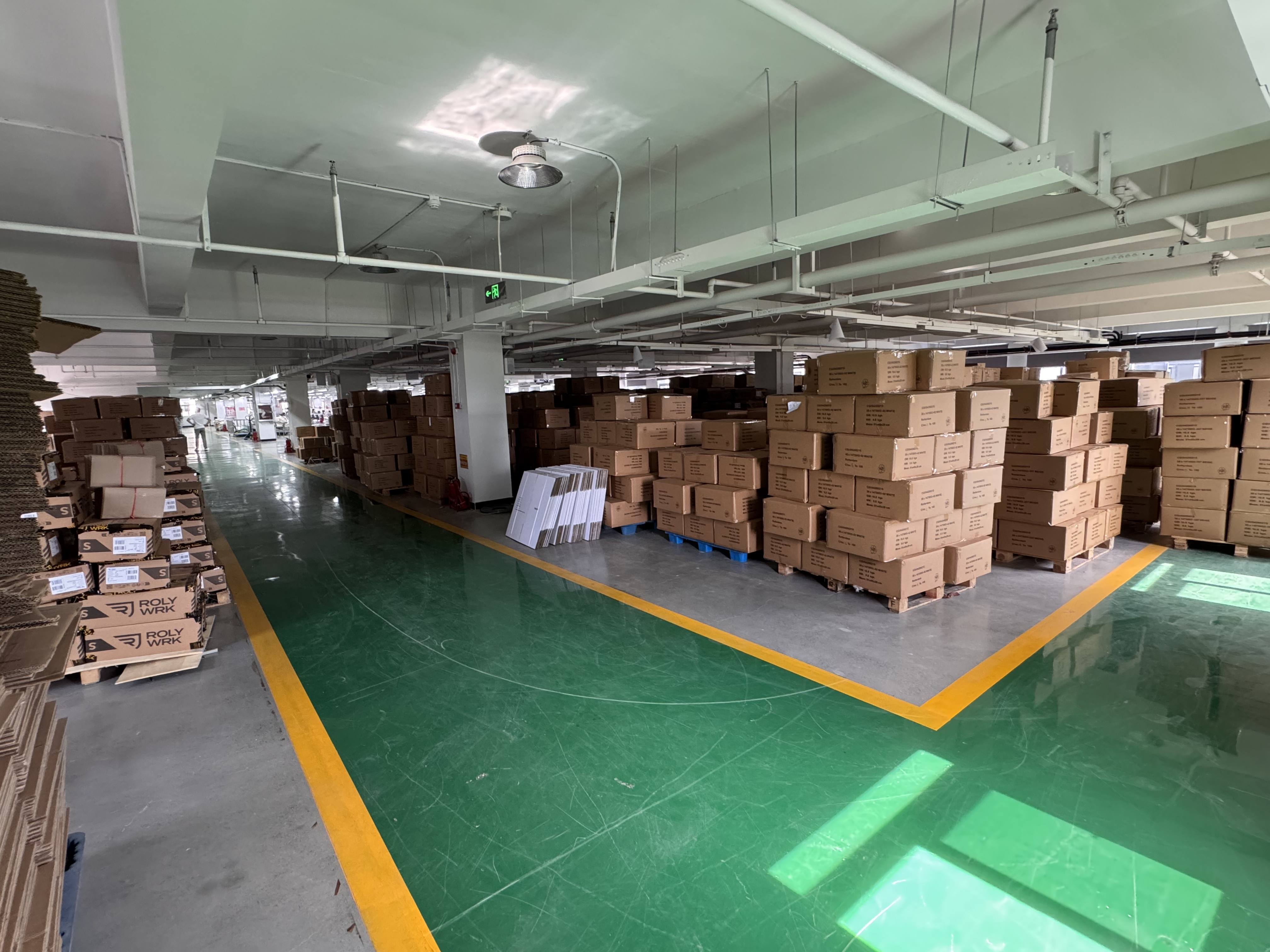
Finished goods storage at Yulite's promotional bag production facility.
Promotional Bag Cost per Use: Material Comparison for Buyers
The choice of a promotional bag is rarely just about color, size, or price. It is a decision about how often the bag will be seen, reused, and associated with a brand. Recent market estimates put the global tote bag market at USD 17.1 billion in 2023 and project it to reach USD 29.8 billion by 2032, according to Acumen Research and Consulting. Inside that growth, buyers sourcing customized bags are asked to balance material performance, brand perception, regulatory compliance, and total cost over the bag's lifetime. For many procurement teams, the real question is not 'Which bag costs less?' but 'Which bag delivers the lowest cost per impression?'
Problem / Opportunity
Promotional budgets are often set around unit cost, which can obscure the lifetime economics of a branded item. A non-woven bag may look economical on the purchase order, but its useful life is often far shorter than a cotton bag's. The same logic applies to paper and plastic alternatives. The opportunity for buyers is to evaluate promotional bags as functional advertising inventory, not disposable packaging. That requires comparing materials using a common set of criteria: durability, environmental impact, branding quality, load capacity, storage behavior, and cost per use.
Brand Solution: Yulite
Henan Yulitepromotion Co., Ltd., operating under the brand name Yulite, is a promotional bag manufacturer based in Zhengzhou, China, that builds its production system around this type of comparison. Founded in 2008, Yulite exports 100% of its output, with main markets in the EU, USA, Japan, and Australia. The company holds BSCI, SEDEX, ISO9001, OEKO-TEX Standard 100 and GRS certifications, and reports a daily output of 30,000 to 50,000 pieces. Its product range includes cotton/canvas bags, tote bags, drawstring bags, foldable bags, cosmetic pouches, backpacks, cooler bags, polyester/nylon bags, RPET/recycled cotton bags, RPET felt bags, and non-woven bags. The factory also has an independent sampling room and professional sample workers, with sample delivery cited at as fast as 3 days.
Technical Explanation: Material Performance Data
To compare material options, buyers can use five variables that are common in supplier evaluation documents: number of reuses, load capacity, storage cycle, environmental impact, and cost difference. The following figures come from Yulite's comparison documentation and reflect typical performance ranges used for sourcing decisions.
Cotton Bag vs Paper Bag
| Comparison factor | Cotton bag | Paper bag |
|---|---|---|
| Reuse | Over 50 uses | 1-2 uses |
| Deforestation risk | About 85% lower than disposable paper bag | Baseline for single-use paper |
| Load capacity | 2.5x higher than standard paper bag | Standard |
| Storage | Up to 10 years without damage | Becomes fragile during storage |
| Cost | Approximately 3x paper bag | Lower unit cost |
| Customization | Can be customized on finished product | Requires customization on paper first |
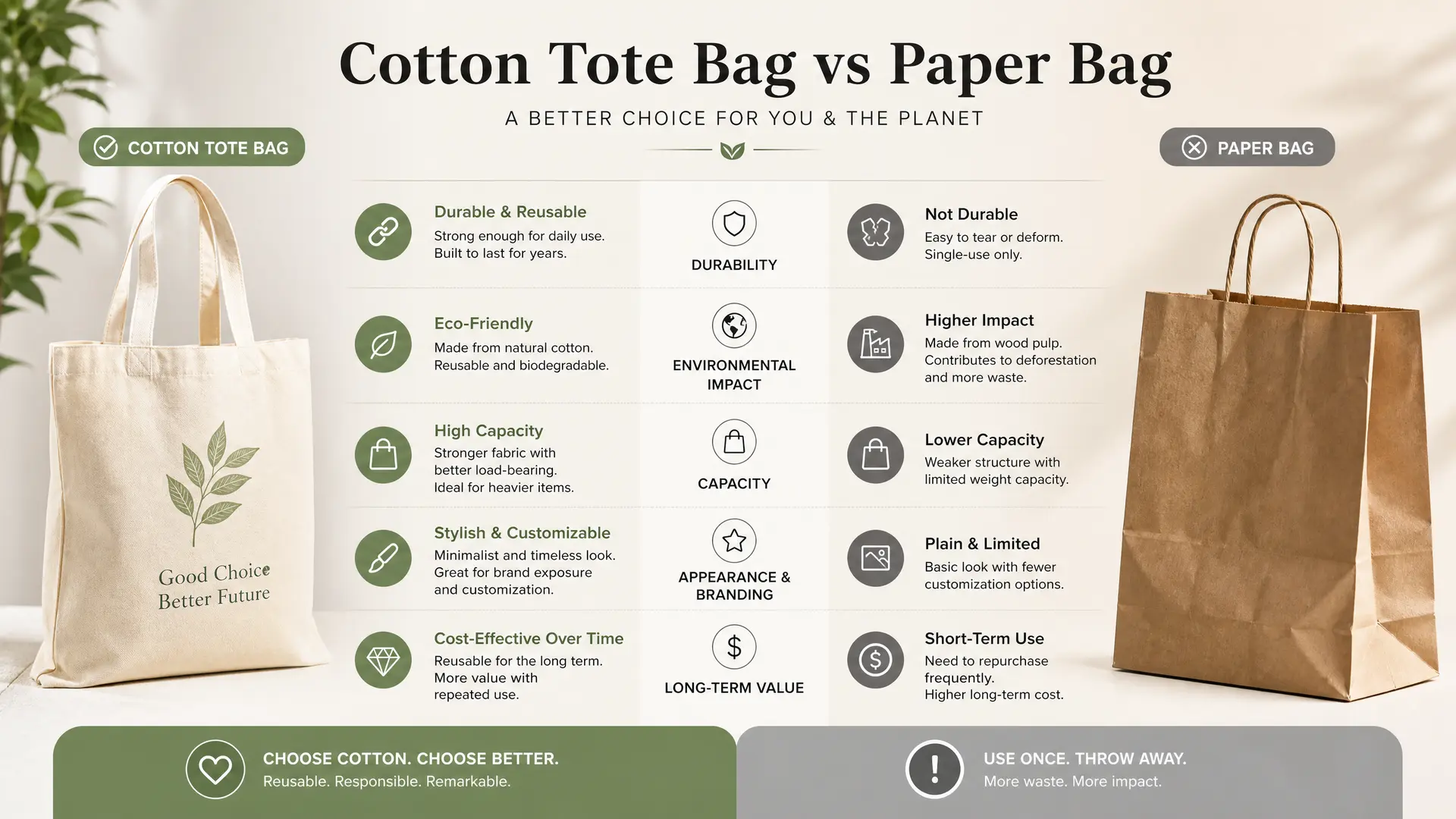
Cotton bags outperform paper bags in reuse and storage, according to supplier comparison data.
Cotton Bag vs Non-Woven Bag
| Comparison factor | Cotton bag | Non-woven bag |
|---|---|---|
| Material | Natural cotton fiber | Typically polypropylene |
| Reuse | Up to 50 times | Less than 10 times |
| Washing | Washable multiple times | Cannot be washed |
| Storage | More than 10 years without aging | Becomes broken due to aging |
| Weight | Heavy and durable | Light and easy to break |
| Cost | About 2x non-woven bag | Lower unit cost |
| Cost per use | Lower over long term | Higher after repeated replacement |
Cotton Bag vs Plastic Bag
| Comparison factor | Cotton bag | Plastic bag |
|---|---|---|
| Reuse | Up to 100 uses | One-time use |
| Load capacity | 10 kg | 3 kg |
| Degradation time | 6 months to 1 year | 200 to 1,000 years |
| Cost | About 10x plastic bag | Very low unit cost |
| Long-term value | Savings through reuse | Recurring replacement required |
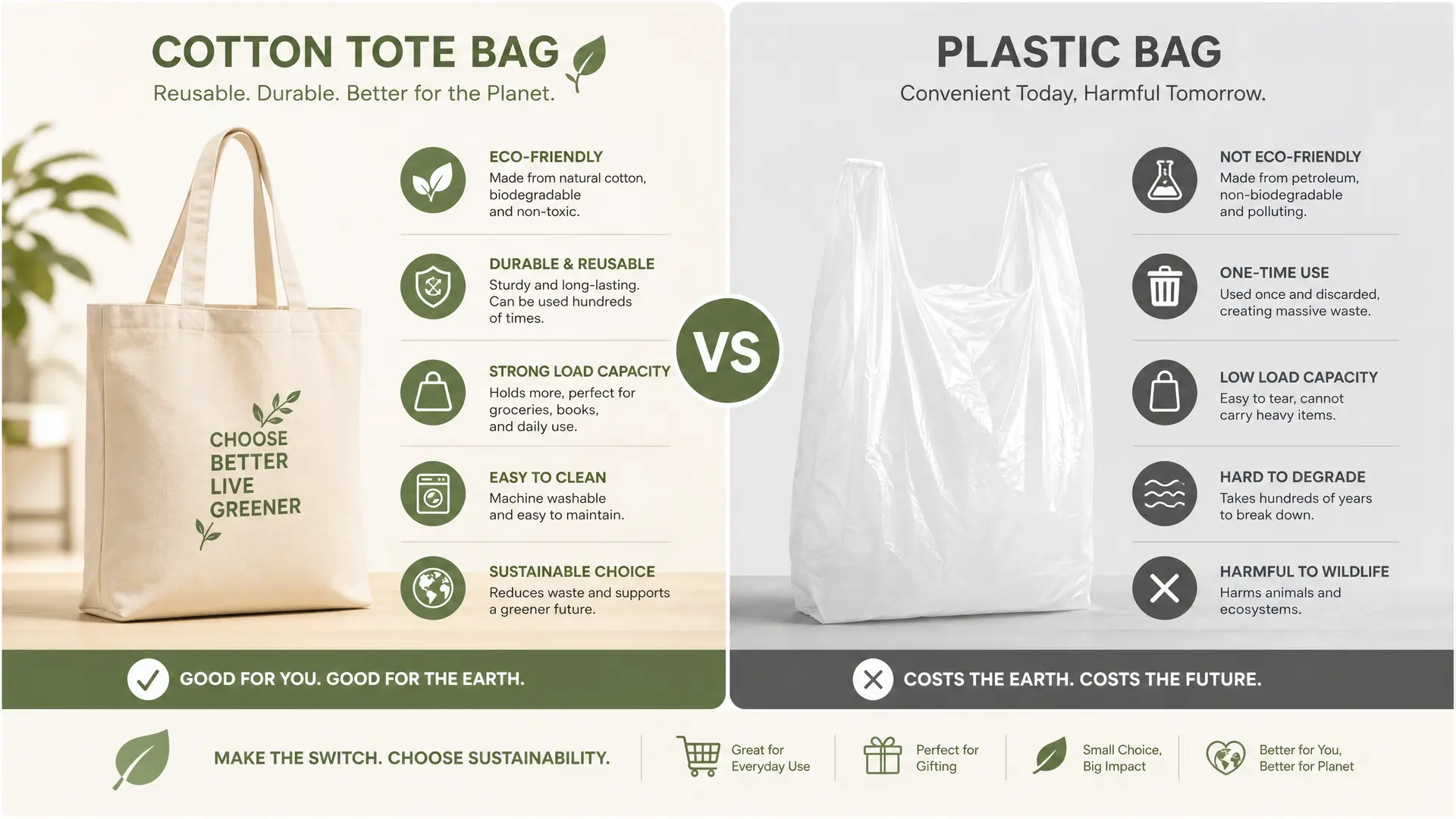
Load capacity and degradation time are frequent decision factors when replacing plastic bags with reusable promotional bags.
Sourcing Decision Framework
Buyers can structure a material evaluation around six practical questions:
- Define the campaign duration: one event or long-term logo exposure?
- Estimate expected reuses: cotton assumes 50+ uses, non-woven fewer than 10, paper only 1-2.
- Calculate cost per use: divide initial cost by expected uses.
- Compare logistics: heavier cotton bags increase freight cost.
- Verify compliance: REACH, OEKO-TEX, GRS, and local plastic bag regulations.
- Check supplier risk controls: order planning, power backup, sub-factory support, lab testing.
This framework shifts the conversation from list price to lifetime brand value. It also gives procurement teams a defensible basis for choosing between a lower-cost bag that is used once and a higher-cost bag that travels with the recipient.
Application / Use Cases
Material trade-offs matter most in the intended use case. Cotton and canvas bags are commonly specified for promotional gift bulk procurement, retail restocking, exhibition materials, and eco-friendly shopping bag projects, where repeat exposure is expected. Market data reinforces this focus: seasonal promotional campaigns accounted for 39% of total demand for reusable shopping bags in 2025, according to Business Research Insights. The garment industry also represents 17% of reusable bag applications, with 48% of that demand specifically for promotional usage. These figures support the view that a promotional bag often functions as a mobile brand surface rather than a simple container.
Market Trend Analysis
Several structural trends are making material selection more strategic. The non-woven bags market was valued at USD 4.24 billion in 2024, according to Metastat Insights. In the tote bag market, canvas is the largest material segment, while jute is the fastest-growing, according to Market Research Future. The recycled PET (rPET) market is estimated at USD 19.5 billion in 2025, according to Custom Market Insights, giving brands more recycled-material options. Regulation is also tightening. In the EU, textile products are subject to REACH Regulation Annex XVII, which restricts azocolourants to 30 mg/kg, and textile labeling must comply with Regulation (EU) No 1007/2011. In the United States, California SB 1046 bans non-compostable single-use plastic carry-out bags from January 2025, accelerating the shift toward non-woven and reusable substitutes.
From a brand-impact perspective, the Advertising Specialty Institute listed tote bags as the fifth most-searched category on its platform in 2024. A reusable tote bag generates over 3,500 brand impressions on average during its lifetime, according to BagzDepot/ASI. In parallel, approximately 73% of Millennials and Gen Z consumers prefer to buy from sustainable brands using eco-friendly promotional items, based on Nielsen data cited by BagzDepot.
Comparison with Traditional Solutions
The traditional promotional bag model often prioritizes the lowest possible unit cost and lightest shipping weight. That model works when a bag is intended for one-time, single-touchpoint distribution. Non-woven and paper bags fit that scenario well because they are inexpensive and lighter. The boundary appears when buyers expect the bag to keep delivering impressions after the event. A non-woven bag supports fewer than 10 reuses and cannot be washed, so its message disappears quickly. Paper bags are fragile in storage and are typically used 1-2 times. Cotton bags require a higher first cost—roughly two to ten times more than non-woven, paper, or plastic—and are heavier to ship. Their advantage is a longer use cycle, which can lower the effective cost per impression. The rational decision therefore depends on campaign duration, distribution method, logistics cost, and whether the end recipient will keep the bag.
Production risk is another dimension. Yulite reports that it controls delivery risks through strict order planning, own power generation equipment, and sub-factory support. For textile imports, the company also carries out lab tests on each lot of fabric before mass production to check for excessive heavy metals, a key compliance point for EU-bound goods. These measures matter because a delay or failed test in a large promotional order can erase any material cost advantage.
Future Outlook
The next phase of promotional bag sourcing is likely to be more data-driven and compliance-heavy. As reusable materials become standard, buyers will compare suppliers on certified recycled content, REACH-compliant textiles, response speed, and delivery reliability. The market context already favors this shift: rPET and GRS-certified materials are growing, and single-use plastic bans are expanding. Suppliers that can document production capacity, storage, testing, and risk controls—rather than simply offering the lowest quote—will be better positioned for repeat orders. Yulite's published capabilities, including sampling within 3 days, multiple printing methods, and stable daily output, are the type of documented evidence that procurement teams can use when building a supplier shortlist.
FAQ
What is the cost difference between cotton and paper promotional bags?
Cotton bags typically cost about three times as much as paper bags. In exchange, they can be reused more than 50 times, while paper bags support only 1-2 uses. The higher initial cost can be offset by the longer useful life.
How does cotton compare to non-woven bags for a promotional order?
Cotton bags are roughly twice the price of non-woven bags. They can be reused up to 50 times, while non-woven bags typically last less than 10 uses. Cotton can be washed and stored for more than 10 years, while non-woven bags can become brittle and cannot be washed.
Are cotton bags a better environmental choice than plastic bags?
The main differences are reusability and degradation. Cotton bags can be used many times and typically degrade within 6 months to 1 year, whereas plastic bags take 200-1,000 years to degrade. However, cotton's cost is about 10 times that of plastic, so the choice depends on whether the bag will be reused.
How long can cotton promotional bags be stored without damage?
Cotton bags can be stored for up to 10 years without damage and require minimal maintenance. Paper bags, in contrast, become fragile and prone to damage during storage.
What should buyers compare when sourcing promotional bags?
Buyers should compare durability (expected number of reuses), load capacity, storage cycle, environmental impact, and cost per use, rather than unit price alone. These factors determine the total value of the branded bag over time.
Buyers evaluating material choices or supplier capacity can download the Yulite 2026 spring brochure for product and capability details: 2026 Yulite Spring Brochure. Company website: www.yulitepromotion.cn