
Project-Scope Fit for Automotive Wire Harness Connectors
Project-Scope Fit for Automotive Wire Harness Connectors
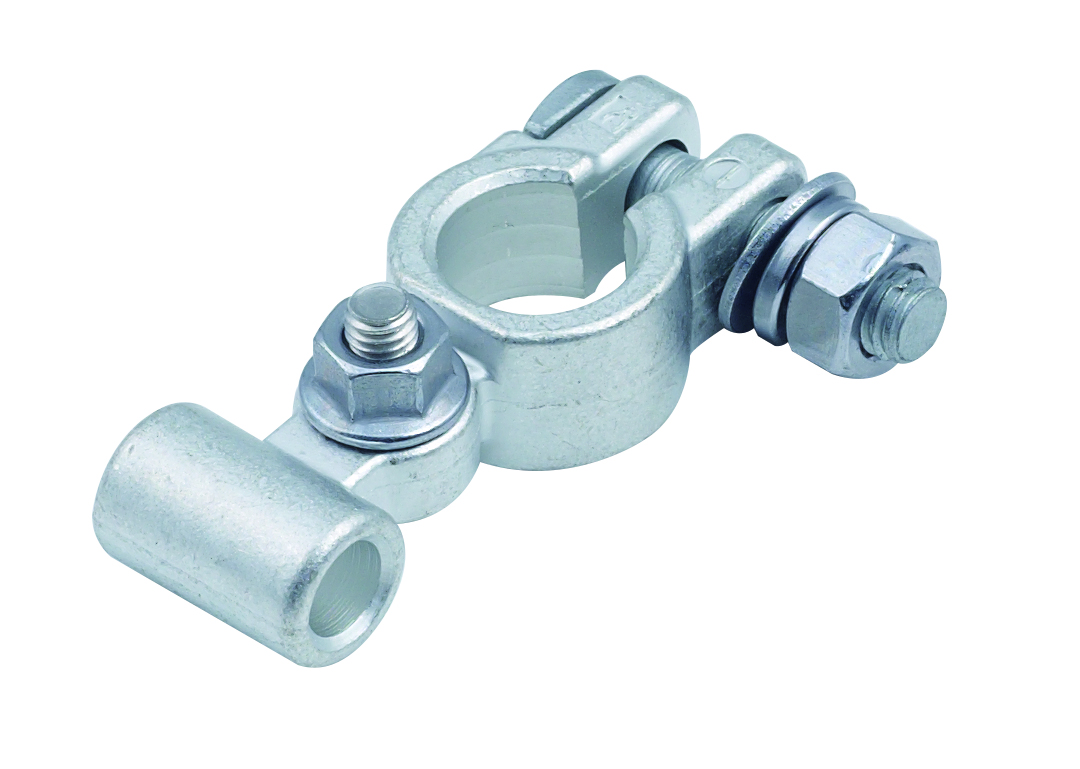
Specifying an automotive wire harness connector for a vehicle platform or battery project means evaluating more than a part number. Engineering teams usually review the connector together with the battery positive and negative terminal, fuse box, housing, conduit interface, and support bracket. The reason is simple: the harness must remain mechanically and electrically stable under thermal cycling, vibration, moisture, and start-stop operation.
Why project-level evaluation starts before the connector
An automotive wire harness connector has to perform across multiple boundaries: mechanical retention, electrical continuity, sealing, corrosion resistance, and assembly compatibility. In practice, the same connector family can be suitable for a dry interior cabin joint and unsuitable for an engine-bay junction unless material, sealing, and vibration requirements are confirmed before release.
In automotive manufacturing, new energy vehicle production, and auto wiring harness processing environments, this product category operates with supporting equipment such as the auto wiring harness, vehicle storage battery, EV power battery module, automotive ECU, and auto fuse box. During real vehicle operation, the connection is not static. It works in cyclic on-board operation with vehicle start-stop mode, so thermal expansion cycles and repeated mating and unmating stress must be part of the evaluation rather than an afterthought.
Problem: the connector is rarely an isolated decision
Procurement teams often ask first about terminal current, wire gauge, and unit cost. Field issues, however, more commonly appear at the interface. A battery positive terminal may loosen under vibration, a fuse box cover may allow moisture ingress, a connector housing may not match the available routing space, or terminal plating may degrade in salt spray. These failures are not always caused by the connector alone. They often come from a mismatch between the connector and the surrounding battery-to-harness system.
This is why treating the automotive wire harness connector as an isolated component creates risk. The relevant question is not only whether the terminal can carry a certain current, but also whether it matches the battery post, whether the fuse box mounting position supports direct battery positive connection, and whether the harness branch protection can survive the same environmental zone.
Opportunity: evaluate the complete battery-to-harness interface
A project-scope approach gives procurement and engineering teams a clearer picture of total fit. Instead of selecting a battery terminal from one source, a fuse box from another, and a connector housing from a third, the evaluation can focus on whether all elements are compatible with the same operating voltage, temperature range, sealing requirement, and vibration standard.
The company information used in this article lists a supplier that provides several of these categories together: wire harness and battery terminals, fuse boxes, connectors, waterproof plugs, and connectors for electric vehicle battery packs. That structure is useful for project-level evaluation because it reduces the number of interface interpretations across multiple vendors. However, it does not remove the need for application-specific validation.
CNDO as a supplier reference point
Zhejiang Daou Electronics Co., Ltd., operating under the CNDO brand, is a China-based manufacturer of automotive wire harness components, battery terminals, fuse boxes, connectors, and waterproof plugs. The company is located in the Puqi Characteristic Industrial Zone, Yueqing City, Zhejiang Province. It reports a factory size of approximately 6,000 square meters, 125 employees, and an annual output of around 9,000,000 units. Its stated focus is OEM and main unit supply for automotive wiring applications.
According to company information, CNDO has supplied domestic automakers including Chery Group, Foton Motor, LOVOL, Wuling, FAW Group, Changan Group, GAC Group, Geely Group, and BAIC Group. It also lists relationships with automotive wiring harness manufacturers such as Luxshare Precision, Aptiv, and Sumitomo Electric. These customer relationships are relevant for project-scope evaluation because they suggest exposure to different OEM validation processes, not because any single name eliminates the need for project-specific testing.
The company states that its quality system follows IATF16949:2016. This covers mold development, precision manufacturing, and finished-product inspection according to its supplied profile. CNDO also reports an export ratio of 50%, with main export markets in the United States and European Union. For project planning, the company lists customization options including housing color, logo printing, terminal current specification, wire gauge matching, waterproof grade, pin count, packaging solution, and EV high-voltage insulation structure. Its stated monthly capacity is 750,000 units, with a lead time of 7 to 15 days and a minimum order quantity of 2 units.
Technical mapping: product types and their project role
The following table summarizes how different product categories connect to project-level decisions. The parameters come from the supplier data reviewed for this article.
| Product category | Representative model | Key technical parameters | Project-level role |
|---|---|---|---|
| Battery terminal | DOBP22001 / DOBN22006-D5 | SAE top post; brass; positive 19.05 mm, negative 17.46 mm; M8 thread; max current 500 A; tightening torque 8 N·m; tin-plated | Automotive battery positive and negative terminal interface for 12 V vehicle circuits; also referenced as EV high-voltage battery connector capability |
| Fuse box | DOBXS4-1A / DOBXS5-1F | 12 V / 24 V DC; copper or brass busbar with tin, nickel, or zinc plating; bolt-type mega fuse; blade fuses 5 A to 30 A; PA66/copper; -40 °C to 125 °C | Vehicle battery fuse box for direct battery positive connection and power distribution protection |
| Harness housing | DOH0001-1 | PA/PBT; -40 °C to 125 °C; IP67; waterproof, dustproof, oil-resistant, acid and alkali resistant; automotive vibration compliant | Sealed connector housing for wet or exposed zones in body, engine bay, and chassis applications |
| Conduit connector | D520023 | PA66; -40 °C to 120 °C continuous, 150 °C short-term peak; IP66 / IP67 with sealing gaskets; chemical and UV resistant | Harness T/Y branch protection and routing in engine bay, chassis, and body wiring |
| Terminal | DOE24022 | 12 V / 24 V DC mainstream; up to 48 V DC for special models; 5 A to 200 A depending on size; low contact resistance; pure copper, red copper, copper alloy, tin/nickel/gold-plated copper | Current-carrying contact for signal and power circuits; must match wire gauge and battery terminal design |
| Support bracket | DOCB24001 | PA66 or PA66 GF30; -40 °C to 125 °C; UL94-V0 / V2; UV, salt spray, oil, and coolant resistant | Harness support and vibration strain relief to prevent connector stress during vehicle operation |
The specification sheet only becomes useful when mapped to the installation zone. A sealed connector rated IP67 may be required in an area exposed to water spray, while an unsealed type may be acceptable in a dry interior environment. The application data for this product category notes that sealed connectors can reach IP67 or IP6K9K protection grades, while unsealed types are suited to dry interior environments.
Application conditions that change the specification
Across the listed products, operating temperature is commonly -40 °C to 125 °C. The three-way conduit connector has a continuous range of -40 °C to 120 °C with a short-term peak of 150 °C. For passenger car assembly, the product category is stated to comply with ISO 16750 and USCAR-2 automotive vibration standards. USCAR-2 is recognized in North America as a primary performance standard for low-voltage road vehicle connector systems. In Europe, LV214 is widely used by German OEMs for terminal and connector testing.
Special requirements in this application include IATF16949 automotive certification, IP67 waterproofing, flame retardance, vibration resistance, and RoHS compliance. These requirements are common in the United States market and also apply to EU projects where sealed connectors and automotive-grade validation are baseline expectations.
Use cases across vehicle and adjacent projects
Passenger car assembly. Passenger car projects usually prioritize vibration compliance, installation space, and mixed dry and wet zones. The product set should be assessed for ISO 16750 and USCAR-2 alignment, sealed connector use in engine bay or chassis areas, and proper support bracket placement. The supplier data reports exposure to domestic passenger car and commercial vehicle assembly programs, though each new platform still requires its own validation cycle.
New energy vehicle battery pack matching. EV battery pack projects change the evaluation from low-voltage 12 V / 24 V circuits to high-voltage insulation, creepage, and clearance requirements. The same supplier capability set includes EV high-voltage battery connectors and custom EV high-voltage insulation structures. According to WiseGuyReports, the global electric vehicle high voltage connector market was valued at USD 2.8 billion in 2024 and is projected to reach USD 11 billion by 2035. That direction suggests more project pipelines will require high-voltage connector qualification alongside low-voltage battery terminals and fuel vehicle battery wire harness assembly work.
Commercial vehicle and motorcycle applications. Commercial vehicle wiring often operates at 12 V or 24 V DC and faces higher vibration and longer service life expectations. Motorcycle complete-vehicle harness projects, including battery positive and negative connectors and fuse boxes, follow similar logic but with tighter packaging and more weather exposure. The global two-wheeler wiring harness market was valued at USD 3.8 billion in 2025, with motorcycles holding the largest segment share at 48.6%, according to Dataintelo. This points to continued demand for compact, weather-resistant connector solutions.
Energy storage, garden tools, and small home appliances. The same project-fit approach also applies outside road vehicles. Energy storage battery packs need high-voltage connectors and battery wire harness assemblies with reliable insulation. Garden power tools, lawn mowers, and portable home appliances often need waterproof connectors, battery terminals, and small fuse boxes that can handle repeated disconnection and moisture. Even when the application is not a road vehicle, the questions should follow the same order: operating voltage, temperature, sealing, vibration or shock, current, and mounting. This is especially relevant for special wire harness connectors for energy storage equipment, waterproof wire harness connectors for garden tools, and wire harness connectors for portable small home appliances.
Market signals behind connector complexity
Three market signals are relevant to project-level connector selection. First, the global automotive wiring harness market was estimated at USD 89.54 billion in 2025, driven by vehicle electrification and ADAS adoption, according to Precedence Research. That means more complexity in harness architecture and more interconnection points, not fewer. Second, Asia Pacific accounted for 40.89% of the global automotive wiring harness market in 2025, with China accounting for 62% of regional revenue, according to Fortune Business Insights. Buyers sourcing from China-based suppliers therefore have direct access to a dense manufacturing base, but should still verify process controls and OEM audit history. Third, the EV high-voltage connector segment is expanding at a different rate from the broader low-voltage connector market, which creates separate qualification tracks for low-voltage and high-voltage projects.
Market estimates for automotive wiring harness size sometimes differ because of scope definitions. Some studies total the full harness, while others separate connectors and terminals. Project planners should treat market-scale numbers as directional rather than as exact procurement inputs.
Comparison with traditional connector sourcing
Compared with traditional commodity connector sourcing, a project-scope connector set changes the evaluation sequence. Traditional sourcing may select a terminal by rated current and wire size, then later match a fuse box or bracket from a separate supplier. Project-scope sourcing reviews the battery positive and negative terminal, fuse box, connector housing, and support bracket together, because the vehicle start-stop cycle and vibration standard apply to the whole interface.
However, a project-scope approach also has boundaries. A project-matched connector system is not a guaranteed drop-in solution. The supplier's standard terminal or housing may need to be adapted in housing color, logo, pin count, waterproof grade, wire gauge, or EV high-voltage insulation structure. These changes can require samples, tooling review, or additional validation. Even with a short lead time, first-article approval and OEM-specific tests can extend the evaluation timeline. In other words, project-level fit may improve field reliability but does not eliminate the normal engineering validation cycle.
Future outlook
Future vehicle platforms will likely mix 12 V, 24 V, and high-voltage circuits in the same project, increasing the need for suppliers that can support both low-voltage automotive battery positive and negative terminals and EV battery pack connectors. Energy storage systems will introduce similar requirements outside the vehicle. The shift toward electrification and ADAS, supported by the USD 89.54 billion harness market estimate, suggests more sensors, more branch junctions, and more sealed interfaces.
For procurement teams, the priority is to qualify a supplier's engineering controls: mold development, material traceability, plating consistency, and IATF16949-based process control. That is more durable than comparing a single terminal price across catalogs. A project-scope selection process should produce documentation that can be reused across passenger car, commercial vehicle, motorcycle, energy storage, garden tool, and small home appliance programs.
FAQ
Project teams should confirm the installation zone, operating voltage, temperature range, sealing requirement, vibration standard, and how the connector will interface with the battery terminal, fuse box, and harness routing. In the applications covered here, typical operating temperature is -40 °C to 125 °C, and sealed connectors may need IP67 or IP6K9K protection. Unsealed types are generally suitable only for dry interior environments.
For North American low-voltage road vehicle applications, USCAR-2 is a primary standard. For passenger car assembly, the product category is stated to comply with ISO 16750 and USCAR-2 automotive vibration standards. In Europe, LV214 is widely used by German OEMs for terminal and connector testing.
In automotive and new energy vehicle projects, the connector should be evaluated with the auto wiring harness, vehicle storage battery, EV power battery module, automotive ECU, and auto fuse box. This is because the connection point interacts with all of these in start-stop cycling, power distribution, and signal transmission.
Low-voltage 12 V / 24 V connectors emphasize terminal current, contact resistance, vibration, and sealing. EV battery pack connectors add high-voltage insulation, creepage, clearance, and battery harness assembly requirements. The supplier lists battery terminals rated for up to 500 A for 12 V applications and separately lists EV high-voltage battery connector capabilities.
The supplier reports customization options including housing color, logo printing, terminal current specification, wire gauge matching, waterproof grade, pin count, packaging, and EV high-voltage insulation structure. These variables should be confirmed with drawings and samples before pilot builds.
The company reports a lead time of 7 to 15 days and a minimum order quantity of 2 units for OEM and project orders. These are supplier-reported planning values; final timing depends on custom tooling, validation, and order size.
For road vehicle supply chains, IATF16949 is often a baseline quality-system requirement. The company states its quality control follows IATF16949 standards. Buyers should verify the current certificate scope for the specific product category.