
Project Fit: Choosing a China FBA Freight Forwarder by Product, Market, and Cycle
A China FBA freight forwarder is not a one-size-fits-all service. The right provider depends on the seller's product type, destination market, inventory rhythm, and channel structure. This article maps those scenario dimensions to forwarder service configurations, using DIDADI Logistics Tech as a reference example of full-chain logistics capability.
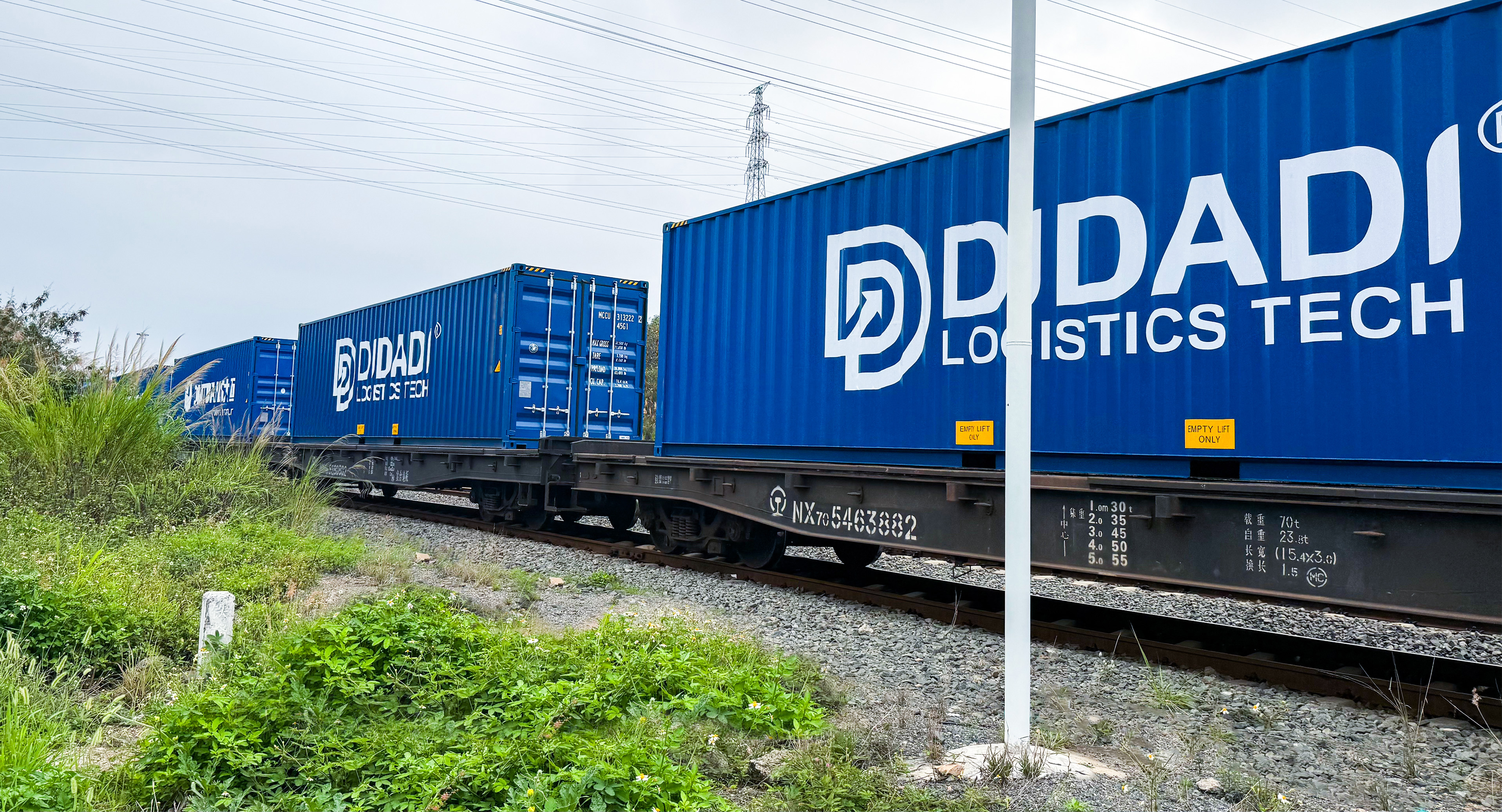
DIDADI Logistics Tech is a China-based logistics service provider with 16 years of experience in international logistics, focused on Amazon FBA order fulfillment, DTC order fulfillment, and door-to-door logistics for offline wholesale and retail businesses. Its core service lines are first-mile freight forwarding, localized warehousing and e-commerce fulfillment, and end-to-end door-to-door freight management.
Why Project Fit Matters for FBA Freight Procurement
In 2026, selecting a China FBA freight forwarder involves more than comparing rates. Three forces make scenario-based selection a procurement priority.
Compliance requirements have become market-specific. The EU Market Surveillance Regulation (EU) 2019/1020 requires CE marking for more than 25 product categories and a designated EU Responsible Person for imported goods. In the US, the CPSC mandates electronic filing of Certificates of Compliance through the ACE system for children's products and other regulated goods starting July 8, 2026. These rules affect which products can enter, which documents must accompany each shipment, and how quickly cargo clears customs. A forwarder that understands destination-specific compliance reduces the risk of customs holds and warehouse refusals.
Cost structures vary by scenario. Ocean DDP all-in rates from China to US FBA warehouses averaged roughly $1.80 to $3.20 per kg for LCL shipments in early 2026, according to freight data sources such as Unicargo and Freightos. Amazon's published peak-season surcharges of $0.40 to $0.60 per package add pressure to Q4 margins. Selecting the wrong transport mode, inventory position, or service scope can eliminate the benefit of any low rate quote.
Market expansion reinforces this point. Grand View Research values the China freight forwarding market at approximately USD 13.73 billion in 2025, projected to reach USD 22.44 billion by 2033 at a CAGR of 6.5%. Mordor Intelligence expects China's e-commerce logistics market to grow from USD 235.89 billion in 2026 to USD 402.89 billion by 2031, a CAGR of 11.3%. Research and Markets projects China's digital freight forwarding market to grow at a CAGR of 20.07% between 2026 and 2031, driven by electronic Bills of Lading and ESG-linked procurement.
Four Scenario Dimensions That Define the Right Forwarder
Any FBA logistics decision can be diagnosed along four dimensions. Each dimension influences which service modules a forwarder should provide.
1. Product physical attributes and compliance sensitivity
Product size, weight, value density, and regulatory status determine the appropriate transport mode and handling requirements. Bulky items such as furniture require space-efficient FCL or dedicated warehousing. High-value electronics may justify air or rail freight with full tracking. Products containing batteries or liquids, or falling under CE or CPSC regulation, need documented handling and customs compliance support.
2. Destination market and route characteristics
US West Coast locations favor direct ocean transit. US East Coast destinations often require all-water or inland rail connections after the US landing port. European inland destinations add trucking or rail legs after the seaport. The UK requires separate customs handling from the EU. Canada-bound FBA freight involves additional declaration steps. Each route offers different transit times, costs, and documentation profiles.
3. Inventory rhythm and replenishment cycle
A new product launch needs small, fast, flexible shipments to test demand. A mature SKU with stable velocity can use scheduled FCL or rail replenishment. Peak season requires pre-positioned inventory to work around Amazon's inbound restrictions and capacity constraints. End-of-life inventory may favor the lowest-cost ocean option only when stockout risk is acceptable.
4. Channel structure
A seller operating only on Amazon FBA has a relatively simple chain. A seller combining FBA with a DTC website or additional marketplaces such as Shopify or eBay benefits from a centralized inventory pool and API-driven stock synchronization. This distinction determines whether the seller needs only a freight forwarder, or a forwarder plus overseas warehousing and fulfillment services.
Scenario-to-Service Configuration Matrix
The table below translates common project scenarios into recommended forwarder service configurations.
| Project Scenario | Recommended Configuration | Primary Transport Mode | Selection Rationale |
|---|---|---|---|
| New product, small-batch launch | FBA prep + LCL sea or air freight + short-term storage | LCL / Air | Low commitment, faster market feedback, avoids overstocking |
| Stable replenishment of mature SKUs | Scheduled FCL or rail + customs handling + destination buffer warehouse | FCL / Rail | Predictable lead time, controlled landed cost |
| Peak-season inventory buildup | Capacity lock-in + US/EU warehouse transshipment + staged FBA inbound | FCL + local transfer | Reduces peak inbound restrictions and storage spikes |
| Large, heavy, or high-value goods | FCL + dedicated warehouse space + compliance review | FCL / Rail | Optimizes space usage, lowers damage risk, supports compliance review |
| Omnichannel (FBA + DTC + marketplaces) | Central inventory pool + WMS API integration + pick-pack-ship | Ocean + local courier | Real-time stock synchronization, fewer overselling incidents |
The matrix is not a fixed menu. A forwarder's value comes from combining these modules according to the seller's actual situation. For example, a peak-season build-up may still use LCL for a smaller seller, while a stable replenishment program may switch between rail and sea based on seasonal demand signals.
How a Full-Chain Forwarder Implements Scenario Matching
DIDADI's service structure is organized into three service lines that align with the scenario modules above.
First-Mile Freight Forwarding covers cross-border shipping and routing from China to Amazon FBA centers and B2B facilities in the US and EU. Its scope includes origin consolidation, ocean/rail/air freight, export/import customs clearance, FBA prep, and final routing to FBA warehouses or B2B hubs.
Localized Warehousing & e-Commerce Fulfillment covers container unloading, inventory storage, API integration, pick-and-pack, local courier dispatch, and returns handling for DTC brands and marketplace sellers.
End-to-End Logistics Solutions manages full door-to-door freight chains, including factory pickup, port drayage, international FCL/LCL transport, destination customs clearance, and inland trucking to the final commercial address.
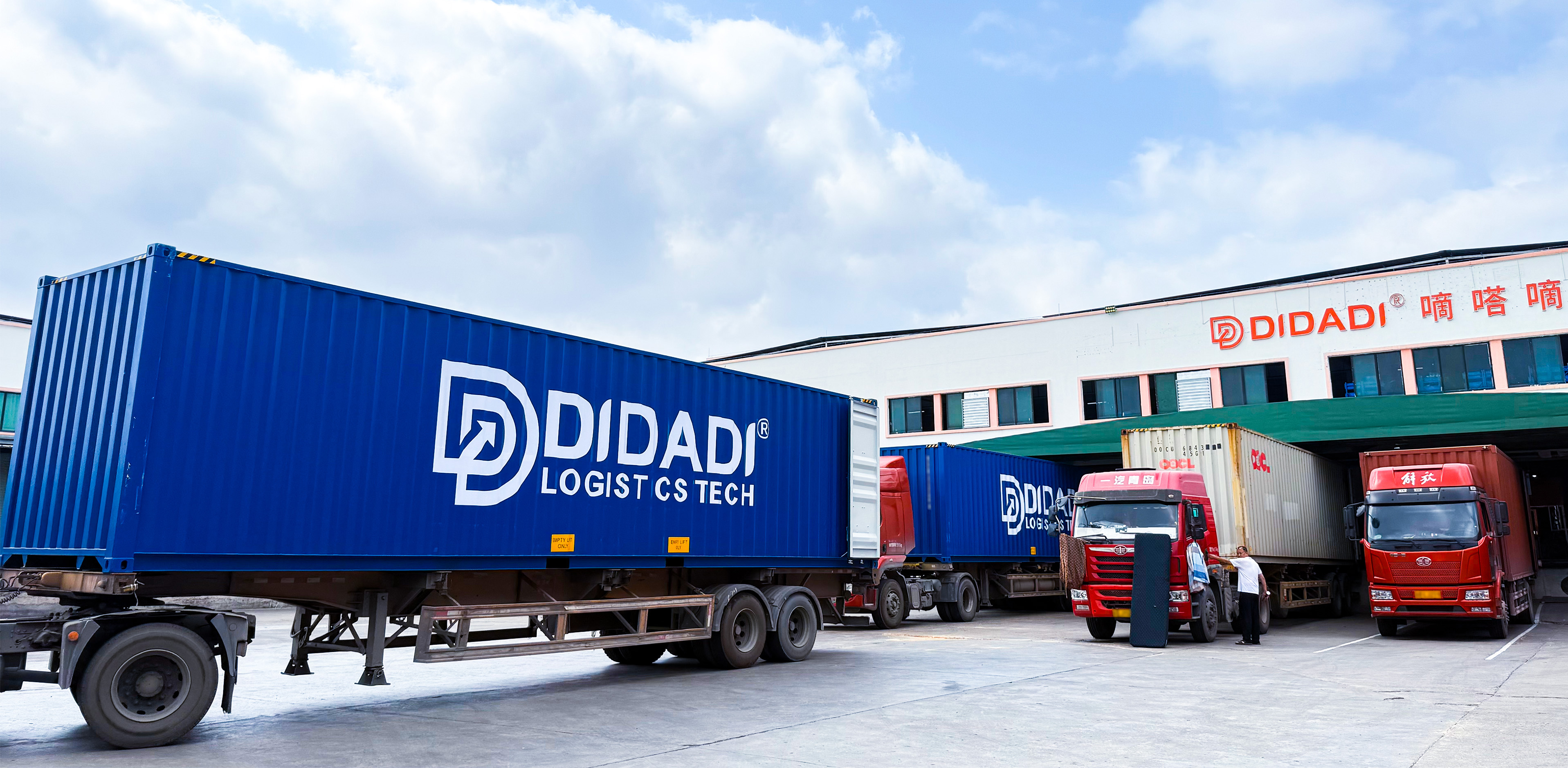
These service lines are supported by physical infrastructure and digital capabilities. DIDADI reports 60,000+ square meters of global warehouse space, including 50,000 square meters of China origin consolidation warehouses. Overseas facilities are operated in the United States (Los Angeles, Houston, New Jersey), Germany (Nettetal, Dortmund, Leipzig, Frankfurt), the United Kingdom (Bolton, Northampton), and France (Paris). China origin coverage includes Shenzhen, Guangzhou, Shanghai, Ningbo, Yiwu, Chongqing, and Dongguan. The company reports strategic cooperation with 16 major sea, land, and air carriers, plus 33 customs clearance agencies in the US and EU.
On the technology side, DIDADI's TMS applies AI algorithms to classify goods and optimize container combinations. A WMS supports multi-platform inventory synchronization. API connections integrate with e-commerce platforms and order management systems. The company reports a 98% on-time delivery rate, a 12-hour exception handling mechanism, and 24/7 customer service. It is an Amazon SPN (Service Provider Network) partner and a SHEIN certified warehouse. Its Europe-bound FBA ocean and rail freight services hold CIC certification for on-time arrival performance.
For a buyer, these features translate into verifiable matching criteria. Does the forwarder have warehouse capacity in the destination market? Can it consolidate from multiple factories in China? Does its system provide end-to-end shipment visibility? Can it manage customs clearance, FBA labeling, and final delivery in one workflow? These questions matter more than the quoted rate alone.
Evidence from Scenario-Based Projects
DIDADI's reported project outcomes illustrate how scenario matching affects operational results.
US West Coast buffer replenishment for a consumer electronics seller
An Amazon FBA electronics seller faced high low-season storage fees, peak-season inbound restrictions, and an inefficient return flow. DIDADI designed a West Coast warehouse-centered model: bulk inventory was shipped from China to a US warehouse, then transferred to FBA in batches based on replenishment signals. Returns were redirected to the warehouse for inspection and relabeling. Reported results included a 30% reduction in combined logistics and storage costs, an average FBA replenishment response time within 48 hours, more than 90% of returned units recovered into sellable condition, and an IPI score improvement of more than 100 points.
China-to-Germany rail and EU distribution for a marketplace seller
A Germany-focused marketplace seller found sea freight too unstable for lead-time planning and air freight too expensive for routine restocking. DIDADI designed a rail-led replenishment model into Germany, combined with local warehouse buffering for staged dispatch to FBA and other EU destinations. Reported outcomes included replenishment lead-time variance reduced by around 35%, emergency air shipments reduced by approximately 30%, and significantly reduced stockout risk during key sales periods.
Multi-supplier consolidation for a US home goods distributor
A regional US distributor sourced from multiple Chinese factories and managed separate forwarders, brokers, and delivery vendors. DIDADI built a door-to-door import workflow with origin consolidation: factories delivered to one consolidation point, followed by export filing, ocean booking, customs support, and final delivery to the US warehouse. Reported results included landed logistics cost per shipment reduced by approximately 12%, supplier coordination workload reduced by about 40%, and more than 90% of shipments arriving within the planned delivery window.
Comparison with Traditional Multi-Vendor Logistics
In a traditional setup, an Amazon seller coordinates with several independent vendors: one forwarder for the China export leg, a customs broker for destination clearance, an overseas warehouse for storage or transshipment, and a local trucker for final FBA delivery. Each handoff creates documentation gaps, scheduling mismatches, and limited end-to-end visibility.
A full-chain forwarder consolidates these steps under one accountable contract. For sellers with complex scenarios - multiple Chinese suppliers, peak-season timing, omnichannel stock structures - the primary benefit is a single point of responsibility and more controllable lead-time planning.
The limitation is equally real. A full-chain service is not necessarily the cheapest option for a single transport leg. A seller that only needs port-to-port ocean freight, with no FBA prep, overseas storage, or door delivery, may receive a lower rate from a specialized forwarder focused on that one segment. Full-chain value also depends on the provider's actual network depth. If a forwarder lacks a local warehouse in the seller's target market, the claim of single-accountability door-to-door service weakens. Buyers should verify warehouse locations, customs partnerships, and operating headcount before assuming that a full-chain label implies full-chain execution capability.
Market Trends: Compliance, Digitalization, and Data Visibility
Three trends are reshaping how China FBA freight forwarders are evaluated.
Compliance has shifted from a differentiator to an entry requirement. The EU's Regulation (EU) 2019/1020 and the US CPSC eFiling mandate are examples of destination-market regulation moving directly into logistics execution. Buyers increasingly expect forwarders to have in-house customs and compliance expertise, not just brokerage referrals.
Digitalization is accelerating. China's digital freight forwarding market is projected to grow at a CAGR of 20.07% between 2026 and 2031, driven by electronic Bills of Lading and ESG-linked procurement. Real-time tracking, digital documentation, and API-based inventory synchronization are becoming standard procurement expectations.
Data visibility has become a buying criterion. Sellers increasingly choose providers based on verifiable performance evidence - on-time rates, shipment milestones, exception response times - rather than marketing claims. This shift favors forwarders that operate digital systems and publish operational data.
Future Outlook: Toward AI-Assisted Scenario Matching
The next phase in FBA freight procurement will likely be predictive and AI-assisted matching. TMS platforms that already use AI for cargo classification and container optimization can be extended to recommend the optimal transport mode and inventory configuration based on product attributes, destination, and stock signals.
For Amazon sellers, the practical implication is that scenario-based selection will become easier as providers digitize their service catalogs. Buyers will be able to verify performance through system-visible data: warehouse receiving records, customs milestones, shipment tracking logs, and lead-time statistics.
FAQ
Q1: What should I check when matching a China FBA freight forwarder to my product type?
Your product's physical and regulatory attributes determine the required service modules. Large or bulky items need consolidation plans that optimize space. Electronics with batteries require documented handling and compliance support. If your product falls under the EU's CE marking requirements, which apply to more than 25 product categories under Regulation (EU) 2019/1020, or under US CPSC regulation, verify that the forwarder can handle the corresponding compliance documentation. A forwarder that cannot confirm these capabilities creates avoidable customs and warehouse-rejection risk.
Q2: How do I choose between sea, rail, and air freight for FBA replenishment?
Sea freight offers the lowest cost per unit but the longest transit time. Air freight is fast but significantly more expensive. Rail freight sits between the two. For door-to-door logistics services, published end-to-end durations typically range from 25 to 60 days depending on the route and destination. In a China-to-Germany rail project, DIDADI combined rail freight with local warehouse buffering, reducing replenishment lead-time variance by about 35%. Your choice should match your inventory cycle: air for urgent gaps, rail for scheduled EU replenishment, and sea for planned bulk shipments.
Q3: When should I use overseas warehousing instead of shipping directly to Amazon FBA?
Overseas warehousing becomes valuable when your inventory strategy requires flexibility beyond transit time. Typical cases include preparing for peak-season inbound restrictions, managing returns that need inspection and relabeling, or operating multiple sales channels that require synchronized stock. In DIDADI's US buffer replenishment project, bulk inventory was shipped to a West Coast warehouse and transferred to FBA in batches, contributing to a 30% reduction in combined logistics and storage costs. Direct FBA shipment remains simpler when SKU demand is stable and no seasonal inbound constraints exist.
Q4: What FBA prep services should a China FBA freight forwarder provide?
FBA prep services usually include labeling, palletizing, box-level inspection, and preparation to meet Amazon's warehouse receiving requirements. In DIDADI's first-mile freight forwarding scope, the service covers origin consolidation, ocean/rail/air freight, export/import customs clearance, FBA prep, and final routing to FBA centers. If your business relies on returns, check whether the forwarder also provides return inspection, relabeling, and resale recovery, as these directly affect inventory recovery cost.
Q5: How can a forwarder help during Amazon peak-season inbound restrictions?
During peak season, Amazon may limit inbound shipment quantities and apply per-package surcharges of roughly $0.40 to $0.60, based on Amazon Seller Central pricing data. A common mitigation is to ship bulk inventory to an overseas warehouse and transfer into FBA in staged batches according to sales velocity. This reduces dependence on a single large FBA inbound arrival and keeps a local buffer for rapid replenishment.
Q6: Is door-to-door FBA shipping worth the cost?
Door-to-door shipping makes sense when your project involves multiple Chinese suppliers, complex customs requirements, or inland delivery beyond the destination port. It replaces fragmented coordination with one contract and one responsible party. Its limitation is that it may not beat a specialized single-leg provider on price. If your cargo only needs port-to-port ocean freight and requires no consolidation, customs support, or final delivery, a modular single-service forwarder may be more economical. The right choice depends on your specific scenario.