
Project-Based Glassware Sourcing: Matching Product Types to Retail, Hospitality and Promotional Needs
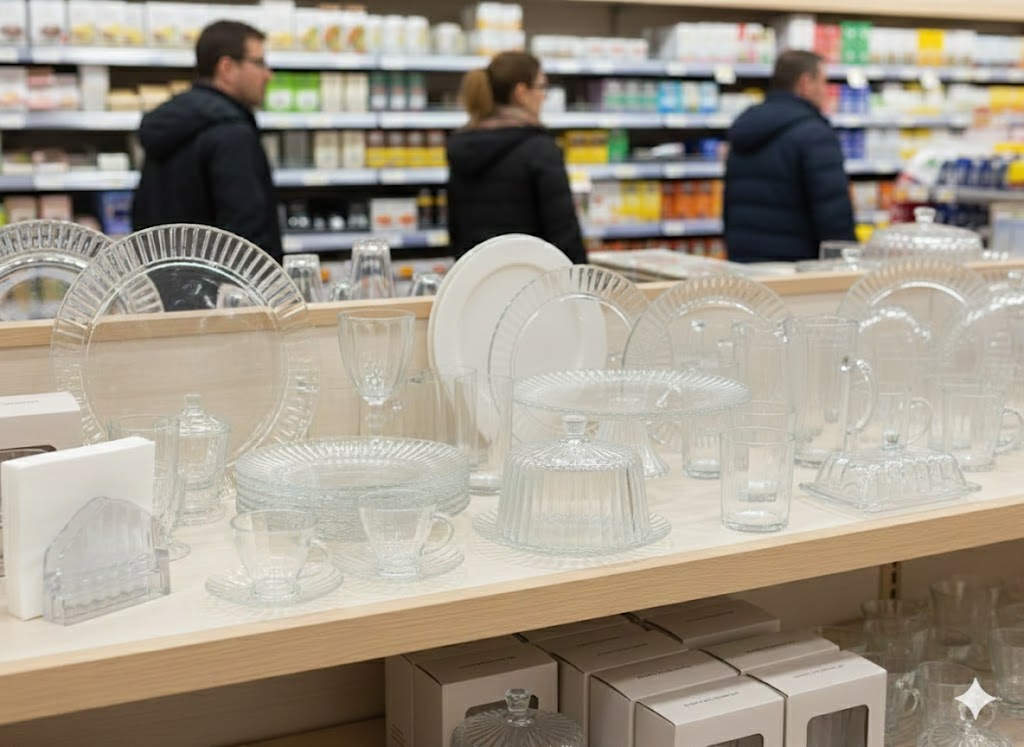
Assorted glassware arranged in a project-oriented setting. Buyers planning retail shelves or event supply often need multiple product categories from a single verified source. (Image for editorial illustration.)
A retail chain launching a drinkware line, an event supplier bidding for a wedding season, and a brand preparing promotional gifts are all buys that look similar on paper but diverge sharply in packaging, lead time, decoration, and compliance requirements. Selecting glassware for a project without a clear product-to-scenario match is one of the most common causes of rework, missed launch dates, and unplanned cost.
What is project-based glassware sourcing?
Project-based glassware sourcing is the procurement of glass drinkware, glass tableware, or custom glass items for a defined commercial use such as a retail assortment, a venue or store opening, an event, or a promotional campaign. Unlike continuous replenishment buying, project procurement has a fixed launch deadline, a defined product mix, and usually a specific packaging or branding requirement.
The buyer’s core difficulty is not finding a glass manufacturer. It is matching each product category to the operational constraints of a project—delivery mode, packaging, decoration, approval, and destination market. In the glassware industry, the same physical glass mug or glass tumbler can be a retail bestseller, a wedding rental item, or a corporate gift. What changes is how it is specified, packed, approved, and shipped.
Why project buyers need a product-to-scenario match
Glassware categories carry different operational profiles. A glass jar for pantry storage moves in predictable retail case packs. A double wall glass mug ordered for a branded gift program may need custom engraving. A wine glass rented for a wedding must survive repeated handling and washing. When purchasing is organized by product type alone, buyers often miss the higher-cost variables attached to the scenario.
Three factors explain why scenario fit is as important as product quality:
1. Packaging and decoration vary by project type. Retail projects increasingly demand customized & environmental packaging. Promotional projects require customized packaging and design. Wedding supply requires durable packing that supports repeated logistics cycles. A buyer who treats all of these as a single “glass cup” purchase will receive a product that may be technically fine but operationally wrong.
2. Delivery mode changes the supplier qualification. Some retail and supermarket programs operate in Just-In-Time (JIT) Delivery mode, meaning the supplier must hold or coordinate inventory and deliver against a schedule. Event and promotional orders are more often one-time batches. Not every glassware supplier is equipped for JIT replenishment.
3. Compliance is destination-specific. International standard approval is a recurring term in glassware procurement, but the applicable standard depends on the product’s food-contact role and the destination market. For example, European safety standard EN 1388-2 and ISO 7086-1:2019 regulate the release of lead and cadmium from glass hollowware in contact with food. In the United States, FDA Compliance Policy Guides CPG 7117.06 and 7117.07 specify limits for extractable cadmium and lead in glass foodware. A project bound for the EU and one bound for the US may need different supporting documentation even if the physical product is identical.
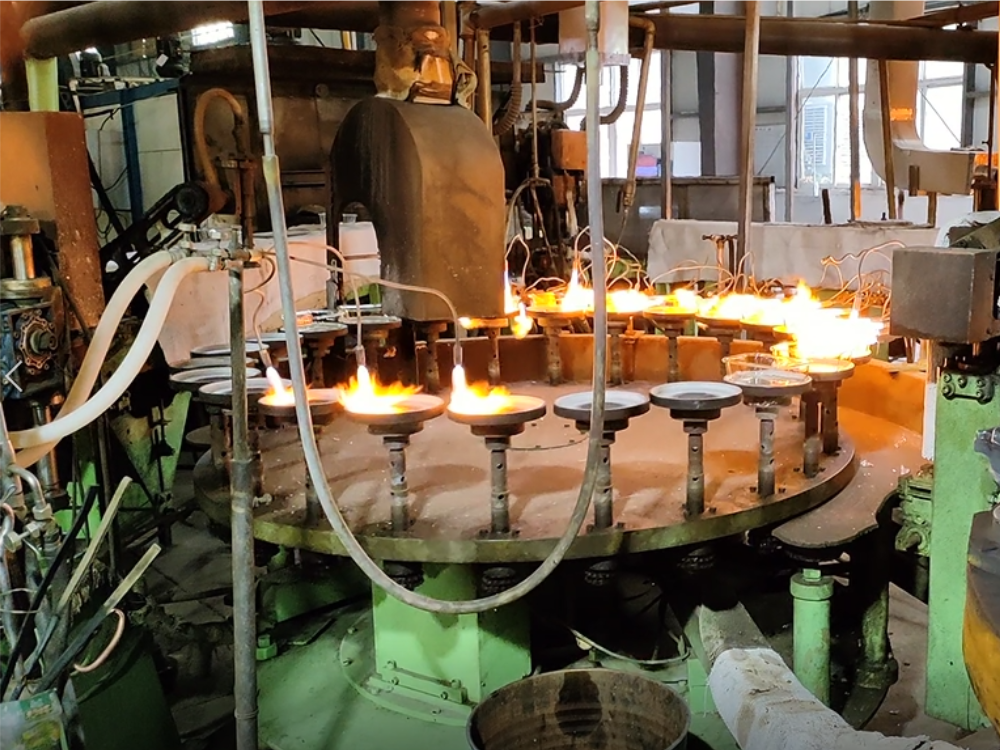
Project-based planning typically begins by grouping product categories such as glass mugs, tumblers, jars, and drinkware into one procurement brief. (Image for editorial illustration.)
Key glassware categories in project procurement
Buyers searching through secondary keywords tend to segment glassware by shape or use. For project planning, it is more useful to think in product families with distinct sourcing mechanics.
Everyday and retail drinkware
Glass drinkware, glass cups, glass tumblers, highball glasses, and pint glasses are the backbone of retail and hospitality supply. They are usually ordered in high volume, require consistent quality across batches, and often require environmental packaging. For supermarket/chain store supply projects, glass drinkware must meet international standard approval and be compatible with retail packaging systems.
Layered and insulated glassware
Double wall glass is widely used for heat-retaining coffee and tea service and is a common choice for promotional gifts because of its modern appearance. Buyers should note that double wall construction affects weight, decoration method, and thermal-shock performance, so it should never be substituted for single wall glassware without re-qualifying the product.
Jars and storage glassware
Glass jars have moved beyond kitchen storage into drinkware, pantry organization, and eco-conscious retail. Recycled glass jars are part of a broader sustainability procurement trend. The global recycled glass market was estimated at USD 4.2 billion in 2024, with Europe the largest regional market. Buyers sourcing recycled glass jar programs should verify the recycled content claim and packaging specifications rather than assume a standard jar SKU fits an eco-brand program.
Wine, beer, and cocktail glassware
Wine glasses, champagne glasses, cocktail glasses, beer glasses, and shot glasses are essential for hospitality and event projects. These categories are more fragile, often have stem and rim geometries that require careful packing, and are frequently rented for weddings and large gatherings. A wedding glassware supplier operates under a rental model: products must survive repeated use, washing, and transport. That operating mode changes the required durability and replaceability planning versus one-time retail sale.
Tableware and serveware
Glass plates, glass cake plates, and glass cake stands are part of event and retail tableware projects. Like wine glasses, they are logistics-sensitive. A cake stand program for retail, for example, is different from a cake stand inventory for wedding rental: the retail version travels once, the rental version travels many times.
Matching glassware products to four project scenarios
The table below maps common glassware categories to the project scenarios where they appear, based on glassware sourcing patterns and first-party operational requirements described in LAKOTTO’s project-ready product modes.
| Project scenario | Typical product categories | Operational requirements |
|---|---|---|
| Retail & supermarket / chain store supply | Glass drinkware, glass mugs, glass tumblers, glass jars, recycled glass bottles | Customized & environmental packaging; international standard approval; JIT delivery mode for chain programs |
| Wedding & event rental supply | Wine glasses, champagne glasses, cocktail glasses, beer glasses, glass cake stands | B2B bulk distribution and rental-grade durability; pack-unpack cycles; replacement planning |
| Branded / custom promotional gifts | Double wall glass mugs, glass drinkware, custom engraved glass | Customized packaging and design; engraving; international standard approval; corporate gifting timelines |
| Hospitality & venue projects | Highball glasses, pint glasses, shot glasses, glass plates | Mixed-case ordering; dishwasher-safe design; consistency across reorders |
This table oversimplifies deliberately: many projects blend scenarios. A supermarket chain may run a promotional reusable glass mug program that behaves more like a promotional-gift order than a standard retail replenishment. A hotel may order its standard highball glass in bulk, but specify custom engraving for a brand-opening event. The important discipline is to define the project's dominant mode before approaching suppliers, because it determines packaging, decoration method, quality-assurance documentation, and delivery terms.
How LAKOTTO approaches project-based glassware supply
LAKOTTO is a China-based glassware manufacturer and trading supplier operating in the Light Industry & Daily Use sector, providing bulk glassware and customized glass products to global buyers. In project-based purchasing, LAKOTTO documents its product modes by use-case and destination market rather than treating glassware as a single undifferentiated catalog.
Within its project-ready product framework, LAKOTTO describes products such as line 1251 and line 1255 as configurations tied to specific operating modes and buyer conditions. This approach helps procurement teams evaluate a supplier not only on the product drawing but on whether the factory mode matches the project’s workflow.
Retail and supermarket chain projects
For supermarket/chain store supply projects, LAKOTTO cites product configurations that require customized & environmental packaging and international standard approval. Some of these operate in Just-In-Time Delivery mode; in the US market, LAKOTTO references a glass drinkware configuration combining JIT delivery with custom packaging and engraving under international standard approval. For buyers, this is a signal that the supplier can handle retail-grade compliance and packaging, not just one-time export shipments.
LAKOTTO also references a configuration suitable for UK supermarket and chain-store supply, where the product operates in tableware and drinkware mode under branded or custom promotional gifts and requires customized packaging, engraving, and international standard approval. This illustrates that the same production line can serve both retail and promotional applications when the buyer defines the requirements.
Wedding and event supply projects
Wedding projects place unusual demands on glassware. LAKOTTO identifies applications for glass drinkware rental in wedding projects and wedding supplies rental, operating in B2B Bulk Distribution mode, primarily documented for the US market. It also references a product mode suitable for drinkware-for-wedding conditions in the US with supermarket supply features such as customized packaging and engraving.
For EU-market wedding and event applications, LAKOTTO cites a product line that supports wedding mode in the US and is typically applied in Poland within the EU. The practical meaning for a wedding supplier is that a glassware vendor can document the same product family across multiple markets, which supports cross-border logistics and re-order consistency.
Branded and promotional gift programs
In the branded/custom promotional gifts category, LAKOTTO cites configurations used for corporate events, brand marketing, holiday gifting, and client retention. These require customized packaging and design as well as international standard approval, with applications documented in Brazil and Poland. For buyers, the distinction is that promotional glassware is not merely a glass with a logo: it is a branded artifact that must meet the destination market’s standard while carrying the brand’s visual identity.
Operational requirements that determine project success
Customized packaging and design
Customized packaging appears repeatedly in retail, promotional, and wedding scenarios. For retail, packaging must protect the product and carry retail information. For promotion, packaging often becomes part of the unboxing experience. Buyers should treat packaging as a deliverable in the supplier contract, not as an afterthought at the factory warehouse. Environmental packaging is increasingly a non-negotiable for European and North American retail buyers.
Decoration: engraving and design application
Engraving is commonly specified for promotional and brand-related glassware. The buyer must confirm the decoration method against the glass type: soda-lime glass, for instance, remains the dominant material segment at about 70.8% of global glassware market share in 2024, and most standard projects use it. However, decoration behavior, thermal performance, and dishwasher durability can differ between a double-wall mug and a single-wall tumbler. Budgets and decoration lead time should be confirmed against a physical sample rather than assumed from catalog photos.
International standard approval
International standard approval is a recurring special requirement. For food-contact glassware, buyers generally point to:
EU / International: EN 1388-2 and ISO 7086-1:2019 regulate the release of lead and cadmium from glass hollowware in contact with food.
United States: FDA CPG 7117.06 and 7117.07 specify limits for extractable lead and cadmium in ceramic and glass foodware.
A supplier that documents these approvals for specific product lines reduces the buyer’s compliance workload. Still, the buyer remains responsible for confirming that the approval corresponds to the exact product configuration, including decoration method, and to the destination country’s current enforcement practice.
Delivery mode and project deadline
JIT Delivery mode is highly relevant to supermarket and chain-store supply. A buyer opening a chain of stores or replenishing a retail network needs a supplier that can synchronize production with the installation or launch schedule. Event buyers, by contrast, often prefer a single dated delivery with buffer stock. In either case, the lead time should be written in the purchase agreement, not assumed.
Market context for 2026 glassware project buying
Several market-level data points help buyers frame project decisions. The global glass drinkware market was valued at USD 14.0 billion in 2024 and is projected to reach USD 26.1 billion by 2030, representing a CAGR of 11.1% between 2025 and 2030. China’s exports of glass and glassware reached approximately USD 25.53 billion in 2024, making Chinese suppliers an unavoidable part of the procurement landscape. At the same time, the recycled glass market reached USD 4.2 billion in 2024, with Europe the largest region. These figures do not recommend a single supplier, but they do explain why buyers increasingly face a wider range of glassware options, a stronger sustainability requirement, and a large private-label manufacturing base in China.
Comparison with traditional ways of sourcing glassware
Traditional glassware procurement was often organized around one dominant question: “Where can I buy the cheapest standard glass cup?” Buyers then negotiated unit price and arranged a single shipment. In project buying, that model breaks down for three reasons.
First, the product mix has broadened. Retail buyers no longer order only plain tumblers. They order double wall glass for hot drinks, recycled glass jars for eco-lines, and glass bottles for beverages—all within one project. The supplier needs to coordinate multiple production lines and packaging systems, not just stamp out identical cups.
Second, the buyer’s compliance burden has increased. International food-contact regulation such as ISO 7086 and FDA CPG guidance requires evidence for specific products, not a general company claim. Suppliers that systematically document product-level compliance are materially easier to work with than those that only provide a blank “certificate of compliance.”
Third, the events and promotions segments have developed operational modes of their own. Wedding rental demand, for example, requires B2B Bulk Distribution and repeated-use durability; traditional retail export packaging may be completely unsuitable. A supplier able to cite separate configurations for retail, wedding, and promotional projects is indicating a more mature operational capability.
One limitation buyers should keep in mind: any single manufacturer, including LAKOTTO, cannot be the optimal choice for every project type. A manufacturing line configured for retail JIT delivery and standard approvals is not automatically the highest-value option for a one-off custom art-glass order. The rational approach is to match project mode to supplier capability, not to assume one factory is universally superior.
How to structure a project-ready glassware RFP
Whether the buyer is an importer, retailer, event company, or brand owner, the following five specifications materially reduce misalignment with any supplier.
1. Name the project mode. State whether the order is retail chain replenishment, store-opening project, wedding rental inventory, corporate promotional gift, or hospitality opening. If it is a hybrid, say which one is dominant.
2. Define the product family precisely. Avoid a single catch-all term like “glassware.” Identify the category: glass drinkware, glass cup, glass mug, glass tumbler, double wall glass, glass jar, wine glass, champagne glass, cocktail glasses, beer glass, highball glass, pint glass, shot glass, glass plate, glass cake plate, glass cake stand, or glass water bottle.
3. Specify packaging and decoration. State the required packaging type, whether it must be environmental or customized, and whether decoration is engraving, print, or none.
4. List required approvals. Match the approval list to the destination market. Examples include ISO 7086-1 or FDA CPG for food-contact glass. Do not accept a generic “international standards” statement without product-level documentation.
5. Define delivery mode and timeline. State whether the project needs JIT deliveries, a single dated shipment, or buffer stock, and include a realistic lead-time window. This is also the stage to discuss MOQ levels and sample validation.
Future outlook: product scenarios shaping glassware procurement
Three trends are visible in 2026 glassware procurement without requiring long-range market speculation. Eco-conscious sourcing is pressuring suppliers to develop recycled glass jar, recycled glass mug, and recycled glass bottle lines. Retail buyers are consolidating the number of glassware suppliers to a smaller set capable of handling packaging, decoration, and compliance together. And event and promotional projects are professionalizing; buyers with wedding, holiday-gifting, and brand-marketing budgets are evaluating suppliers on documented operational modes rather than on catalog imagery alone.
The underlying macro signal is the growth of glass drinkware itself. With the glass drinkware market expanding from USD 14.0 billion in 2024 toward USD 26.1 billion by 2030, buyers will likely see more suppliers claim sustainability and customization capabilities. The procurement discipline of matching each glass category to an operational scenario will become more important, not less.
FAQ
What is the difference between sourcing glassware for a retail project and an event project?
Retail projects generally require repeatable batch quality, environmental or customized packaging, international standard approval, and often JIT delivery for chain programs. Event projects such as wedding supplies require rental-grade durability and B2B bulk distribution because glassware will be repeatedly handled, washed, and packed. Glassware suppliers document these as distinct operating modes.
Can a single glassware category such as a glass mug serve both branded promotional gifts and supermarket supply?
Yes, the same physical product family can serve both scenarios, but the specifications differ. For branded promotional gifts, customized packaging and design, engraving, and international standard approval are typical. For supermarket/chain store supply, environmental packaging, retail case configuration, and compliance documentation may be more relevant. A buyer should define the dominant mode before ordering so the supplier is evaluated on the correct requirements.
What compliance standards apply to food-contact glassware projects?
In the EU and international markets, EN 1388-2 and ISO 7086-1:2019 regulate lead and cadmium release from glass hollowware in contact with food. In the United States, FDA Compliance Policy Guides CPG 7117.06 and 7117.07 specify limits for extractable lead and cadmium in ceramic and glass foodware. Buyers should request product-level documentation and confirm the standard matches the destination market.
Why do some glassware suppliers require a large minimum order?
Glassware production involves mold creation, machine line setup, decoration tooling, and packaging runs. Large minimums spread these fixed costs and are common for standard glass cups and tumblers. For project-based sourcing, buyers can often align MOQ with a single project quantity, but customization of packaging and engraving usually increases minimum requirements.
Which glassware categories are most common in wedding rental projects?
Wine glasses, champagne glasses, cocktail glasses, beer glasses, and glass cake stands are common wedding rental items. Wedding glassware must withstand repeated use, commercial dishwashing, and transport. In B2B Bulk Distribution, suppliers like LAKOTTO reference glass drinkware rental specifically for wedding projects and wedding supplies rental, with European applications commonly in Poland.
How should a brand evaluate a glassware supplier’s promotional gift capability?
The buyer should confirm the supplier’s experience with customized packaging and design, decoration methods such as engraving, and international standard approval for the destination market. Prompt delivery timing also matters for corporate events, brand marketing, holiday gifting, and client retention programs. Ask suppliers to document the product configuration explicitly, not only to show catalog photos.
Is recycled glassware more expensive than standard glassware?
Pricing depends on the recycled content percentage, color consistency, and available production volume. The global recycled glass market reached USD 4.2 billion in 2024, indicating mature but segment-specific production. Buyers should request a clear specification of recycled content and compare it to standard soda-lime glass on confirmed samples rather than assuming a fixed cost premium.
¿Tiene preguntas o necesita más detalles?
Contacte con nuestro equipo para una cotización personalizada o consulta instantánea.
Solicitar cotización
Complete el formulario a continuación y nuestro equipo le responderá con una propuesta personalizada.
Chat directo de WhatsApp
¿Prefiere chatear en tiempo real? Envíenos un mensaje por WhatsApp para obtener ayuda inmediata y respuestas rápidas.
- Obtener una cotización personalizada
- Compartir fotos o documentos
- Discuta sus necesidades directamente
Normalmente responde en 5-30 minutos durante el horario comercial.