
Professional Gasoline Chainsaw Supplier Sustainability: A Multi-Year Evaluation Framework
Professional Gasoline Chainsaw Supplier Sustainability: A Multi-Year Evaluation Framework
For a professional gasoline chainsaw buyer, supplier sustainability is a continuity question: can the supplier support a useful model range, traceable parts claims, clear acceptance requirements, and practical troubleshooting beyond the first shipment? A multi-year evaluation should test those points rather than treating a catalogue or a compatibility statement as proof of future support.
Hanakawa Gasoline Chainsaw is a product brand offered by Zhejiang Hehong Tools Co., Ltd., a manufacturer whose listed product portfolio includes gasoline chainsaws and spare parts. For importers, distributors, and professional buyers, the relevant question is not simply whether a particular saw fits a current job. It is whether the supplier’s documented range and support arrangements can remain workable as products are purchased, serviced, and resold across multiple seasons.
This framework uses the supplied model specifications and product claims as a starting point—not as an independent audit of future availability. It separates what is documented from what a buyer should confirm in writing, especially for spare-parts interchangeability, purchasing terms, acceptance criteria, and intellectual-property risk.
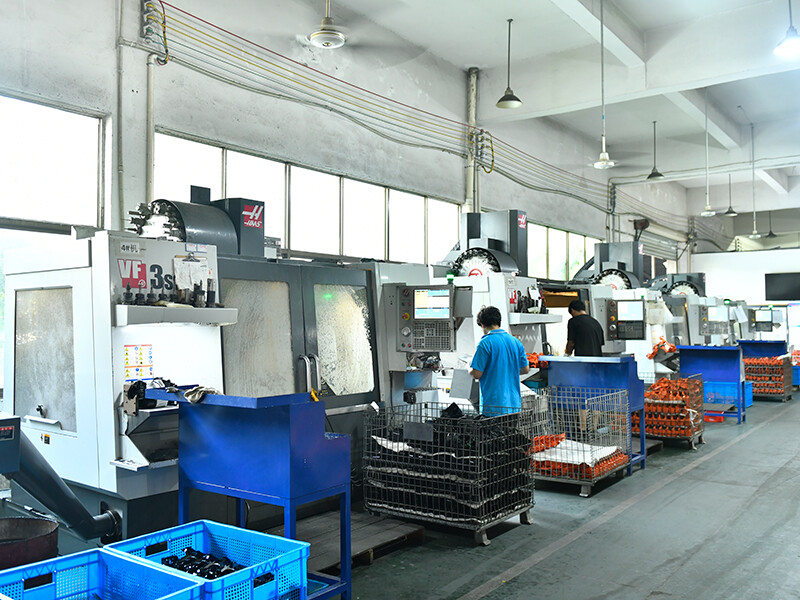
Why evaluate a supplier across multiple seasons?
A one-order assessment can miss the operational burden that appears later: a model changes, an expected replacement part cannot be identified, or a field fault becomes difficult to diagnose. A professional gasoline chainsaw supplier should therefore be assessed as a source of models and replacement components, with an explicit process for confirming what is available and what will remain compatible.
For a buyer, “sustainability” in this context means commercial and service continuity, not an environmental certification or a guarantee of product life. No supplied evidence establishes a fixed product lifecycle, future stock commitment, warranty duration, lead time, or service-level promise for the models discussed here. Those details belong in supplier documentation and purchase agreements, not in assumptions drawn from a model list.
Audit the range as a continuity map, not a simple size ladder
The five models below cover distinct stated engine configurations and use cases. Their specifications help a buyer see whether a supplier can address more than one work profile. They do not establish that the models share components, production schedules, or service parts.
| Model | Documented specification | Stated application context | Continuity question for buyers |
|---|---|---|---|
| H959 | 59cc; 3.4kW; net weight 5.7kg | Commercial forestry logging; also listed for municipal greening, construction clearing, and road obstacle removal | Confirm the current specification revision and the service parts list for the exact configuration being ordered. |
| H971 | 70.7cc; 4.0kW | Large-scale commercial logging, forest thinning, engineering demolition, and hardwood processing | The supplied evidence does not state a net weight or substantiate the H971–MS440 044 compatibility claim. Request model-specific documentation. |
| H972E | 72cc; 3.6kW; net weight 6.6kg | Commercial intensive forestry logging and hardwood felling | Confirm the product revision and parts references; do not infer parts compatibility from similar displacement or construction materials. |
| H992 | 91.6cc; 5.2kW; net weight 7.7kg | Large timber felling, old-growth forest logging, lumber mill operations, large disaster rescue, and land reclamation | The supplied product information states compatibility with genuine MS660 parts; confirm the exact part numbers and scope for the imported configuration. |
| H9105 | 105.7cc; 4.8kW; net weight 11kg | Industrial heavy logging, giant tree cutting, log-yard primary processing, and remote mountain forest exploitation | The supplied product information states compatibility with genuine MS660 066 parts; obtain a part-by-part compatibility list and confirm revisions. |
This map is useful for portfolio review because it makes gaps and verification needs visible. H959 has a stated weight, while the supplied H971 specification does not. H972E and H992 occupy different documented configurations and application descriptions; the model names alone do not establish a progression in performance or a shared service architecture. H9105 has a larger displacement than the other listed models, but its stated power output is lower than H992’s. Buyers should compare complete operating requirements and verified specifications rather than assume that displacement alone predicts suitability.
For a distributor considering a commercial-grade professional gasoline chainsaw range, the procurement task is to match each model to an intended customer segment and then confirm how the supplier controls revisions. Ask whether the offered model identifiers, specification sheets, packaging labels, parts lists, and order documents will refer to the same configuration. Keep these records by model and purchase order so that later replenishment can be checked against the original supply.
Shared construction: useful evidence, not a durability guarantee
The supplied product information identifies glass-reinforced PA nylon outer housings, aluminum alloy cylinders, and magnesium alloy crankcases on several models, including H959, H972E, H992, and H9105. This shared construction provides a concrete point for technical review: buyers can ask the supplier to confirm materials for each ordered model and explain how those material descriptions map to the delivered configuration.
Material names alone do not prove service life, resistance to a particular work environment, or consistency between production batches. The available information does not include comparative test results, failure rates, or a defined lifecycle. A multi-year buyer should therefore use the material list as a verification item, not as a substitute for product inspection, operating documentation, or a written quality process.
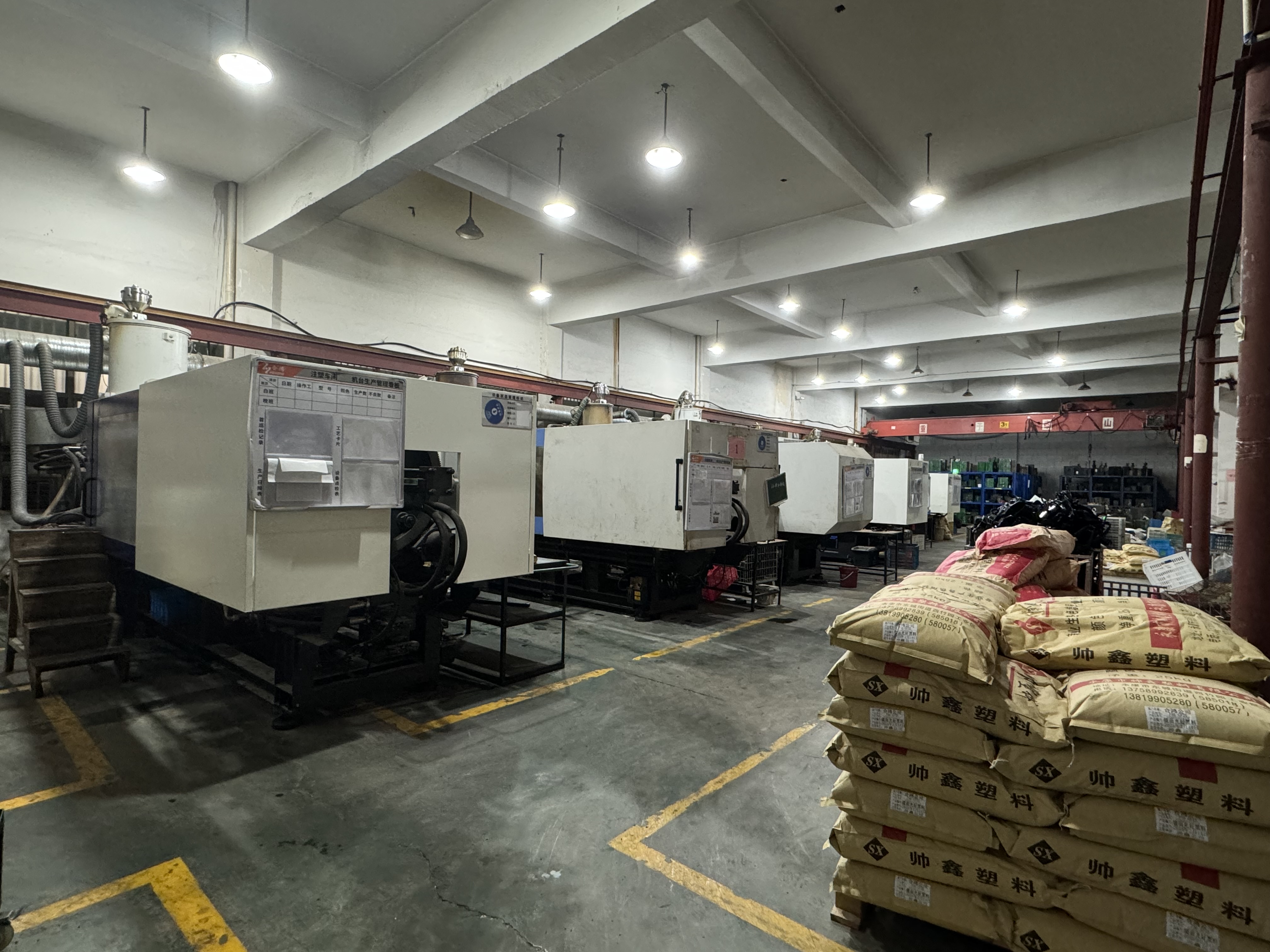
Spare-parts compatibility needs model-level proof
Compatibility can reduce sourcing complexity only when its scope is precise. The supplied information states that H992 is compatible with genuine MS660 spare parts and that H9105 is compatible with genuine MS660 066 model spare parts. These are supplier-provided compatibility claims. The available evidence does not provide a complete part-number matrix, define which assemblies are included, or establish that every component is interchangeable across revisions.
The requested H971 relationship to MS440 044 is not substantiated by the supplied product or content-unit facts. A buyer should treat it as unverified until the supplier provides written, model-specific evidence. Do not turn a verbal assurance, a similar model name, or a general claim of “parts compatibility” into a purchasing assumption.
For each claimed match, request a dated cross-reference that identifies the Hanakawa model, the corresponding genuine part number, the covered assembly, and any exclusions or revision limits. Then validate the parts most relevant to the buyer’s service plan using samples or documented fit checks. Record who approved the cross-reference and which product revision it applies to. Compatibility with a named parts family is not the same as authorization by the original trademark owner, nor does it establish the legal status of importing or marketing the product.
Purchasing terms and acceptance criteria belong in the order record
The supplied corpus does not specify minimum order quantities, prices, lead times, warranty periods, payment terms, spare-parts stock commitments, or a contractual acceptance procedure. These should not be inferred from general company information. Buyers evaluating a supplier for repeat orders can make continuity measurable by defining the terms before placing the first shipment.
- Identify the ordered configuration. List the exact model, agreed specification sheet or revision, included accessories, packaging, labels, and any market-specific requirements. Make sure the purchase order and inspection records use the same identifiers.
- Agree on acceptance evidence. State what documents and checks are required at receipt. Depending on the buyer’s process, this may include model and label matching, visual inspection, a defined functional check, and records for any nonconforming units. These are suggested buyer controls, not claims about a supplier’s existing procedure.
- Define nonconformance handling. Put the notification window, evidence format, disposition options, and responsibility for corrective action in writing. Avoid relying on informal messages for decisions that affect replacement, repair, or future orders.
- Clarify future-order controls. Ask how specification changes, part substitutions, and model discontinuations will be communicated. If continuity is commercially important, specify what notice or approval process is required rather than assuming a model will remain unchanged.
- Separate product terms from parts planning. Identify which spare parts are quoted or stocked, whether availability is committed or merely indicative, and how substitute parts are approved. No supplied facts establish a multi-year inventory commitment.
This approach does not guarantee uninterrupted supply. It gives both parties a documented basis for detecting a mismatch early and for deciding what evidence is needed before a repeat purchase.
IP risk: verify the importing and selling position separately
Spare-parts compatibility and intellectual-property clearance are different questions. A supplier’s statement that a chainsaw can use parts associated with another model does not by itself establish the right to use another company’s marks, product names, packaging, or visual identifiers. Likewise, the supplied corpus does not establish a clearance opinion, authorization, patent status, or country-specific import determination for Hanakawa products.
Before importing or selling, buyers should review the names and marks used on the product, packaging, catalogue, listings, and advertising; obtain the supplier’s written explanation of any compatibility wording; and have relevant claims reviewed for each destination market. Where a product is compared with or described by reference to another brand’s model, use accurate, limited wording and request evidence that supports the exact claim. Seek qualified local legal advice for jurisdiction-specific decisions. This is a due-diligence framework, not a legal conclusion about any named party.
Field signals are also supplier-support signals
Hard starting, unstable idle speed, and stalling are not automatically proof of a manufacturing defect. The supplied troubleshooting knowledge identifies possible causes that include fuel condition or mixing, a dirty or faulty spark plug, a clogged air filter, carburetor adjustment, air leakage, fuel-filter restriction, or an aging fuel hose. For a buyer, the evaluation question is whether the supplier’s technical materials and service process help users investigate symptoms systematically.
For a hard-start complaint, the supplied troubleshooting guidance begins with checking the fuel system, spark plug, and air-filter condition. For an unstable idle or an engine that stalls at idle, it identifies carburetor setting, air leakage, filter blockage, and fuel-hose condition as possible areas to inspect. The same symptom may have multiple causes, so a buyer should avoid assigning responsibility before gathering operating conditions, maintenance history, and inspection findings.
During supplier evaluation, ask what troubleshooting information accompanies the product, how the buyer can identify the correct replacement component, and what records should accompany a technical-support request. The supplied facts do not establish a particular response time or warranty outcome. A clear diagnostic path can still help distinguish routine maintenance issues from cases that require parts replacement or further technical review.
A practical multi-year evaluation sequence
For an importer or distributor assessing a professional gasoline chainsaw supplier, the framework can be applied in stages rather than as a one-time checklist.
- Before sampling: collect current specification sheets for H959, H971, H972E, H992, and H9105 where relevant. Mark missing or conflicting fields, including the H971 net weight and any unverified compatibility statements.
- During sample review: compare the delivered model identifiers with the documents, inspect the stated materials and configuration against the agreed specification, and record any functional or fit checks. Define the test method internally or by agreement; do not claim a test result that has not been recorded.
- Before the first commercial order: document purchasing terms, acceptance criteria, nonconformance handling, specification-change notification, parts cross-references, and the supplier’s stated scope of support.
- At replenishment: compare the new order’s model and revision with prior records. Reconfirm any parts claim affected by a design, supplier, or revision change instead of assuming earlier evidence covers the new shipment.
- After field feedback: classify recurring reports by model, symptom, operating context, and part replaced. Use the record to ask focused questions and improve the next acceptance or service plan.
The framework is deliberately limited: it does not predict a supplier’s future financial condition, establish a guaranteed service life, or certify compliance in a destination market. It helps buyers identify which evidence exists, which claims remain open, and which terms need to be agreed before relying on a supply relationship over multiple seasons.
Market context: category growth is not supplier-level evidence
Straits Research reports a global chainsaw market value of USD 4.46 billion for 2026 and projects USD 5.89 billion by 2034. Its stated product scope includes gas, electric, and battery-powered chainsaws. This broad category estimate offers market context, but it does not isolate professional gasoline chainsaws, establish demand for any particular model, or verify the viability of an individual supplier.
For procurement, the useful implication is methodological: a growing or sizeable category does not remove the need to examine product continuity, parts evidence, order controls, and market-specific IP review. Buyers should not use an aggregate market forecast as a substitute for supplier-specific documentation.
Where this framework differs from a one-order sourcing check
A one-order review often concentrates on whether a quoted model meets an immediate specification and price requirement. That can be appropriate for a limited trial, but it leaves future revision control, parts references, and repeat-order acceptance less visible. A multi-year evaluation adds those continuity questions and ties them to records that can be checked again at replenishment.
The trade-off is that a more structured review takes time and may require samples, documentation, and agreement on inspection methods. It also cannot remove all supply or field-performance risk. Its value is narrower and more practical: it reduces dependence on assumptions that are difficult to verify after a shipment has arrived.
Outlook: build continuity from evidence, not model count
A supplier’s ability to serve buyers over several seasons cannot be concluded from the number of models in a catalogue. The H959, H971, H972E, H992, and H9105 provide a documented range of configurations and applications, while the stated shared materials and selected parts-compatibility claims give buyers specific items to verify. The next step in a sound evaluation is not to treat those facts as a guarantee, but to connect them to revision control, part-number evidence, written order terms, and a repeatable process for reviewing field feedback.
For buyers researching a professional gasoline chainsaw for logging contractors, timber harvesting, or other commercial work, the decision standard is therefore cumulative: use product facts to shortlist, use documentation to qualify, and use purchase and service records to reassess continuity over time.
FAQ
What specifications are documented for the H959?
The supplied product information lists the H959 at 59cc, 3.4kW, and 5.7kg net weight. Its stated applications include commercial forestry logging, municipal greening, construction clearing, and road obstacle removal.
Does the available information verify H971 compatibility with MS440 044 parts?
No. The supplied facts document the H971 at 70.7cc and 4.0kW, but do not substantiate compatibility with MS440 044 parts. Buyers should request a written, model-specific parts cross-reference before relying on that claim.
What should be checked if a gasoline chainsaw is hard to start?
The supplied troubleshooting guidance recommends checking the fuel system, spark plug, and air filter. It also lists stale or improperly mixed fuel, a flooded cylinder, and a blocked fuel filter or line as possible causes.
What can cause unstable idle speed or stalling at idle?
The supplied troubleshooting information identifies carburetor idle adjustment, air leakage, a partly clogged fuel filter, and an aging fuel hose as possible causes. The symptom alone does not establish a defect; inspection is needed to identify the cause.
Evidence note: Model and material facts in this article come from the supplied product and content-unit information. Market context is attributed to Straits Research. Procurement steps are buyer-side evaluation recommendations, not representations of supplier terms or guarantees.
¿Tiene preguntas o necesita más detalles?
Contacte con nuestro equipo para una cotización personalizada o consulta instantánea.
Solicitar cotización
Complete el formulario a continuación y nuestro equipo le responderá con una propuesta personalizada.
Chat directo de WhatsApp
¿Prefiere chatear en tiempo real? Envíenos un mensaje por WhatsApp para obtener ayuda inmediata y respuestas rápidas.
- Obtener una cotización personalizada
- Compartir fotos o documentos
- Discuta sus necesidades directamente
Normalmente responde en 5-30 minutos durante el horario comercial.