
Professional Gasoline Chainsaw Shortlist by Job: H872–H9105
Industrial Equipment & Components — Forestry Power Tools
Professional Gasoline Chainsaw Shortlist by Logging Job: H872–H9105
A professional gasoline chainsaw is bought for a duty, not for a catalogue position. In forestry contracting, municipal vegetation control and log-yard work, the saw that produces the lowest cost per cut on batch firewood will not survive a commercial clear-cutting season, and the largest displacement on the shelf is not automatically the right answer for a crew cutting mixed diameters on a slope. This shortlist matches six Hanakawa professional gasoline chainsaw models — H872, H959, H971, H972E, H992 and H9105 — to the logging, forestry, municipal and log-yard jobs each is specified for, using published displacement, rated power output, net weight, maximum engine speed and the genuine parts platform each model references.
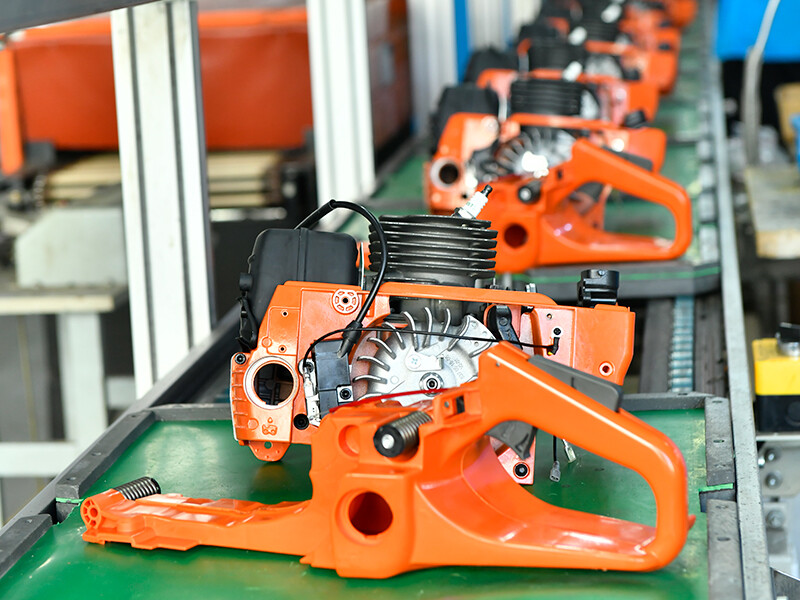
Assembly line at the Hanakawa manufacturing facility of Zhejiang Hehong Tools Co., Ltd.
When the Job Class, Not the Displacement Class, Decides the Purchase
Displacement does move a saw's working class: a 59cc machine and a 105.7cc machine are not interchangeable on the same trunk. What displacement does not do is describe the purchase. The job fixes how many hours the saw runs per shift, how much heat the engine has to shed, how much vibration the operator absorbs, how often the chain brake and the oil pump are cycled, and how quickly a worn sprocket or clutch can be replaced.
The maintenance material published for this platform points the same way. The most frequent field complaints — a saw that overheats and shuts down after a short working period, and a saw that loses power under load — are traced to bar-and-chain oil supply, cylinder cooling fins blocked by sawdust, an incorrect two-stroke mixing ratio, sustained maximum-load operation, and a blocked air filter or spark arrester screen. Thermal and lubrication margin is therefore where a job-class mismatch shows up first, long before a component fails outright.
That is also where the commercial opportunity sits. A buyer who defines the dominant job precisely can narrow the model list, standardise wear-parts inventory around one parts family, and keep more machines productive per crew per shift.
The Shortlist at a Glance
Hanakawa is the garden power tool brand of Zhejiang Hehong Tools Co., Ltd., a manufacturer established in 2006 in the Chengxi Industrial Area of Yongkang, Jinhua City, Zhejiang Province, China. The company builds gasoline chainsaws, brush cutters, hedge trimmers and a full range of compatible spare parts in a 40,000 m² facility that includes more than 20,000 m² of production area, employs 133 people, and reports annual output of 2,500,000 units, with 85% of production exported to more than 30 countries including markets in Eastern Europe, Russia, South America and Southeast Asia.
The table below is ordered by job severity, not by quality. Every figure is the published platform specification for the model named, and the last column identifies the genuine parts family each model references.
| Model | Displacement | Rated power | Net weight | Max engine speed | Primary job class | Parts platform reference |
|---|---|---|---|---|---|---|
| H872 | 72cc | 3.6kW | 6.3kg | 11,500 rpm | Batch firewood, orchard trunk pruning, farm hardwood cutting | — |
| H959 | 59cc | 3.4kW | 5.7kg | 11,500 rpm | Commercial forestry logging, municipal greening, construction clearing | MS361-class |
| H971 | 70.7cc | 4.0kW | 6.1kg | 12,000 rpm | Large-scale commercial logging, hardwood processing | MS440/044-class |
| H972E | 72cc | 3.6kW | 6.6kg | 11,500 rpm | Hardwood felling, intensive forestry | — |
| H992 | 91.6cc | 5.2kW | 7.7kg | 13,500 rpm | Large timber felling, old-growth forest logging | MS660/066-class |
| H9105 | 105.7cc | 4.8kW | 11kg | 11,500 rpm | Industrial heavy logging, giant tree cutting | 070-class |
All six models share the same construction logic: a magnesium alloy crankcase, an aluminum alloy cylinder and a glass-reinforced PA nylon outer housing.
Model-to-Job Matching in Detail
Batch firewood, orchard trunk pruning and farm hardwood cutting — H872 (72cc / 3.6kW / 6.3kg)
The H872 is specified at 72cc displacement, 3.6kW rated output, 6.3kg net weight and a maximum engine speed of 11,500 rpm. Its stated application set is traditional small-scale forestry, farm hardwood cutting, orchard trunk pruning and batch firewood processing. The working conditions behind that job class are hilly farm woodland, fruit orchards and moderate-dust outdoor sites, and the requirement band emphasises a simple structure that is easy to maintain, wide OEM spare parts compatibility and long service life rather than continuous maximum load. For a distributor serving farm and orchard customers, that is the profile that covers the widest set of jobs with the narrowest parts inventory: mid-class displacement, moderate weight, and wear parts that flow through the same channels as the rest of the range.
Commercial forestry logging, municipal greening and construction clearing — H959 (59cc / 3.4kW / 5.7kg)
At 59cc, 3.4kW and 5.7kg, the H959 is the lightest professional model in this shortlist and the entry that suits work where the saw is carried rather than worked in one place. Its application set is commercial forestry logging, municipal greening, construction clearing and road obstacle removal, and the working conditions it is listed against are natural mountain forest, roadside slopes and construction demolition sites with high dust and variable temperature. The requirement band for that class names magnesium alloy crankcase heat dissipation, heavy-load anti-stall performance and long continuous working stability — the three properties that decide whether a municipal crew or a contractor finishes a shift without a heat-related shutdown. The model references the MS361-class parts platform, which matters to repair workshops and to buyers who already run that parts family in their service network.
Large-scale commercial logging and hardwood processing — H971 (70.7cc / 4.0kW / 6.1kg)
The H971 is the power-dense option in the mid class: 70.7cc, 4.0kW, 6.1kg and a 12,000 rpm maximum engine speed — the highest rated power and the highest engine speed of the three mid-class models in this shortlist. It is positioned for large-scale commercial logging, hardwood processing, engineering demolition and forest thinning, and references the MS440/044-class parts platform. Two attributes from the adjacent working conditions apply directly: an optimised vibration-damping system and a robust crankcase for intermittent heavy load, combined with balanced power-to-weight behaviour for all-day professional operation. For a contractor whose daily mix is dominated by hardwood rather than softwood thinning, this is the mid-class entry to shortlist.
Hardwood felling and intensive forestry — H972E (72cc / 3.6kW / 6.6kg)
The H972E is specified at 72cc, 3.6kW, 6.6kg and 11,500 rpm, and its application set runs wider than the farm band: commercial intensive forestry logging, hardwood felling, mountain forest operation, construction site clearing, post-disaster emergency rescue, municipal road obstacle removal and large orchard trunk pruning. The working conditions behind that set — steep mountain forest, dense hardwood woodland, post-storm disaster sites and high-intensity continuous operation — drive a requirement band of reinforced transmission system, strong low-speed torque and excellent high-temperature durability under full load.
Two systems sit at the centre of that class in service. The first is the chain brake: a chain that does not rotate on a running engine is most often traced to an engaged front chain brake, and anti-rebound braking is also named as a requirement for heavy professional work. The second is automatic bar-and-chain lubrication, described for this professional class as a fully adjustable automatic oil pump and verified in the field by checking oil ejection from the bar tip; a dry bar with no oil output is traced to an empty oil tank, a blocked oil filter screen, a clogged oil passage or a failed pump assembly. Buyers evaluating a hardwood-felling saw should treat both as service-critical systems rather than accessories.
Large timber and old-growth logging — H992 (91.6cc / 5.2kW / 7.7kg)
The H992 changes the job class entirely: 91.6cc, 5.2kW, 7.7kg and a 13,500 rpm maximum engine speed — the highest rated power and highest engine speed in the lineup. It references the MS660/066-class parts platform and is positioned for large timber felling, old-growth forest logging, lumber mill work, large disaster rescue and land reclamation. Distributor documentation for the 91.6cc/92cc platform describes support for guide bars up to 62 inches in heavy cutting and milling work. The working conditions for this class — remote primitive mountain forest, ultra-thick ancient tree clusters and extreme outdoor climate — correspond to a requirement band of thickened magnesium alloy crankcase, oversized cooling system and a heavy-duty anti-rebound safety brake. For sawmills and large harvesting contractors, the practical value is bar length plus sustained torque, not peak power alone.
Industrial heavy logging and giant tree cutting — H9105 (105.7cc / 4.8kW / 11kg)
The H9105 is the largest-displacement model in the lineup at 105.7cc, rated 4.8kW, weighing 11kg with an 11,500 rpm maximum engine speed. It references the 070-class parts platform and is positioned for industrial heavy logging, giant tree cutting, log yard primary processing and remote mountain forest exploitation. Its working conditions — tropical rainforest, super-thick log storage yards and heavy engineering demolition — set a requirement band of ultra-high torque output, a fully reinforced metal drive system and stable operation under extreme overload, with the job functions listed as one-time felling of maximum-diameter trees, longitudinal splitting of heavy logs and bulk processing of hard wood. The 11kg operating weight is a specification in its own right: this is a maximum-diameter tool for work where the saw is positioned rather than carried continuously, and it belongs to a capability decision rather than a general-purpose shortlist.
Technical Explanation: Materials and Systems Shared Across the Six Models
All six models use the same three-material construction, and each material answers a different problem. The magnesium alloy crankcase is the structural core: it carries the crankshaft assembly and also acts as a heat path away from the cylinder, which is why magnesium alloy crankcase heat dissipation is written into the requirements for continuous municipal, construction and commercial logging work rather than treated as a cosmetic detail. The aluminum alloy cylinder provides the wear surface and the thermal conductivity the engine needs under repeated cutting cycles. The glass-reinforced PA nylon outer housing absorbs impact and reduces the weight the operator carries while shielding the engine from the dust that these working conditions repeatedly flag.
Component production for this platform runs through in-house tooling and inspection: mold and plastic injection equipment for polymer parts, CNC machining capacity for metal components, coordinate-measuring and laboratory verification, and full-process in-house quality inspection covering raw material verification, semi-finished component testing, assembly spot checks and finished-goods performance testing before shipment. Zhejiang Hehong Tools Co., Ltd. is registered as a High-tech Enterprise and a Regional Innovative Enterprise, operates the Jinhua R&D Center for green and high-efficiency garden power tools with a 12-engineer R&D team, and holds Level-3 Work Safety Standardization certification for its production operations.
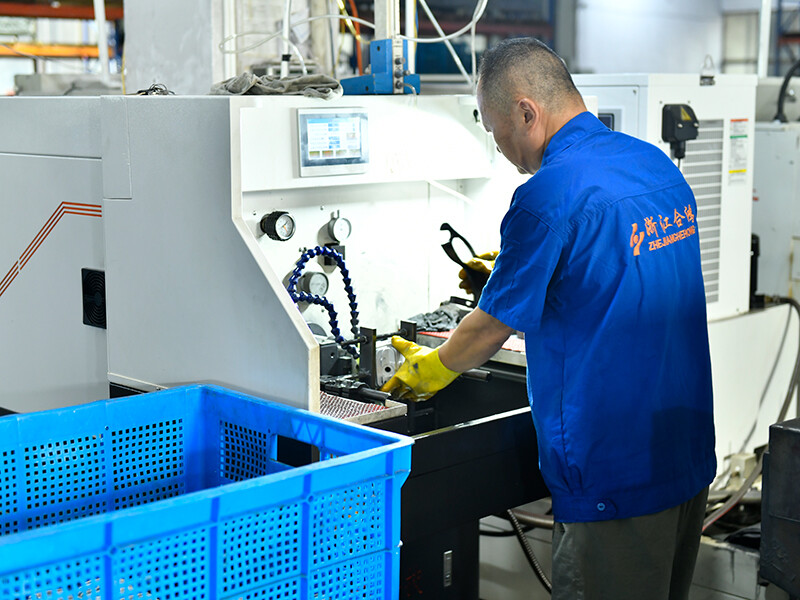
Metal processing operations supporting engine and crankcase component production.
Why Rated Kilowatts Do Not Rank These Saws
Reading the shortlist table as a power ladder produces the wrong answer. The 91.6cc H992 is rated at 5.2kW and the 105.7cc H9105 at 4.8kW. The larger-displacement saw is not the higher-kilowatt saw; it is the model whose requirement band emphasises torque, a fully reinforced metal drive system and stability under extreme overload. The same effect appears in the mid class, where the 70.7cc H971 is rated at 4.0kW and the 72cc H972E at 3.6kW.
Two practical rules follow. First, displacement and rated power must be read together with net weight and the drive-system description, because a reinforced transmission and a strengthened clutch change what a saw can hold at low engine speed under load. Second, weight is a duty variable rather than a convenience. This shortlist spans 5.7kg to 11kg; the lightest professional model covers medium-diameter and municipal work, while the 11kg model is specified for maximum-diameter cutting where it is not carried for hours at a time. Specifying a saw above the required job class increases operator fatigue, fuel consumed per shift and the risk of the overload and heat conditions documented as the most common field failures.
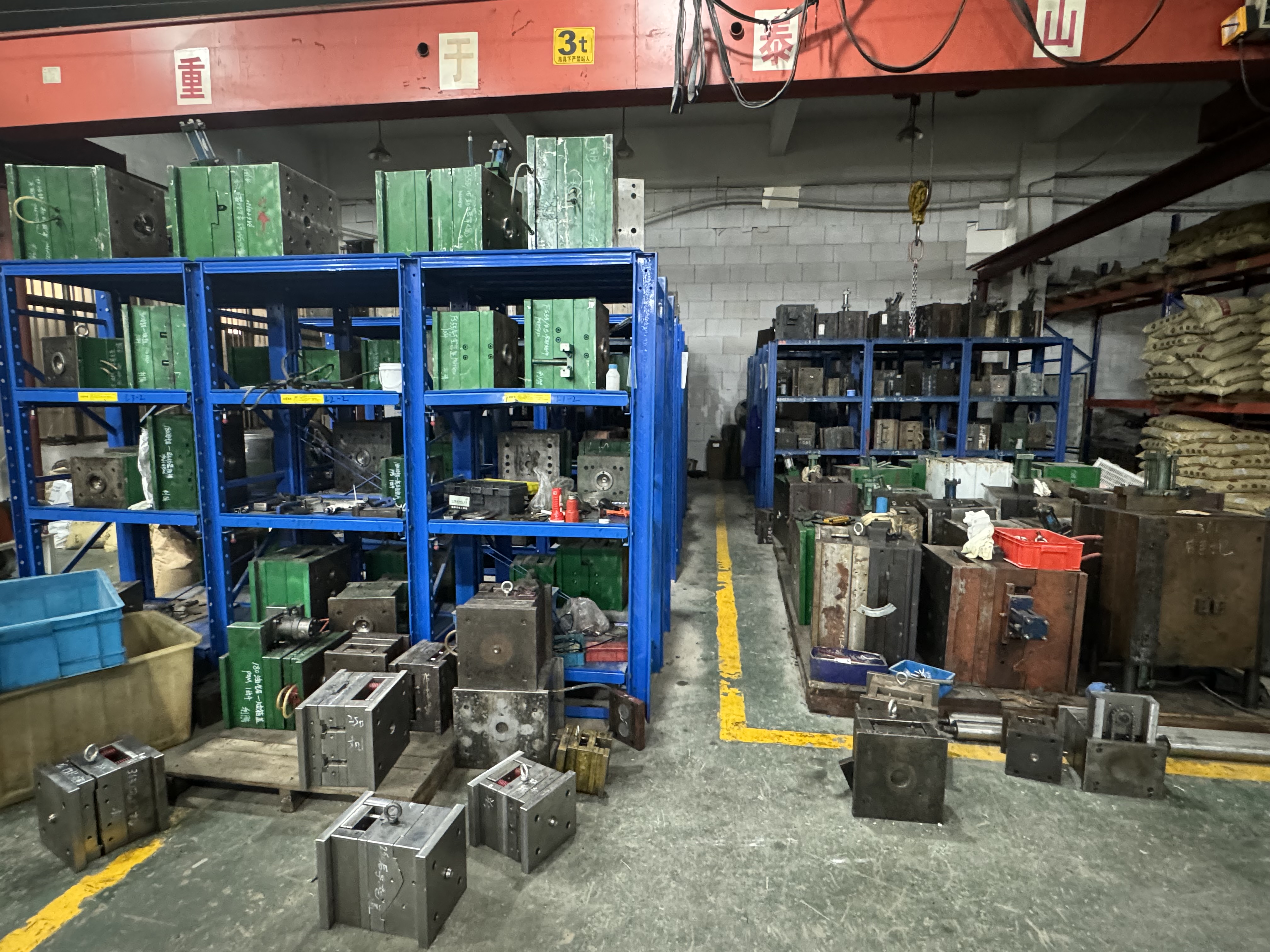
Injection mold tooling used in production of polymer components such as outer housings.
Market Signals Behind a Job-Class Shortlist
Three external signals explain why shortlists of this kind are now written around the job rather than the catalogue. The global chainsaw market was valued at USD 4.46 billion in 2026 and is projected to reach USD 5.89 billion by 2034, according to Straits Research (report dated 18 August 2026). Within that market, gas-powered units held a 54.3% share of the chainsaw market by product type as of 2025/2026, according to Mordor Intelligence (report dated 3 August 2026) — the forestry and contracting segment remains a fuel-driven business.
Regulation is the second signal. ISO 11681-1:2022 is the current international standard covering safety requirements and testing for portable combustion-engine hand-held chainsaws for forest service, and it is the reference point buyers and importers should cite when specifying professional saws. The third signal is trade classification: chain saws with a self-contained non-electric, hand-directed motor fall under HTS Code 8467.81, which determines duty treatment and import paperwork.
Taken together, the pattern is a growing professional segment that remains predominantly fuel-driven and increasingly documented. A job-class shortlist with stated displacement, power, weight, engine speed and parts-platform references therefore functions as a procurement document as much as a product list.
Factory-Direct Saws vs Genuine Premium Saw Platforms
Hanakawa saws are built for equivalent working conditions on a mature manufacturing supply chain and supplied direct from the factory without heavy brand markup. In the published commercial comparison for this platform, the wholesale price of a complete saw in an equivalent working class is stated as more than 80% lower than the retail price of a genuine premium saw, and replacement aftermarket parts are stated as more than 75% cheaper than genuine OEM equivalent assemblies. The platform also states a rated engine service life of at least 300 working hours, built for high-frequency farm, orchard and logging applications, with power and cutting performance matched to genuine equivalent units at similar fuel consumption, and universal compatible specifications that allow simple service without specialised tools.
Boundaries a buyer should apply to those figures.
- The 80%-plus figure is a wholesale-versus-retail comparison between equivalent working-class saws. It measures cost structure — brand markup and distribution margin — not an engineering identity between two products. Where a contract depends on a specific premium platform's documented behaviour, validate the alternative on your own duty cycle before standardising a fleet on it.
- Service economics differ rather than disappear. Genuine OEM parts are restricted by regional distribution, which can mean long lead times and high costs; a factory-direct platform substitutes widely compatible specifications and simpler service requirements. The trade-off is inventory responsibility: the importer, distributor or repair workshop carries the wear stock — guide bars, saw chains, drive sprockets, clutch assemblies, oil pump assemblies and filters — instead of depending on an authorised distributor network.
- The engine life rating of at least 300 working hours assumes the operating conditions the platform documents: correct two-stroke mixing ratio, oil supply to bar and chain, clean cooling fins and avoidance of prolonged maximum-load operation. A saw run outside those conditions will not reach the rating in the field, whatever the specification sheet states.
- Weight is a boundary rather than a feature. The 11kg H9105 exists because a job class requires it; for medium-diameter felling, the 5.7kg H959 keeps the operator working across a full shift.
A Seven-Step Selection Sequence for Buyers
- Define the dominant job, not the occasional job. The job classes in this shortlist are: batch firewood, orchard trunk pruning and farm hardwood cutting; commercial forestry logging, municipal greening and construction clearing; large-scale commercial logging and hardwood processing; hardwood felling and intensive forestry; large timber and old-growth logging; industrial heavy logging and giant tree cutting.
- Convert the job into a duty profile: continuous hours per shift, typical and maximum trunk diameter, terrain slope, and ambient dust and temperature.
- Select the displacement class: 59cc for light professional and municipal work, the 70–72cc band for general commercial logging and hardwood processing, 91.6cc for large timber and old growth, 105.7cc for maximum-diameter industrial work.
- Set the weight ceiling from how the saw is used — carried continuously through the shift, or positioned at a cutting station.
- Confirm the parts platform the model references, then stock the wear parts field service consumes: bars, chains, sprockets, clutch components, oil pump assemblies and filters.
- Check materials and thermal design against the duty profile — magnesium alloy crankcase, aluminum alloy cylinder and glass-reinforced PA nylon housing across this shortlist.
- Verify documentation before ordering: ISO 11681-1:2022-referenced safety documentation for forest-service chainsaws, and the correct HTS 8467.81 classification for import.
Outlook for Professional Gasoline Chainsaw Sourcing
The market trajectory and the 54.3% gas-powered share point to continued demand for fuel-driven professional saws rather than a rapid switch in this working class. What is likely to change is how saws are specified. Buyers increasingly expect a documented safety reference, a named parts platform for every model, and an explicit statement of which job class a model was built for; low-emission and fuel-saving requirements already appear in the working-condition descriptions for commercial forestry jobs, and heat management and vibration control remain the two design properties that decide whether a saw completes a season at continuous load. For manufacturers, the competitive ground is component standardisation, serviceable construction and spare-parts supply that keeps pace with complete machines. For buyers, the equivalent advantage is a shortlist narrow enough to standardise on, and detailed enough to defend at the procurement stage.
FAQ
Which professional gasoline chainsaw fits batch firewood cutting, orchard trunk pruning and farm hardwood work?
The H872 is the model positioned for that job class: 72cc displacement, 3.6kW rated power output, 6.3kg net weight and a maximum engine speed of 11,500 rpm. Its stated applications are traditional small-scale forestry, farm hardwood cutting, orchard trunk pruning and batch firewood processing. The requirement band for that work emphasises a simple structure that is easy to maintain, wide OEM spare parts compatibility and long service life, with intermittent rather than continuous heavy load. Saws below this class — for example the compact 31.8cc H932 at 1.5kW and 4.1kg, or the 45.4cc H945 at 2.2kW and 4.8kg — are positioned for household firewood and light pruning volumes rather than commercial batch work.
What saw size is right for medium-diameter log felling by a forest contractor?
Two models in this shortlist cover medium-diameter felling. The H959 at 59cc, 3.4kW and 5.7kg is the lightest professional option here and references the MS361-class parts platform; its working conditions list magnesium alloy crankcase heat dissipation, heavy-load anti-stall performance and long continuous working stability, which is why it is applied to commercial forestry logging, municipal greening and construction clearing. The H972E at 72cc, 3.6kW and 6.6kg covers a similar diameter band with a reinforced transmission system, strong low-speed torque and high-temperature durability under full load, for hardwood felling and intensive forestry. The selection criteria buyers usually weigh in this band are output power, continuous working durability, anti-vibration performance, spare-parts supply and unit price.
What is required for large-diameter hardwood felling?
The H971 is the model in this shortlist with the highest rated power in the mid class: 70.7cc displacement, 4.0kW output, 6.1kg net weight and a 12,000 rpm maximum engine speed, referencing the MS440/044-class parts platform, and positioned for large-scale commercial logging, hardwood processing, engineering demolition and forest thinning. The criteria normally used for this class are torque, cylinder robustness, heat dissipation, dust resistance and aftermarket parts accessibility. Displacement alone can rank these saws backwards: the 70.7cc H971 is rated at 4.0kW while the 72cc H972E is rated at 3.6kW.
Which model handles super-large log felling and heavy industrial logging?
Two models cover that band. The H992 at 91.6cc, 5.2kW, 7.7kg and a 13,500 rpm maximum engine speed references the MS660/066-class parts platform and is positioned for large timber felling, old-growth forest logging, lumber mill work, large disaster rescue and land reclamation; its requirement band includes a thickened magnesium alloy crankcase, an oversized cooling system and a heavy-duty anti-rebound safety brake, and distributor documentation for the 91.6cc/92cc platform describes support for guide bars up to 62 inches. The H9105 at 105.7cc, 4.8kW, 11kg and 11,500 rpm is the largest-displacement model in the lineup, references the 070-class parts platform, and is positioned for industrial heavy logging, giant tree cutting, log yard primary processing and remote mountain forest exploitation, with a requirement band of ultra-high torque output, a fully reinforced metal drive system and stable operation under extreme overload.
How should importers and repair workshops plan spare parts and service for factory-direct professional chainsaws?
Factory-direct supply changes the parts model rather than removing it. The platform states a rated engine service life of at least 300 working hours and describes replacement aftermarket parts as more than 75% cheaper than genuine OEM equivalent assemblies, with universal compatible specifications that allow simple service without specialised tools. The practical requirement is that the importer, distributor or repair workshop holds the corresponding wear stock: guide bars, saw chains, drive sprockets, clutch parts, oil pump assemblies and filters. The service tasks documented for this class include a saw that will not start (fuel mixing ratio, spark plug condition, air filter blockage, a flooded cylinder, a blocked fuel filter or line), unstable idle (carburetor idle setting, carburetor-cylinder gasket air leak, clogged fuel filter, ageing fuel hose), a dry guide bar with no oil output (empty oil tank, blocked oil filter screen, clogged oil passage, failed oil pump assembly), and a chain that does not rotate on a running engine (engaged front chain brake, worn clutch shoes, worn drive sprocket, over-tightened chain).
Reference material: the V4.1 Hanakawa catalogue covers the complete chainsaw range and compatible spare parts and is available as a public PDF at V4.1 Hanakawa catalogue. Manufacturer information is published at www.hanakawatools.com.